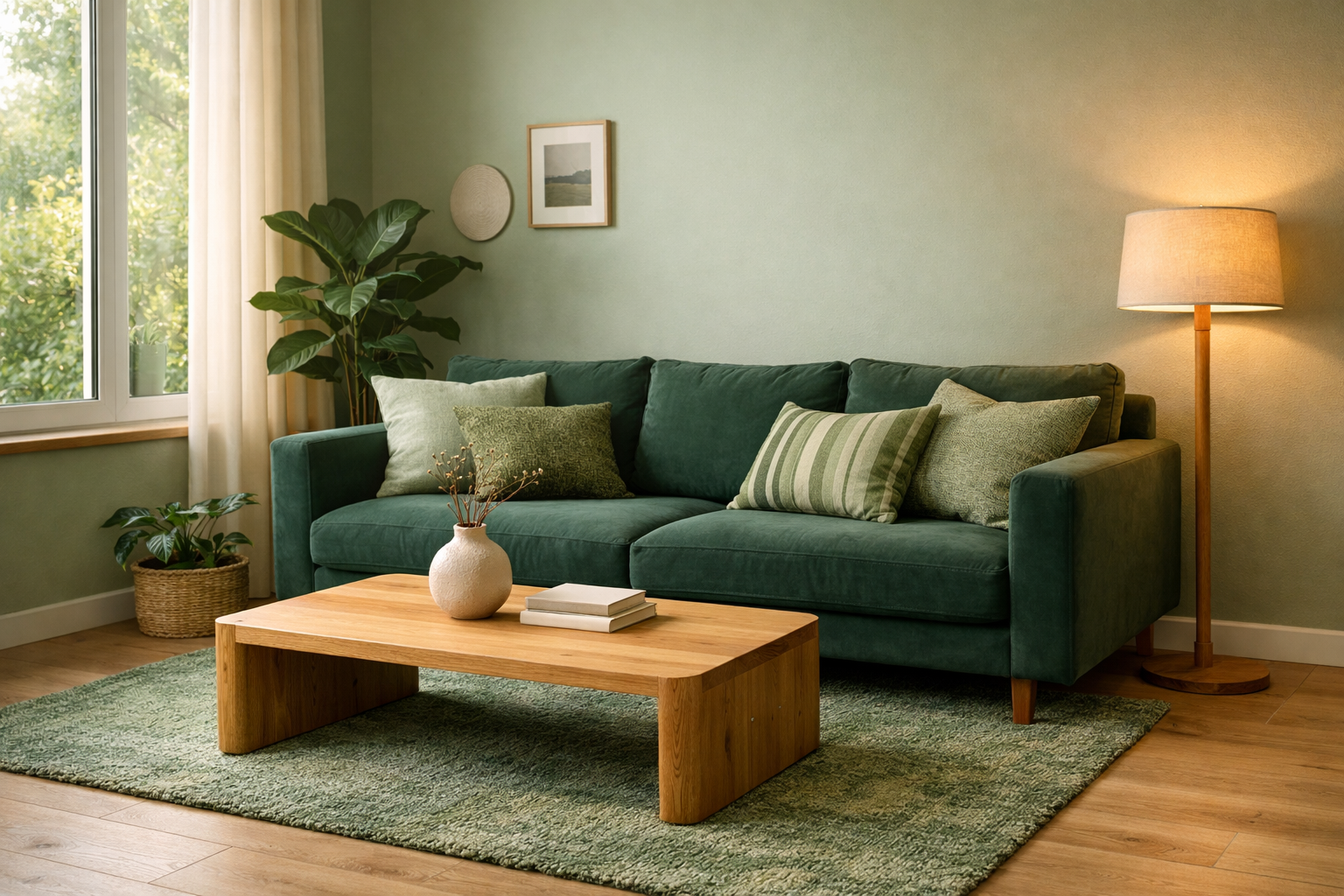
22 Green Living Room Ideas That Feel Calm, Stylish, and Easy to Copy
Green can change how your living room feels in seconds. It brings calm, freshness, and a soft connection to nature without feeling dull. You do not need a full makeover to use green in a smart way. Small, creative choices can shift the mood and make your space feel styled and intentional. In this guide, you will explore the first part of 22 green living room ideas. Each idea gives you clear, practical ways to use color, texture, lighting, and layout so you can imagine the result and apply it easily in your own home.
1. Deep Forest Green Accent Wall with Warm Wood Balance
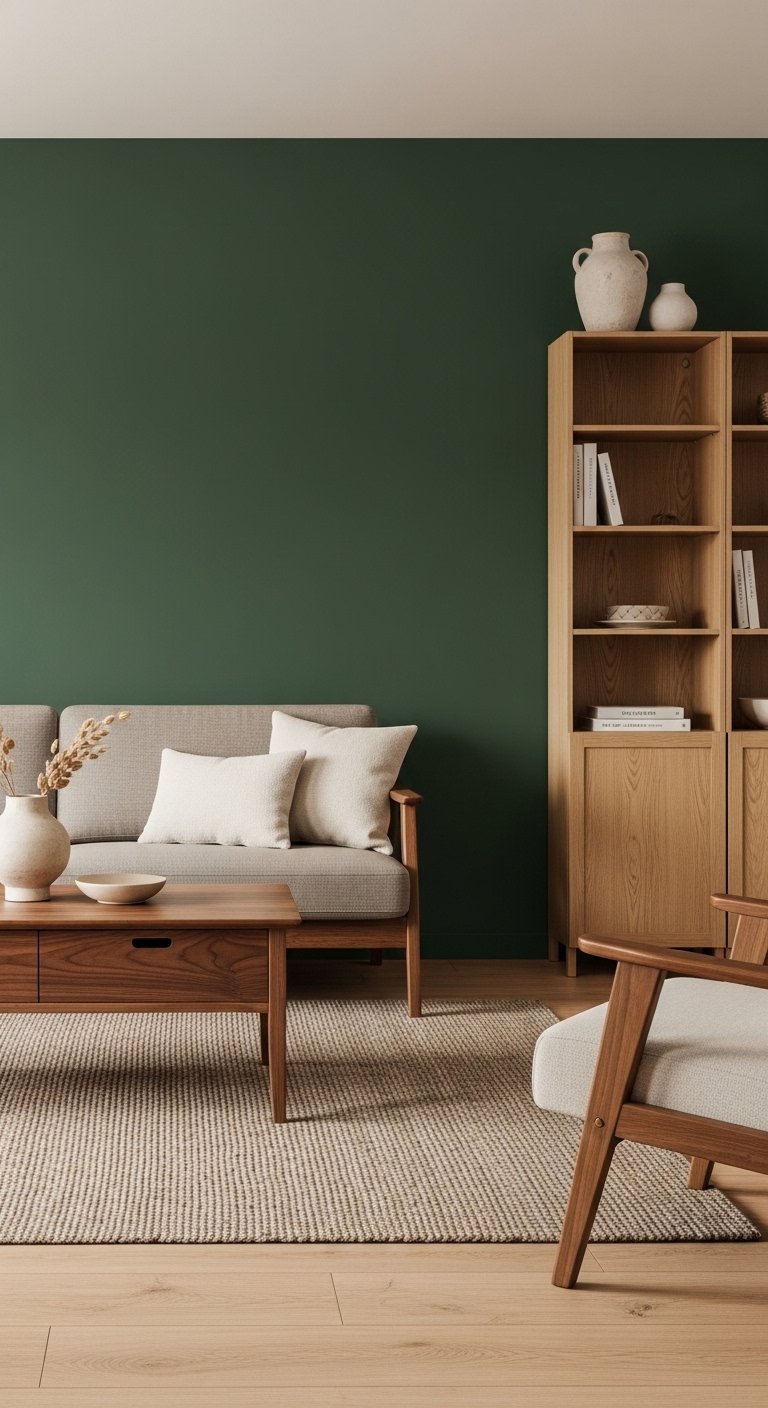
A deep forest green accent wall creates a strong and cozy base for your living room. Paint the wall behind your sofa or main seating area so it becomes the natural focal point. This rich shade feels bold, but you can soften it by adding warm wood tones like oak shelves, a walnut coffee table, or a light wooden floor. These natural textures stop the room from feeling dark and heavy. Use cream or beige cushions to brighten the seating and add contrast without breaking the calm mood. Soft warm lighting from table lamps or floor lamps will enhance the depth of the green and make the space feel inviting in the evening. This idea works best when you keep the rest of the room simple, allowing the wall to stand out while everything else supports it quietly.
2. Olive Green Sofa as the Centerpiece
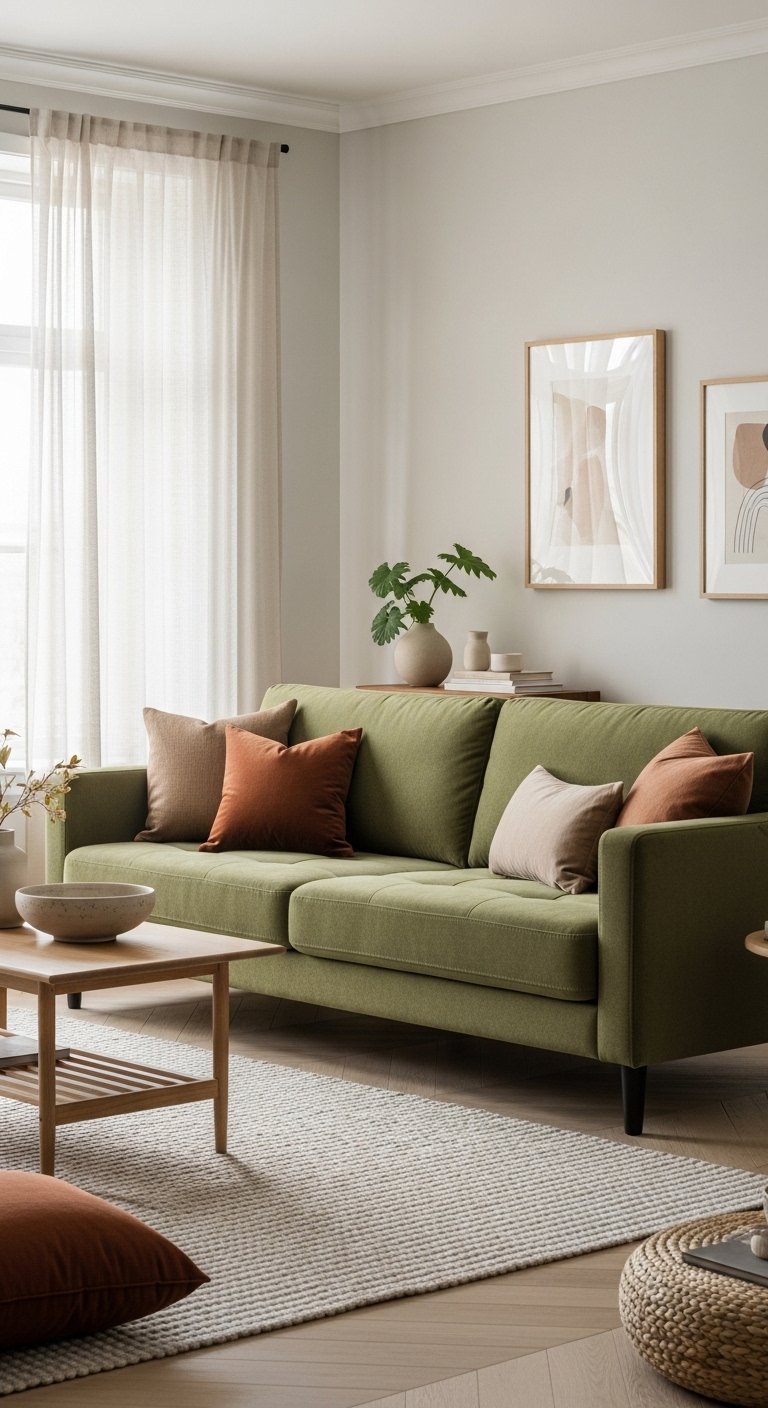
An olive green sofa gives your living room a relaxed and stylish center without feeling too bold. This shade sits between green and brown, which makes it easy to combine with natural materials. Place the sofa against a light neutral wall so the color becomes more noticeable without overwhelming the space. Add cushions in soft earthy tones like rust, tan, or muted mustard to create depth. A textured rug in beige or cream can ground the seating area while keeping the room light. Use a simple wooden or glass coffee table to balance the heavier tone of the sofa. Natural light enhances olive green beautifully, so keep windows open and use light curtains. This setup feels warm, modern, and comfortable, making it ideal for everyday living while still looking carefully styled.
3. Sage Green Walls with Soft White Layers
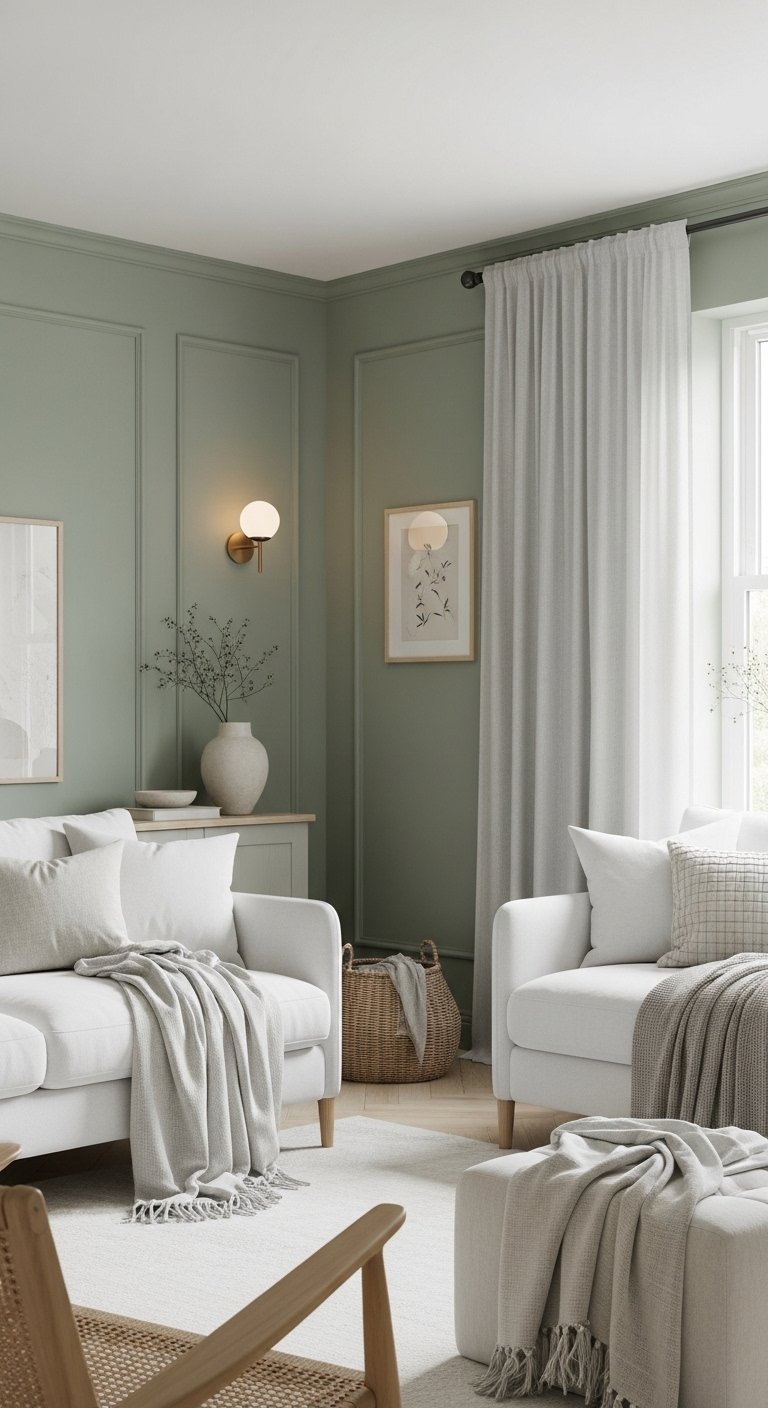
Sage green walls bring a soft and calming atmosphere that feels open and fresh. This gentle shade reflects light well, which helps smaller living rooms feel more spacious. Pair the walls with soft white furniture such as a cozy sofa or armchairs to create a clean and peaceful look. Add layers through fabrics like linen curtains, cotton throws, and light textured cushions to keep the room from feeling flat. Pale wood furniture works well here because it adds warmth without overpowering the softness of the green.
Keep decorations simple, such as ceramic vases or minimal artwork, so the space stays light and balanced. Use natural daylight as much as possible, and choose soft white bulbs for evening lighting. This idea works perfectly if you want a calm space that still feels styled and welcoming.
4. Green and Gold Luxury Contrast
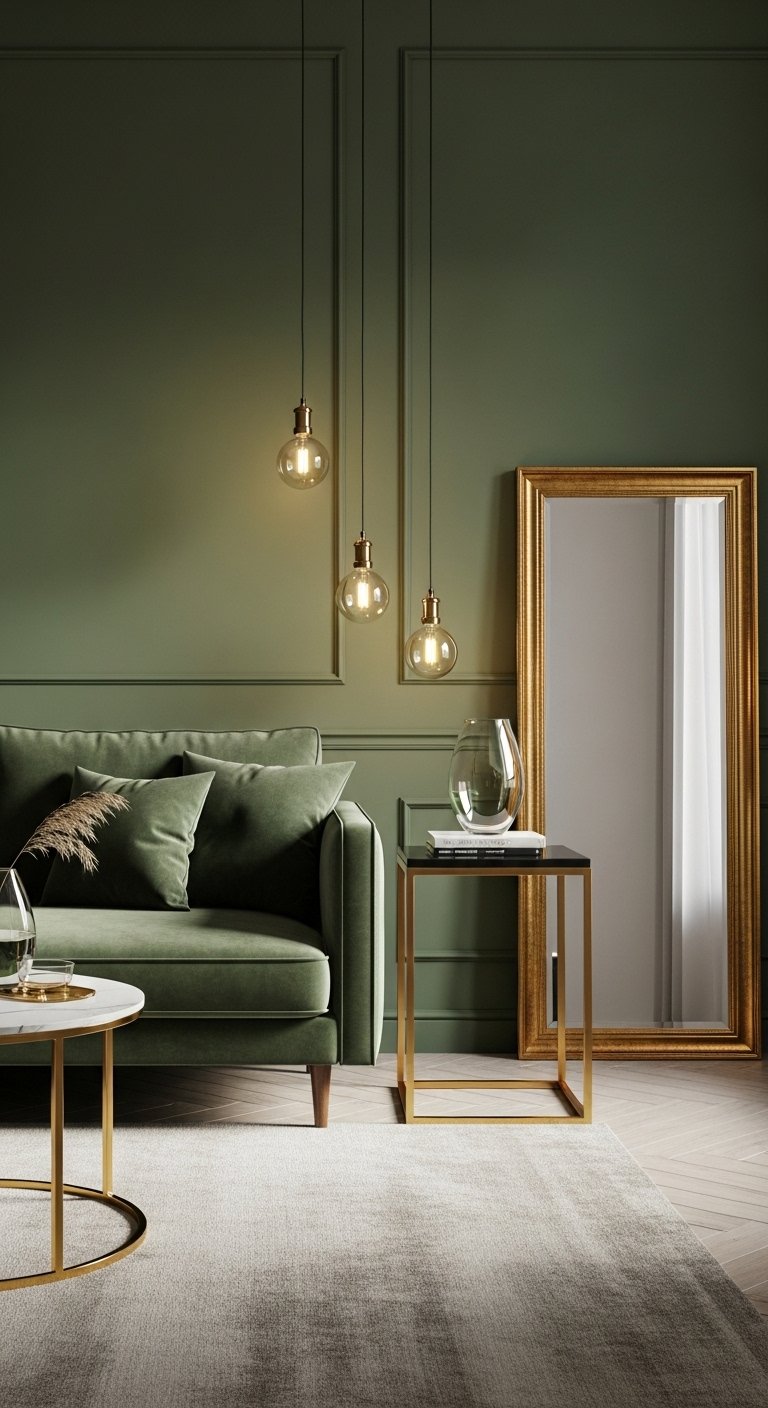
Green and gold create a rich and refined look that adds instant elegance to your living room. Start with a deep green base, such as a velvet sofa or painted wall, and then introduce gold through small but noticeable details. Use gold-framed mirrors, metallic lamps, or side tables with gold finishes to reflect light and add shine. The key is to keep the balance right so the gold highlights the green instead of overpowering it. Add soft textures like velvet cushions or a plush rug to enhance the luxurious feel. Keep the rest of the color palette simple with neutrals like cream or soft gray to avoid visual clutter. Warm lighting works best here because it enhances the gold tones and deepens the richness of the green. This idea suits spaces where you want a slightly dramatic but still comfortable atmosphere.
5. Layered Green Textiles for a Soft Cozy Look
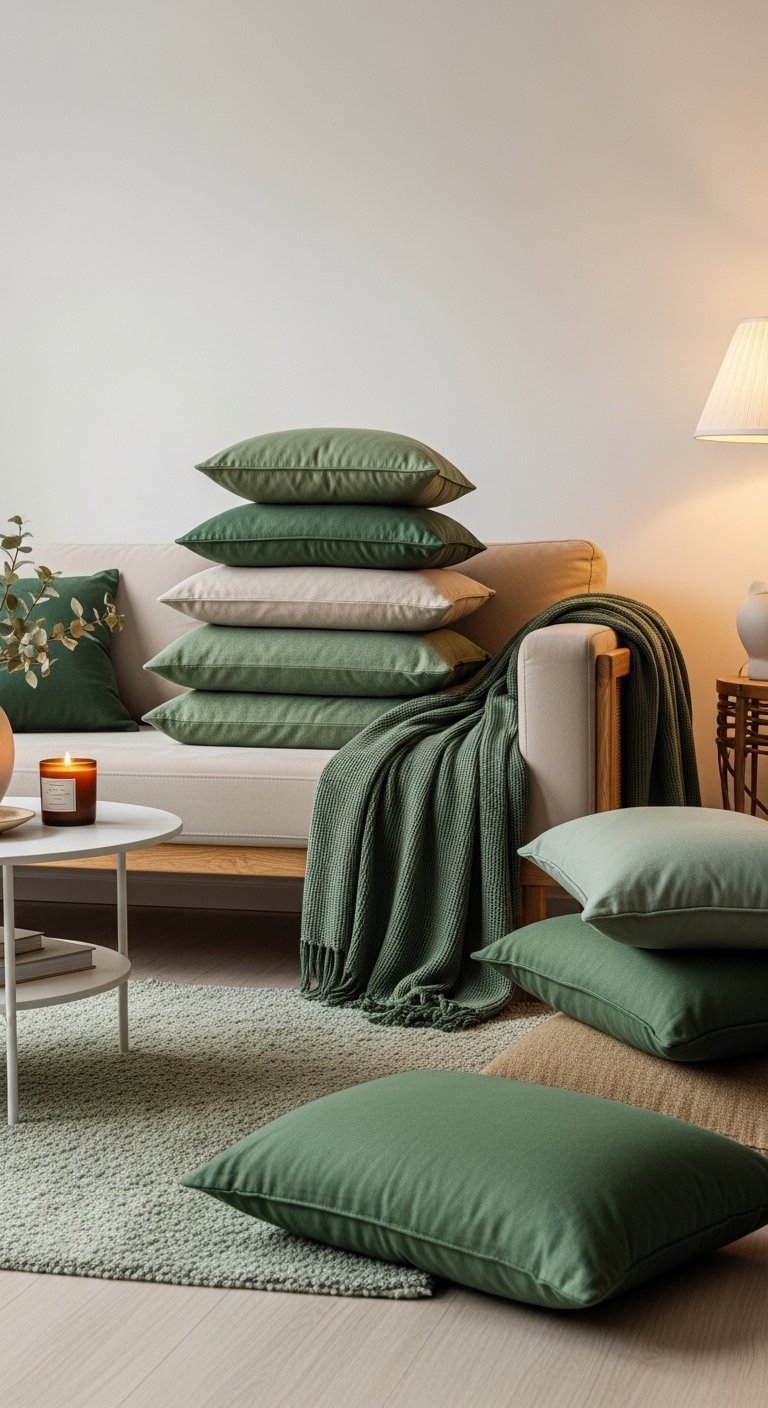
Layering different green textiles can create a cozy and inviting living room without changing walls or furniture. Start with a neutral base such as a beige or gray sofa, then build layers using green cushions, throws, and a rug. Mix different shades like sage, olive, and forest green to add depth without making the room feel too matched. Use varied textures such as knitted blankets, velvet pillows, and woven rugs to create visual interest. This combination makes the space feel warm and lived-in while still looking styled. Add a simple wooden coffee table or natural decor pieces to keep the look grounded. Soft lighting from lamps will highlight the textures and make the room feel more comfortable in the evening. This idea is perfect if you want a quick update that feels rich and thoughtfully designed.
6. Green Built-In Shelving with Neutral Decor
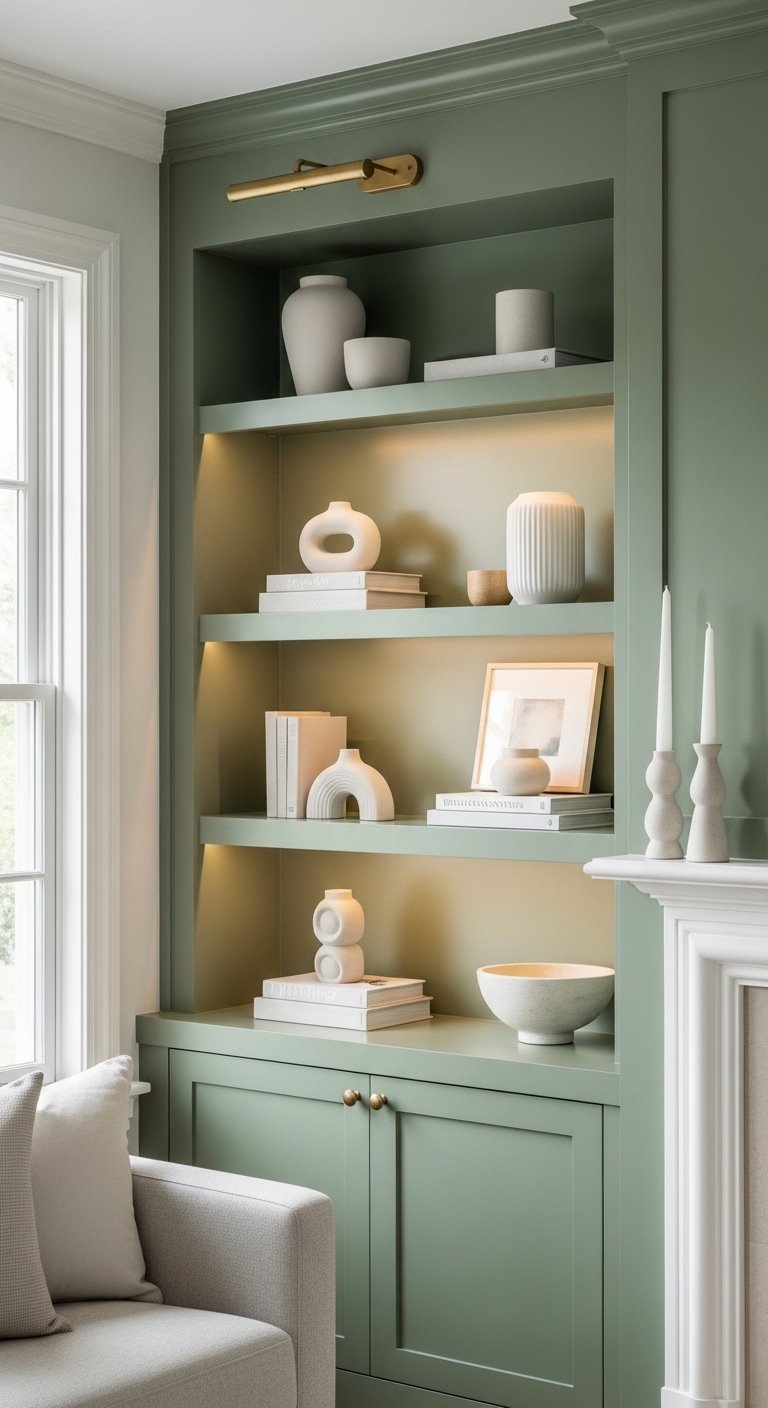
Painting built-in shelves green can add character and depth to your living room without overwhelming the space. Choose a medium or dark green shade to create contrast against lighter walls. Arrange your shelves with neutral decor like white ceramics, books with soft covers, and small wooden pieces to balance the color. The green background makes each item stand out more clearly, giving your display a curated look. Avoid overcrowding the shelves so each object has space to breathe. Add a small warm light or spotlight to highlight the shelves and create a soft glow in the evening. This idea works well in both modern and classic interiors because it combines structure with color in a subtle but effective way. It also gives you a chance to refresh your decor without changing the entire room.
7. Indoor Plants as Natural Green Layers
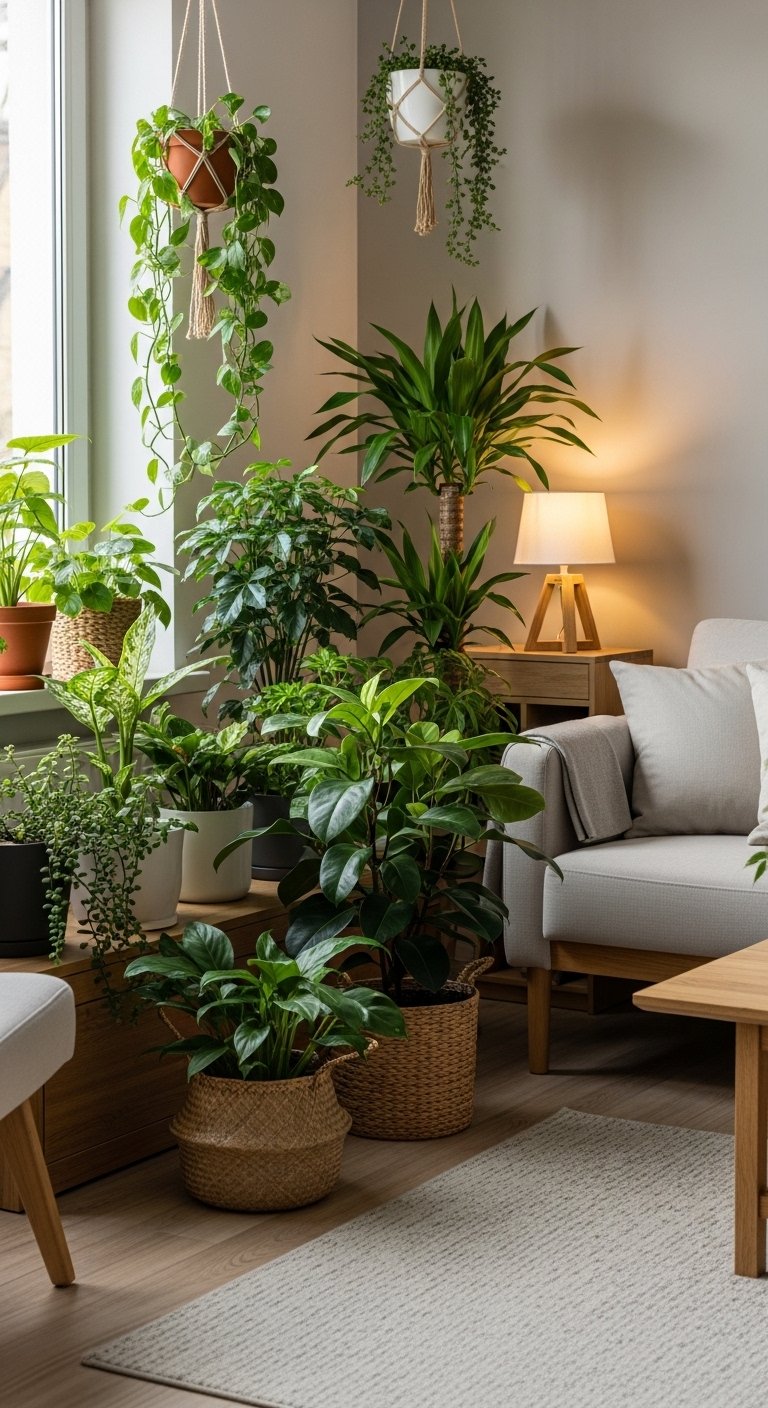
Using indoor plants is one of the most natural ways to bring green into your living room. Instead of placing just one plant, create layers by using different heights and shapes. Place a tall plant in a corner, medium plants near furniture, and small plants on shelves or tables. This arrangement makes the room feel alive and balanced. Use simple pots in neutral tones like white, clay, or black so the focus stays on the greenery. Natural light is important, so place plants near windows where they can thrive. Combine plants with soft fabrics and wooden elements to create a warm and relaxed setting. This idea works for any style because it adds freshness without needing major changes. It also improves the overall feel of the room by making it more connected to nature.
8. Green Curtains to Frame Natural Light
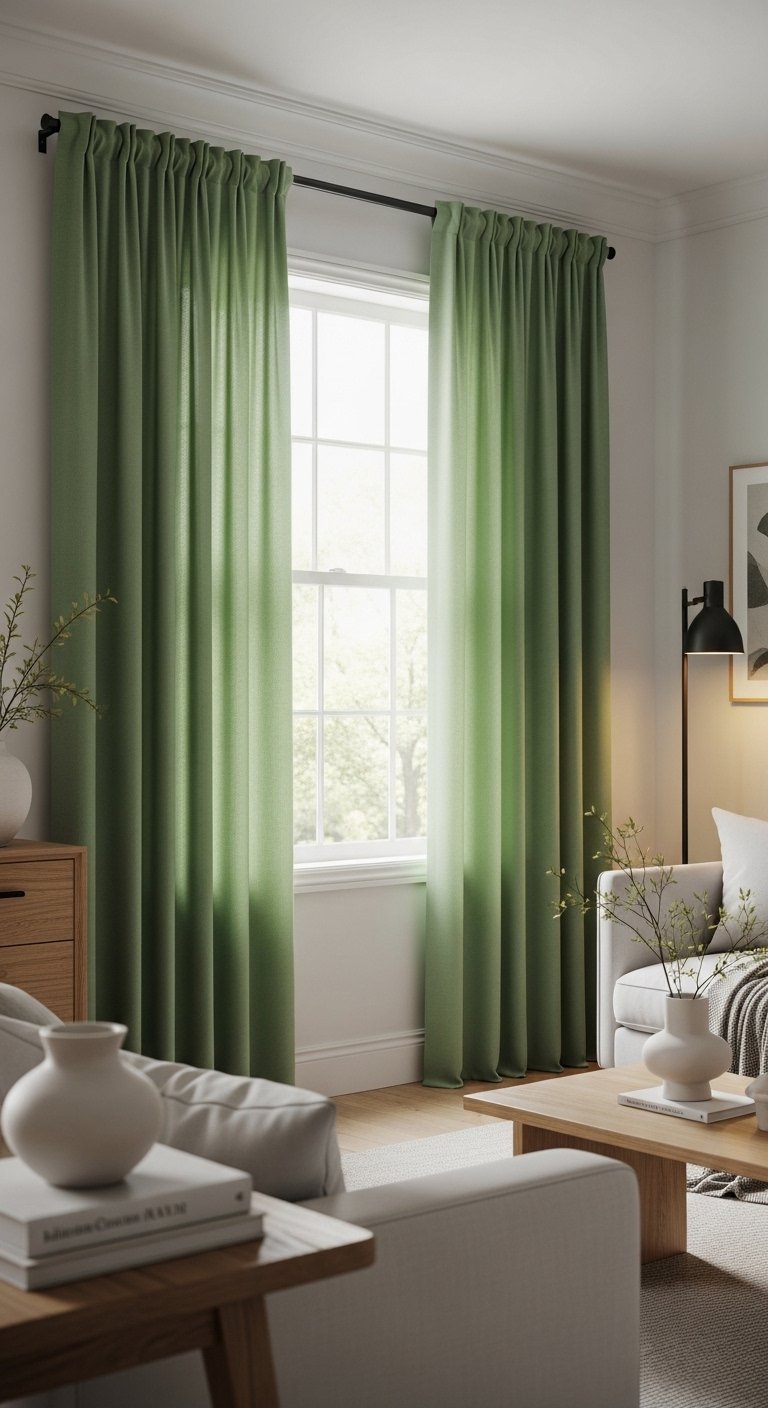
Green curtains can transform your living room by adding color while also controlling light. Choose a soft green shade like sage or olive if you want a calm effect, or go for a deeper green if you want more contrast. Hang the curtains slightly higher than the window frame to make the room feel taller. Let them fall naturally to the floor to create a clean and elegant look. Pair them with neutral walls and furniture so the curtains stand out without clashing. During the day, natural light passing through lighter green fabric creates a soft glow that feels warm and peaceful. In the evening, use warm lighting to keep the room cozy. This idea is simple but effective, making it a great choice for anyone who wants to refresh their space without major effort.
9. Two-Tone Green Wall Design for Depth
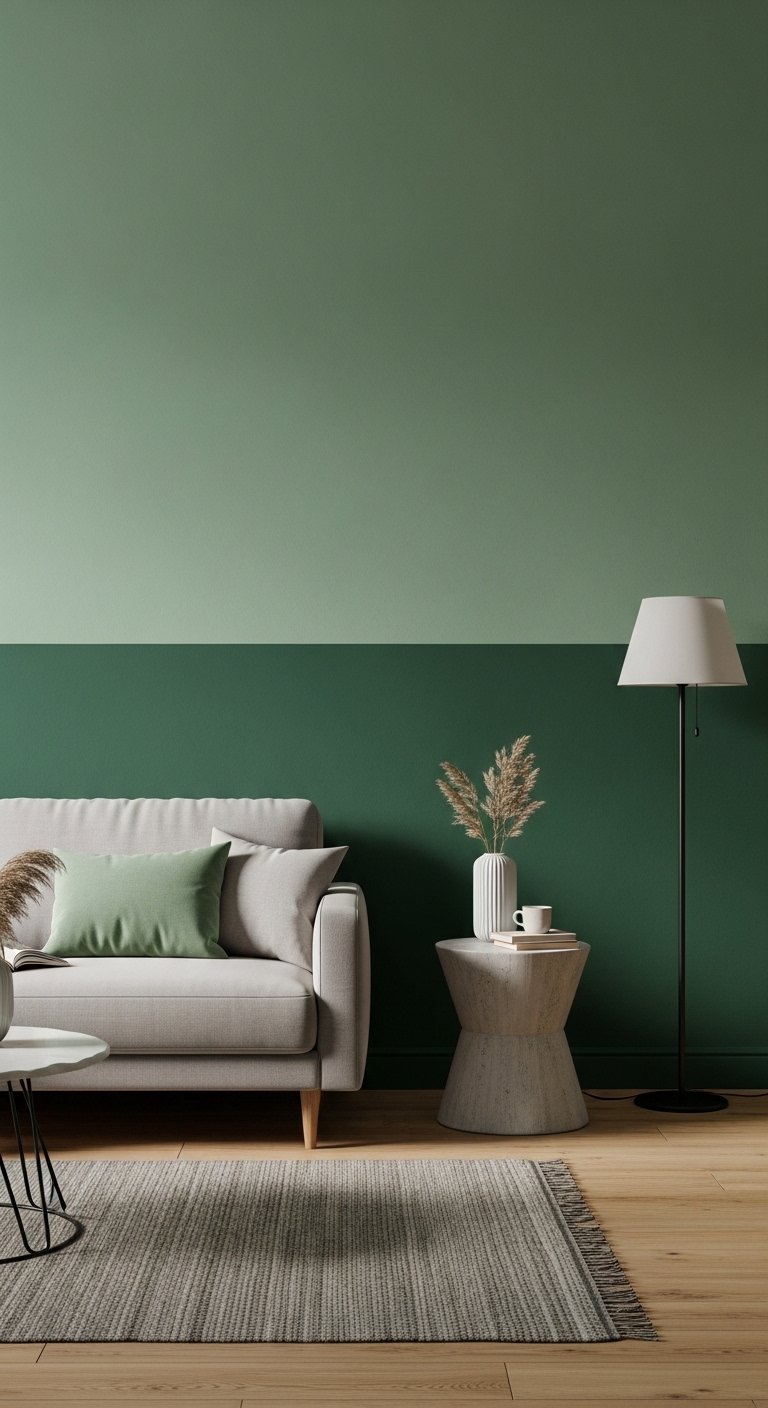
A two-tone green wall adds visual interest and makes your living room feel more designed. Divide the wall horizontally, using a darker green on the lower half and a lighter green on the upper half. This creates a balanced look that adds depth without overwhelming the space. You can use a simple line or a thin molding strip to separate the colors for a cleaner finish. Pair this wall with simple furniture in neutral shades so the design stands out clearly. Add a few matching green accents like cushions or decor pieces to tie the room together. Use soft lighting to highlight the color contrast and create a warm atmosphere. This idea works especially well in modern homes where clean lines and subtle creativity are key.
10. Green Rug as a Grounding Element
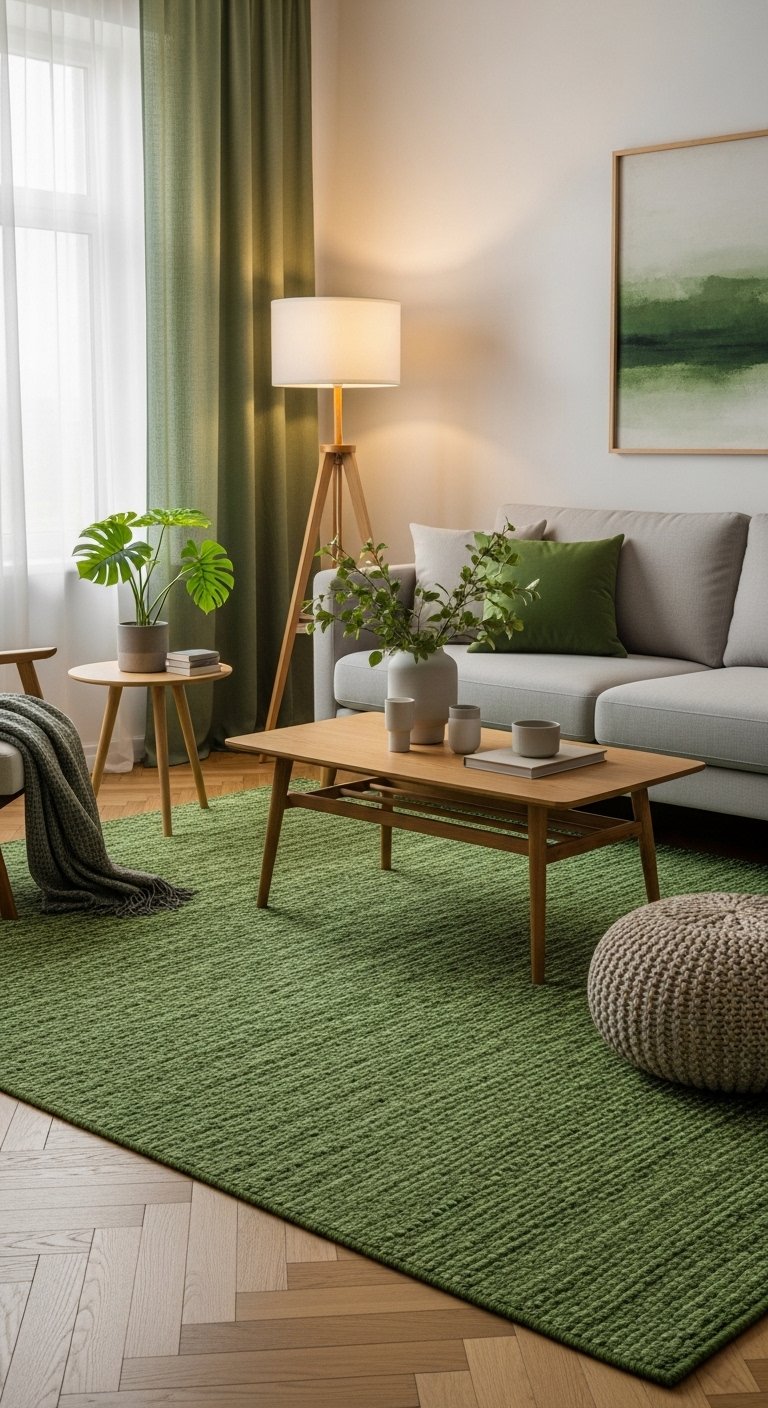
A green rug can anchor your living room and bring all elements together without changing walls or furniture. Choose a shade that complements your existing decor, such as a soft sage for a light room or a deep green for more contrast. Place the rug under your main seating area so it defines the space clearly. Look for textures like woven or slightly patterned designs to add depth without making the room busy. Pair the rug with neutral furniture and add a few green accents like cushions or plants to create harmony. Natural light will enhance the color during the day, while soft lighting will make it feel warm at night. This idea is practical and easy to implement, making it perfect for anyone who wants a noticeable change with minimal effort.
11. Muted Green Ceiling for a Soft Unexpected Touch
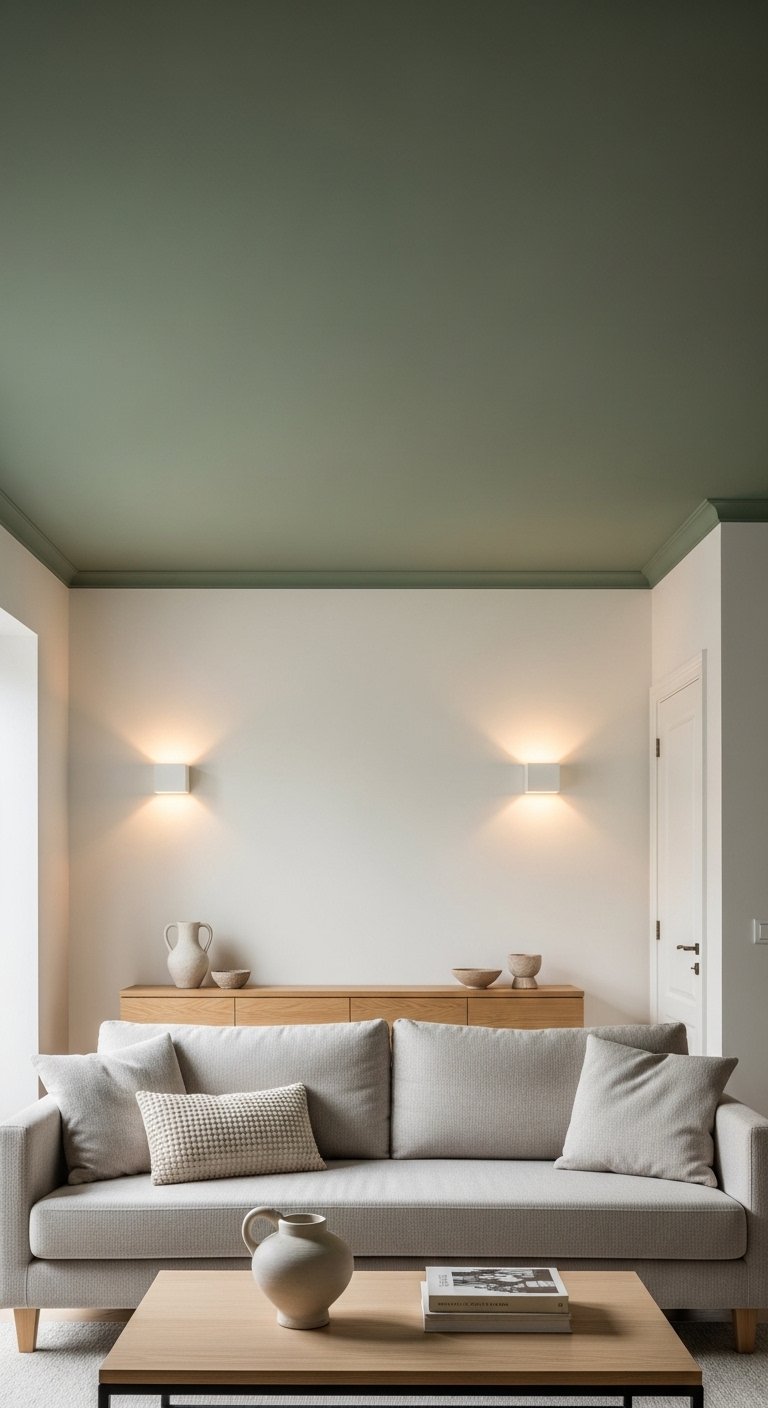
A muted green ceiling adds color in a place most people ignore, making your living room feel unique without overwhelming the space. Choose a soft tone like sage or dusty olive so the ceiling feels calm rather than heavy. Keep the walls light, such as warm white or pale beige, to create contrast and allow the ceiling to stand out gently. This approach draws the eye upward and makes the room feel taller and more open. Use simple lighting fixtures like a white pendant or soft-glow bulbs so the green tone stays visible. Add subtle green accents below, such as cushions or a small rug, to connect the look. This idea works especially well in rooms with good natural light, where the ceiling color changes slightly throughout the day and adds quiet visual interest.
12. Green Marble Accents for a Refined Natural Look
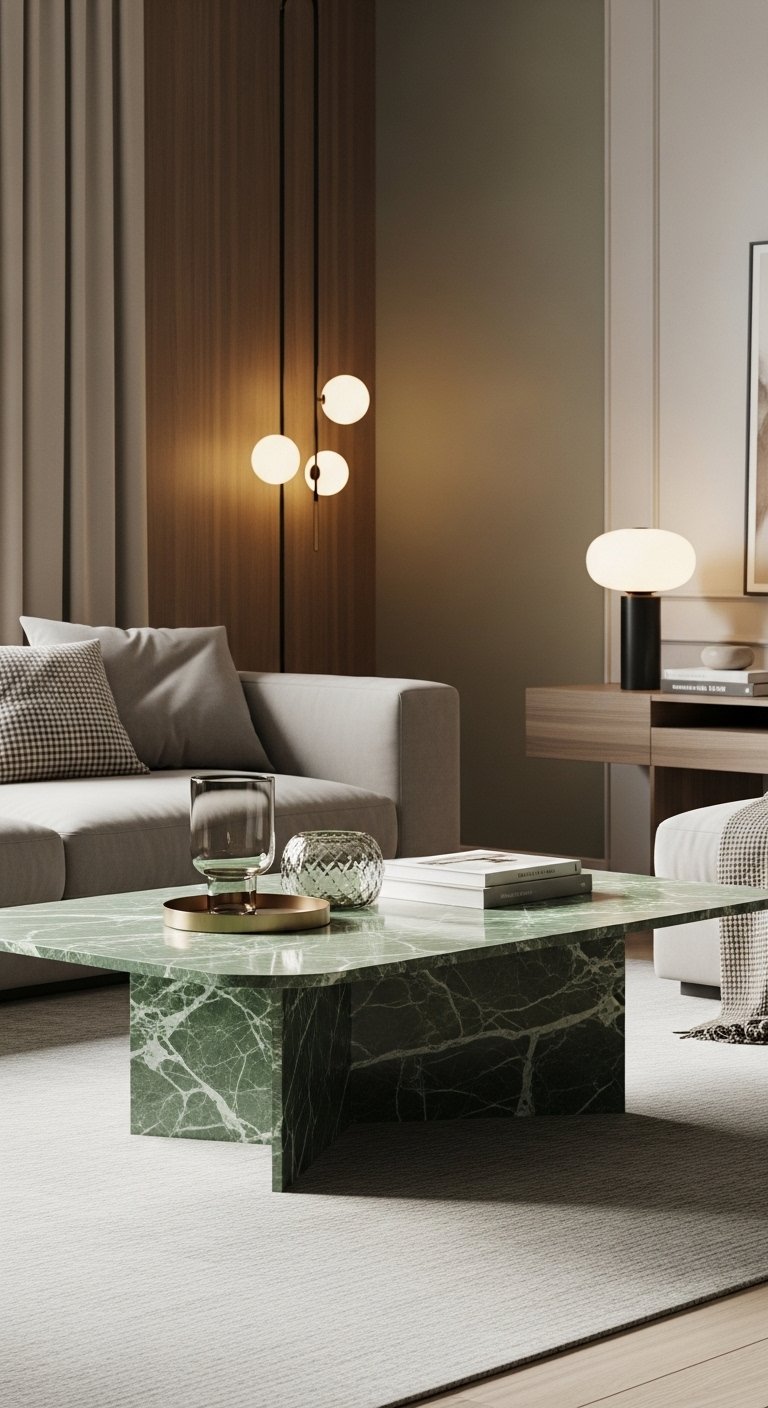
Green marble brings a polished and organic feel into your living room through small but impactful details. You do not need large slabs to make it work. Start with a marble coffee table, tray, or side table that features soft green veining. Pair it with neutral furniture so the texture stands out without competing with other elements. The natural patterns in marble add depth and movement, making even simple spaces feel more refined. Use warm lighting to highlight the surface and bring out its subtle color variations. Combine it with soft fabrics like linen or velvet to balance the cool stone texture. This idea suits modern and classic interiors because it mixes elegance with nature in a quiet, controlled way that feels both fresh and timeless.
13. Green and Terracotta Earthy Combination
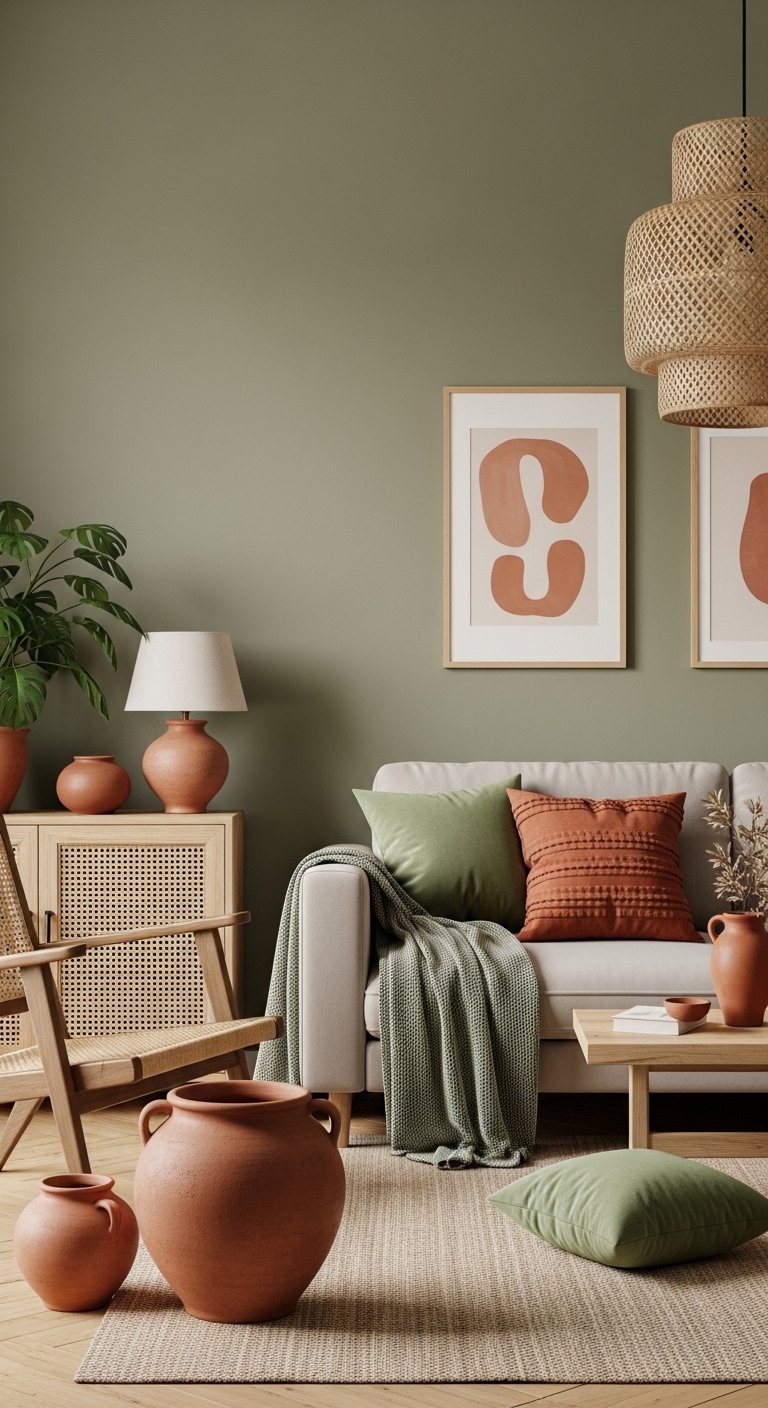
Green and terracotta together create a warm and grounded living room that feels natural and inviting. Use a soft green on walls or furniture, then introduce terracotta through pots, cushions, or a textured rug. The warm orange tone of terracotta balances the coolness of green, creating a rich and harmonious palette. Choose materials like clay, woven fabrics, and raw wood to enhance the earthy feel. Keep the layout relaxed, with low seating and layered textiles to make the space feel comfortable. Natural light works beautifully with this combination, highlighting the warmth of the terracotta and the softness of the green. This idea is perfect if you want a cozy environment that feels connected to nature without using bold or dramatic colors.
14. Green Panel Molding for Subtle Structure
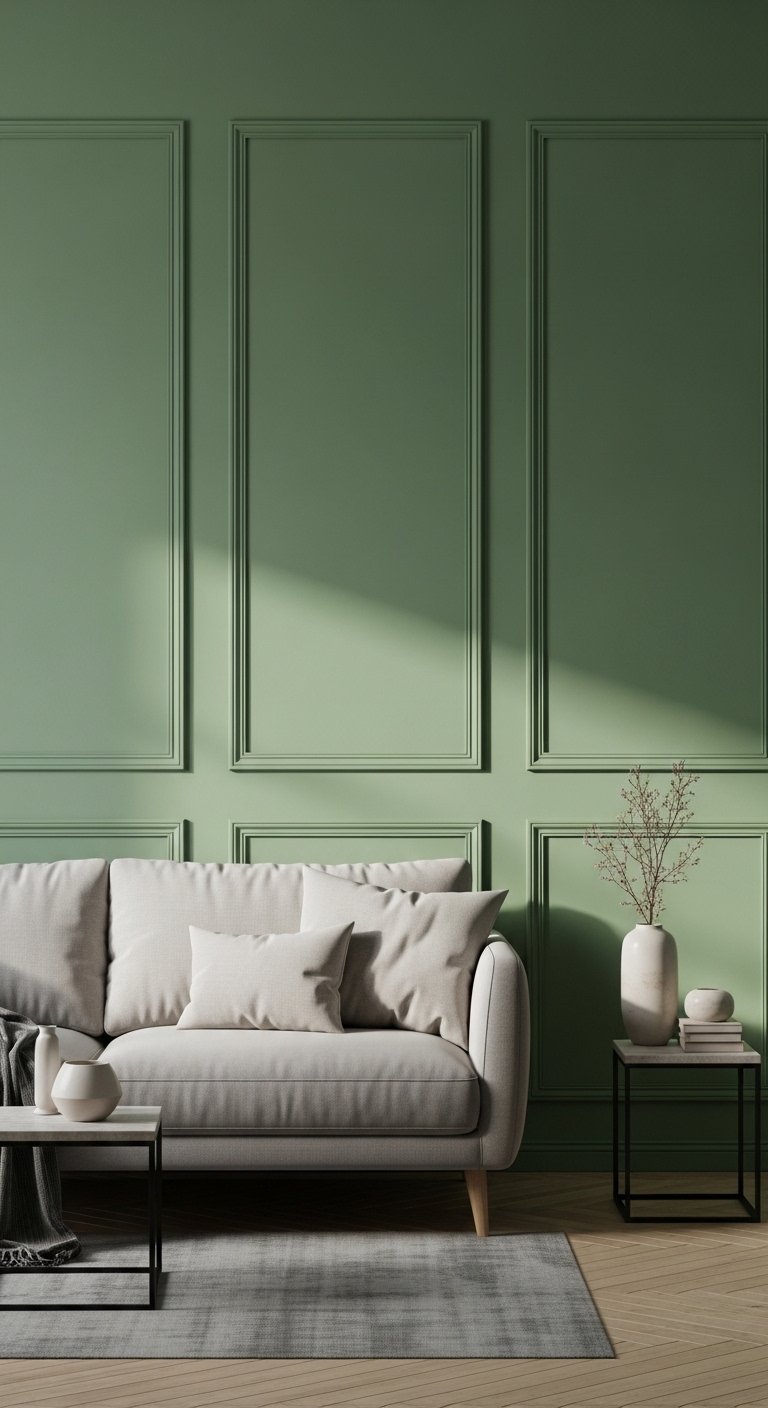
Green panel molding adds structure and detail to your walls while keeping the overall look clean and stylish. Paint both the molding and the wall in the same green shade to create a seamless effect with added depth. Choose a medium green tone that feels balanced, not too dark or too light. This design works well behind a sofa or as a feature wall to add quiet character. Pair it with simple furniture in neutral colors so the wall design remains the highlight. Add soft lighting that casts gentle shadows across the panels, enhancing the texture. This idea suits modern and classic homes because it combines architectural detail with color in a subtle way that feels thoughtful and refined without being too bold.
15. Green Glass Decor for Light Reflection
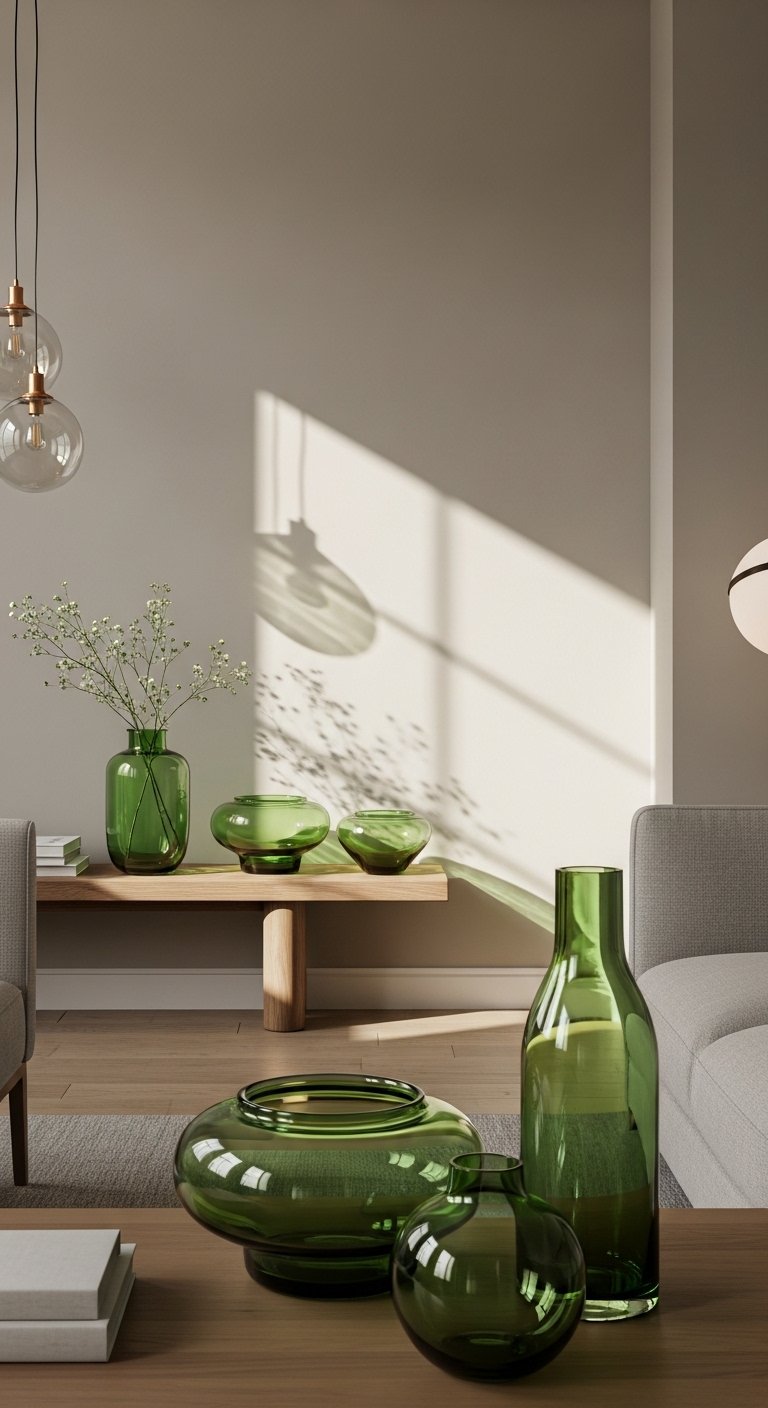
Green glass decor adds a delicate layer of color that interacts beautifully with light. Use items like vases, bowls, or decorative bottles in different shades of green and place them near windows or light sources. When sunlight passes through the glass, it creates soft reflections that bring life into the room. Keep the surrounding decor simple so these pieces stand out naturally. Combine them with neutral surfaces like wooden tables or white shelves for balance. In the evening, place them near a lamp to create a gentle glow. This idea works well if you want to introduce green in a subtle and artistic way without committing to large furniture or wall changes. It adds freshness and movement while keeping the space light and uncluttered.
16. Green and Black Contrast for a Modern Edge
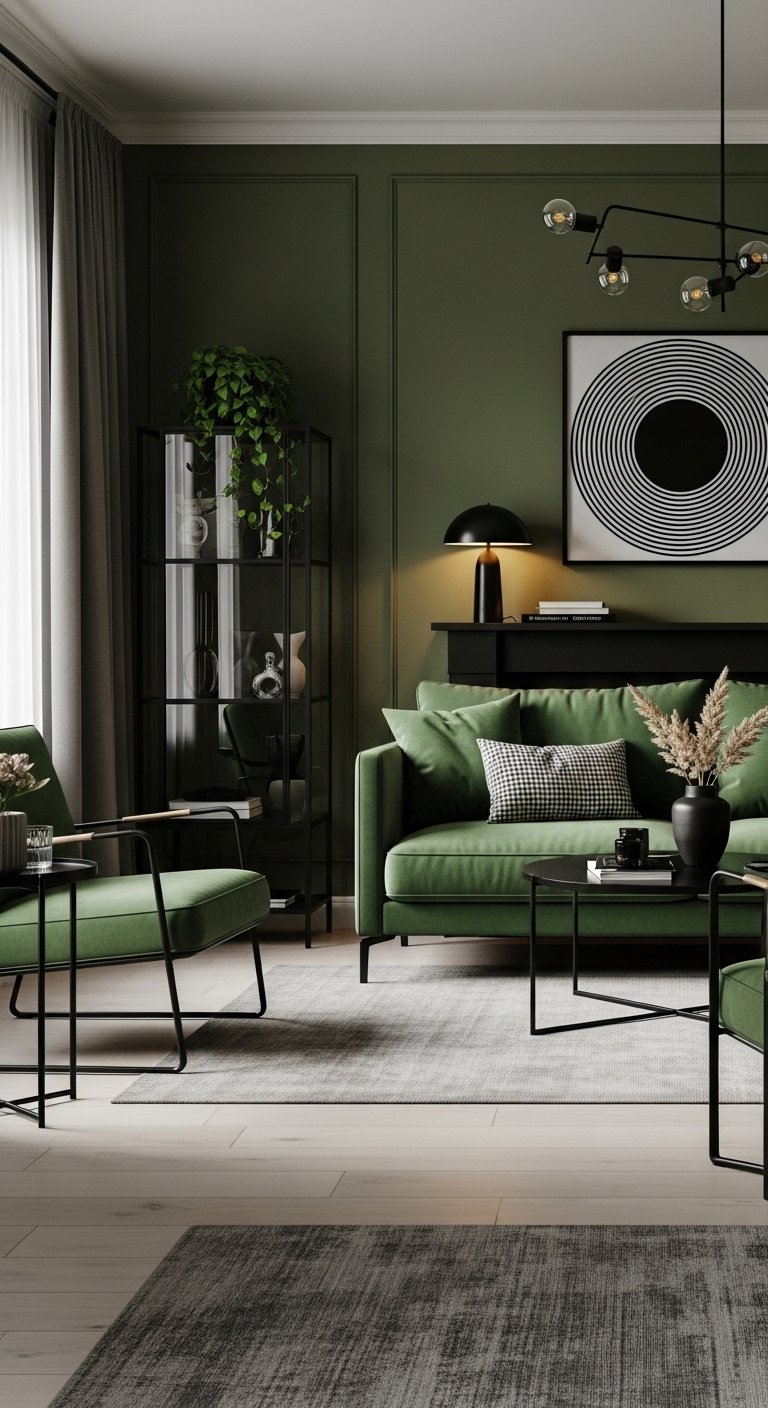
Green and black create a bold and modern living room that feels sharp and intentional. Use a rich green shade on a sofa or wall, then add black through furniture like a metal coffee table, shelving, or lighting fixtures. The black elements provide structure and contrast, making the green appear more vibrant. Keep the rest of the palette minimal with touches of white or gray to avoid visual clutter. Choose clean lines and simple shapes to maintain a modern look. Soft lighting can balance the strong contrast and prevent the room from feeling too harsh. This idea works best in spaces where you want a confident and slightly dramatic style that still feels organized and easy to live in.
17. Soft Green Upholstered Chairs for Accent Seating
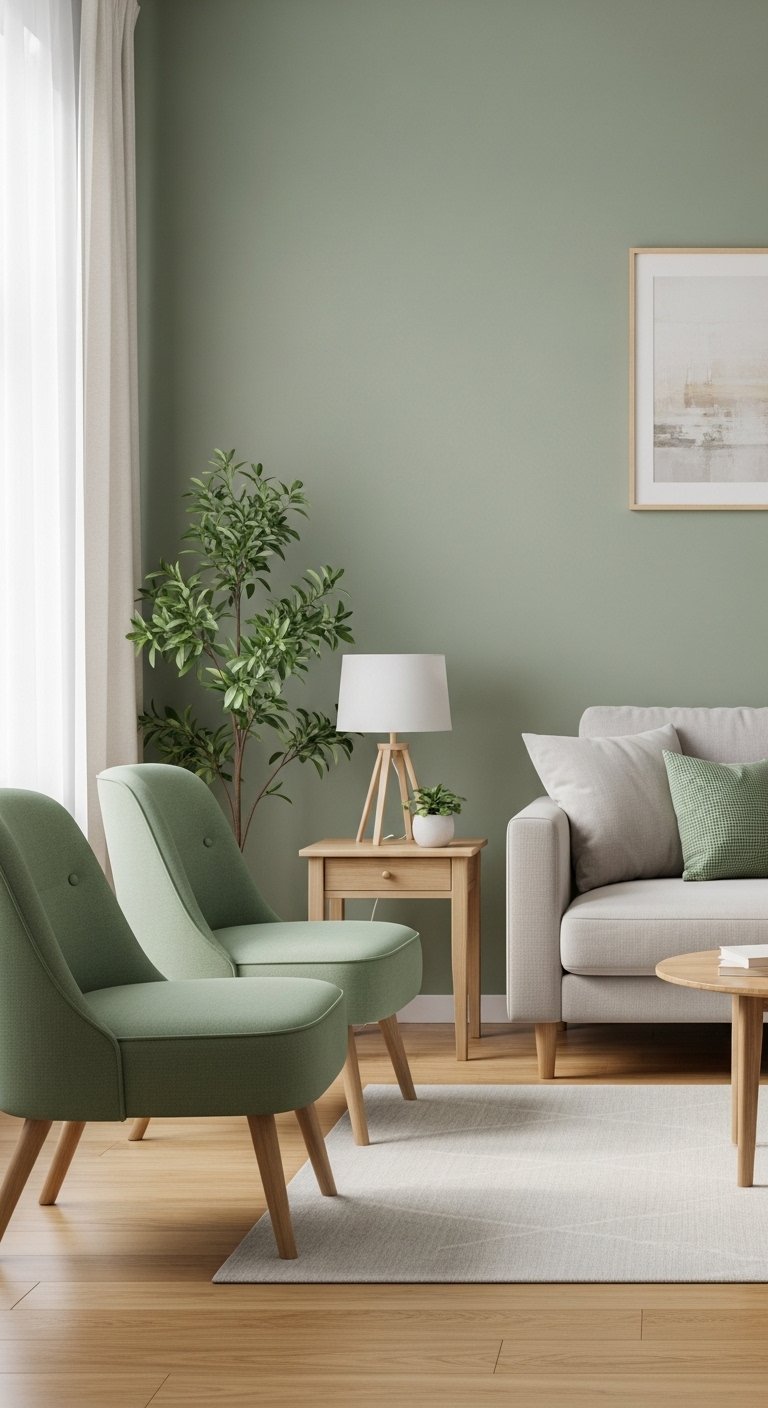
Soft green upholstered chairs can refresh your living room without changing the main furniture. Place one or two chairs in a cozy corner or near a window to create a small seating area. Choose a light green fabric with a smooth or slightly textured finish to keep the look relaxed. Pair the chairs with a small wooden or round side table to complete the setup. Add a simple throw or cushion to connect the chairs with the rest of the room. This idea works well in neutral spaces where you want to introduce color in a controlled and flexible way. It also allows you to rearrange the layout easily while keeping the overall design balanced and welcoming.
18. Green Artwork as a Visual Anchor
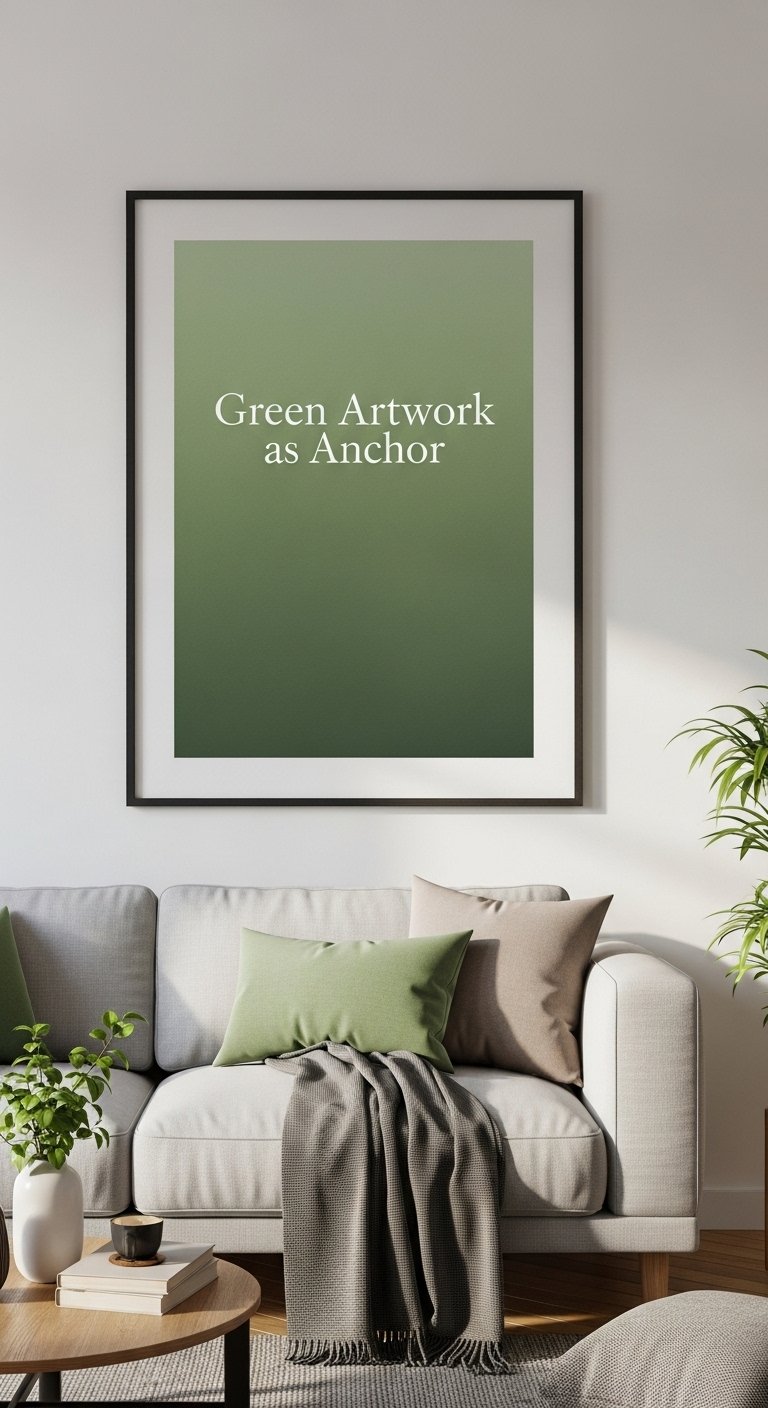
Green artwork can tie your living room together by adding color at eye level. Choose abstract prints, nature-inspired paintings, or simple patterns that include shades of green. Hang the artwork above your sofa or on a main wall to create a focal point. Use frames in wood, black, or gold depending on the overall style of your room. Keep the surrounding decor minimal so the artwork remains the center of attention. Add a few matching green accents like cushions or plants to create a connection across the space. Good lighting is important, so use wall lights or position the artwork where it can catch natural light. This idea is simple but effective, helping your room feel complete without large changes.
19. Green Patterned Wallpaper for Character
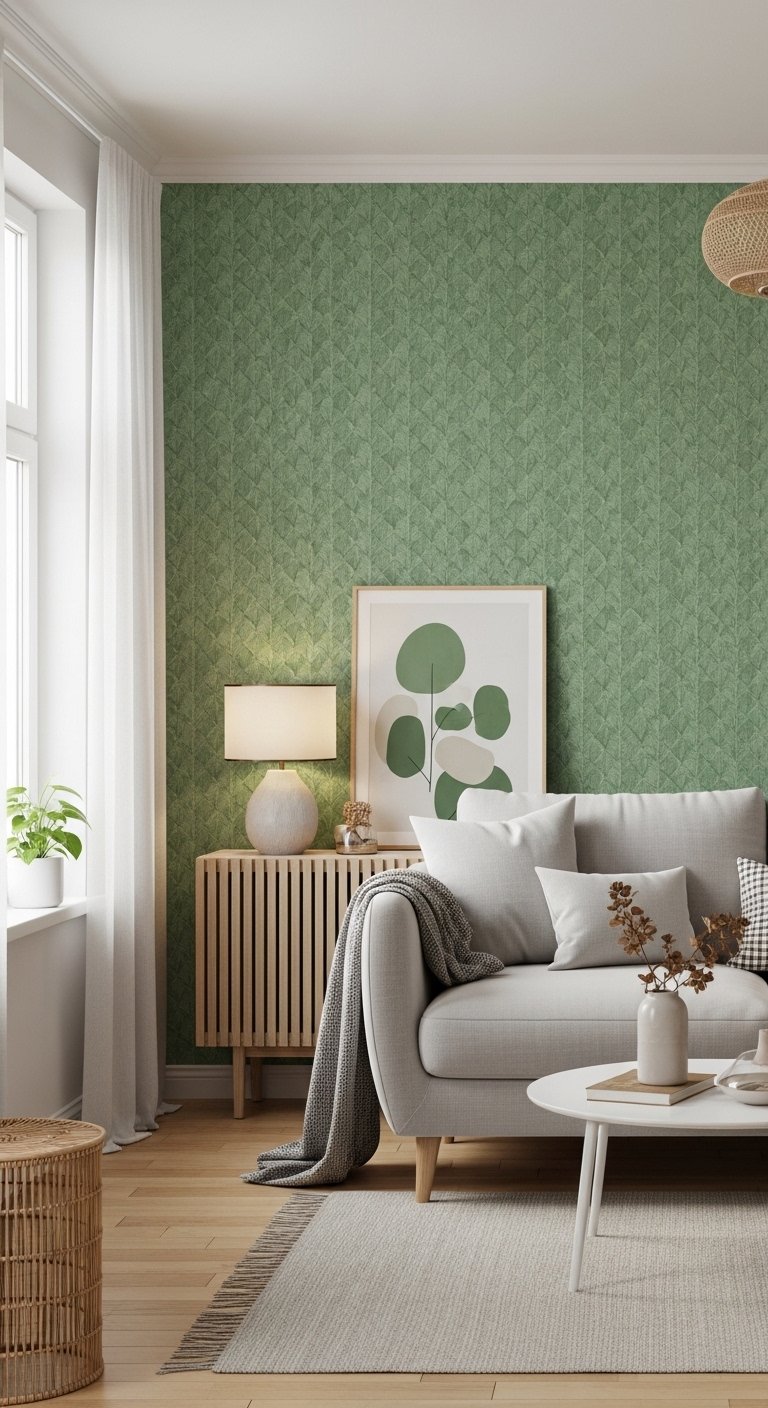
Green patterned wallpaper adds personality and depth to your living room in a way that paint alone cannot achieve. Choose a design with subtle patterns like leaves, lines, or geometric shapes to keep the look balanced. Apply it to one feature wall so it becomes a focal point without overwhelming the space. Pair it with simple furniture in neutral tones to let the pattern stand out clearly. Add textures like woven rugs or soft fabrics to complement the design. Use warm lighting to soften the overall look and make the space feel inviting. This idea works well if you want to introduce both color and pattern in a controlled way that feels stylish and unique.
20. Green and Beige Calm Minimal Blend
Green and beige together create a calm and balanced living room that feels soft and easy to live in. Use beige as the base color for walls or large furniture, then layer in green through cushions, throws, or a rug. Choose soft green shades to maintain a peaceful atmosphere. Add natural materials like wood or woven decor to enhance the warmth of the palette. Keep the layout simple with clean lines and open space to avoid clutter. Use soft lighting to maintain the relaxed mood, especially in the evening. This idea is perfect for those who want a minimal look that still feels warm and welcoming, combining simplicity with gentle color.
21. Dark Green Curtains with Light Walls for Contrast
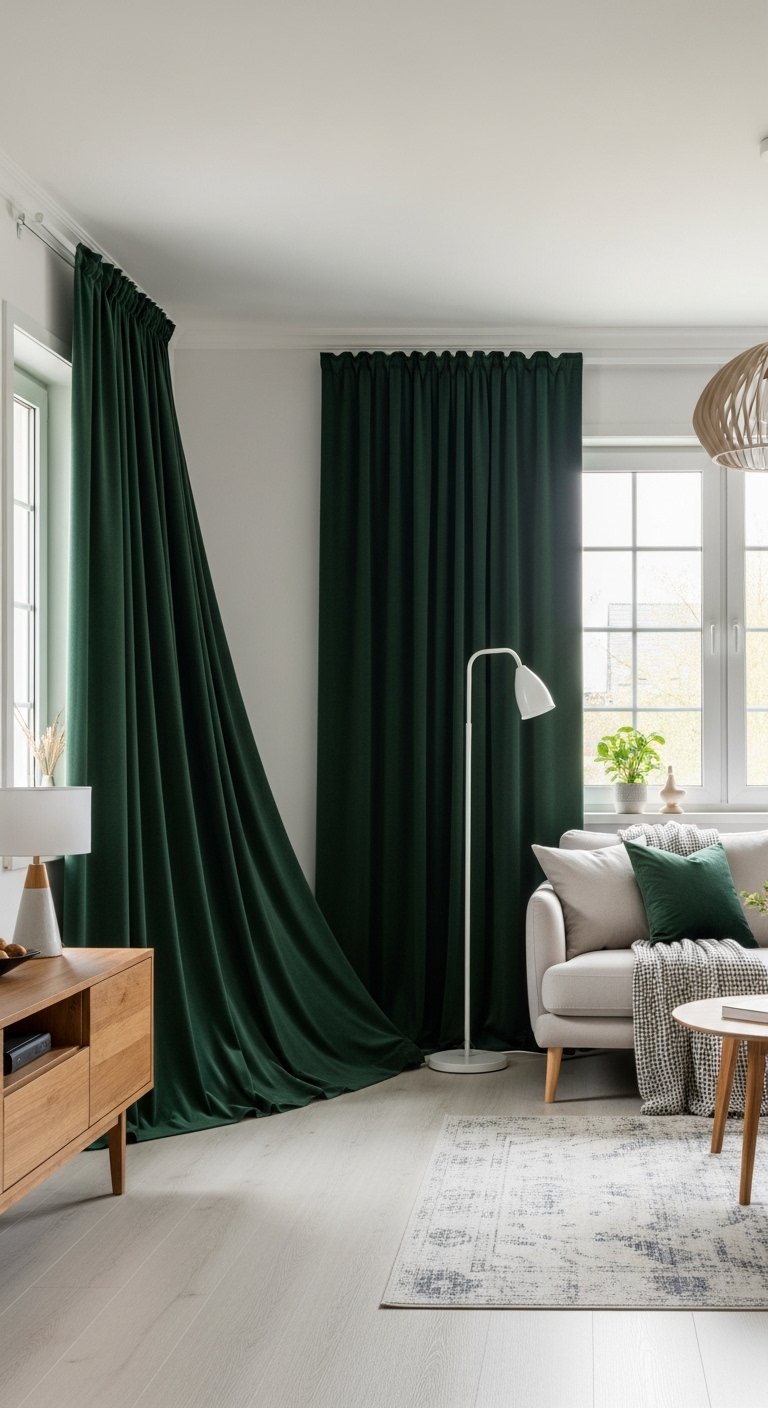
Dark green curtains create strong contrast against light walls, adding depth and elegance to your living room. Choose a rich shade like forest green and let the curtains fall fully to the floor for a clean look. Pair them with white or cream walls so the color stands out clearly. Use simple furniture in neutral tones to maintain balance. During the day, the curtains frame the natural light beautifully, while in the evening they add a cozy and enclosed feeling. Add small green accents around the room to connect the look without overdoing it. This idea works well in both modern and classic spaces, giving your room a polished and complete appearance.
22. Mixed Green Shades for a Layered Look
Using multiple shades of green in one room creates depth and keeps the space visually interesting. Combine light, medium, and dark greens through different elements like walls, furniture, textiles, and decor. Make sure each shade has its own place so the room does not feel messy. Balance the greens with neutral tones like white, beige, or wood to keep everything grounded. Use varied textures such as soft fabrics, smooth surfaces, and natural materials to enhance the layered effect. Good lighting will help each shade stand out while maintaining harmony. This idea allows you to be creative while still keeping the room cohesive, making it perfect for a personalized and well-designed living space.
Conclusion
Green offers endless ways to refresh your space, whether you prefer soft and calm tones or bold and dramatic contrasts. These 22 green living room ideas show how you can use color, texture, lighting, and layout in practical and creative ways. Each idea gives you a clear path to transform your living room without making it complicated.
Start with one idea that fits your space, then build from there. Save the ideas that inspire you most and try them step by step to create a living room that feels fresh, balanced, and uniquely yours.