23 Farmhouse Kitchen Ideas: Warm, Inviting & Stylishly Functional Decor

Introduction
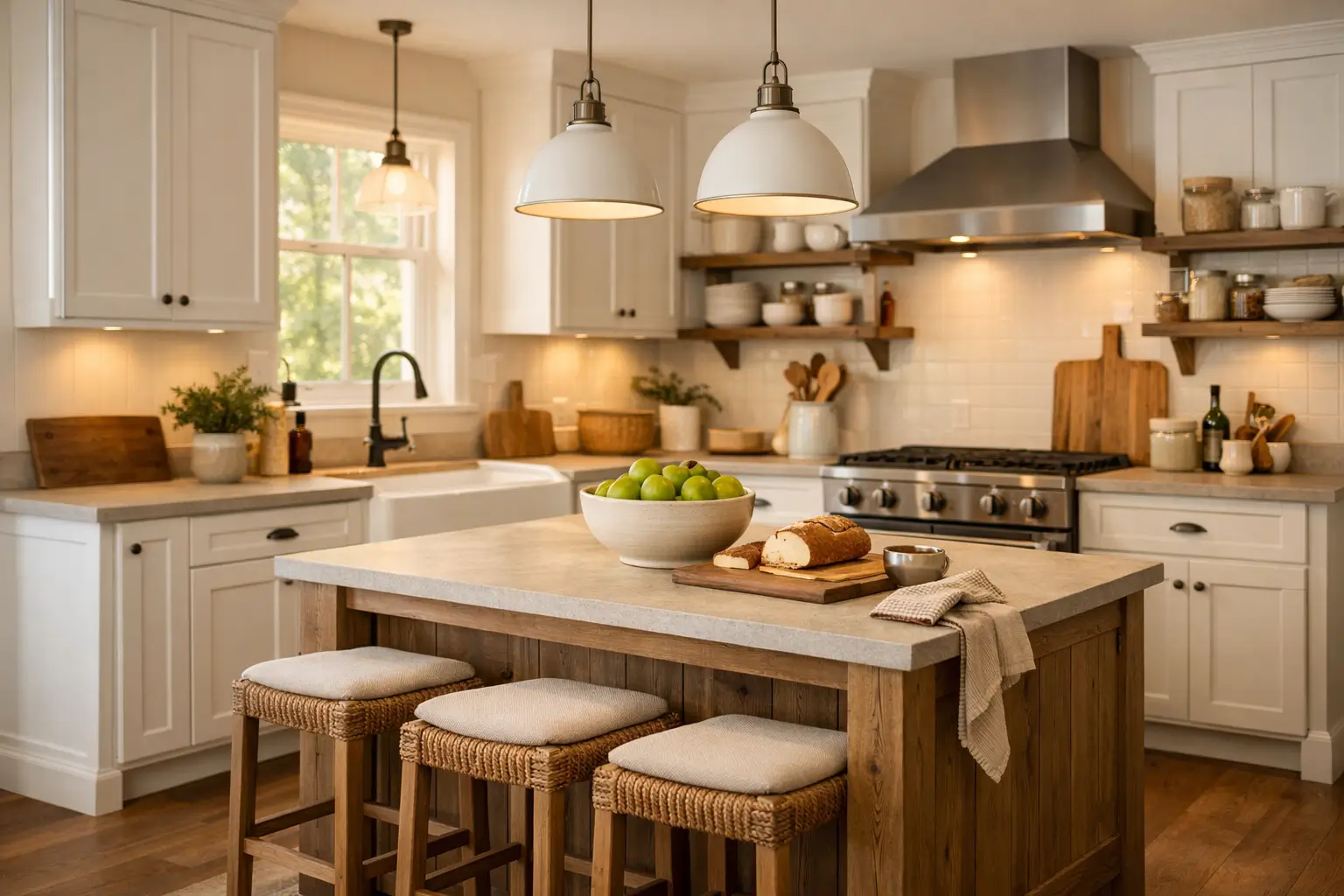
A farmhouse kitchen should feel warm, lived-in, and easy to use every day. It is not just about rustic looks. It is about creating a space where cooking feels simple, gathering feels natural, and every detail has a purpose. If your kitchen feels cold or cluttered, small design choices can completely change the mood.
In this guide, you will discover farmhouse kitchen ideas that are both beautiful and practical. Each idea focuses on real-life use while adding charm through textures, colors, lighting, and layout. These are not overused tips. Each one gives you something fresh you can actually try, whether you have a small kitchen or a large open space.
1. Mix Soft White Cabinets with Warm Wood Contrast
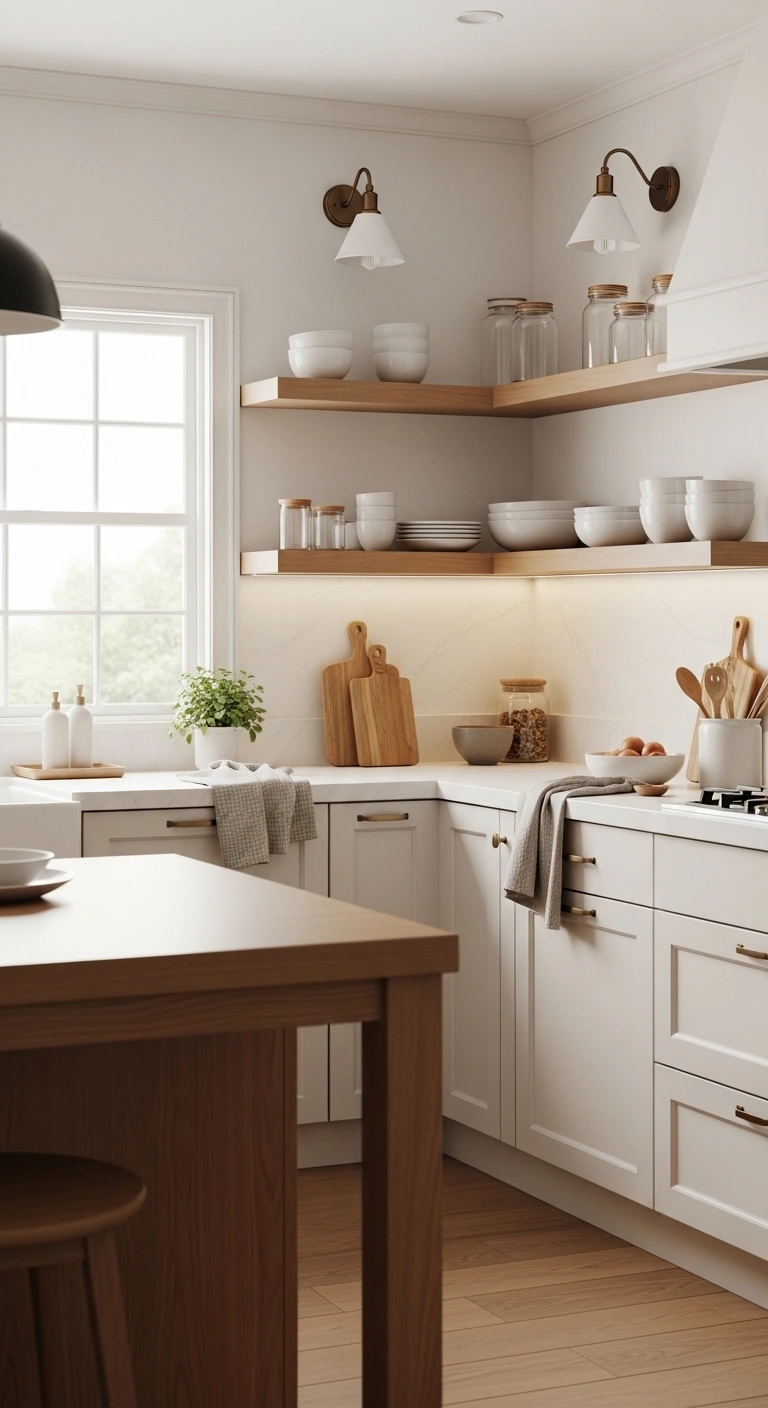
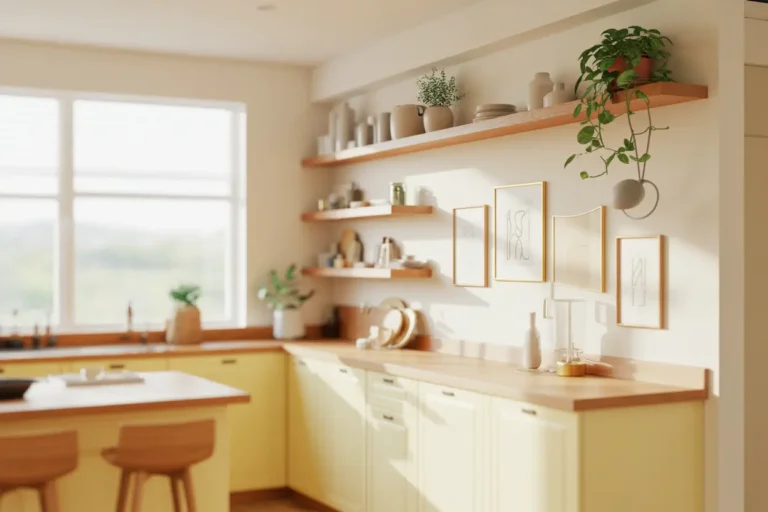
Start with a clean base using soft white cabinets, then add warmth through natural wood elements. This balance keeps your kitchen bright while avoiding a flat or sterile look. Choose creamy whites instead of stark tones to create a cozy feel, especially under natural daylight.
Pair cabinets with a butcher block countertop or floating wooden shelves. Use slightly aged wood with visible grain to bring texture into the space. For a deeper effect, add a wooden island in a slightly darker tone than your shelves. This layered contrast creates depth without overwhelming the room.
Keep hardware simple with brushed brass or matte black handles. Add woven baskets or ceramic jars on open shelves for visual interest. The mix of smooth paint and raw wood creates a farmhouse look that feels calm, welcoming, and easy to maintain.
2. Use Open Shelving with Layered Everyday Items
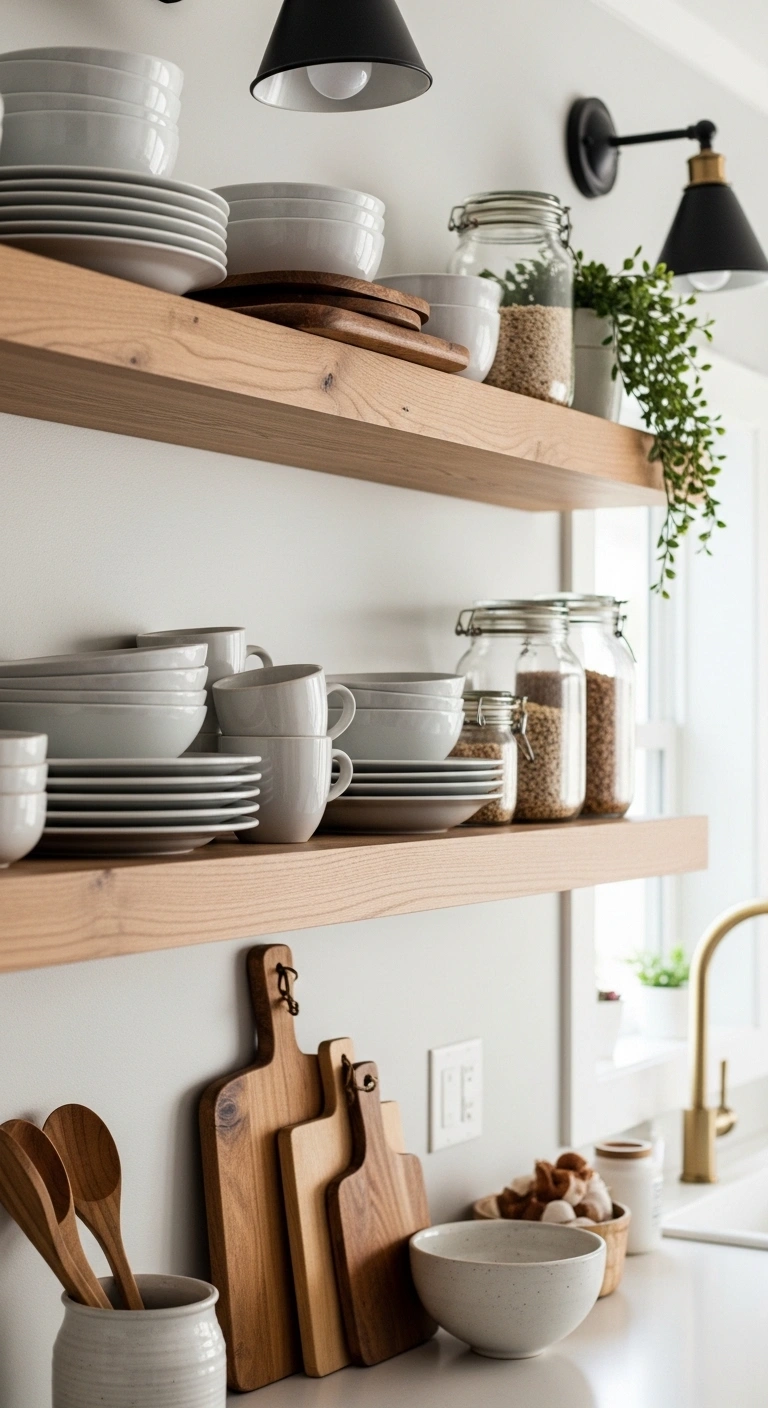
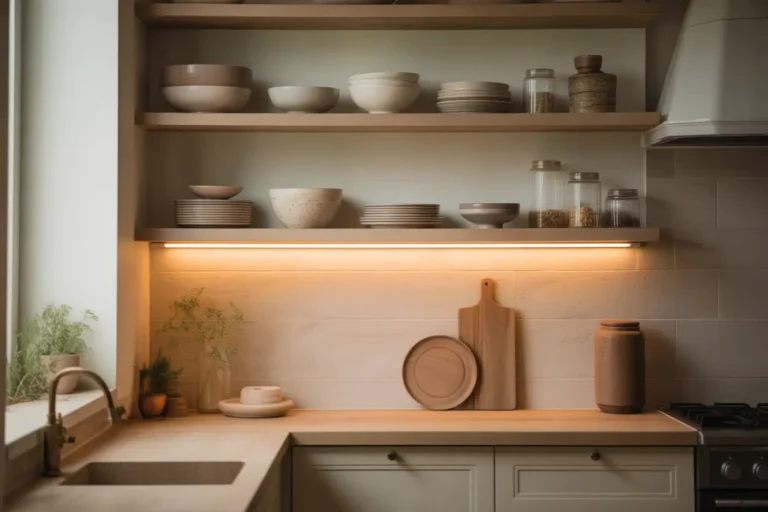
Open shelving works best when it feels natural and not staged. Instead of displaying only decor, mix daily-use items like plates, mugs, and jars. This keeps your kitchen both functional and visually rich.
Choose thick wooden shelves with a slightly rough finish. Arrange items in layers by stacking plates, leaning cutting boards, and placing small jars in front. Use neutral tones like cream, beige, and soft gray, then add one or two darker elements like a black teapot or deep brown bowls.
To avoid clutter, leave small gaps between groups. Let the wall color show through for breathing space. Add subtle greenery like a small herb pot or trailing plant. This approach turns storage into decor while keeping everything within easy reach.
3. Add a Farmhouse Sink as a Focal Point
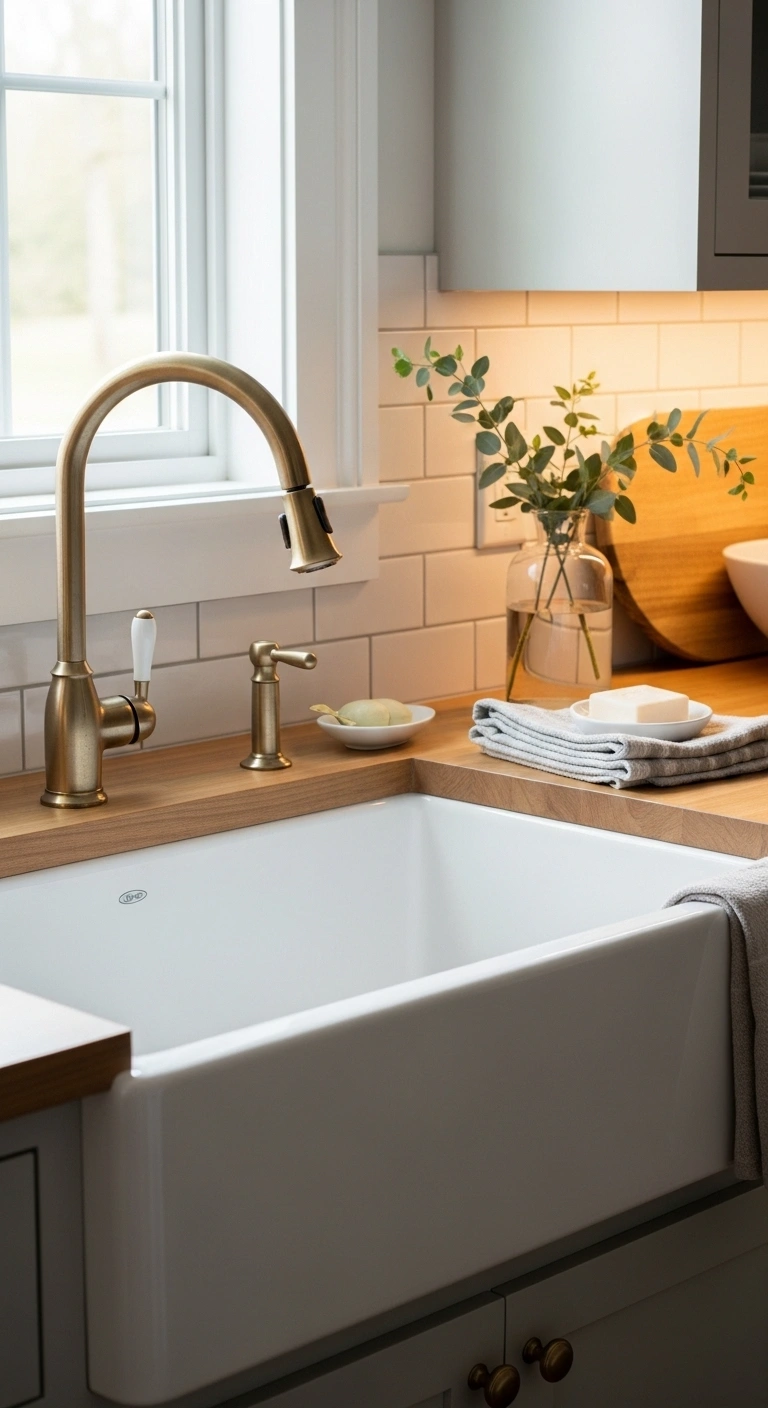
A farmhouse sink instantly anchors the kitchen with its deep and simple shape. It is not only a visual centerpiece but also highly practical for washing large pots and pans.
Choose a white apron-front sink for a classic look, or go for a stone or matte black version for a modern twist. Pair it with a tall, curved faucet in brushed brass or antique bronze. This combination adds height and elegance without feeling too polished.
Surround the sink area with subtle details like a wooden soap tray, linen towels, and a small vase with fresh stems. Use a soft backsplash, such as subway tiles with light grout, to keep the focus on the sink. The result feels grounded, functional, and effortlessly stylish.
4. Layer Lighting for Warm and Practical Ambiance
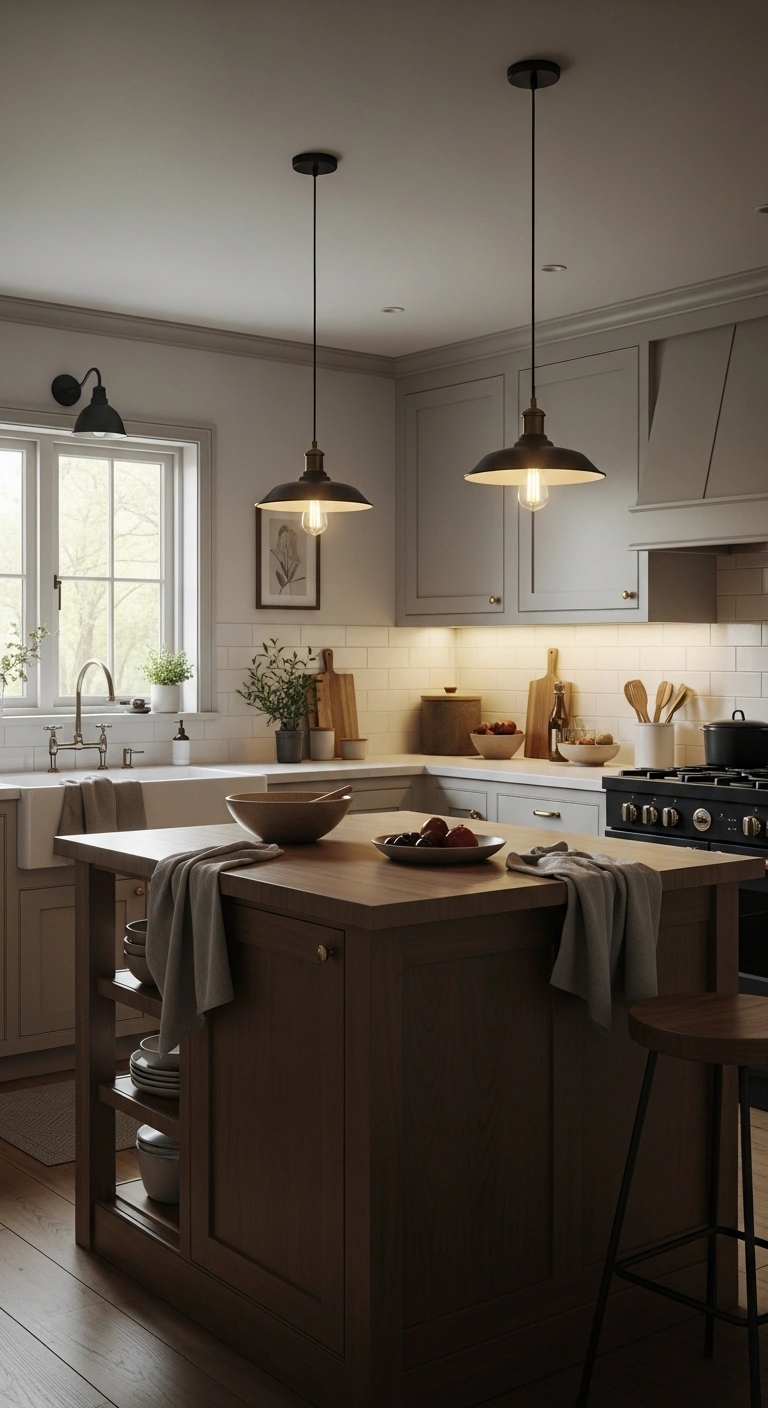
Lighting shapes the mood of your kitchen more than any other element. A farmhouse kitchen needs soft layers instead of one harsh overhead light.
Start with warm pendant lights above the island or dining area. Choose metal or glass fixtures with simple shapes. Then add under-cabinet lighting to softly highlight countertops and improve visibility while cooking.
For extra warmth, include a small table lamp or wall sconce in a corner. This creates a cozy glow during evenings. Use warm white bulbs to avoid a cold feel. The mix of lighting sources adds depth, making your kitchen feel inviting at any time of day while staying fully functional.
5. Introduce Subtle Pattern Through Textiles
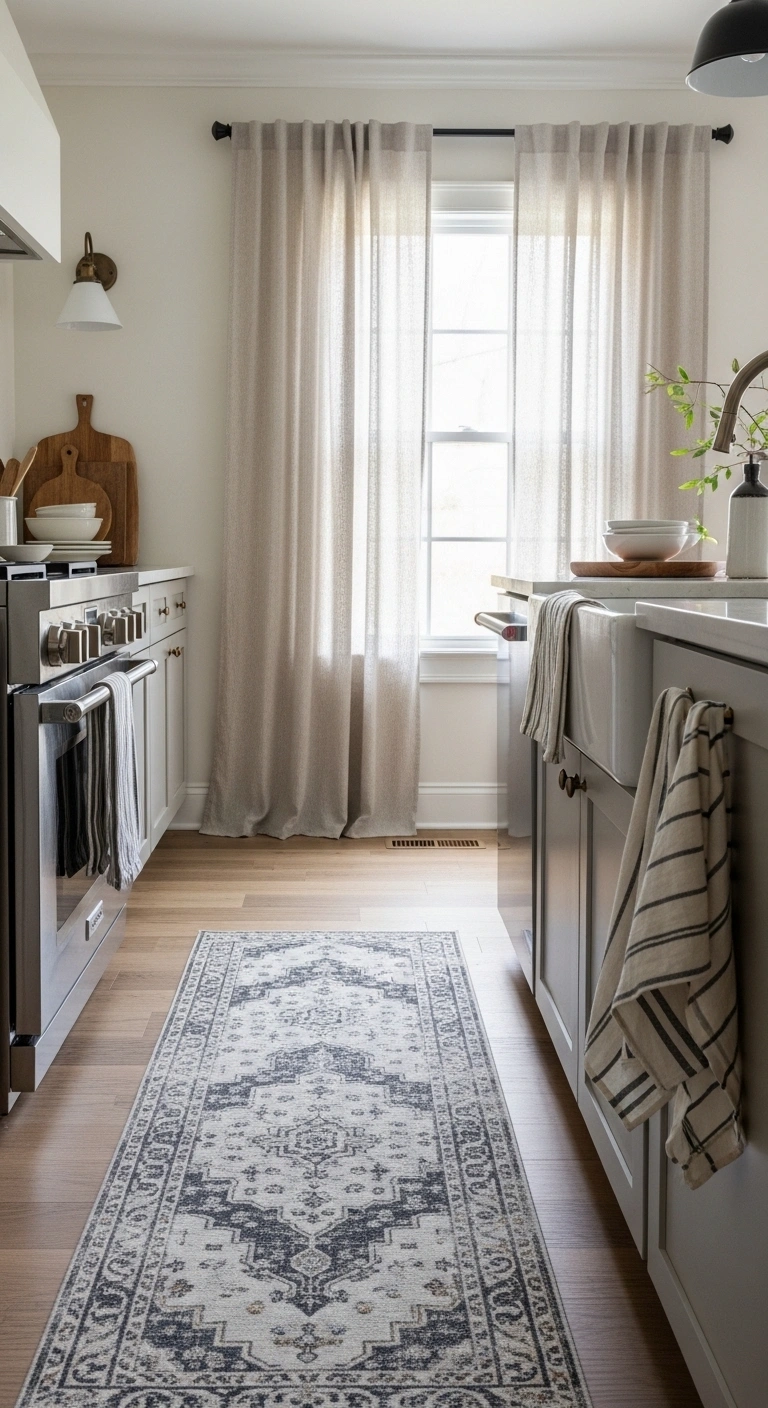
Textiles bring softness into a farmhouse kitchen, which often has many hard surfaces. Use them to add gentle patterns without overwhelming the space.
Start with a runner rug in muted tones like faded red, soft blue, or earthy beige. Look for patterns that feel slightly worn or vintage-inspired. Add linen curtains or Roman shades with light texture to filter natural light.
Use dish towels as part of your decor by hanging them on hooks or oven handles. Choose simple stripes or small checks for a classic farmhouse touch. These layers of fabric create comfort and warmth while adding quiet visual interest.
6. Combine Vintage Pieces with Modern Function
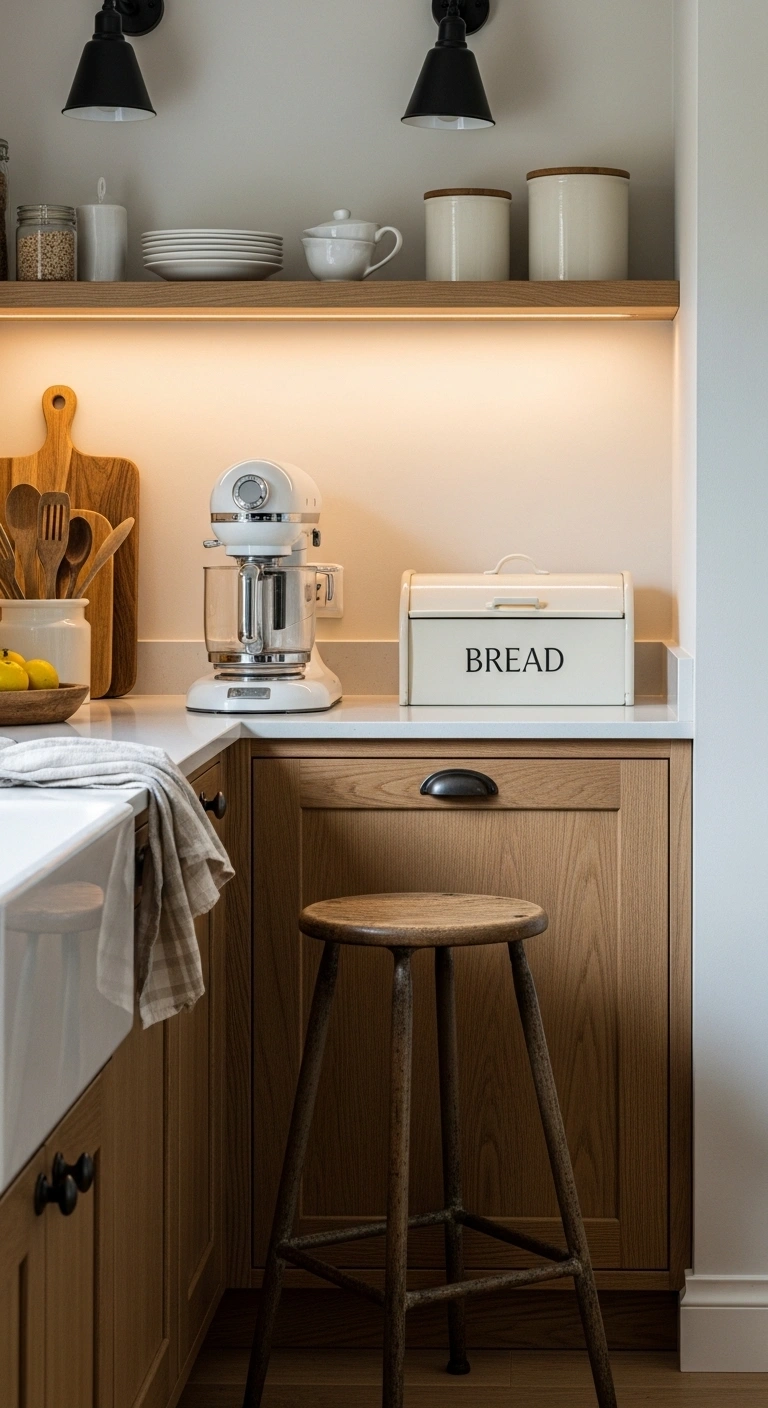
A farmhouse kitchen feels authentic when it blends old and new elements. Instead of copying a full vintage style, mix in a few aged pieces with modern essentials.
Use a vintage wooden stool, an antique scale, or an old bread box as accents. Place them alongside sleek appliances or clean countertops. This contrast makes the space feel collected over time rather than designed all at once.
Keep the balance simple. Let vintage items stand out by surrounding them with neutral tones. This approach creates character while keeping your kitchen efficient and easy to use every day.
7. Create a Cozy Corner Dining Spot
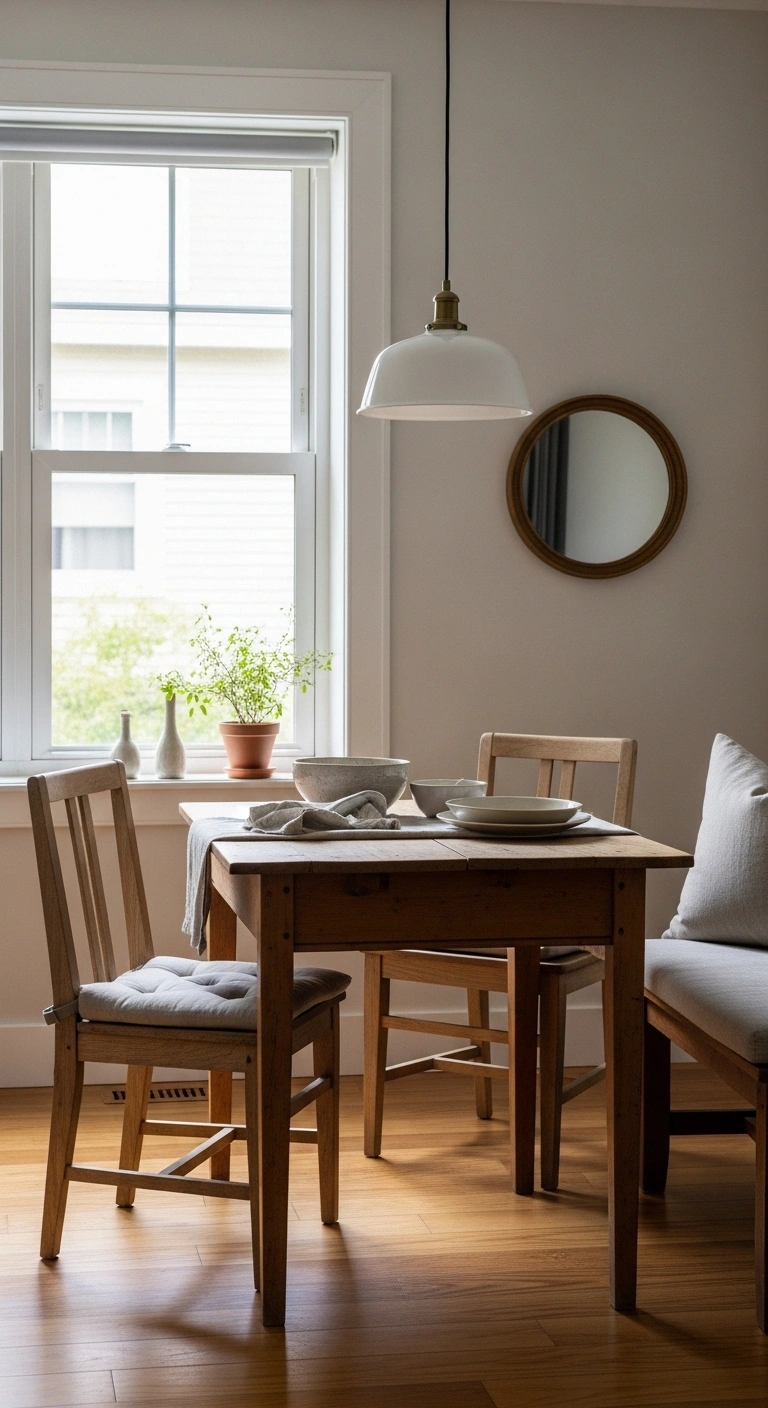
A small dining area inside the kitchen adds warmth and function. Even a compact corner can become a welcoming place for meals or coffee breaks.
Use a wooden table with a slightly worn finish and pair it with simple chairs or a bench. Add soft cushions in neutral fabrics to make seating comfortable. Position the table near a window if possible to bring in natural light.
Place a small pendant light above the table to define the space. Add a simple centerpiece like a ceramic bowl or fresh flowers. This cozy setup encourages slow moments and makes your kitchen feel more personal and lived-in.
8. Use Neutral Color Layers Instead of One Tone
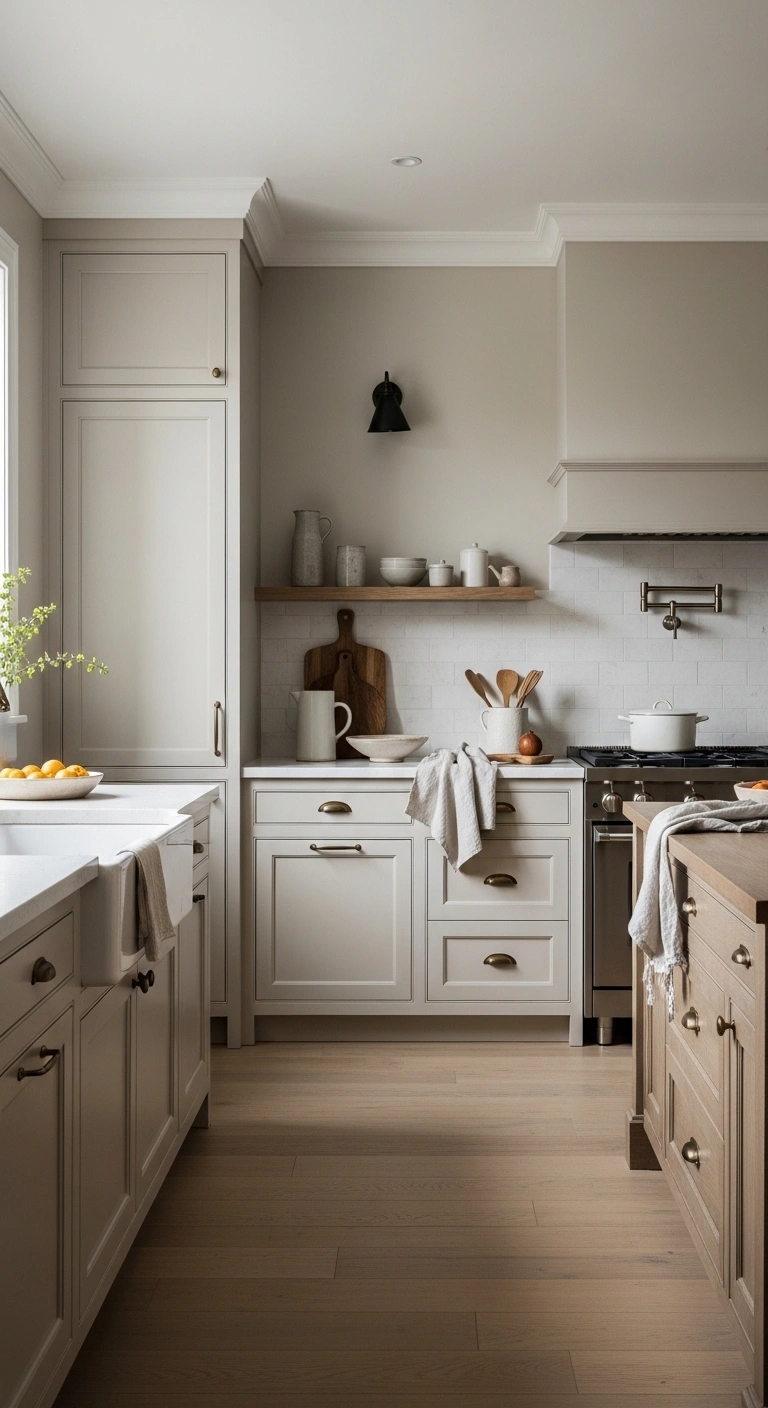
A farmhouse kitchen looks richer when you layer similar tones instead of sticking to one flat color. This creates depth without making the space feel busy.
Start with a base color like soft white or light beige. Then add slightly darker tones through cabinets, walls, or decor. Use warm grays, muted greens, or sandy tones to build variation.
Incorporate texture through materials like wood, stone, and linen. Even small differences in shade and finish can make a big impact. This layered approach keeps the kitchen calm while adding visual interest that feels natural and inviting.
9. Add Functional Decor with Wooden Accessories
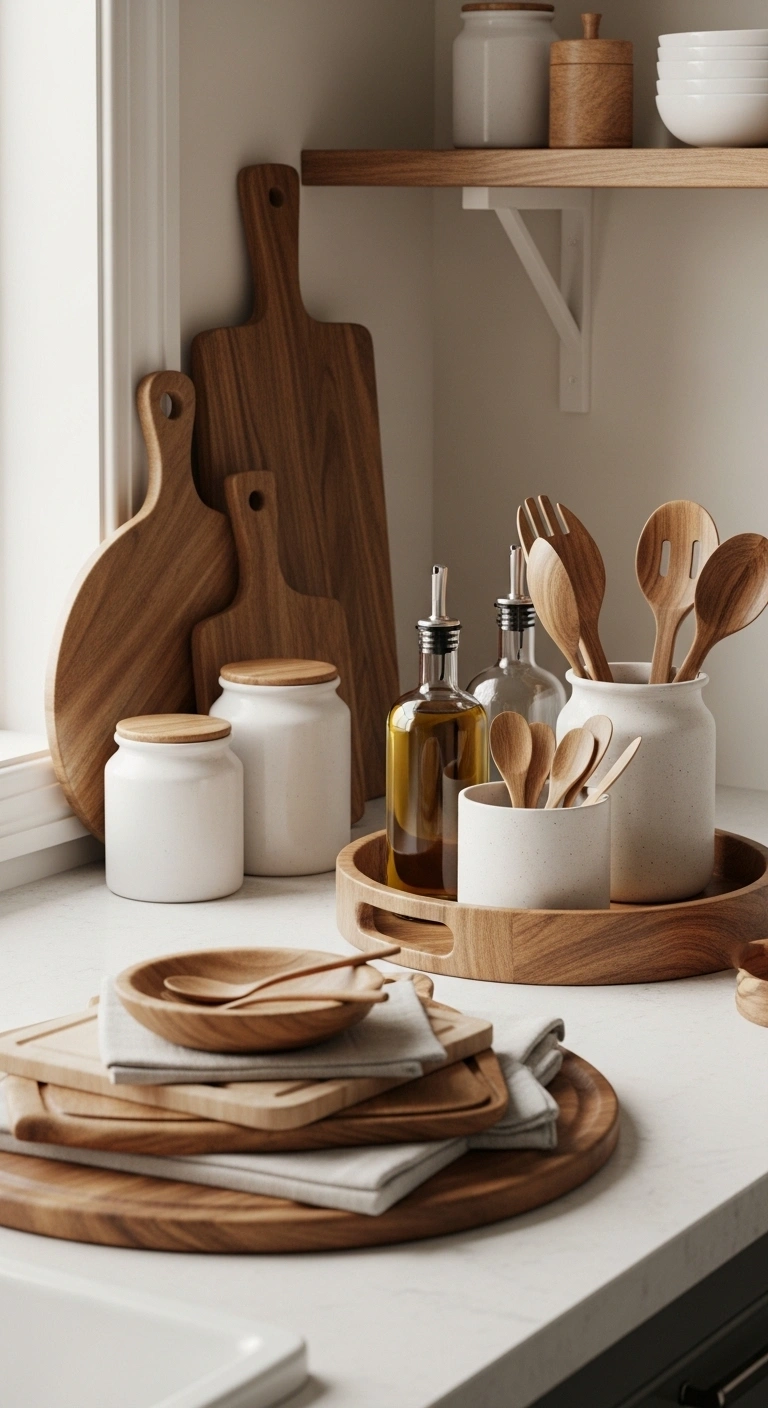
Decor in a farmhouse kitchen should always serve a purpose. Wooden accessories are perfect because they add warmth while being useful.
Display cutting boards in different shapes by leaning them against the backsplash. Use wooden trays to organize oils, spices, or utensils on the counter. Choose items with visible grain and slightly imperfect edges for an authentic feel.
Keep the arrangement simple so it does not look cluttered. Group items in odd numbers and vary their heights. This creates a balanced display that feels effortless. Functional decor like this keeps your kitchen organized while adding a natural farmhouse charm.
10. Highlight Walls with Simple Shiplap Texture
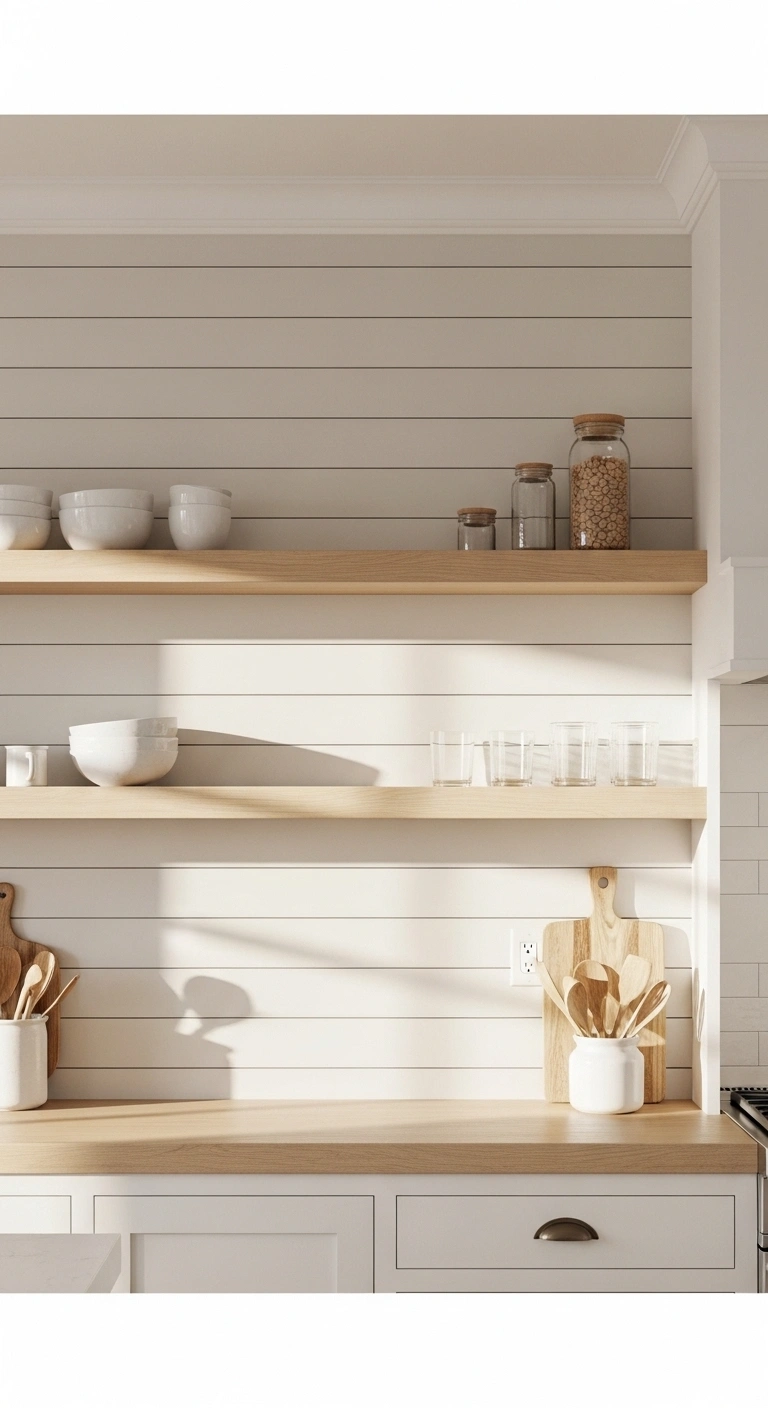
Shiplap walls add subtle texture without needing bold colors or patterns. They create a clean farmhouse look that works in both small and large kitchens.
Use horizontal panels painted in soft white or light gray to keep the space bright. For a more unique approach, try vertical shiplap to add height to the room. Keep the finish slightly matte to avoid a glossy feel.
Pair the textured walls with simple decor like framed prints, wooden hooks, or open shelves. This allows the wall itself to become part of the design. Shiplap adds depth and character while keeping the overall look calm and cohesive.
11. Use Glass Cabinet Doors to Lighten the Space
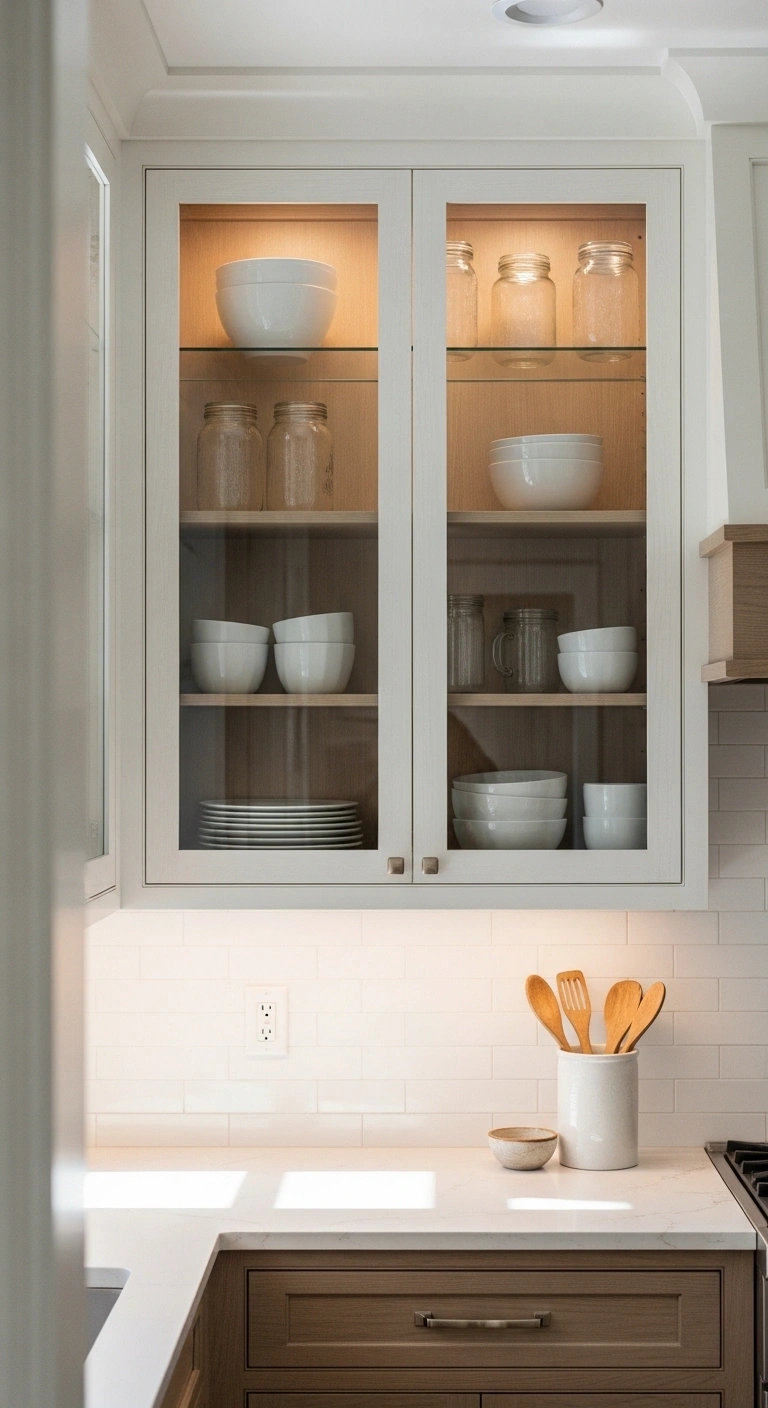
Glass cabinet doors help break the heaviness of solid cabinetry and make your kitchen feel more open. They work especially well in smaller spaces where too many closed cabinets can feel bulky. Choose clear or slightly frosted glass depending on how much you want to reveal.
Style the inside carefully by placing neatly stacked dishes, neutral bowls, or glass jars. Keep colors soft and consistent to avoid a cluttered look. Add a small interior light inside the cabinet for a gentle glow at night. This creates depth and makes your kitchen feel brighter without adding extra decor.
12. Bring in Aged Metal Accents for Subtle Character
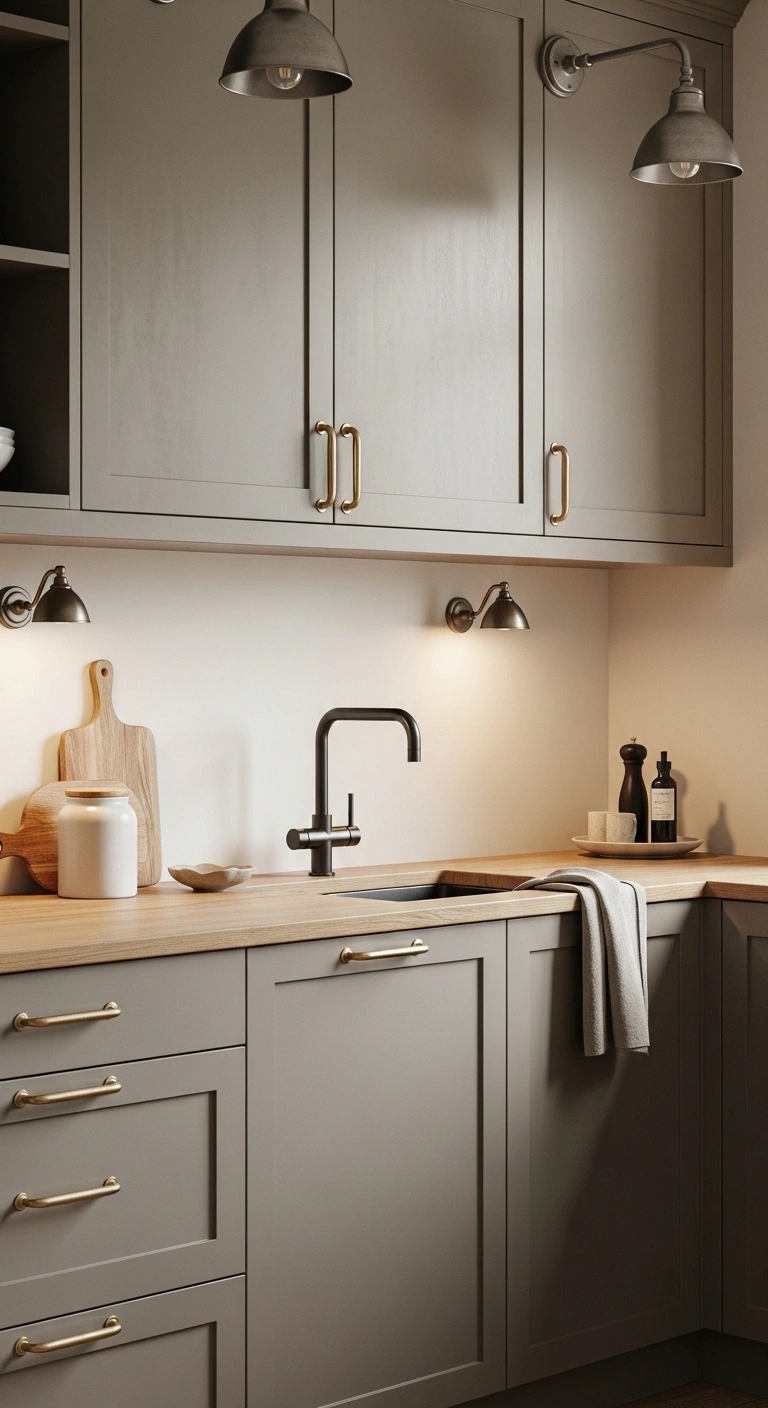
Metal accents can add depth without overpowering the farmhouse look. Instead of shiny finishes, choose aged or brushed metals that feel soft and slightly worn. This keeps the kitchen grounded and warm.
Use these finishes on cabinet handles, faucets, or light fixtures. Mix tones carefully, such as pairing brushed brass with matte black, to create contrast without chaos. Keep the rest of the palette neutral so the metal details stand out naturally. These small touches add quiet character and make the space feel thoughtfully designed.
13. Create a Coffee Station with Personality
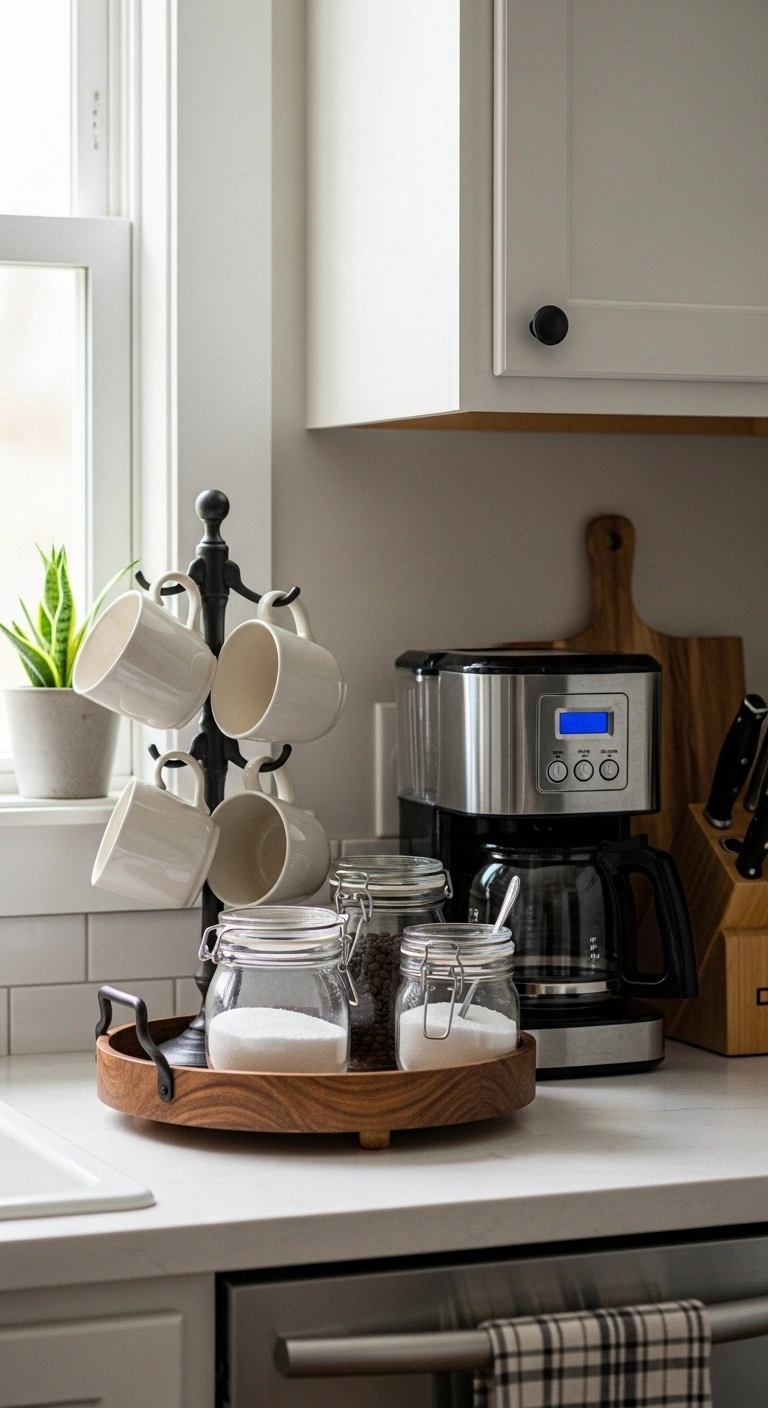
A dedicated coffee spot adds both function and charm to your kitchen. It keeps your routine organized while creating a cozy corner you can enjoy daily.
Use a small section of the counter or a side cabinet. Add a wooden tray to hold your coffee maker, mugs, and jars of beans or sugar. Choose ceramic or glass containers for a clean, farmhouse feel. Hang a few hooks above to display favorite mugs.
Add a soft light source nearby to create a warm mood in the morning. This small setup turns a daily habit into a comforting experience while keeping your kitchen tidy.
14. Use Soft Green Accents for a Natural Feel
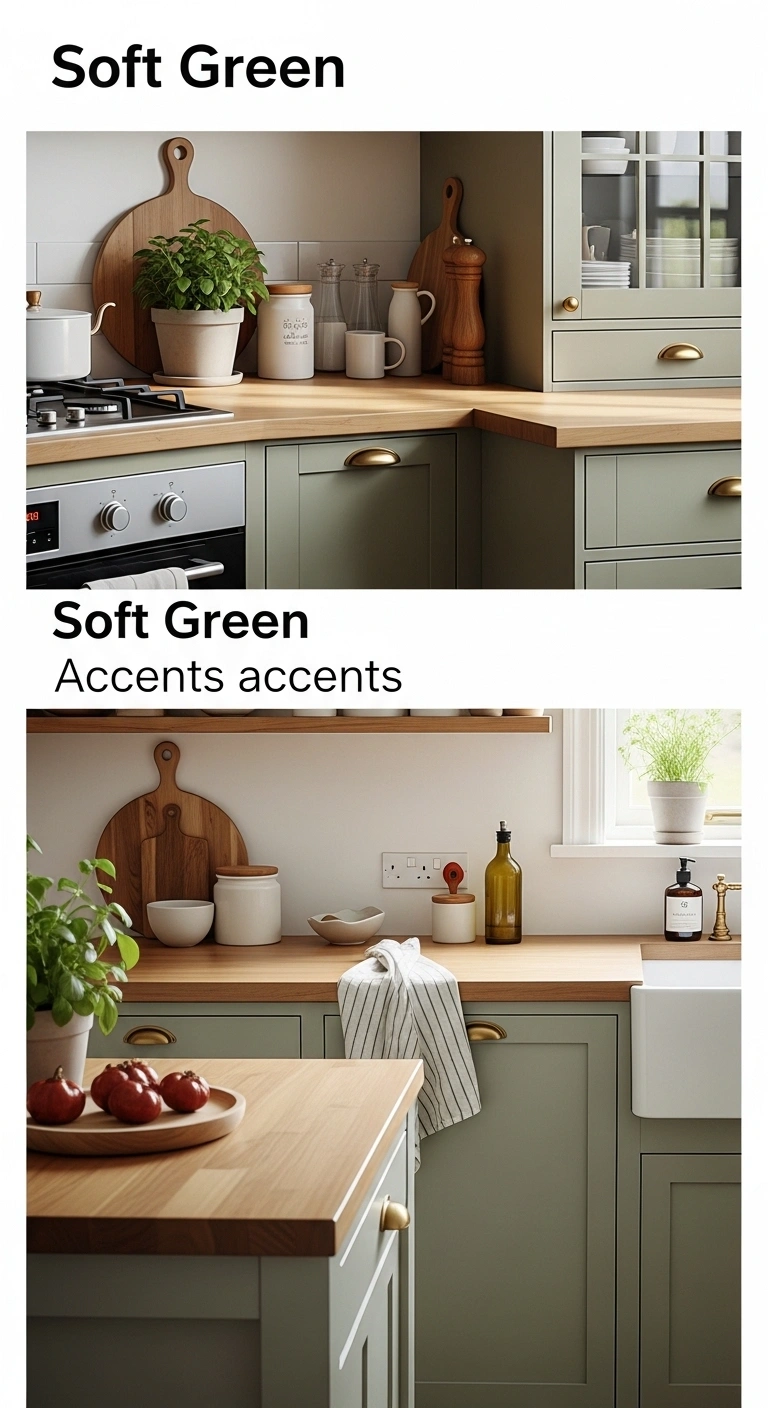
Soft green tones bring a calm, fresh feeling into a farmhouse kitchen. They connect the space to nature without being too bold or overpowering.
Introduce green through painted cabinets, a backsplash, or smaller accents like vases and dishware. Choose muted shades like sage or olive instead of bright greens. Pair them with wood and white surfaces to keep the look balanced.
Add real plants or herbs to enhance the natural vibe. Even a small pot on the windowsill can make a difference. These green touches make the kitchen feel alive and peaceful.
15. Install a Sliding Barn Door for Style and Space
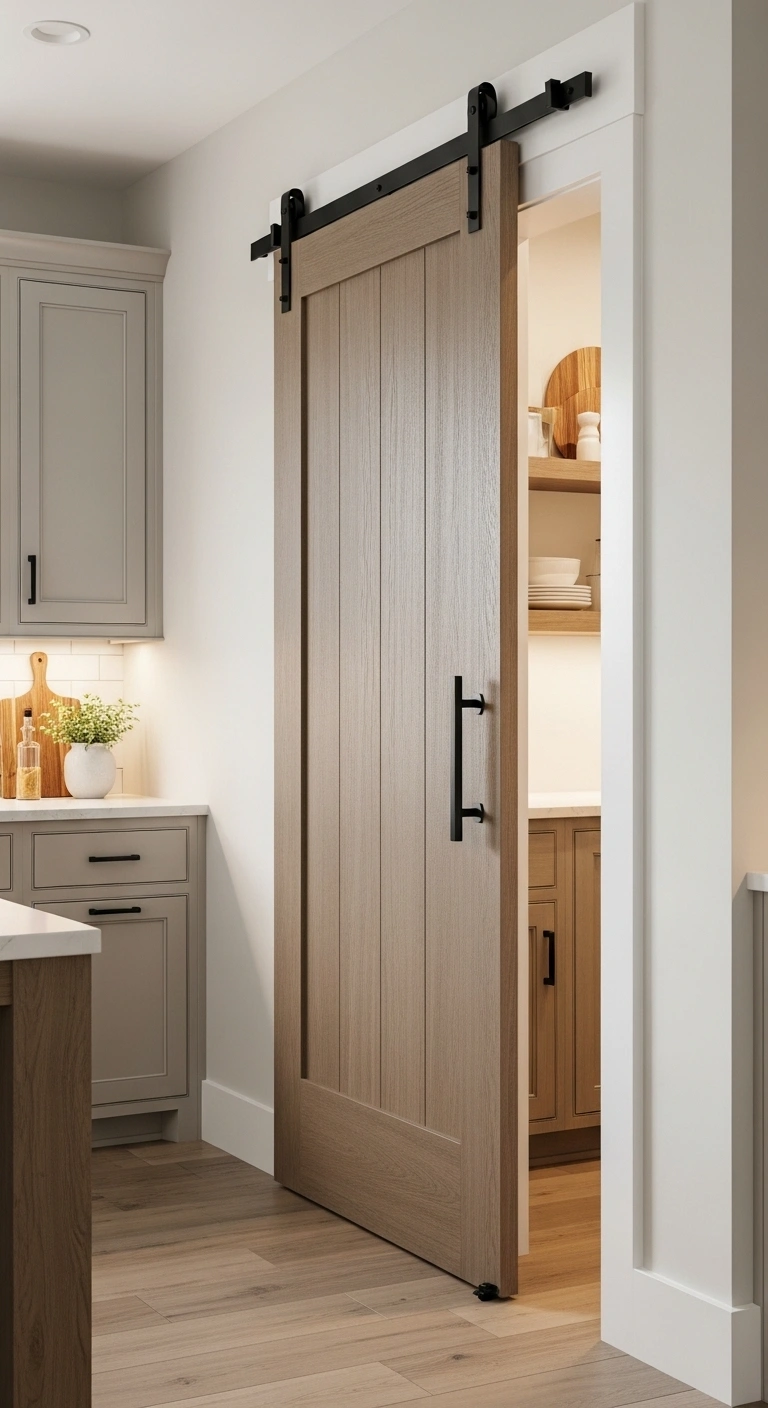
A sliding barn door adds strong farmhouse character while saving space. It works well for pantries, utility areas, or kitchen entrances.
Choose a wood finish that complements your cabinets or flooring. A slightly distressed look adds texture and authenticity. Use simple black hardware for contrast and clean lines.
Make sure the door slides smoothly and fits the scale of your space. This feature not only looks beautiful but also improves flow by removing the need for a swinging door. It becomes both a design highlight and a practical solution.
16. Layer Countertops with Stone and Wood Mix
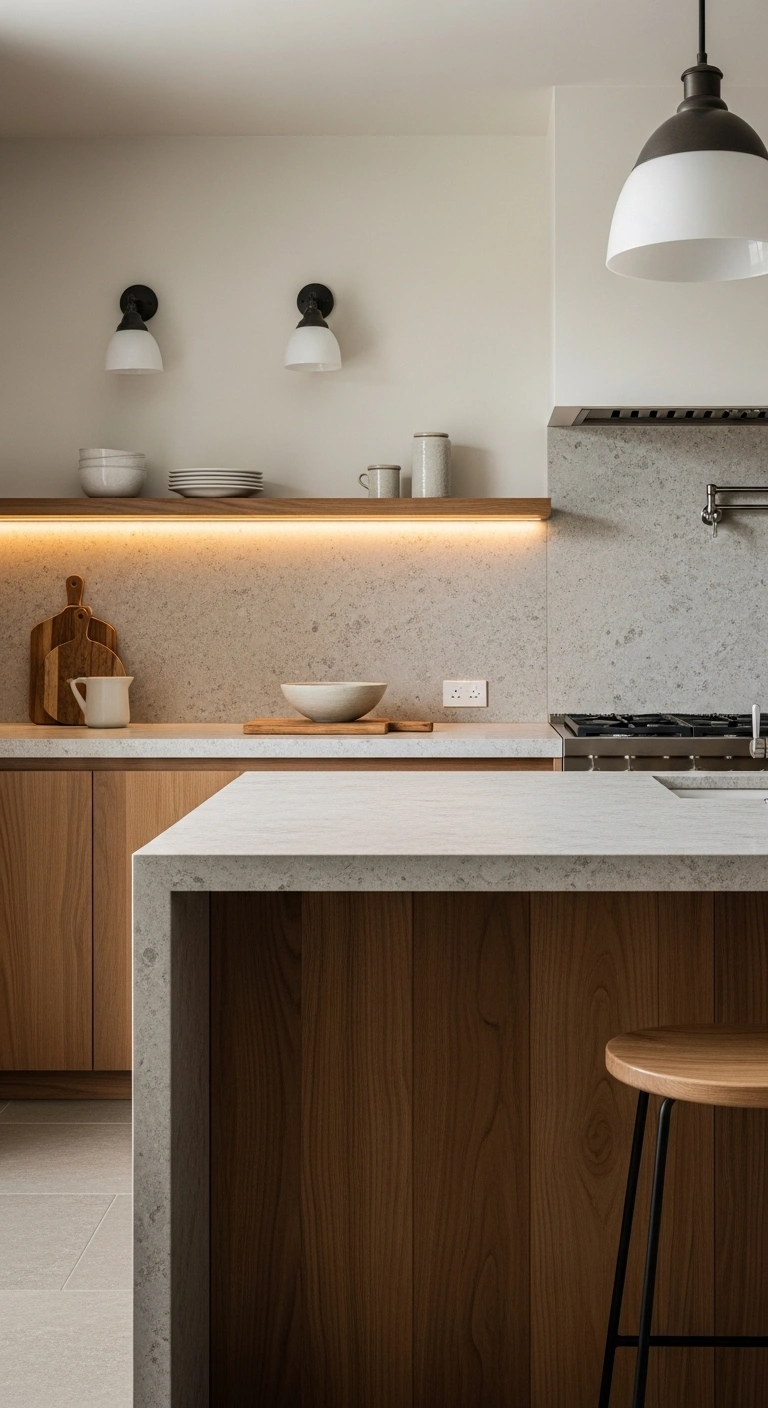
Using more than one countertop material adds depth and interest to your kitchen. A mix of stone and wood creates a balance between durability and warmth.
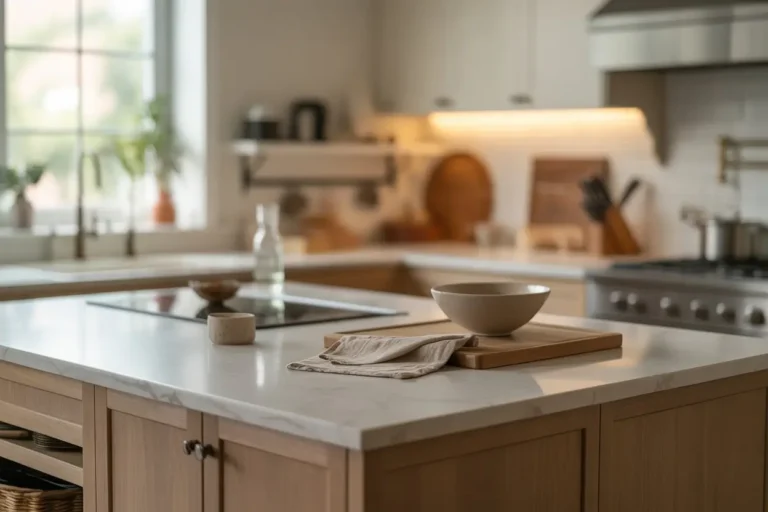
Use stone like quartz or marble for main work areas to handle daily use. Then add a wooden section on the island or a smaller prep space. This contrast helps define different zones in the kitchen.
Keep the tones cohesive so the materials feel connected. This layered approach makes your kitchen more dynamic while staying functional and easy to maintain.
17. Add a Peg Rail for Flexible Storage
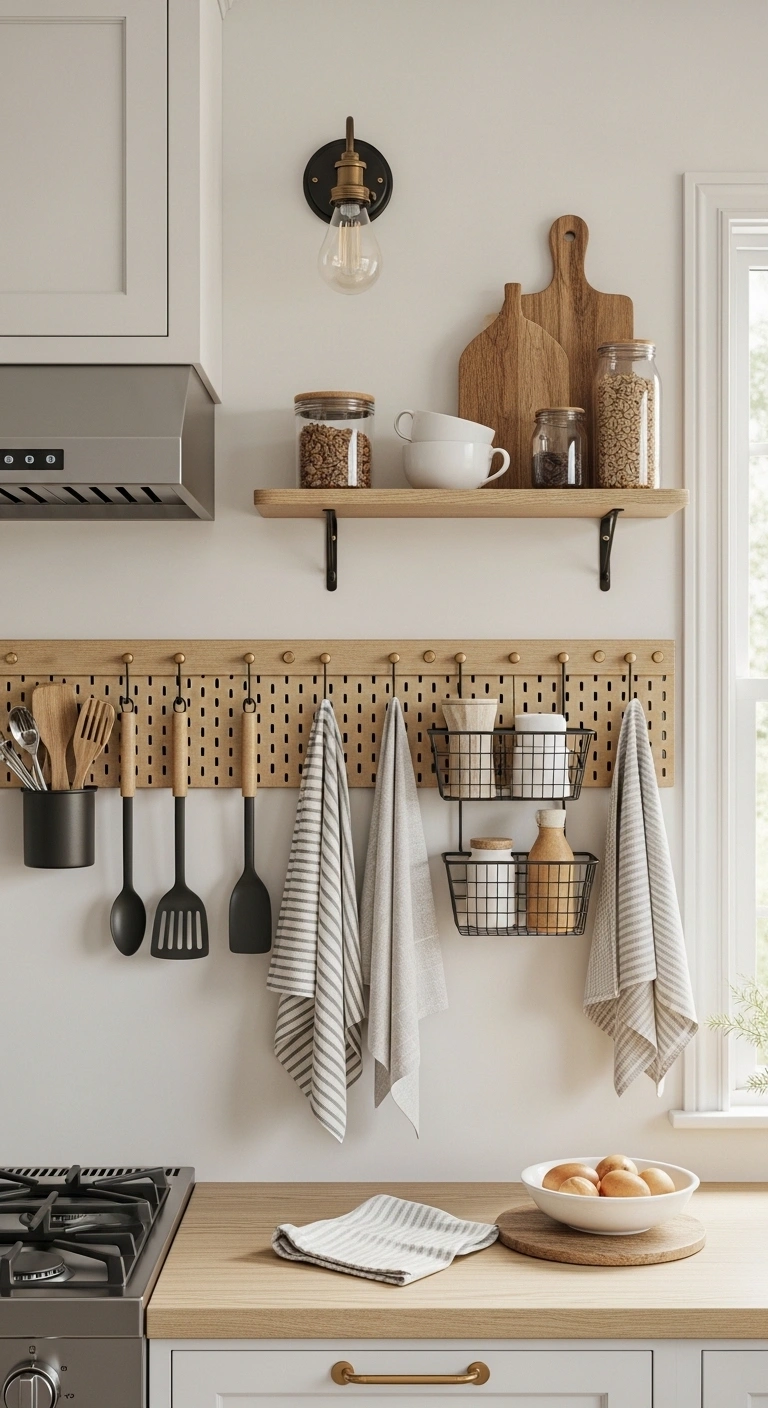
A peg rail is a simple feature that adds both charm and usefulness. It gives you a flexible way to hang items without taking up counter space.
Install it along an empty wall or under open shelves. Use it to hang utensils, cutting boards, towels, or small baskets. Choose wood with a natural finish to keep the look soft and cohesive.
Change what you hang based on your needs. This makes your kitchen feel more adaptable and personal. It is a small detail that brings both style and everyday convenience.
18. Use Large Statement Lighting for the Island
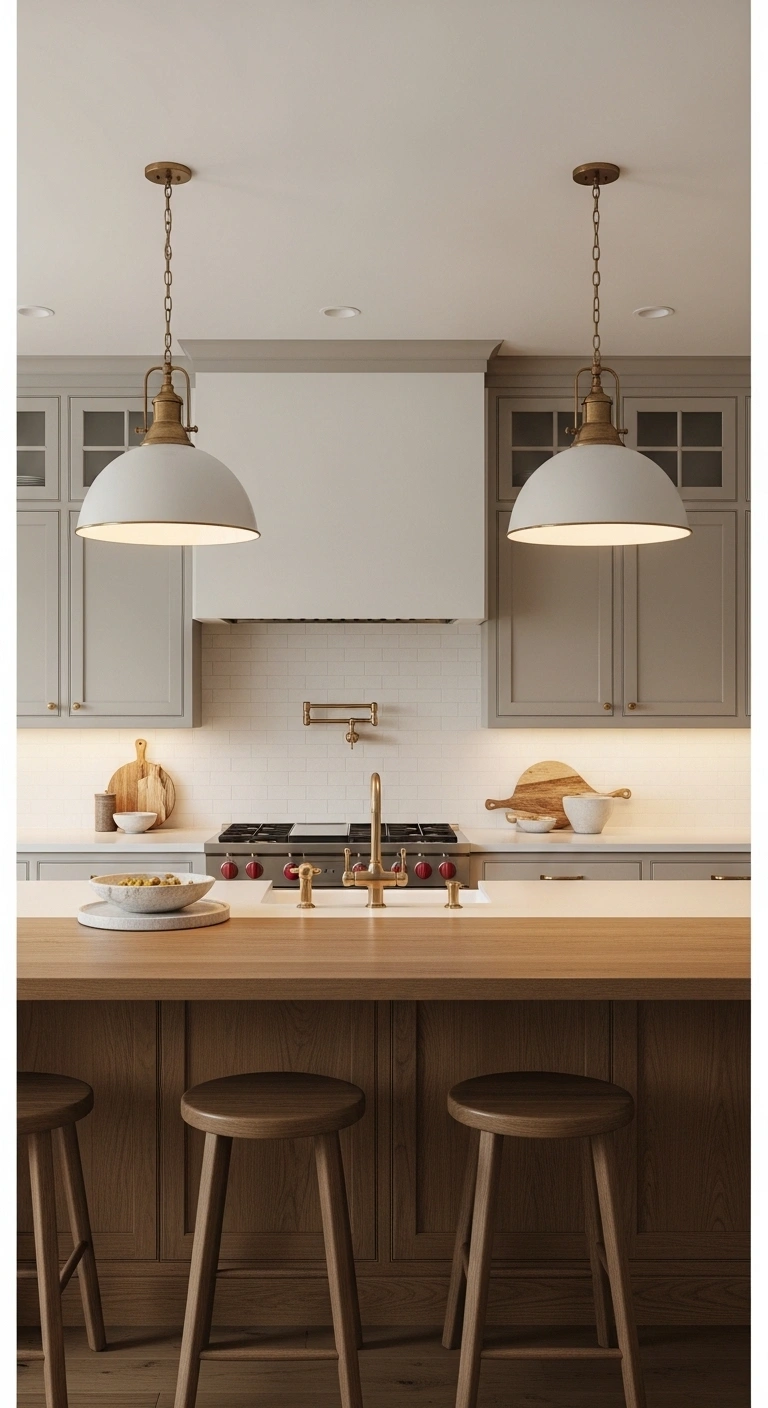
A bold light fixture above the island can anchor the entire kitchen. It draws attention while also improving task lighting.
Choose oversized pendants or a linear fixture with simple lines. Materials like metal or glass work well, especially in muted finishes. Keep the shape clean so it does not feel too heavy.
Hang the light at the right height to balance visibility and style. This feature creates a focal point that ties the whole space together while keeping it practical for daily use.
19. Add Texture with Brick or Stone Backsplash
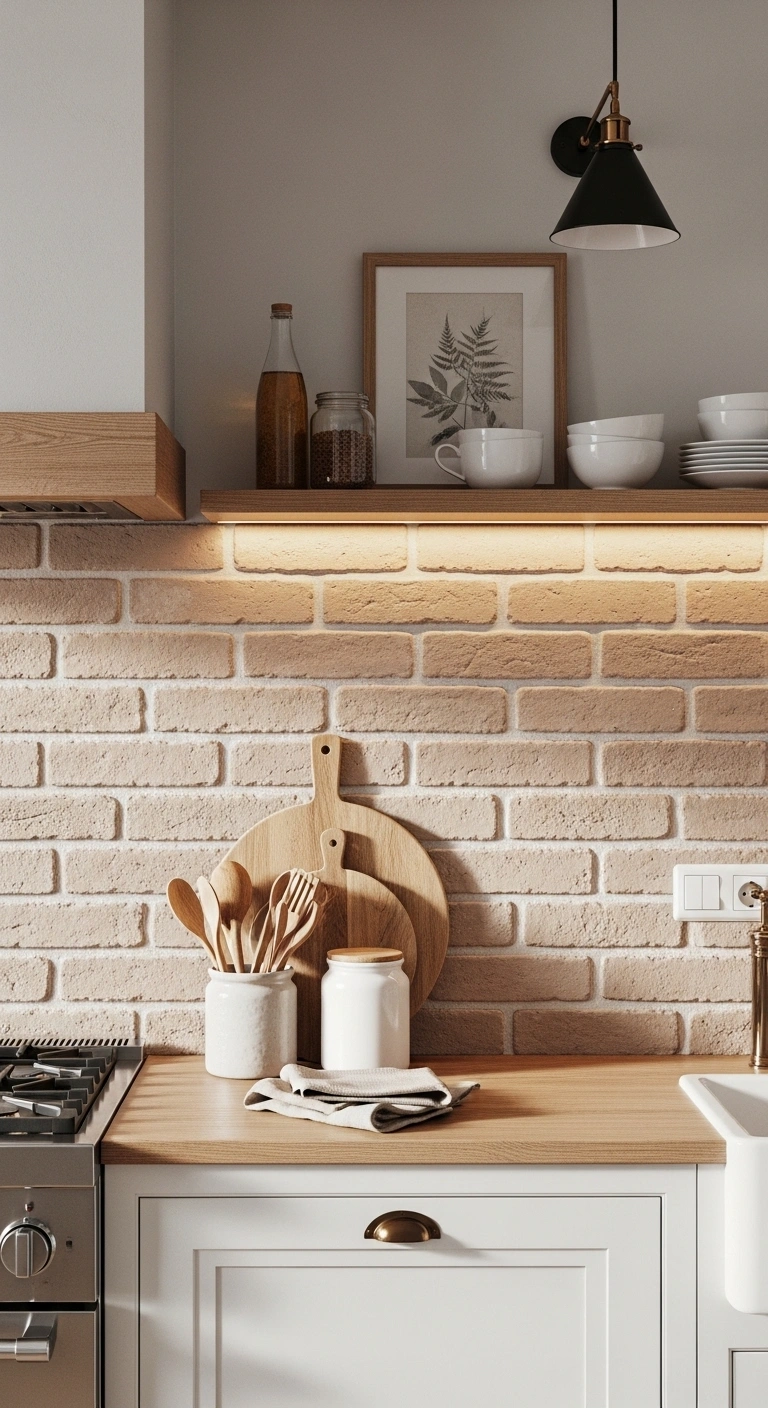
A textured backsplash adds depth and warmth without relying on bold colors. Brick or stone works especially well in farmhouse kitchens.
Use light-colored brick for a soft and airy feel, or go with slightly darker stone for more contrast. Keep the finish matte to maintain a natural look.
Balance the texture with simple cabinets and minimal decor nearby. This allows the backsplash to stand out without overwhelming the space. It becomes a subtle but powerful design feature.
20. Keep Countertops Clear with Smart Storage
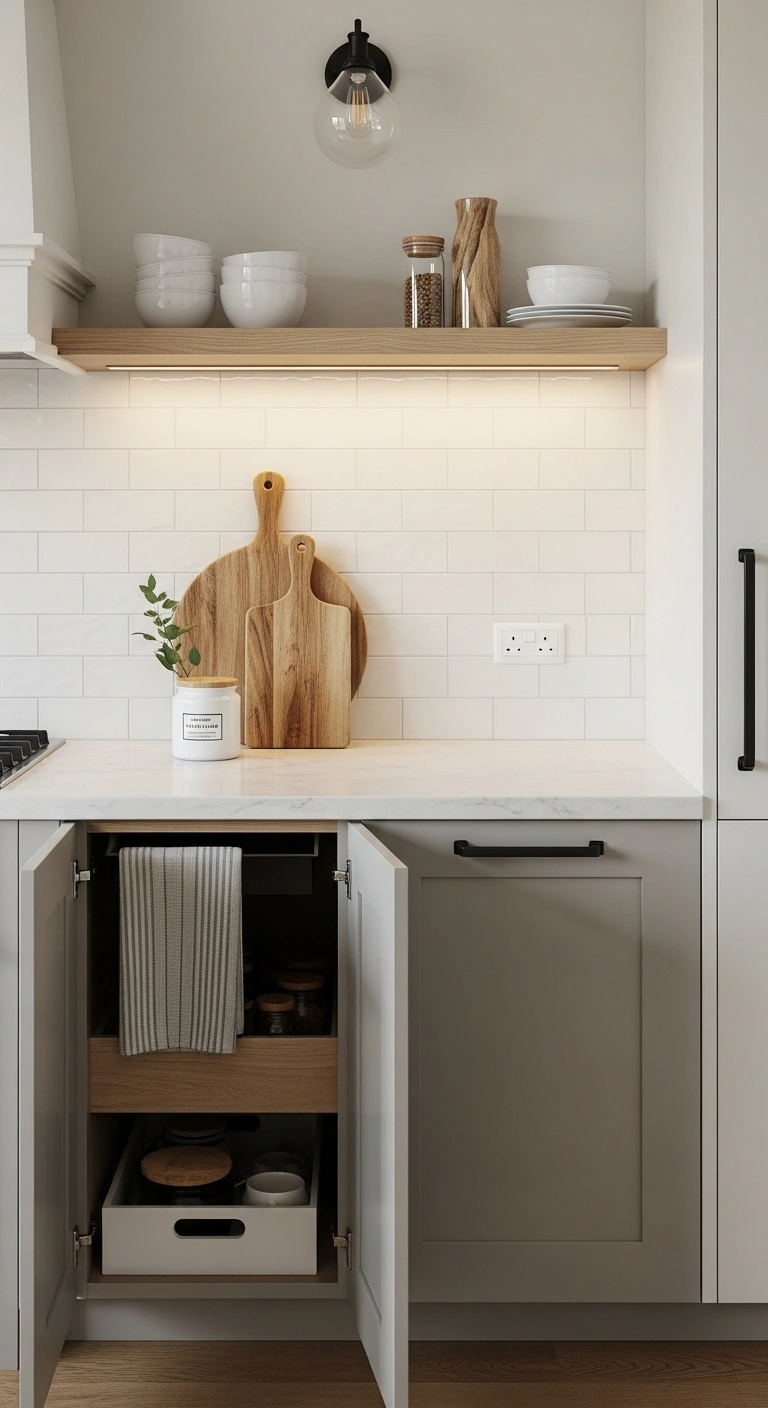
A clean countertop makes your kitchen feel calm and organized. The key is to store items in a way that keeps them accessible but out of sight.
Use drawers with dividers, pull-out shelves, and hidden compartments. Store daily items close to where you use them to keep your workflow smooth.
Leave only a few essential or decorative pieces on the counter, like a wooden board or a small jar. This approach reduces visual clutter while keeping everything functional. A clear surface instantly makes your kitchen feel more open and inviting.
21. Introduce Soft Window Treatments for Light Control
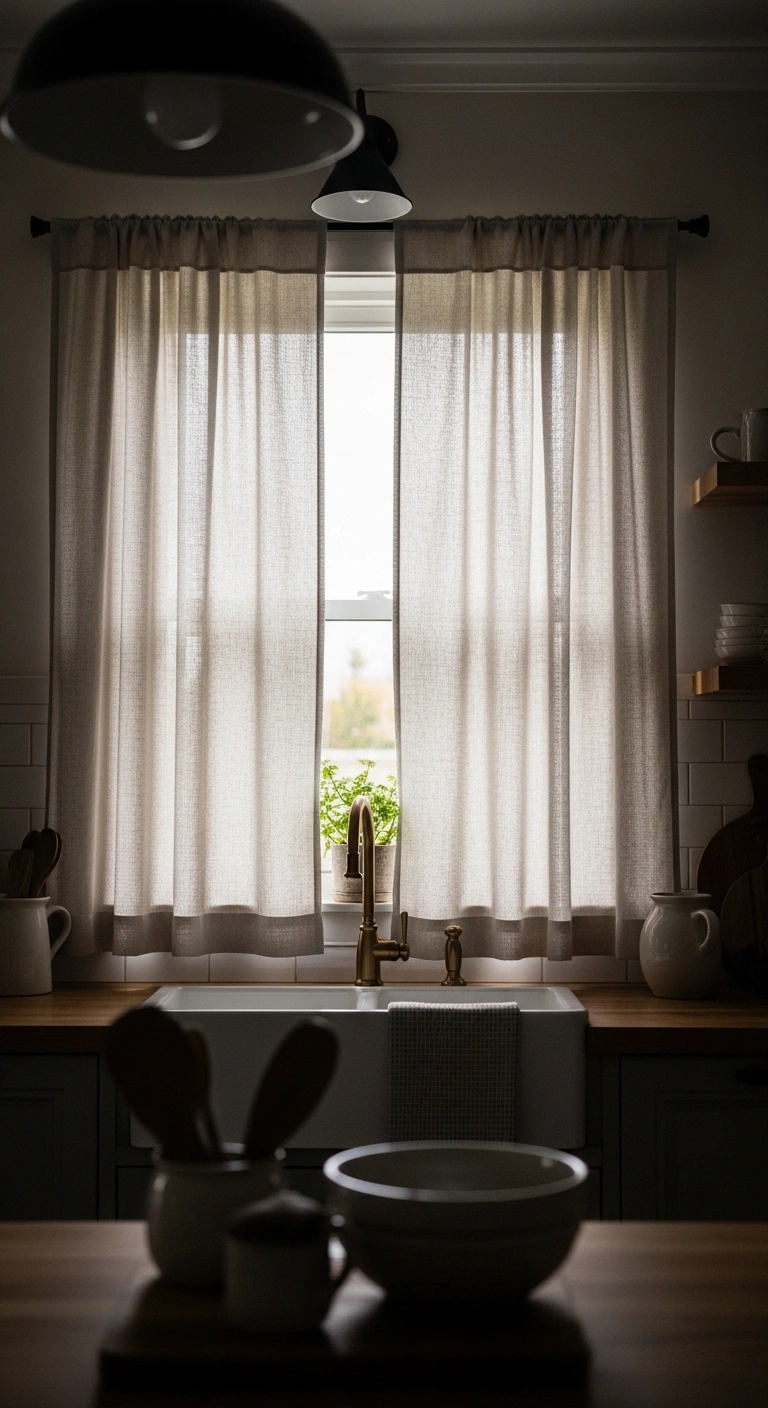
Window treatments help control light while adding softness to the space. They should feel light and natural, not heavy or formal.
Use linen curtains or simple Roman shades in neutral tones. Let them filter sunlight instead of blocking it completely. This keeps the kitchen bright while adding a gentle layer of texture.
Choose fabrics that move slightly with air to create a relaxed feel. These small details make your kitchen feel more comfortable and lived-in.
22. Display Everyday Items as Visual Elements
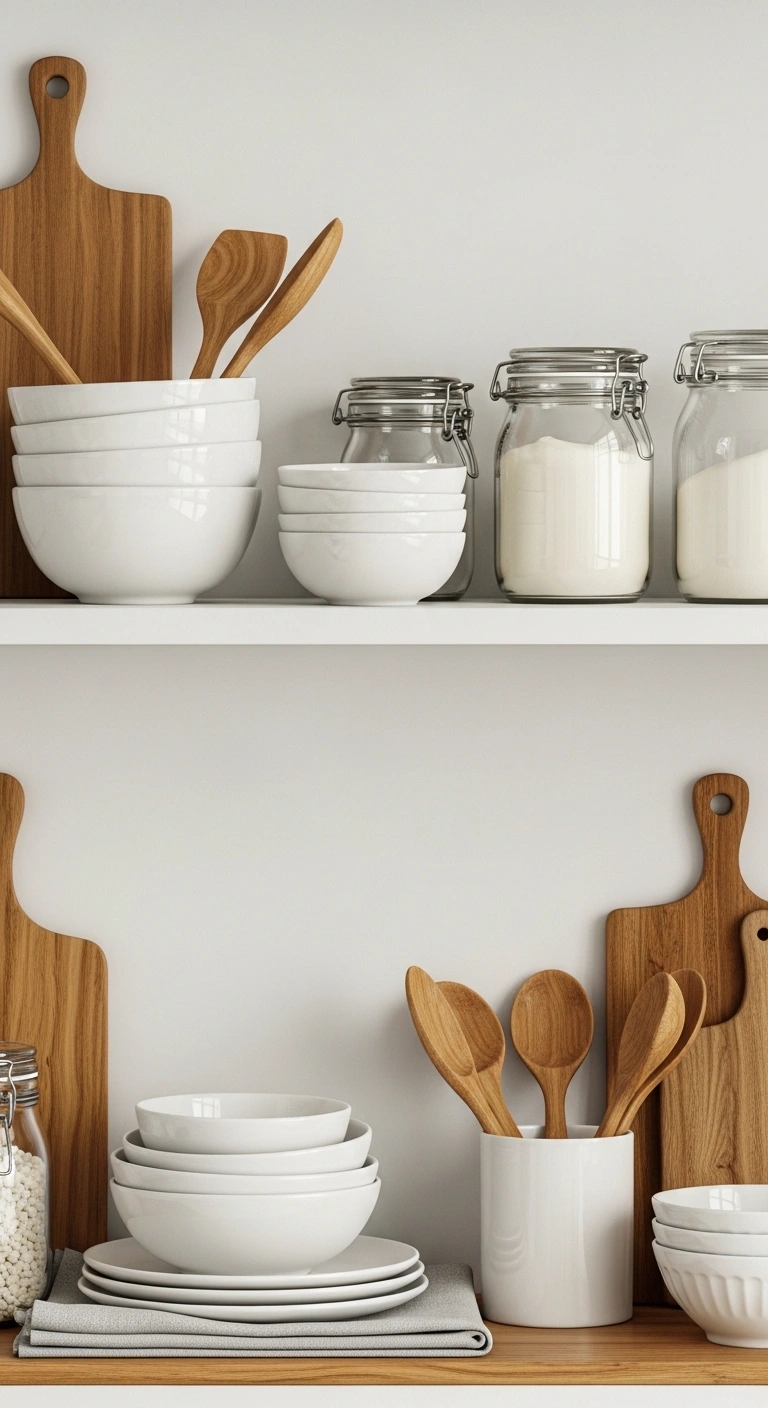
Instead of hiding everything, let some everyday items become part of your design. This keeps the kitchen practical while adding personality.
Display items like bowls, jars, or utensils in an organized way. Use trays or shelves to group them neatly. Stick to a consistent color palette so the display feels intentional.
Rotate items occasionally to keep the look fresh. This approach turns simple objects into decor while keeping your kitchen functional.
23. Use Warm Flooring to Ground the Space
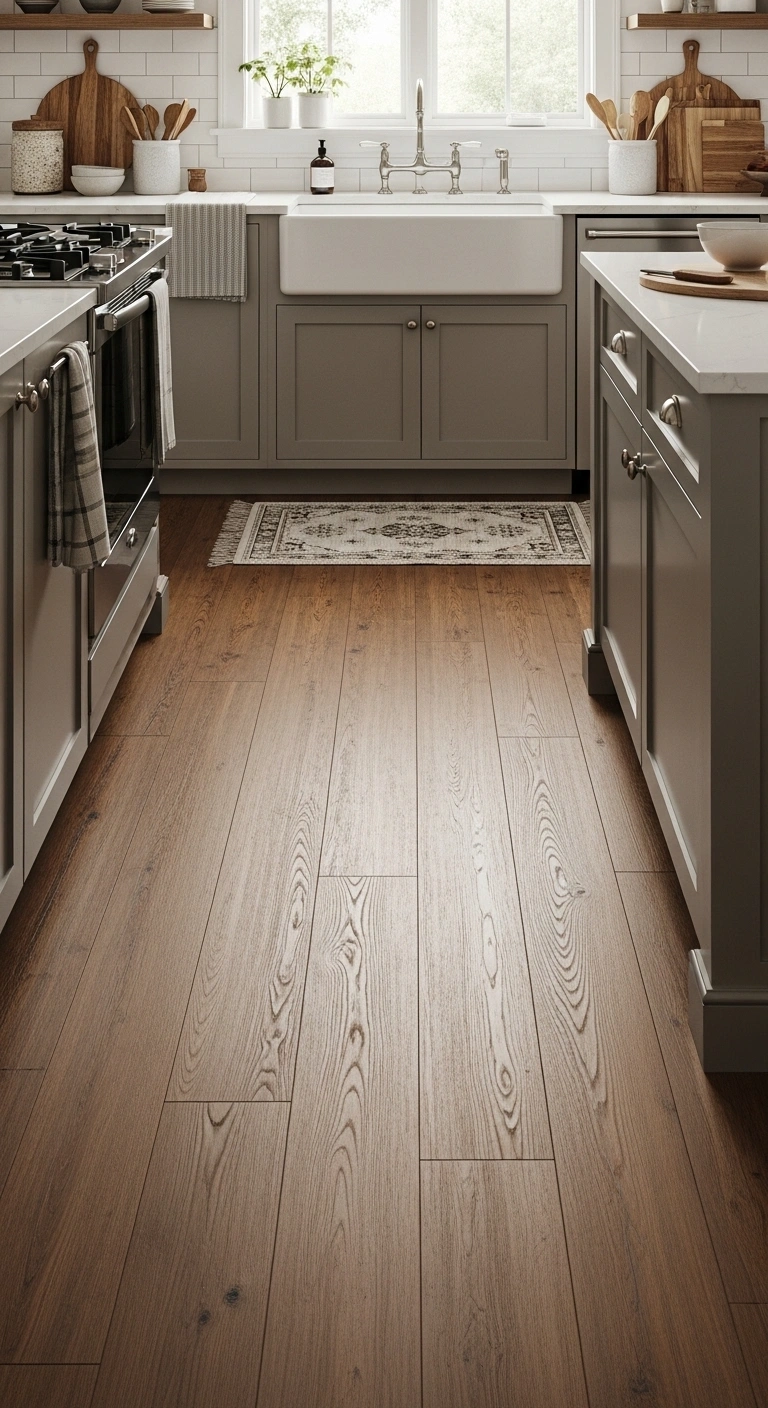
Flooring plays a big role in how your kitchen feels. Warm-toned floors help anchor the space and tie all elements together.
Choose wood or wood-look flooring in medium to warm shades. Avoid very dark tones that can feel heavy or very light tones that lack contrast.
Add a soft rug in key areas like near the sink or island for extra comfort. The right flooring brings balance and warmth, making the entire kitchen feel complete and welcoming.
Conclusion
A well-designed farmhouse kitchen blends warmth, function, and simple beauty. You do not need a full renovation to achieve this look. Small changes like adding texture, mixing materials, or improving lighting can make a big difference. Each idea in this guide focuses on real-life use while creating a space that feels calm and inviting.
Start with one or two ideas that fit your space and build from there. Focus on comfort, natural materials, and thoughtful details. Save your favorite farmhouse kitchen ideas, try them step by step, and create a kitchen that truly feels like home.