24 Ways to Style a Coffee Table With Black Trays and Coastal Accents

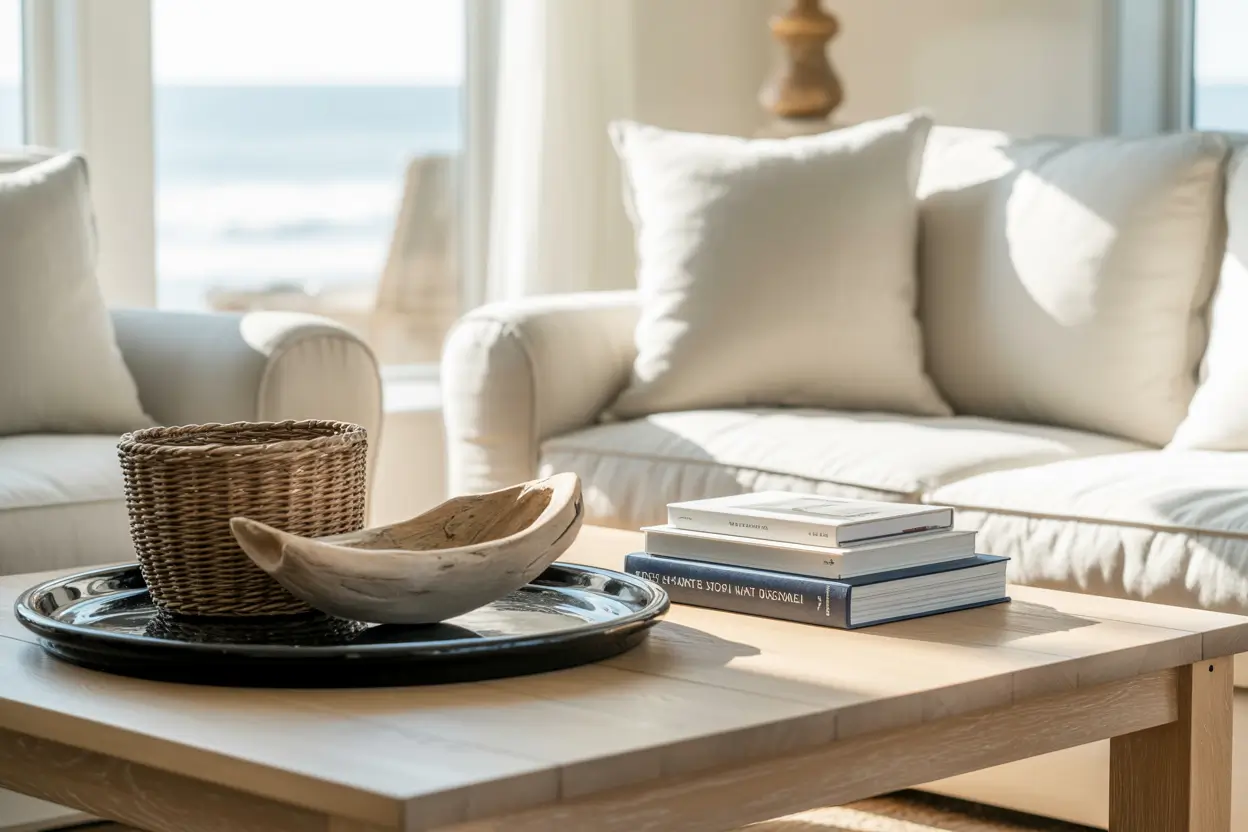
A friend once told me her coffee table was where clutter went to die, remote controls, mail, a half-empty water glass, all of it piling up until the table basically disappeared. Mine looked the same way for years until I started treating it like a small stage instead of a dumping ground. The combination that finally worked in my living room was a simple black tray as the anchor, paired with soft coastal touches like driftwood, woven textures, and a bit of blue and white. It sounds like a small thing, but a styled coffee table changes how the whole room feels the second you walk in. Below are twenty four ways to bring that look into your own space, each one simple enough to put together in an afternoon with things you can buy locally or already have tucked away in a closet.
1. Black Lacquer Tray
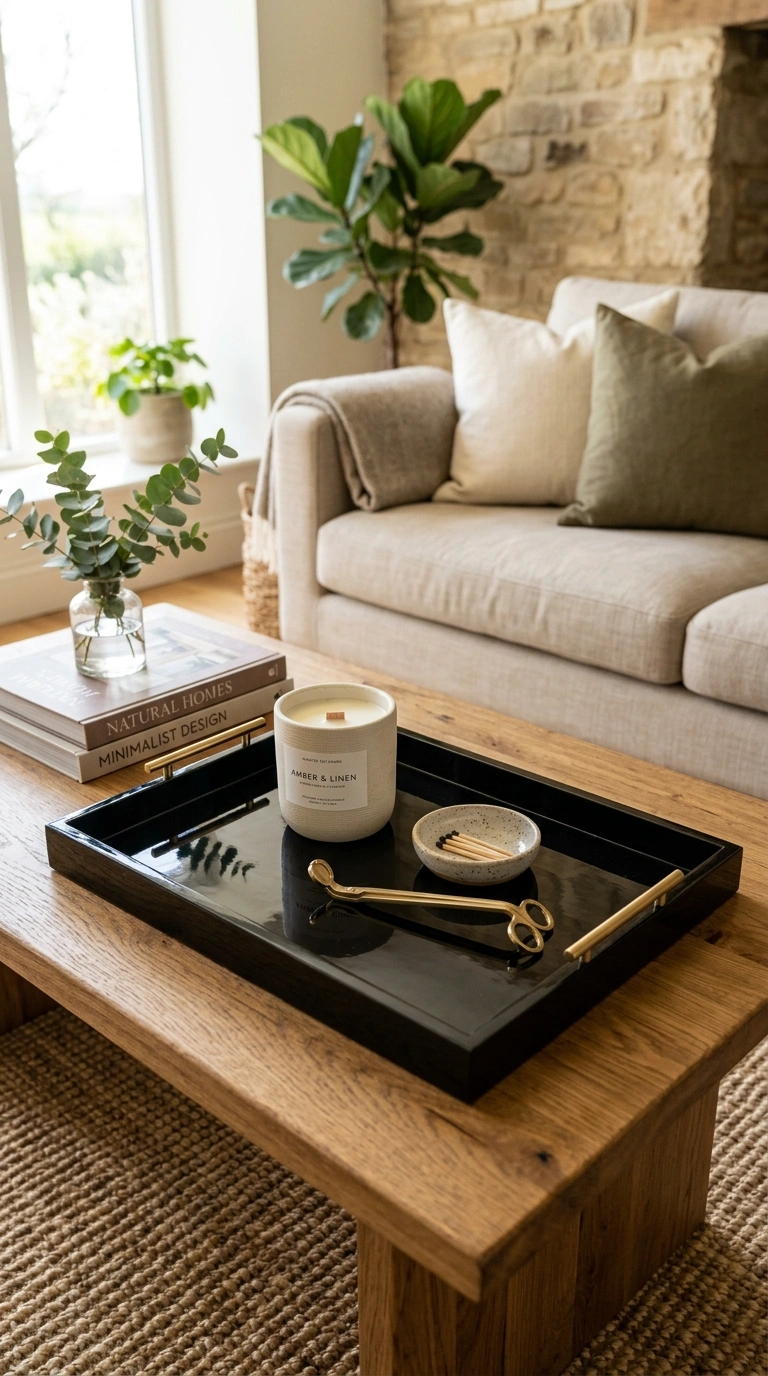
Start with a glossy black lacquer tray as your base layer, placed slightly off center on the coffee table rather than dead in the middle. The dark, reflective surface acts like a picture frame for whatever you group on top of it, and it instantly grounds a room full of lighter woods and neutral fabrics. Choose a tray with a slim gold or brass rim if your other hardware in the room leans warm, or a plain matte black tray if you prefer a more understated coastal look. Use the tray to corral smaller items, a candle, a small dish, a stack of coasters, so they read as one intentional grouping instead of scattered objects. Leave a little negative space on the tray rather than filling every inch, since breathing room is what makes a vignette feel calm instead of busy. This single tray becomes the foundation you can build every other coastal accent around, season after season, without needing to buy anything new.
2. Woven Seagrass Basket
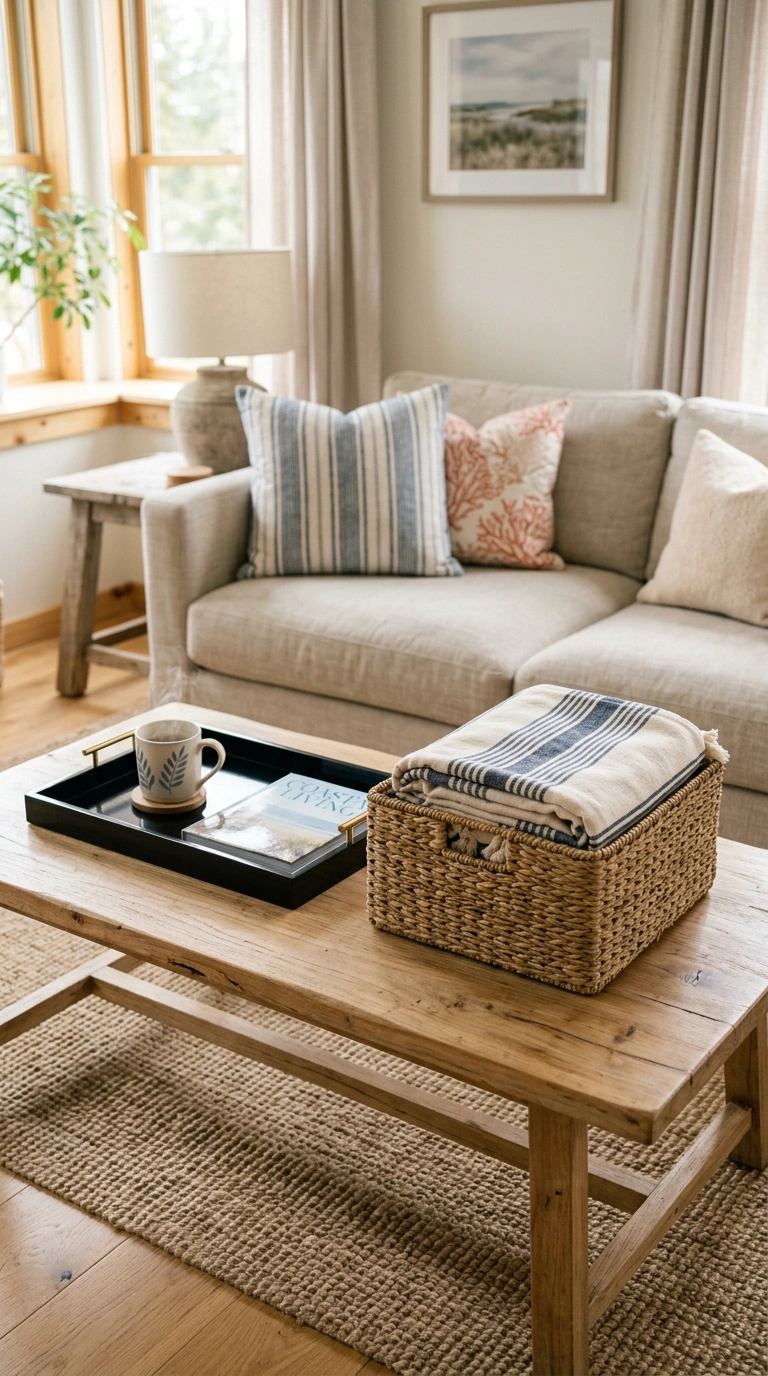
Place a low, wide seagrass basket beside your black tray to add texture and warmth that keeps the whole tabletop from feeling too dark or too formal. Use the basket to hold a folded throw blanket, a stack of magazines, or a few oversized decorative balls, so it does double duty as both storage and styling. The natural fiber pairs beautifully with black lacquer because the contrast between rough texture and glossy shine is exactly what gives coastal rooms their easy, collected feel. Choose a basket with a slightly imperfect, handwoven look rather than a perfectly uniform one, since the small irregularities are what make it feel authentic rather than mass produced. Position it at one end of the table rather than centered, so your eye has a clear path from the smooth tray to the textured basket. This pairing works in almost any living room, from a small apartment to a large open concept space, and it never goes out of style.
3. Stack of Coastal Books
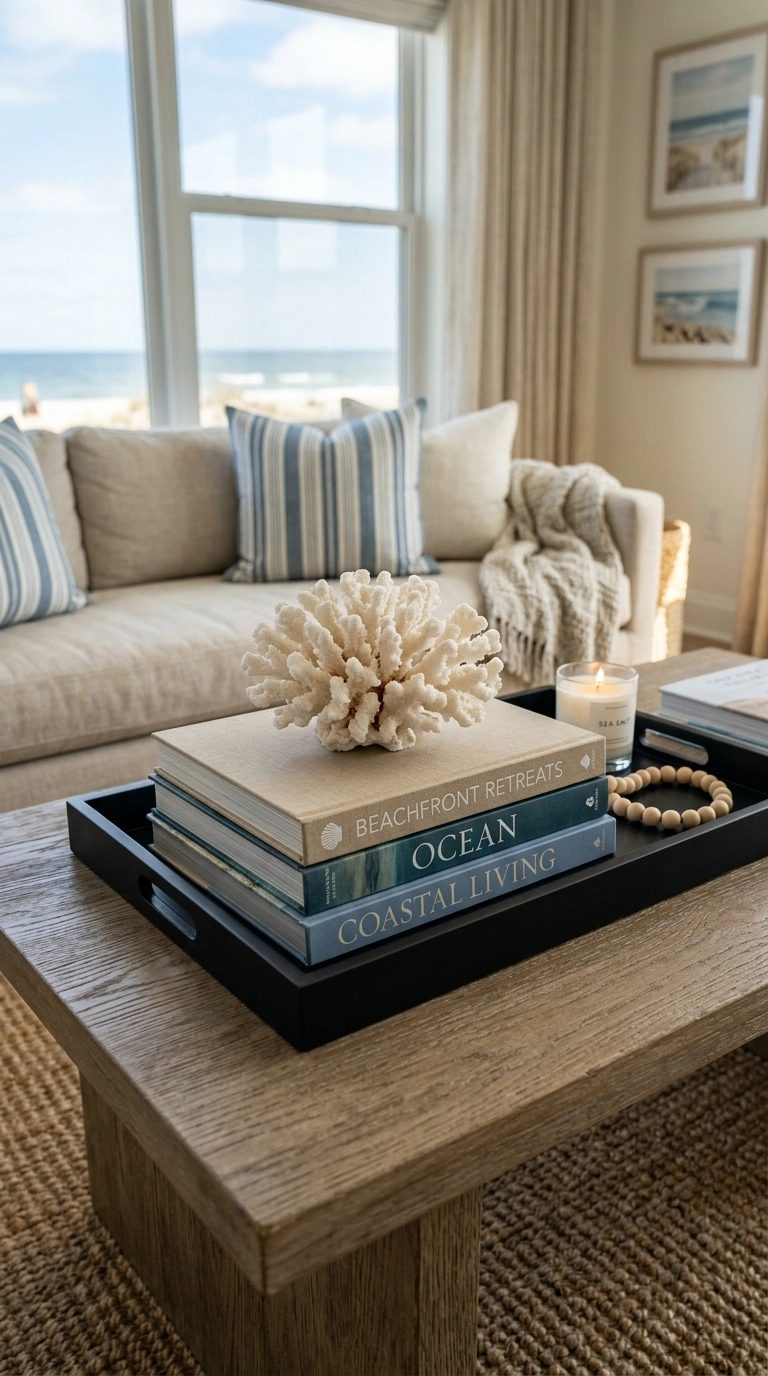
A short stack of two or three hardcover books adds height and personality to a coffee table vignette, especially when the covers lean toward blues, sandy neutrals, or ocean photography. Stack them by size, largest on the bottom, smallest on top, and angle the top book slightly for a relaxed, lived-in look rather than a perfectly squared stack. Place the stack directly on your black tray or just beside it, and top it with a small object like a piece of coral, a shell, or a smooth stone to draw the eye upward. Choose book spines in muted, coordinating tones rather than bright graphic covers, since a soft palette keeps the coastal mood intact. This trick works especially well if you already own a few travel or design books, since it repurposes something you already have into a styled decor element. Swap the top book out occasionally to keep the display feeling fresh and current.
4. Driftwood Centerpiece Bowl
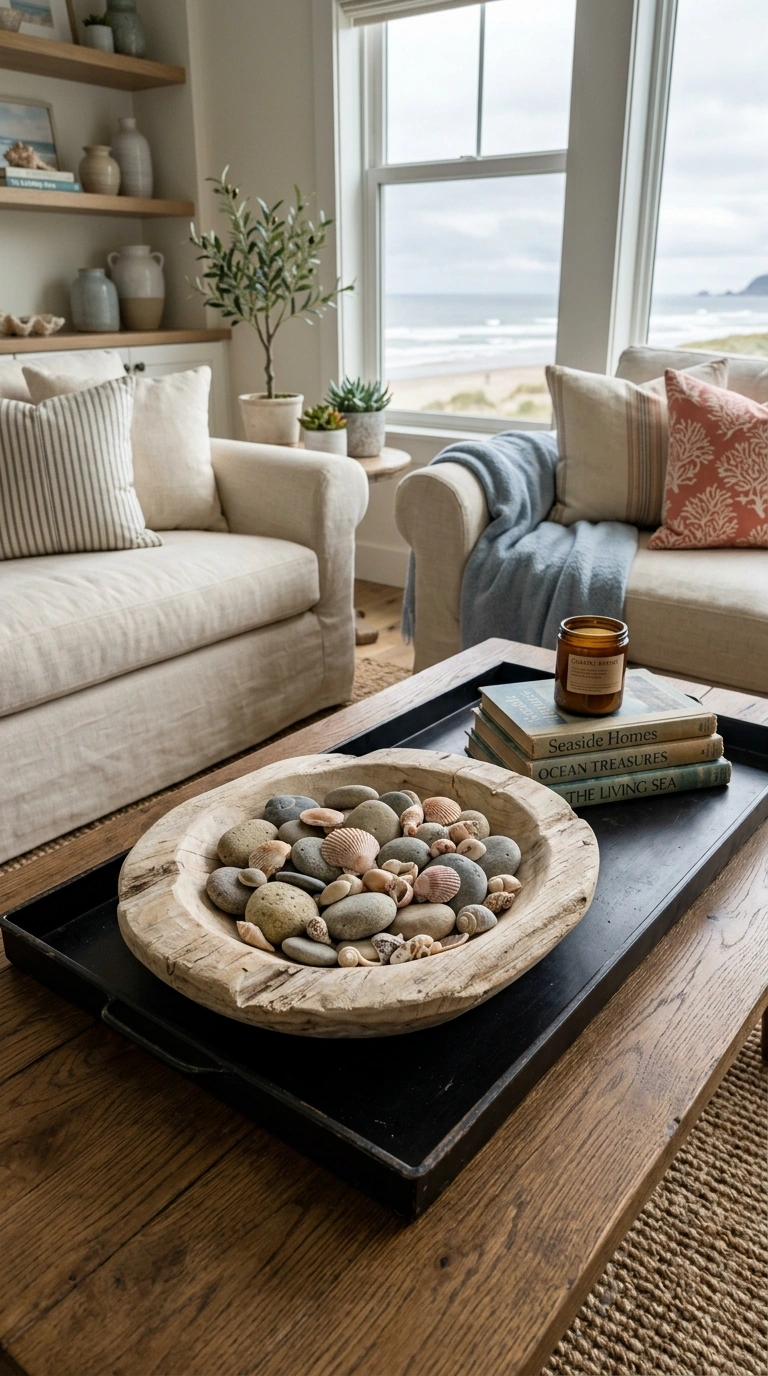
A shallow bowl carved from driftwood or pale wood makes a natural centerpiece for the middle of your coffee table, whether it sits directly on the wood surface or on top of your black tray. Use the bowl to hold a small collection of shells, smooth beach stones, or dried starfish, items that instantly signal a coastal mood without feeling like a themed display. Choose a bowl with visible wood grain and a slightly irregular, organic shape rather than a perfectly symmetrical one, since the natural imperfections are part of the appeal. Keep the contents simple, five or six pieces at most, so the bowl reads as curated rather than like a souvenir collection dumped in one spot. Position the bowl as the visual center of your table styling, with taller items like a vase or candle placed just behind it so the eye moves naturally from front to back. This piece works beautifully in living rooms near a window with good natural light.
5. Textured Ceramic Vase
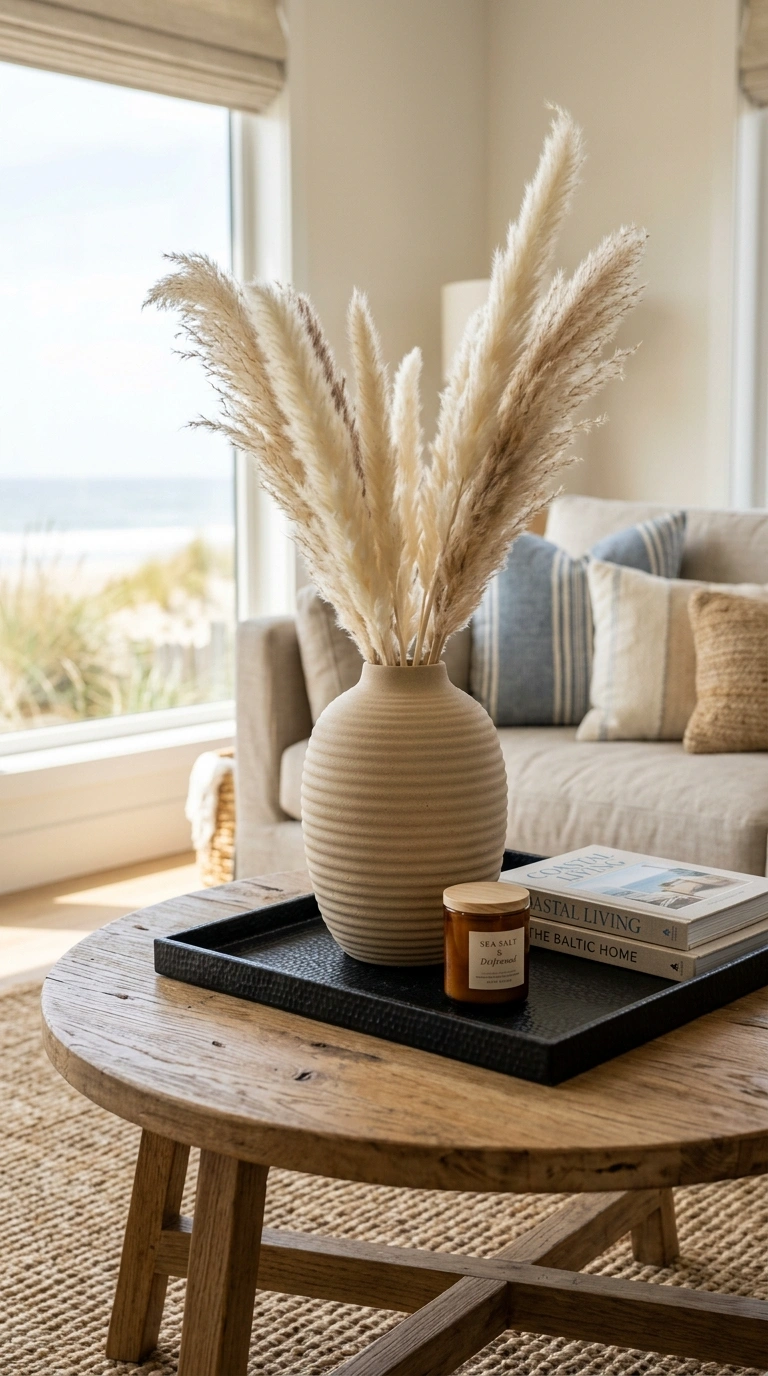
A single ceramic vase with a matte, slightly bumpy or ribbed texture adds height and softness to a coffee table without needing fresh flowers inside it. Choose a vase in warm white, sandy beige, or soft blue, colors that echo sea glass and weathered pottery you might find on a beach walk. Place the vase toward the back of your tray or table so it does not block the view of shorter items in front, and let it sit empty or add two or three stems of dried pampas grass or eucalyptus for a little movement. The texture of the vase is what does the real work here, catching light differently than the smooth black tray beside it and adding a handmade, tactile quality to the whole grouping. This piece works well as the tallest item in a small styled vignette, giving your eye a natural stopping point as it travels across the table from the shorter shells and books toward the back.
6. Linen Napkin Stack
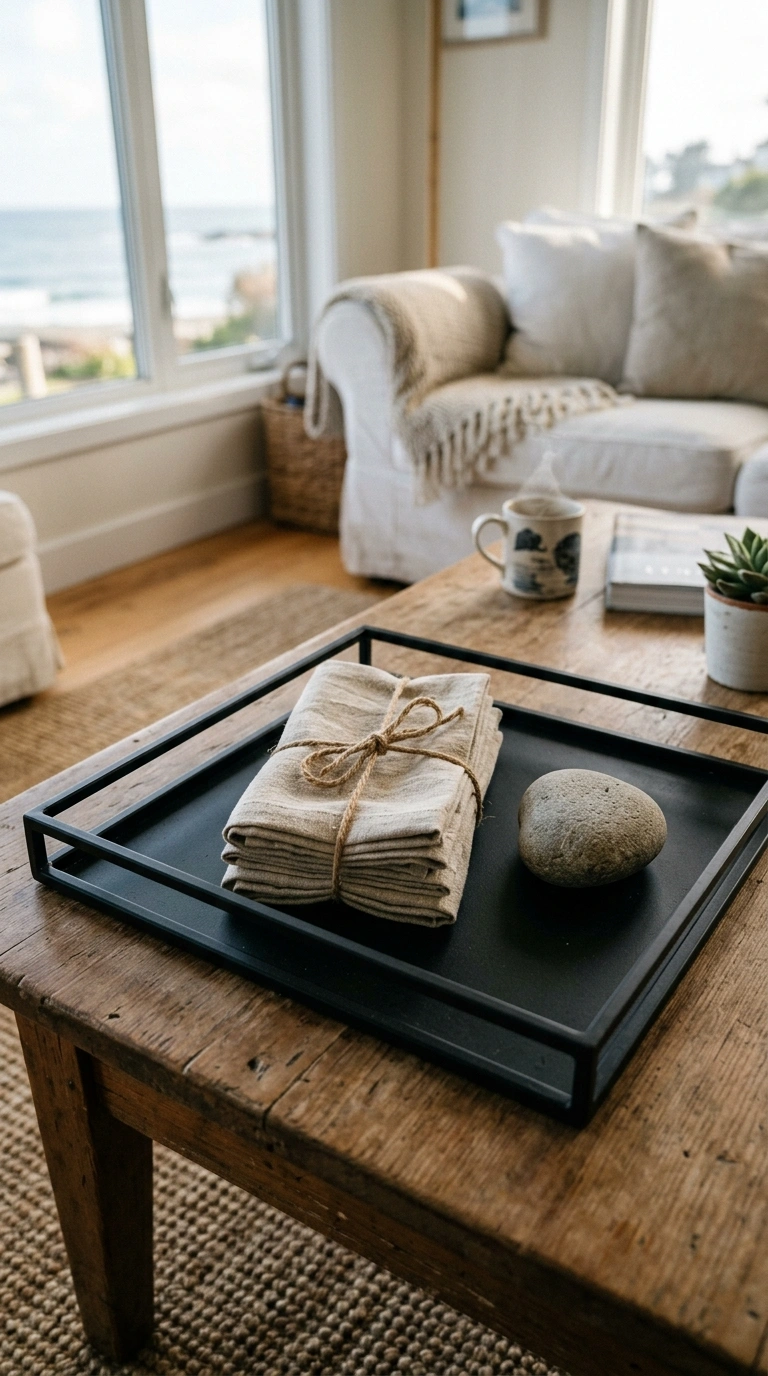
A small stack of folded linen napkins, tied with a bit of natural jute twine, brings an unexpected soft texture to a coffee table that might otherwise be dominated by hard surfaces like wood and ceramic. Choose napkins in oatmeal, white, or the palest blue, and fold them into a neat rectangle before stacking two or three together. Place the stack on your black tray beside a small stone or shell paperweight to keep the fabric from shifting, and let the twine tie hang loose rather than pulling it too tight. This trick works especially well if you already keep a stash of linen napkins for entertaining, since it gives them a decorative role between dinner parties instead of sitting unused in a drawer. The soft, slightly wrinkled texture of linen contrasts nicely with the glossy tray and smooth ceramic pieces around it, adding the kind of relaxed, unfussy layer that coastal styling depends on to avoid feeling too polished or staged.
7. Small Potted Succulent
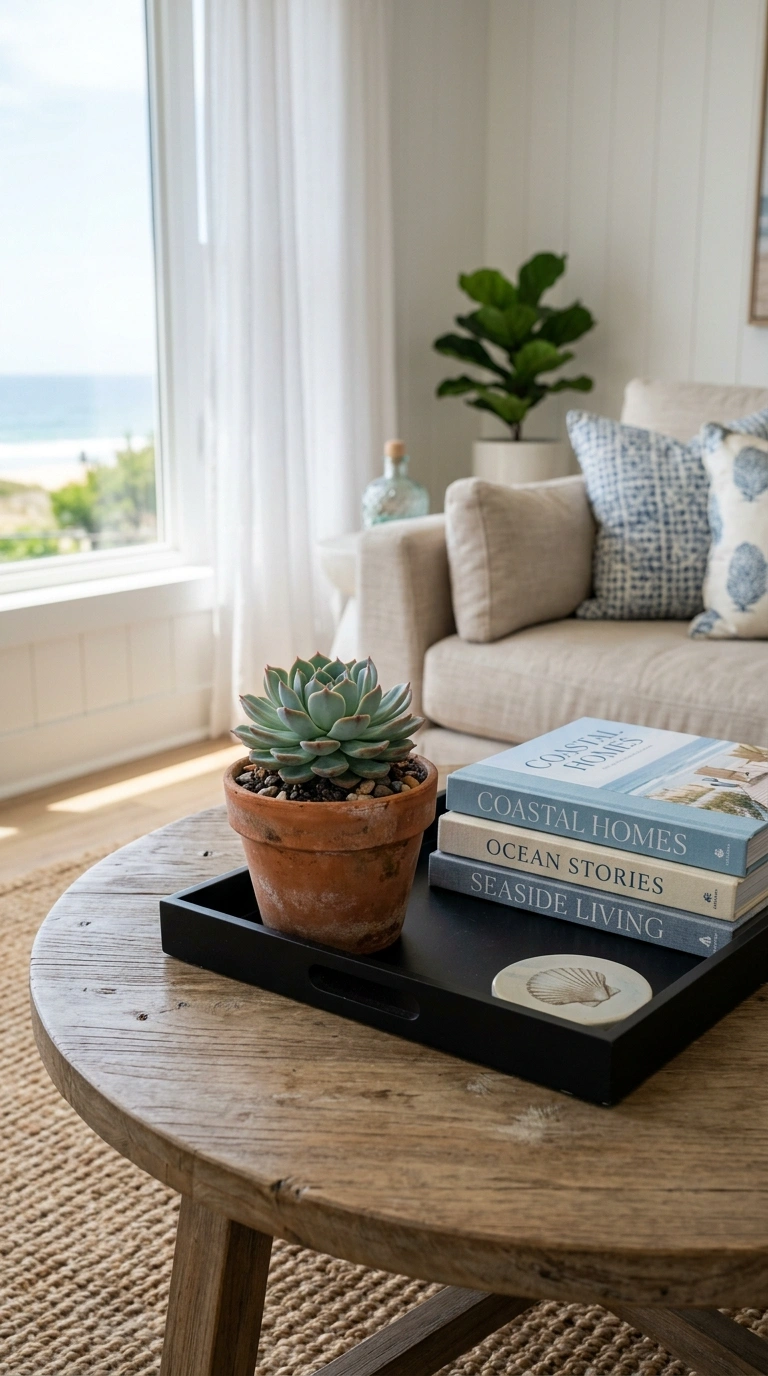
A single small succulent in a simple terra cotta or matte white pot brings life and a touch of green to a coffee table without requiring much maintenance or watering. Place the pot on your black tray, positioned slightly to one side so it does not overwhelm the smaller decorative pieces around it, and choose a variety with rounded, fleshy leaves rather than spiky ones for a softer coastal feel. This tiny bit of greenery breaks up a table that might otherwise be all neutral tones and hard textures, giving the eye a natural, living focal point. Succulents also tolerate the indirect light most living rooms get near a window, so this trick works even if you do not consider yourself a plant person. Wipe the leaves occasionally with a soft cloth to keep them dust free and glossy. Pair the pot with a small saucer underneath to protect the tray surface from any water that drains through after a light watering.
8. Capiz Shell Bowl
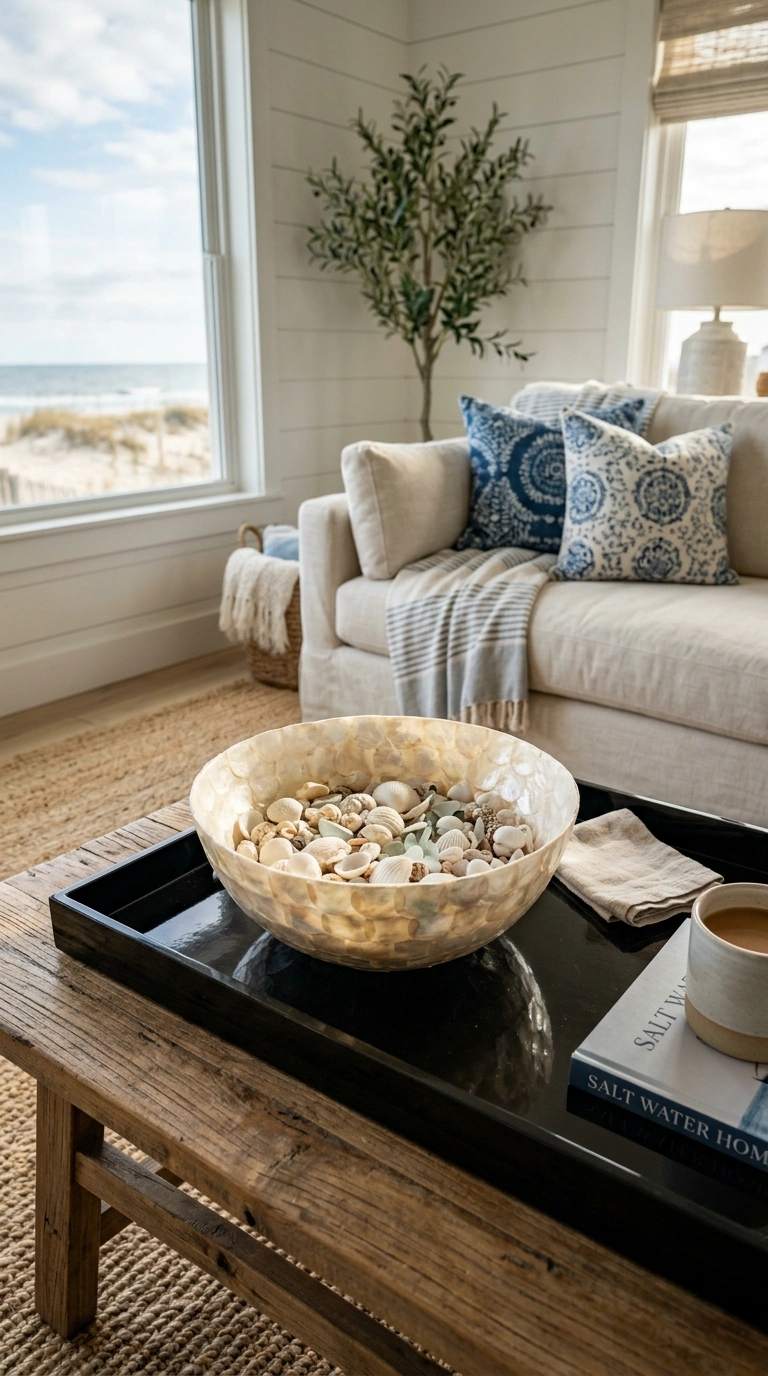
A bowl made from iridescent capiz shells catches light in a way few other materials can, adding a soft, shimmering quality to a coffee table that instantly reads as coastal. Place the bowl on your black tray as a secondary vessel beside a driftwood piece or vase, and fill it with a handful of small white shells or a single floating candle for evening ambiance. The pale, pearly finish of capiz pairs beautifully with black lacquer, creating a contrast between deep matte darkness and delicate, light catching texture. Position the bowl where it will catch afternoon sunlight from a nearby window, since the shifting light across the shell surface is part of what makes this piece so appealing throughout the day. Keep the bowl relatively empty or lightly filled, since the material itself is the star of this vignette and does not need much added to make an impact. This piece works particularly well in rooms with white or pale walls.
9. Black Marble Coasters
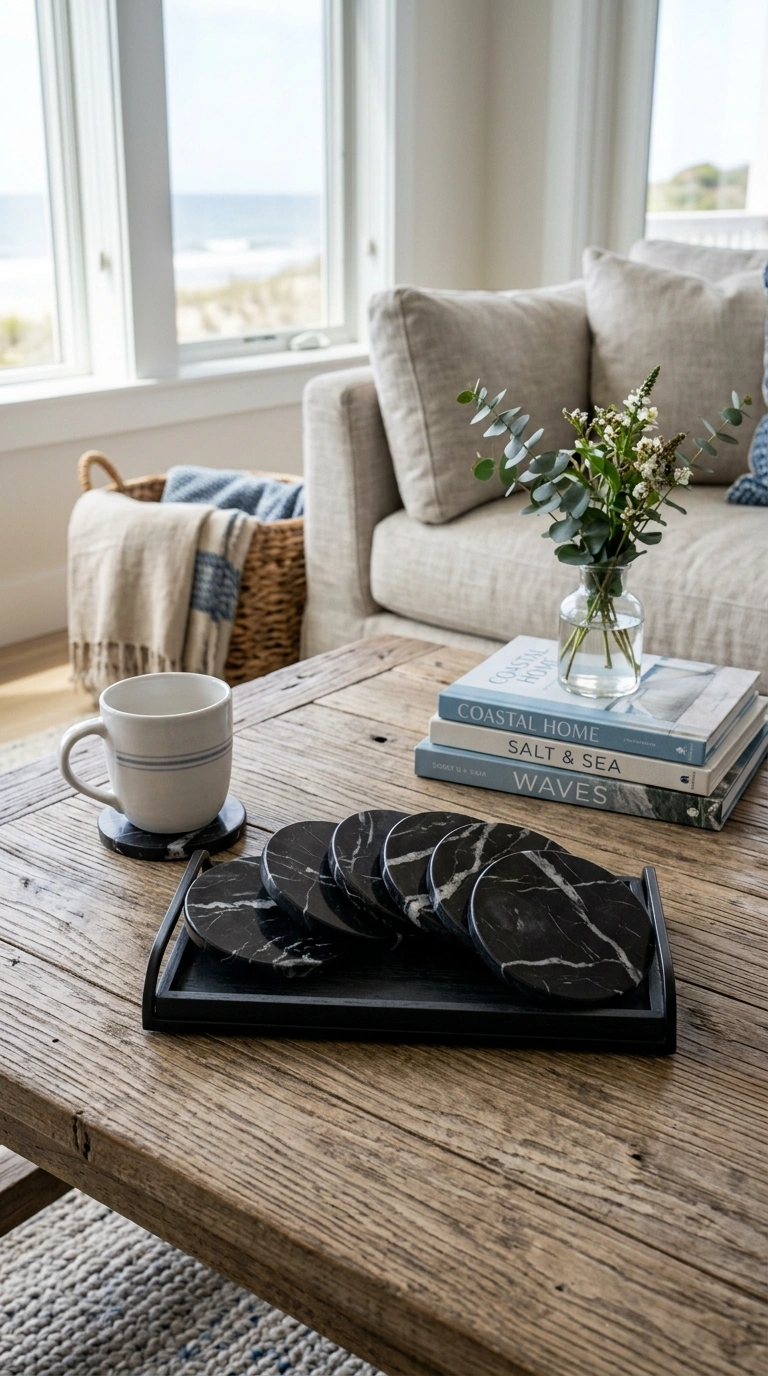
A small stack of black marble coasters serves a genuinely practical purpose while also reinforcing the black accents already established by your tray. Choose coasters with visible white or gray veining, since the natural stone pattern adds subtle movement and keeps the coasters from looking like a flat, solid block of color. Stack three or four together near the edge of your tray, slightly fanned so the veining on each one is at least partly visible, rather than stacked in a perfectly even tower. These coasters double as function and form, protecting your table surface from water rings while also acting as a small styled element in the overall grouping. Pair them with a woven or rattan coaster holder if you want a place to store extras out of the main display. This trick is especially useful in households that actually use their coffee table daily for drinks and snacks, since it blends everyday practicality into the decor rather than fighting against it.
10. Rattan Tray Layer
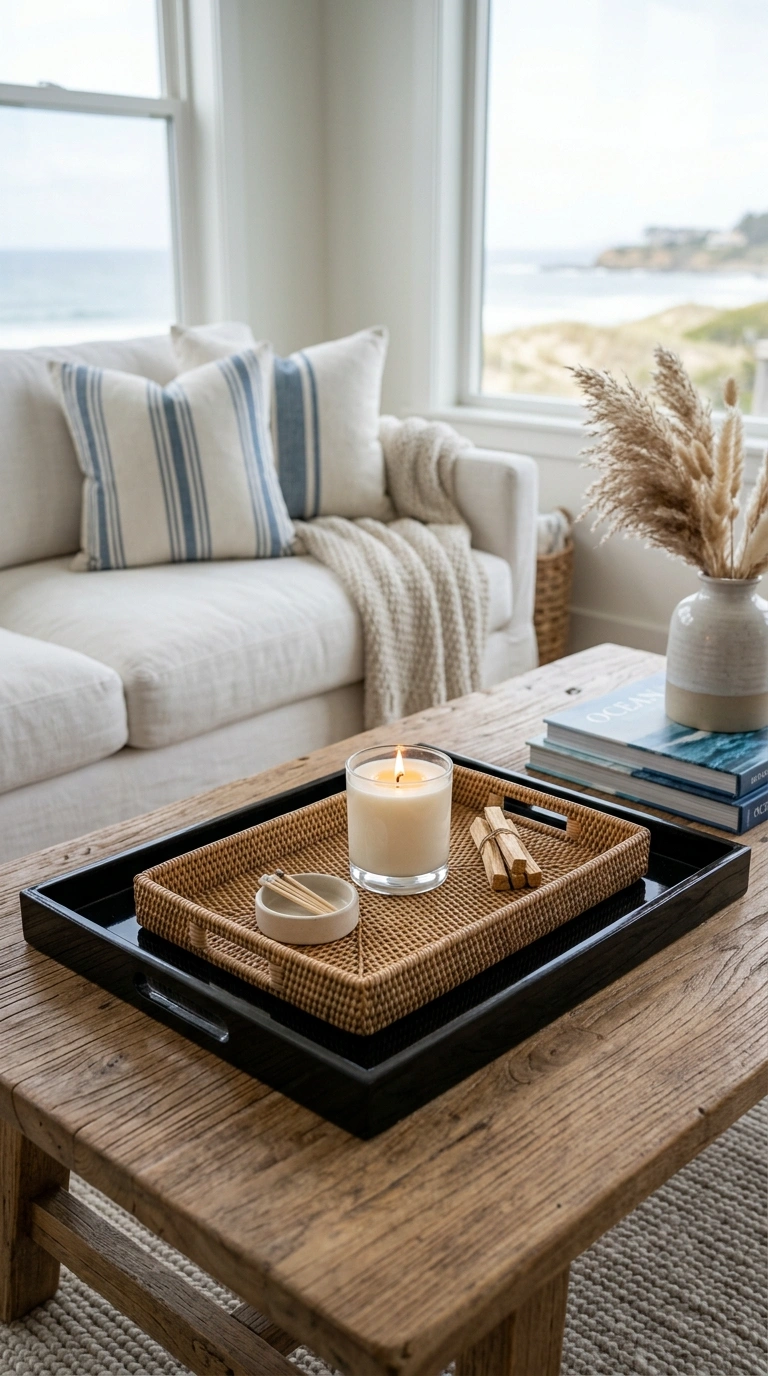
Layer a smaller rattan or woven tray on top of your black lacquer tray to create height and visual interest through contrasting materials. Use the rattan layer to hold your most delicate items, like a small candle or a tiny vase, so they sit slightly elevated above the main black surface below. This double tray trick is a favorite among stylists because it adds depth to a coffee table vignette without requiring any tall furniture pieces, which is especially useful in living rooms with lower ceilings or smaller proportions where tall decor can feel overwhelming. Choose a rattan tray with clean, simple lines rather than an overly ornate woven pattern, since the goal is texture and warmth, not visual clutter competing with the black base below. Position the rattan tray off center on the larger black one, leaving part of the black surface visible around the edges so both materials get their moment rather than one hiding the other completely.
11. Blue and White Vase
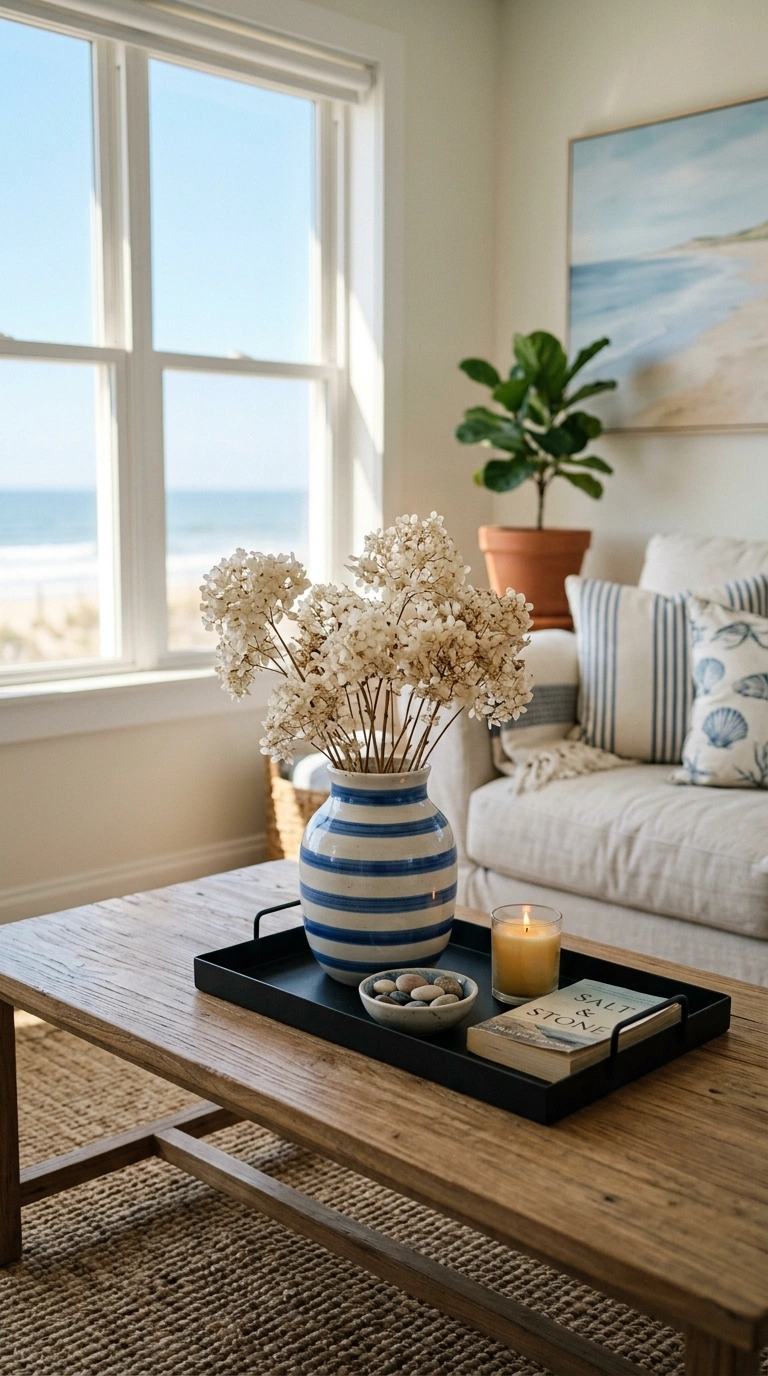
A classic blue and white ceramic vase brings a hint of traditional coastal color into an otherwise neutral styling scheme without overwhelming the room. Choose a vase with a simple pattern, like stripes or a subtle wave motif, rather than a busy, heavily painted design, so it complements rather than competes with your black tray and woven textures. Place the vase toward the back of your table grouping, and either leave it empty for a sculptural look or add two or three stems of white ranunculus or dried hydrangea for softness. The cool blue tone pairs naturally with black and white, creating a small color story that feels deliberate without requiring a full color palette overhaul in the room. This piece works especially well as a seasonal swap, since you can rotate in a different vase color for other times of year while keeping the black tray and neutral textures as your constant base layer underneath everything else on the table.
12. Candle Trio Grouping
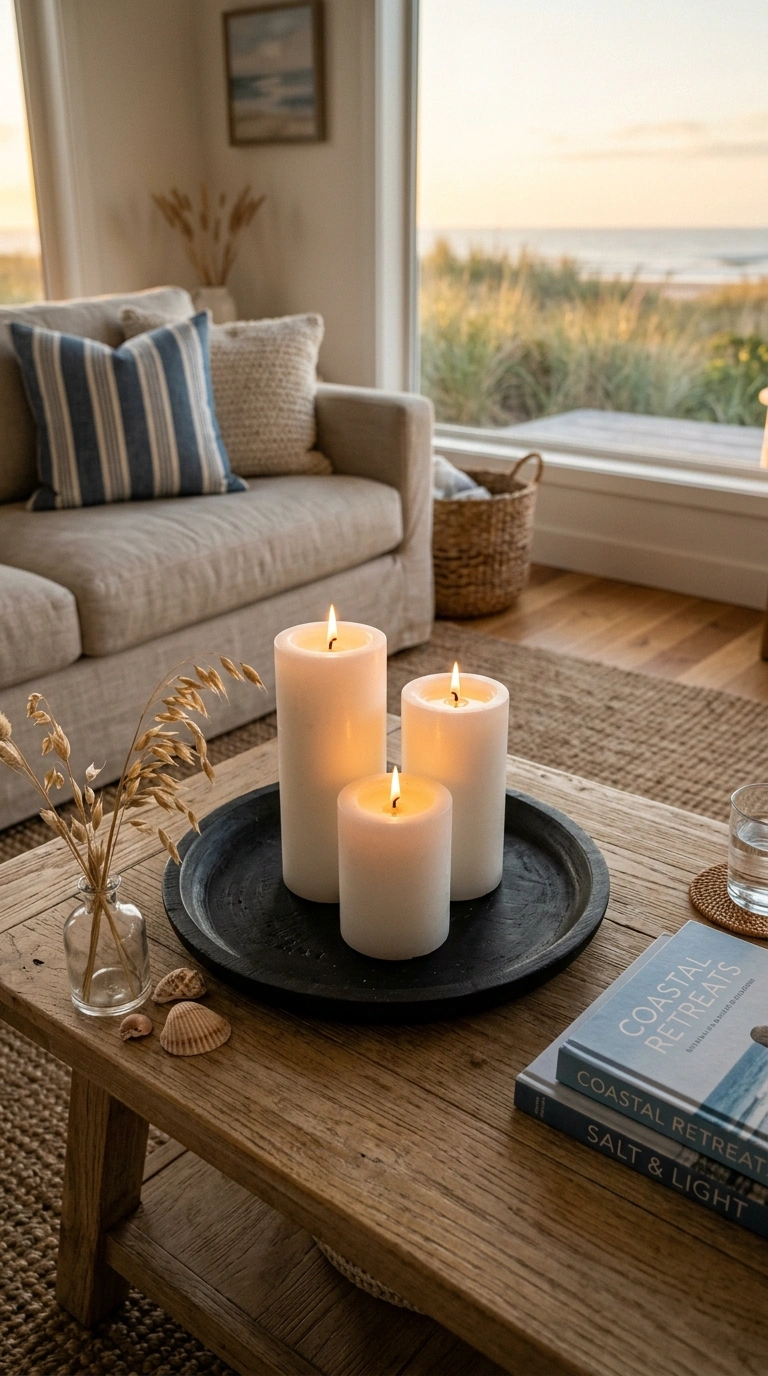
Group three pillar candles of varying heights on your black tray, using a mix of white and pale gray wax to keep the palette soft and coastal rather than bold or seasonal. Choose simple, unscented or lightly scented candles in a driftwood or sea salt fragrance to tie the sensory experience into the visual theme without being overpowering in a small living room. Cluster the three candles close together toward one corner of the tray, rather than spacing them evenly across the whole surface, since a tighter grouping reads as more intentional and photographs better for a cozy evening look. Vary the heights noticeably, tall, medium, and short, so the grouping has a clear visual rhythm rather than three candles that blend together at the same level. Light them in the evening for a warm glow that plays beautifully off the glossy black tray beneath them, doubling the light with a soft reflection across the dark surface.
13. Book Ladder Stack
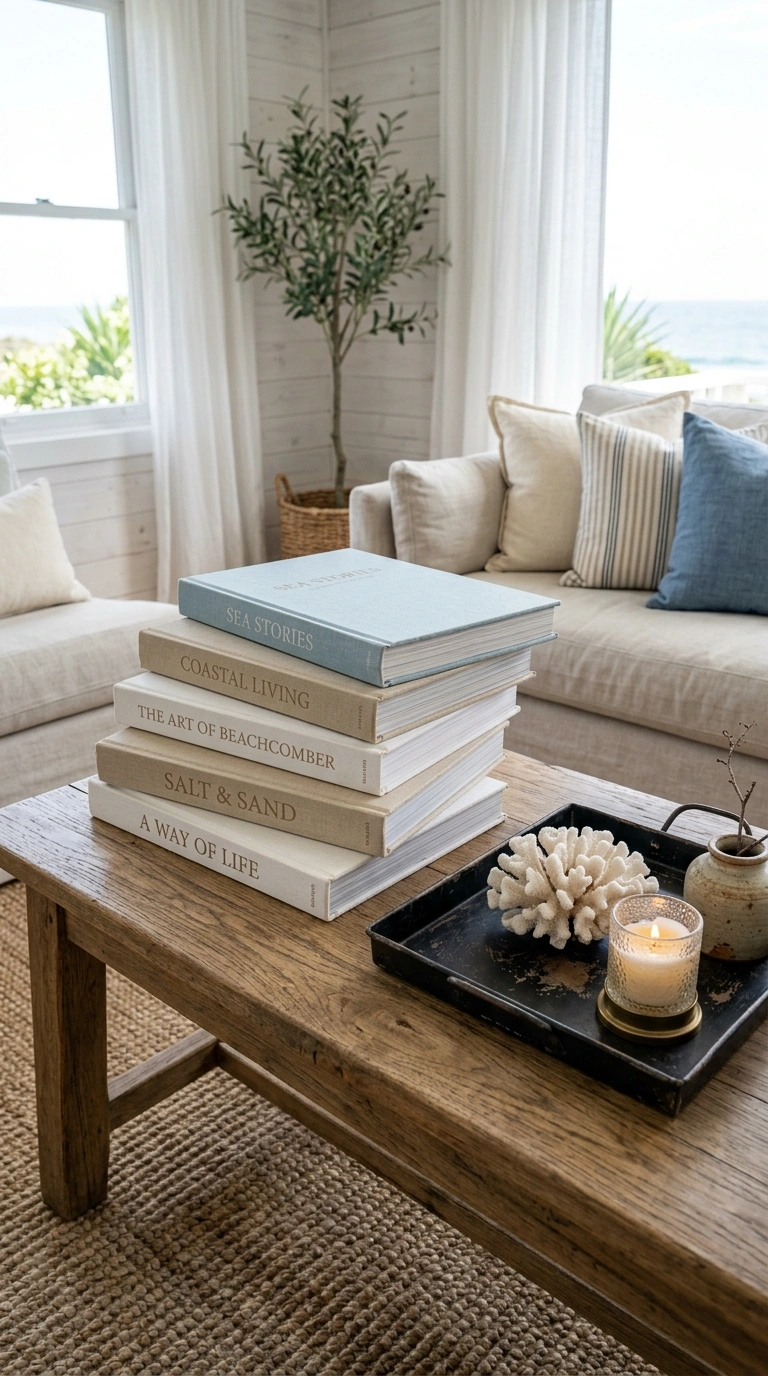
Beyond a simple stack, try building a small book ladder effect using four or five books of gradually decreasing size, fanned slightly so each spine is visible rather than perfectly aligned. Place this taller stack directly on the coffee table beside your black tray rather than on top of it, giving the vignette more visual variety across the whole surface instead of piling everything in one spot. Choose spines in a coordinated but not identical palette, mixing white, sand, and pale blue covers for a look that feels collected over time rather than purchased as a matching set. Top the stack with a small decorative object like a piece of coral or a smooth stone, using it as a visual anchor that draws the eye to the top of the ladder. This trick is a great way to display books you love without needing a bookshelf, and it adds meaningful height to a coffee table that might otherwise feel flat and low to the ground.
14. Woven Rope Accents
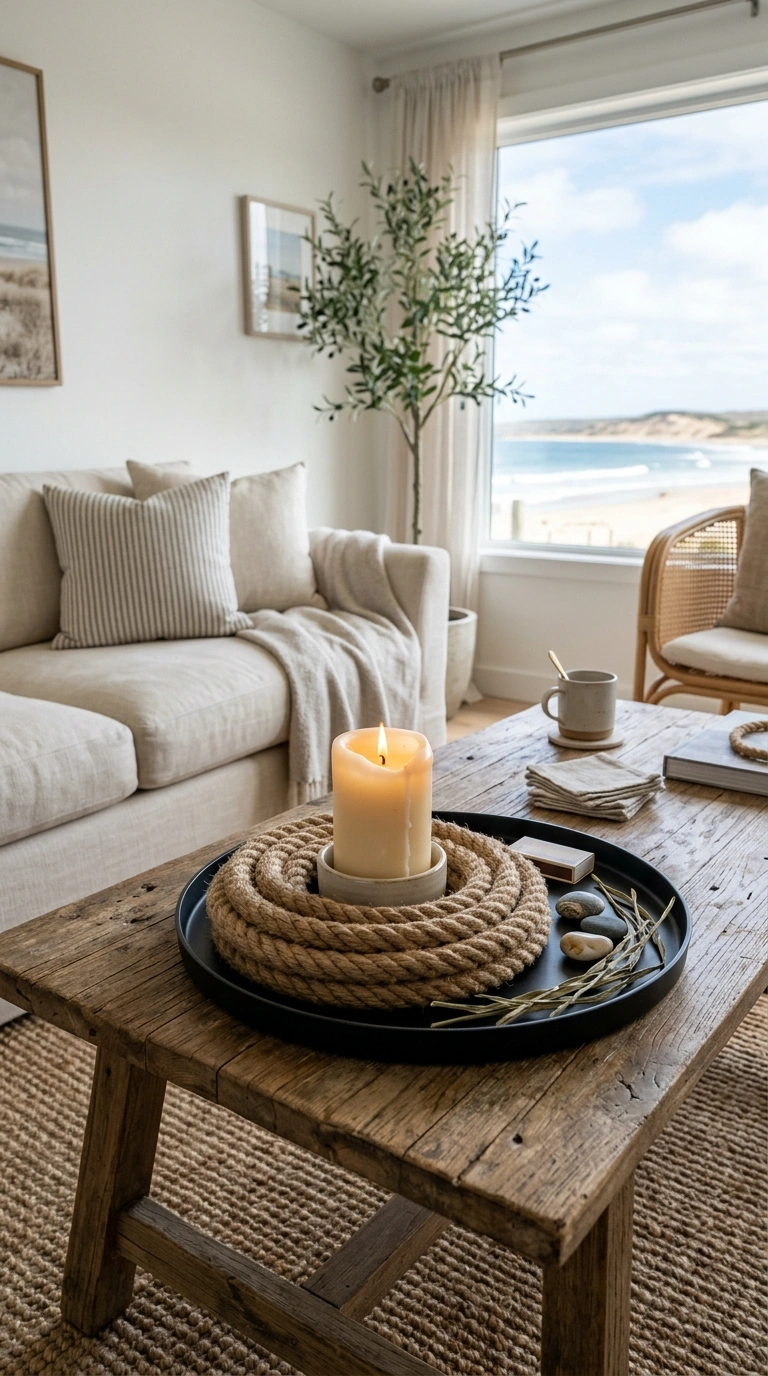
A length of thick, natural rope, twisted into a loose coil or wrapped around the base of a candle or vase, adds an unexpected nautical texture that fits naturally into a coastal styling scheme. Place a coiled rope directly on your black tray as a base for a candle to sit on top of, which raises the candle slightly and adds a rustic, handmade texture underneath it. Choose rope in its natural, undyed color rather than anything bleached bright white, since the slightly rough, golden brown tone reads as more authentic and less costume like. This accent works especially well paired with driftwood and shell elements already on your table, tying the whole nautical thread together without feeling like a themed display bought as a matching set. Keep the rope accent to one or two spots on the table rather than using it throughout, since a little goes a long way with a texture this distinct and visually heavy.
15. Glass Hurricane Candle
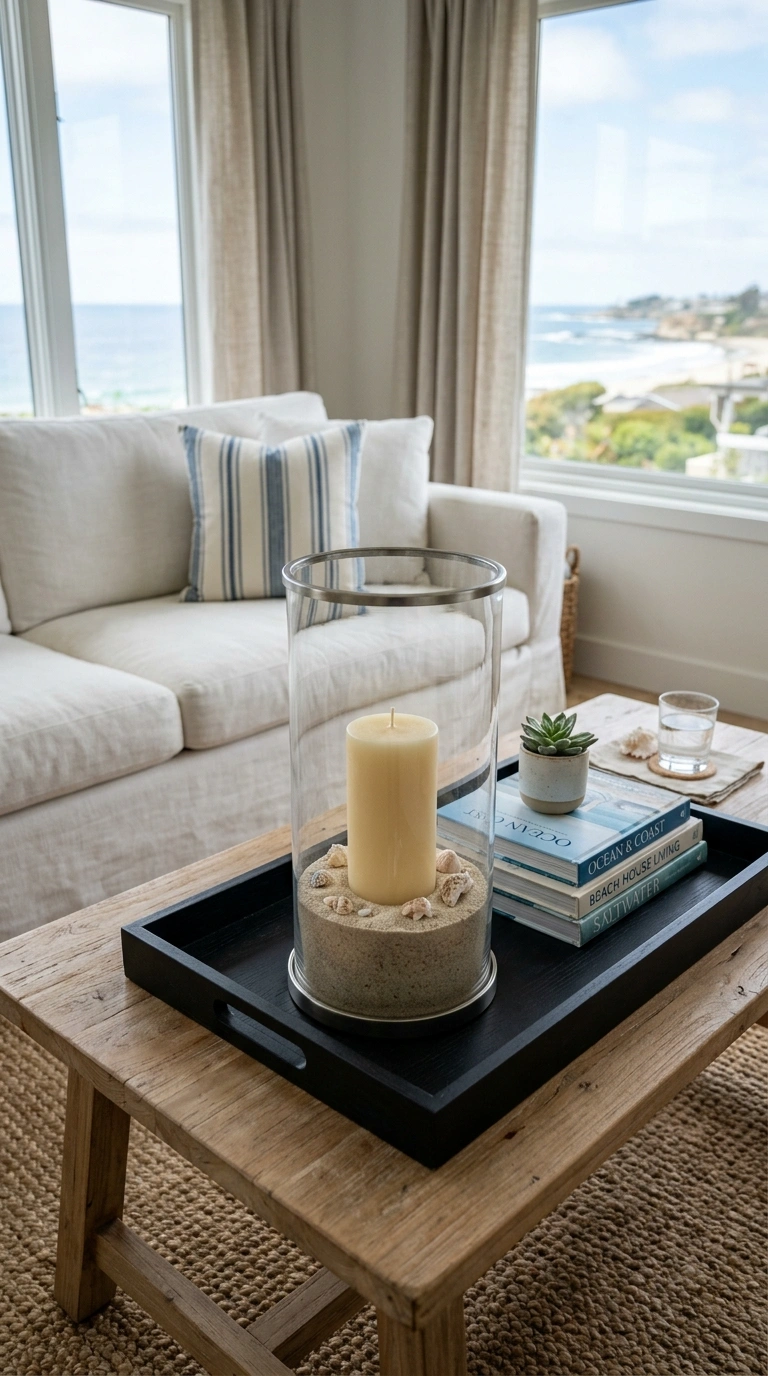
A glass hurricane lantern with a simple pillar candle inside adds height and a bit of old world charm to a coffee table, especially when placed toward the back of your black tray. Choose a hurricane with clean lines and minimal detailing, either clear glass or a soft frosted finish, so it reads as coastal and relaxed rather than heavy or formal. The glass casing protects the flame, making it a safer option for tables where kids or pets might brush past, while still giving you that warm, flickering glow in the evening. Position it slightly behind shorter items like a shell bowl or a stack of coasters, so the hurricane becomes the tallest point in your vignette and naturally draws the eye upward. Fill the base of the hurricane with a thin layer of sand or small pebbles for an extra coastal touch, which also helps stabilize the candle inside and adds a subtle textured layer visible through the glass.
16. Striped Linen Runner
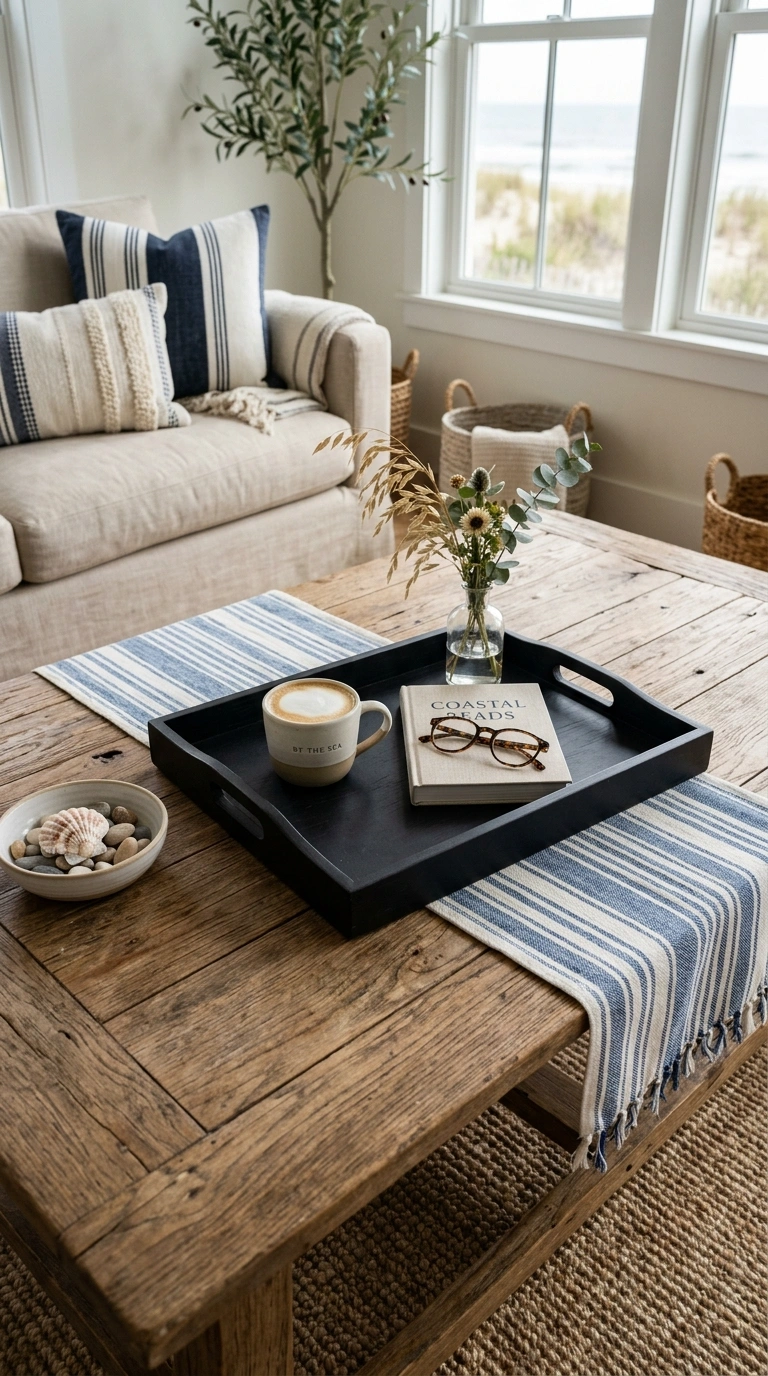
Instead of placing your tray directly on bare wood, add a narrow striped linen runner underneath it, running the length of the coffee table for a layered, finished look. Choose a runner with thin navy or soft blue stripes on a white or oatmeal background, echoing classic coastal ticking fabric without feeling overly literal or themed. This layer adds softness and a bit of pattern to a table styling scheme that might otherwise rely entirely on solid colors and natural textures, giving the eye a gentle visual break. Let a few inches of the runner peek out on either side of the tray rather than tucking it completely underneath, so the pattern actually gets seen rather than hidden. This trick works especially well on tables with a wood or glass surface, since the fabric adds warmth and softens the hard lines of the furniture itself. Wash the runner occasionally since it sits at a height where spills and dust both tend to land.
17. Coastal Coral Accent
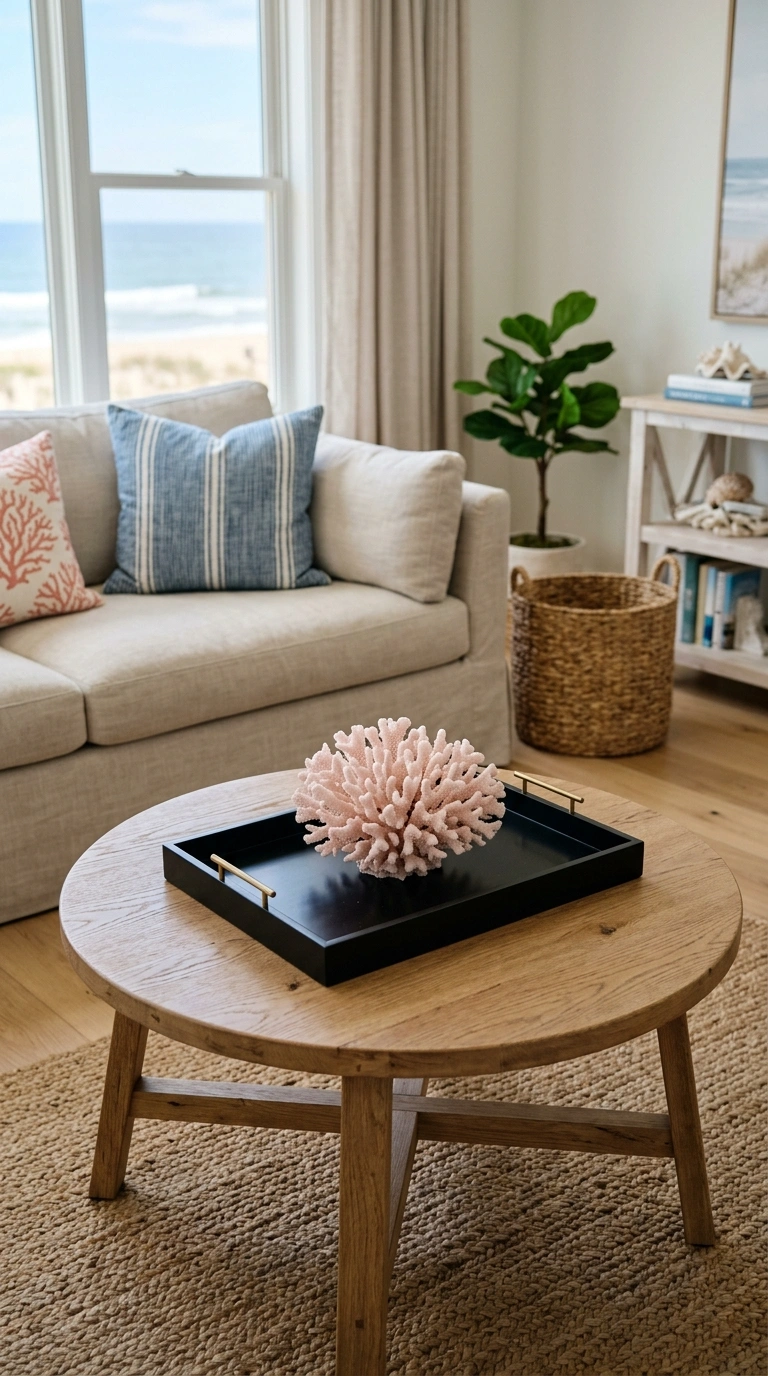
A single piece of decorative coral, whether real faux coral from a home decor shop, makes a striking sculptural accent when placed directly on your black tray or nestled inside a shallow bowl. Choose a piece in white or pale pink, since these tones photograph beautifully against black lacquer and read as elegant rather than kitschy or overly literal beach theme. Position the coral as a stand alone accent rather than surrounding it with too many other shell based items, letting its unique branching shape be the clear visual focus of that corner of the table. This piece works particularly well in living rooms that already lean coastal in their broader decor, like linen sofas or woven rugs, since it reinforces the theme without needing to add anything else nautical to the room. Dust the coral gently with a soft brush every few weeks, since its textured surface tends to collect more dust than smooth ceramic or glass pieces sitting nearby on the same tray.
18. Black Metal Tray
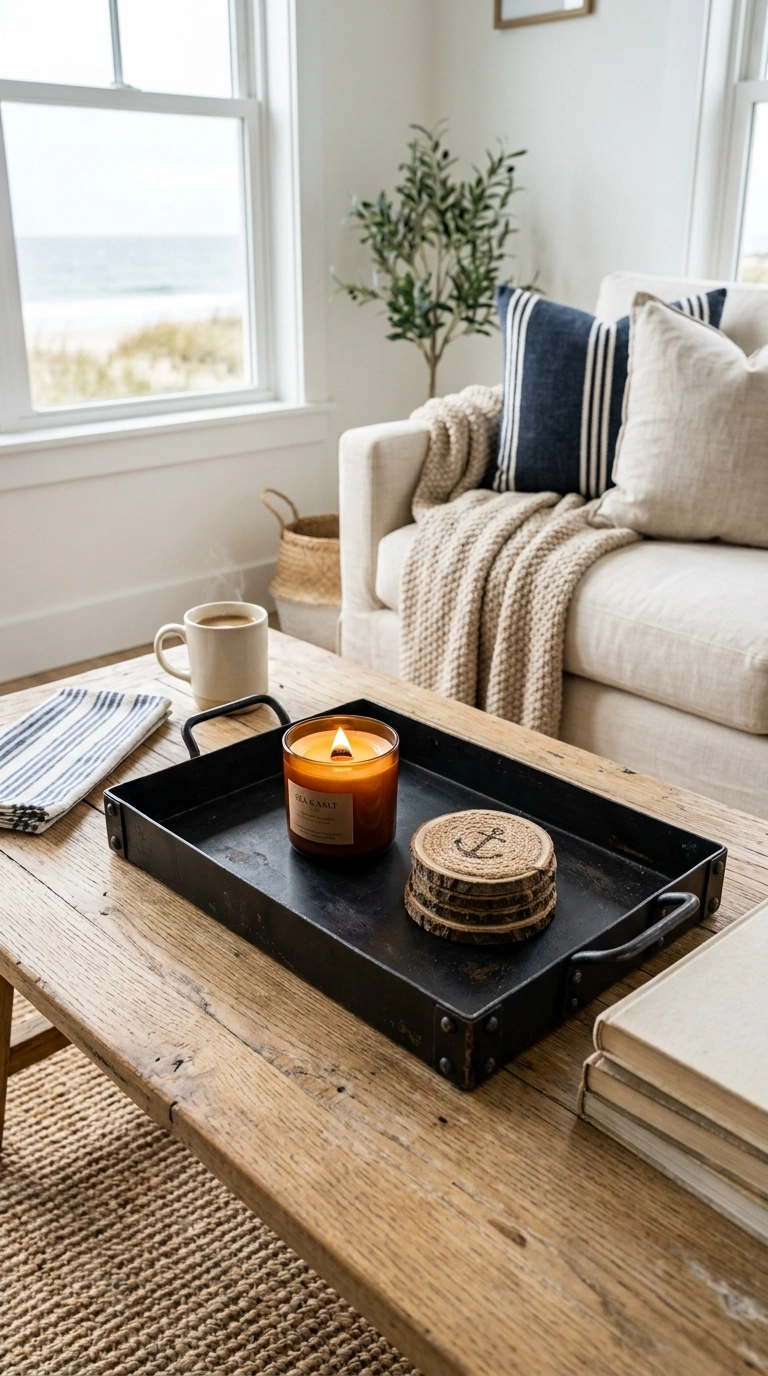
For a slightly more modern take than lacquer, try a black metal tray with a slim rim and visible rivets or seams, placed on your coffee table as an alternative base layer. The matte, slightly industrial finish pairs surprisingly well with soft coastal textures like linen and rattan, creating a contrast between hard edges and natural materials that feels current rather than dated. Use this tray the same way you would a lacquer one, grouping smaller items like a candle, a small dish, and a stack of coasters within its borders to keep the tabletop organized. Choose a tray with slightly raised edges rather than a completely flat surface, since the lip helps contain smaller items and keeps them from sliding off during everyday use. This option works particularly well in living rooms with black hardware elsewhere, like window frames or light fixtures, since it ties the metal finish together throughout the space rather than introducing a new material that stands alone.
19. Small Wooden Bowl
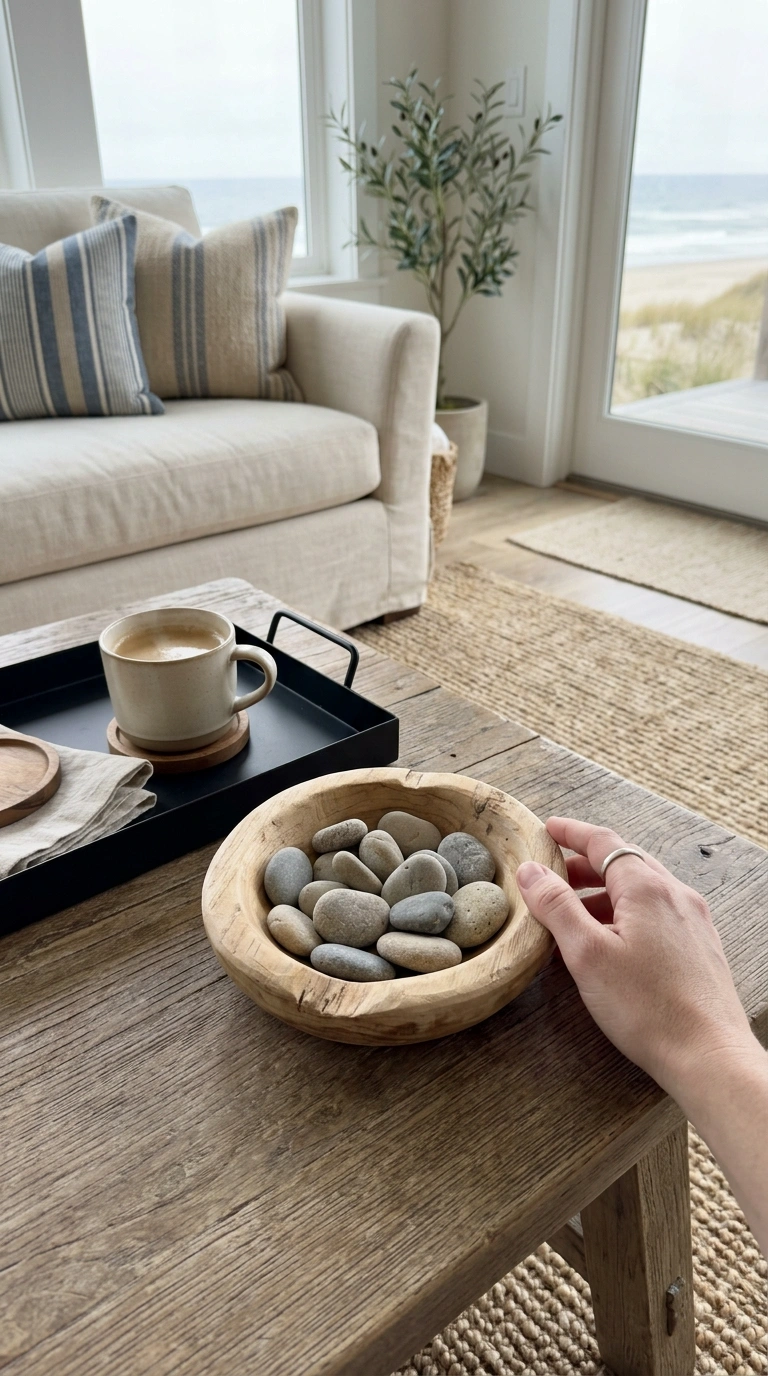
A shallow, hand carved wooden bowl in a pale or bleached finish adds a second layer of natural material to sit alongside your black tray and any ceramic pieces already grouped on the table. Use the bowl to hold a small collection of smooth stones, a set of keys, or even a few pieces of dried citrus for a subtle scent, keeping the contents simple and uncluttered. Choose a bowl with a visible wood grain pattern rather than a painted or heavily varnished finish, since the raw, natural texture is what makes this piece feel coastal rather than generic. Position it near the front edge of the tray where it is easy to reach, since a bowl like this often ends up holding everyday small items people actually need, not just decorative ones. The warm tone of pale wood softens the black tray beneath it, creating the same light and dark contrast that runs through several of the styling ideas on this list.
20. Woven Placemat Base
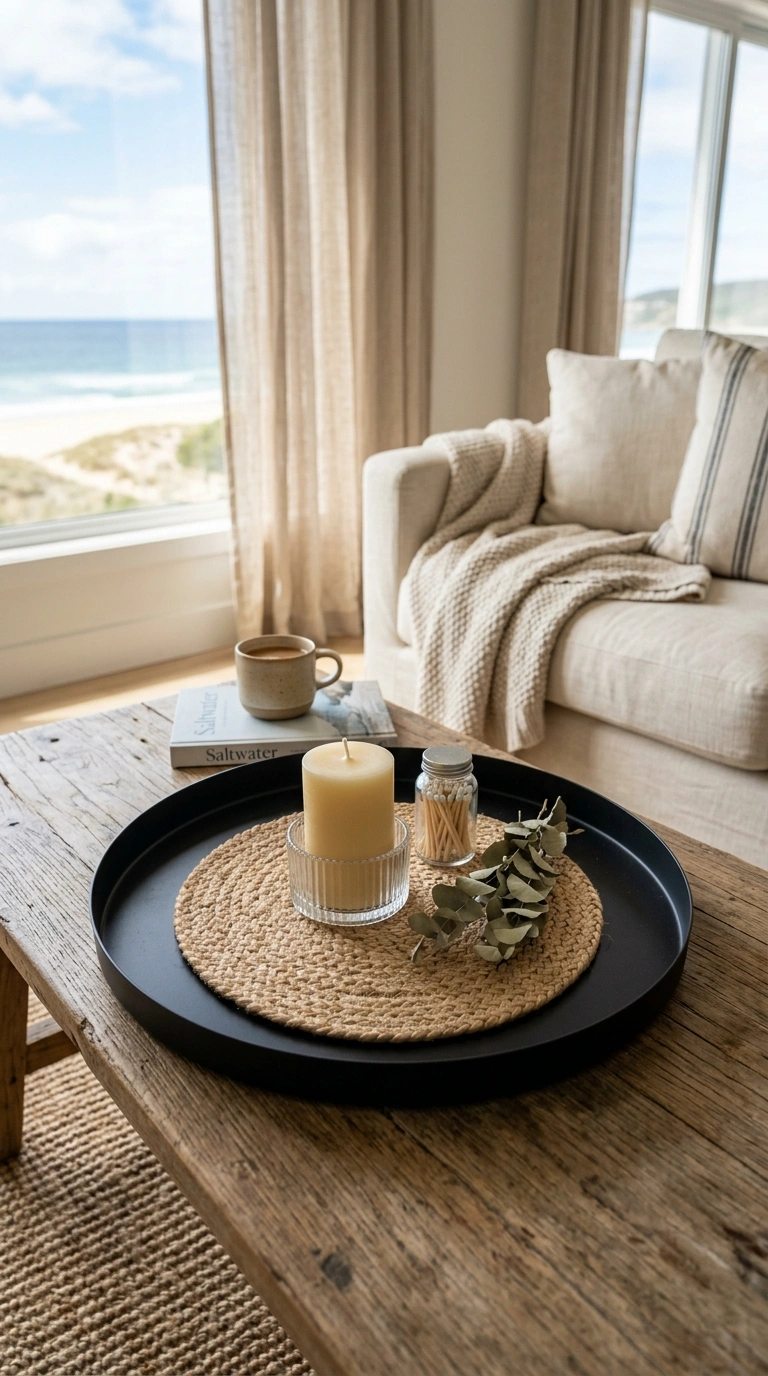
Instead of a fabric runner, try a single round or rectangular woven placemat as the base layer under a smaller decorative object, like a candle or a small vase, positioned on top of your main black tray. Choose a placemat in natural jute or seagrass, and let its rough, textured edge peek out slightly from underneath whatever sits on top of it. This trick adds another layer of texture to the tabletop without taking up much visual space, since the placemat is small enough to work as an accent rather than a dominant element competing with the tray itself. Use it under your tallest item, since elevating something even slightly with a woven base adds a subtle sense of intention to the styling, as if that particular object was placed there deliberately rather than set down at random. This is a low cost trick, since inexpensive woven placemats are widely available and can be repurposed from your dining table collection if you already own a set.
21. Black and Tan Books
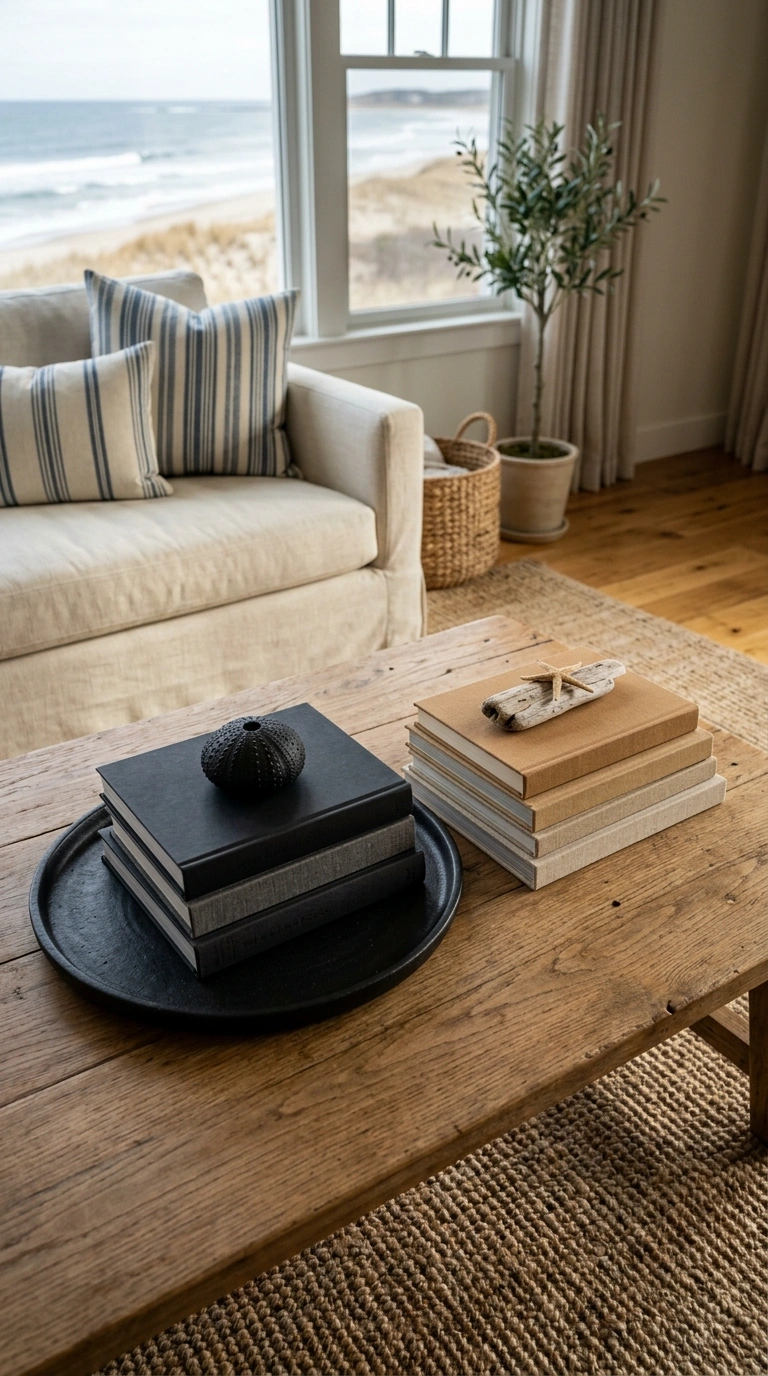
Beyond a single stack, spread two smaller book groupings across different areas of your coffee table, one in black or charcoal covers and one in tan or cream, to create a subtle color conversation across the whole surface. Place the black stack directly on your tray and the tan stack just off to the side on the bare table surface, so your eye moves between the two groupings rather than focusing on just one spot. Top each stack with a small object, a candle on one, a shell or stone on the other, so both groupings feel complete and intentional rather than like leftover clutter. This trick works especially well on larger coffee tables that have enough surface area to support two distinct vignettes without feeling crowded or competing for attention. Choose books you already own rather than buying new ones purely for color coordination, since a mismatched but genuine collection often looks more authentic than a perfectly matched staged set.
22. Sea Glass Jar
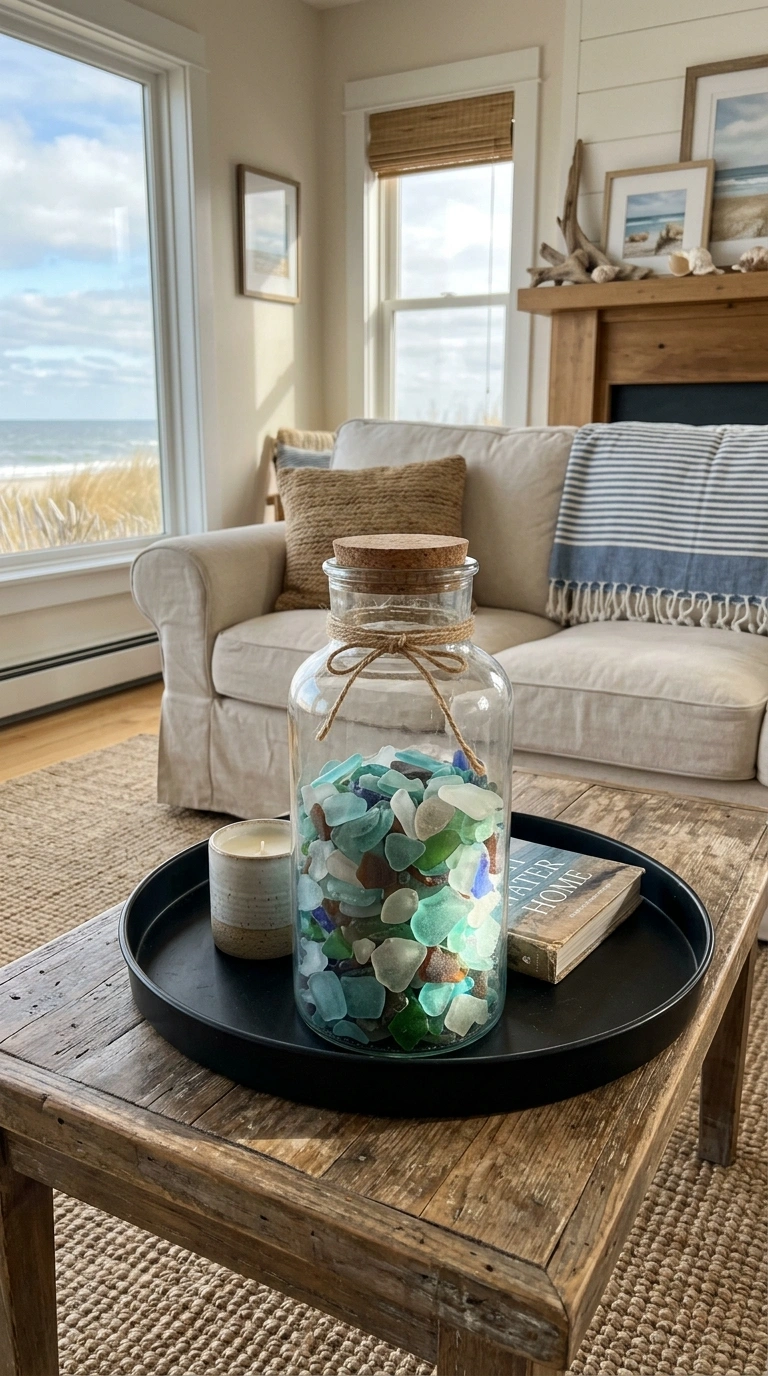
A clear glass jar filled with collected sea glass or smooth colored glass pieces makes a simple, low cost coastal accent that works beautifully on a black tray. Choose a jar with a wide mouth so the colors and shapes inside are easy to see from above, and fill it about two thirds full rather than packing it completely, which lets light pass through the glass more easily. Position the jar toward the front of your tray where the colors catch the most natural light from a nearby window, since sea glass really comes alive when sunlight passes through it in the afternoon. This trick is a wonderful way to display glass collected on actual beach trips, turning a sentimental keepsake into a genuine piece of home decor rather than something tucked away in a drawer. Pair the jar with a single candle or a small stack of coasters to round out the vignette without overcrowding the tray with too many competing glass and ceramic textures.
23. Layered Tray Trio
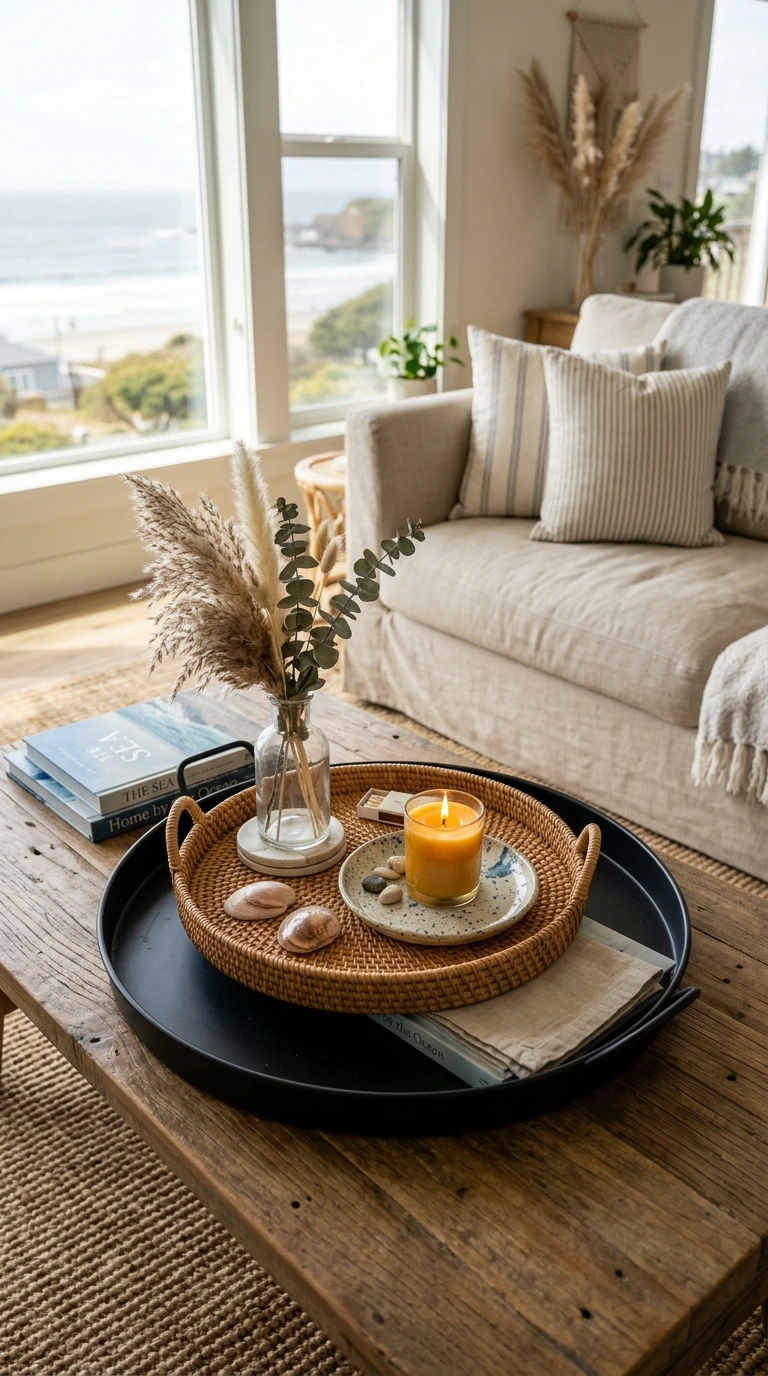
For a more elaborate styling moment, layer three trays of decreasing size directly on top of each other, starting with your largest black tray on the bottom, a smaller rattan tray in the middle, and a tiny ceramic dish on top holding a single object like a candle or a small stone. This layered approach creates real height and dimension on an otherwise flat coffee table, giving the eye a clear path to follow from the wide black base up to the small focal point at the very top. Choose materials that contrast with each other at each layer, smooth lacquer, rough woven rattan, and glossy ceramic, so each tier reads as visually distinct rather than blending together into one flat shape. This trick works best on larger coffee tables with enough surface area to support the full trio without making the rest of the table feel cramped or overcrowded with additional items competing for space around the layered stack.
24. Fresh Eucalyptus Sprig
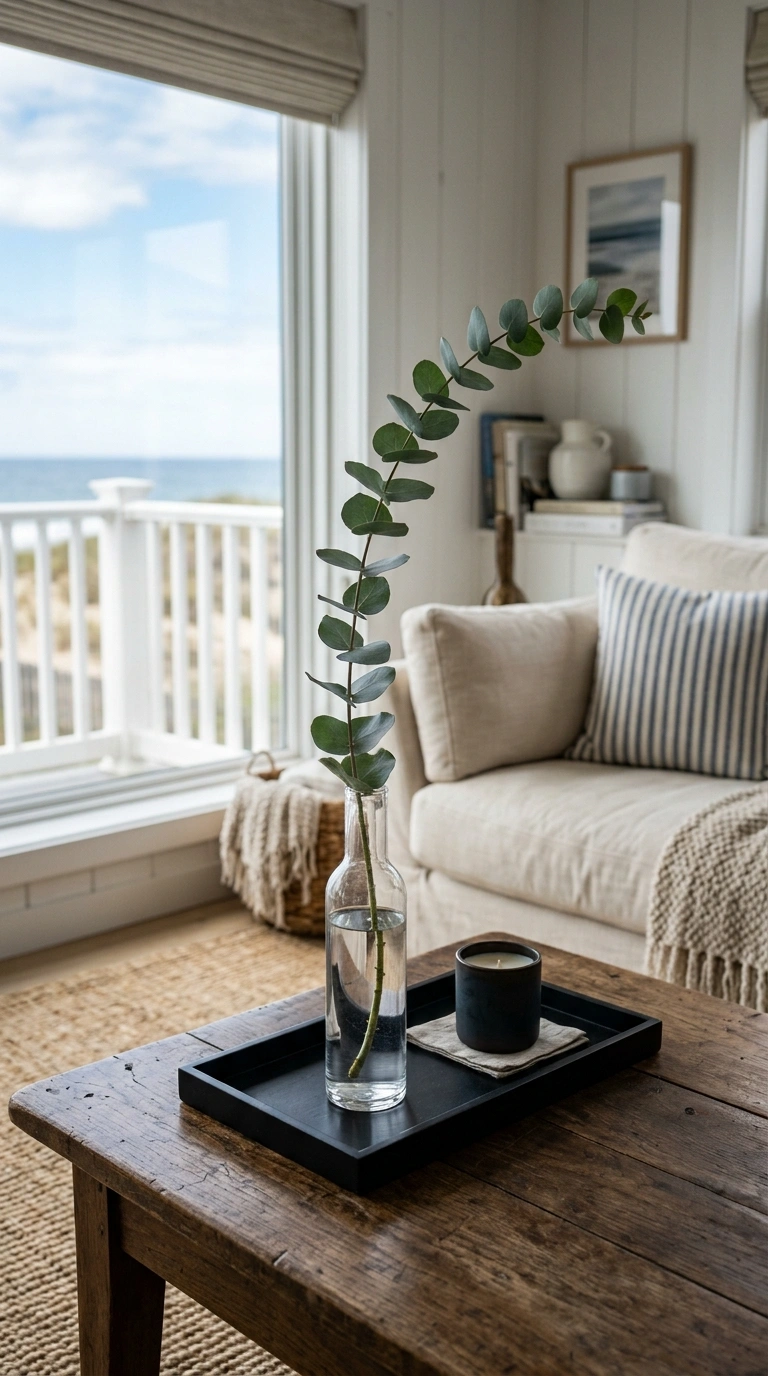
A single sprig or small bundle of fresh or dried eucalyptus, placed in a slim glass vase or bud vase, adds a soft green accent and a light natural scent to your coffee table styling. Position the vase toward the back of your black tray, letting the long stems arch slightly to one side rather than standing perfectly straight, for a more relaxed, gathered look rather than a stiff, formal arrangement. Choose eucalyptus over brighter flowers if you want something that lasts for weeks without wilting, since the dried leaves hold their shape and silvery green color for a long time with almost no maintenance required. This small green accent breaks up a tabletop that might otherwise be entirely black, white, and neutral wood tones, adding just enough color to feel fresh without disrupting the overall coastal palette. Trim the stems at an angle every couple of weeks if using fresh eucalyptus, which helps the sprig stay hydrated and holds its shape a little longer on the table.
Wrapping Up
A coffee table does not need a big budget or a design degree to look pulled together, just a black tray as your anchor and a handful of coastal touches layered in slowly. Try three or four ideas from this list at once, live with them for a week, then swap pieces in and out until the table finally feels like yours.
FAQs
Do I need a black tray specifically, or will any dark tray work?
Any dark, glossy tray creates a similar effect. Black lacquer is the classic choice, but a deep charcoal or navy tray works just as well as an anchor piece.
How many items should I put on a coffee table at once?
Aim for five to eight objects total, grouped in clusters rather than spread evenly, so the table feels styled rather than cluttered.
Can this coastal look work in a home that is not near the beach?
Yes. The black tray and neutral textures ground the coastal accents so the look feels like relaxed, collected decor rather than a themed beach house.
How often should I change the styling on my coffee table?
Swapping one or two items seasonally, like the vase or candle scent, keeps the table feeling fresh without needing to redo the whole layout.
What if my coffee table is small and cannot fit many items?
Stick to one tray with three or four small pieces, like a candle, a shell bowl, and a short stack of books, so the table never feels overcrowded.