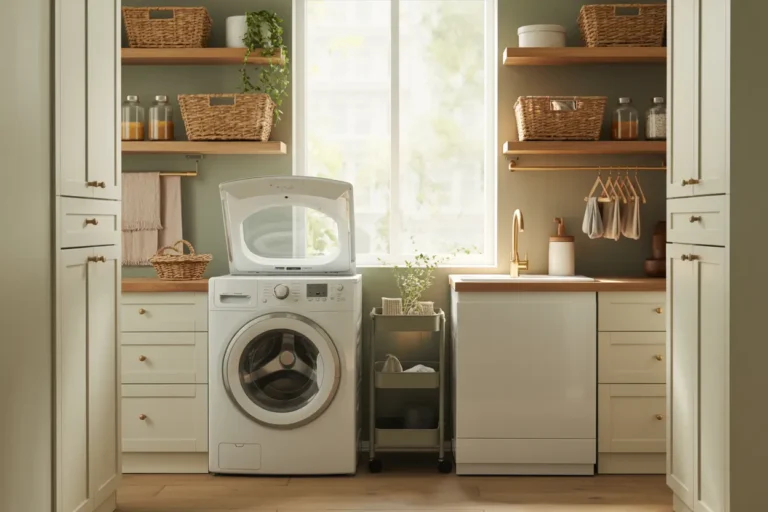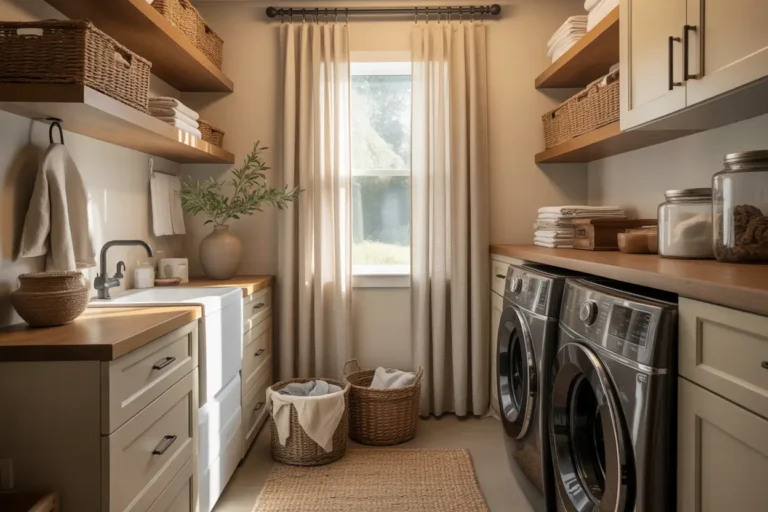
23 Basement Laundry Room Makeovers That Completely Change the Space

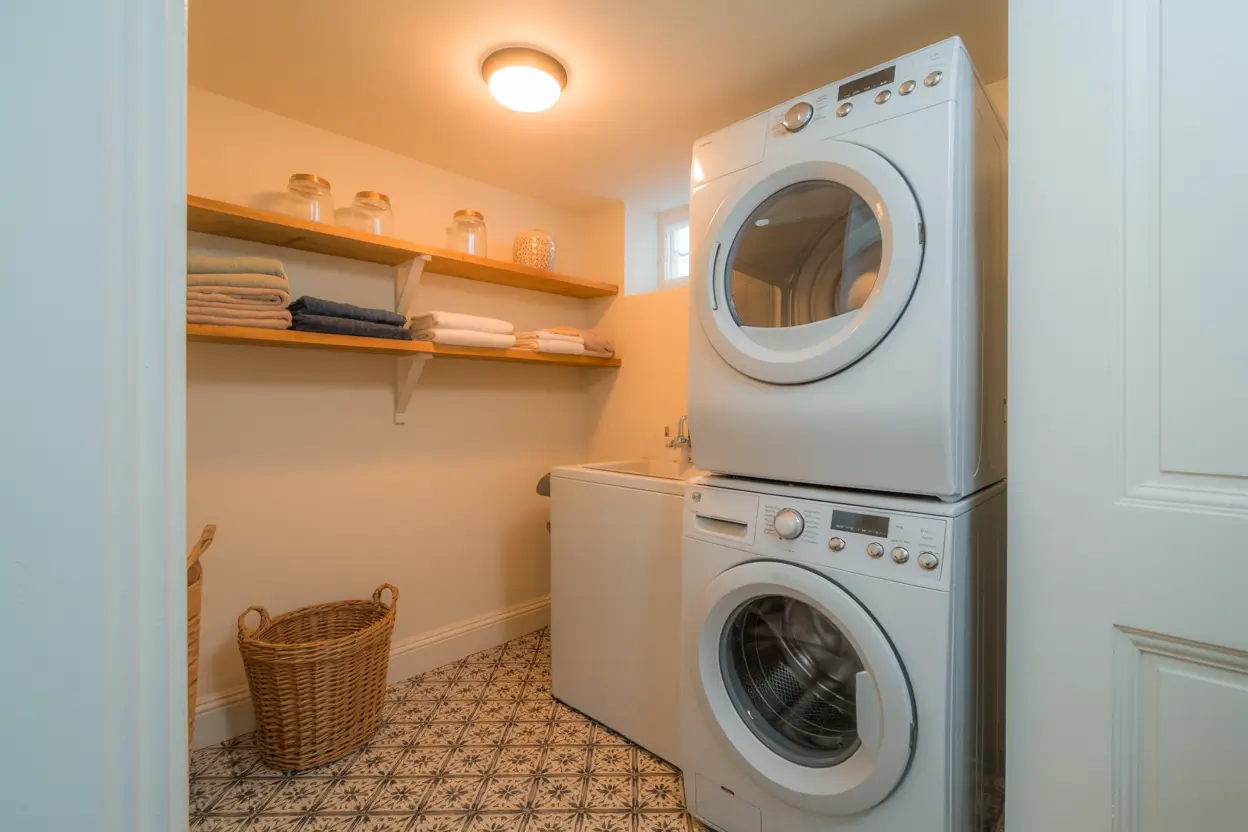
Most basement laundry rooms start out as an afterthought. There is a washer, a dryer, a bare bulb hanging from the ceiling, and maybe a folding pile of clothes on top of the dryer that never seems to shrink. If that sounds like your basement, you are not alone. The good news is that this room does not need a big budget or a full renovation crew to feel different. A few smart changes to the walls, the floor, the lighting, and the storage can turn a gray, forgotten corner into a room you actually enjoy walking into. Below are 23 real makeover ideas you can borrow, mix, and match for your own basement laundry room. Some are weekend projects, others take a bit more planning, but every single one is something you can picture, plan for, and photograph once it is done.
1. Bright White Walls
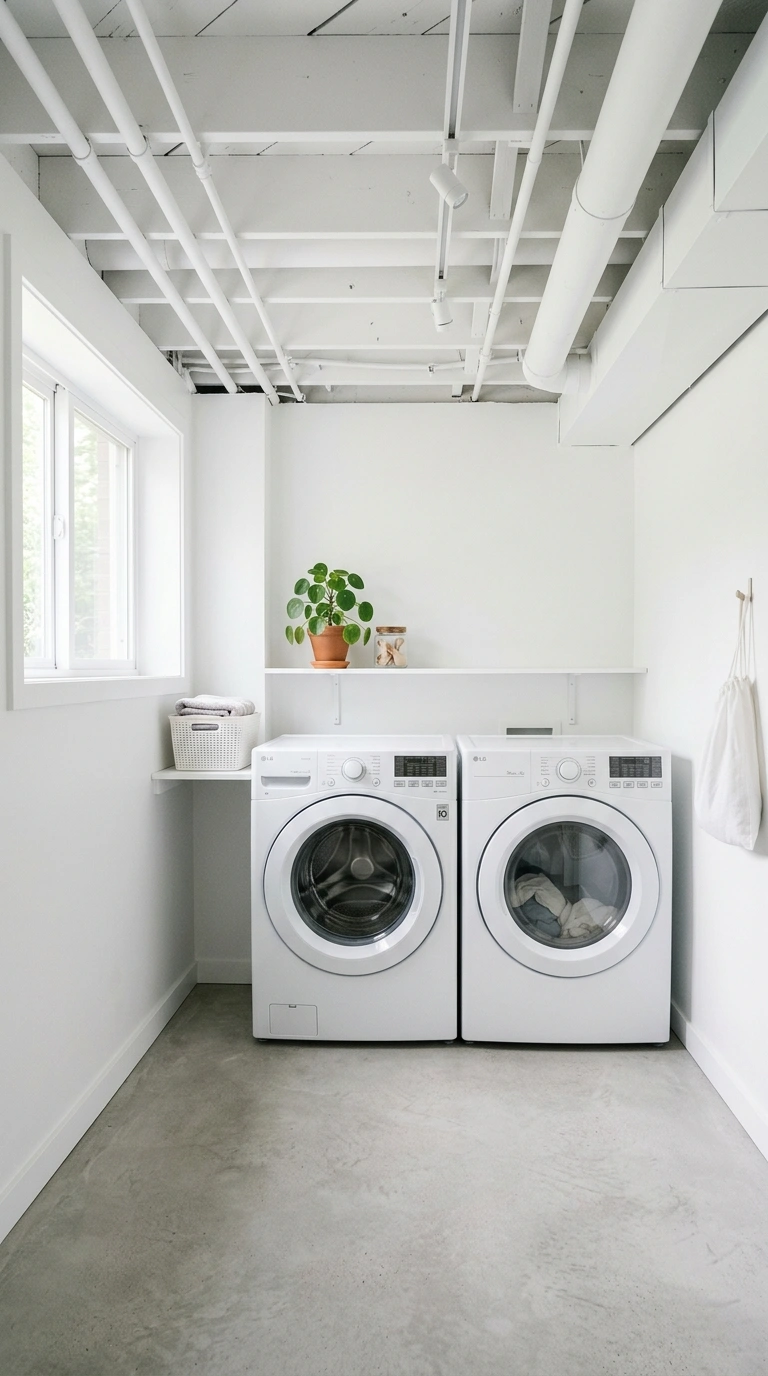
Dark basement walls make any room feel smaller and heavier, and a laundry room is no exception. Painting the walls a clean white or soft off white bounces around whatever light you already have, whether that is a small window or a single overhead fixture. This one change often does more for a basement laundry room than any other single update, because it fixes the biggest problem most basements share, which is a lack of natural brightness. Choose a paint with a satin or semi gloss finish since laundry rooms deal with humidity and occasional splashes, and a shinier finish wipes clean much easier than flat paint. Before you paint, patch any cracks in the drywall or foundation walls so the surface looks smooth once the color goes on. If your basement has exposed pipes or ductwork near the ceiling, painting those the same white as the walls helps them disappear instead of standing out as an eyesore. This single project can usually be finished in a weekend and instantly makes the whole room feel bigger and cleaner.
2. Open Shelving Storage
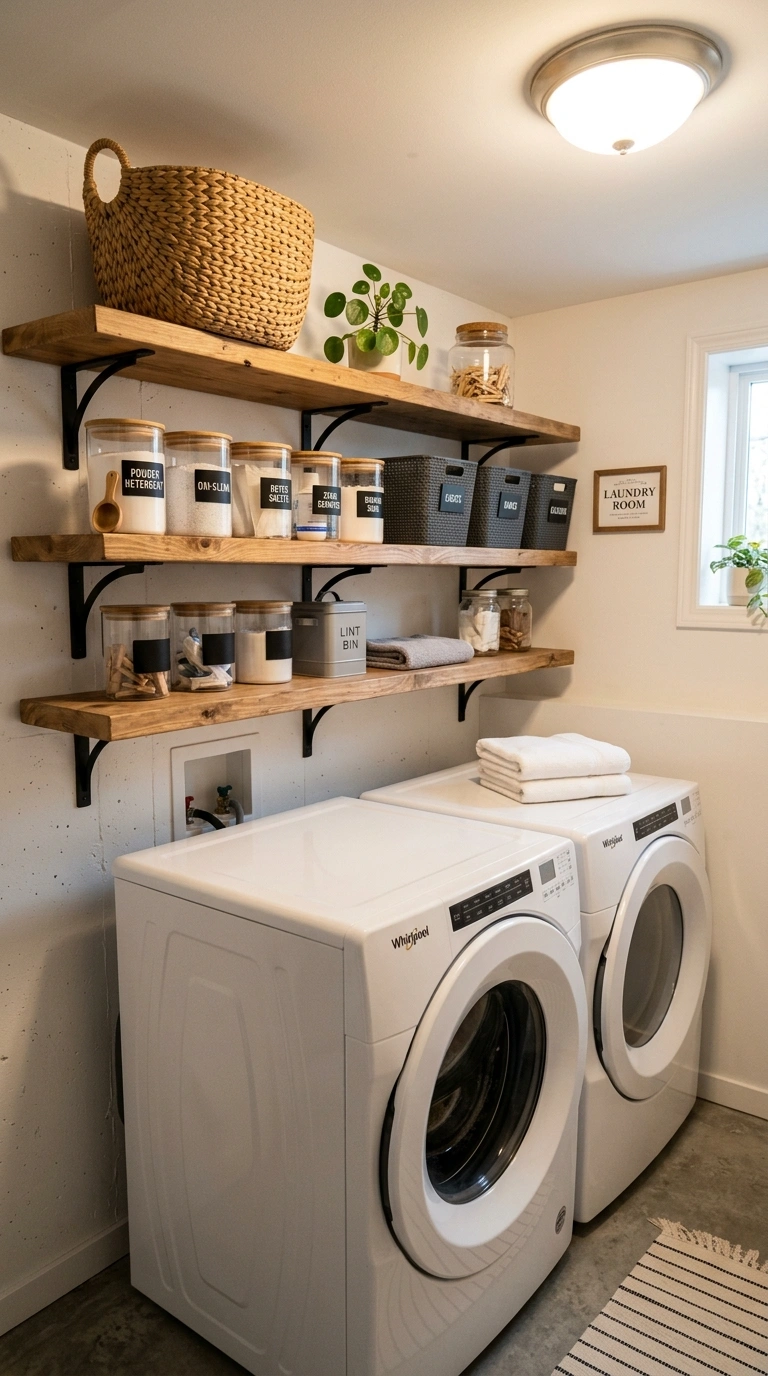
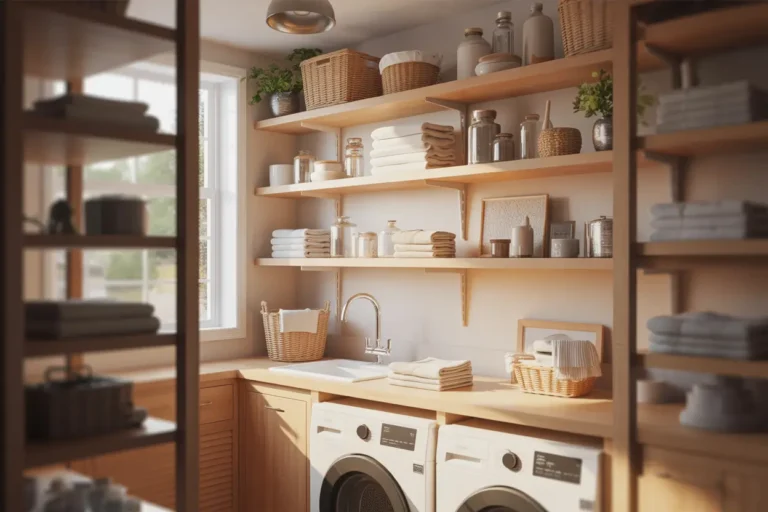
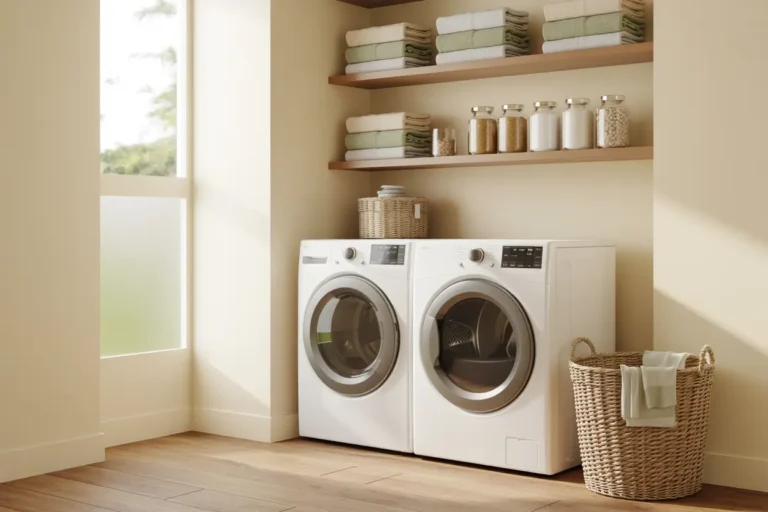
Open shelves above or beside the washer and dryer give you a place to store detergent, dryer sheets, and baskets without needing a full cabinet install. Simple wood shelves on metal brackets look clean and are easy to mount into basement walls, even if those walls are concrete block, using the right anchors. Group your supplies into matching bins or glass jars so the shelves look tidy rather than cluttered, and leave a little breathing room between items instead of packing every shelf edge to edge. A shelf placed at eye level is perfect for things you use daily, like stain remover and dryer balls, while a higher shelf can hold seasonal items such as extra pillowcases or off season blankets. If your basement ceiling is low, keep the shelves shallow, around eight to ten inches deep, so they do not crowd the walking space in front of the machines. This is one of the easiest upgrades on this list and usually costs less than a hundred dollars for a full wall of storage.
3. Folding Table Station
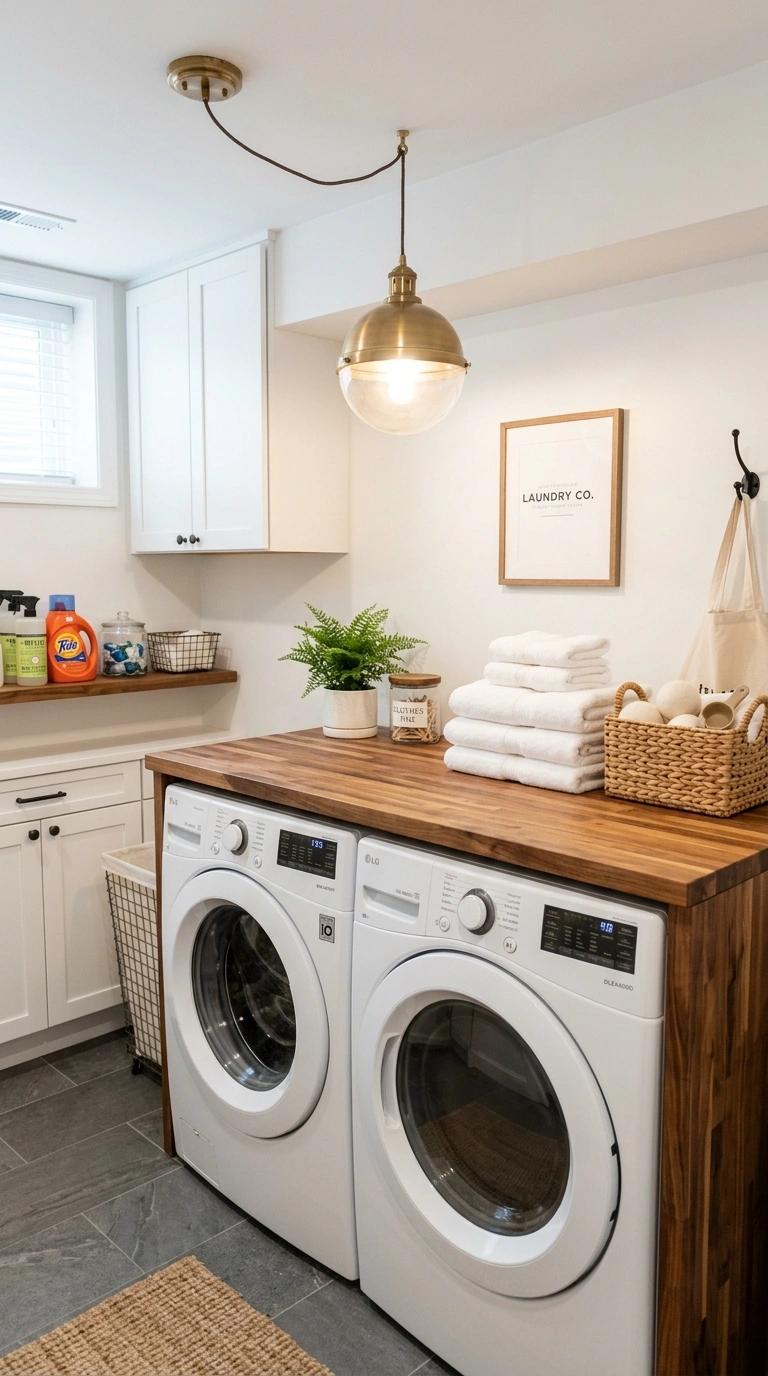
A dedicated folding surface changes how a laundry room functions every single day. Instead of folding clothes on top of the dryer or carrying baskets upstairs to the kitchen table, a built in counter or a simple table gives you one spot to sort, fold, and stack clean laundry. If you have space, a countertop built over a front load washer and dryer works well, especially with the machines set at a slight height with a small platform underneath. In a tighter basement, a narrow console table or a fold down shelf attached to the wall does the same job without taking up permanent floor space. Choose a surface that can handle some moisture, like laminate, butcher block sealed with a protective coat, or a solid surface counter. Add a small basket or tray at one end for stray socks and another for items that need mending, so the folding station becomes a real sorting hub. This one addition often turns laundry from a dreaded chore into a much faster, calmer task.
4. Patterned Vinyl Flooring
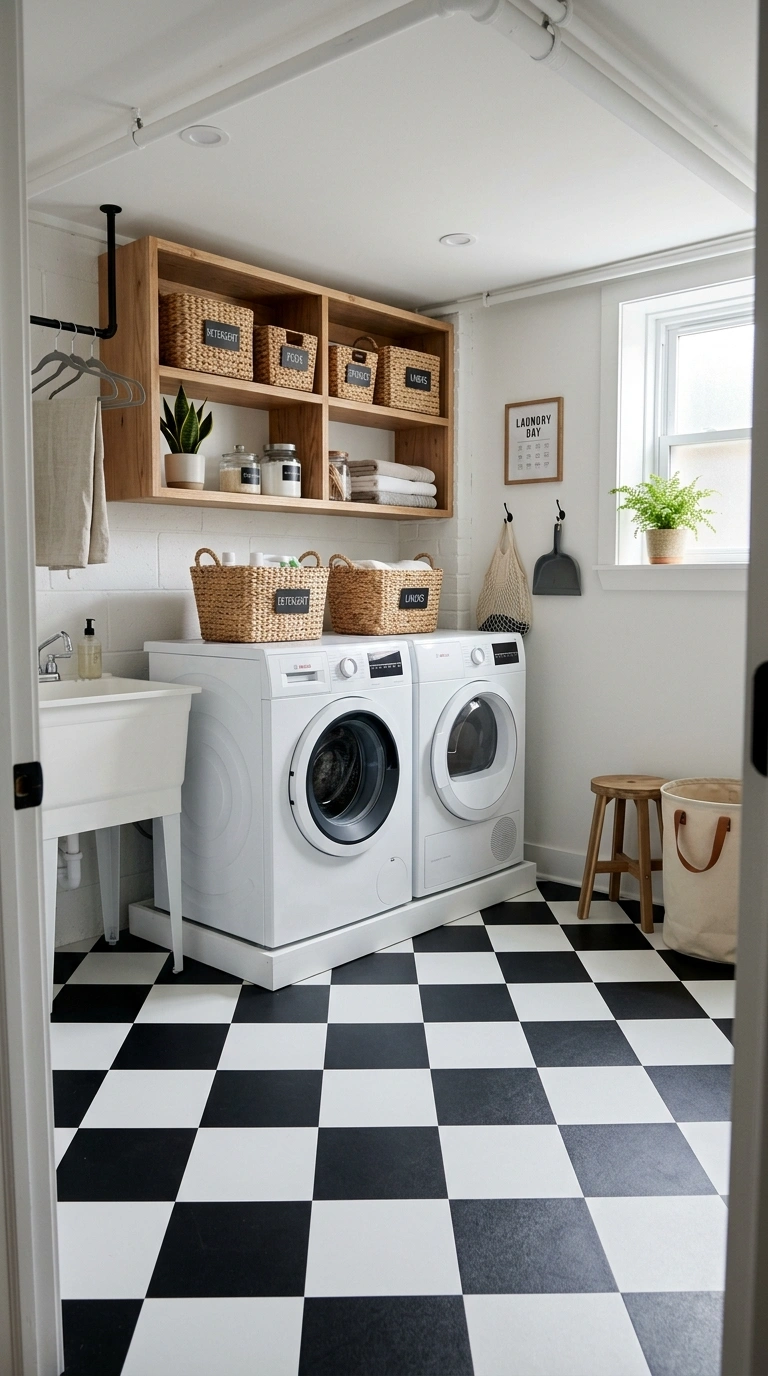
Basement floors are often bare concrete, and while that works, it rarely feels welcoming. Peel and stick vinyl tile or sheet vinyl in a checkerboard or patterned design gives the room personality without the cost of a full flooring renovation. Patterned black and white tile is a popular choice because it hides dirt and lint well and gives the room a slightly retro, cheerful look that feels intentional rather than unfinished. Before laying vinyl, make sure the concrete is clean, dry, and free of major cracks, and consider a basement specific underlayment if moisture has ever been an issue in that area. Vinyl is water resistant, which matters in a room where a hose connection or a leaking machine could cause a spill. It is also soft underfoot compared to bare concrete, which is a nice bonus if you spend time standing there sorting or folding. This project can often be done in a single day for an average sized laundry room.
5. Hidden Laundry Nook
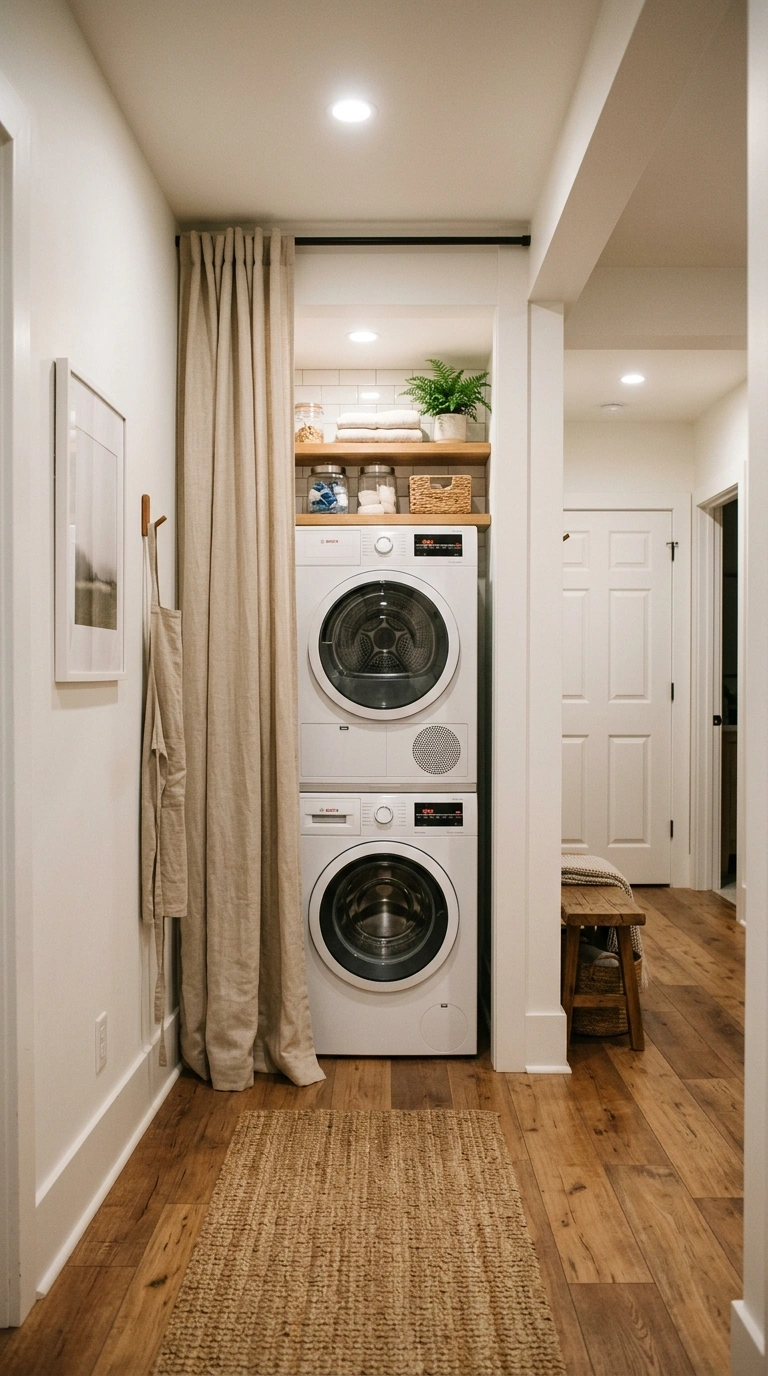
If your basement laundry area sits out in the open near a stairway or rec room, closing it off with a simple wall, curtain, or sliding panel keeps the mess out of sight when you are not using it. A half wall with an open doorway works well if you want to keep the space feeling connected to the rest of the basement, while a full wall with a door creates a true separate room. For a lower cost option, a ceiling mounted curtain track with a simple linen curtain can hide the machines completely and softens the look of the space at the same time. This idea works especially well in finished basements where the laundry area sits near a home gym, office, or playroom, since nobody wants to look at a washer and dryer while working out or relaxing. Choose a curtain fabric that can handle some humidity, like a cotton blend, and hang it a few inches above the floor so it does not drag or trap moisture.
6. Butcher Block Countertop
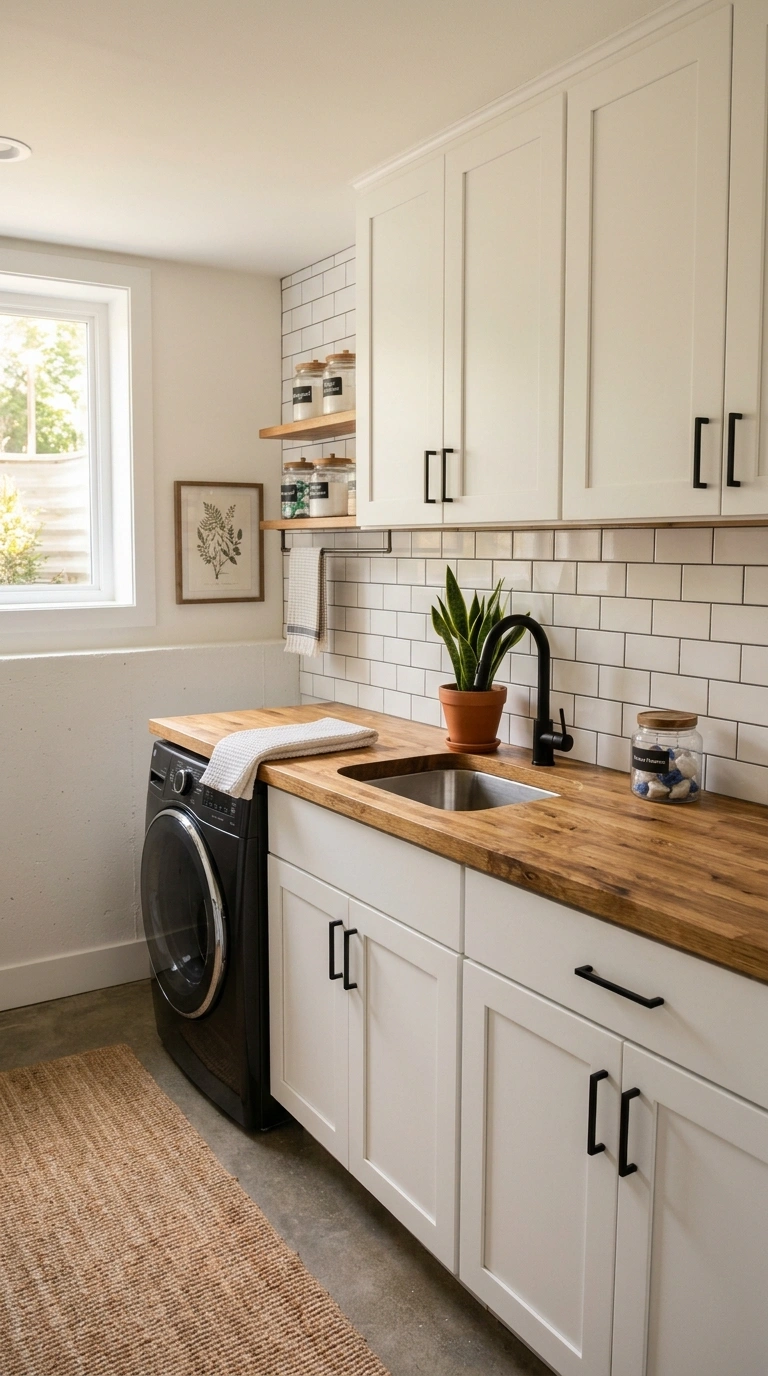
A butcher block countertop brings warmth into a basement laundry room that might otherwise feel cold and utilitarian. Installed over a stacked washer and dryer, a side cabinet, or a small run of base cabinets, butcher block gives you both counter space and a softer, more finished look than bare plywood or exposed studs. Choose a hardwood like maple or oak, and seal it with a food safe mineral oil or a polyurethane topcoat rated for moisture, since laundry rooms deal with humidity from the dryer vent and occasional spills. The warm wood tone pairs nicely with white walls, black hardware, or woven baskets, giving the room a cozy, cabin like feel instead of a sterile utility closet look. If your basement has exposed pipes nearby, a wood counter also helps balance out the more industrial elements in the room. Wipe up any water right away and reapply sealant once or twice a year to keep the wood looking fresh and to prevent warping over time.
7. Wall-Mounted Drying Rack
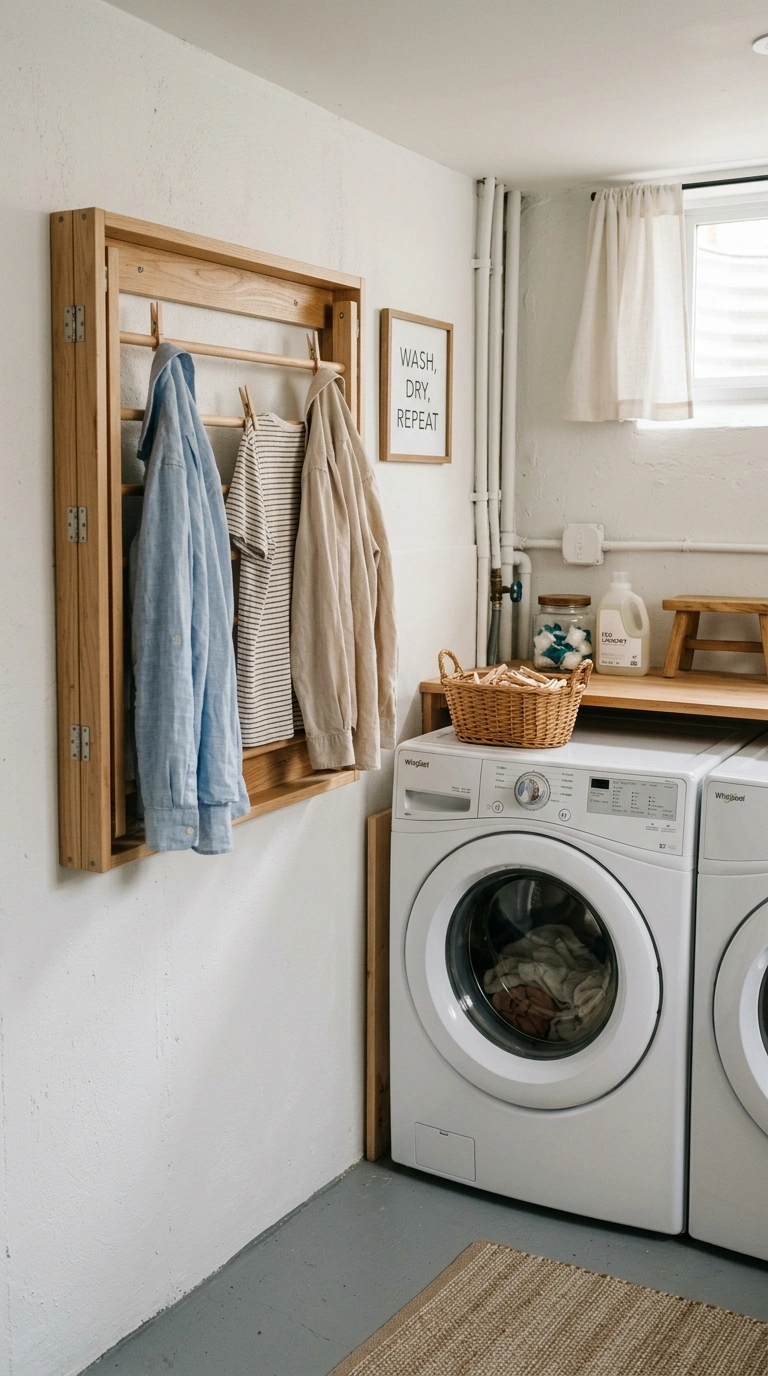
Not everything can go in the dryer, and a wall mounted drying rack solves the problem of wet clothes taking over your counters or floor. Folding wooden or metal racks attach directly to the wall and fold flat against the surface when you are not using them, which is especially helpful in a smaller basement laundry room where floor space is tight. Mount the rack near the washer so wet items do not drip across the room, and place it where some airflow reaches it, either near a vent, a small window, or a dehumidifier. A row of hooks nearby gives you a spot to hang delicate items on hangers straight out of the wash. Choose a rack with several fold out arms if you regularly hand wash sweaters or delicate fabrics, since more arms mean more spread out drying space and faster drying times. This is a low cost addition that solves a daily frustration in almost every laundry room, basement or not.
8. Sliding Barn Door
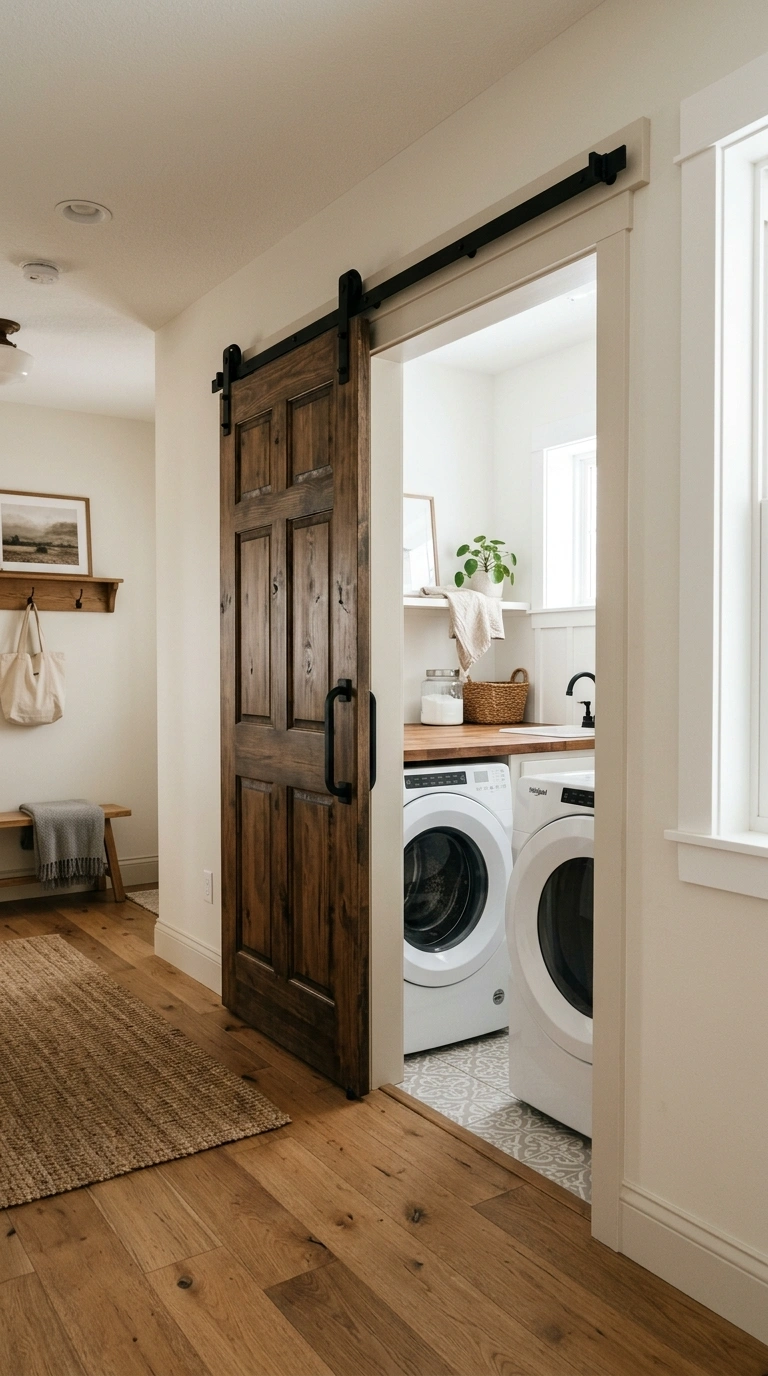
A sliding barn door adds a strong visual moment to a basement laundry room while solving a practical problem, since traditional swinging doors need floor clearance that many basements simply do not have. A barn door slides along a track mounted above the doorway, which frees up floor space and works well in tight hallways or narrow basement layouts. Choose a door in a warm wood tone or a painted finish that matches your basement’s overall color scheme, and pair it with black hardware for a look that feels current without trying too hard. Frosted or reeded glass panels in the door let some light pass through while still keeping the laundry area a bit more private. Barn doors also double as a design feature, giving an otherwise plain basement hallway something interesting to look at. Measure your doorway carefully before ordering hardware, since the door needs to be a few inches wider than the opening on each side to fully cover it when closed.
9. Built-In Cabinetry Wall
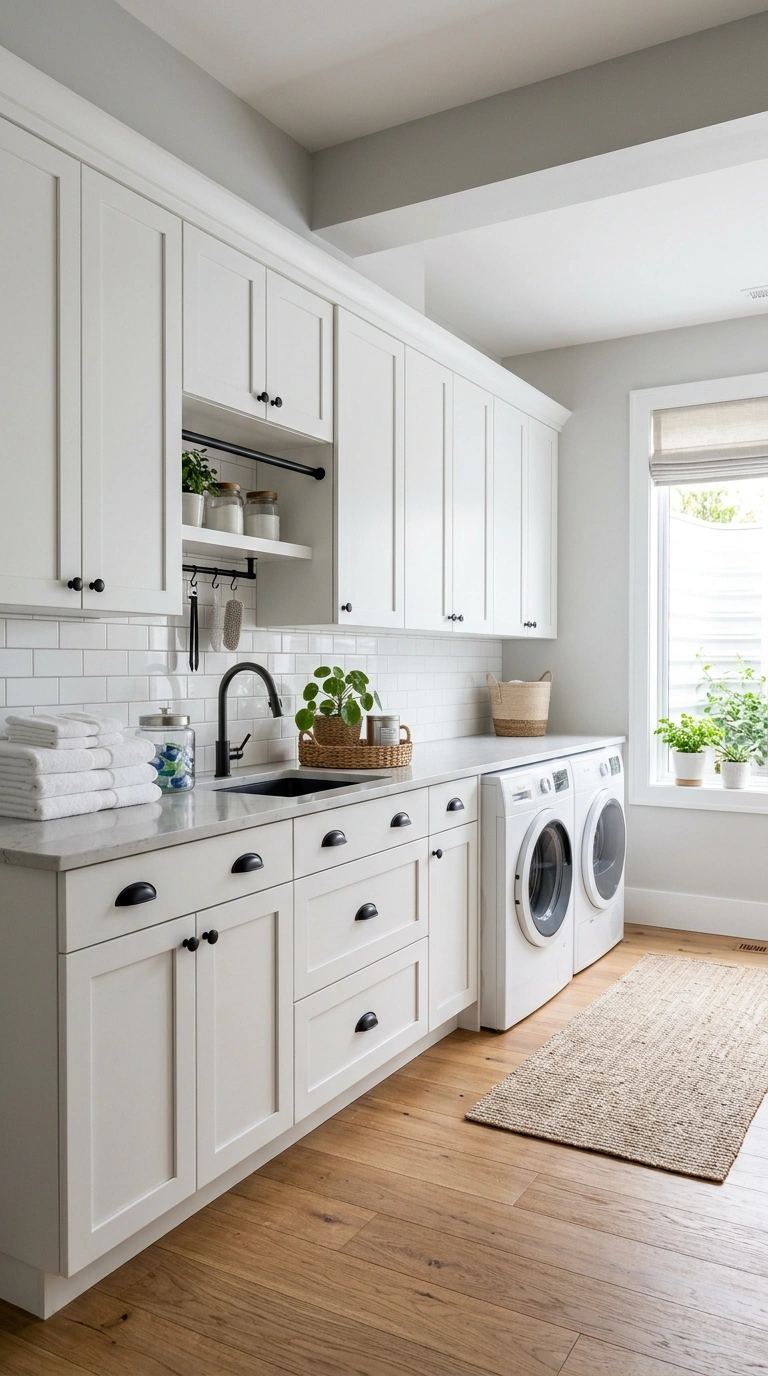
A full wall of cabinetry turns a basement laundry room into something that looks closer to a real mudroom or utility room than a leftover corner. Upper and lower cabinets give you closed storage for cleaning supplies, extra linens, and laundry products, keeping everything out of view and off open shelves if you prefer a tidier look. Leave a section of open counter between the upper and lower cabinets for folding, and consider a few glass front doors on the uppers to break up the solid cabinet look. White or light gray cabinets keep the basement feeling bright, while a bold color like navy or forest green on the lower cabinets only adds a nice contrast if the room gets enough light to support a darker tone. Stock cabinets from a home improvement store keep costs down compared to custom built ins, and many companies offer laundry specific cabinet sizes that fit around standard washer and dryer dimensions. This is a bigger project, but it gives the most finished, put together look on this list.
10. Laundry Sink Station
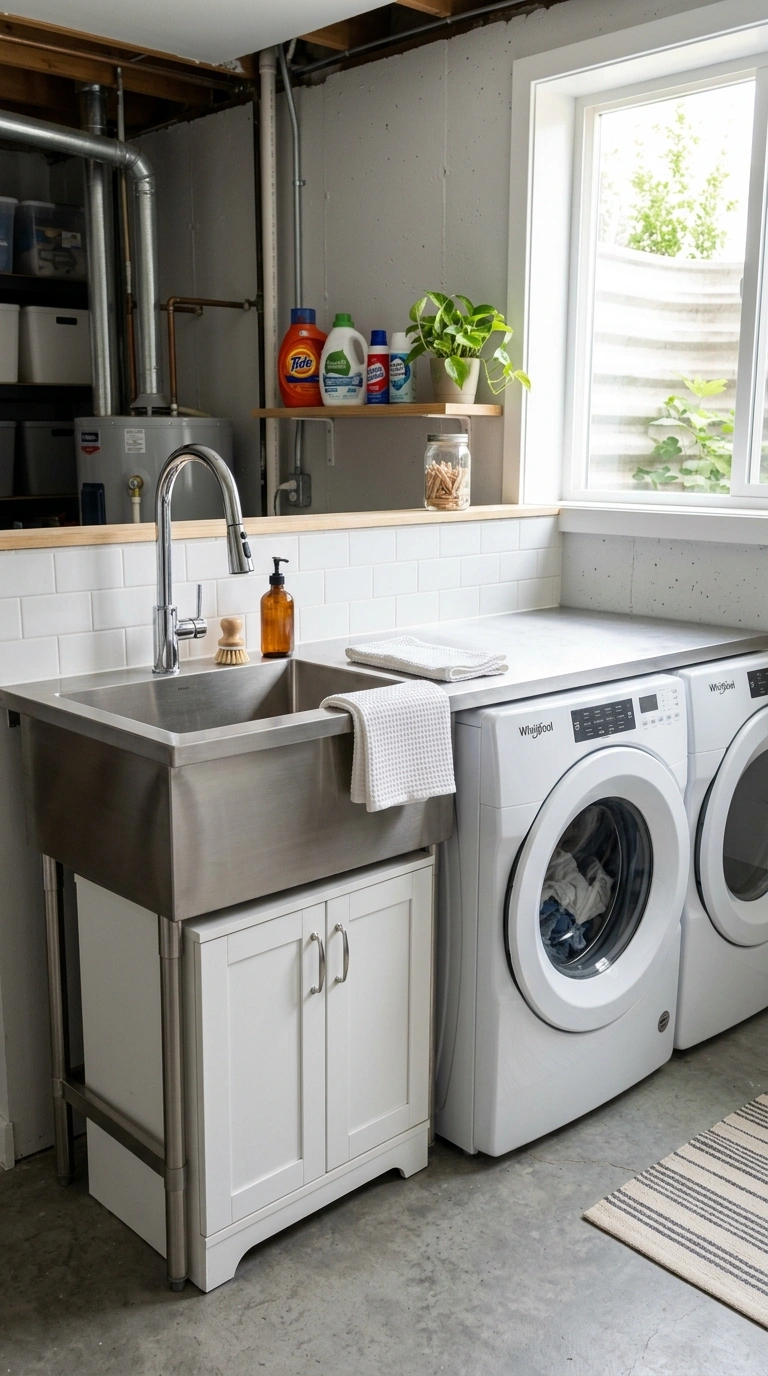
A utility sink next to the washer solves a lot of small daily problems, from rinsing out stained clothes to filling mop buckets or watering plants. In a basement, plumbing is often already nearby, which makes adding a laundry sink more affordable than in other parts of the house. Choose a deep stainless steel or composite sink that can handle heavy use, and mount a simple gooseneck faucet with a pull down sprayer for extra flexibility when rinsing bulky items. A small cabinet underneath the sink hides cleaning supplies and gives you a place to store a mop and bucket out of sight. Add a soap dispenser and a small towel bar right at the sink so hand washing and rinsing feels convenient rather than like an extra chore. This upgrade works especially well for households with kids or pets, since a laundry sink becomes the go to spot for washing muddy shoes, cleaning up spills, and pre treating stains before they set.
11. Board and Batten Walls
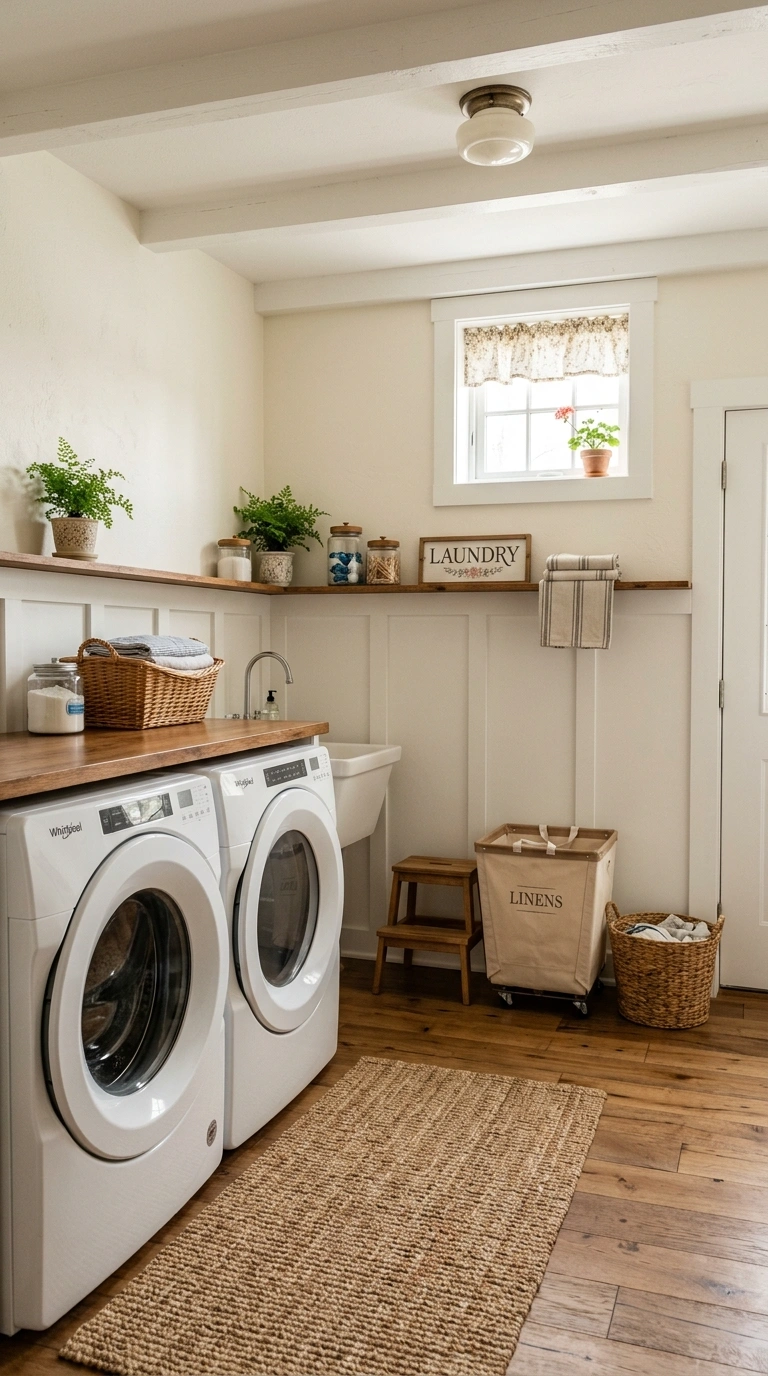
Board and batten trim adds texture and a cottage style charm to basement walls that would otherwise be flat and plain. This look is created by attaching vertical wood strips over a painted wall, spaced evenly apart, which gives the surface a paneled, dimensional look. In a laundry room, board and batten works well on a lower half of the wall, topped with a simple shelf ledge, leaving the upper wall plain or wallpapered for contrast. Paint the boards and the wall behind them the same color for a subtle, tone on tone effect, or choose a contrasting color on the trim for a bolder statement. This detail is inexpensive to add, usually using strips of pine or MDF board cut to size, and it can be installed over drywall in a single weekend with a level, adhesive, and a nail gun. The texture it adds makes a basement laundry room feel like a designed space rather than an unfinished afterthought, and it photographs beautifully against simple white appliances.
12. Pegboard Organization Wall
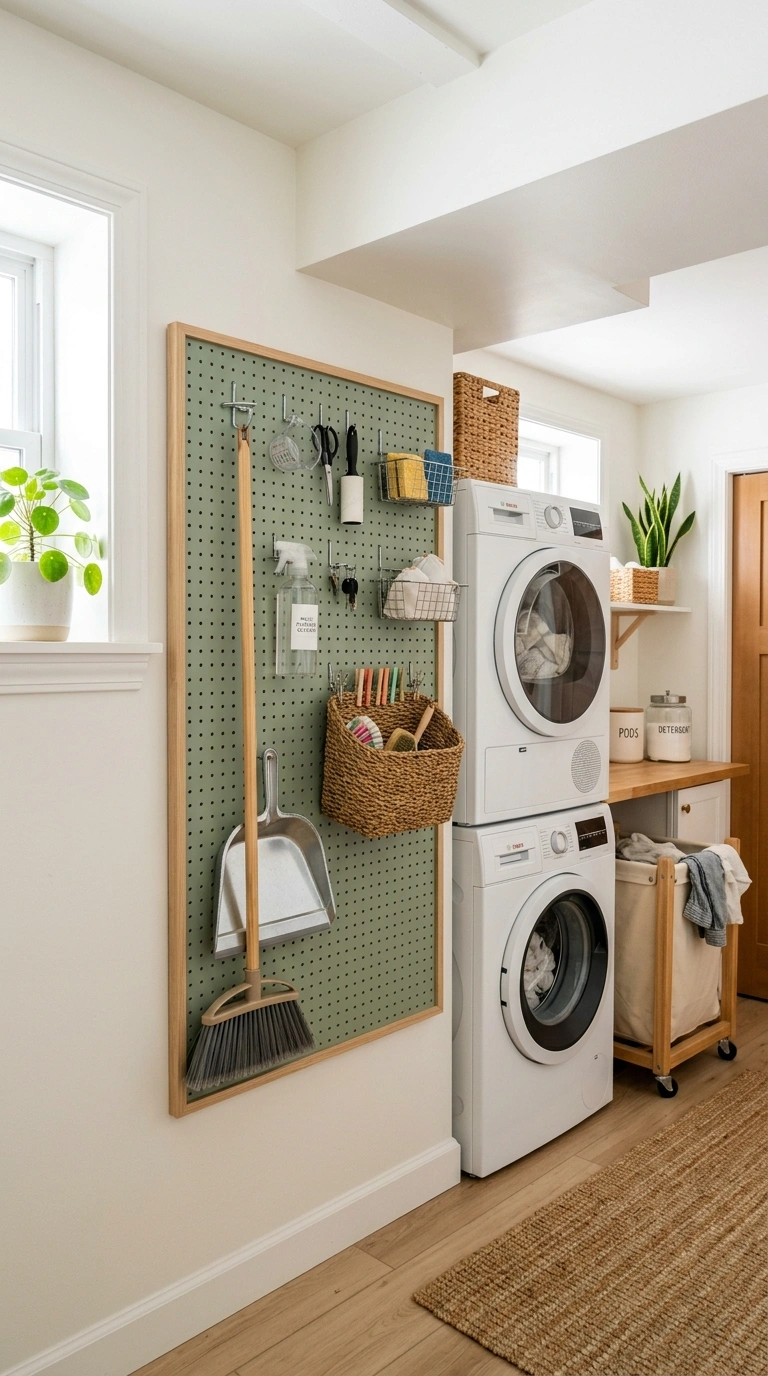
A pegboard wall keeps laundry tools within reach while adding a fun, organized look to the room. Mounted behind or beside the washer and dryer, a pegboard holds hooks for hanging a broom, dustpan, ironing board, or a spray bottle of stain remover, all without taking up any counter or floor space. Paint the pegboard a color that matches your walls for a subtle look, or choose a bold shade like sage green or navy to make it a focal point in the room. Add small baskets or bins that clip onto the pegboard for holding clothespins, lint rollers, or extra dryer sheets, so small items do not get lost or cluttered on a shelf. This idea works especially well in smaller basement laundry rooms where every bit of wall space needs to earn its keep. Rearranging a pegboard is easy too, since hooks and bins can be moved around any time your storage needs change, which makes it a flexible option as your laundry routine evolves.
13. Ceiling Light Upgrade
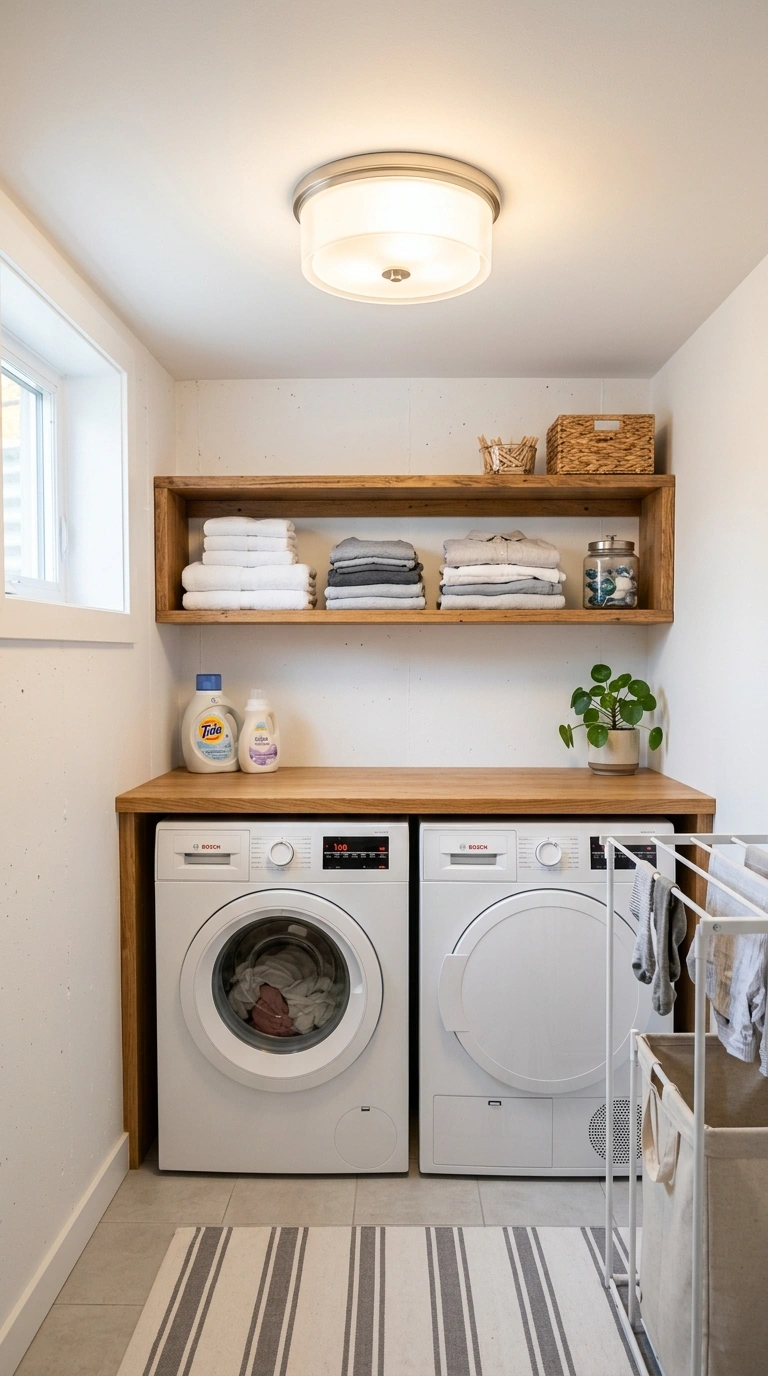
Basement ceilings often come with a single bare bulb or a builder grade fixture that leaves the room feeling dim and uninviting. Swapping that fixture for a flush mount light with a wider glass shade spreads light more evenly across the room and instantly makes the space feel more finished. In basements with low ceilings, a flush or semi flush fixture avoids the head bumping problem that can come with hanging pendants. Choose a bulb with a warm white color temperature, somewhere around 2700 to 3000 Kelvin, so the room feels cozy rather than clinical under fluorescent style lighting. If your basement laundry room lacks a window, consider adding a second light source, like a small under cabinet strip light above the folding counter, so you are not working in your own shadow while sorting clothes. This upgrade usually takes less than an hour to install if you already have wiring in place, and it makes a bigger visual difference than almost any other change on this list.
14. Wicker Basket Storage
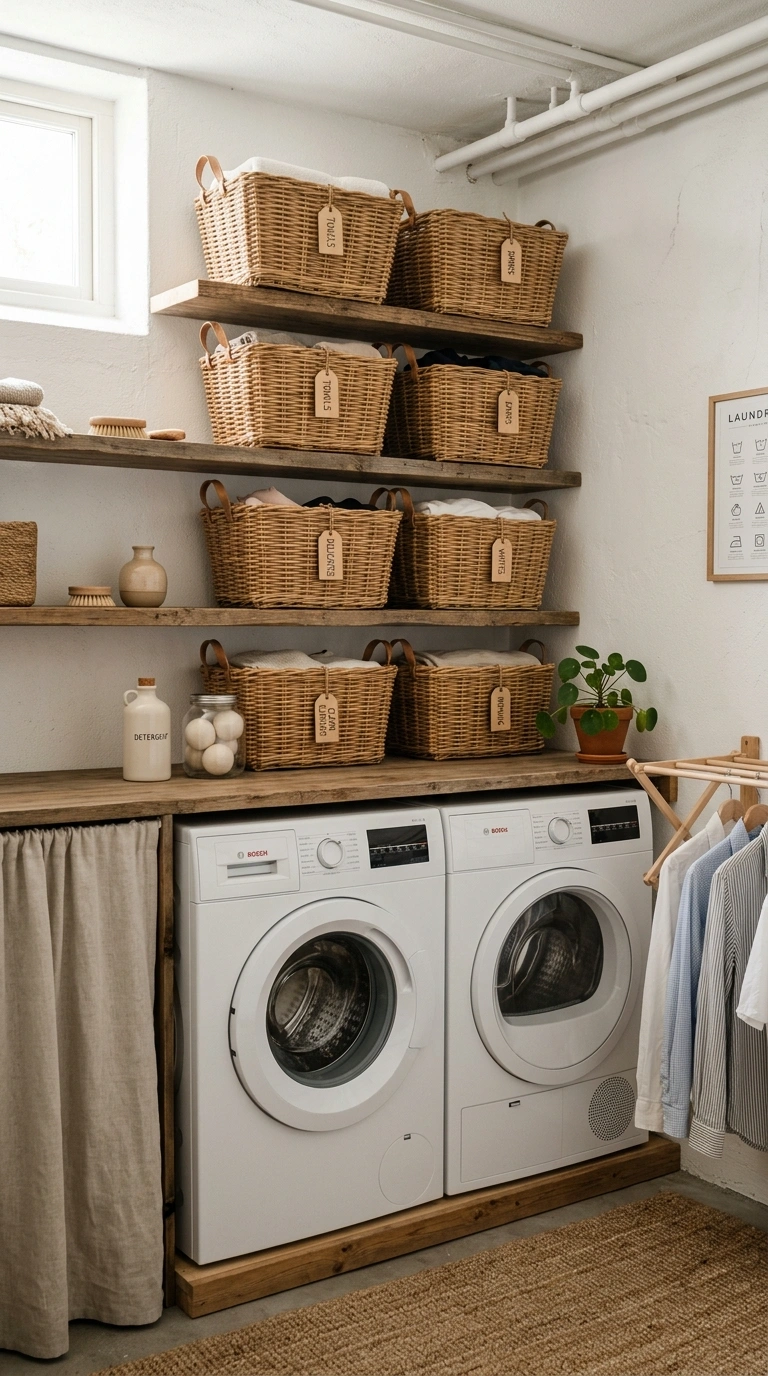
Woven baskets bring a soft, natural texture into a room full of hard surfaces like machines, tile, and metal shelving. Use large baskets on the floor for sorting darks, lights, and delicates, and smaller baskets on open shelves to corral loose items like clothespins, lint rollers, or extra socks waiting to be matched. Choose baskets in a similar tone, like natural rattan or a light seagrass, so the shelves look coordinated rather than mismatched. Label each basket with a simple wood or fabric tag so everyone in the household knows exactly where laundry should go, which cuts down on piles building up on the floor. Baskets with handles make it easy to carry a full load of laundry up the stairs in one trip instead of juggling loose clothes. This is one of the most budget friendly ideas on this list, since a full wall of basket storage can often be put together for well under a hundred dollars using baskets from a home goods or discount store.
15. Rolling Cart Storage
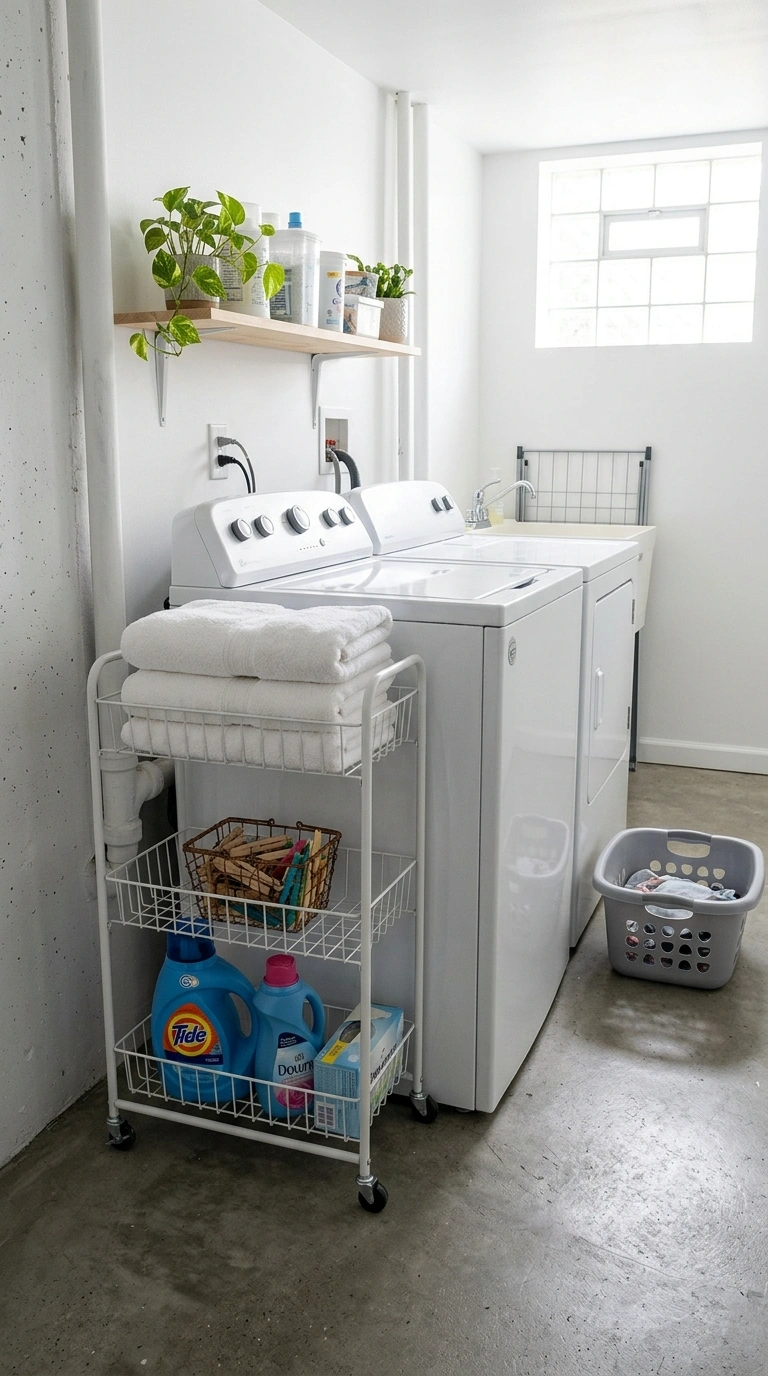
A rolling cart adds flexible storage in a basement laundry room where built in cabinets are not an option, whether because of budget, rented space, or an awkward layout. Slim rolling carts fit neatly into the narrow gap beside a washer or dryer, giving you a few tiers of storage for detergent pods, stain sticks, and a small basket of dryer sheets, all within arm’s reach of the machines. Metal wire carts have an open, airy look that works well in a modern basement, while a wood and canvas cart brings a softer, more traditional feel. Because the cart has wheels, you can roll it out of the way when cleaning the floor or pull it closer when you are doing a big folding session. Choose a cart with a locking wheel feature if your laundry room floor has any slope, which is common in basements built with a floor drain. This idea is especially useful for renters who want real storage without installing anything permanent.
16. Painted Concrete Floor
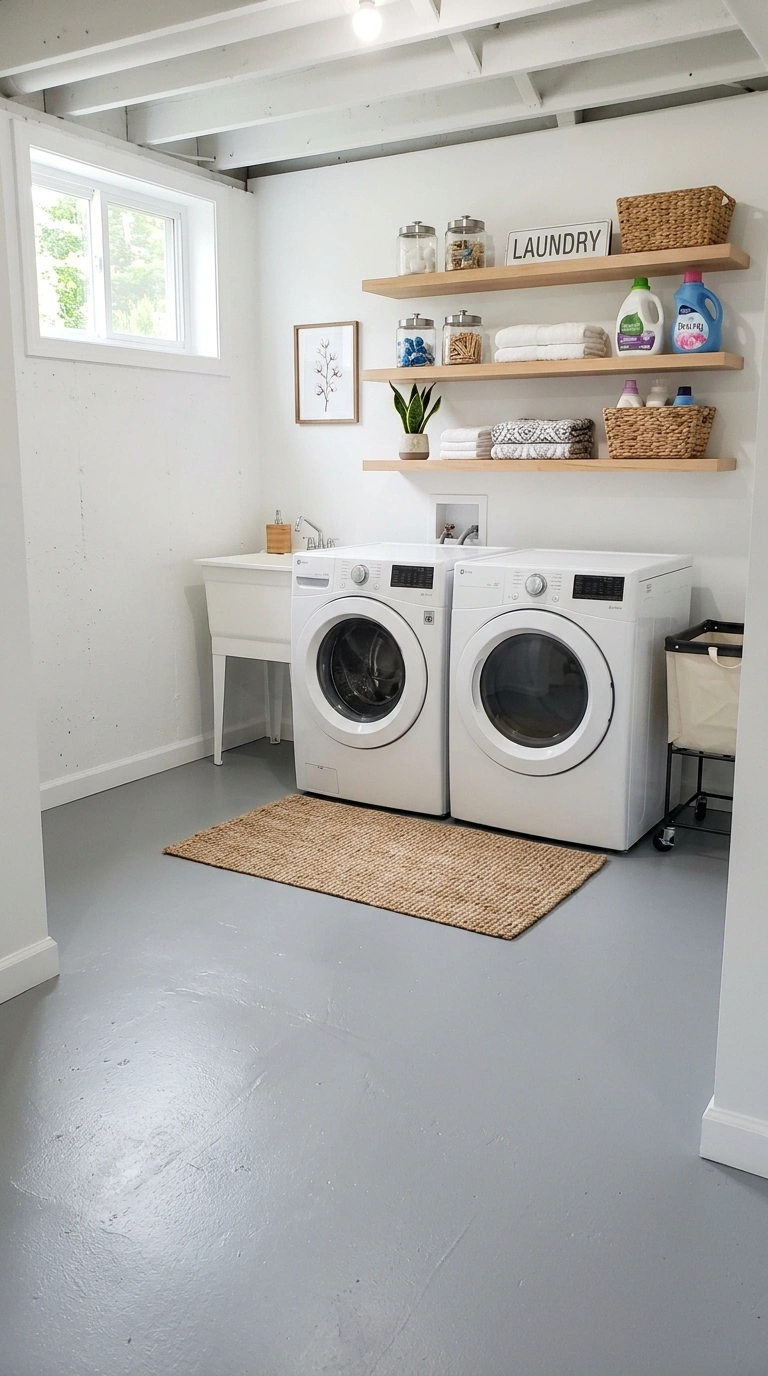
If new flooring is not in the budget right now, a painted concrete floor is a low cost way to completely change the look of a basement laundry room. Concrete floor paint comes in a wide range of colors, and many basement owners choose a soft gray, warm terracotta, or even a painted checkerboard pattern using two coordinating shades. Before painting, the concrete needs to be cleaned thoroughly and any oil or grease stains treated, since paint will not stick properly to a dirty or sealed surface. A concrete etching solution helps the paint bond, followed by a primer made for concrete floors and then two coats of your chosen color. Finish with a clear sealant to protect the paint from scuffs and moisture, especially near the washer where water splashes are more likely. This project takes a few days total because of drying time between coats, but the cost is a fraction of installing new flooring, and the result gives the room a fresh, finished floor.
17. Wallpaper Accent Wall
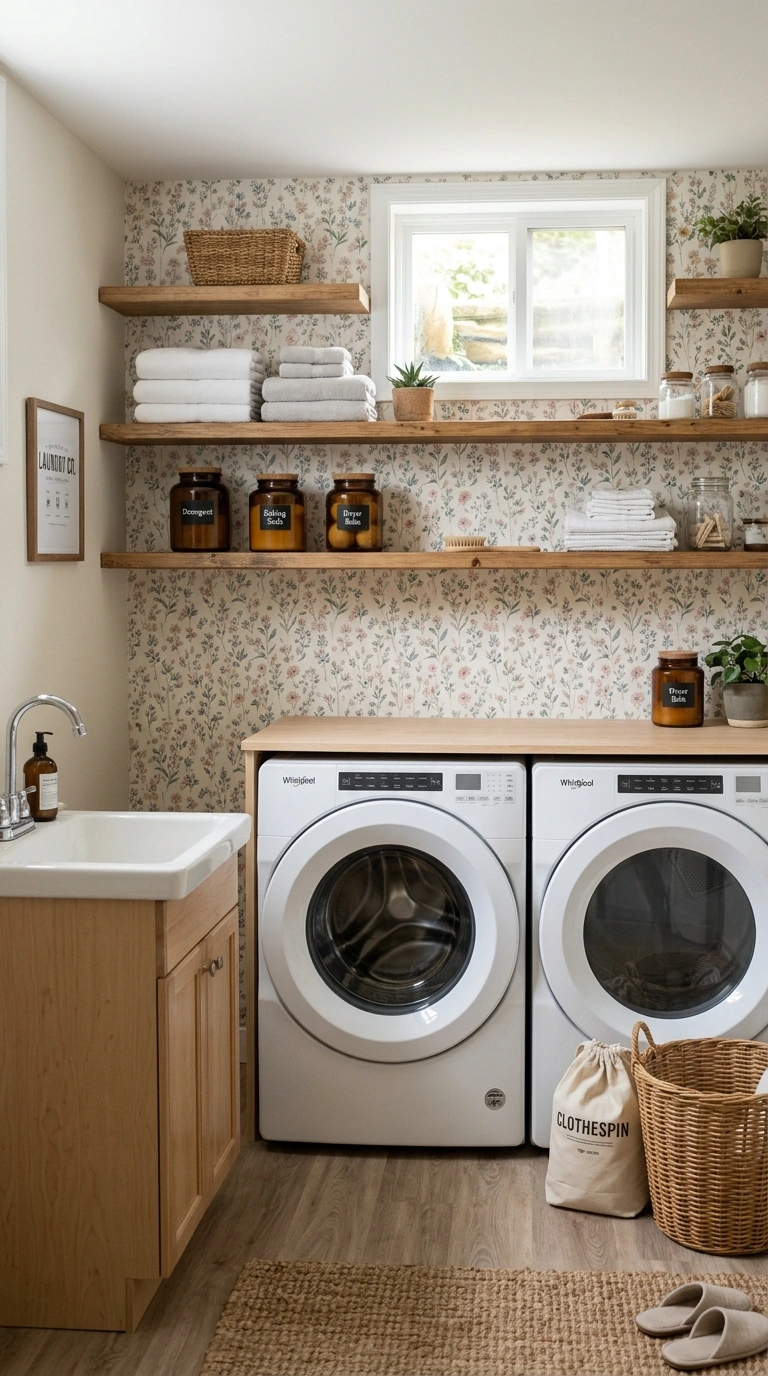
A single wallpapered wall adds pattern and personality to a basement laundry room without overwhelming the whole space. Peel and stick wallpaper is especially popular for this kind of project since it goes up without paste or a steamer and can be removed later if you change your mind or move out of the home. Choose a durable wallpaper style, like a small scale floral, a subtle stripe, or a classic gingham, and apply it to the wall behind open shelving or above a folding counter where it becomes a backdrop rather than the main focus. Keep the rest of the room simple with white appliances and plain hardware so the wallpaper has room to stand out instead of competing with too many other patterns. Basements can be more humid than other rooms, so choose a vinyl coated wallpaper that holds up better against moisture over time. This idea is one of the fastest ways to add real style to a laundry room in a single afternoon.
18. Stacked Washer Dryer
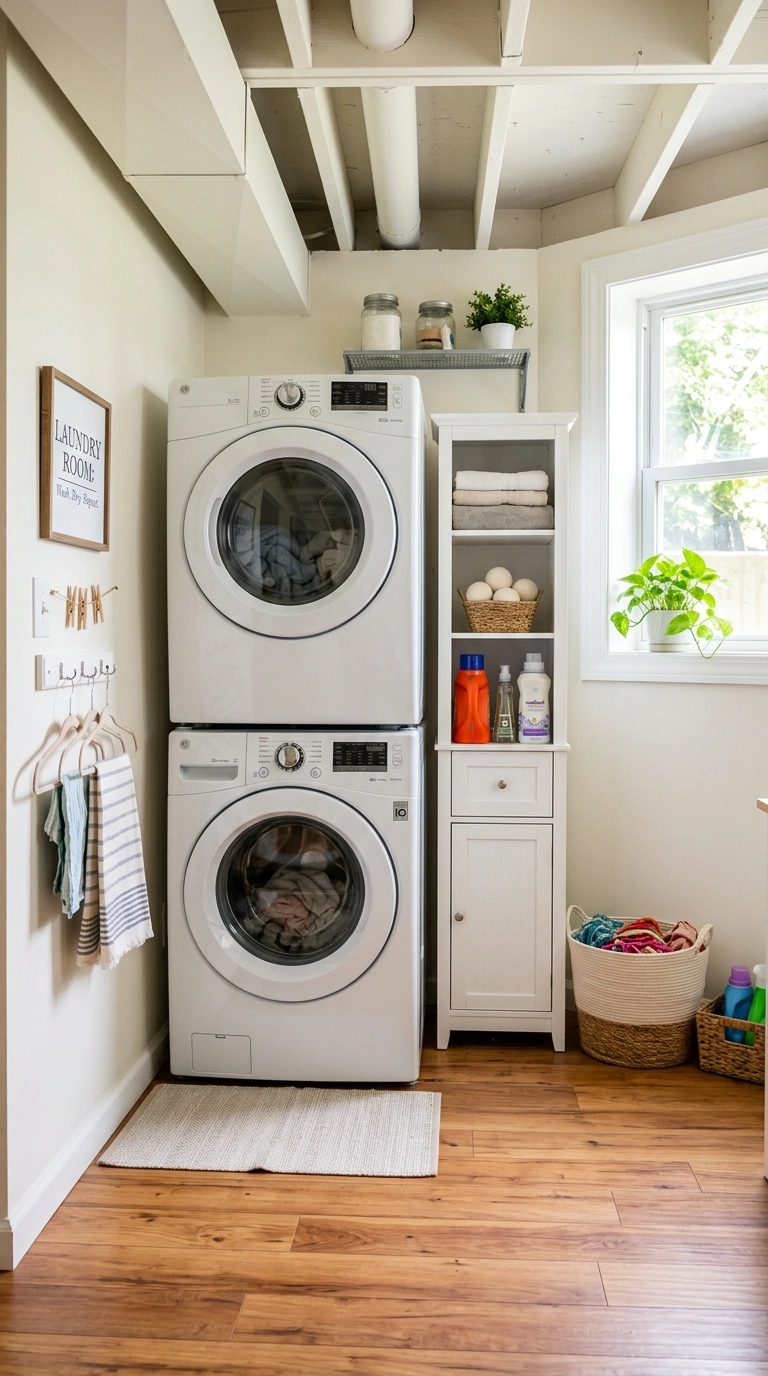
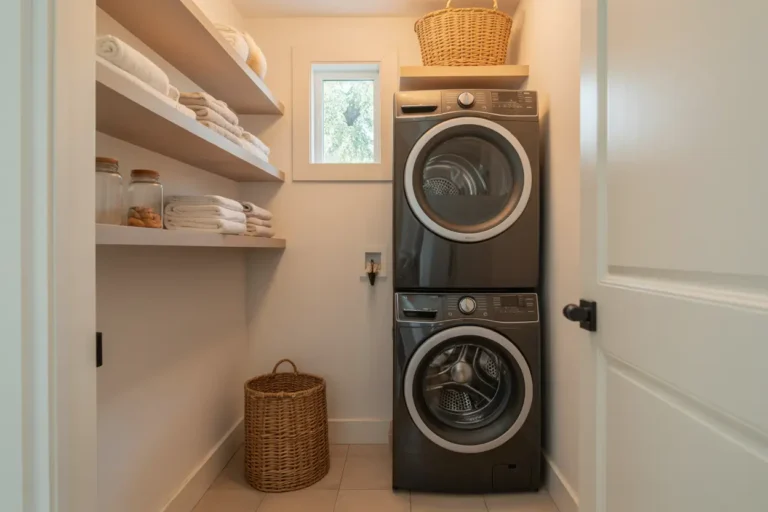
Stacking the washer and dryer instead of placing them side by side frees up valuable floor space in a smaller basement laundry room, which can then be used for a folding counter, extra storage, or simply a bit more room to move around. Front load machines are designed to be stacked using a manufacturer approved stacking kit, which locks the dryer securely on top of the washer and prevents any shifting during use. This layout works especially well in basements with an awkward footprint, like a narrow closet style laundry area or a corner tucked under a staircase. Once stacked, the freed up floor space next to the machines can hold a slim cabinet, a rolling cart, or even a small bench for setting down a laundry basket while you load or unload. Stacked units also sit at a more convenient height for reaching the dryer controls without bending down, which is a small but noticeable improvement in daily comfort.
19. Hanging Rod Station
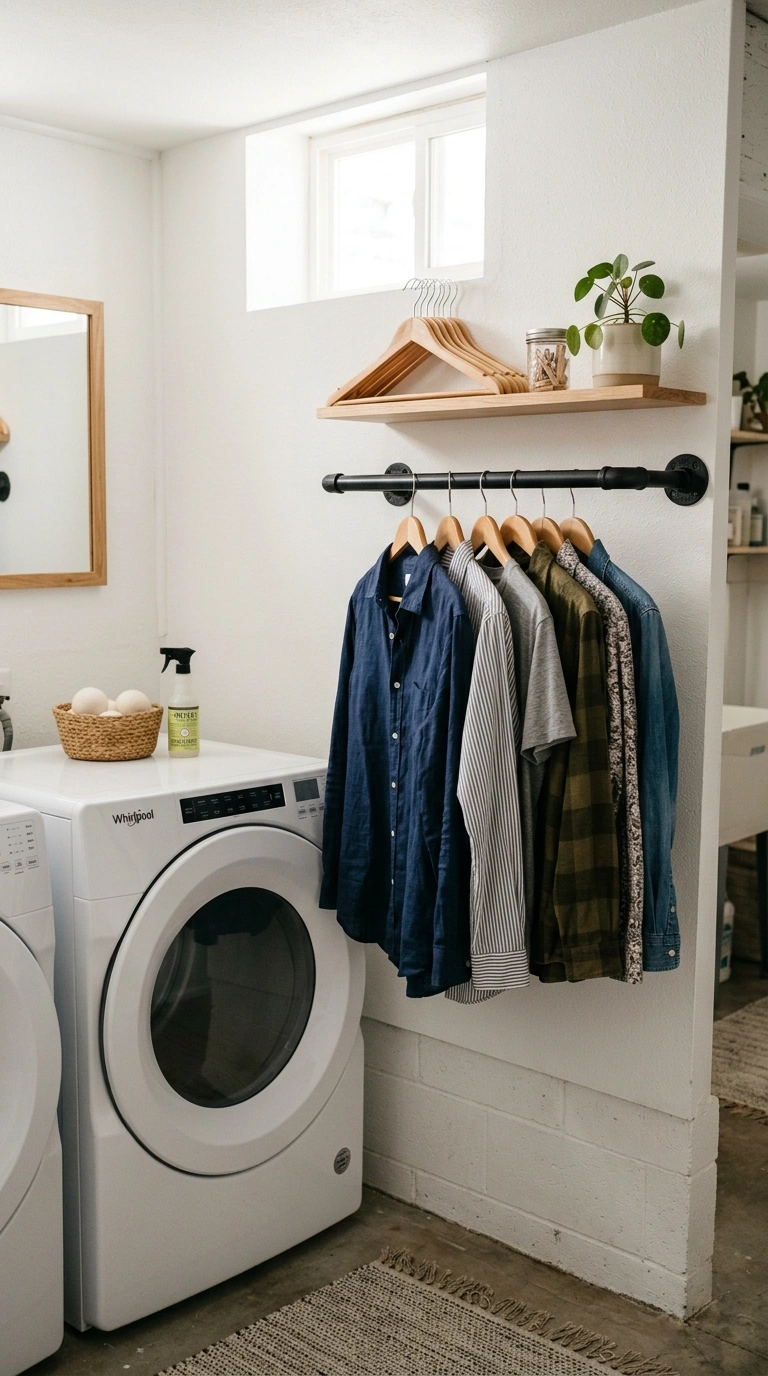
A hanging rod mounted near the dryer gives you an instant spot to hang shirts, dresses, and other clothes straight out of the machine, which cuts down on wrinkles and skips the need to carry everything upstairs before hanging it up. This works especially well in basement laundry rooms that double as a drying or ironing space, since the rod becomes a holding area for clothes waiting to be put away. Choose a simple metal or wood rod mounted on brackets, sized to fit the wall space you have available, whether that is a short run near the dryer door or a longer stretch across an entire wall. Adding a small shelf above the rod gives you a spot for extra hangers, so you are never digging through a drawer mid load. This idea pairs especially well with the folding table station idea, since clothes that need to hang can go straight from the dryer to the rod while folded items go straight to the counter.
20. Mudroom Combo Layout
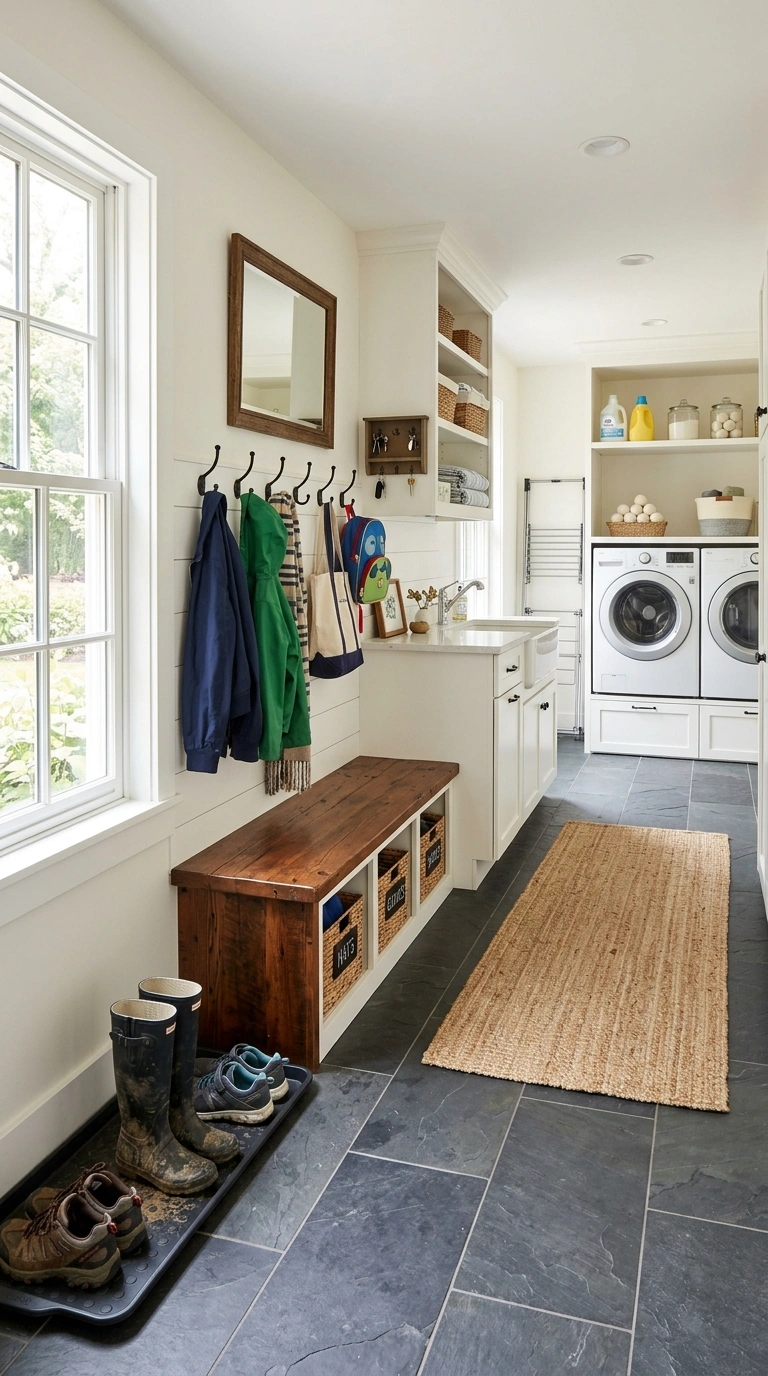
Combining a laundry room with a mudroom style entry makes sense in basements that have a walkout door or a garage entrance nearby. This layout adds a bench for taking off shoes, hooks for coats and bags, and a boot tray near the door, all within the same space as the washer and dryer. The combination makes the most of a basement’s square footage and turns two smaller needs into one well organized room. A durable, easy to clean flooring choice, like tile or vinyl, works well here since the space handles both laundry spills and muddy shoes. Cubbies above the bench give each family member their own spot for bags, hats, and gloves, which helps keep the rest of the house tidier too. This layout is especially popular with families who have kids in sports or outdoor activities, since dirty gear can go straight from the door into the wash without tracking through the rest of the home.
21. Chalkboard Label Wall
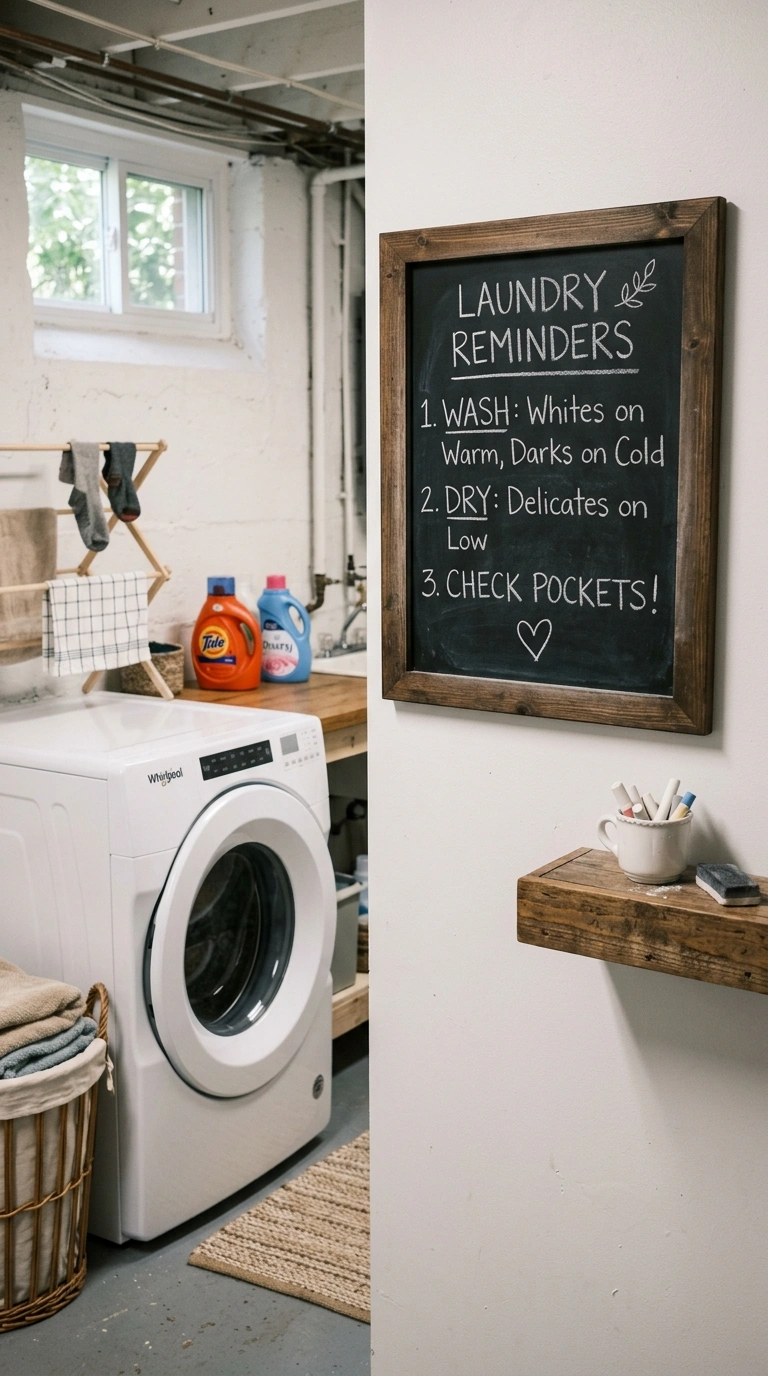
A small chalkboard panel or painted chalkboard section on the wall gives a basement laundry room a playful, useful touch. Use it to jot down laundry symbols as a quick reference, track whose turn it is to fold, or simply write a friendly note for anyone doing a load that day. Chalkboard paint can be applied directly to a section of drywall, a piece of plywood mounted to the wall, or even an old picture frame turned into a small chalkboard sign. This idea works particularly well in family laundry rooms where more than one person handles the wash, since it keeps everyone on the same page about detergent levels, stain treatments in progress, or which loads still need to be switched over. Frame the chalkboard area with simple wood trim for a more finished look, and keep a small cup of chalk and an eraser on a nearby shelf or hook so it actually gets used instead of becoming another dusty surface.
22. Window Light Addition
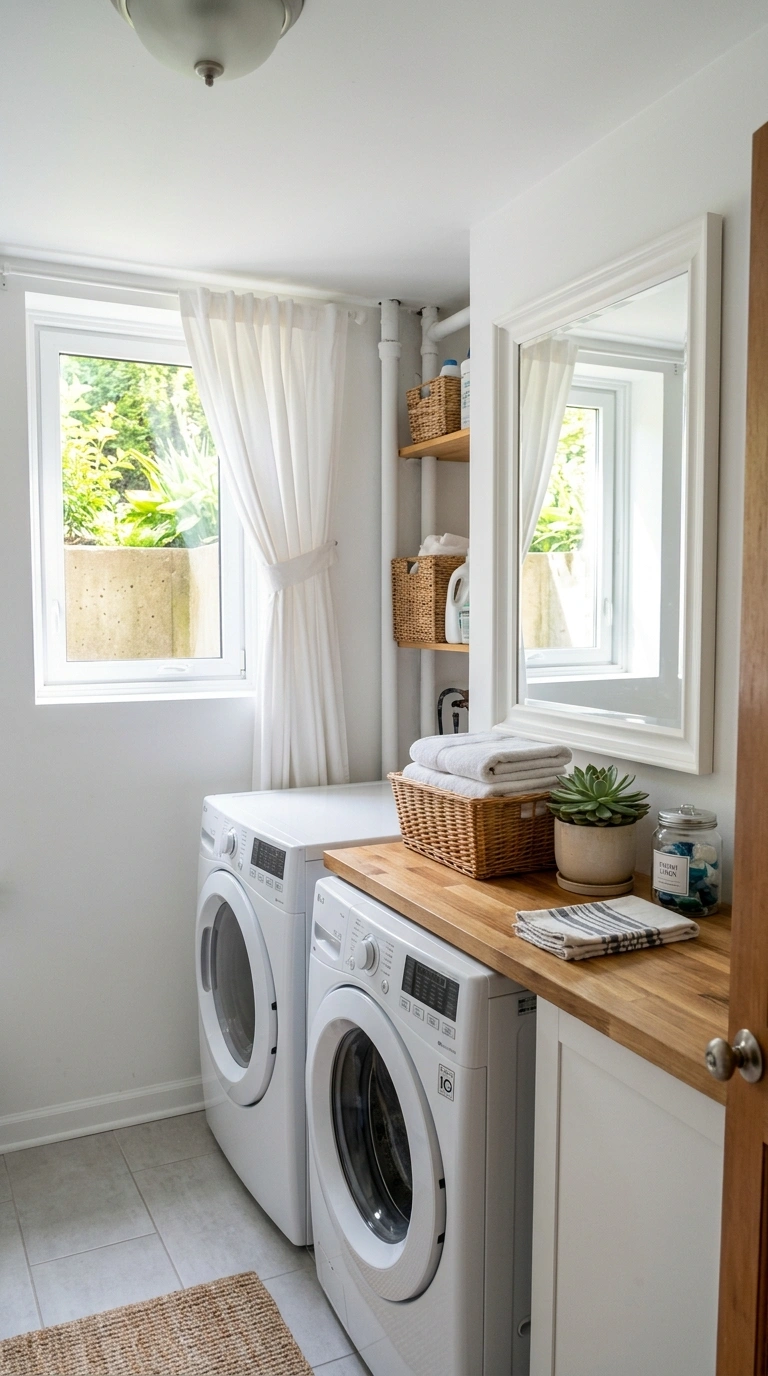
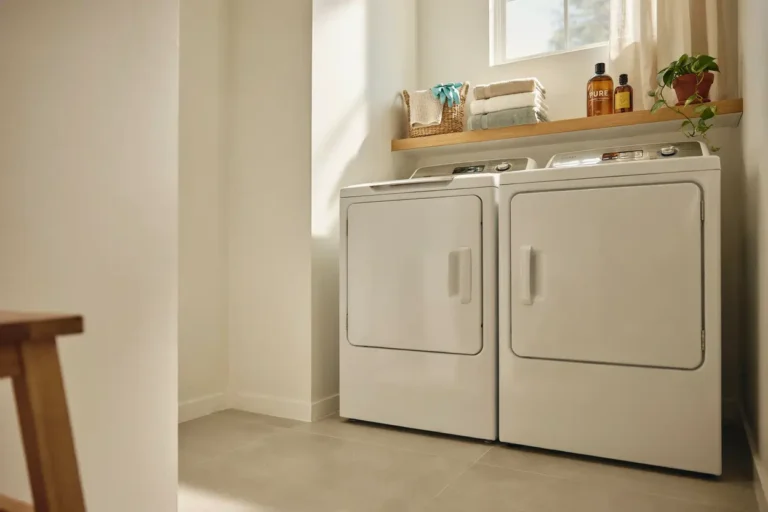
Not every basement has a window near the laundry area, but if yours does, making the most of it changes the entire feel of the room. Keep window treatments minimal, like a simple café curtain or no covering at all if privacy is not a concern, so as much daylight as possible reaches the space. If the window is small, a mirror placed across from it can help bounce light further into the room, making the whole laundry area feel brighter and larger than it is. Trim the window in a fresh coat of white paint to make it stand out as a feature rather than an afterthought, and add a small shelf on the sill for a plant or a few folded towels. Even a small basement window, often called a hopper window, can bring in a surprising amount of natural light once it is cleaned and left uncovered, which reduces how much you rely on artificial lighting during the day.
23. Cozy Rug Layer
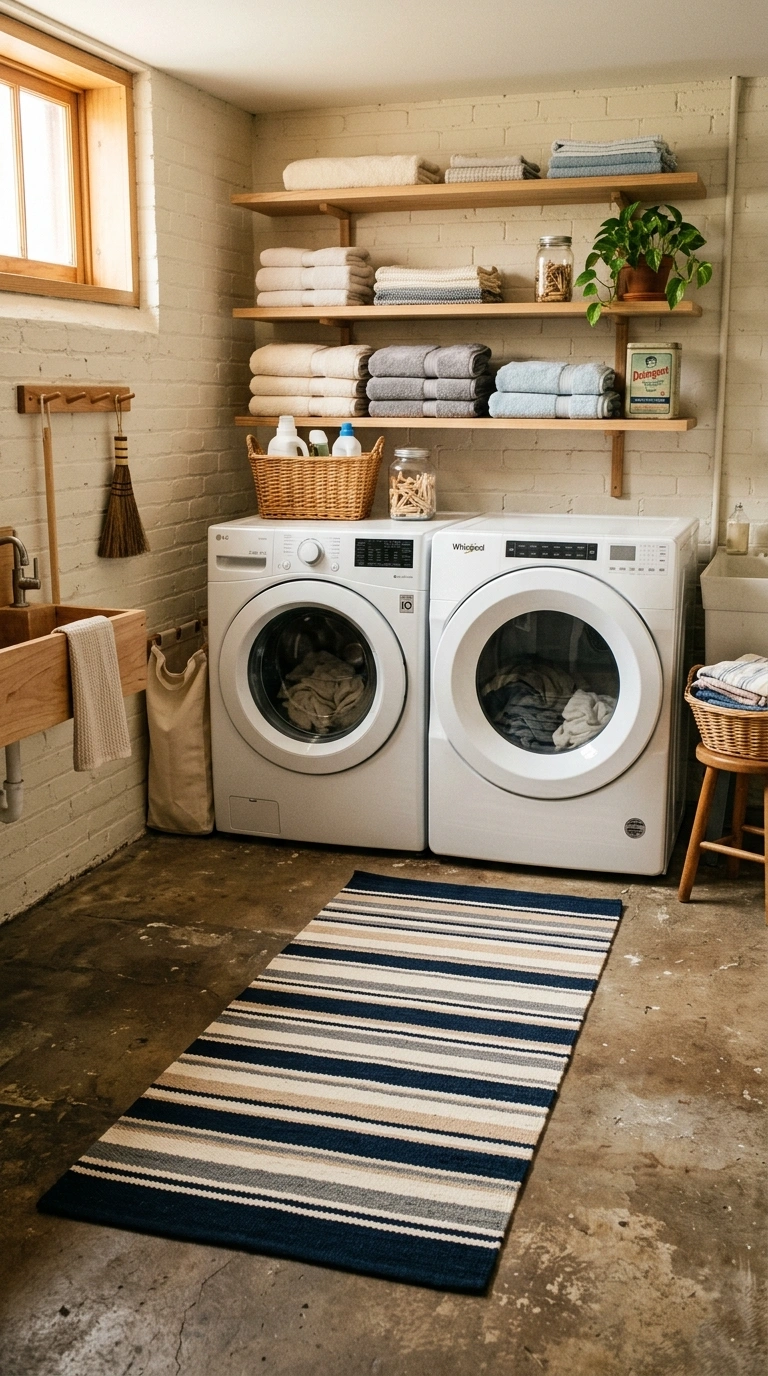
A washable rug placed in front of the washer and dryer softens the hard concrete or tile floor underfoot and adds a welcoming touch of color and pattern to the room. Choose a low pile, machine washable rug so it can handle lint, occasional water drips, and regular foot traffic without becoming a hassle to keep clean. A runner style rug works well in narrow basement laundry rooms, stretching along the length of the machines, while a smaller accent rug suits a folding station or a sink area. Patterns like stripes, plaid, or a simple geometric design hide dust and lint better than a solid color, which matters in a room that generates a fair amount of both. Adding a rug is one of the simplest changes on this list, taking only a few minutes to place, but it makes the room feel considered and comfortable rather than purely functional, which is exactly the kind of small touch that makes a basement laundry room feel like part of the home.
The basement laundry room is often the most overlooked space in the whole house, but it does not have to stay that way. Pick one or two ideas from this list that fit your space and your budget, and build from there. Small changes really do add up to a room that feels good to use every single day.
FAQs
Do basement laundry rooms need a dehumidifier?
Many basements run more humid than the rest of the house, and a laundry room adds even more moisture from washing and drying. A small dehumidifier helps protect wood shelving, cabinets, and painted walls from moisture damage over time.
What flooring works best in a basement laundry room?
Vinyl, tile, and sealed concrete are all good choices since they resist water and are easy to clean. Avoid materials like solid hardwood or carpet that can trap moisture and are harder to dry out if a leak happens.
How do I add more light to a basement laundry room with no windows?
A brighter overhead fixture combined with a warm white bulb makes the biggest difference. Adding a small under shelf light above the folding area also helps if the main fixture leaves shadows near the counter.
Can I make a small basement laundry room feel bigger without a renovation?
Yes. Painting the walls a light color, adding a mirror, and switching to open shelving instead of bulky cabinets are all changes that make a small space feel more open without any construction.
Is it worth adding a sink to a basement laundry room?
If your basement already has nearby plumbing, a utility sink is a fairly affordable addition and it is genuinely useful for rinsing stains, filling buckets, and washing items by hand.