20 Popular Bedroom Trends For A Stylish And Peaceful Home

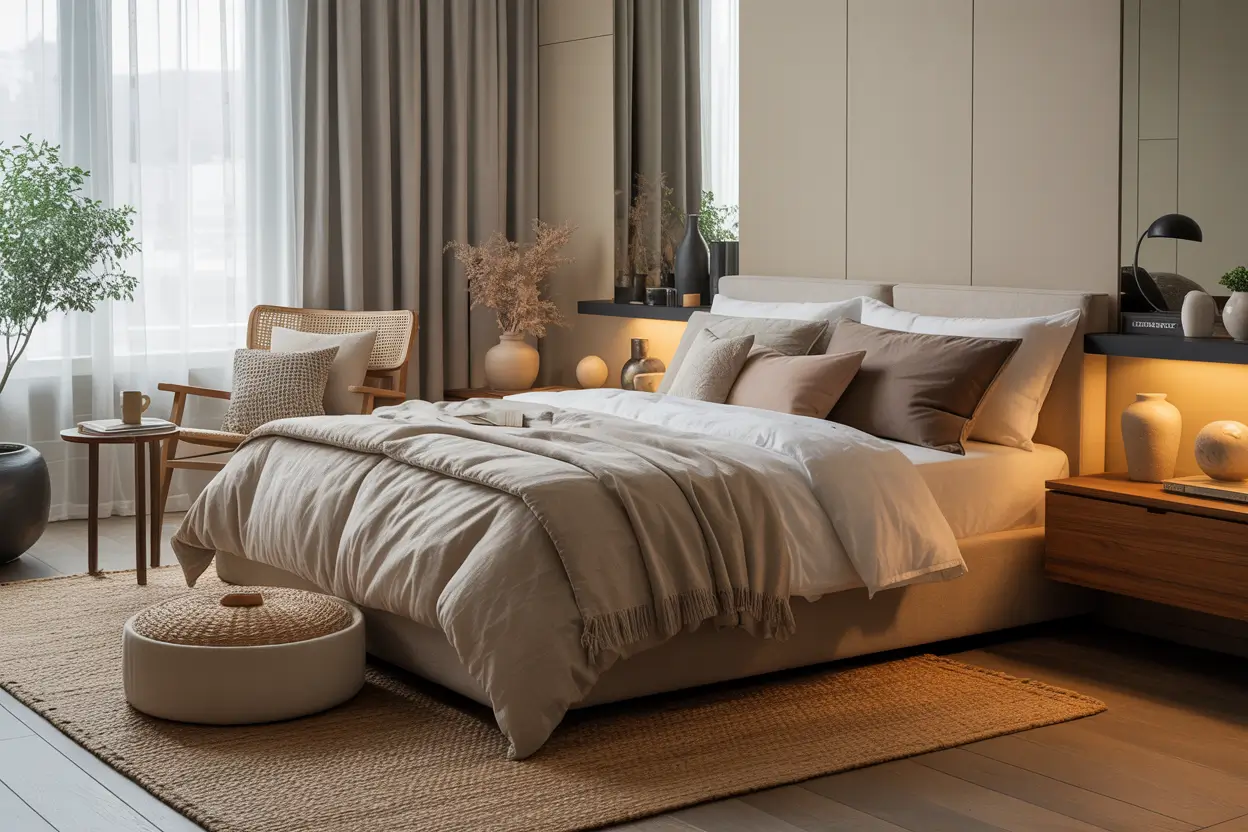
Bedrooms are finally getting treated like the most important room in the house instead of an afterthought. People are slowing down on trendy accent walls and instead reaching for things that actually help them sleep better and feel calmer at the end of a long day. That means warmer colors, softer lighting, and furniture that feels grounded rather than flashy. A lot of these trends do not need a full renovation either, some are as simple as swapping your bedding or adding a reading chair in an empty corner. Below are 20 bedroom trends that keep showing up in real homes right now, each one explained so you can picture exactly how it would look in your own space and figure out which ones actually fit your life.
1. Warm Earth Tone Bedrooms

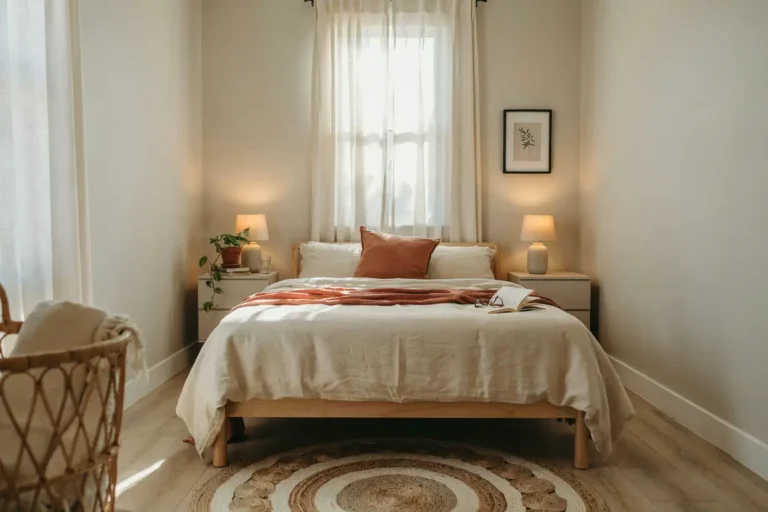
Warm earth tones like terracotta, clay, rust, and warm brown are replacing the cooler grays that dominated bedrooms for years. These colors work especially well on the walls behind the bed, painted as a soft backdrop rather than a bright, saturated color. Pair earth tone walls with natural linen bedding in cream or soft white, so the room feels grounded rather than heavy. Wood furniture in a warm oak or walnut tone complements this palette naturally, since the two share similar warm undertones. This look works in bedrooms of any size, though smaller rooms may want to keep the earth tone limited to one wall rather than all four, to avoid the space feeling too enclosed. A simple styling tip is adding a woven basket or rattan lamp shade, which brings in texture that matches the earthy, natural feeling of the color palette without adding anything visually busy to the room.
2. Oversized Statement Headboards

A large, tall headboard that stretches well above the mattress has become one of the easiest ways to make a bedroom feel more finished and intentional. Upholstered headboards in a channel tufted or wingback style add softness, while a carved wood headboard brings more of a traditional, grounded feel. Choosing a headboard in a neutral fabric like boucle, linen, or velvet keeps it timeless rather than tied to one specific trend cycle. This works especially well in bedrooms with higher ceilings, since a tall headboard needs vertical space to look balanced rather than cramped. If your ceiling is lower, choosing a headboard that is wide rather than tall gives a similar statement feeling without overwhelming the room. Keep the wall behind mostly bare, aside from maybe one small piece of art off to the side, so the headboard itself stays the clear focal point of the space.
3. Soft Layered Lighting

A single overhead light rarely creates the calm mood most people want in a bedroom, which is why layered lighting has become such a popular trend. This means combining a dimmable overhead fixture with bedside lamps, and sometimes a floor lamp in a reading corner, so you have options depending on the time of day. Choose warm toned bulbs rather than bright white ones, since warm light feels more relaxing in the evening and is gentler right before bed. Bedside lamps with fabric shades soften the light even further compared to bare bulbs or metal shades. This idea works in any bedroom, regardless of size or style, and is one of the more affordable trends to try since it often just means adding a lamp or two rather than any construction. Dimmer switches on the main overhead light are a small investment that make a noticeable difference every single night.
Also Read > 24 Ceiling Upgrades to Make a Bedroom Look Pricey
4. Minimalist Bedrooms With Cozy Details

A fully minimal bedroom can sometimes feel cold, which is why the current version of this trend pairs a simple, uncluttered layout with a few cozy details layered in. This might mean a plain platform bed and bare walls, but with a chunky knit throw blanket, a soft area rug, and one textured pillow to keep the room from feeling too sparse. The goal is fewer objects overall, but the objects that remain should feel warm and inviting rather than purely functional. Choosing natural materials like wood, wool, and linen over plastic or synthetic fabrics helps a minimal room feel soft instead of stark. This trend works especially well for people who feel overwhelmed by too much stuff but still want their bedroom to feel welcoming rather than like an empty hotel room. A single meaningful piece of art on one wall keeps the space from feeling completely blank.
5. Dark Accent Walls Behind The Bed

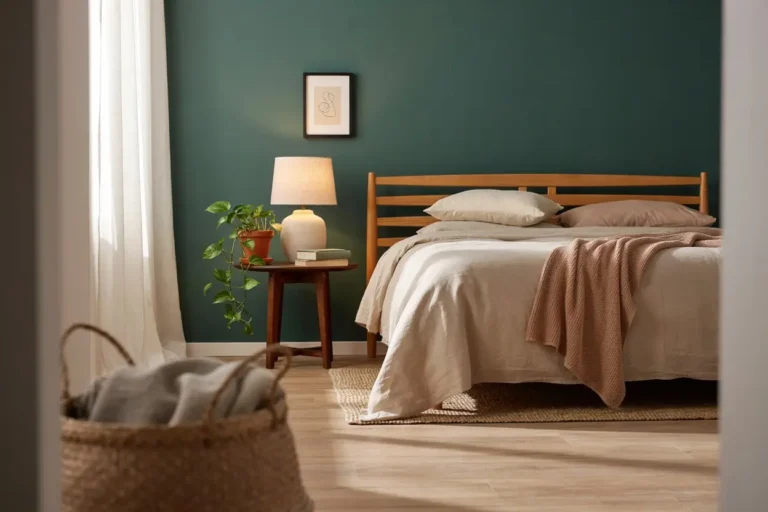
A dark accent wall, painted in deep charcoal, navy, or forest green, right behind the bed gives a bedroom a cozy, enclosed feeling that works especially well for sleep. This trend has moved past the one bold red or black wall of years past and now leans toward deeper, more muted tones that feel calming rather than dramatic. Painting just the wall behind the headboard, rather than the whole room, keeps the effect contained and easier to change later if your taste shifts. Pair the dark wall with warm wood furniture and soft, light colored bedding, so the contrast keeps the room from feeling too dark overall. This works particularly well in bedrooms that get a lot of natural light during the day, since the dark wall balances out the brightness rather than making the room feel dim. A wall mounted sconce on either side of the bed adds a nice symmetrical touch.
6. Natural Wood Everywhere

Using natural wood across multiple pieces of furniture, like a bed frame, nightstands, and a dresser, gives a bedroom a warm, grounded feeling that pairs well with almost any color palette. This trend favors visible wood grain and slightly imperfect, natural finishes over painted or heavily lacquered furniture. Mixing a couple of different wood tones, like a lighter oak nightstand next to a darker walnut dresser, actually looks more collected than matching every piece exactly. This works in bedrooms of any size, since wood tones tend to feel calming rather than overwhelming even when used generously. Pairing the wood furniture with soft textiles, like a wool rug or linen curtains, keeps the room from feeling too rigid or masculine. A small styling tip is adding a woven basket at the foot of the bed for extra blankets, which continues the natural material theme into the storage side of the room.
7. Hotel Inspired Bedding Layers

Layering bedding the way hotels do, with a fitted sheet, a duvet, a folded blanket or coverlet at the foot of the bed, and several pillows in varying sizes, has become one of the most popular ways to upgrade a bedroom without buying any new furniture. Choosing all white or all cream bedding in different textures, like a waffle weave blanket over a smooth cotton duvet, keeps the look cohesive rather than mismatched. A folded throw at the end of the bed adds both color and a sense of intentional styling, similar to what you would see in a nice hotel room. This trend works in any bedroom and is one of the more affordable updates on this list, since it mostly requires new textiles rather than furniture or paint. Fluffing and rearranging the pillows each morning, rather than leaving the bed unmade, keeps this look feeling fresh every day.
Also Read > What Makes a Bedroom Reading Corner Actually Comfortable?
8. Curved Furniture And Soft Shapes

Furniture with rounded edges and soft, curved silhouettes is replacing the sharp, angular pieces that were popular for years. This might show up as a curved headboard, a rounded nightstand, or an oval mirror instead of a rectangular one. Curved furniture tends to feel more inviting and less formal, which fits the overall shift toward calmer, cozier bedrooms. This trend works especially well in smaller bedrooms, since rounded furniture edges make it easier to move through a tight space without bumping into sharp corners. Pairing curved furniture with soft, rounded lighting fixtures, like a globe pendant or a curved arc lamp, carries the theme throughout the whole room rather than limiting it to just one piece. A simple way to try this trend without replacing all your furniture is starting with just a mirror or a single accent chair with a rounded shape.
9. Floor To Ceiling Curtains

Hanging curtains as high as possible above the window, ideally close to the ceiling, and letting them fall all the way to the floor makes a bedroom feel taller and more finished than curtains that stop at the windowsill. This is one of the simplest and most affordable trends on this list, since it usually just means moving your curtain rod higher and choosing a slightly longer panel. Choose a soft, light filtering fabric like linen for a relaxed feeling, or a heavier blackout fabric if you want better light control for sleeping in. Floor to ceiling curtains work in bedrooms of any size, though the effect is especially noticeable in smaller rooms, where the height draws the eye upward and makes the space feel larger than it actually is. Keeping the curtain color close to your wall color creates a soft, seamless look rather than a bold contrast around the window.
10. Hidden Storage With Clean Designs

Storage that blends into the room, like a bed frame with built in drawers or a closet with flush, handle free doors, keeps a bedroom looking calm and uncluttered without sacrificing practical space. This trend favors function that does not visually announce itself, so the room reads as simple and open even if there is plenty of storage tucked away. Platform beds with drawers underneath are especially useful in smaller bedrooms, since they use space that would otherwise sit empty beneath the mattress. Choosing matching finishes for hidden storage pieces, like a closet door painted the same color as the wall, helps the storage disappear even further into the background. This trend suits anyone who wants a peaceful, minimal looking bedroom but still needs realistic storage for clothes, linens, and everyday items. A closet organizing system inside, even a simple one, makes this hidden storage far more useful day to day.
11. Mixed Texture Bedding Combinations

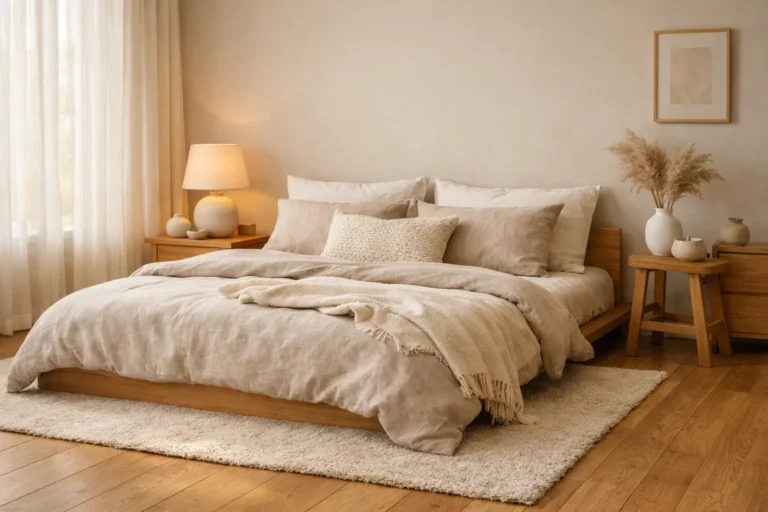
Combining several different fabric textures on one bed, like a smooth cotton sheet, a nubby waffle weave blanket, and a slightly fuzzy knit throw, adds visual depth to a bedroom without needing to introduce new colors or patterns. This trend works especially well with a neutral or monochrome color palette, since the varying textures do most of the visual work instead of color contrast. Choosing textures that feel good against skin, not just ones that look good, matters here too, since the bed should still feel comfortable and inviting rather than purely decorative. This idea is a low cost way to refresh a bedroom, since you are working with textiles rather than furniture or paint. A simple approach is starting with your existing bedding and adding just one new textured element, like a chunky throw blanket, rather than replacing everything all at once.
12. Sage Green Bedroom Spaces

Sage green has become one of the most popular bedroom colors, since it reads as calming and natural without being as bold as a brighter green. This color works well on walls, though it also shows up in bedding, curtains, and upholstered furniture for anyone who wants the color without committing to painting a whole room. Sage pairs especially well with warm wood tones and cream colored textiles, creating a soft, garden inspired feeling that works in bedrooms of nearly any size. Choosing a slightly muted, dusty version of sage rather than a bright, saturated green keeps the color feeling calm rather than energetic, which matters more in a bedroom than in other rooms of the house. A simple way to try this trend without full commitment is starting with a sage green throw pillow or blanket, then moving toward walls or larger furniture pieces once you know you like living with the color.
13. Floating Furniture Layouts

Arranging furniture so it does not touch every wall, sometimes called a floating layout, gives a bedroom a more open, intentional feeling compared to pushing everything against the perimeter of the room. This might mean placing the bed at an angle in a corner, or positioning a bench at the foot of the bed away from the wall entirely. This layout works especially well in larger bedrooms, where furniture pushed against the walls can leave an awkward empty space in the middle of the room. A floating layout also makes it easier to walk around the bed from both sides, which is more practical for couples sharing a room. This trend requires a bit more planning than simply pushing furniture against a wall, but it often makes better use of an oddly shaped room. A soft area rug underneath the floating furniture helps anchor the layout and define the space.
14. Soft Neutral Color Palettes

A soft neutral palette, built around creams, warm whites, and light taupe rather than stark white or cool gray, continues to be one of the most popular choices for bedrooms because it feels calm and easy to live with long term. This palette works as a backdrop for almost any style of furniture or decor, since neutral tones rarely clash with wood, metal, or textile choices you might add later. Layering different shades of the same neutral family, rather than sticking to just one tone, adds depth without introducing any bold color. This trend is especially popular in bedrooms because bright or bold colors can feel overstimulating right before sleep, while soft neutrals tend to feel more restful. A small amount of contrast, like a black picture frame or a dark wood nightstand, keeps an all neutral room from feeling flat or one dimensional.
15. Black Accents In Calm Bedrooms

Small doses of black, whether in a lamp base, a picture frame, or window hardware, add a grounding contrast to an otherwise soft and neutral bedroom. This trend avoids painting large areas black and instead focuses on smaller accent pieces scattered throughout the room, so the calming feeling of the space stays intact. Matte black finishes tend to feel more current and softer than glossy black, which can look a bit harsh in a bedroom setting. This idea works well alongside almost any color palette, from warm earth tones to soft sage green, since black acts as a neutral anchor rather than a competing color. A good starting point is choosing just two or three black accents throughout the room rather than scattering them everywhere, since repetition in a few spots reads as more intentional than randomly placed single items.
Also Read > 23 Blue Bedroom Inspirations for a Relaxing Atmosphere
16. Nature Inspired Bedroom Decor

Bringing elements of nature into the bedroom, through real or high quality faux plants, botanical artwork, and natural materials like rattan or jute, helps the room feel more calming and connected to the outdoors. A large plant in the corner of the room, paired with a woven rattan lamp shade or a jute rug, brings texture and life into the space without adding bold color. This trend works especially well in bedrooms with good natural light, since real plants need sunlight to thrive, though faux versions work just as well in darker rooms. Botanical art, whether a simple line drawing of leaves or a more detailed framed print, adds a nature theme to the walls without needing much additional decor elsewhere. This idea pairs naturally with earth tone and sage green bedrooms, since all three trends share a similar organic, grounded feeling throughout the room.
17. Moody Luxury Bedroom Designs

A moody bedroom leans into deeper colors, richer fabrics like velvet, and warmer, dimmer lighting to create a space that feels more like a boutique hotel than a typical bedroom. This might mean deep navy or emerald walls, paired with brass hardware and a velvet upholstered headboard. Unlike the softer, neutral trends elsewhere on this list, a moody bedroom embraces more contrast and drama, though it still relies on warm, cozy lighting rather than harsh overhead lights. This trend works especially well in bedrooms without a lot of natural light, since darker colors can actually feel more intentional and cozy rather than gloomy in a room that gets limited sun. Adding a few metallic accents, like a brass mirror frame or gold lamp, keeps the moody palette from feeling too heavy or somber overall.
18. Vintage And Modern Furniture Mixing

Combining a vintage piece, like an antique dresser or an old wood mirror, with more modern furniture creates a bedroom that feels collected over time rather than bought all at once from a single store. This trend works well for anyone who already owns hand me down or thrifted furniture, since it turns those pieces into intentional design choices rather than mismatched leftovers. The key is balance, pairing one or two vintage pieces with simpler, more contemporary furniture elsewhere in the room, rather than mixing too many different eras and styles at once. A vintage mirror above a modern platform bed, for example, creates a nice contrast between old and new without feeling chaotic. This trend also tends to be more budget friendly, since vintage furniture is often less expensive than buying everything brand new, especially when sourced from secondhand shops or estate sales.
19. Artistic Wall Panel Designs

Wall paneling, whether classic wainscoting, modern vertical slat panels, or a more decorative geometric pattern, adds texture and architectural interest to a bedroom wall without requiring bold paint colors. This trend works especially well behind the bed, giving the headboard area a more finished, custom look even with simpler furniture. Choosing a paneling style that matches the overall feeling of the room matters here, slat panels tend to feel more modern and warm, while classic wainscoting leans traditional. Painting the panels the same color as the wall keeps the look subtle and texture focused, while painting them a contrasting color makes more of a bold statement. This trend requires a bit more installation work than most others on this list, though it adds significant visual value to a bedroom and can be done on just one wall to keep the project manageable.
20. Cozy Reading Corners In Bedrooms

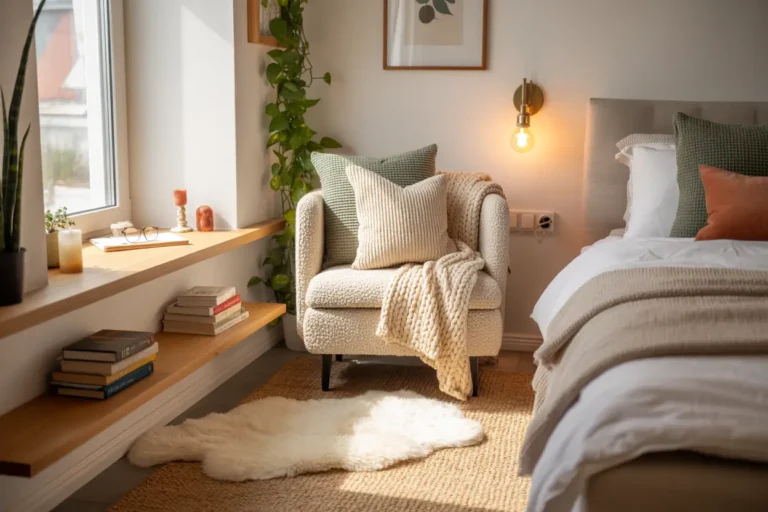
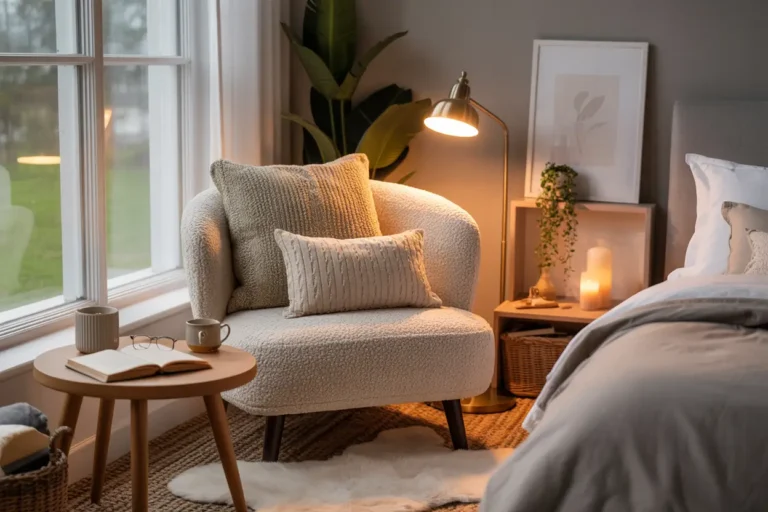
Dedicating a small corner of the bedroom to a reading nook, with a comfortable chair, a small side table, and a floor lamp, gives the room a second purpose beyond just sleeping. This works especially well near a window, where natural light makes reading easier during the day, paired with a warm lamp for evening use. Choosing a chair with a soft, textured fabric and adding a throw blanket makes the corner feel inviting rather than like an afterthought squeezed into leftover space. This trend suits bedrooms of nearly any size, since even a small armchair and side table can create a defined reading spot without needing a lot of square footage. A small basket beside the chair for current books keeps everything organized and adds a nice practical touch to the corner. This idea gives a bedroom a cozy, lived in feeling beyond the bed itself.
Conclusion
These 20 trends all point toward the same idea, bedrooms that feel calm, warm, and personal rather than just a place to sleep. You do not need to add all of them at once. Pick a couple that match your own taste and daily habits, and let the room grow from there.