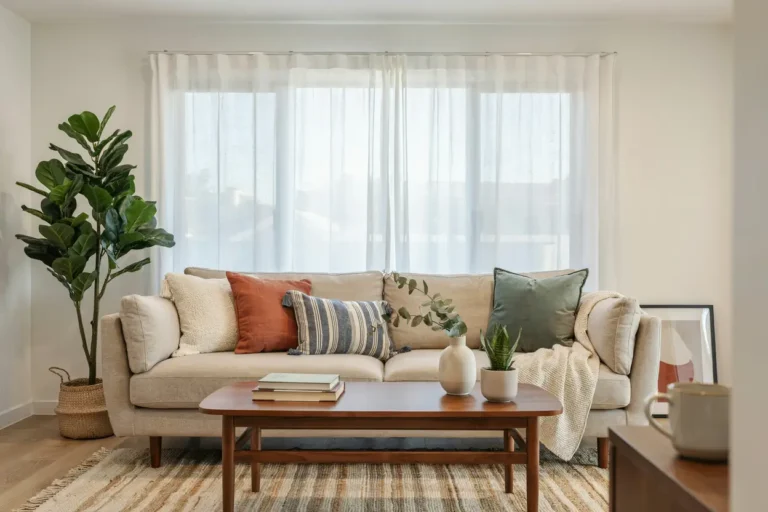
23 Chic Living Room Ideas That Won’t Break the Bank


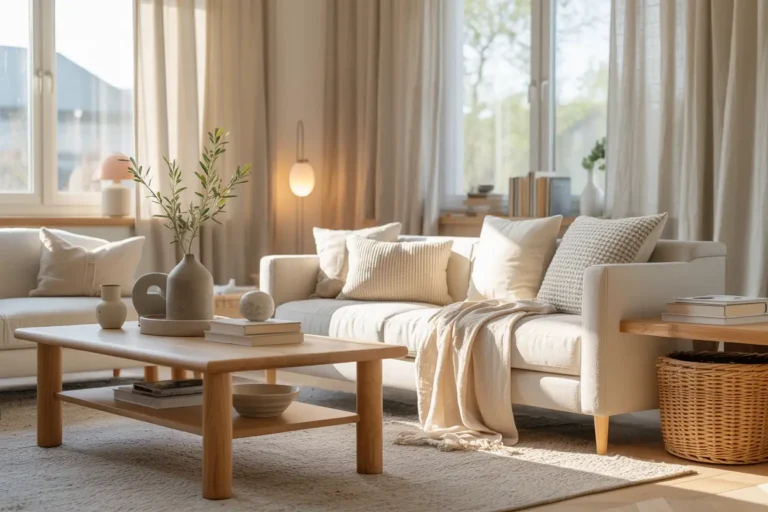
Some of the best looking living rooms I’ve seen didn’t come from a big budget. They came from someone willing to hunt through a thrift store, hang onto an old ladder, or spend a Saturday painting one wall a color they weren’t sure about. A chic living room isn’t about how much you spent. It’s about a few good choices that work together, some texture, a little contrast, and details that feel personal instead of store bought. You don’t need new furniture or a full remodel to get there. A lot of the ideas below use things you already own or can find secondhand for next to nothing. Whether your living room needs a full refresh or just a few small updates, these 23 ideas will help you get a look that feels put together, without the price tag that usually comes with it.
1. Layer Thrifted Textiles for Instant Warmth
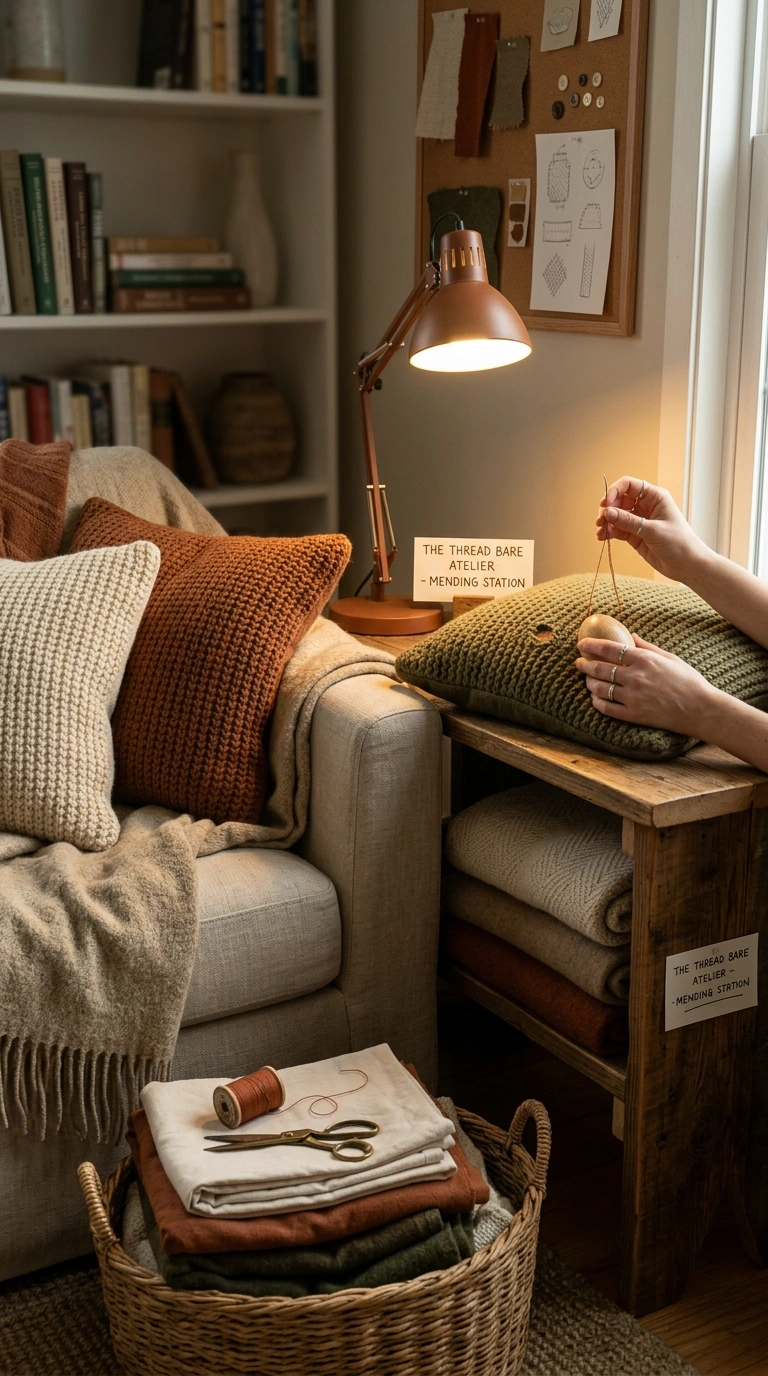
Thrifted textiles bring instant warmth to a living room, and you can usually find them for a few dollars each at a secondhand shop. Look for vintage throw blankets, embroidered pillow covers, or woven table runners you can drape over the back of a sofa or fold at the foot of a chair. Mixing a couple of different patterns, like a striped blanket with a floral pillow, gives the room a collected look instead of a matched set fresh from a store shelf. Wash anything you bring home first, since older textiles can carry dust or a musty smell from storage. Layer a chunky knit throw over a smoother cotton one for texture, and don’t worry if the colors aren’t perfectly matched. A little variation is what makes the layered look feel real instead of staged. This is one of the easiest updates on this whole list, and it can change the feel of a room in a single afternoon of thrifting.
2. Paint One Wall a Moody Charcoal
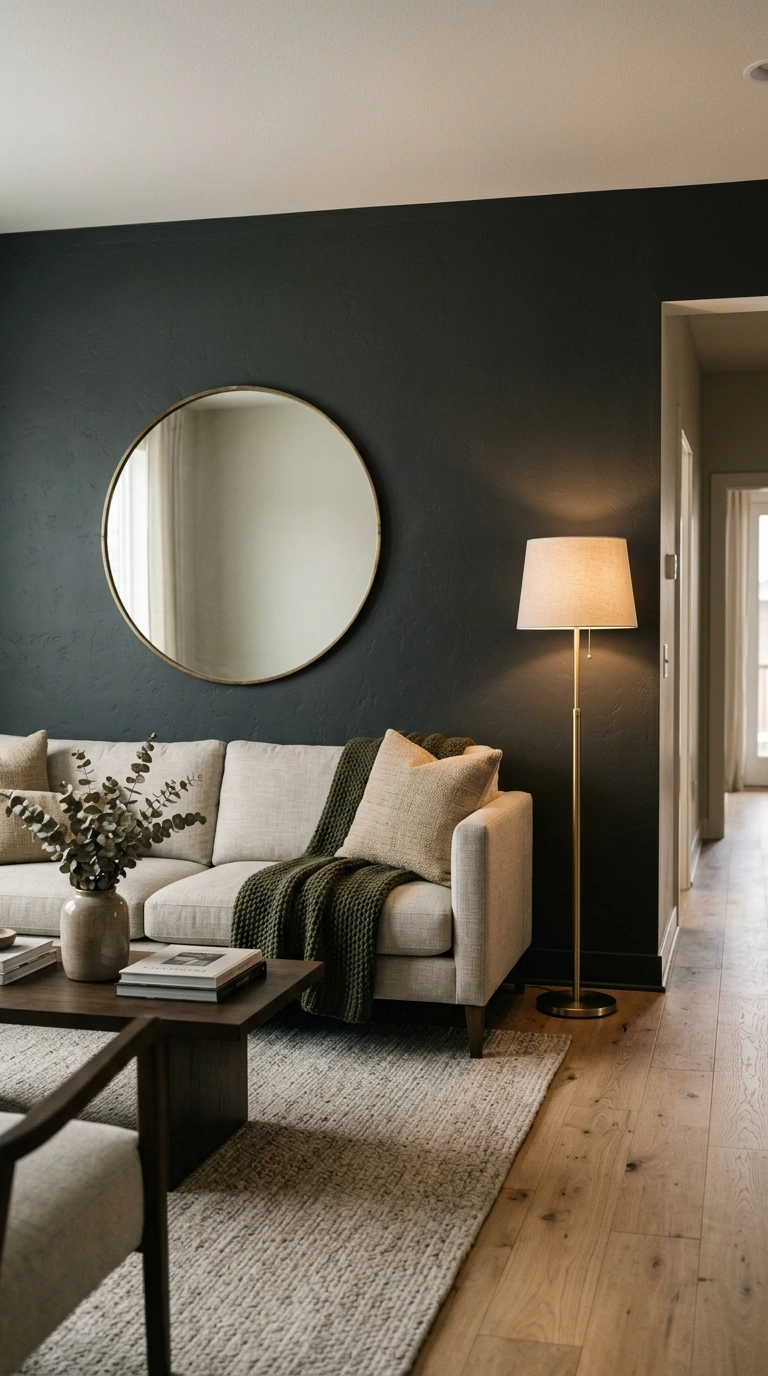
Painting one wall a moody charcoal color gives a living room instant depth without touching the other three walls. A dark accent wall works especially well behind a sofa or around a fireplace, since it creates a natural focal point the eye is drawn to first. Choose a charcoal with a slight warmth to it rather than a flat, cool gray, since warmer darks tend to feel cozier in a living space. A matte or eggshell finish hides small wall imperfections better than a glossy one. Balance the dark wall with lighter furniture or a pale rug nearby, so the room doesn’t feel heavy overall. Brass or gold picture frames and light fixtures stand out beautifully against a charcoal backdrop, giving the room a bit of shine. This project usually costs less than fifty dollars in paint and takes a single weekend, making it one of the highest impact, lowest cost updates you can make.
Also Read > 21 Stunning Symmetrical Living Room Ideas
3. Swap Out Dated Furniture Hardware
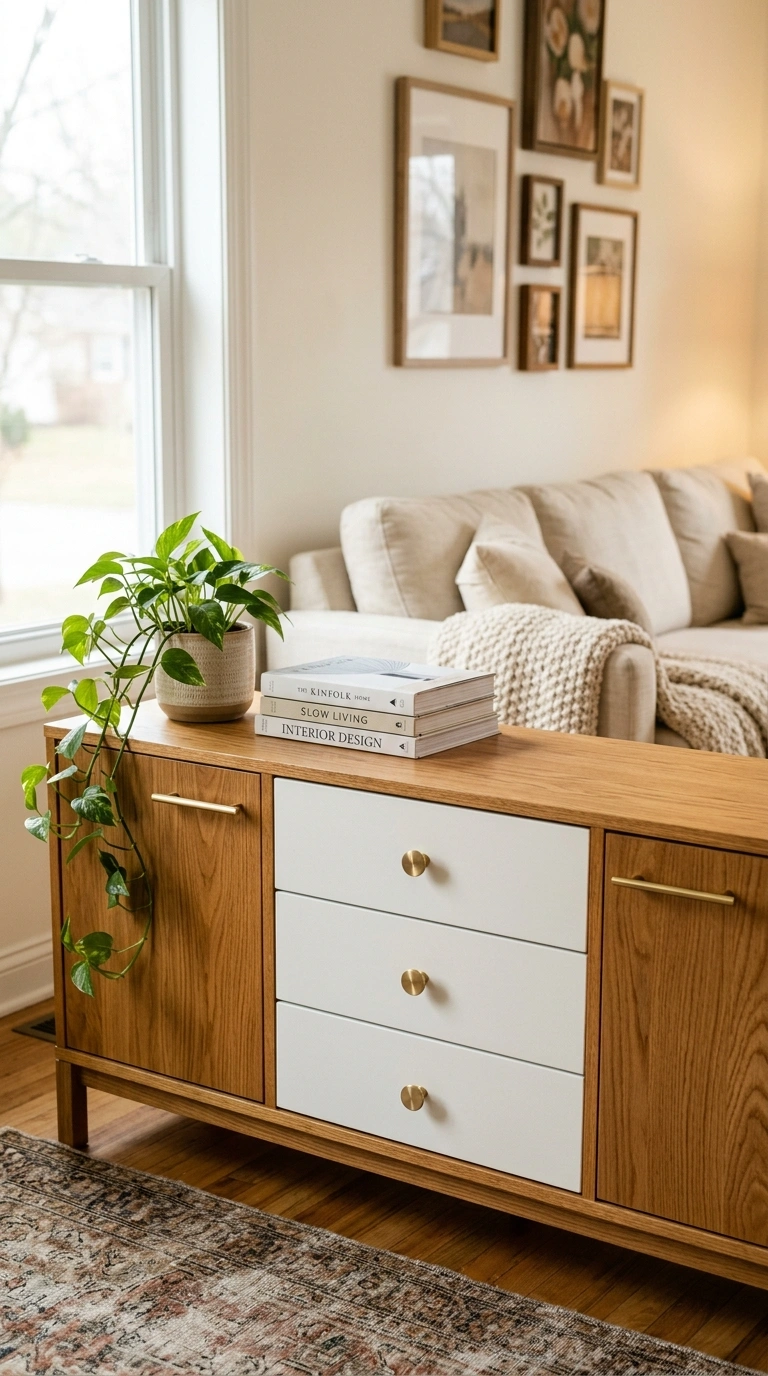
Old furniture often looks dated because of small details like drawer pulls and cabinet knobs, not the piece itself. Swapping out hardware on a console table, media cabinet, or side table is a quick and cheap way to modernize a piece you already own. Brass and matte black are both popular choices right now, and either one can shift a piece from looking outdated to looking intentional. Measure the distance between the existing screw holes before you shop, since new hardware needs to match the same spacing unless you’re willing to fill and redrill. A basic screwdriver is the only tool most people need for this project. This works especially well on hand-me-down furniture or thrift store finds that have good bones but tired details. For under twenty dollars, you can completely change how a piece reads in the room, which makes this one of the best value updates on this whole list.
4. Float Secondhand Shelves Above the Sofa
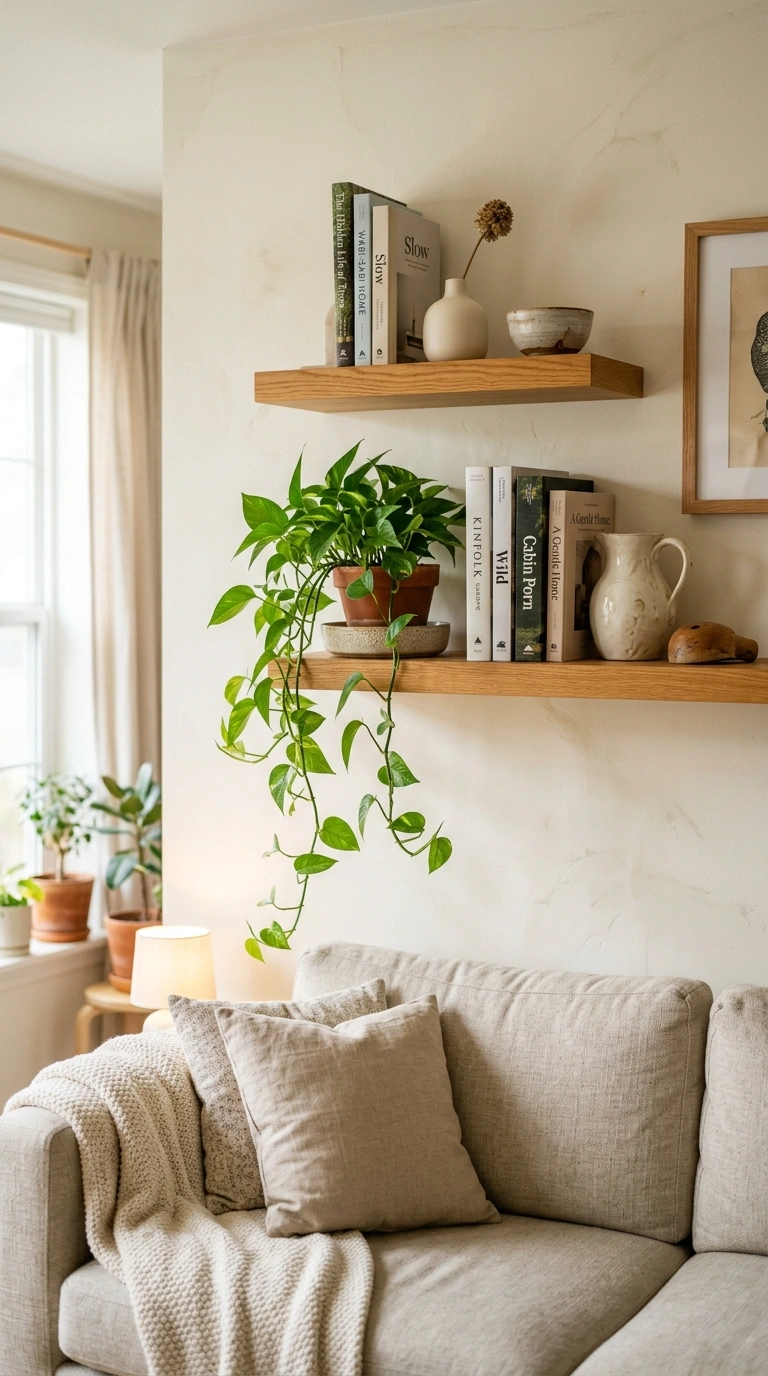
Floating shelves above a sofa give you a spot to display books, plants, and small art pieces without taking up any floor space. Secondhand shelves from a thrift store or a resale app usually cost a fraction of new ones, and a coat of paint or a light sanding can make them look brand new. Space two or three shelves at varying heights above the sofa, leaving enough gap between them so items don’t feel cramped. Mix in a small trailing plant, a stack of books turned spine out, and one small sculptural object for visual interest. Keep the styling a little uneven rather than perfectly symmetrical, since this creates a more natural, collected look. Floating shelves also work well for renters, since many mounting brackets only need a couple of small holes that are easy to patch later. This is a great way to add both storage and personality above a sofa that might otherwise feel bare.
5. Use Peel-and-Stick Wallpaper on One Accent
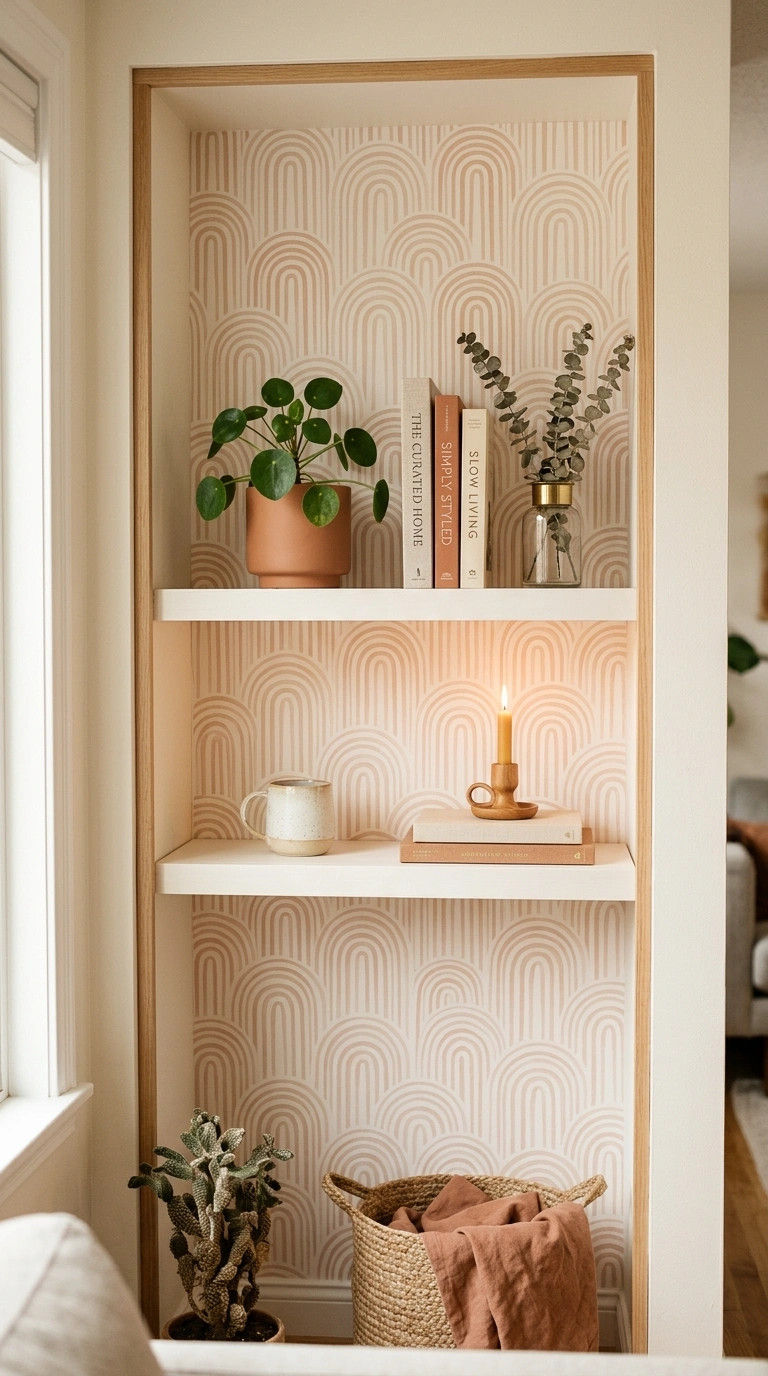
Peel-and-stick wallpaper lets you add pattern to one wall without the mess or commitment of traditional wallpaper paste. Choose one accent wall, often the one behind a sofa or television, rather than covering the whole room, since a single wall keeps the cost down and the look more current. Botanical prints, subtle textures, and geometric patterns all work well in a living room setting. Measure your wall carefully before ordering, since most rolls come in set widths and you’ll want to plan the pattern repeat so it lines up cleanly. Smooth the paper on gradually with a squeegee or a credit card to avoid air bubbles as you apply it. Because it peels off cleanly, this is a favorite among renters who want a bold look without risking their deposit. A single roll usually covers more wall than people expect, and most accent walls can be finished with just one or two rolls.
6. Add a Large Mirror to Bounce Light
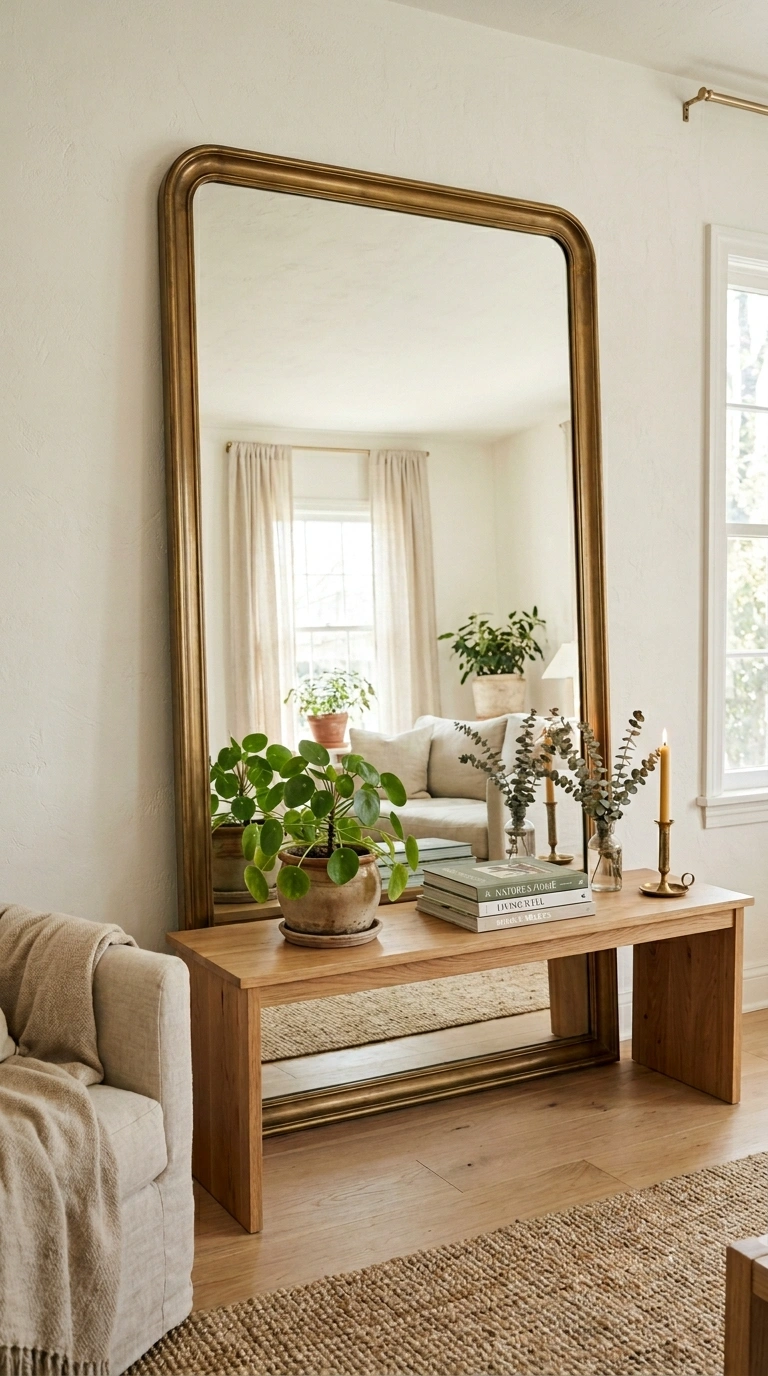
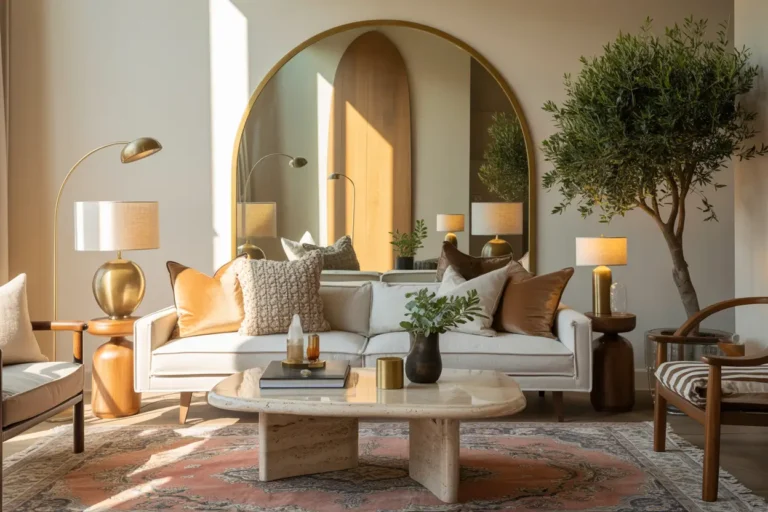
A large mirror does more work in a living room than almost any other single object. Leaning one against the wall behind a sofa or console table bounces light around the room and makes the whole space feel larger than it is. Secondhand shops and resale apps often have oversized mirrors for a fraction of retail price, sometimes because the frame style is out of trend even though the mirror itself is in great shape. A quick coat of spray paint on the frame, in gold, black, or white, can update the whole look for under fifteen dollars. Position the mirror to reflect a window if possible, since this doubles the natural light in the room during the day. Avoid placing it directly across from a television or a blank wall, since it works best reflecting something with visual interest, like a plant, a piece of art, or a window view.
7. Style Your Coffee Table With Stacked Books
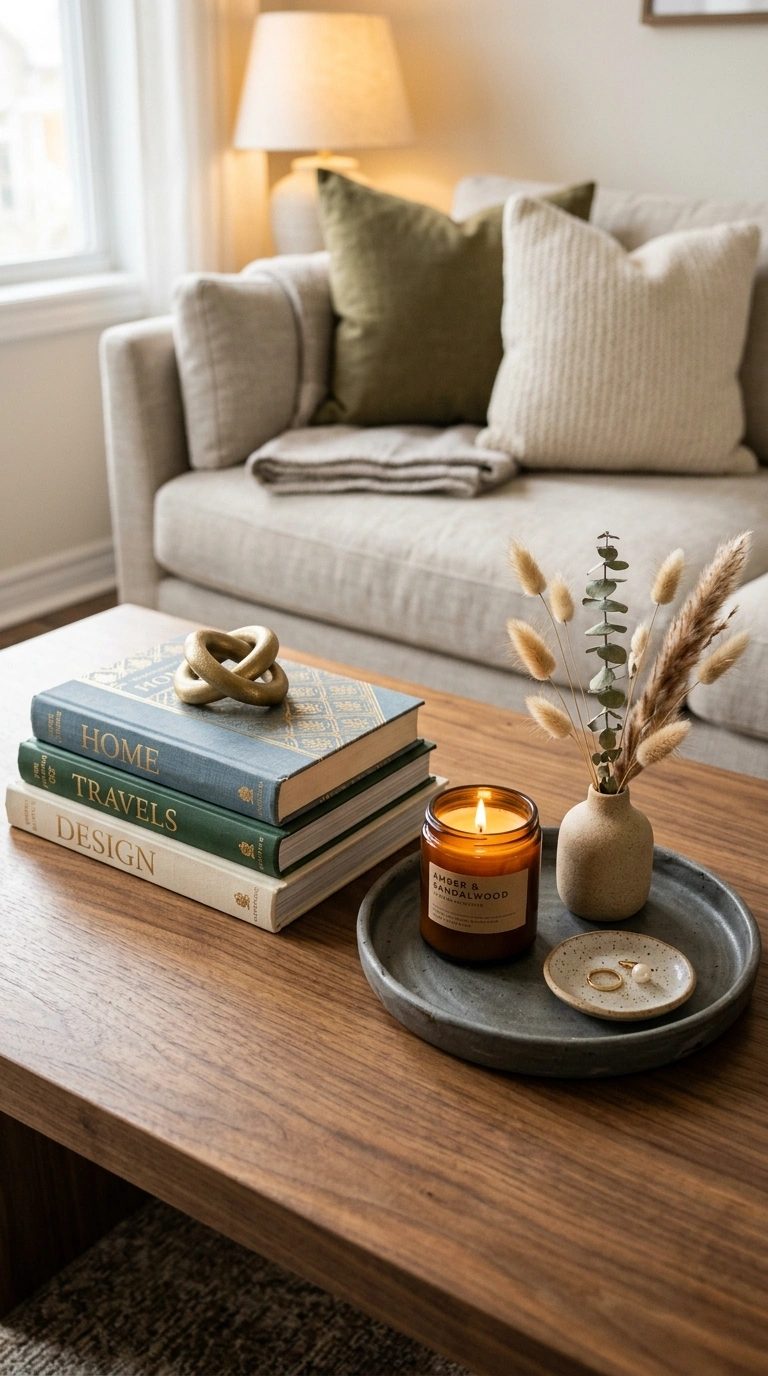
A coffee table styled with a stack of books instantly makes a living room feel more finished, and it costs nothing if you’re using books you already own. Choose a few hardcovers with interesting spine colors or textures, and stack them by size with the largest on the bottom. Top the stack with a small object like a candle, a small dish, or a piece of stone, which gives the eye a place to land. Thrift stores and library sales often sell hardcover books for under a dollar, so this is an easy way to build a small collection just for styling if you don’t already have enough at home. Keep the stack a little uneven rather than perfectly aligned, since this looks more natural and less like a display. This simple styling trick works on almost any coffee table and takes only a couple of minutes to put together.
8. Bring in Thrifted Brass Accents
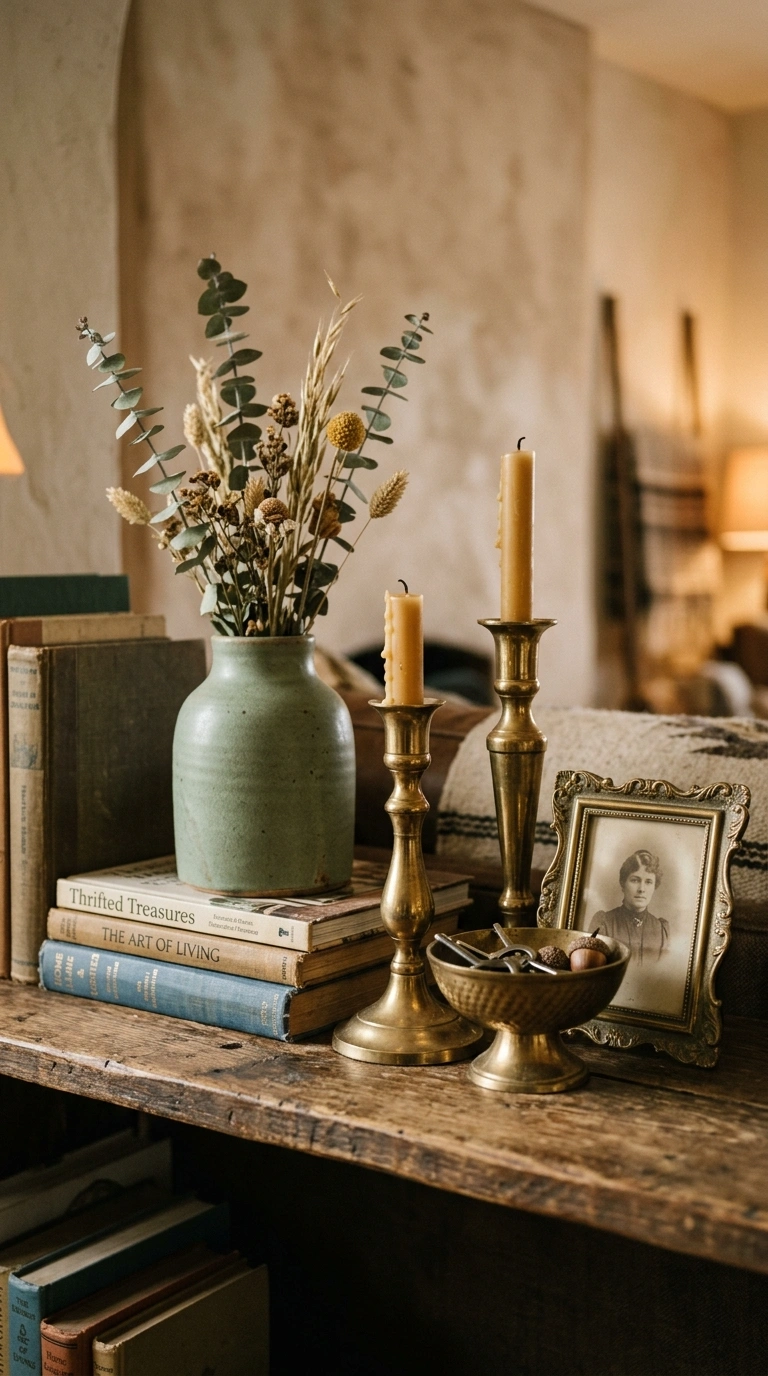
Thrifted brass accents add warmth and a bit of shine to a living room without the cost of buying new. Look for small candlesticks, trays, bowls, or picture frames in secondhand shops, since brass pieces often show up for just a dollar or two because the finish can look tarnished at first glance. A quick polish with a soft cloth and a bit of brass cleaner usually brings the shine right back. Group a few pieces together on a shelf or coffee table rather than scattering single items around the room, since clusters read as more intentional. Brass pairs especially well with dark wood, deep green, or navy tones, all of which are common in a cozier living room palette. Even a single brass tray under a stack of candles or a small plant can add a polished touch that makes the whole room feel a little more considered.
Also Read > 23 Black Living Room Ideas Featuring Marble and Natural Textures
9. Make Simple Slipcovers for Tired Sofas
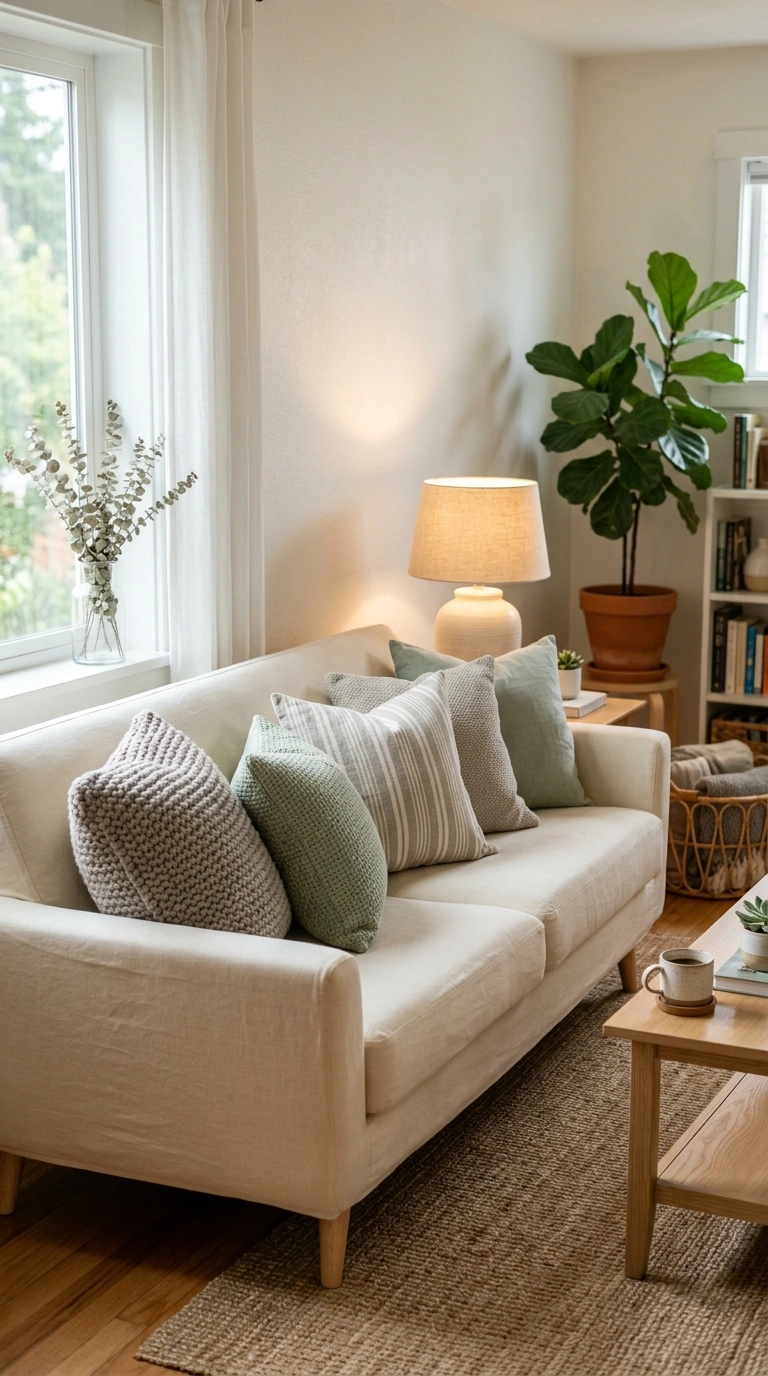
A tired, worn sofa can look brand new again with a simple slipcover, and this is far less expensive than reupholstering or replacing the piece entirely. Measure your sofa’s dimensions before shopping, including the depth of the cushions and the width of the arms, since a slipcover that fits well makes all the difference in how finished it looks. A plain linen or cotton blend in white, oatmeal, or a soft gray works with almost any color scheme and hides stains better than you’d expect. Tuck the extra fabric into the crevices of the cushions for a more tailored look rather than letting it hang loose. If your sofa has removable cushion covers, a slipcover made specifically for that cushion shape will look more polished than a one-size-fits-all version. This update can completely change the feel of a living room for a fraction of what new furniture would cost.
10. Layer Two Rugs for Texture
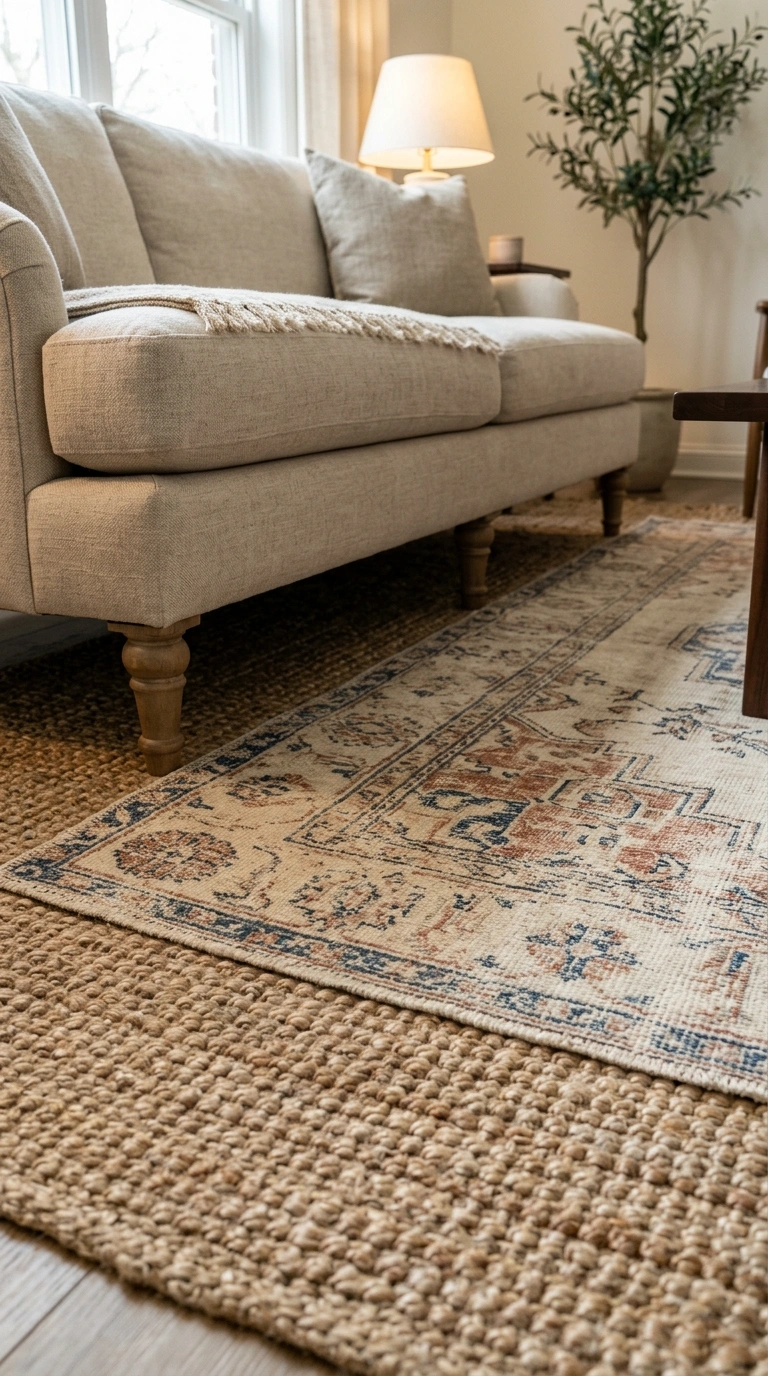
Layering two rugs on top of each other adds texture and depth to a living room floor, and it’s a favorite trick among people who love a collected, lived-in look. Start with a larger, neutral rug like a jute or sisal weave as the base layer, then add a smaller patterned or textured rug on top, slightly off center. This combination grounds the seating area while adding visual interest underfoot. Secondhand rugs are easy to find for this purpose, since layering hides small flaws or worn spots that might rule a rug out on its own. Keep the top rug positioned so at least the front legs of your sofa and chairs sit on it, which ties the layers together instead of looking like two separate accidents. This idea works especially well in rooms with plain flooring, since the layered rugs add color and texture without needing to touch the walls or furniture at all.
11. DIY an Oversized Abstract Canvas
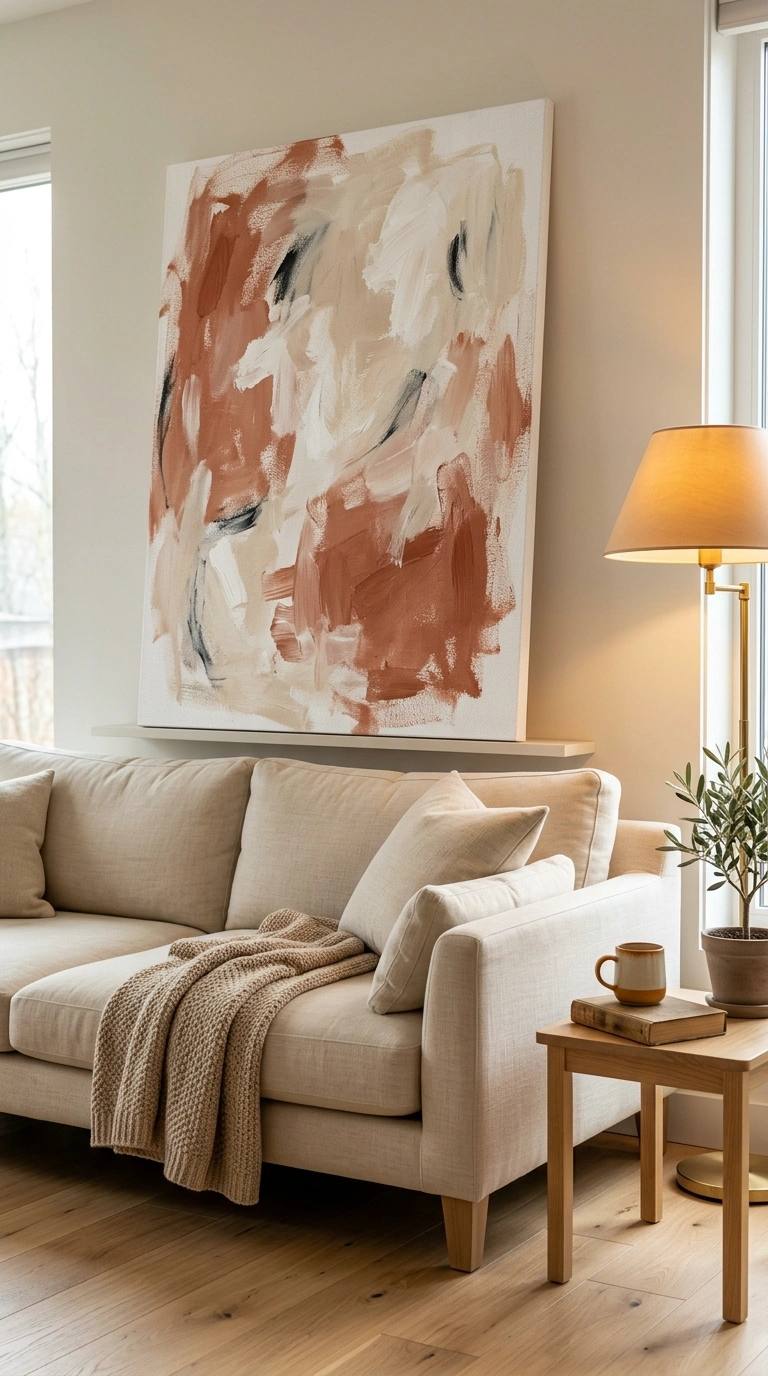
An oversized abstract canvas fills a big wall for a fraction of what a large piece of art usually costs, and it’s a project almost anyone can do in an afternoon. Start with a blank canvas from a craft store, ideally the largest size your budget allows, since scale matters more than detail for this kind of piece. Use acrylic paint in two or three colors that already appear elsewhere in your room, like a cream, a deep green, and a touch of rust. Apply the paint with a wide brush, a palette knife, or even a piece of cardboard, focusing on loose, sweeping motions rather than precise lines. Abstract art forgives imperfection, which makes it one of the most beginner-friendly DIY projects for a living room. Let it dry fully before hanging, and don’t worry about creating something gallery perfect. The goal is a piece with color and movement that fills the wall and ties the room together.
12. Cluster Candles for Warm Lighting
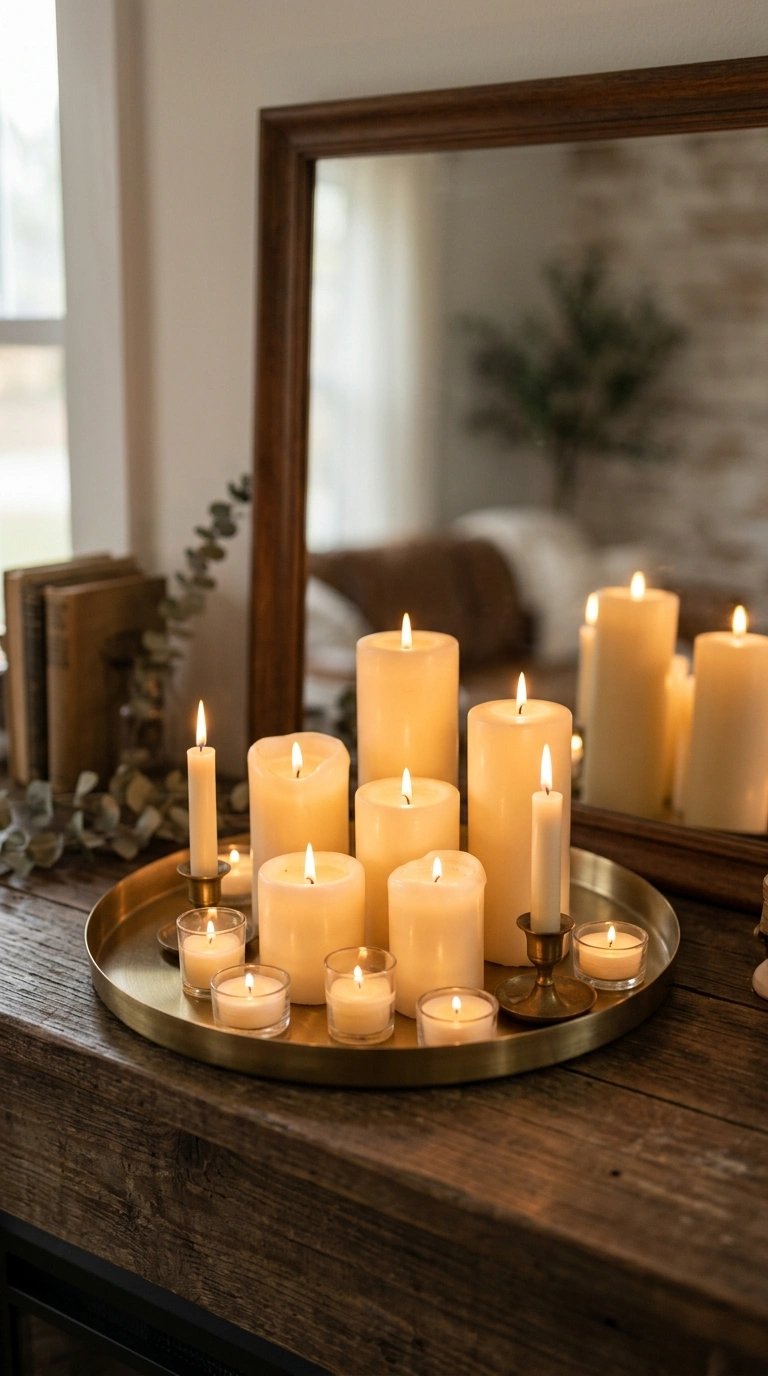
Clustering candles together creates warm, low lighting that makes a living room feel cozy in the evening, and it’s one of the cheapest ways to add ambiance to a space. Group three to five candles of varying heights on a tray on the coffee table or a side table, mixing in a taper candle or two for extra height variation. Unscented candles work best if you already have other scents going in the room, like a diffuser or a scented plant. A mix of matte white, cream, and a deep color like forest green or terracotta keeps the cluster looking cohesive rather than random. Battery-operated candles are a good option if you have pets or small children, since they give the same warm glow without an open flame. This small styling trick adds instant coziness to a coffee table or mantel for just a few dollars.
Also Read > 22 Designer-Inspired Living Room Decor Ideas
13. Hang Floor-Length Curtains Up High
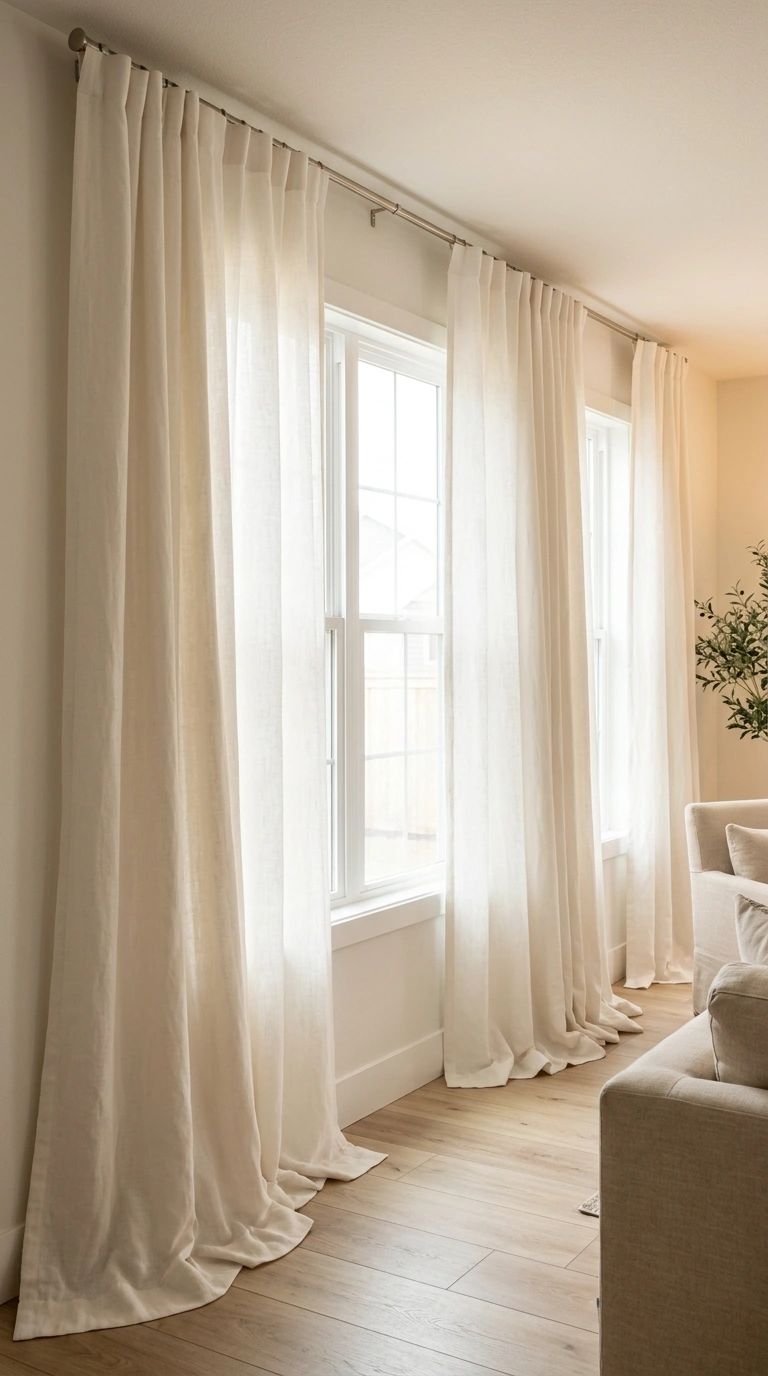
Hanging curtains close to the ceiling instead of right above the window frame makes a living room feel taller, even if the actual window is small. Mount the curtain rod a few inches below the ceiling line and let the curtains fall all the way to the floor, or even puddle slightly for a softer look. This trick draws the eye upward and creates the illusion of a much bigger window than what’s actually there. Choose a lightweight linen or cotton fabric in a soft neutral, since heavier fabrics can look bulky when hung this high. Floor-length curtains also make a room feel more finished overall, since short curtains that stop above the windowsill tend to look unfinished no matter how nice the fabric is. This is a simple, low-cost swap if you already have curtains that are too short, since a new rod costs far less than new custom curtains.
14. Repurpose a Ladder as a Throw Rack
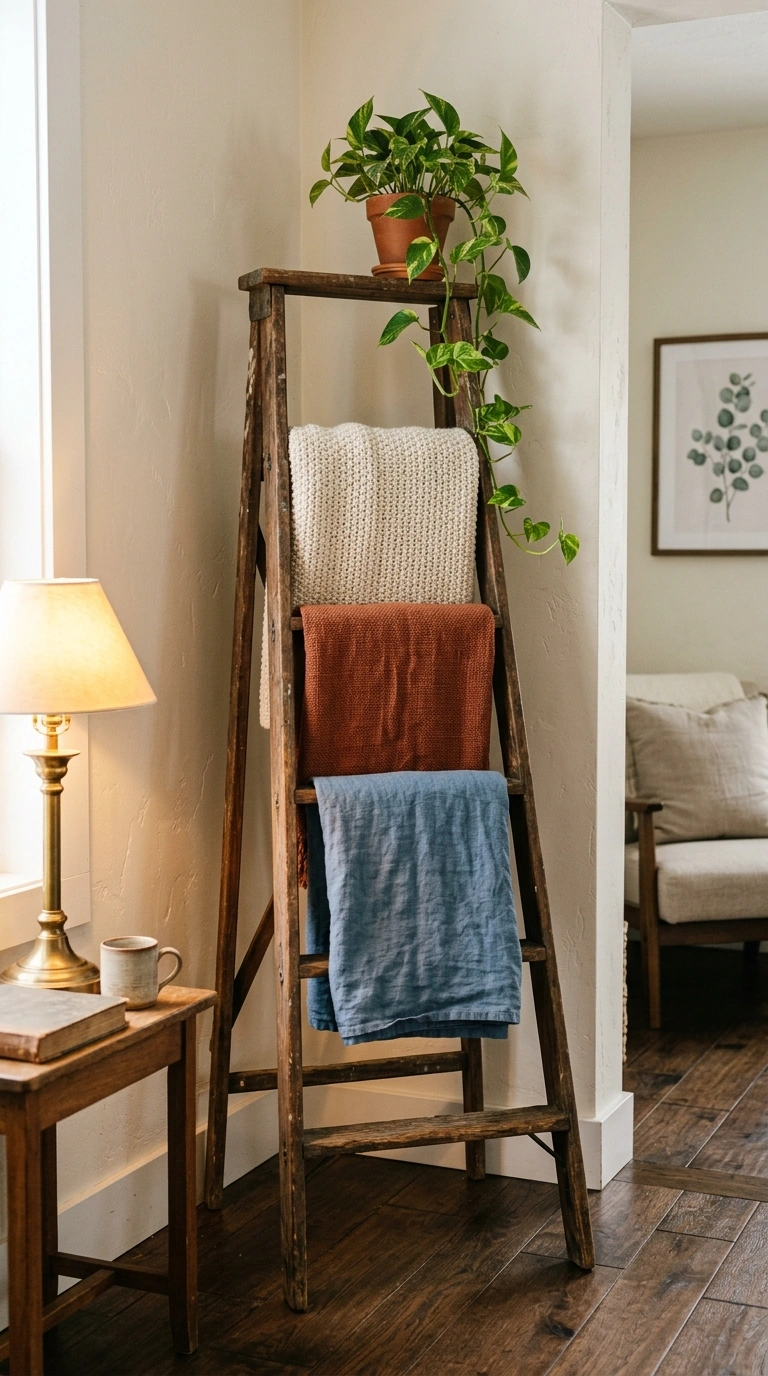
An old wooden ladder, whether it’s a real vintage find or a new decorative one, makes a charming throw blanket rack for a living room. Lean it against the wall near a sofa or an armchair and drape one or two blankets over the rungs, which keeps them handy for chilly evenings while adding a rustic touch to the room. A slightly worn, weathered ladder often looks better for this purpose than a brand new one, so don’t worry if the finish isn’t perfect. Secondhand shops and yard sales are good places to find old ladders for very little money. Keep the blankets folded neatly rather than bunched up, since a tidy drape looks more intentional. This idea works especially well in farmhouse or cottage style living rooms, though it can fit into almost any style with the right blanket colors layered over it.
15. Group Plants in Mismatched Pots
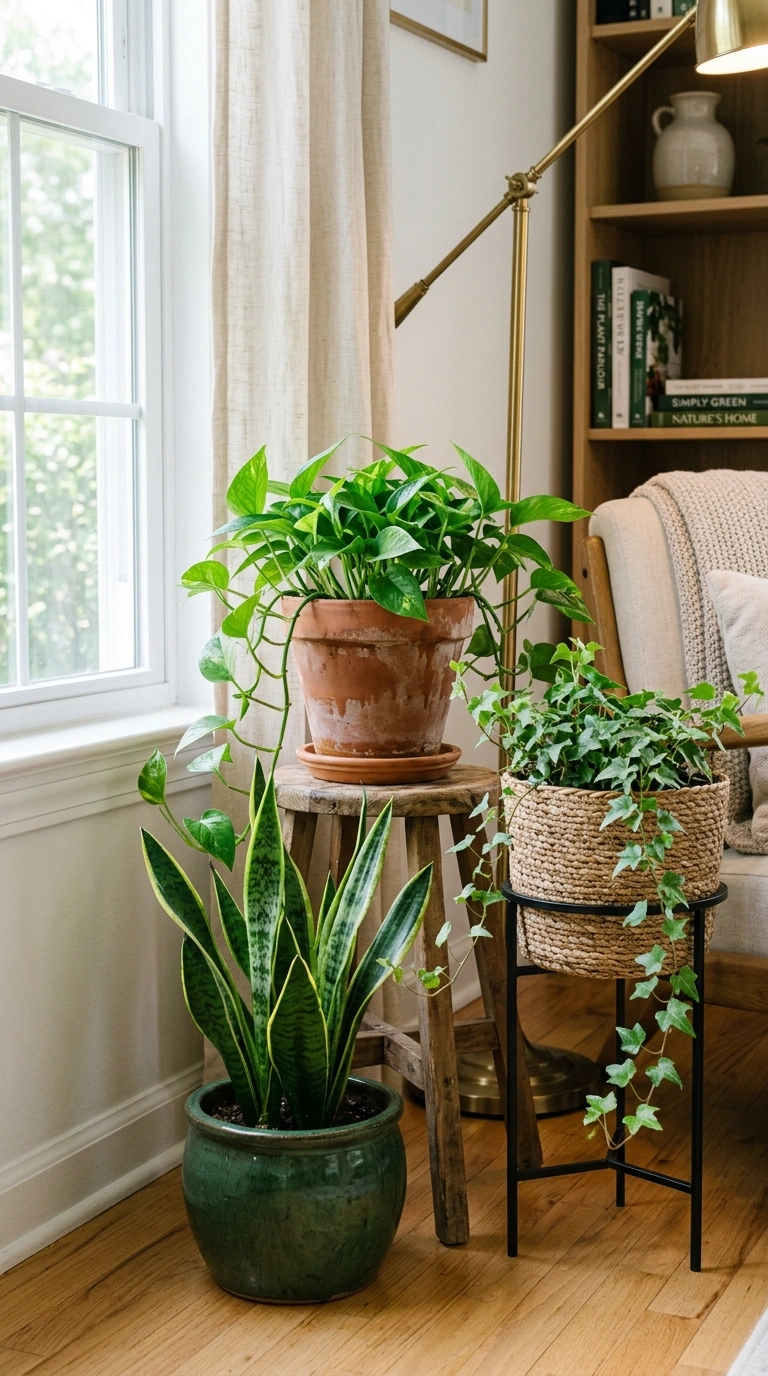
Grouping a few plants together in mismatched pots gives a living room life and texture without needing a big budget for greenery. Look for pots at thrift stores, dollar stores, or even repurpose old ceramic bowls and ceramic mugs that no longer match your dish set. Vary the heights by placing smaller pots on stacked books or a small stool, so the grouping has some visual rhythm instead of sitting flat. Pothos, snake plants, and ZZ plants are all forgiving choices if you don’t have much of a green thumb, and they’re usually inexpensive at most garden centers. Cluster three to five plants together near a window or in an empty corner rather than scattering single plants around the room, since groupings read as more intentional. This is one of the most affordable ways to bring color and life into a living room, and it keeps growing in value the longer you have it.
16. Create a Gallery Wall With Free Printables
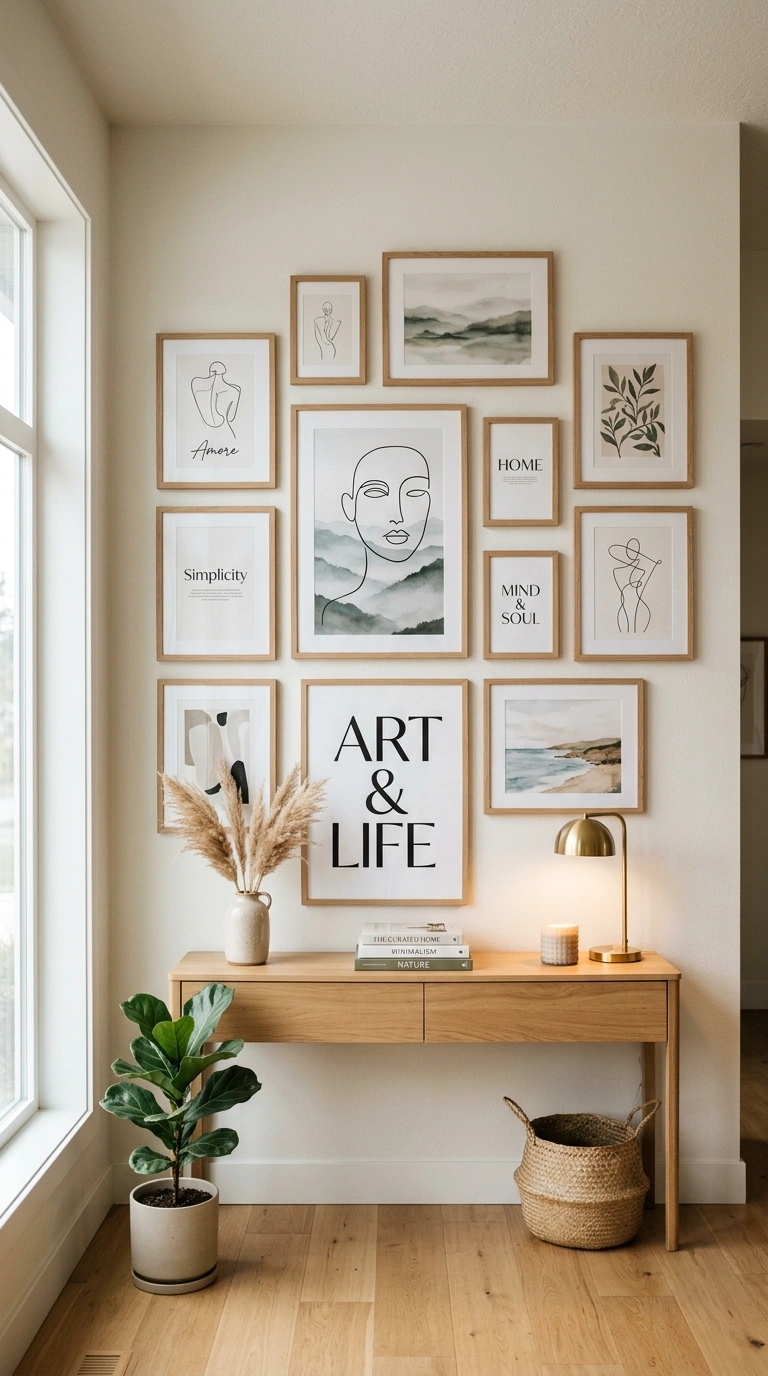
A gallery wall doesn’t need expensive art to look good. Free printable art, found through a quick search online, can fill several frames for the cost of printing alone. Botanical prints, simple line drawings, and vintage art reproductions are all easy to find and print at home or at a local print shop for a few dollars each. Mix frame sizes and finishes for a collected look, using thrifted frames if you have them, since a gallery wall benefits from a bit of variety rather than a matched set. Lay the frames out on the floor first to plan the arrangement before hammering any nails, adjusting the spacing until it feels balanced. Keep a consistent gap of about two to three inches between frames for a clean, gallery style look. This is one of the most budget-friendly ways to fill a large, empty wall with something that feels personal and put together.
17. Reupholster a Chair Into an Accent Piece
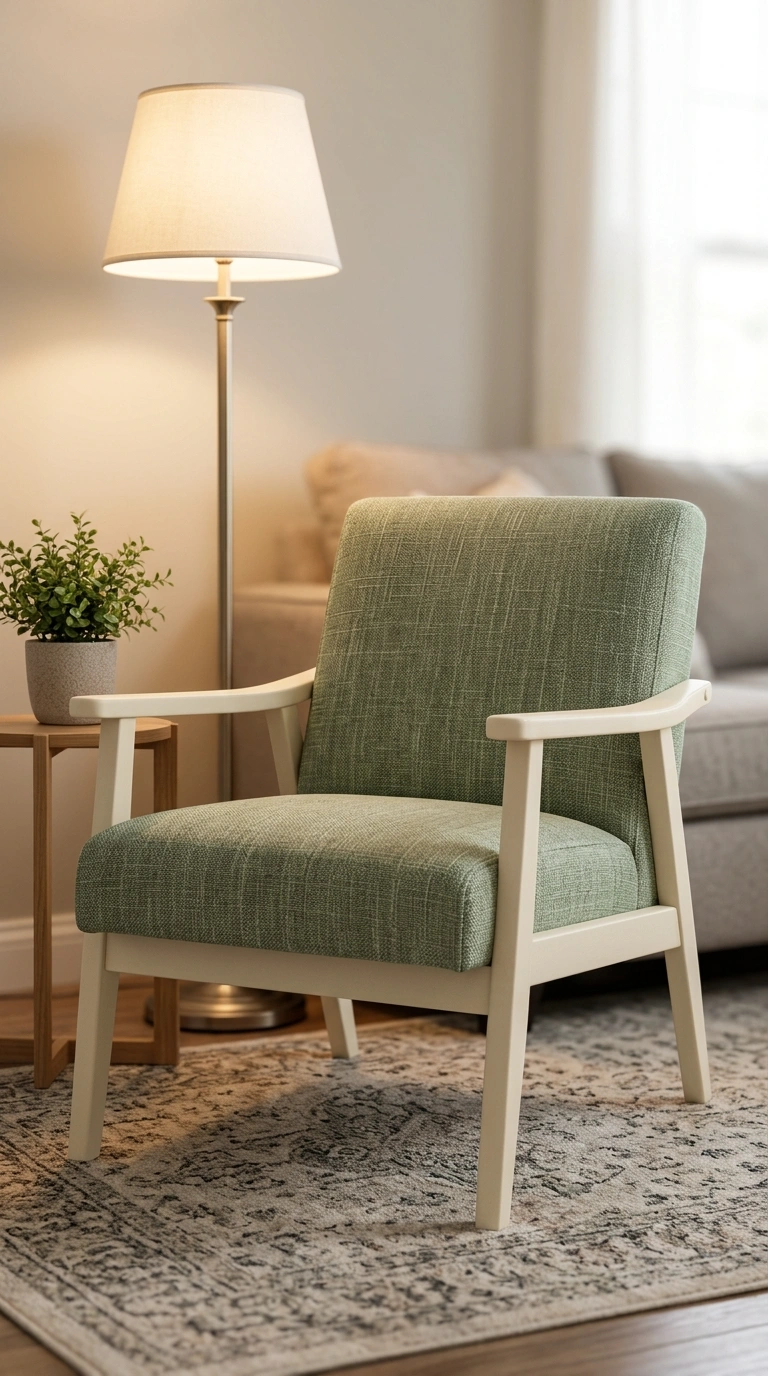
An old chair with a sturdy frame but tired fabric is a great candidate for reupholstering, and it costs far less than buying a new accent chair. Look for chairs at estate sales or thrift stores where the bones are solid but the fabric is dated or worn. A basic reupholstering project, especially on a simple chair without a lot of curves, is doable as a weekend DIY project with a staple gun and a few yards of fabric. Choose a durable fabric like canvas, linen blend, or a performance weave if the chair will get regular use. This project takes some patience, but the transformation is often dramatic, turning a chair that looked ready for the curb into a real statement piece in the room. If reupholstering feels like too much, a simple fabric or a fitted cover can achieve a similar refresh with much less effort.
18. Use a Vintage Trunk as a Coffee Table
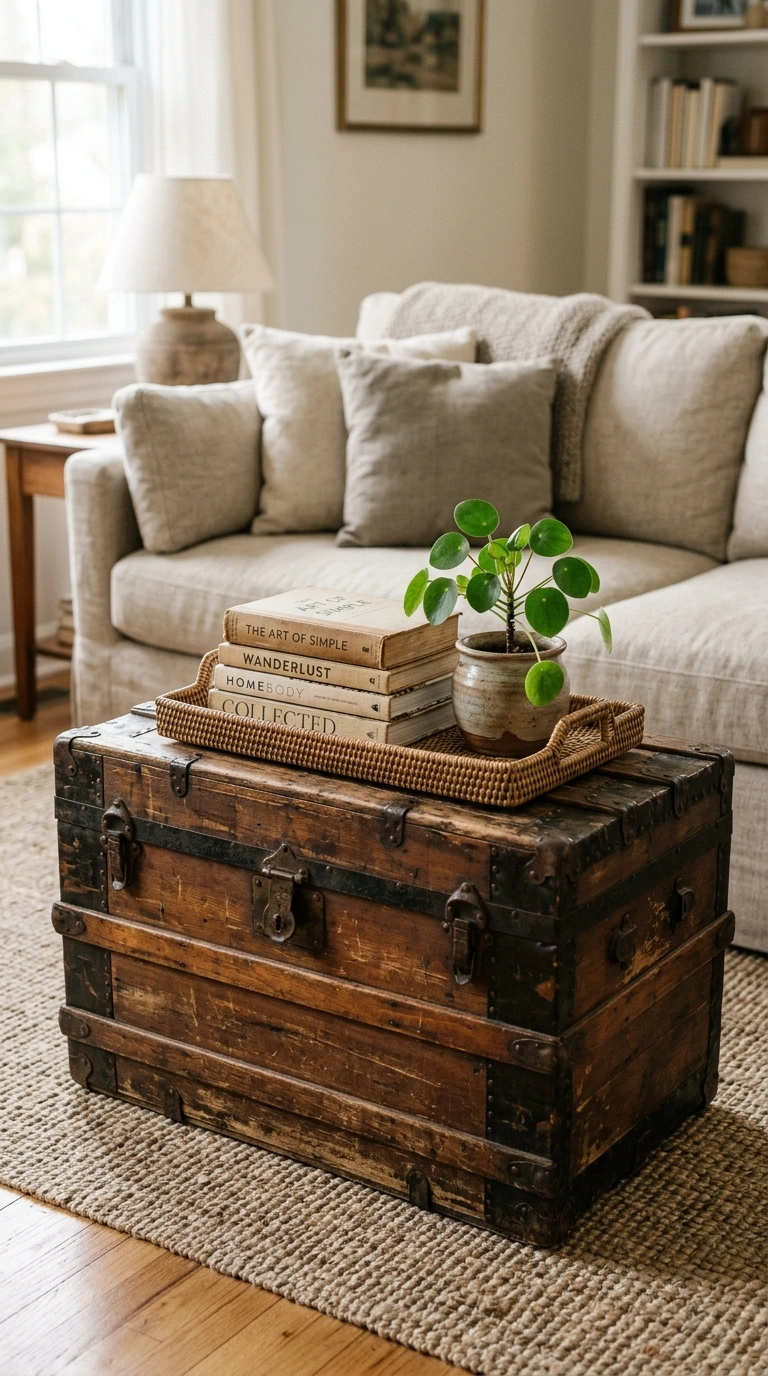
A vintage trunk used as a coffee table brings texture, history, and hidden storage all in one piece, and it’s often cheaper than a traditional coffee table with none of those benefits. Look for trunks at flea markets, estate sales, or antique shops, checking that the hinges and latches still work smoothly before buying. A trunk with some visible wear, like scuffed leather or a slightly dented metal corner, usually adds character rather than detracting from the piece. Use the inside for storing extra blankets, board games, or seasonal items, which is especially useful in a smaller living room without a lot of closet space. Top the trunk with a tray to create a flat surface for drinks or a stack of books, since most trunk lids aren’t perfectly level. This piece works well in almost any style of room, from farmhouse to more traditional, and it’s a great conversation starter for guests.
19. Add a Woven Pendant or Paper Lantern
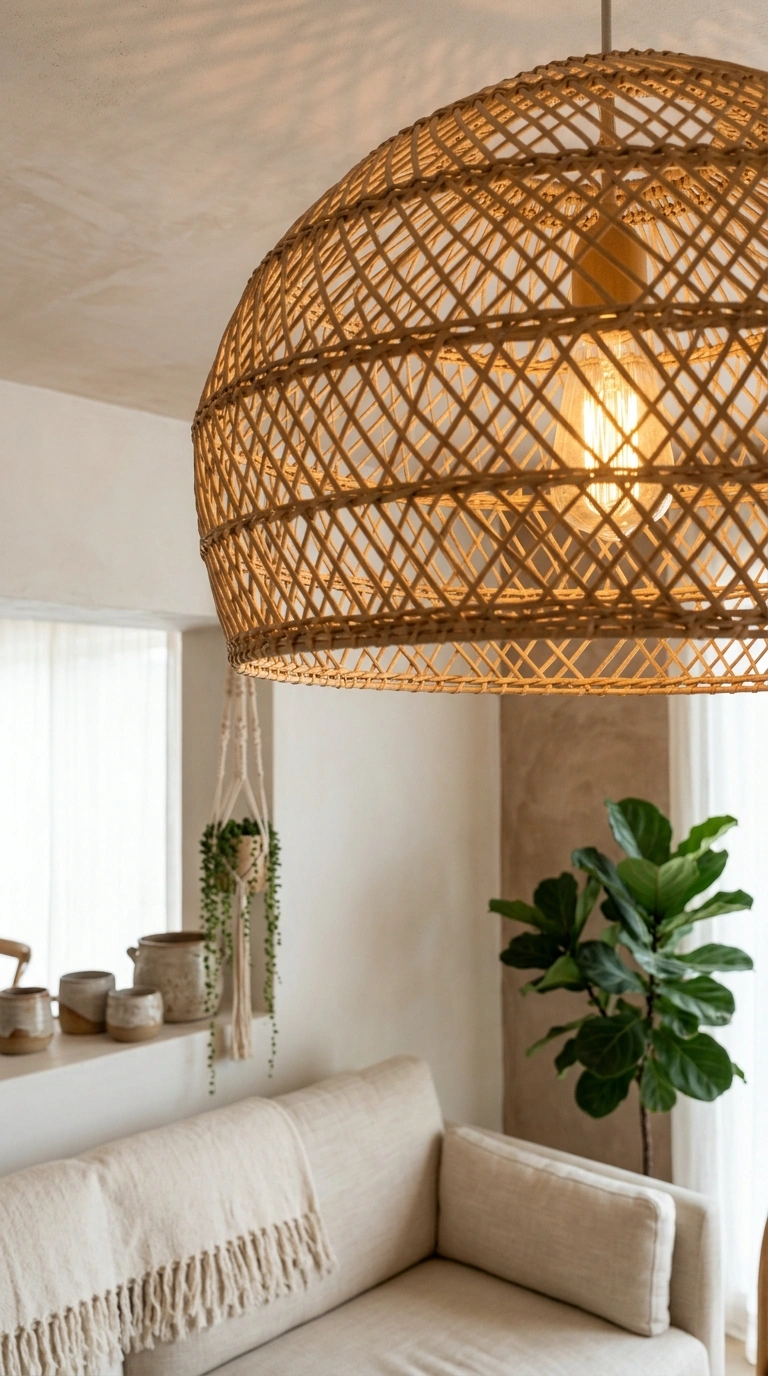
Swapping a basic overhead light fixture for a woven pendant or a paper lantern adds warmth and texture to a living room ceiling, an area that often gets overlooked. Rattan and woven wood pendants cast a soft, dappled light that feels much warmer than a plain glass or metal fixture. Paper lanterns are an even more budget-friendly option and come in a range of shapes, from simple spheres to more sculptural designs. Make sure any new fixture is rated for the wattage and wiring already in place, and if you’re not comfortable with electrical work, a plug-in pendant kit lets you skip rewiring altogether. Hang the fixture at a height where it doesn’t interfere with taller furniture or foot traffic through the room. This is a small change that has a big visual impact, since lighting fixtures are one of the first things the eye notices when entering a room.
20. Frame Fabric Swatches or Scarves as Art
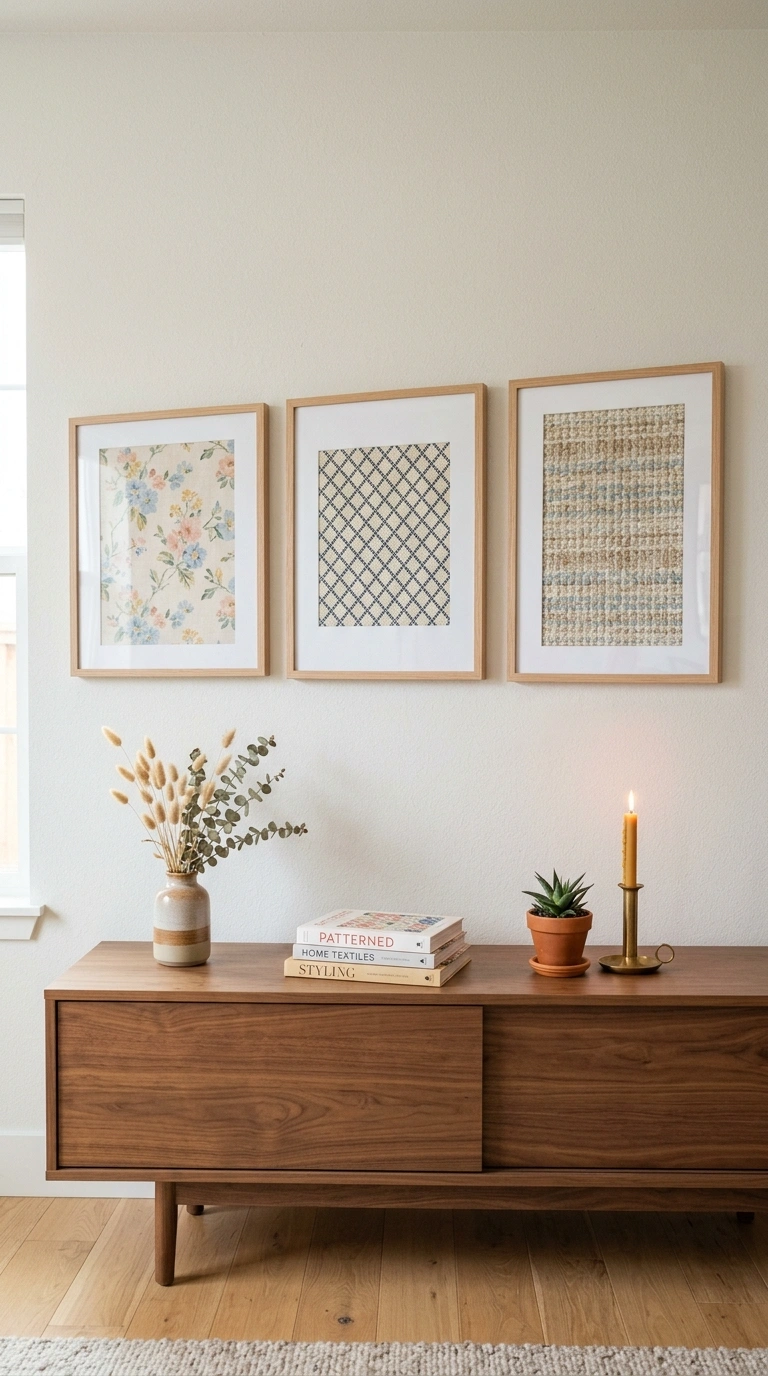
Fabric swatches, vintage scarves, or even a beautiful piece of wrapping paper can be framed as art for a fraction of what a traditional print costs. Look for scarves with interesting patterns at thrift stores, or use a fabric remnant left over from another project around the house. Stretch the fabric gently over a foam board or canvas backing before placing it in a frame, which keeps it flat and taut behind the glass. This works especially well for a small gallery wall or as a single statement piece above a console table. Choose a frame with a simple profile so the pattern of the fabric stays the star of the piece rather than competing with an ornate frame. This idea is a favorite for anyone who has inherited a scarf or fabric piece with sentimental value but wasn’t sure how to display it, since framing turns it into wall art instead of something folded away in a drawer.
21. Style Open Shelving With Thrift Ceramics
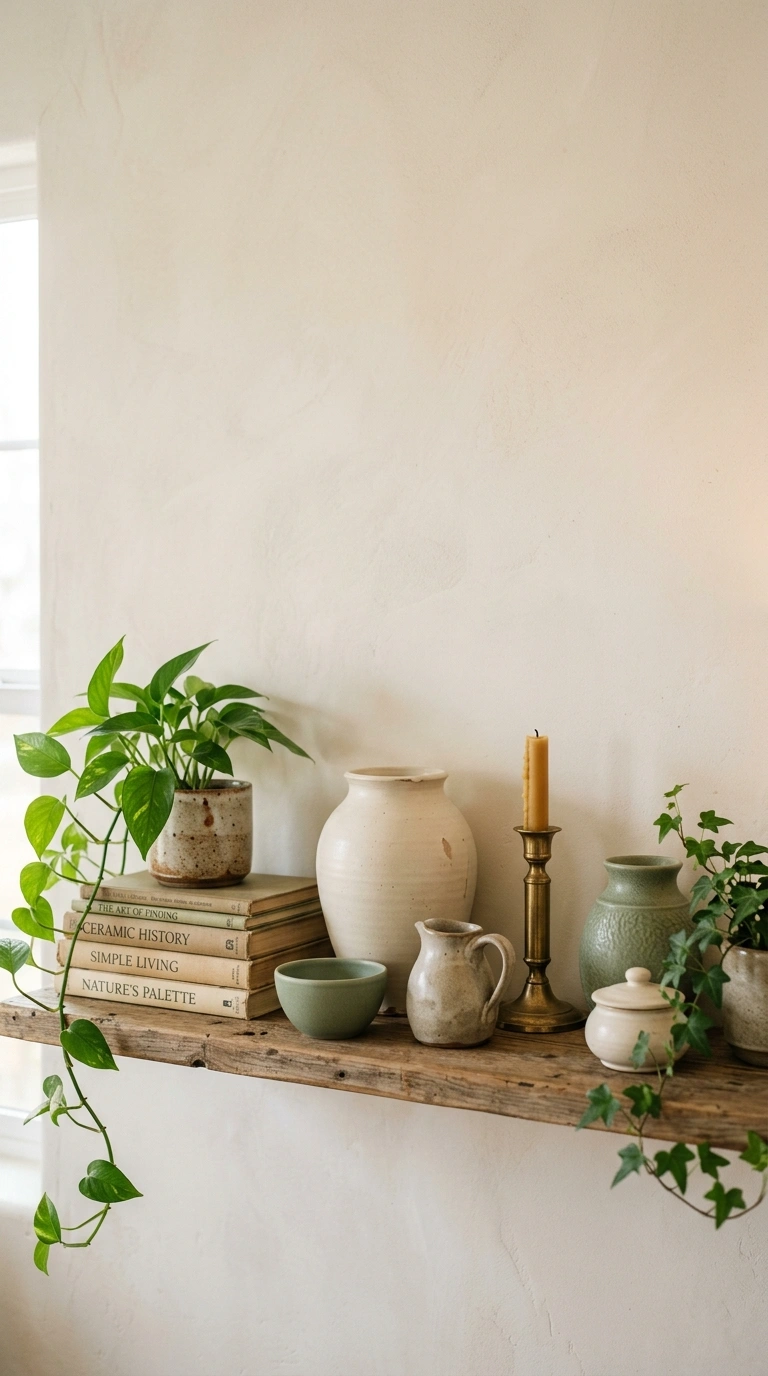
Open shelving styled with thrifted ceramics gives a living room a curated, gallery-like feel without the cost of buying decor new. Look for small vases, bowls, and sculptural pieces at thrift stores, mixing a few different textures like matte stoneware, glossy ceramic, and a bit of woven basket for contrast. Group items in odd numbers, like three or five, rather than pairs, since odd groupings tend to look more natural and less staged. Vary the heights across the shelf by placing a taller vase next to a shorter bowl or a small stack of books. Leave some negative space between groupings rather than filling every inch of the shelf, since breathing room helps each piece stand out instead of blending into visual clutter. This approach works well whether your shelving is built in or a simple floating unit, and it makes even inexpensive finds look intentional and collected.
22. Build a Reading Nook With a Secondhand Armchair
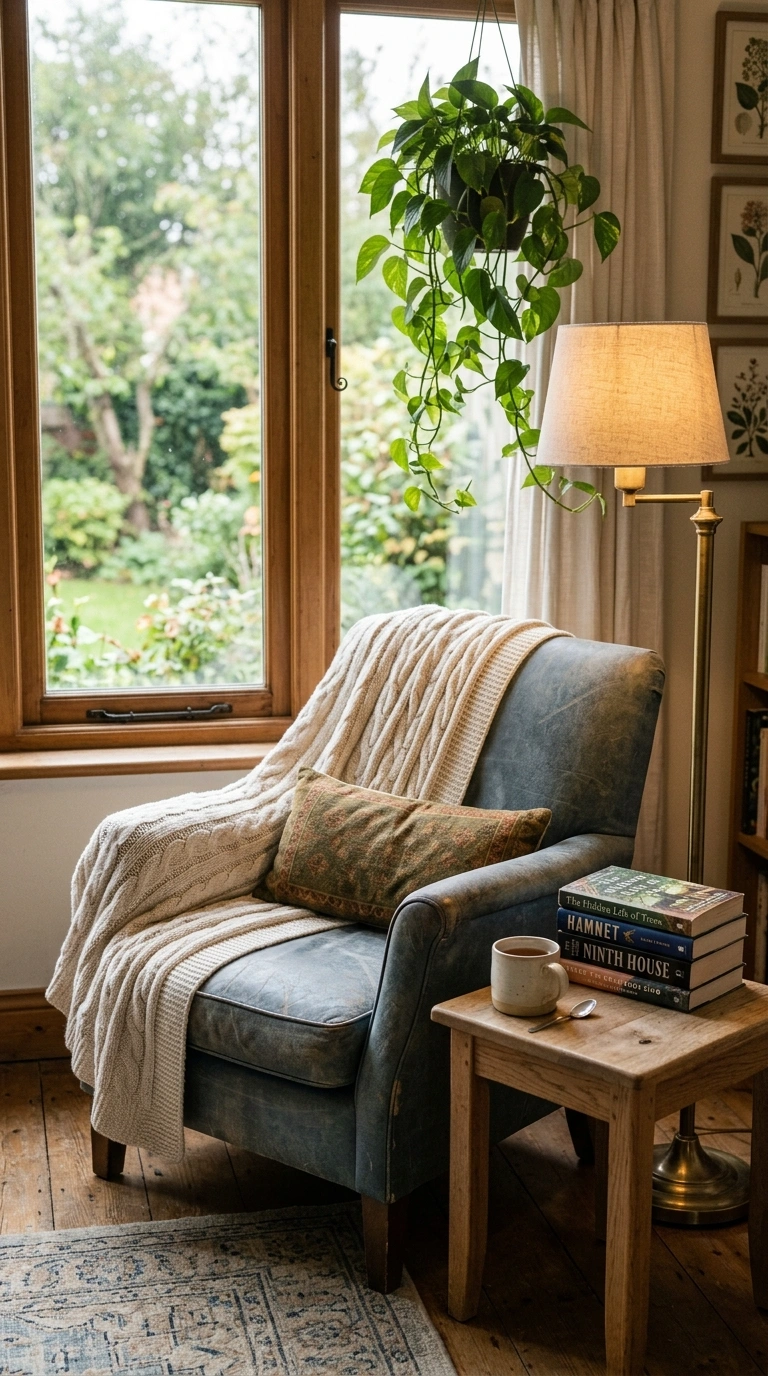
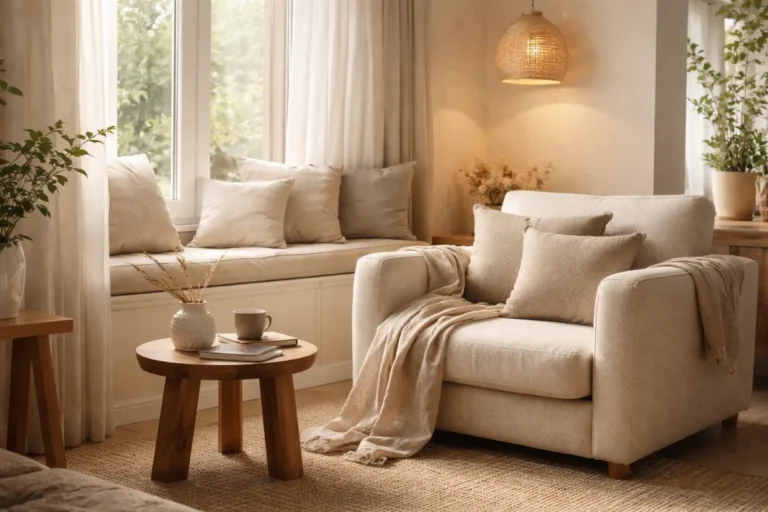
A secondhand armchair tucked into an empty corner, paired with a small side table and a floor lamp, creates a reading nook that adds function and coziness to a living room. Look for an armchair with a comfortable seat depth and sturdy frame at a thrift store or resale shop, since fabric and finish can always be updated later if needed. Add a small side table just large enough for a cup of coffee and a book, along with a floor lamp that casts warm, direct light for reading in the evening. A folded blanket over the arm of the chair and a small basket of current reads nearby finish the look. This nook doesn’t need to take up much space, even a narrow corner near a window works well, and it gives the living room a dedicated spot that feels a little separate from the main seating area.
23. Refresh With Seasonal Throw Pillow Covers
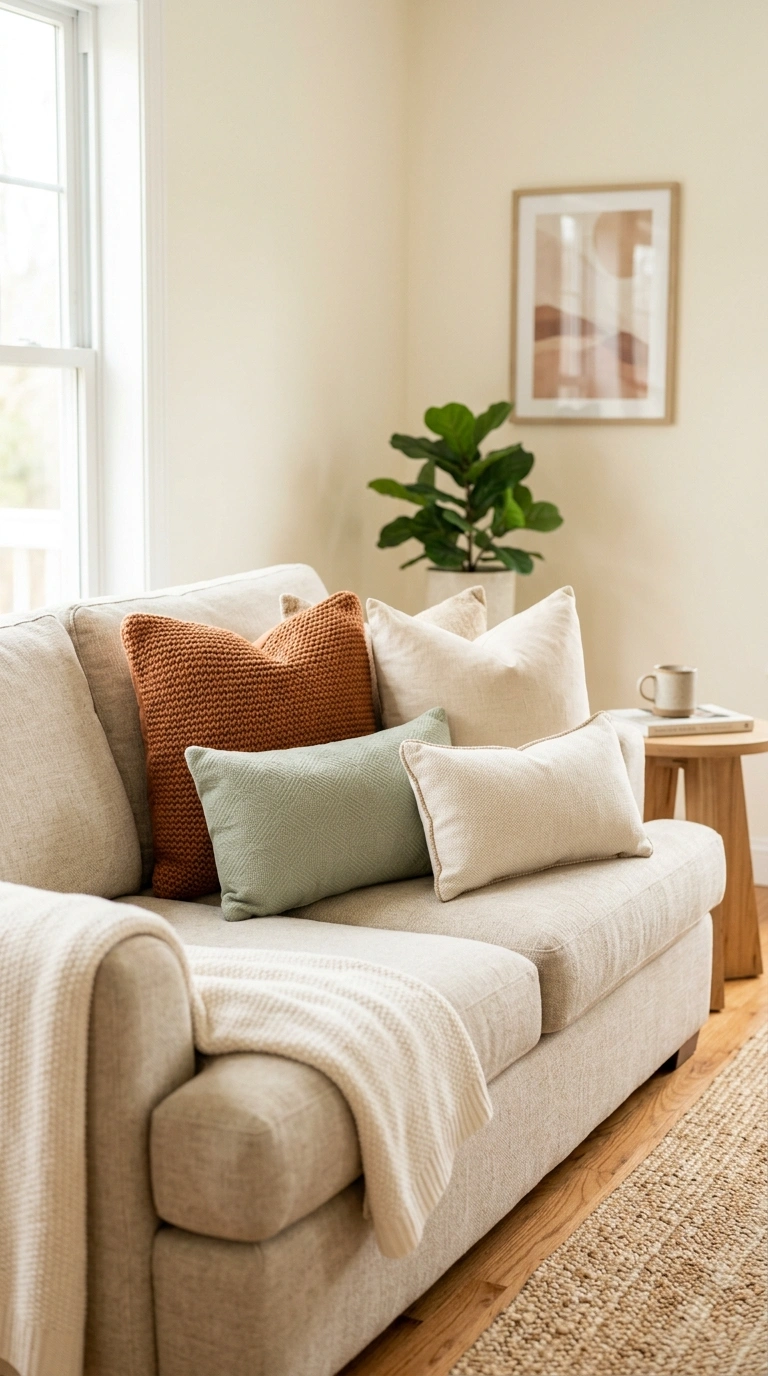
Refreshing a living room with seasonal throw pillow covers is one of the cheapest ways to change the whole feel of the space throughout the year. Rather than buying new pillows, simply swap the covers over your existing inserts, which keeps the cost down to just the fabric covers themselves. Choose warmer tones like rust, mustard, and deep green for fall and winter, then switch to lighter blues, creams, and soft greens for spring and summer. Look for covers at thrift stores, discount home shops, or make your own from fabric remnants if you’re comfortable with a sewing machine. Keeping a small rotation of two or three sets of covers means you can refresh the room every few months without a big expense each time. This simple habit keeps a living room feeling current and cared for, even when nothing else in the room has changed.
Conclusion
None of these ideas require a big renovation or a trip to a high end furniture store. A moody accent wall, a thrifted trunk, or a few well placed candles can shift a living room from tired to chic in a weekend. Pick a handful that fit your space and your style, and let the room grow slowly from there. A living room that comes together piece by piece usually feels more like home than one that was bought all at once.
FAQs
How can I make my living room look expensive on a budget?
Focus on a few high impact changes rather than many small ones. A large mirror, a moody accent wall, and thrifted brass accents all add a polished feel without a big price tag.
What is the cheapest way to update a living room?
Swapping throw pillow covers, styling your coffee table with books, and rearranging what you already own are some of the cheapest updates. Many of these ideas cost under twenty dollars.
How do I decorate a small living room on a budget?
Use vertical space with floating shelves, hang curtains close to the ceiling to add height, and keep a light color palette to make the room feel bigger. Thrifted furniture with a slim profile also helps in a tighter space.
Where can I find cheap chic decor for my living room?
Thrift stores, estate sales, yard sales, and resale apps are all good places to look. Many pieces just need a coat of paint, a hardware swap, or a good cleaning to look brand new.
What colors make a living room look chic and cozy?
Warm neutrals like cream and oatmeal, paired with a deeper accent color like charcoal, forest green, or rust, tend to feel both chic and cozy. Brass or gold accents add warmth to almost any color palette.