21 Modern Minimalist Living Room Ideas That Feel Warm, Stylish, and Easy to Live In

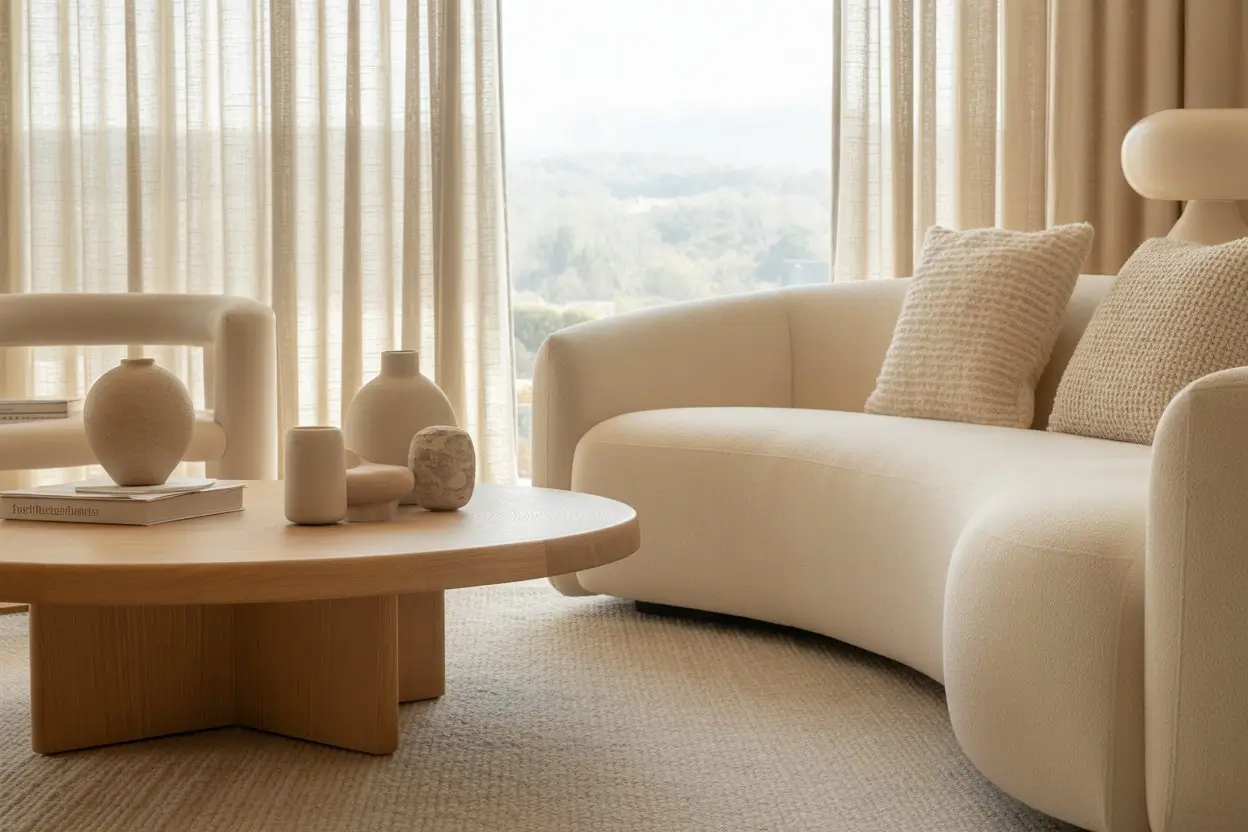
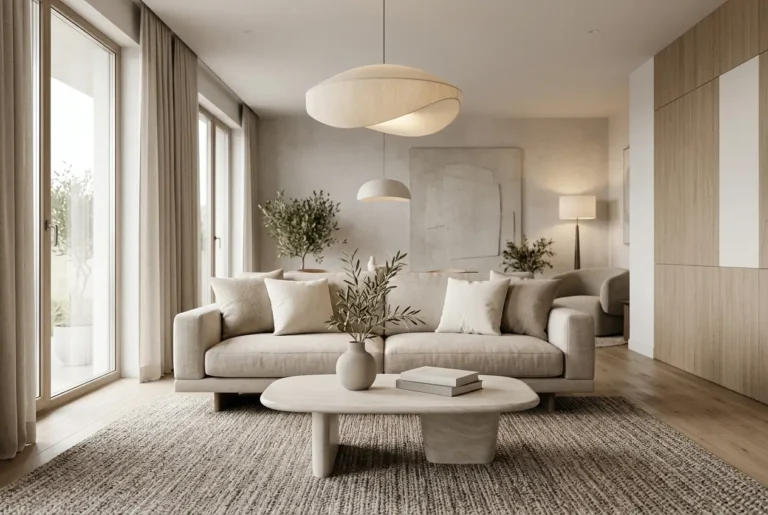
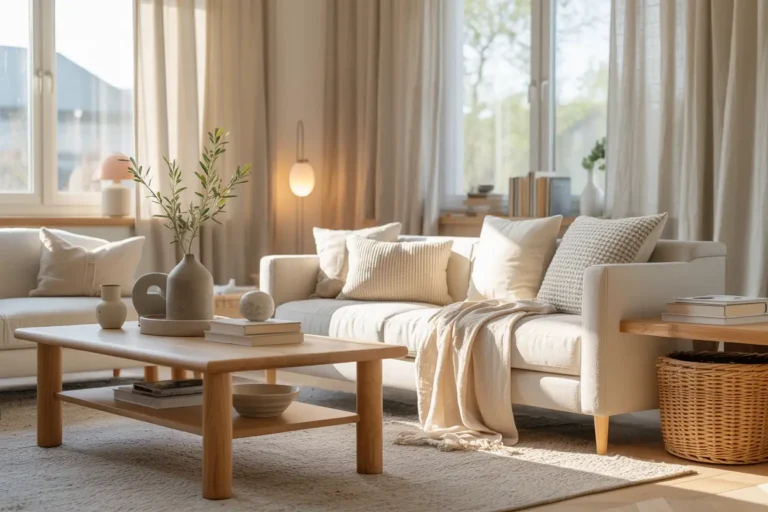
A beautiful minimalist living room is not about removing everything from a space. It is about choosing the right details that make the room feel calm, stylish, and comfortable at the same time. Modern minimalism works best when the space feels soft and welcoming instead of cold or empty. The right mix of textures, lighting, furniture, and colors can turn even a simple room into a warm and relaxing retreat.
This guide shares creative and practical ideas that make minimalist living rooms feel more personal and visually interesting. You will find soft neutral palettes, layered textures, cozy lighting ideas, smart layouts, and fresh styling tips that feel realistic for everyday living. Each idea is designed to inspire Pinterest-worthy spaces that still feel easy to enjoy every day.
1. Layer Warm Beige Tones With Natural Oak Wood
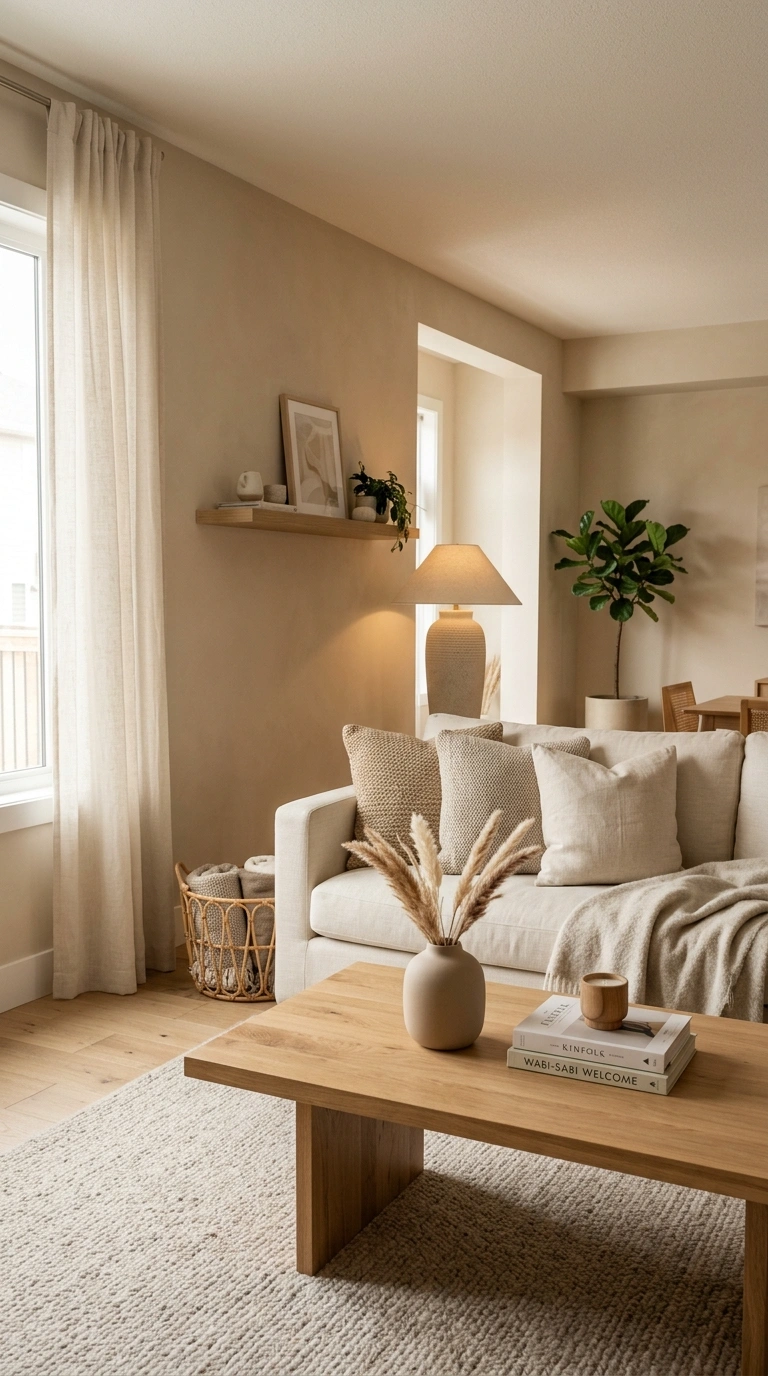
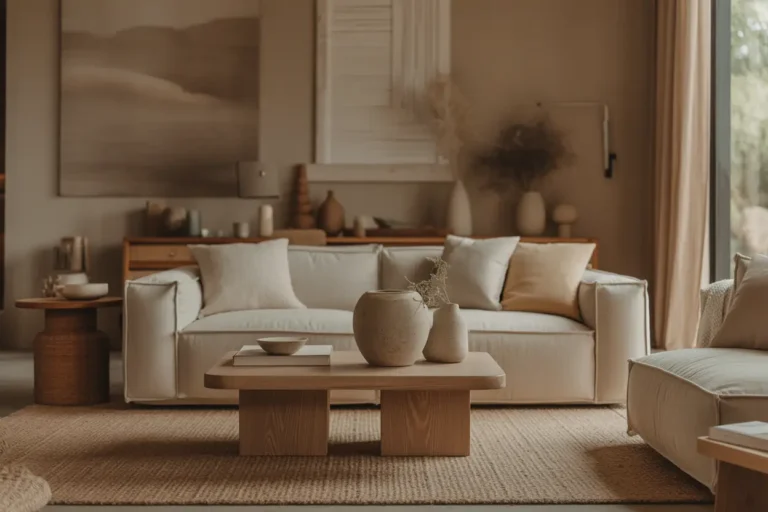
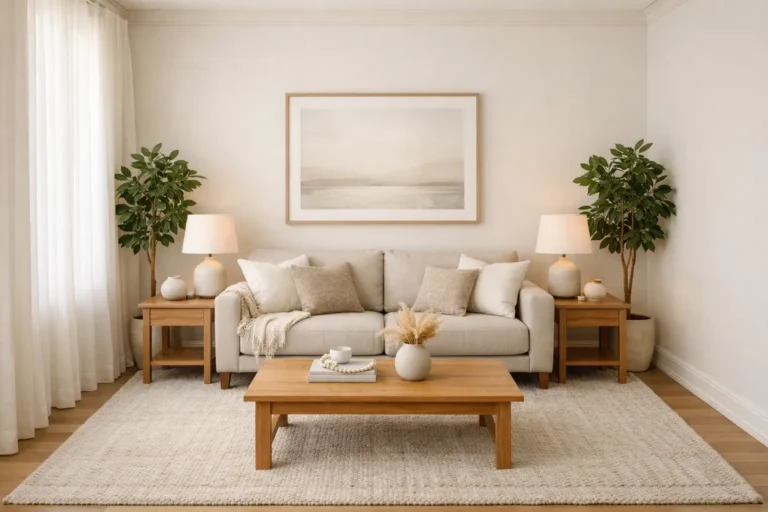
A warm beige palette instantly makes a minimalist living room feel softer and more inviting. Instead of using bright white walls and cool gray furniture, combine creamy beige walls with natural oak wood shelves, coffee tables, and flooring. This creates a relaxed atmosphere that feels modern without looking sterile. Linen curtains in sandy tones help sunlight move gently around the room while textured throw pillows add depth without cluttering the space.
To keep the room visually balanced, choose furniture with slim frames and soft edges. A low oak media console paired with a curved cream sofa creates a clean but comfortable layout. Add one large ceramic vase with dried olive branches for a natural finishing touch. This combination feels calming, timeless, and perfect for everyday living.
2. Create Contrast With Charcoal and Soft Cream
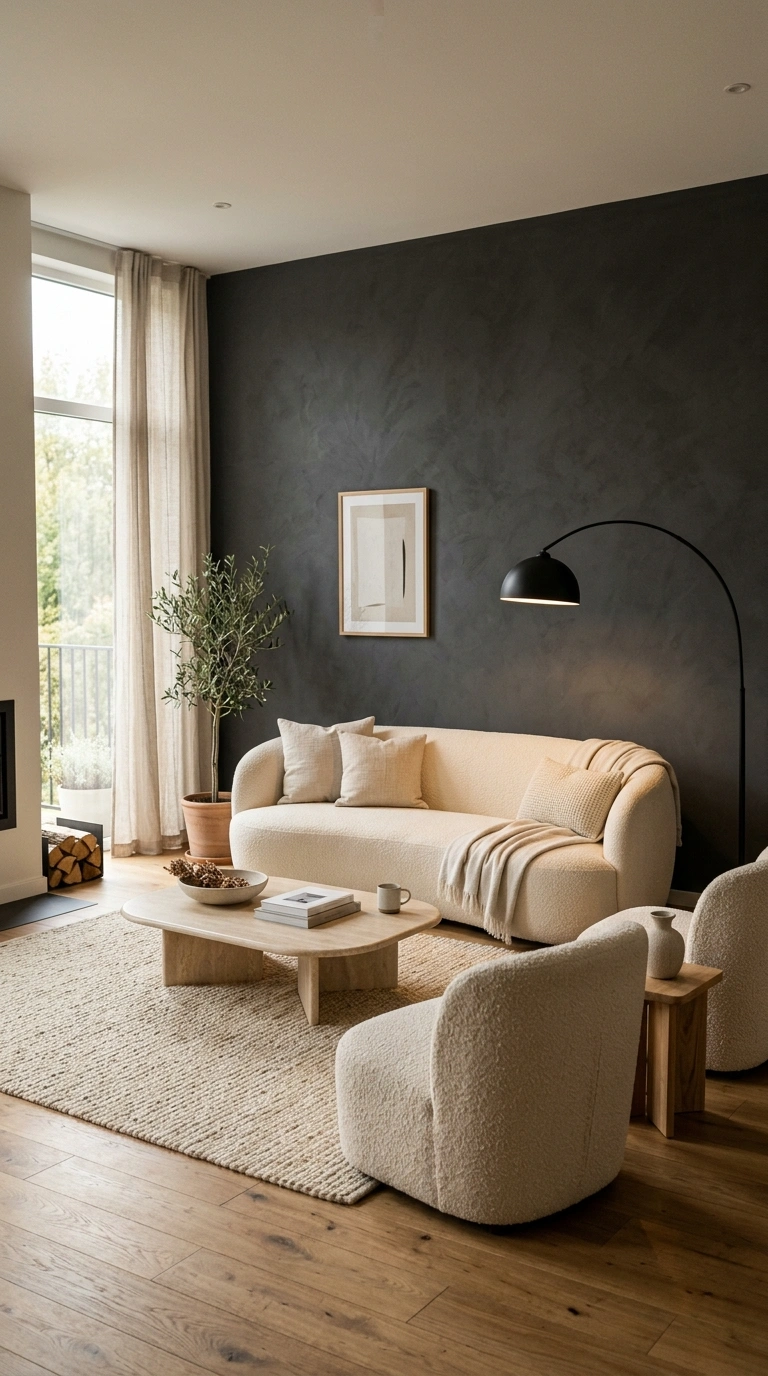
Minimalist spaces look more dynamic when light and dark tones work together. A charcoal accent wall behind a cream-colored sofa creates strong visual contrast while still keeping the room elegant and calm. This style works especially well in living rooms with large windows because natural light softens the darker shades throughout the day.
Use textured fabrics to prevent the room from feeling flat. Bouclé chairs, woven rugs, and matte black lighting fixtures add warmth and depth without making the space busy. Instead of adding many decorative items, focus on a few oversized pieces like abstract wall art or a sculptural floor lamp. The result feels modern, dramatic, and clean while still remaining cozy enough for daily life.
3. Use Curved Furniture for a Softer Minimalist Look
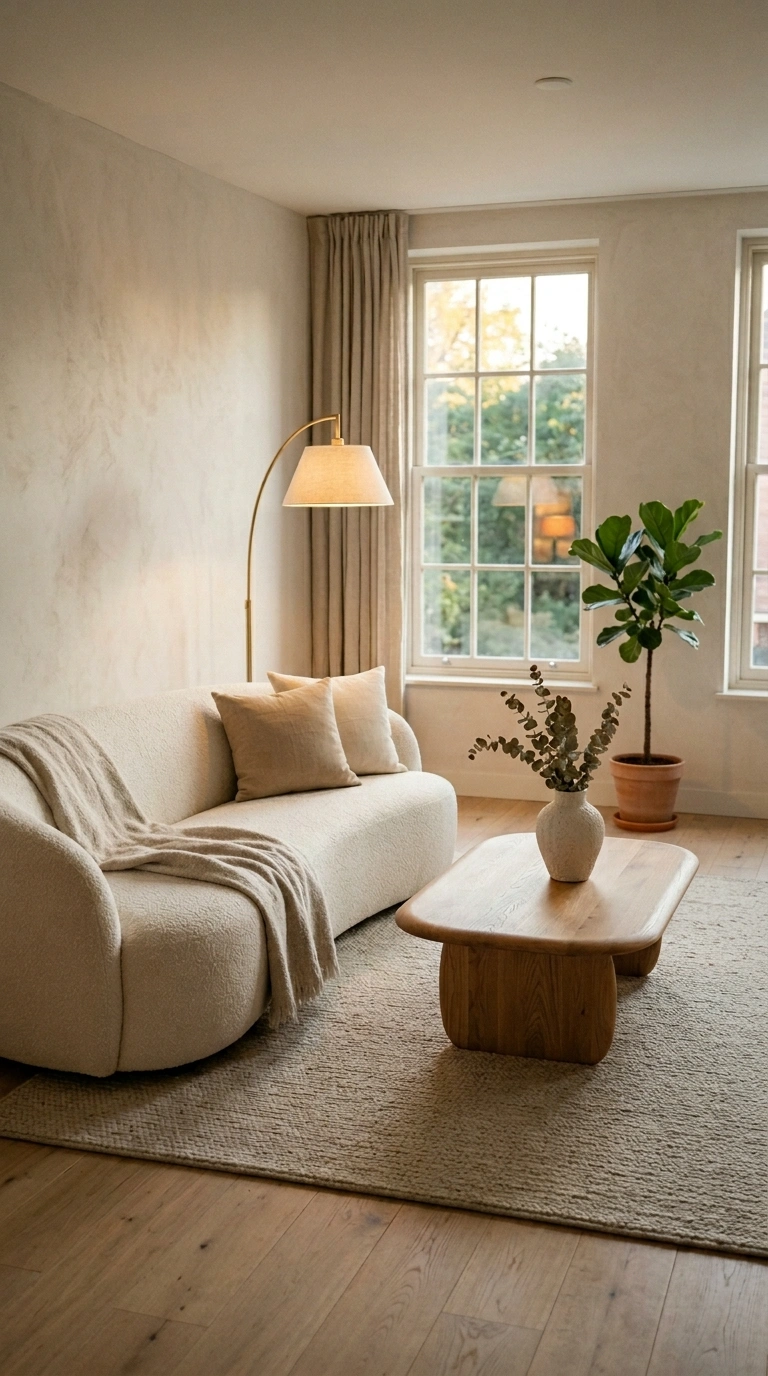
Straight lines can sometimes make minimalist rooms feel too sharp or formal. Curved furniture instantly softens the entire space and creates a more relaxed atmosphere. A rounded sofa paired with a circular coffee table helps the room feel balanced and inviting. Soft curves also improve the flow of the room by making movement feel more natural and open.
Choose fabrics with subtle texture like brushed cotton, velvet, or linen to make the furniture feel richer without overwhelming the design. Light taupe, warm ivory, and muted clay tones work beautifully with curved shapes. Add a tall arched floor lamp in brushed brass to continue the soft visual movement throughout the room. This approach gives modern minimalism a more artistic and welcoming personality.
4. Add Texture Through Limewash Walls
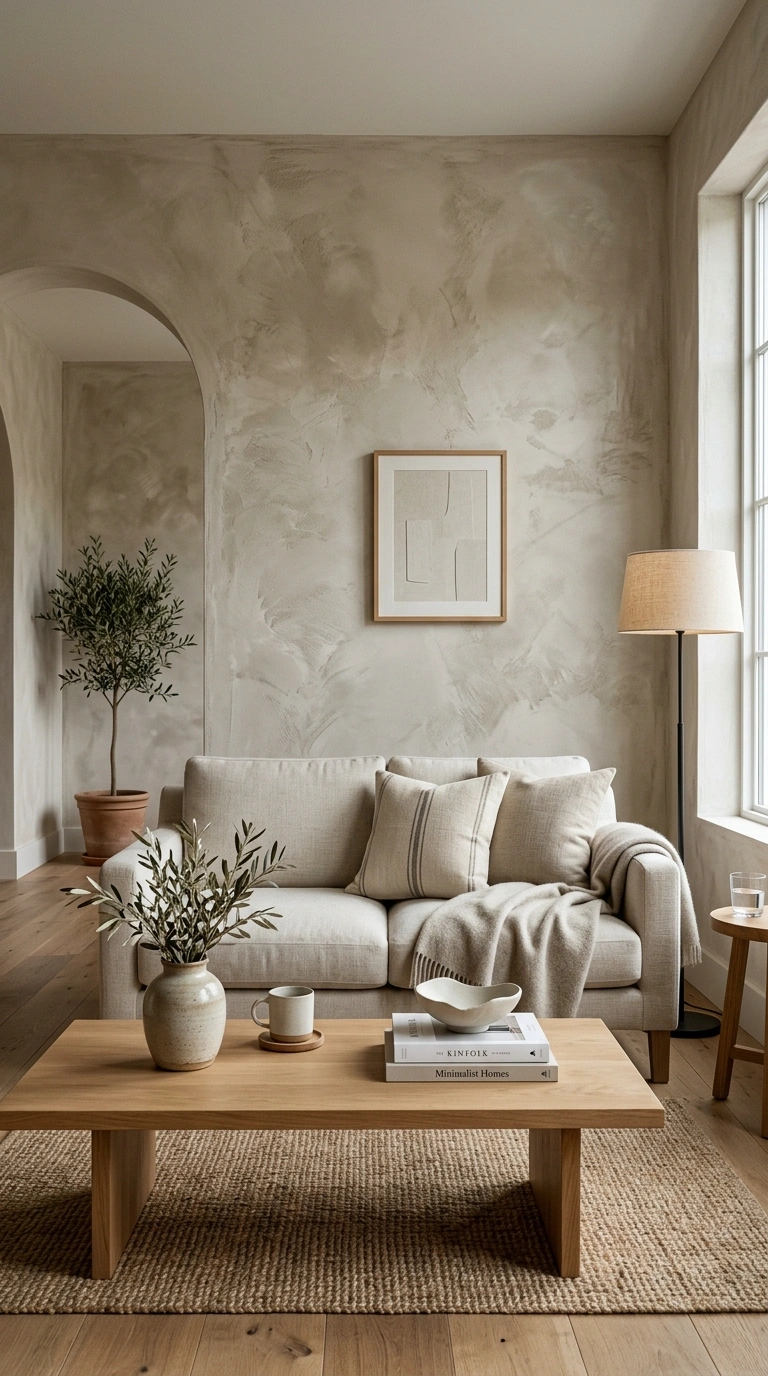
Limewash walls create quiet texture that makes minimalist living rooms feel layered and sophisticated. Unlike flat paint, limewash has gentle movement and natural variation that changes beautifully in different lighting. Soft stone shades, warm greige, and pale clay colors work especially well for creating a calm and earthy atmosphere.
Keep furniture simple so the textured walls remain the focus of the room. A linen sofa, light wood coffee table, and woven rug complement the natural look without competing for attention. Add warm lighting in the evening to highlight the soft texture across the walls. This idea feels organic, modern, and visually rich while still staying true to minimalist design.
5. Style Open Shelving With Fewer Decorative Pieces
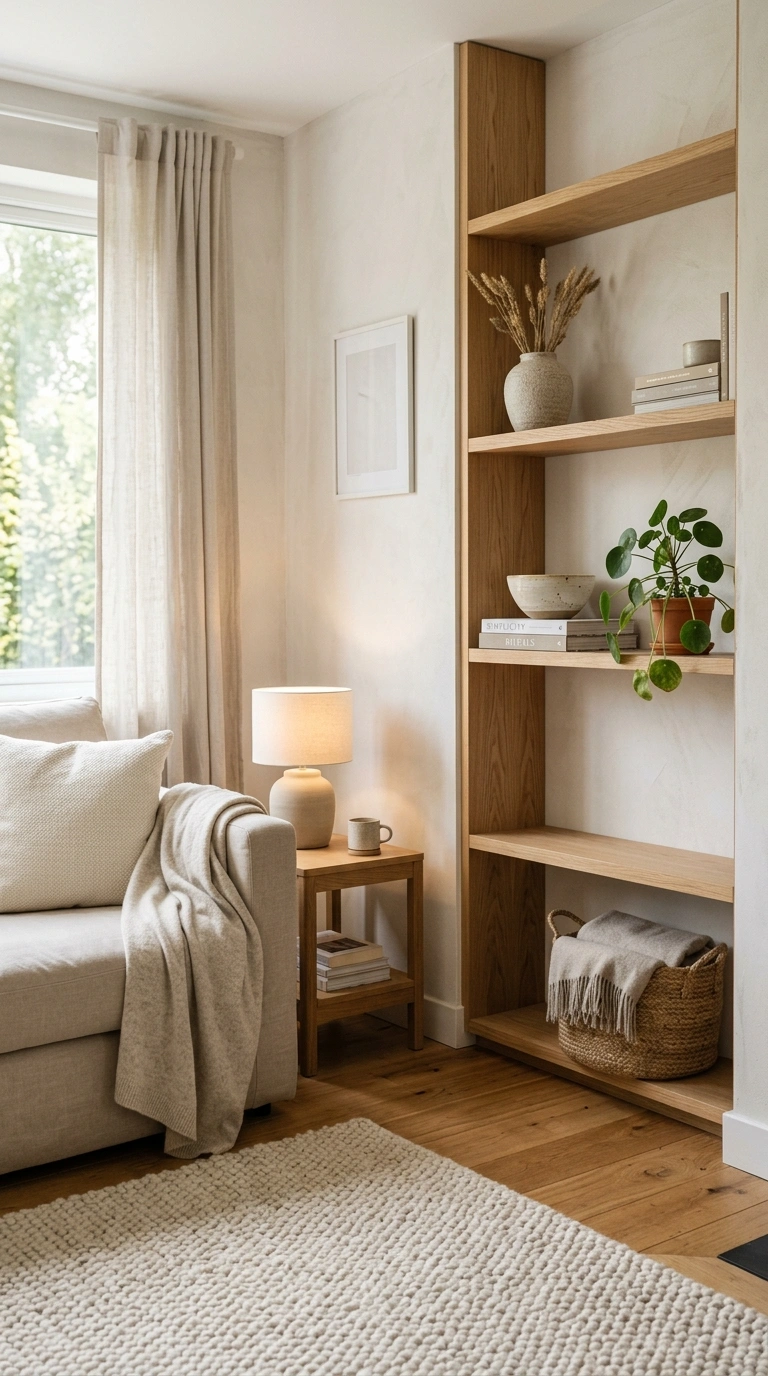
Minimalist shelving looks best when it feels intentional instead of overcrowded. Use open shelves to display only a few carefully selected items like ceramic bowls, stacked neutral books, and textured vases. Leave empty space between objects so each piece feels important and visually calming.
Mix materials to create depth without adding clutter. Pair light oak shelves with matte black brackets or combine creamy ceramics with smoked glass accessories. Small trailing plants can bring freshness into the room while keeping the styling soft and natural. This method makes the living room feel curated and airy while still adding personality to the space.
6. Combine Soft Lighting Sources Instead of One Bright Light
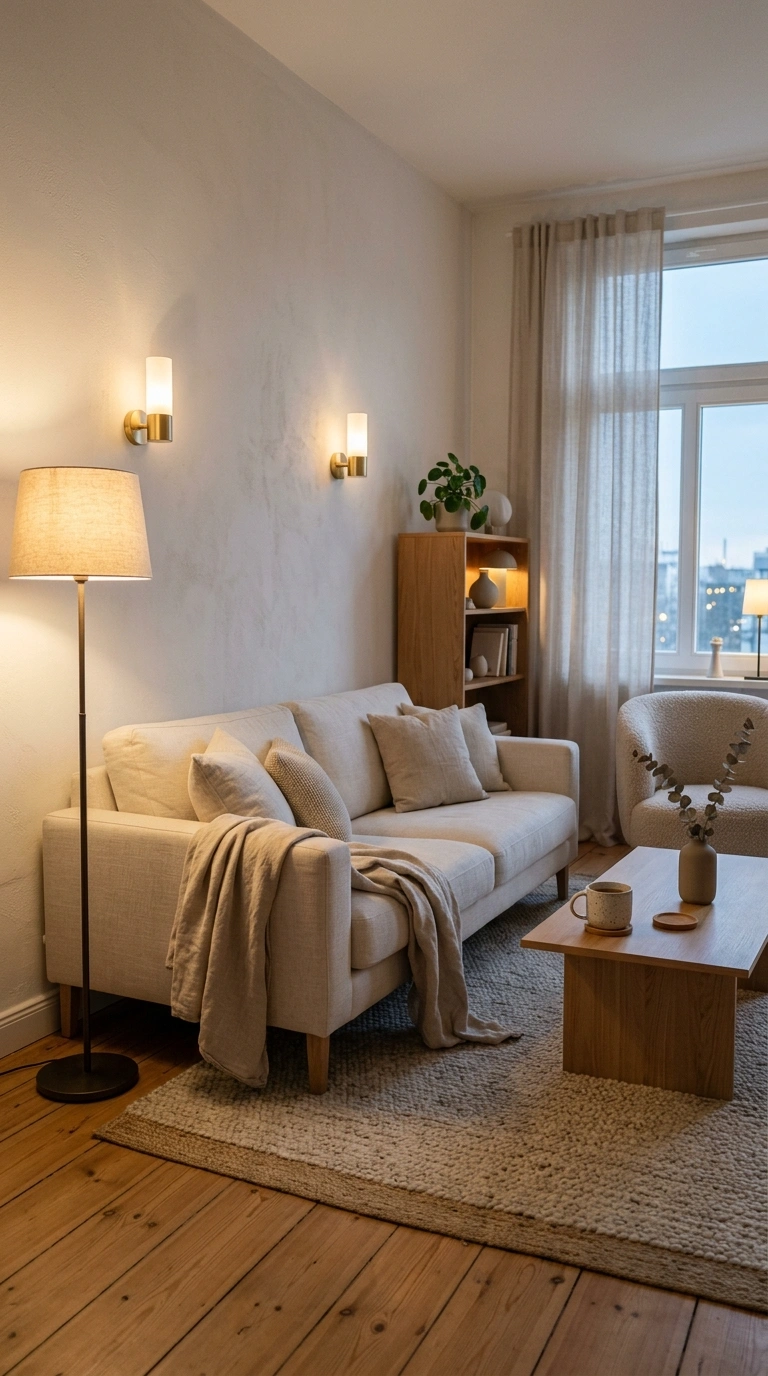
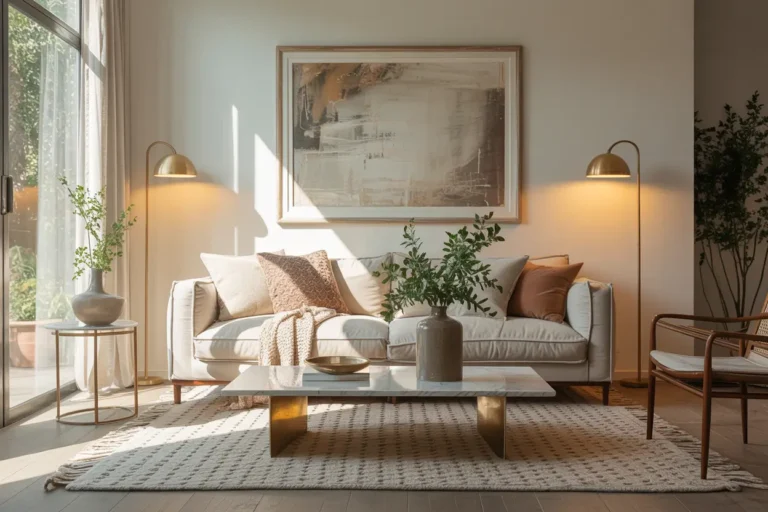
A single ceiling light often makes minimalist spaces feel cold and flat. Layering different light sources creates warmth and gives the room a more relaxed mood. Use a combination of wall sconces, floor lamps, table lamps, and hidden LED lighting to build soft illumination throughout the space.
Warm white bulbs help neutral colors appear richer and more inviting during the evening. Place lighting at different heights to create depth and visual comfort. A soft paper lamp in one corner paired with a warm brass table lamp on a side table instantly changes the atmosphere of the room. Layered lighting makes minimalist spaces feel more intimate and comfortable without adding unnecessary decoration.
7. Use Oversized Art Instead of Many Small Decorations

Large artwork creates a strong visual impact while keeping minimalist spaces clean and uncluttered. Instead of filling walls with multiple frames, choose one oversized abstract piece in soft earthy colors. This gives the room personality while maintaining the simplicity that minimalist interiors need.
Neutral artwork with textured brushstrokes works beautifully in modern living rooms because it adds movement without overwhelming the space. Lean large frames casually against the wall for a relaxed Pinterest-inspired look. Pair the artwork with simple furniture and soft fabrics so the room feels balanced and elegant. This idea keeps the design visually interesting without relying on excessive accessories.
8. Mix Stone and Wood for a Balanced Modern Feel
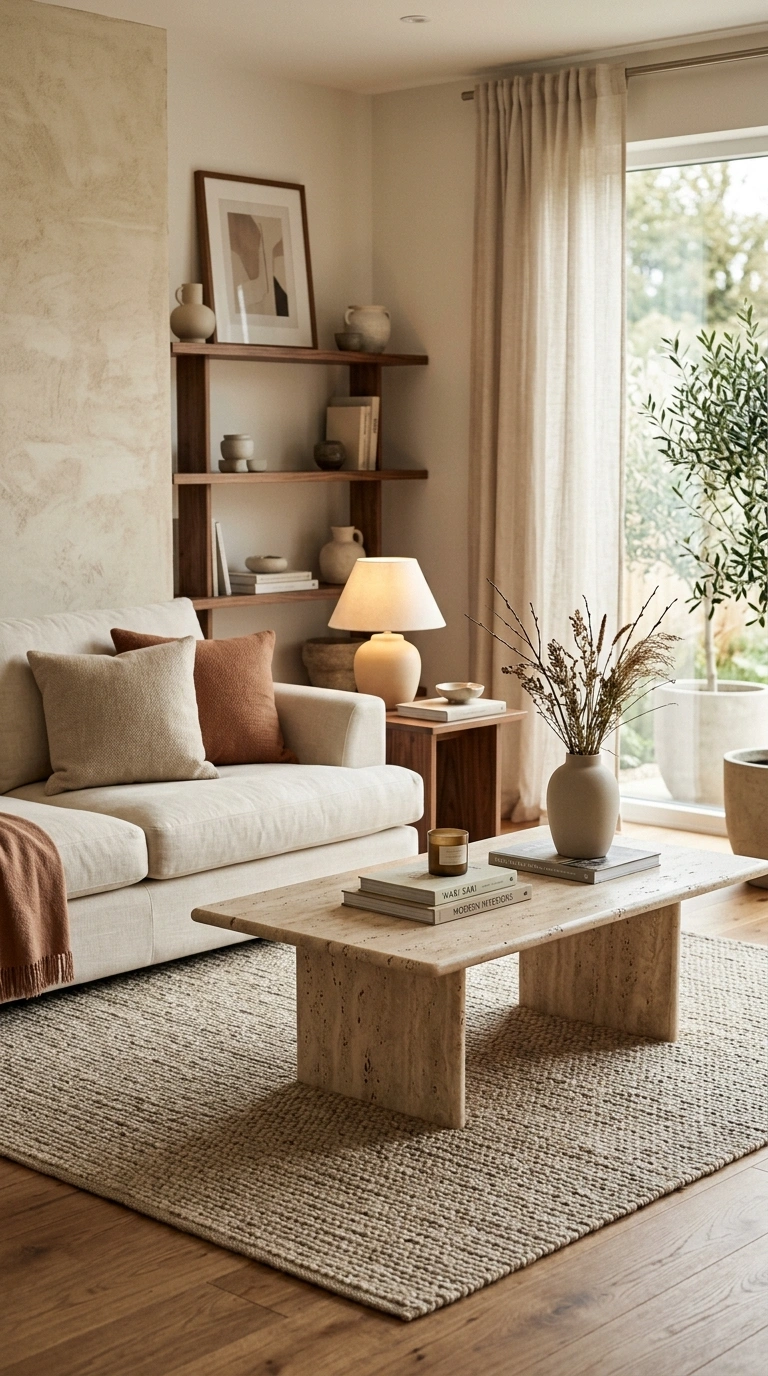
Natural materials make minimalist living rooms feel warmer and more grounded. Combining wood and stone creates beautiful contrast while still keeping the room simple and modern. A travertine coffee table paired with walnut shelving gives the space depth and texture without adding visual noise.
Use soft woven fabrics and textured rugs to connect the materials together naturally. Light oak floors work especially well with creamy stone finishes because they keep the room bright and airy. Add subtle black accents through lighting or hardware for extra definition. This material combination feels timeless, luxurious, and calm while remaining highly practical for everyday living.
9. Keep the Layout Open and Airy
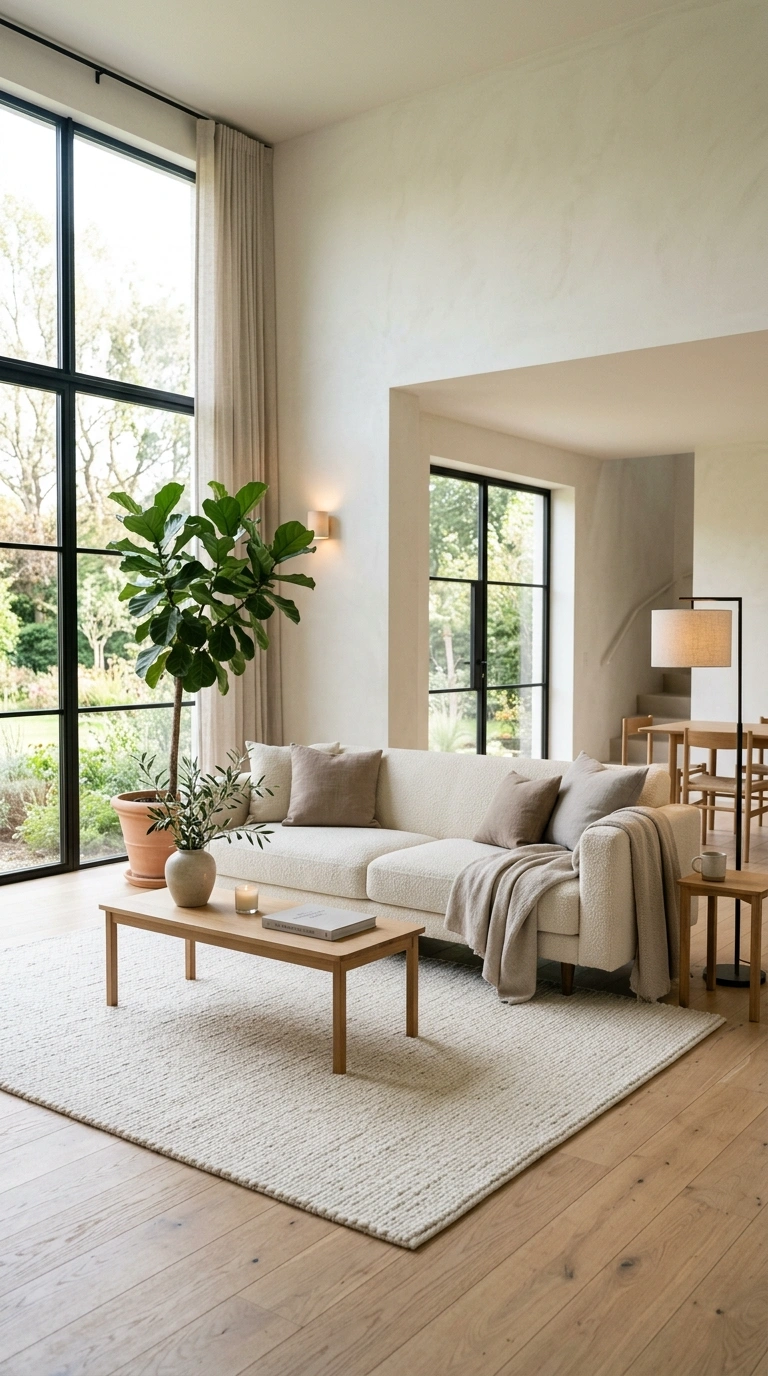
Minimalist living rooms feel better when furniture placement allows easy movement through the space. Avoid pushing too many pieces against the walls or filling empty corners unnecessarily. Instead, create breathing room around furniture so the layout feels open and balanced.
Float the sofa slightly away from the wall to make the room feel more designed and intentional. Use one statement chair instead of multiple smaller pieces to reduce visual clutter. A light area rug can define the seating zone while still keeping the room spacious. Open layouts help natural light travel more freely and make even smaller living rooms feel larger and more peaceful.
10. Bring Warmth With Earthy Textiles and Soft Fabrics
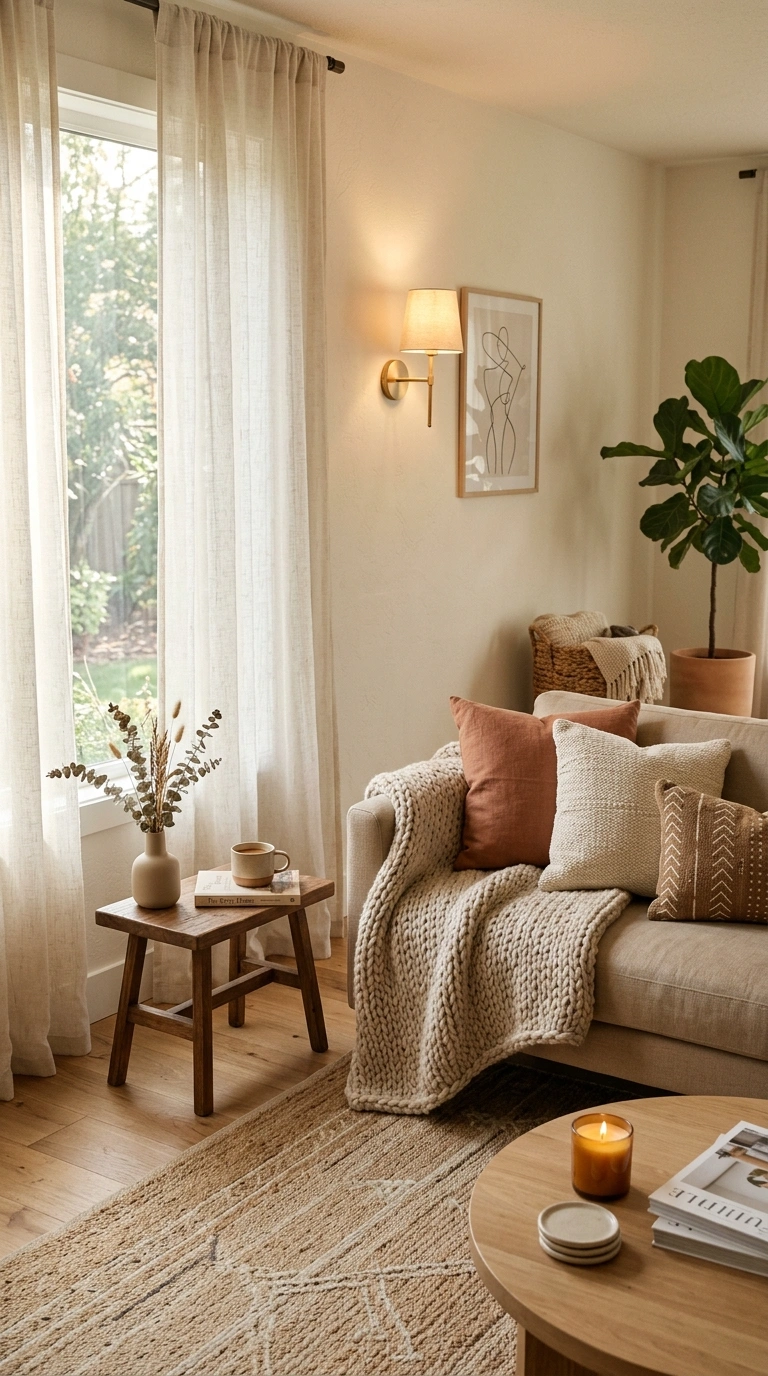
Textiles are one of the easiest ways to make a minimalist room feel cozy without losing its clean style. Layer soft fabrics like linen, wool, cotton, and bouclé in warm neutral shades to create comfort and visual softness. A chunky knit throw over a smooth linen sofa instantly adds warmth and texture.
Choose curtains that lightly filter sunlight instead of blocking it completely. This creates a soft glow that makes the room feel calm throughout the day. Mix textures carefully so the space feels layered but not crowded. A woven rug, soft cushions, and natural fabric seating create a comfortable atmosphere that feels modern, stylish, and easy to live in.
11. Add Black Accents in Small Controlled Areas
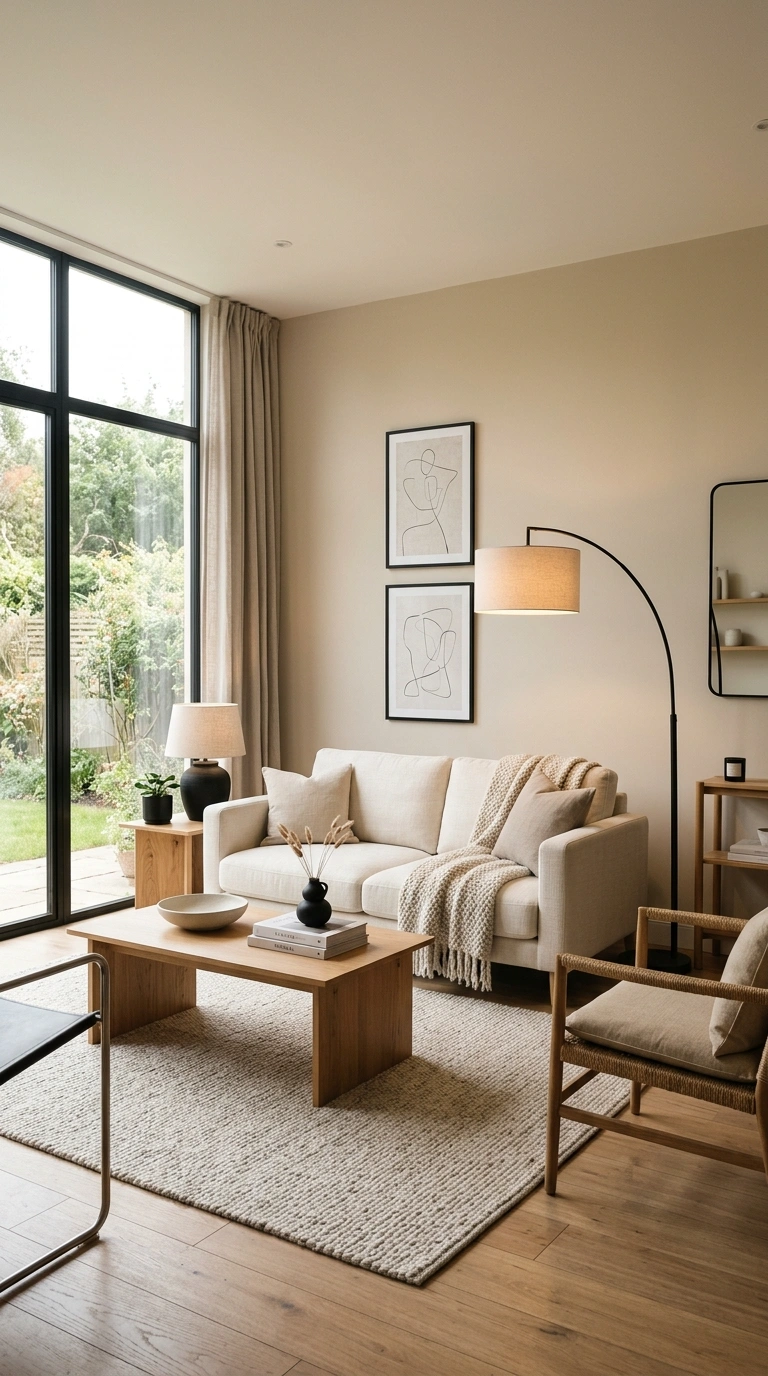
Black accents help a minimalist living room feel more defined and polished without making the space heavy. The key is to use black carefully in smaller details instead of large furniture pieces. Thin black window frames, matte black floor lamps, or sleek cabinet handles create contrast that sharpens soft neutral interiors beautifully.
Balance dark accents with warm materials like oak wood, linen fabrics, and creamy walls so the room still feels welcoming. A black-framed abstract artwork above a beige sofa can instantly make the entire space look more modern and intentional. This styling trick works especially well in bright rooms where natural sunlight softens darker elements during the day.
12. Use Low Furniture to Make Ceilings Feel Higher
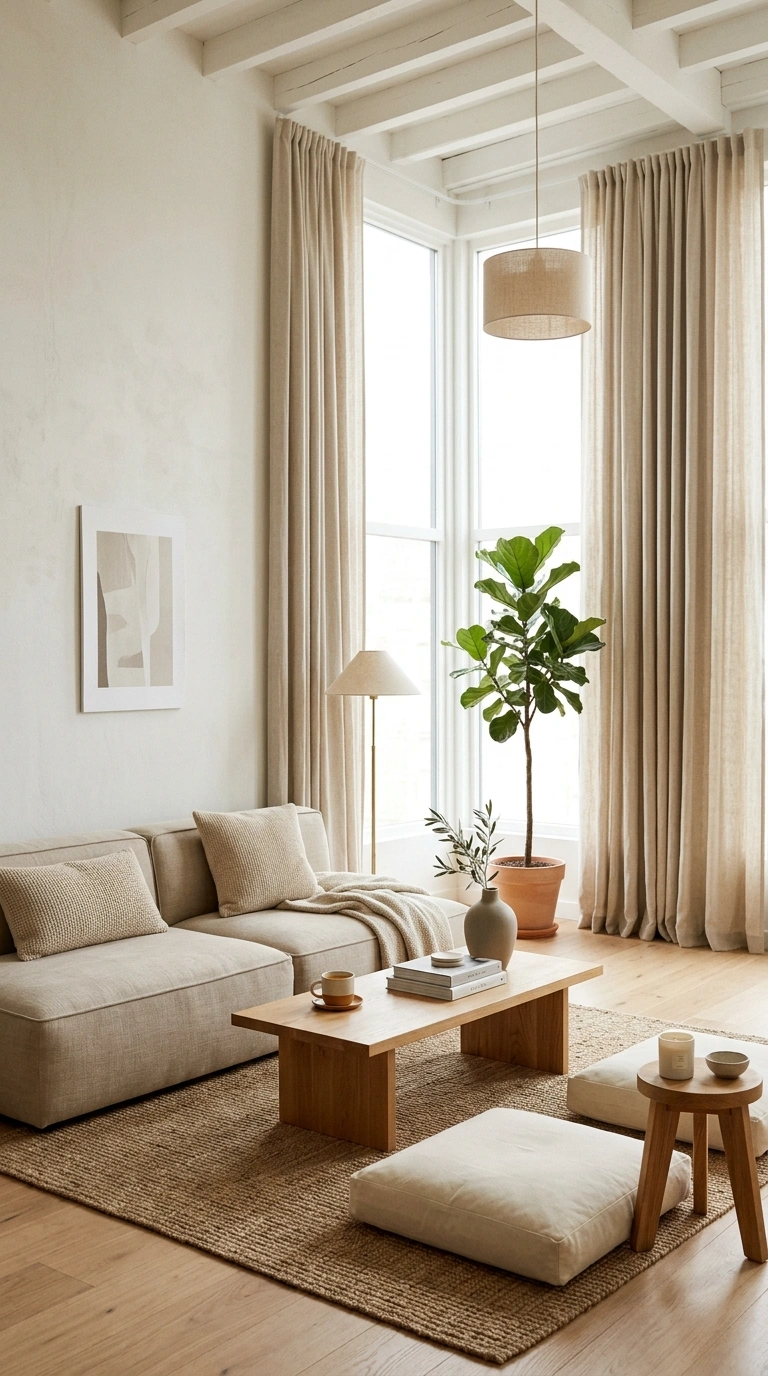
Low-profile furniture creates a calm and spacious feeling in modern minimalist interiors. Sofas with shorter backs, low coffee tables, and simple platform seating make the ceiling appear taller while keeping the room visually open. This design approach works especially well in apartments or smaller living spaces.
Choose furniture with slim legs or floating designs to allow more light to move underneath each piece. This creates a lighter appearance and prevents the room from feeling crowded. Pair low furniture with tall curtains that reach from ceiling to floor for extra height and elegance. The result feels airy, relaxed, and visually balanced without requiring a large room.
13. Create a Cozy Corner With One Statement Chair
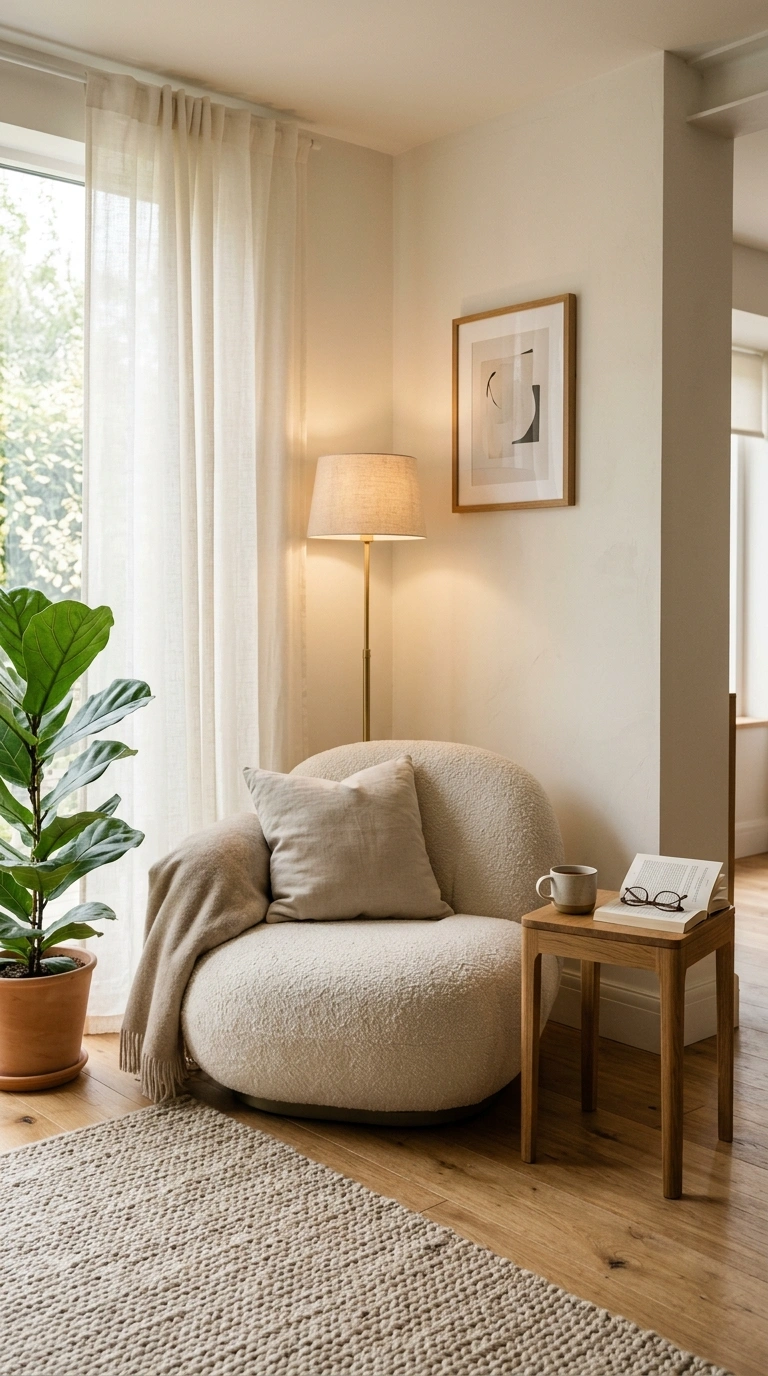
A single statement chair can completely change the mood of a minimalist living room. Instead of adding multiple small decorations, use one sculptural lounge chair in a soft textured fabric to create a cozy reading or relaxation corner. This keeps the space uncluttered while adding personality and function.
Bouclé, soft suede, or woven cotton fabrics work beautifully because they add warmth and texture naturally. Place the chair near a window with a slim side table and warm floor lamp for a comfortable setup that feels intentional and inviting. This small styling idea makes the room feel more lived-in while still maintaining a clean minimalist aesthetic.
14. Use Sheer Curtains for Soft Natural Light
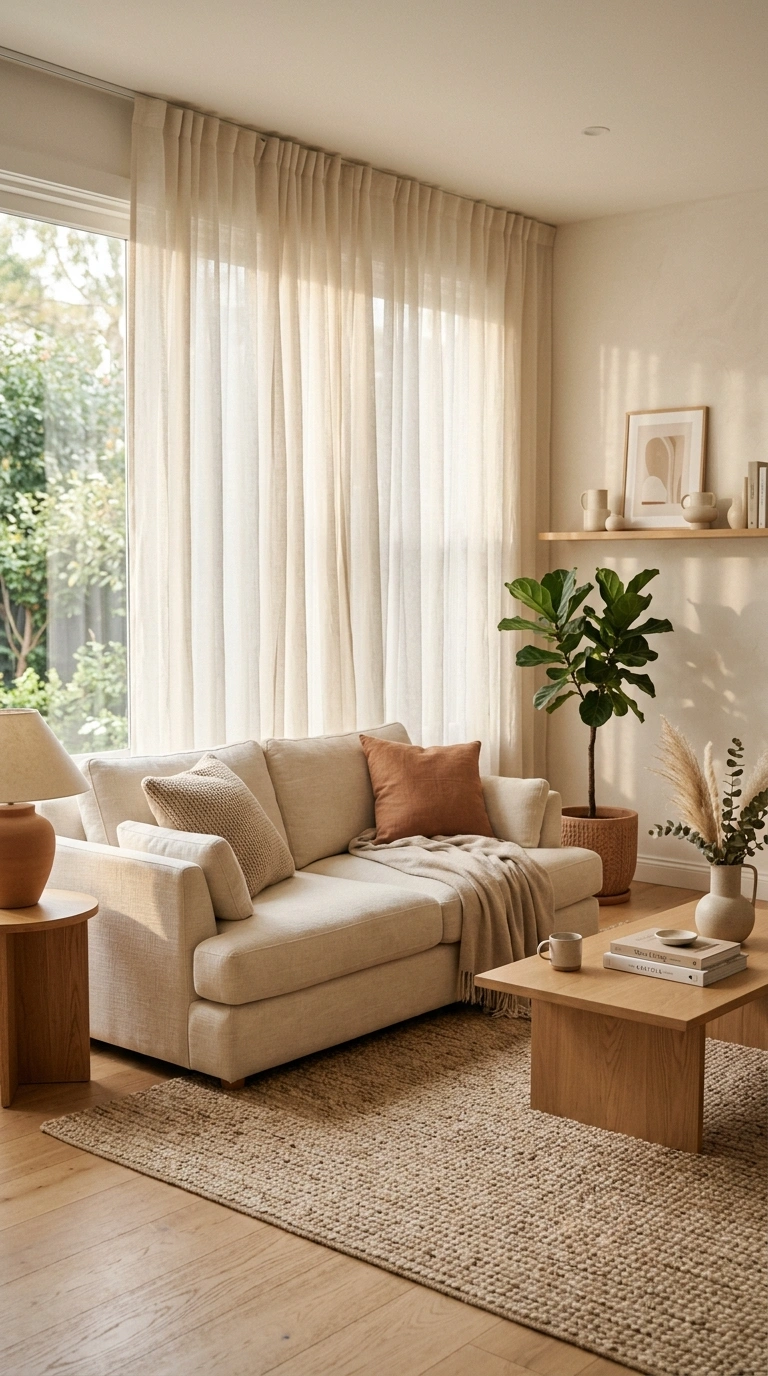
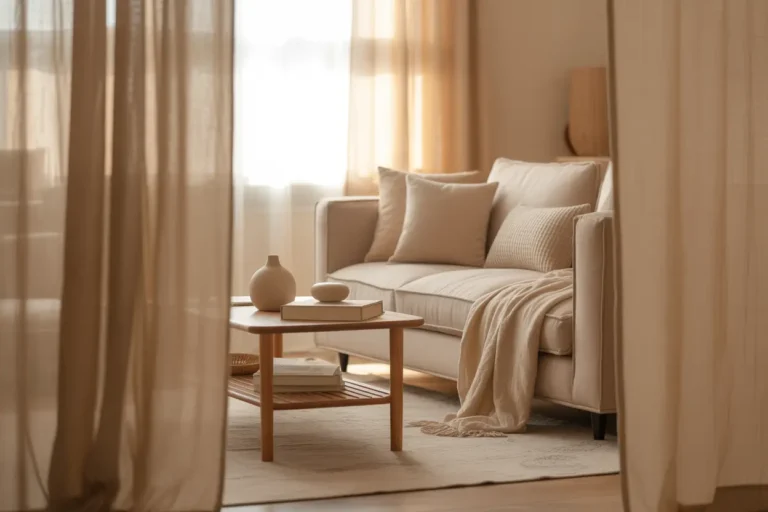
Lighting plays a huge role in how minimalist interiors feel. Heavy curtains can make clean spaces look smaller and darker, while sheer curtains create a soft glowing effect that instantly warms the room. White, cream, or sandy beige fabrics work best because they gently filter daylight without blocking it completely.
Choose curtains with natural texture like linen or cotton blends for a relaxed Pinterest-inspired look. Let the curtains slightly touch the floor to create softness and visual flow. During sunset, the filtered light creates a calm and peaceful atmosphere that makes neutral interiors feel richer and more welcoming. This simple update makes even basic living rooms feel elegant and thoughtfully designed.
15. Style a Minimal Coffee Table With Organic Shapes
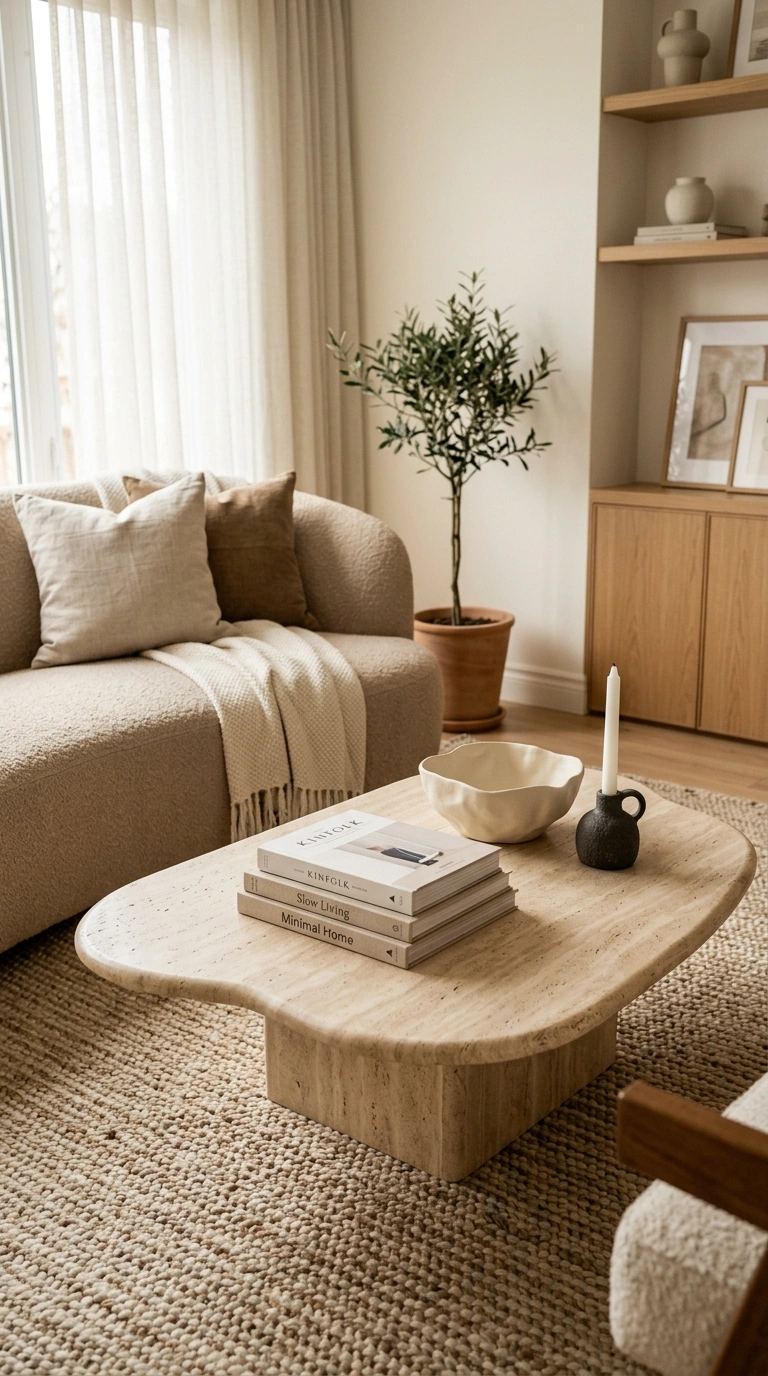
Minimalist coffee tables look better when styling feels simple and natural instead of overly arranged. Focus on a few carefully chosen items like a curved ceramic bowl, stacked design books, or a textured candle holder. Organic shapes soften modern interiors and help the room feel more relaxed.
Travertine, plaster, and light wood coffee tables work especially well because they add subtle texture without visual clutter. Leave empty space between decorative objects so the arrangement feels calm and balanced. Adding one fresh green branch in a sculptural vase creates movement and freshness while keeping the styling clean. This approach makes the room feel sophisticated without trying too hard.
16. Mix Warm Metals With Neutral Tones
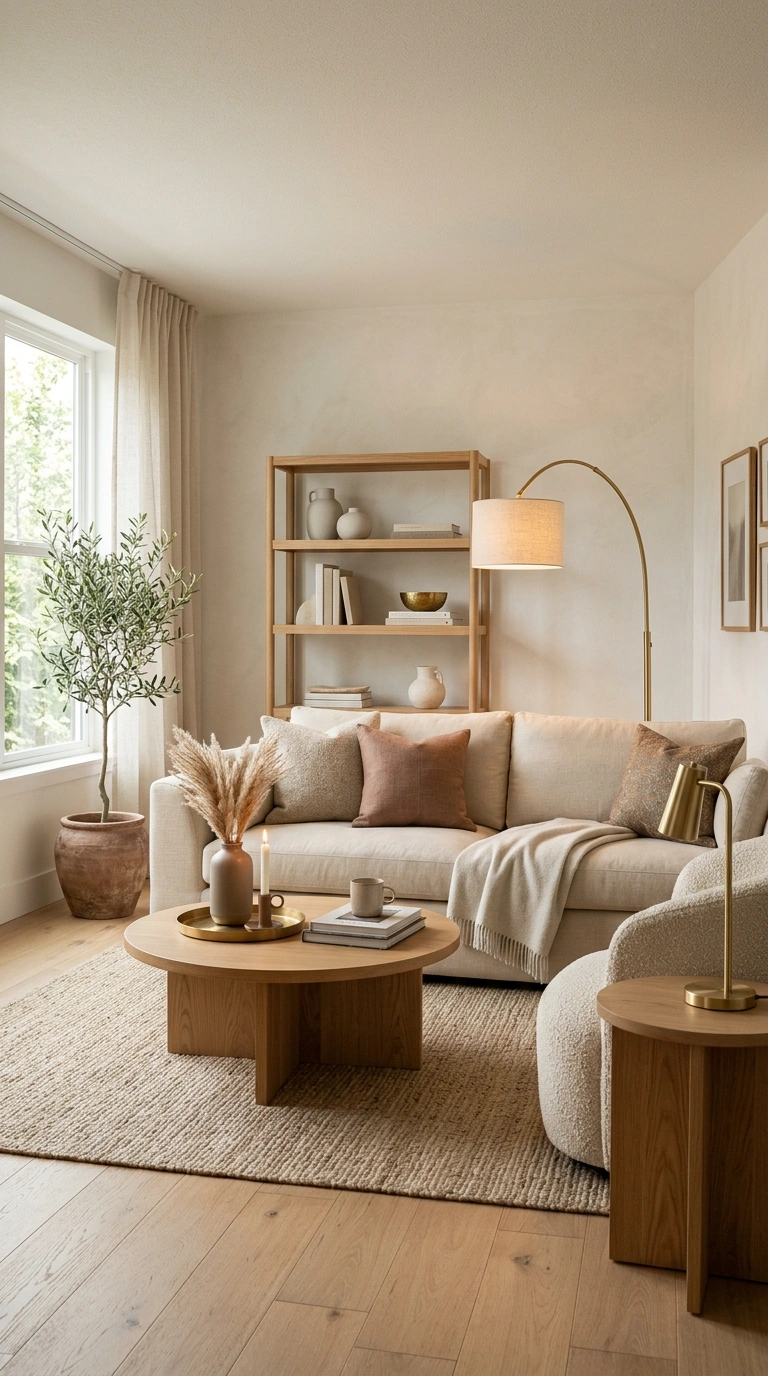
Warm metallic finishes can make minimalist spaces feel richer and more inviting. Instead of shiny chrome, choose brushed brass, muted bronze, or soft copper accents that blend naturally into neutral interiors. These finishes add warmth while keeping the overall look modern and refined.
Use warm metals in small details like lighting fixtures, side tables, or curtain rods. Pair them with soft beige fabrics, oak wood, and stone textures for a balanced appearance. The contrast between matte neutral surfaces and warm metallic tones creates quiet luxury without overwhelming the simplicity of the room. This combination feels elegant, cozy, and timeless.
17. Add Texture Through Large Area Rugs
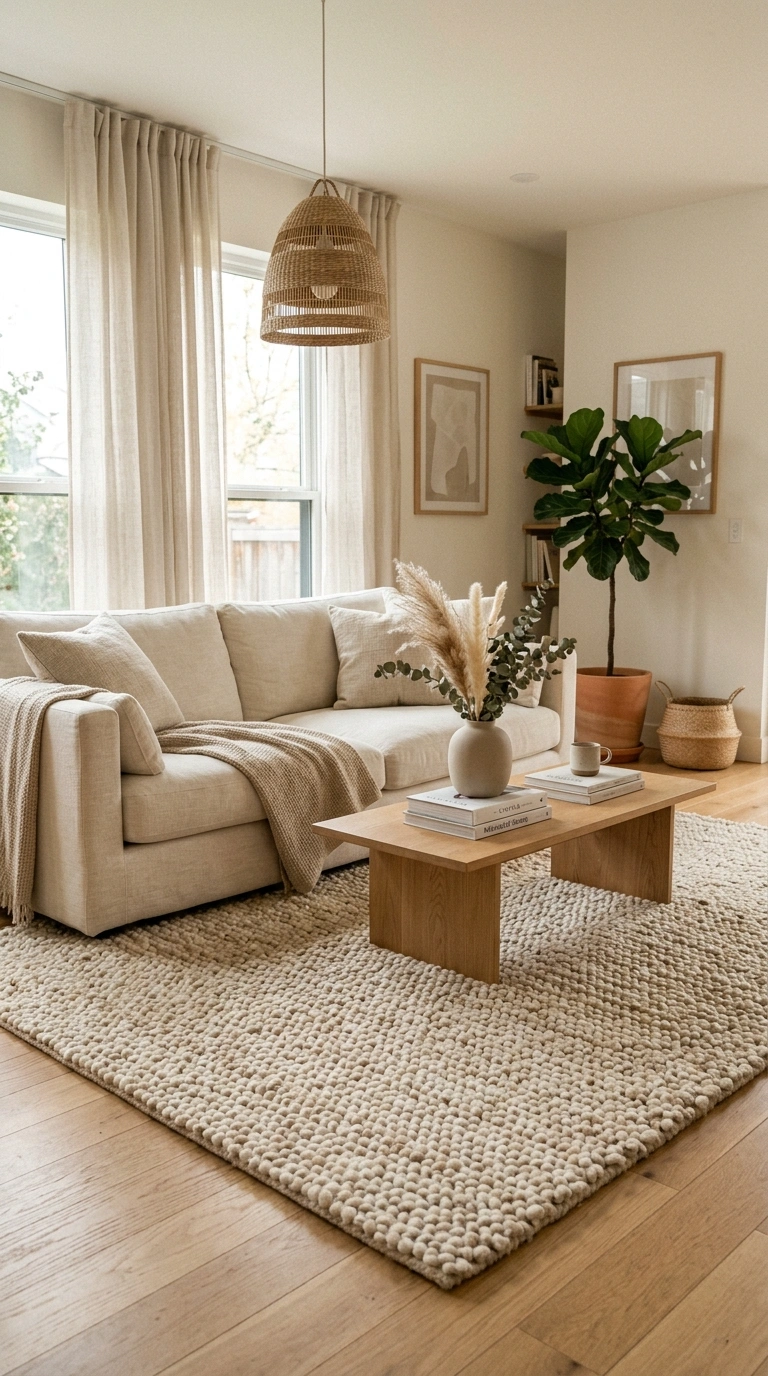
Large rugs help minimalist living rooms feel grounded and complete. A textured rug adds warmth, softness, and visual depth while keeping the furniture arrangement connected. Choose oversized rugs in neutral shades like ivory, oatmeal, or warm gray to maintain a clean and calming atmosphere.
Natural woven textures like wool, jute blends, or soft looped fabrics work beautifully because they add dimension without loud patterns. Layering a soft rug under a curved sofa or stone coffee table creates a comfortable and balanced look. Rugs also help soften sound in open spaces, making the room feel quieter and more peaceful throughout the day.
18. Keep Decorative Objects Tonal and Consistent
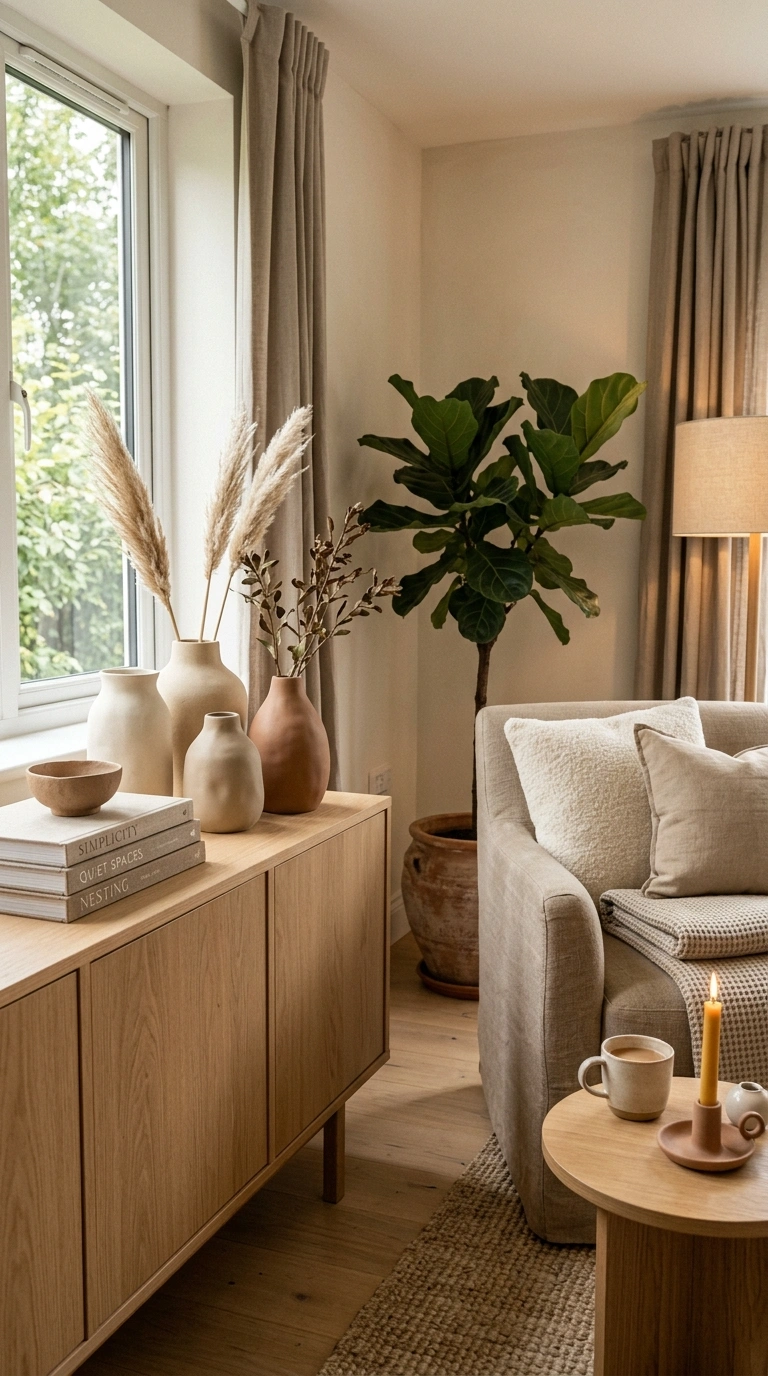
Minimalist styling feels more sophisticated when decorative pieces stay within a similar color family. Instead of mixing many bright colors, use tonal shades like cream, sand, taupe, clay, and soft brown throughout the room. This creates harmony and prevents the space from feeling visually chaotic.
Ceramic vases, books, candles, and trays in matching earthy tones create depth while still keeping the room calm. Different textures become more noticeable when colors remain soft and consistent. Matte finishes, woven materials, and natural stone accessories work especially well together in minimalist interiors. This styling method creates a curated and peaceful look that photographs beautifully for Pinterest inspiration.
19. Bring Nature Indoors With Simple Greenery
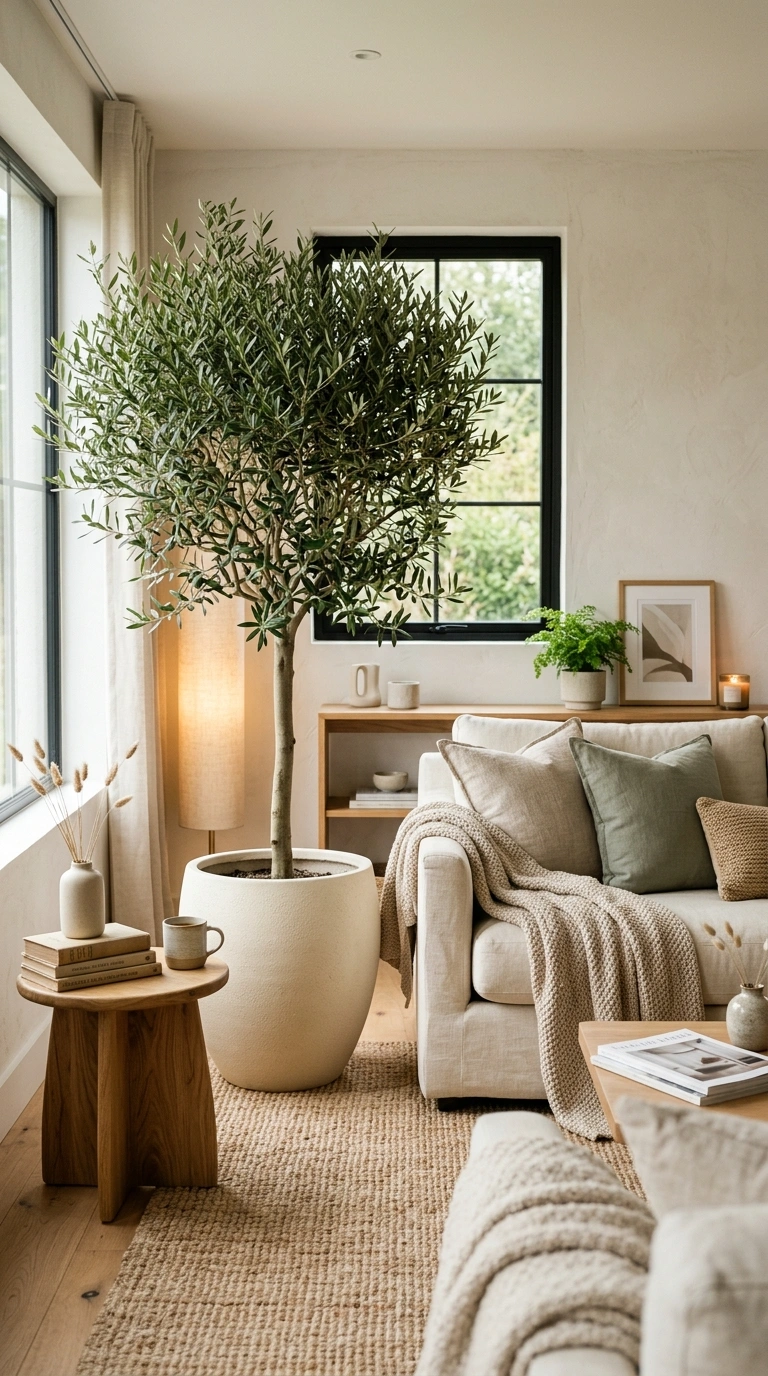
Plants instantly make minimalist living rooms feel fresher and more alive. Instead of filling the room with many small plants, focus on one or two larger greenery pieces that create visual impact without clutter. Olive trees, rubber plants, or tall branches in ceramic vases work beautifully in modern neutral spaces.
Choose planters in matte stone, clay, or textured plaster finishes to keep the look cohesive. Place greenery near windows where natural light highlights the leaves and adds softness to the room. Organic shapes from plants balance clean furniture lines and make minimalist interiors feel warmer and more relaxed. Even a simple branch arrangement can transform the atmosphere of the space.
20. Use Hidden Storage to Maintain a Clean Look
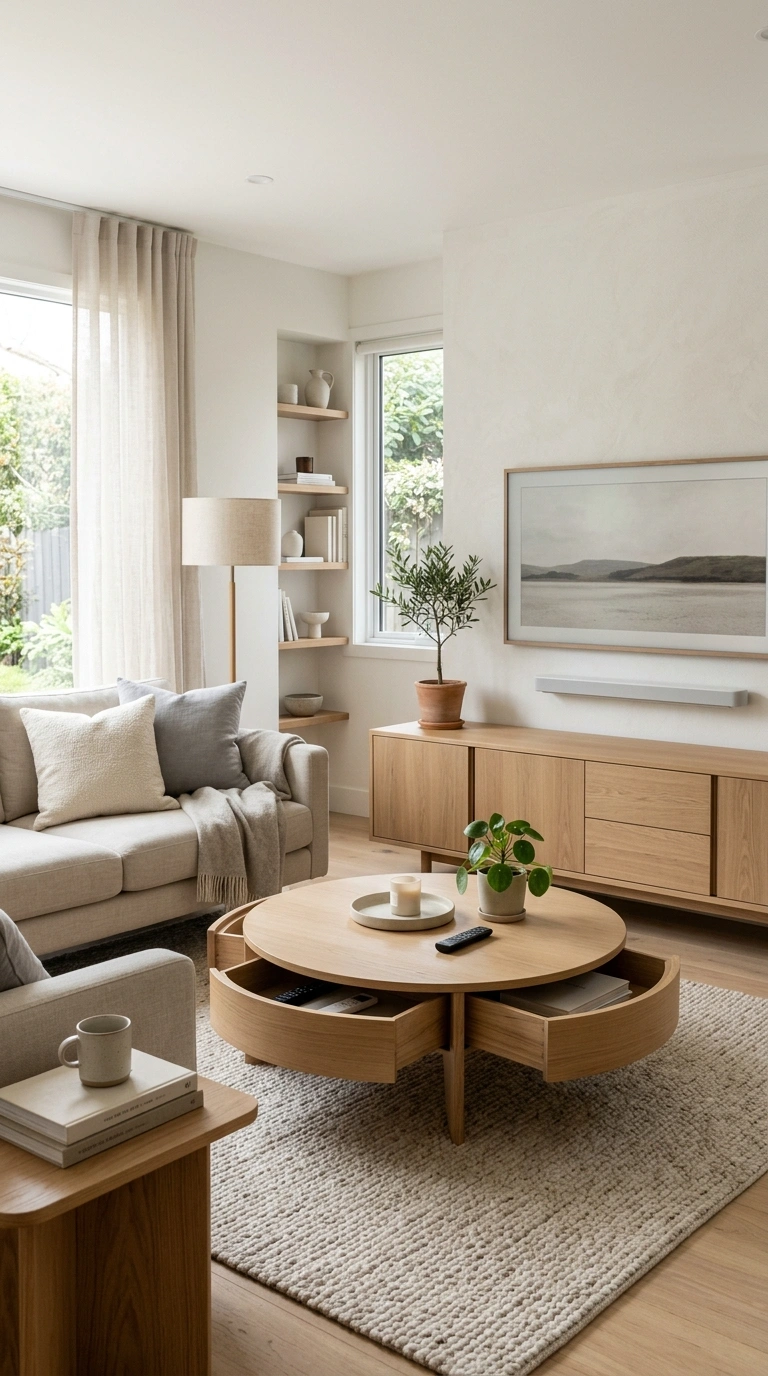
Minimalist living rooms feel most peaceful when everyday clutter stays hidden. Smart storage solutions help maintain clean surfaces while still keeping the room functional for daily life. Choose furniture with concealed compartments like storage ottomans, floating cabinets, or coffee tables with hidden drawers.
Built-in shelving with closed lower cabinets also creates a cleaner appearance while allowing decorative items to stay organized above. Keeping cords, remotes, books, and blankets tucked away helps the room feel calm and visually balanced. Hidden storage allows minimalist interiors to remain practical and comfortable instead of feeling too perfect or untouchable.
21. Blend Soft Modern Style With Personal Details

The best minimalist living rooms still feel personal and lived in. Instead of removing every meaningful object, choose a few items that tell a story while fitting naturally into the room’s color palette and design style. Handmade ceramics, favorite books, framed travel photography, or vintage wood pieces can make the space feel unique and authentic.
Balance personal details with clean styling so the room still feels uncluttered. One meaningful object displayed thoughtfully often creates more impact than many decorations placed together. This approach keeps minimalist interiors warm and emotional instead of cold or overly styled. A home should feel peaceful, beautiful, and personal at the same time.
Conclusion
A modern minimalist living room does not need to feel empty or boring. The most beautiful spaces combine clean layouts with warmth, texture, natural light, and thoughtful details that make everyday living feel comfortable and calm. Soft neutral palettes, layered fabrics, organic materials, and carefully chosen furniture all work together to create a balanced and welcoming atmosphere.
The best part about minimalist design is its flexibility. You can start small by updating lighting, simplifying furniture placement, or adding softer textures to instantly change the mood of your space. Focus on quality over quantity and choose pieces that make the room feel peaceful and functional. Save your favorite ideas, mix the styles that fit your home best, and create a living room that feels modern, cozy, and beautifully timeless.