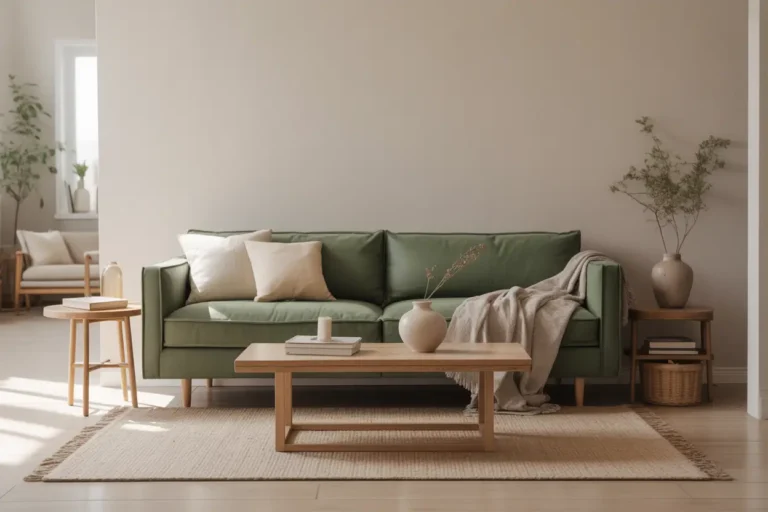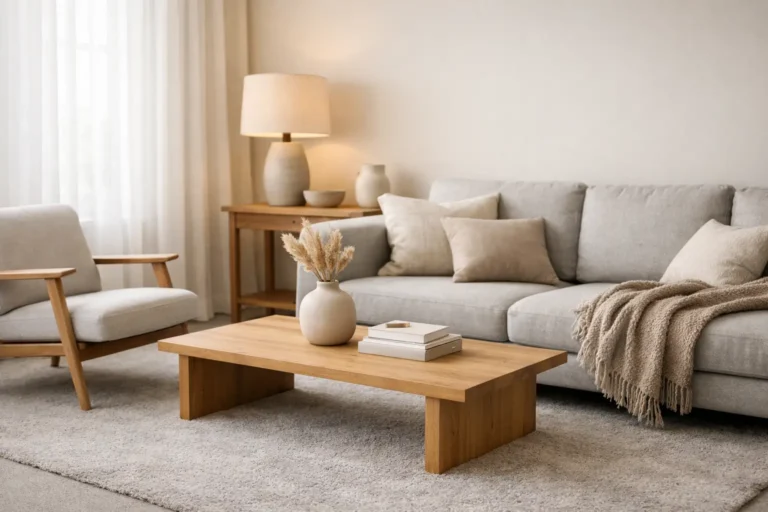
22 Taupe Living Room Ideas Featuring Elephant’s Breath Paint

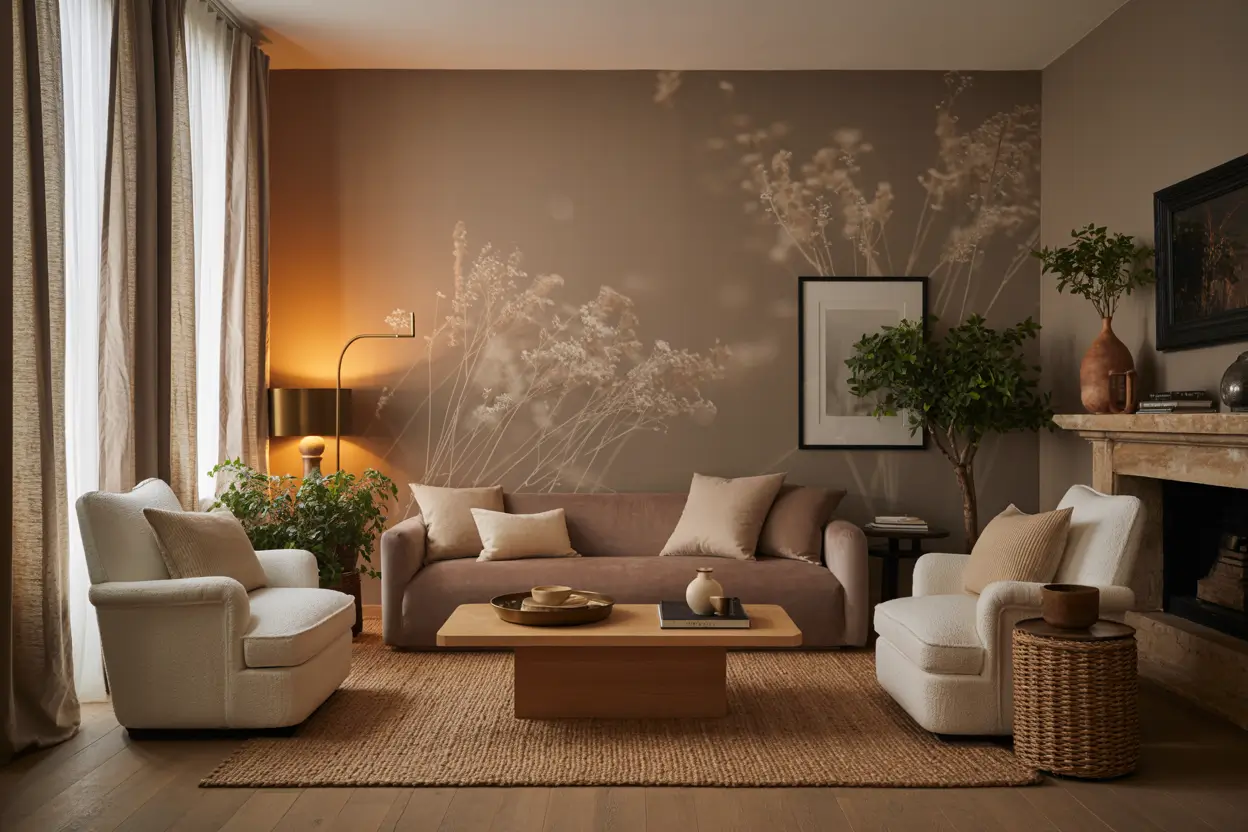
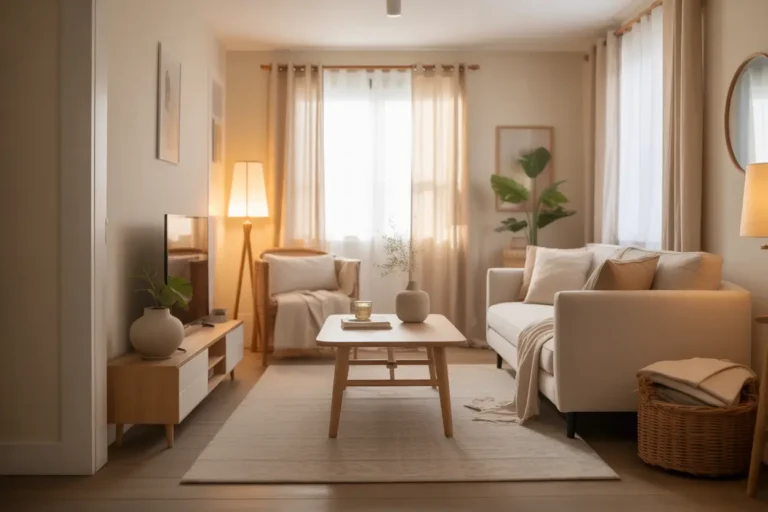
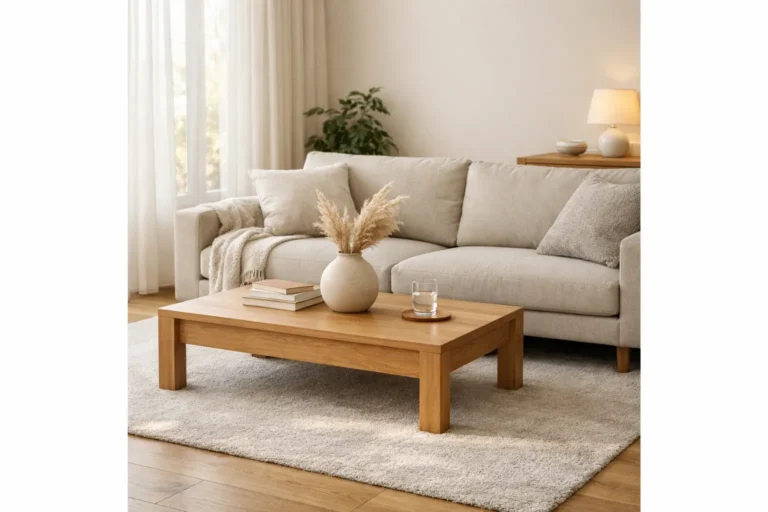
Elephant’s Breath is one of the most requested paint colors for living rooms today. This soft greige-taupe shade from Farrow & Ball brings warmth without feeling heavy, and it pairs beautifully with almost any style. If you want a living room that feels calm, grounded, and quietly elegant, these taupe living room ideas show you exactly how to use this color well.
You’ll find fresh pairings for trim, furniture, textures, and accent colors, plus real tips you can use in your own space this week. Whether you have a small apartment living room or a large open-plan space, there’s an idea here that fits your home.
1. Paint the Walls Elephant’s Breath for an Instant Warm Neutral
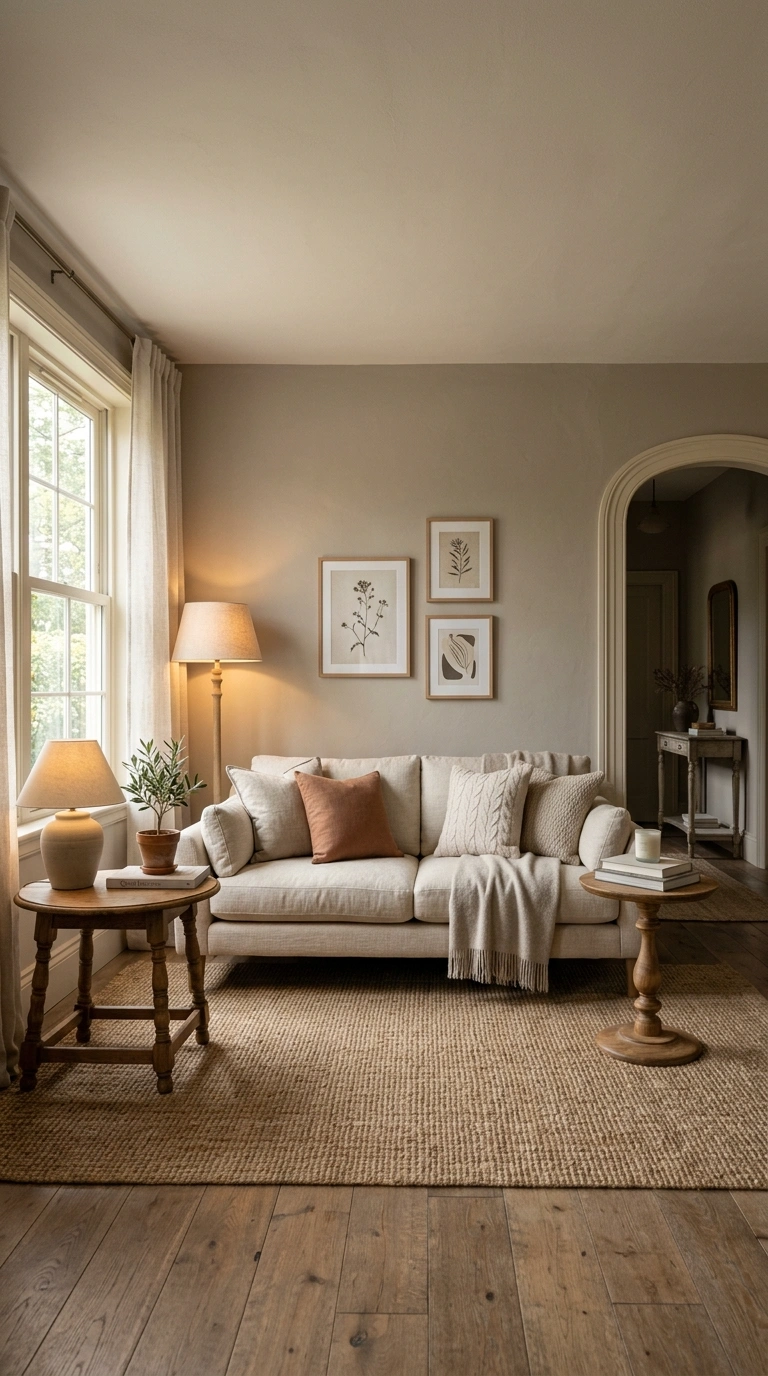
Elephant’s Breath paint works as a warm, quiet backdrop for almost any furniture style. The color shifts through the day, reading more gray in cool morning light and more brown-pink in warm afternoon sun.
Pair the walls with warm ivory trim instead of stark white. This keeps the transition soft rather than harsh.
Try this: Paint a large sample swatch on two different walls and check it at 9am and 5pm before you commit.
I like checking a paint color throughout the day before making a final decision. Large peel-and-stick paint samples make that much easier because you can move them around the room and see how the shade changes in different light without painting several test patches.
2. Add Brass Hardware for a Warm Metal Contrast
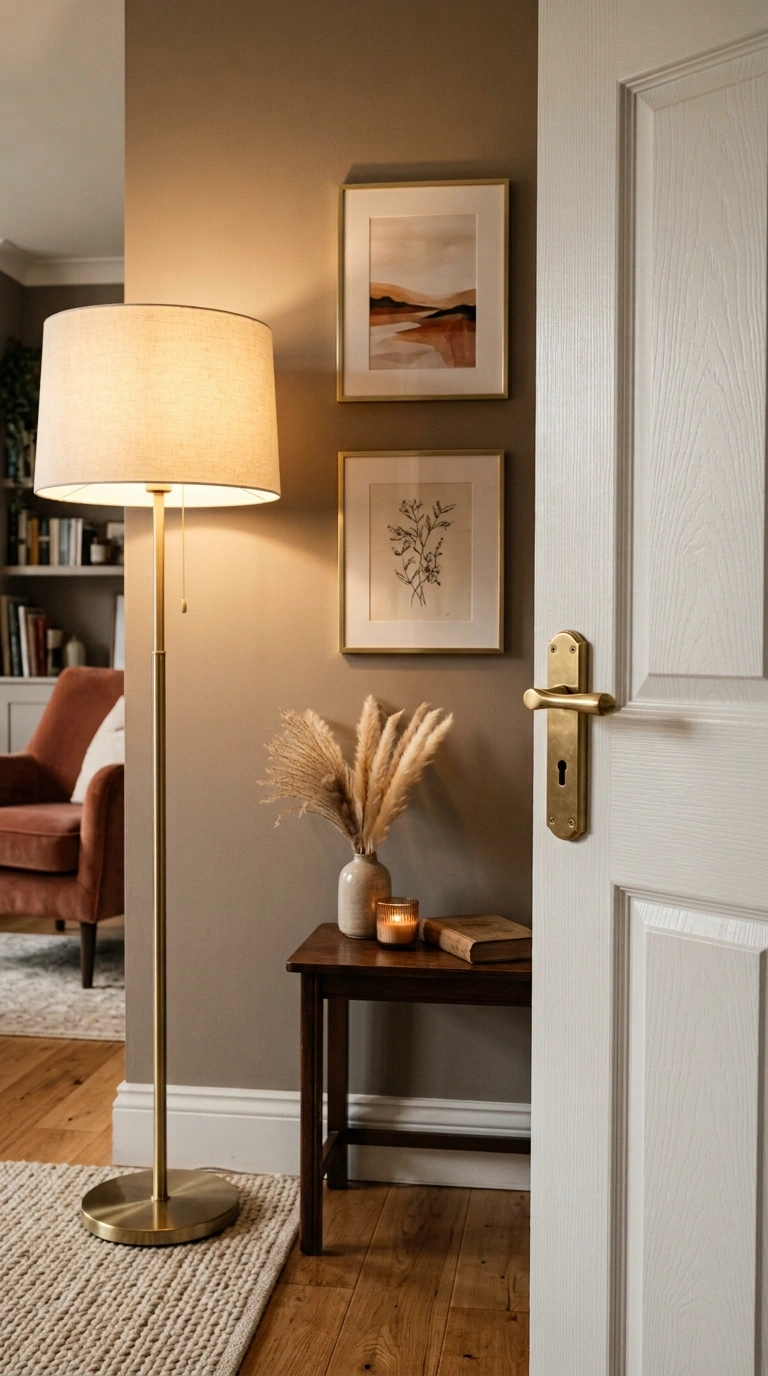
Brushed brass hardware brings a soft glow against Elephant’s Breath walls. The warm undertone in the paint makes brass look rich instead of gaudy.
Use brass on door handles, lamp bases, and picture frame edges. Small touches work better than one large brass piece.
Try this: Swap plain white outlet covers for brushed brass ones near your main seating area.
One thing I always reach for is a brass picture frame set when a room needs a little warmth. It adds a subtle metallic detail without taking attention away from the soft taupe walls, and it works nicely on shelves or side tables.
3. Use Board-and-Batten Panels in the Same Taupe
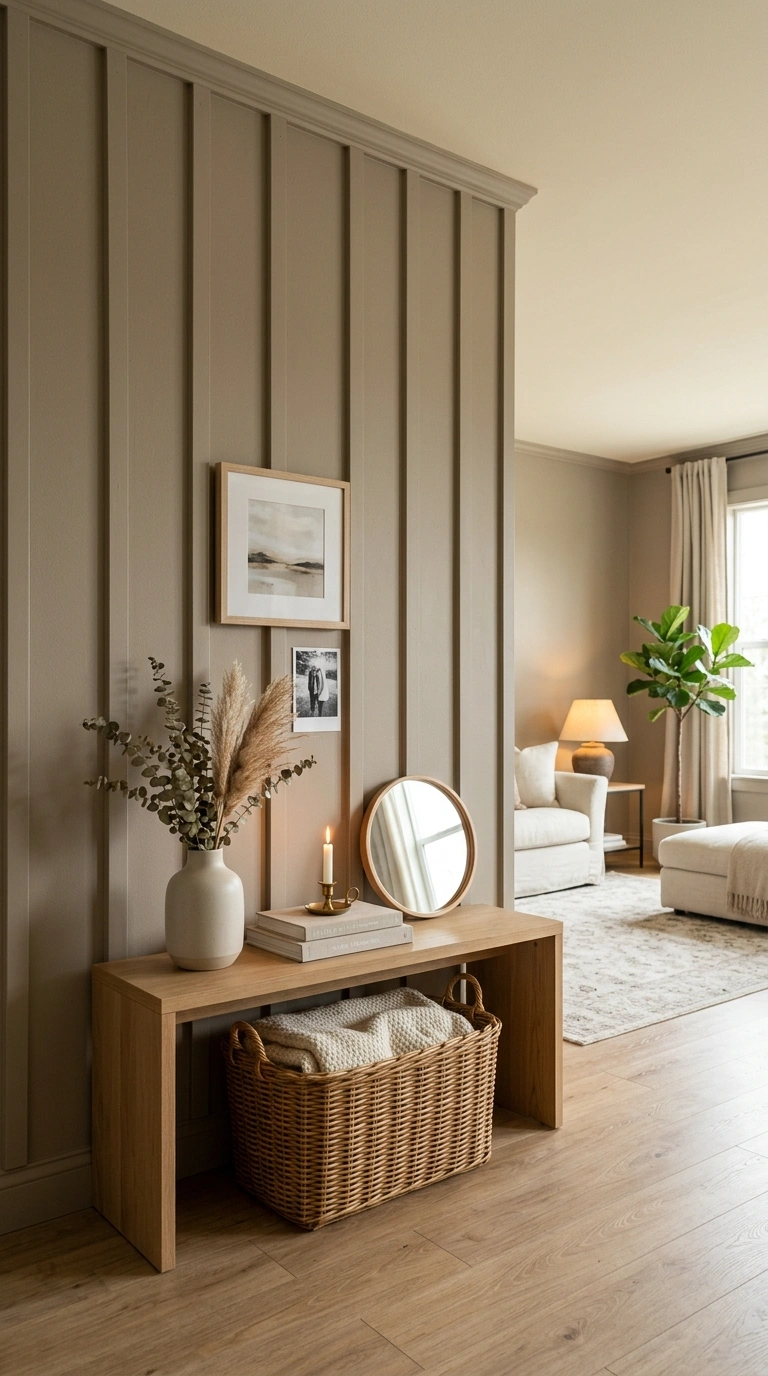
Board-and-batten adds texture to a plain wall without adding pattern. Painting the panels the same taupe as the wall keeps the look calm instead of busy.
This works especially well on a single accent wall behind a sofa or media console.
Try this: Run the battens only halfway up the wall and leave the upper portion in warm ivory for contrast.
4. Try a Two-Tone Wall With a Picture Rail
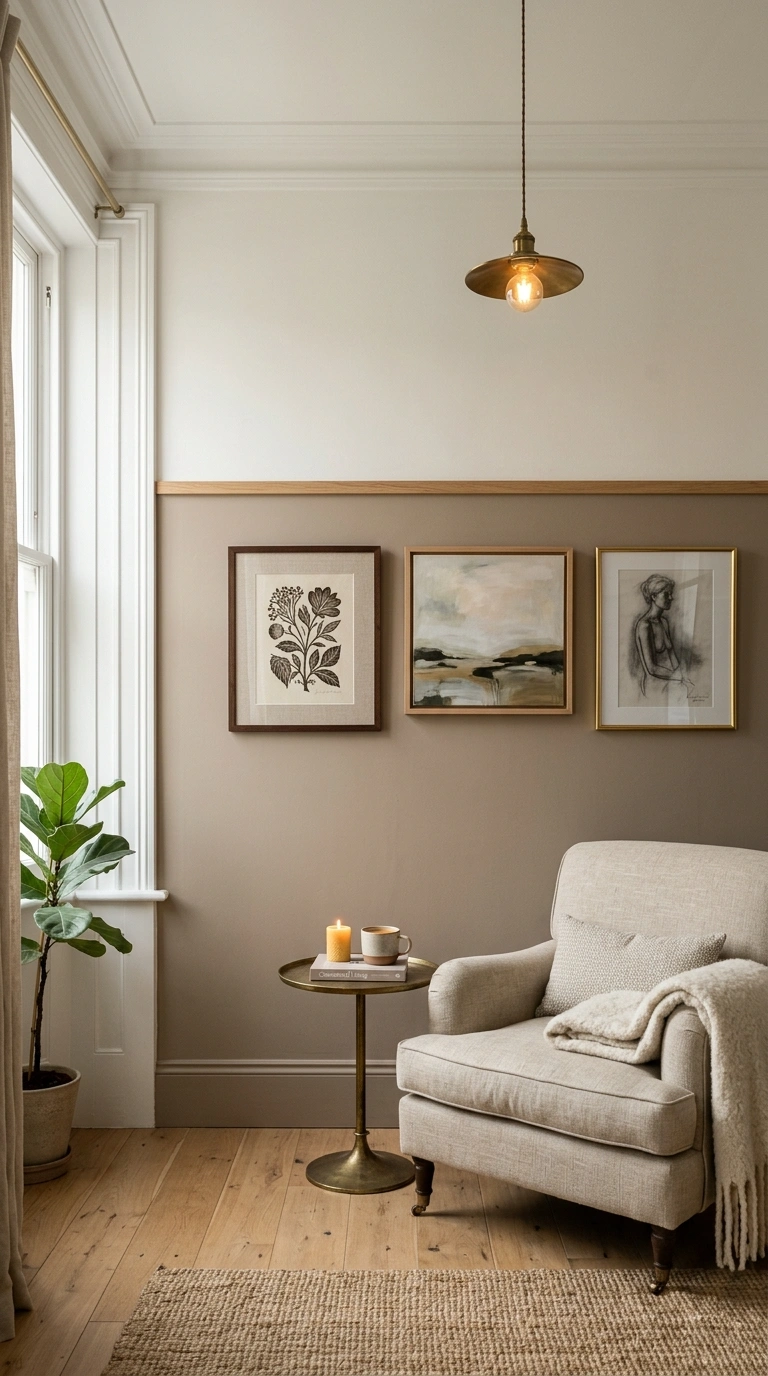
Paint the lower half of the wall Elephant’s Breath and the upper half a soft warm white, divided by a simple wood picture rail.
This trick makes low-ceilinged rooms feel taller, since the eye reads the white section as extended ceiling space.
Try this: Hang framed art below the rail line so it sits fully within the taupe section.
5. Paint the Ceiling Elephant’s Breath as a Fifth Wall
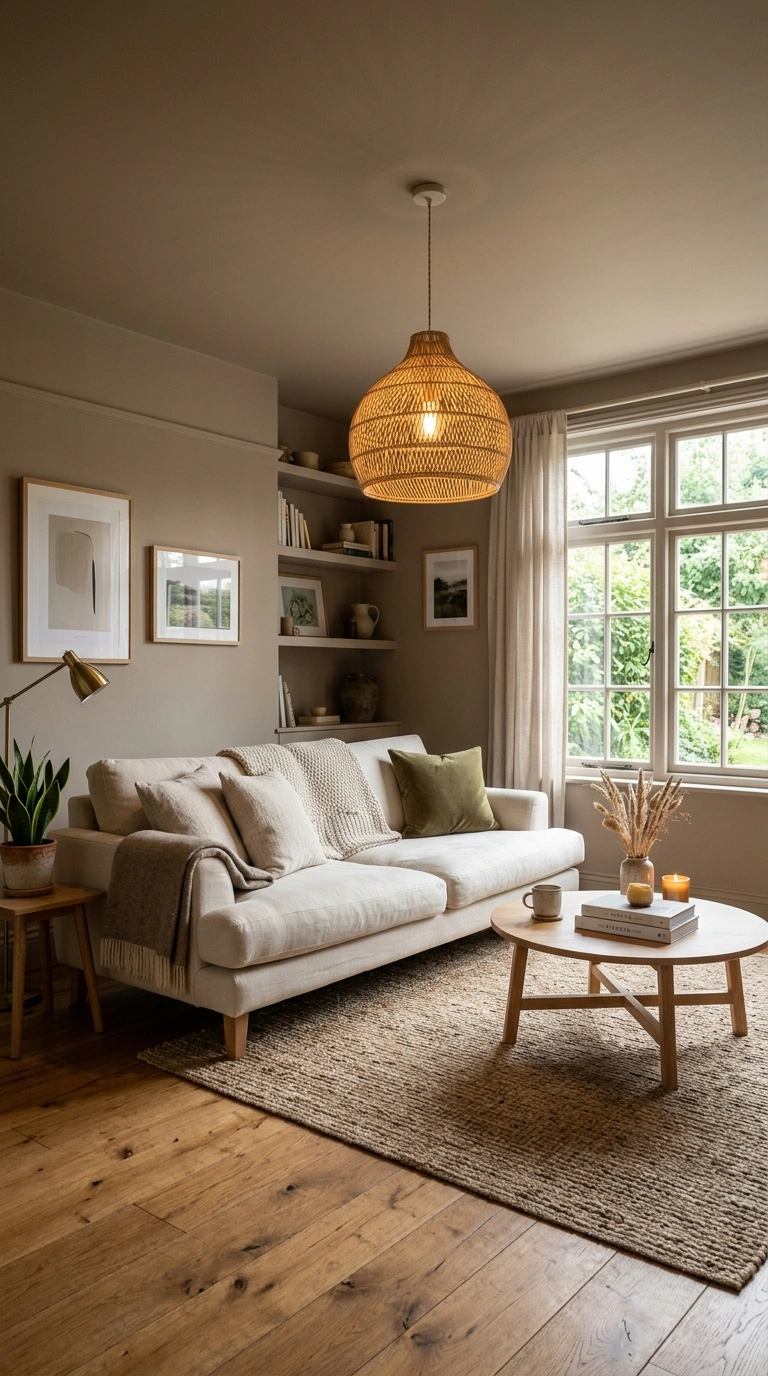
A taupe ceiling wraps the whole room in warmth and removes the stark contrast of a bright white ceiling overhead.
This works best in rooms with good natural light, since the color can read darker overhead than it does on vertical walls.
Try this: Test the ceiling shade with a poster board taped up rather than trusting a small paint chip.
6. Pair Taupe Walls With Black Trim and Doors
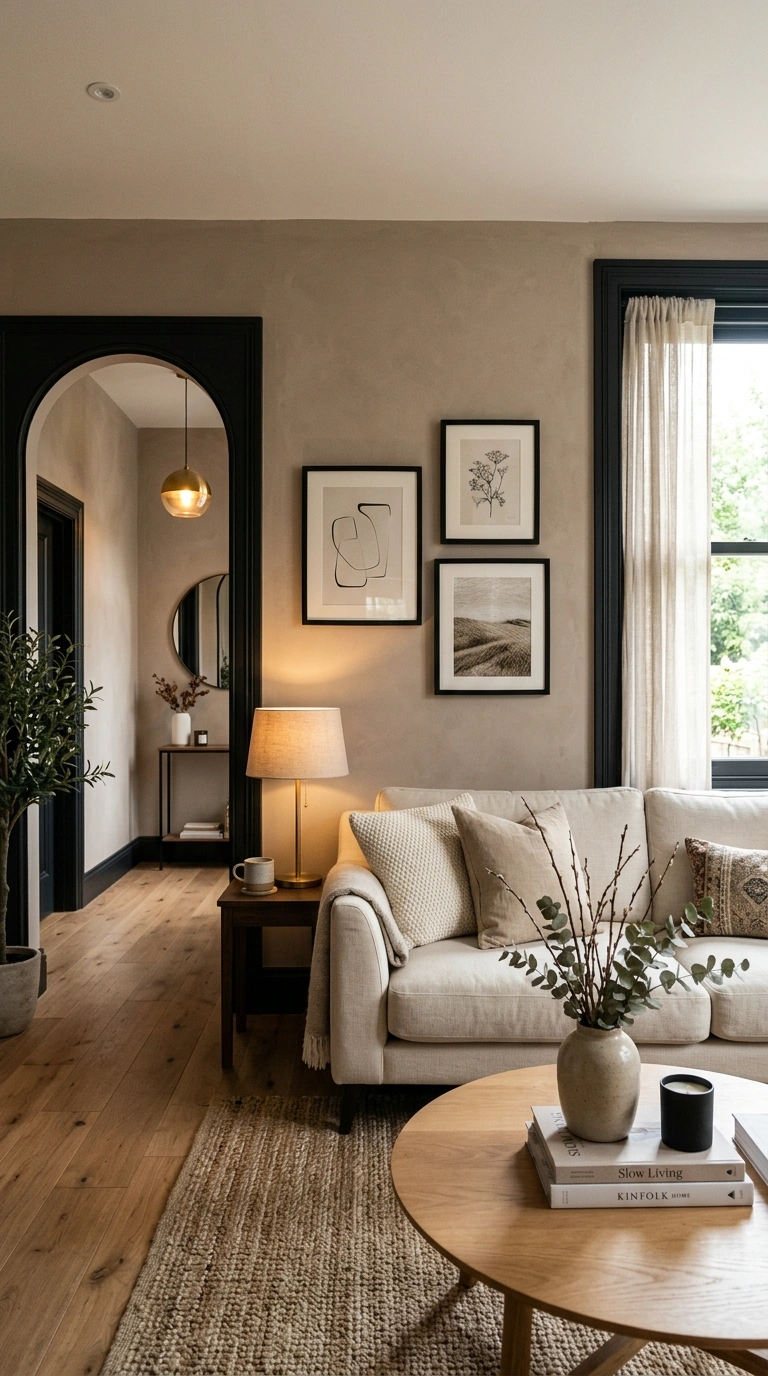
Black trim adds a crisp, modern edge against the softness of taupe walls. The contrast reads as intentional rather than harsh, since both colors share cool gray undertones.
Keep black to doors, window frames, and baseboards so it frames the room instead of dominating it.
Try this: Paint just the interior door slab black and leave the frame in Elephant’s Breath for a subtler version.
I’ve found that adding matte black wall sconces helps carry the black accents throughout the room without making the space feel heavy. They echo the trim and doors while adding soft lighting that keeps the living room comfortable in the evening.
7. Add a Taupe Velvet Sofa for Layered Texture
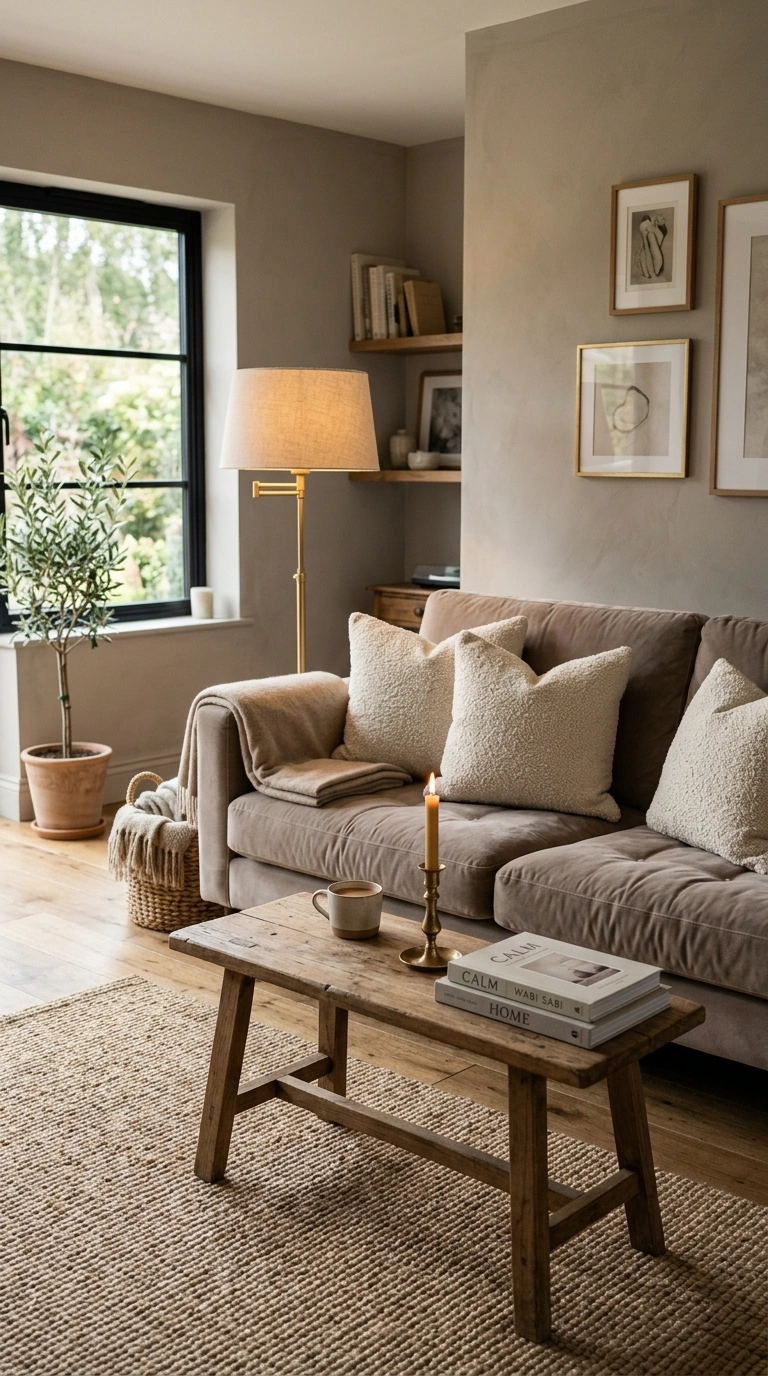
A velvet sofa close in color to your walls creates a soft, layered look instead of one flat block of color.
Velvet catches light differently than paint, so the sofa still stands out even in a matching shade.
Try this: Choose a sofa one shade darker than your wall color so the furniture reads as furniture, not camouflage.
I like adding another layer of texture instead of introducing a new color. A set of textured linen pillow covers helps break up the smooth velvet while keeping the room soft and relaxed. The small mix of fabrics gives the seating area a little more depth without changing the overall palette.
8. Style Boucle Armchairs Against Taupe Walls
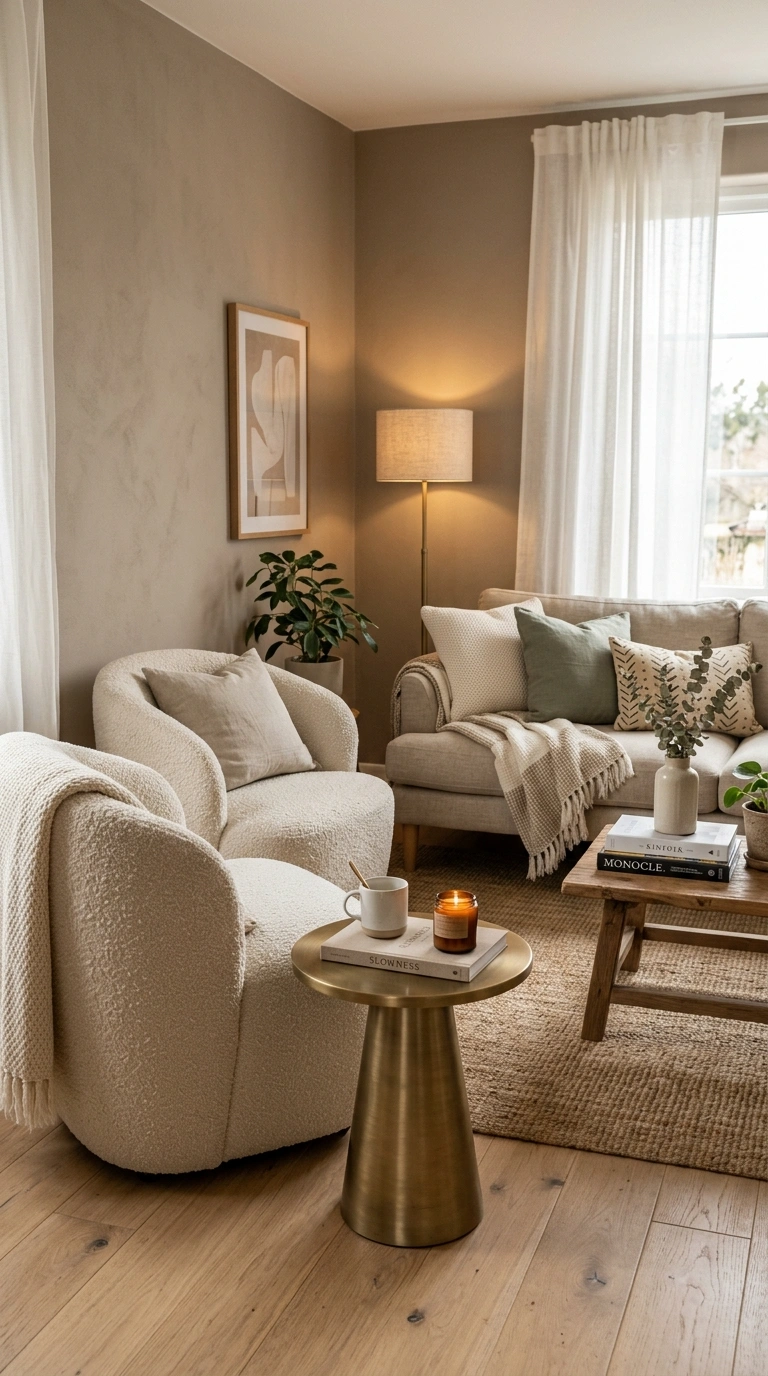
Boucle fabric has a nubby, looped texture that softens the flat surface of painted walls. Cream or warm white boucle chairs look especially rich against Elephant’s Breath.
Place two chairs at an angle facing the sofa rather than lined up straight, for a more relaxed layout.
Try this: Add one boucle throw pillow first if you’re not ready to commit to full chairs.
9. Bring in Rattan and Wicker for Natural Texture
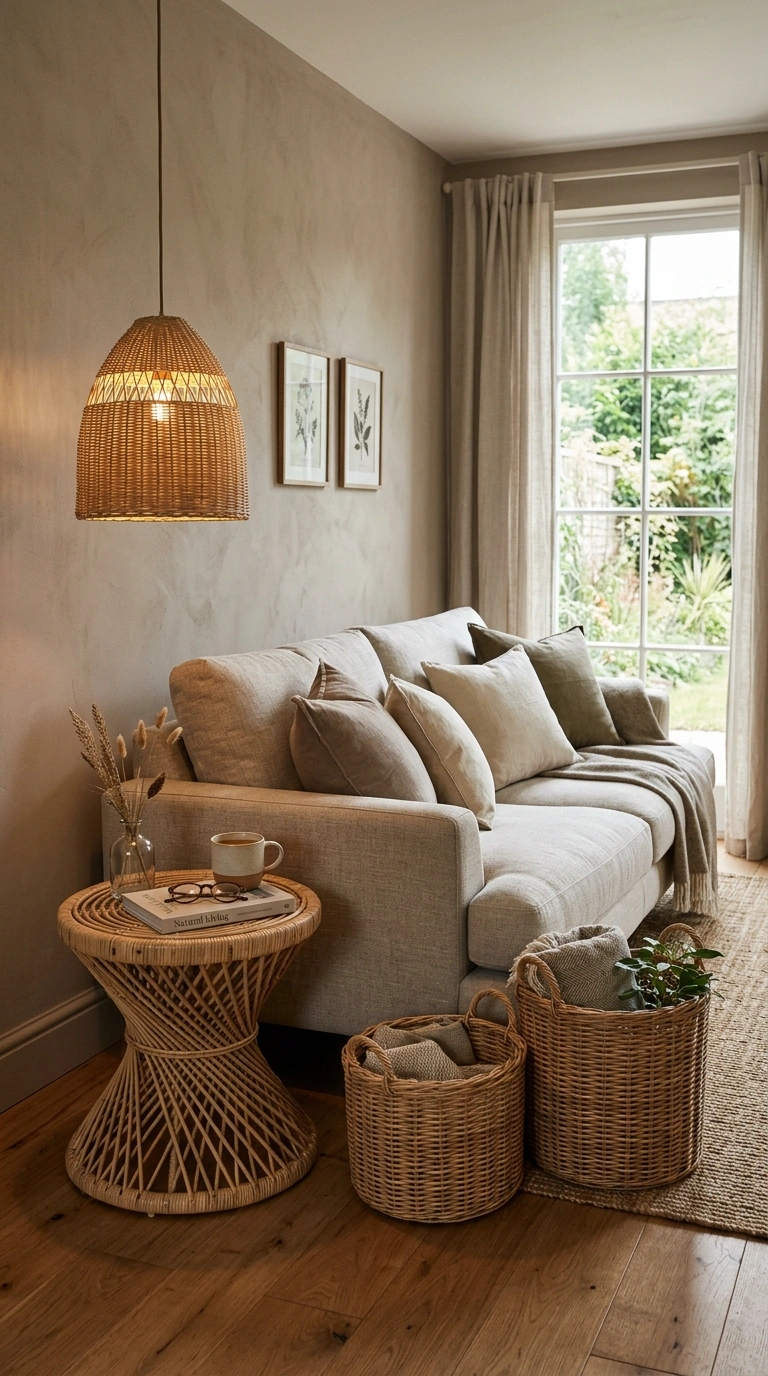
Rattan side tables, woven pendant shades, and wicker baskets add texture and warmth without adding more color to the room.
These natural materials keep a taupe room from feeling flat or overly polished.
Try this: Layer at least three rattan or wicker pieces in different sizes across the room for visual rhythm.
One thing I always reach for is a woven storage basket because it adds natural texture while giving blankets or magazines a home. It keeps the room feeling tidy, and the woven finish blends beautifully with warm taupe walls and other natural materials.
10. Pair Elephant’s Breath With Warm Terracotta Accents
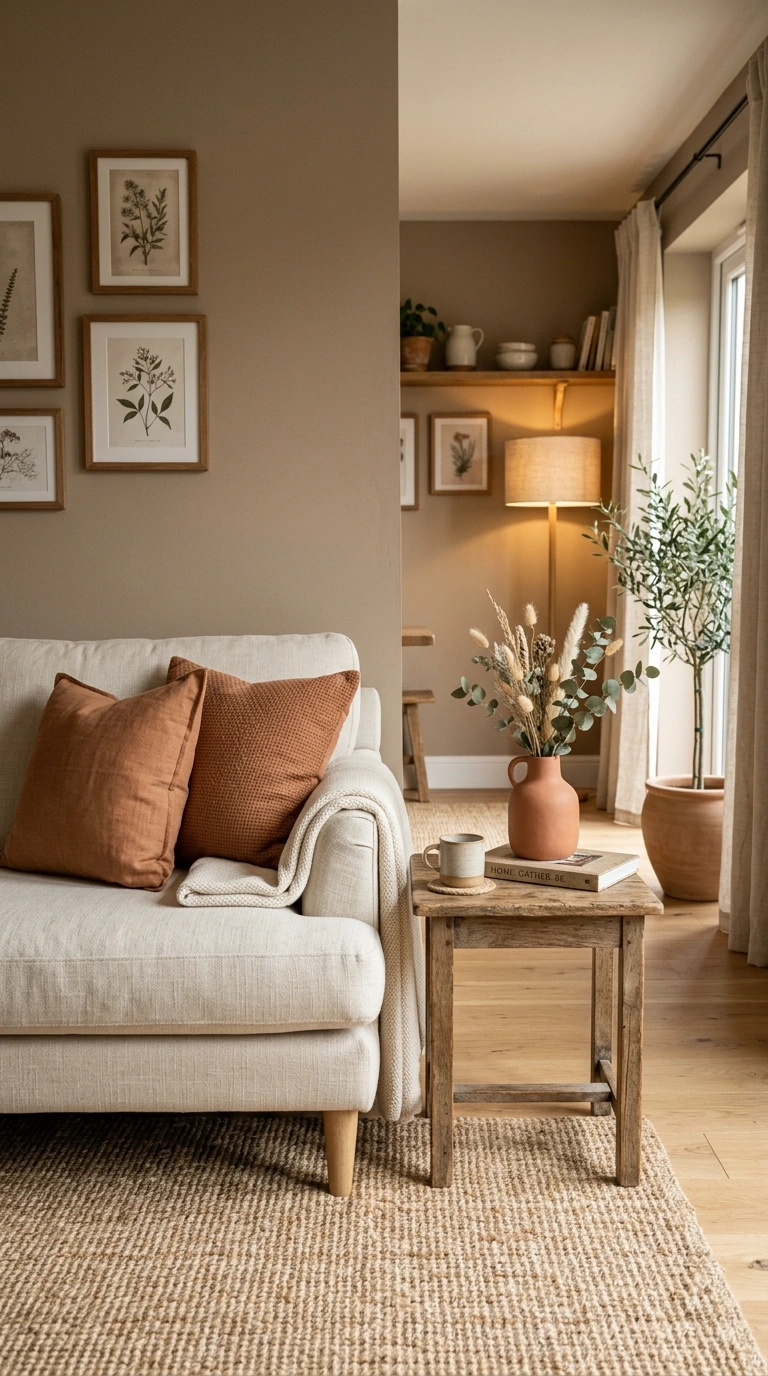
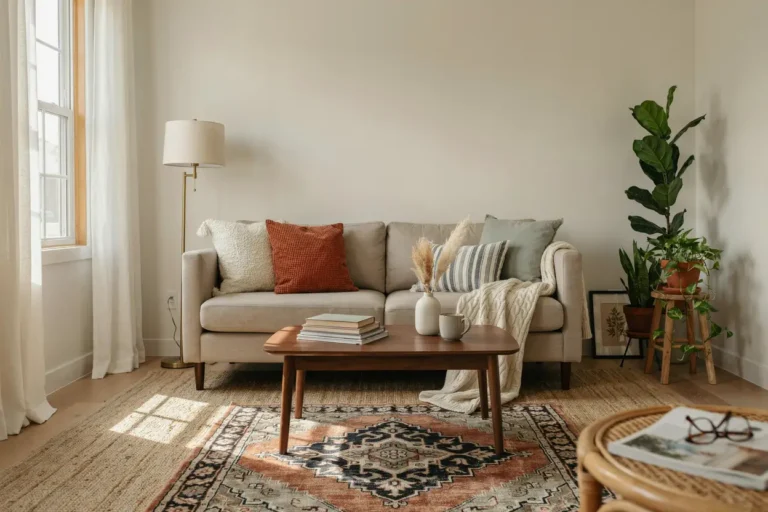
Terracotta throw pillows, ceramics, or a woven pouf bring warmth and contrast against taupe walls without ever clashing.
This pairing works because terracotta shares the same warm undertone as Elephant’s Breath, so the colors feel related instead of competing.
Try this: Add terracotta in small doses first, like a vase or two pillows, before committing to a large piece.
I’ve found that a terracotta ceramic vase is an easy way to test this color combination before adding larger pieces. It brings a warm earthy touch to shelves or coffee tables while keeping the overall room calm and balanced.
11. Add Sage Green for a Calm, Earthy Combination
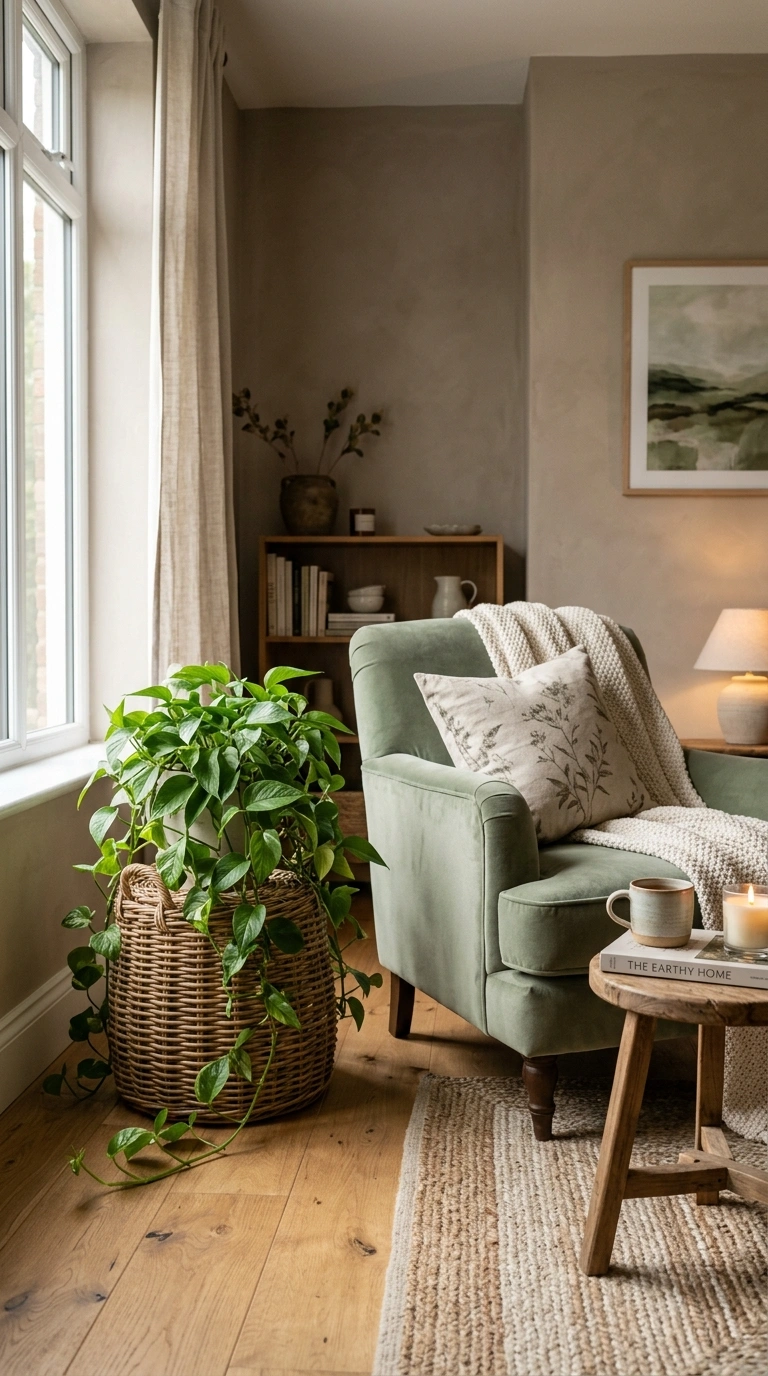
Sage green plants, throw blankets, or an accent chair bring a fresh, natural note into a taupe living room.
The muted quality of sage green matches the softness of Elephant’s Breath, so neither color overpowers the other.
Try this: Use sage green mainly through live plants like a fiddle leaf fig or trailing pothos for an easy, low-cost start.
12. Layer in Dusty Rose for a Soft, Romantic Touch
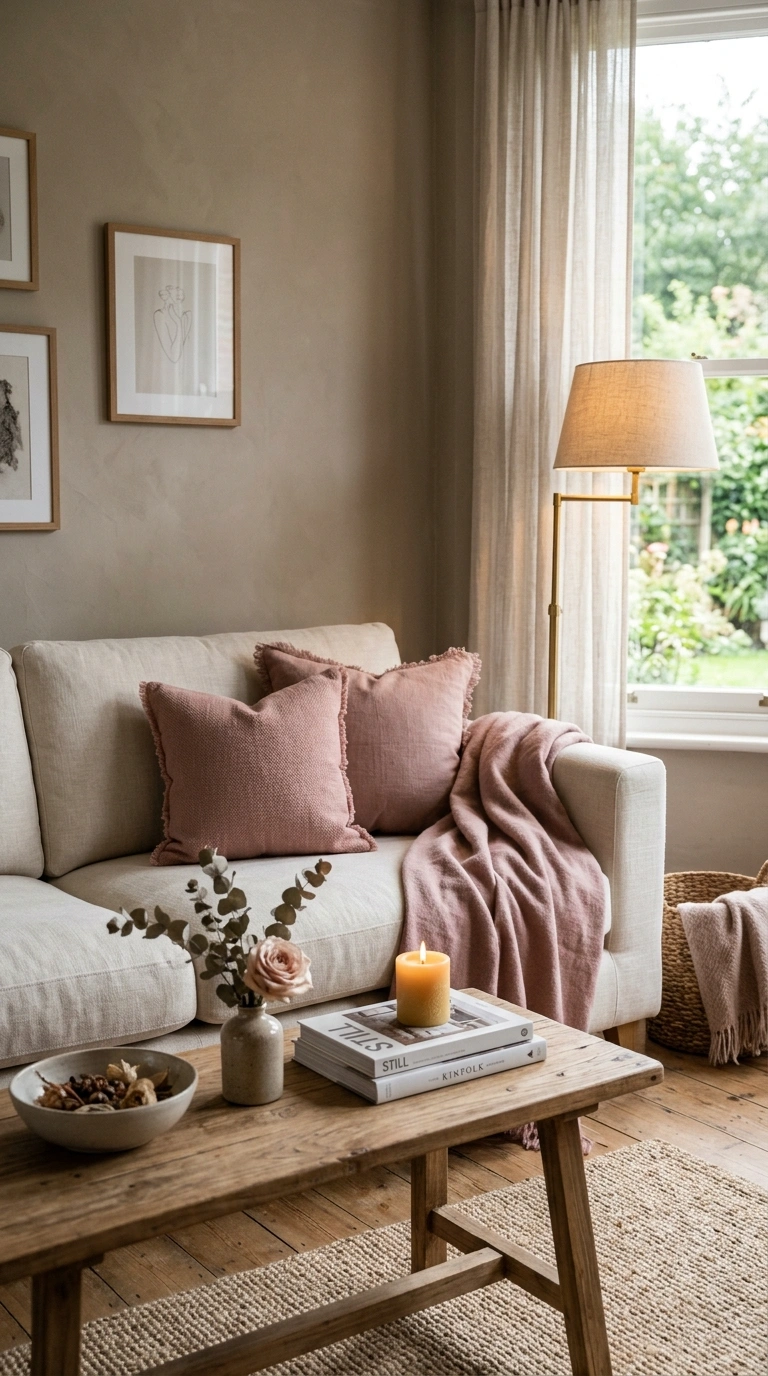
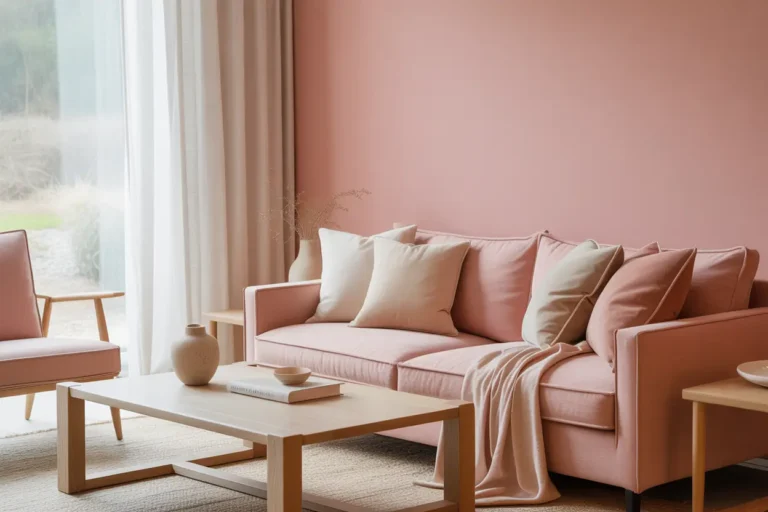
Dusty rose cushions, a throw, or a small accent chair add warmth and softness against taupe walls.
This combination feels gentle rather than sweet, since both colors stay muted instead of bright.
Try this: Stick to fabric accents for dusty rose rather than painted furniture, since fabric is easier to update later.
13. Build a Gallery Wall on Elephant’s Breath
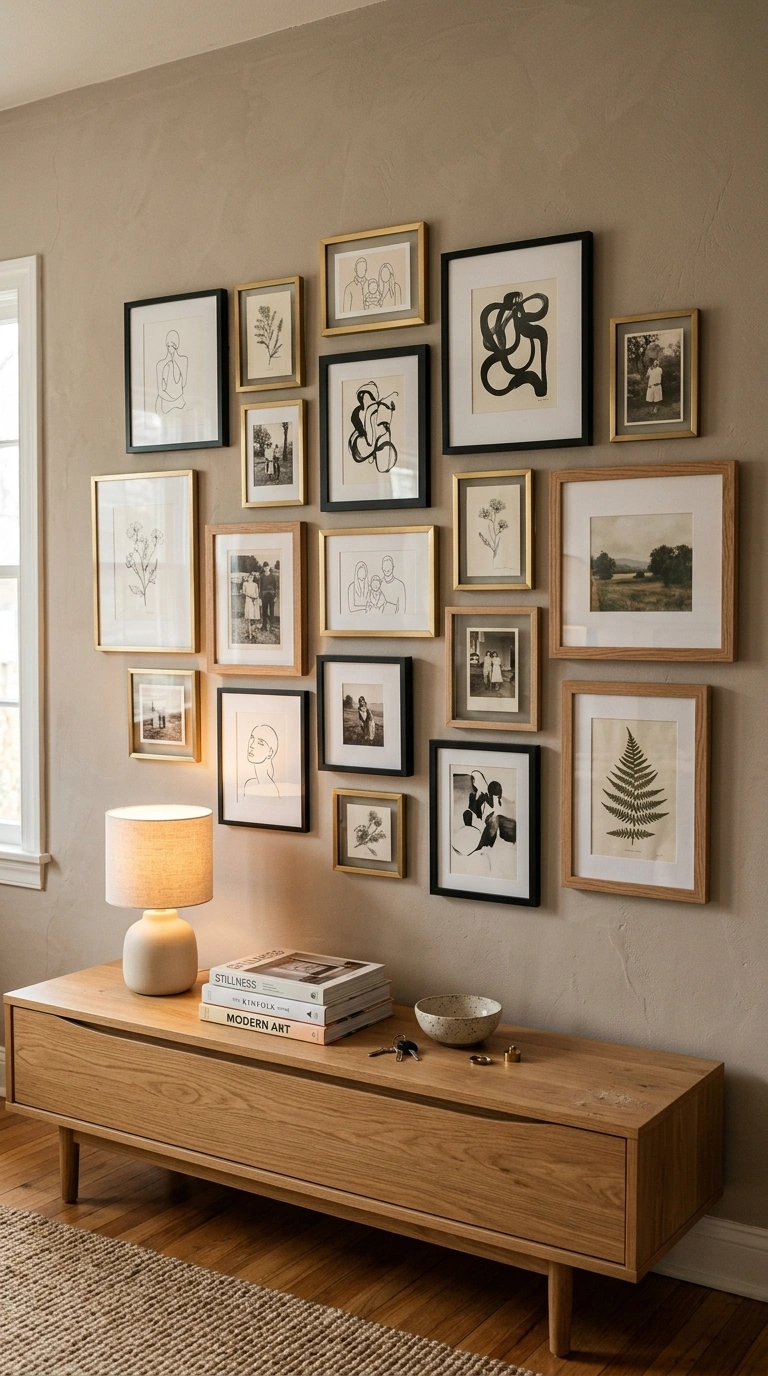
A gallery wall stands out beautifully against a muted taupe background because the color never competes with the artwork.
Mix frame finishes like aged brass, matte black, and natural wood for a collected, unplanned look.
Try this: Lay your frames out on the floor first in your chosen arrangement before hanging a single piece.
I usually gather the frames first before deciding where everything will hang. A set of mixed finish picture frames makes it easier to combine wood, black, and warm metallic tones while keeping the gallery wall looking collected instead of overly matched.
14. Hang Natural Linen Curtains for Soft Light
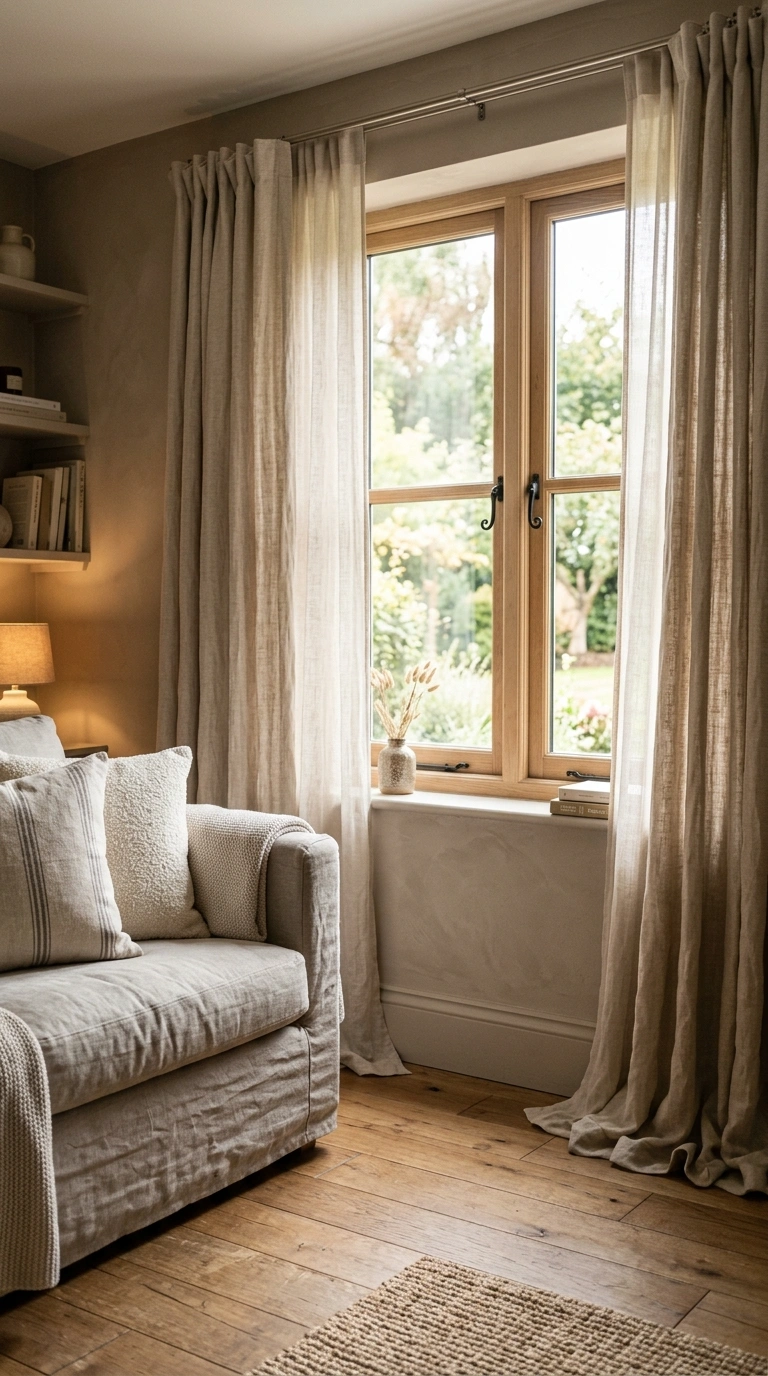
Linen curtains in warm ivory or natural flax let soft daylight filter into the room while keeping the palette calm.
The slightly wrinkled texture of linen adds visual interest that a smooth fabric can’t match.
Try this: Hang curtain rods a few inches above the window frame and let the panels puddle slightly on the floor.
One thing I always notice is how much fabric changes the feeling of a room. Natural linen curtain panels soften incoming daylight and add gentle texture, helping the taupe walls feel lighter while keeping the space relaxed and welcoming.
15. Pair a Stone Fireplace Surround With Taupe Walls
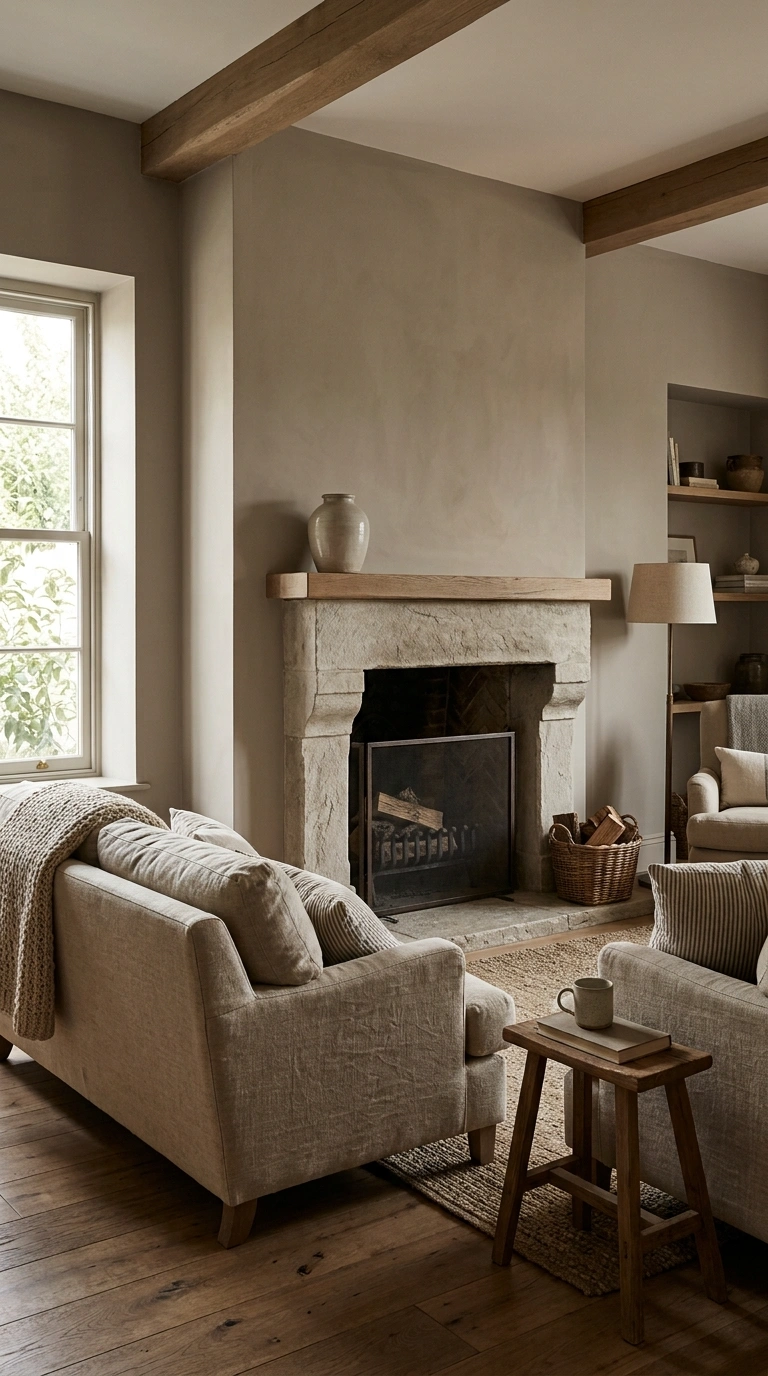
A honed stone or limestone fireplace surround blends naturally with Elephant’s Breath, since both share soft gray-brown undertones.
This pairing creates a grounded, architectural feel without needing much additional decor around it.
Try this: Keep the mantel styling minimal, just one or two objects, so the stone texture stays the visual focus.
16. Add Warm Herringbone Wood Flooring
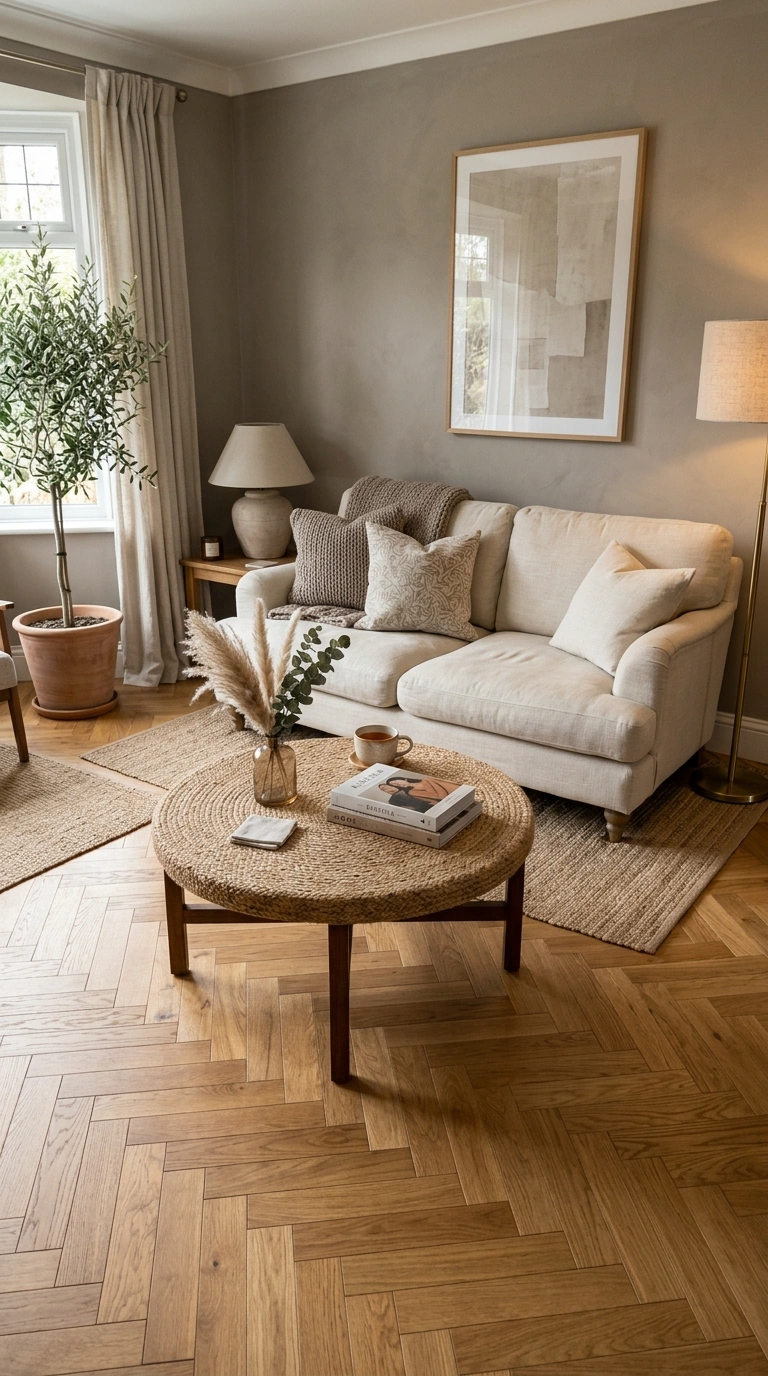
Herringbone wood flooring in a warm honey or walnut tone grounds a taupe room and adds pattern underfoot.
The diagonal lines of the herringbone pattern also make a room feel larger than a straight-plank floor would.
Try this: If new flooring isn’t in the budget, a herringbone-pattern rug gives a similar effect for less cost.
17. Choose a Sculptural Pendant as a Focal Point
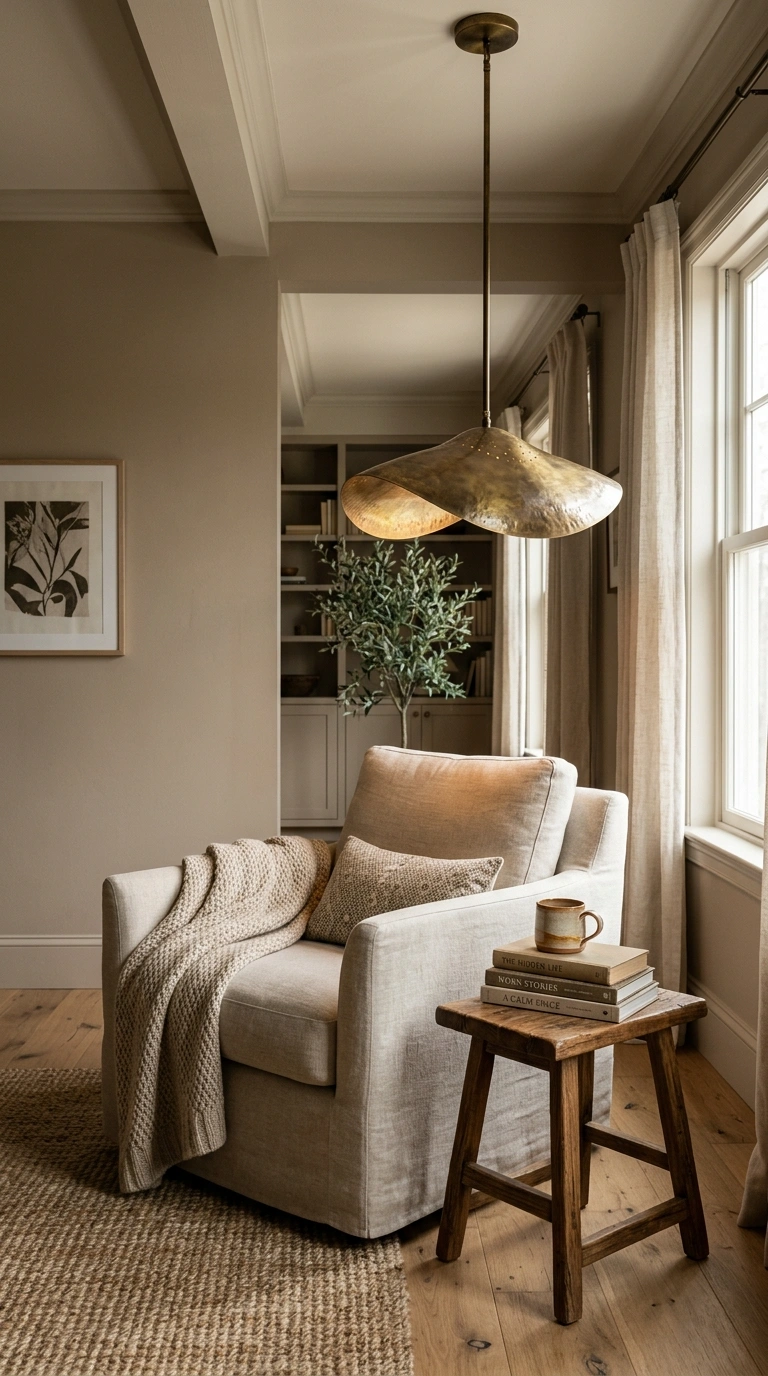
A sculptural pendant in aged brass, alabaster, or matte black draws the eye upward and adds personality to a taupe room.
Since the walls stay quiet, the light fixture can be bolder than it would in a brighter room.
Try this: Hang the pendant slightly off-center over a reading chair instead of dead-center in the room for a more curated feel.
I like choosing one statement piece instead of filling a room with lots of small decorations. A sculptural pendant light naturally draws the eye upward and gives the living room a stronger focal point while letting the quiet wall color stay in the background.
18. Layer Two Rugs for Depth and Texture
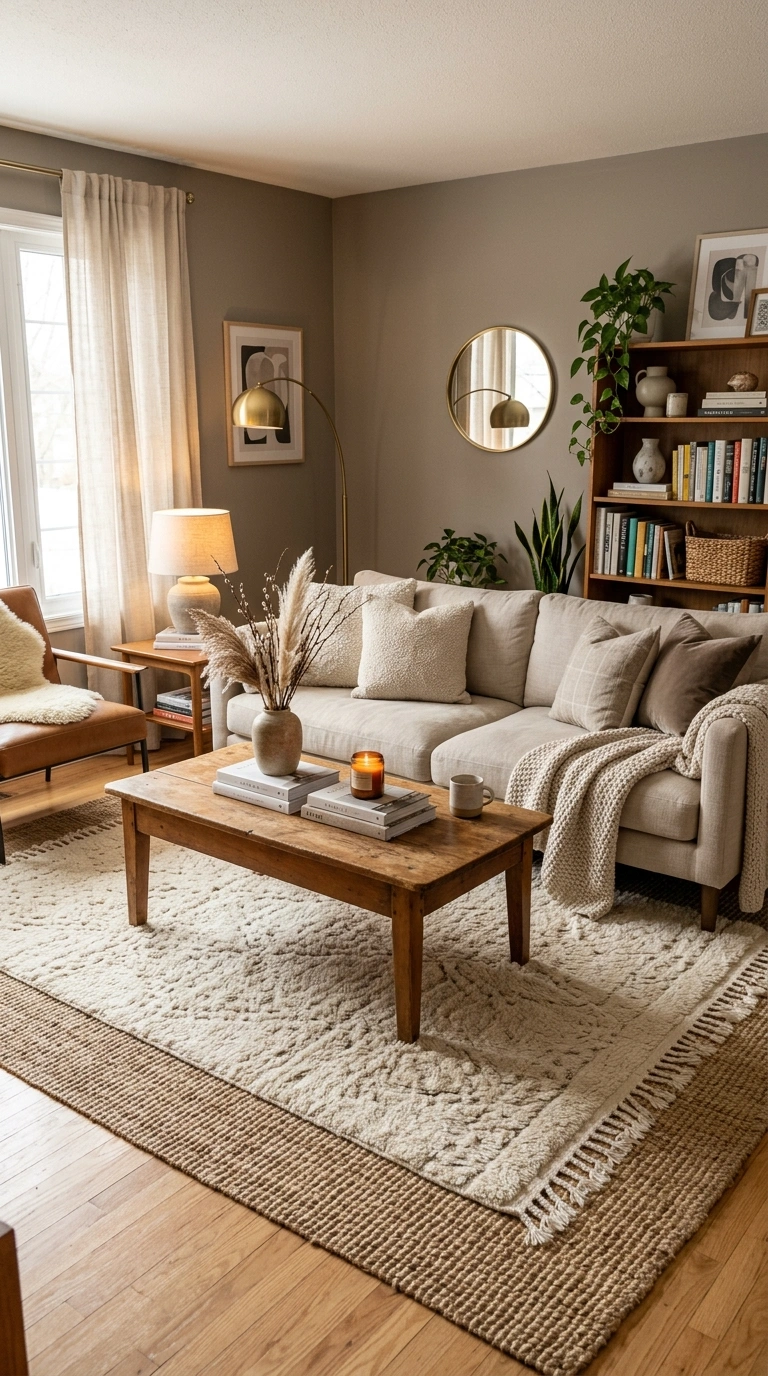
Layering a jute or sisal rug under a smaller patterned or textured rug adds depth without adding more color.
This trick also helps define a seating area within a larger open-plan room.
Try this: Choose a base rug slightly larger than your seating group, then center a smaller rug within it.
I’ve found that starting with a natural jute area rug makes layering much easier because its simple texture works with many styles. It gives the seating area more definition while allowing a smaller patterned rug to stand out without overwhelming the room.
19. Create a Cozy Reading Nook in the Corner
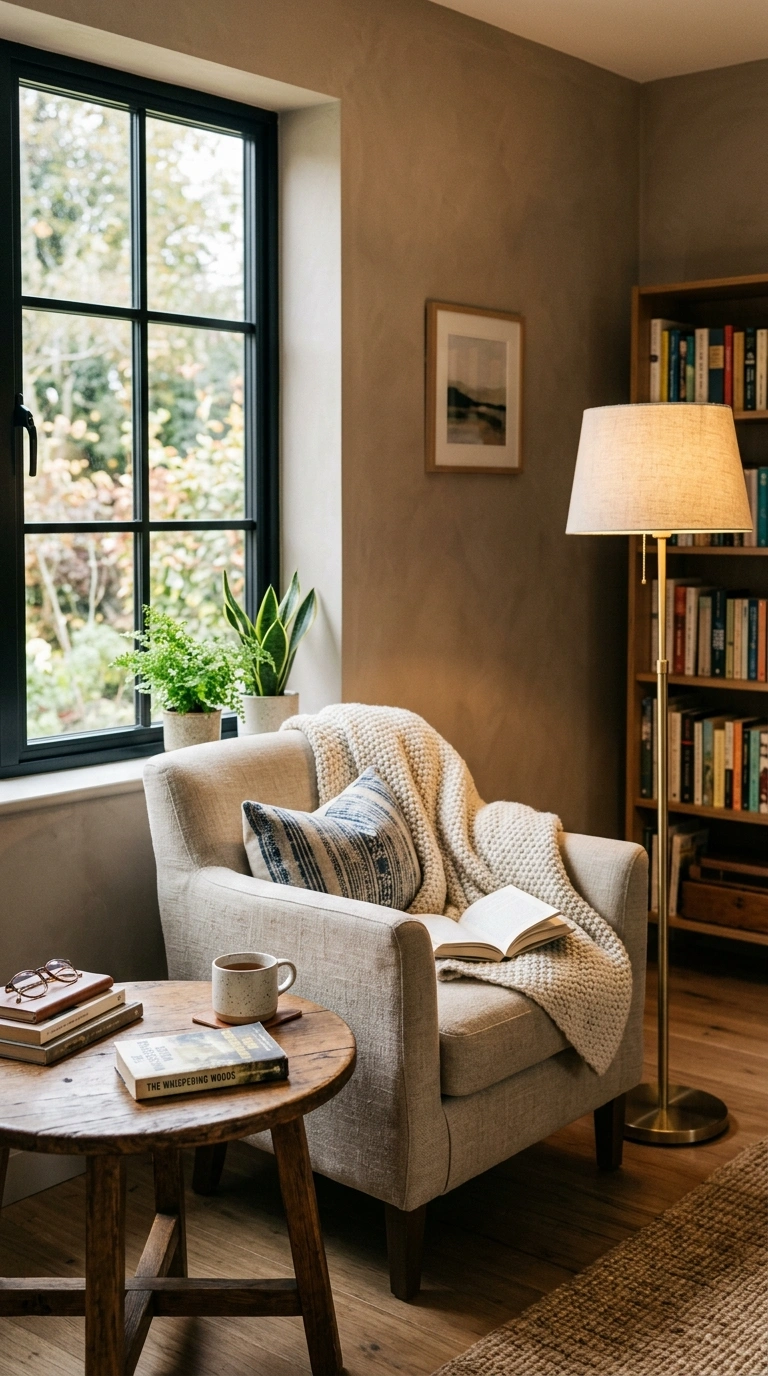
A single armchair, a small side table, and a floor lamp tucked into a corner make use of dead space and add function.
Keep the nook’s fabrics in warm ivory or soft taupe so it blends with the rest of the room instead of standing apart.
Try this: Position the reading chair near a window for natural light during the day.
I like making sure a reading corner has its own source of light instead of depending only on overhead fixtures. An adjustable floor lamp makes it easier to read comfortably in the evening while adding another layer of warmth to the space.
20. Paint Built-In Bookshelves the Same Taupe
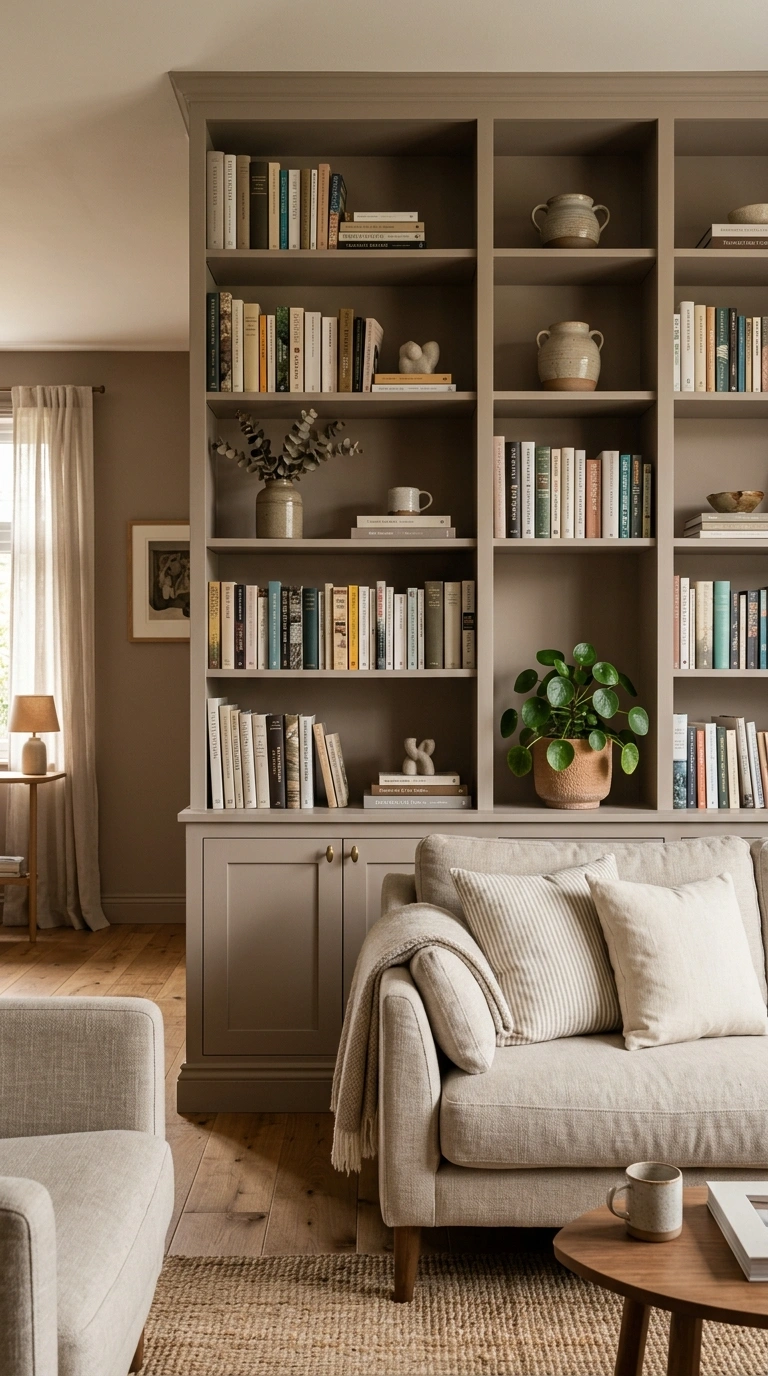
Painting built-ins the same color as the walls makes them recede visually, so the books and objects on the shelves become the focus.
This trick works especially well in smaller rooms where contrasting shelving can feel heavy.
Try this: Leave the inside back panel of each shelf unpainted or in a lighter tone to add subtle depth.
21. Maximize a Small Taupe Living Room With Mirrors
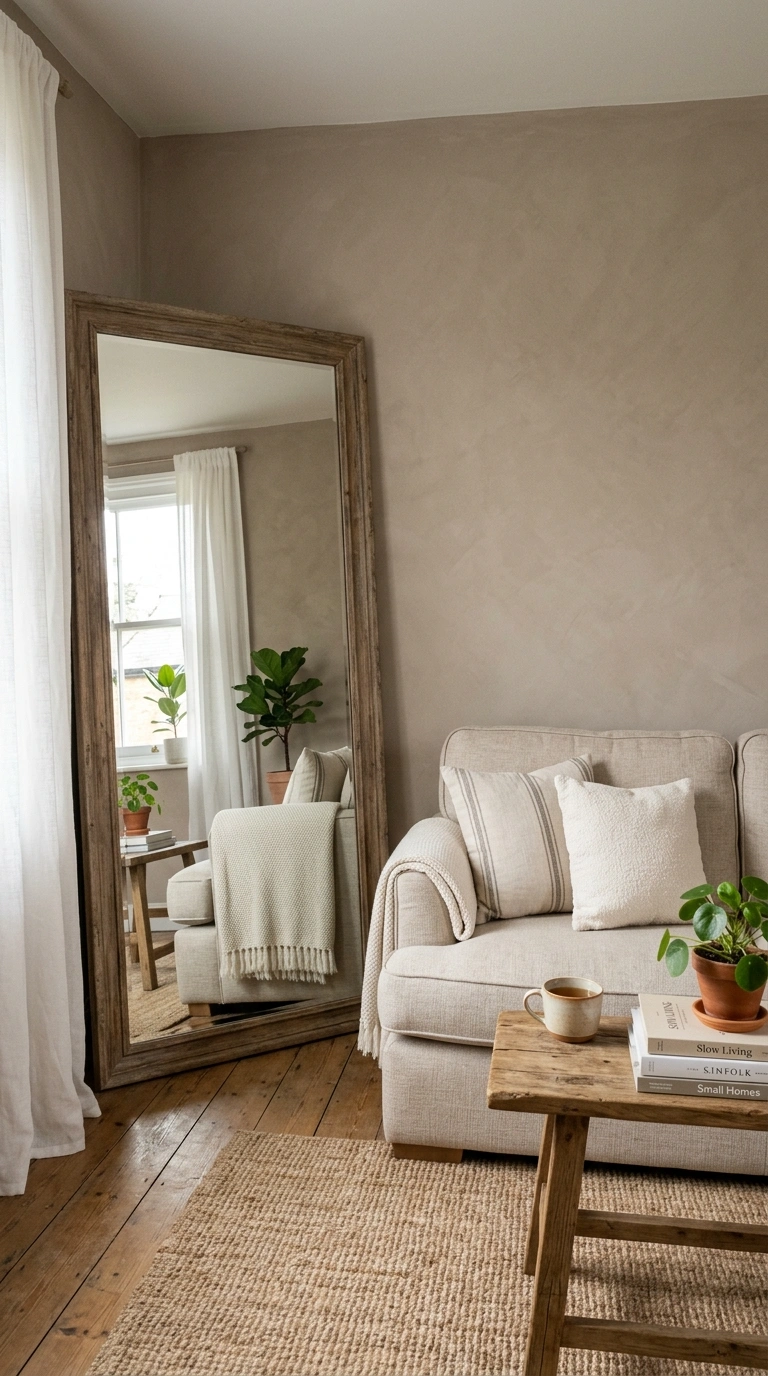
Large mirrors bounce light around a small room and make Elephant’s Breath walls feel airier instead of closing in.
Lean an oversized mirror against the wall rather than hanging a small one high up, for more reflected light.
Try this: Place the mirror across from your main window to double the natural light in the room.
One thing I always look for in a smaller room is more reflected light. An oversized wall mirror helps brighten the space by bouncing daylight around the room, making the taupe walls feel lighter and the whole layout seem more open.
22. Mix Brass and Black Metals for a Layered Finish
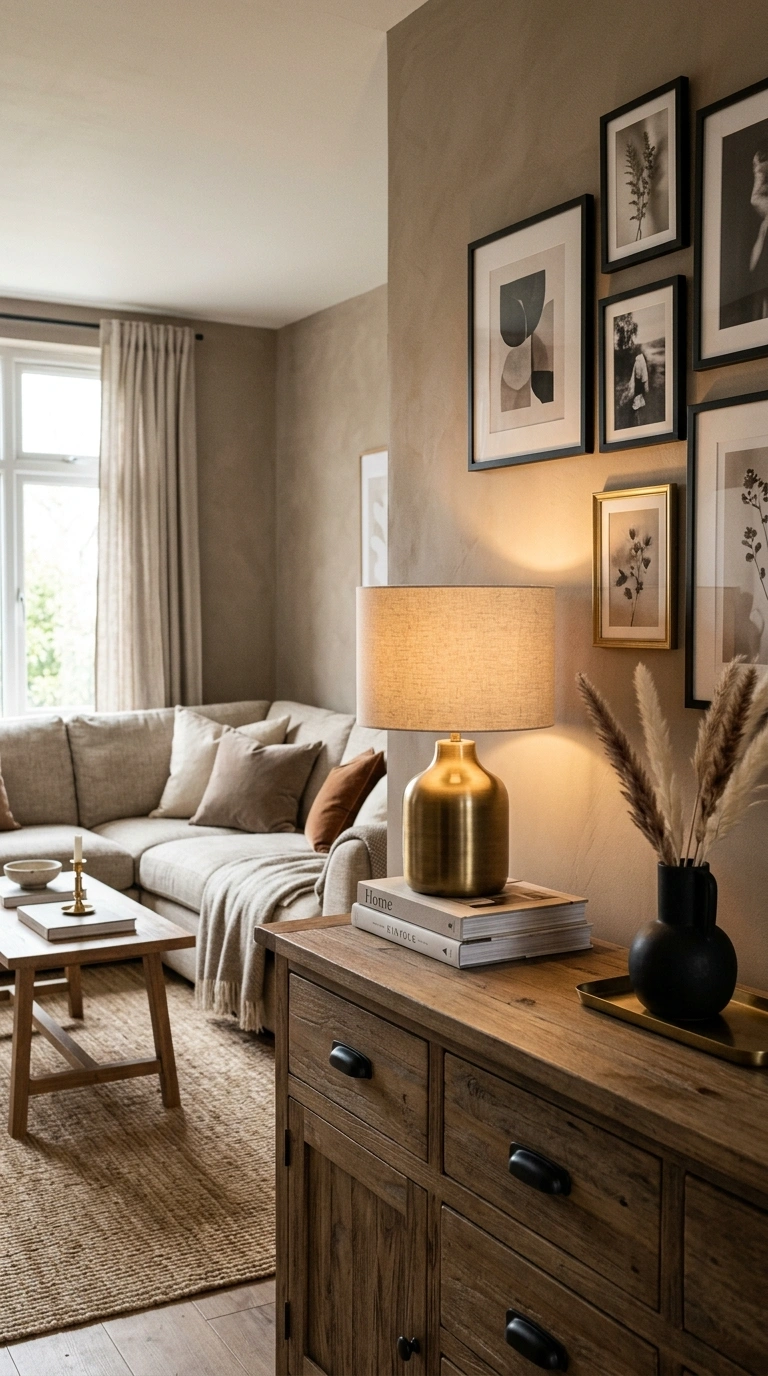
Combining brass lamp bases with black picture frames and matte black hardware keeps a taupe room from feeling one-note.
The warm and cool metals balance each other the same way warm and cool undertones shift within Elephant’s Breath itself.
Try this: Pick one metal as the dominant finish and use the second metal in smaller doses, like drawer pulls or candlesticks.
I’ve found that small accents are often enough to create a layered look. A pair of brass candle holders brings in a warm metallic finish that balances black frames or hardware without making the room feel too shiny or busy.
Bringing It All Together
Elephant’s Breath gives you a flexible base for almost any living room style, from warm and romantic to clean and modern. The right pairing comes down to the textures, metals, and accent colors you choose to sit alongside it.
Start with one or two ideas from this list, like a linen curtain swap or a new brass lamp, and build from there as your room comes together. Small changes add up fast in a room this adaptable.
Pick your favorite idea, snap a photo of your space, and save it to Pinterest so you can track your progress as your taupe living room takes shape.
FAQs
What color is Elephant’s Breath paint?
Elephant’s Breath is a warm greige-taupe paint color from Farrow & Ball. It shifts between gray, brown, and soft pink tones depending on the light in the room.
What colors go with Elephant’s Breath in a living room?
Warm ivory, sage green, dusty rose, and terracotta all pair well with Elephant’s Breath. Brass and matte black metal accents also work nicely against this taupe shade.
Does Elephant’s Breath work in a small living room?
Yes, Elephant’s Breath works well in small rooms, especially when paired with plenty of natural light and a large mirror. Keeping trim in a lighter warm white also helps the space feel open.
Should I paint the trim the same color as Elephant’s Breath walls?
You can paint trim the same color for a seamless, monochromatic look, or use a warm ivory trim for gentle contrast. Both options work well in a taupe living room.
Is Elephant’s Breath a warm or cool paint color?
Elephant’s Breath leans warm overall, though it can read slightly cooler in north-facing rooms with less direct sunlight. Testing a sample in your own space is the best way to see how it shifts.