22 Cozy Living Room and Kitchen Combo Ideas for Homes

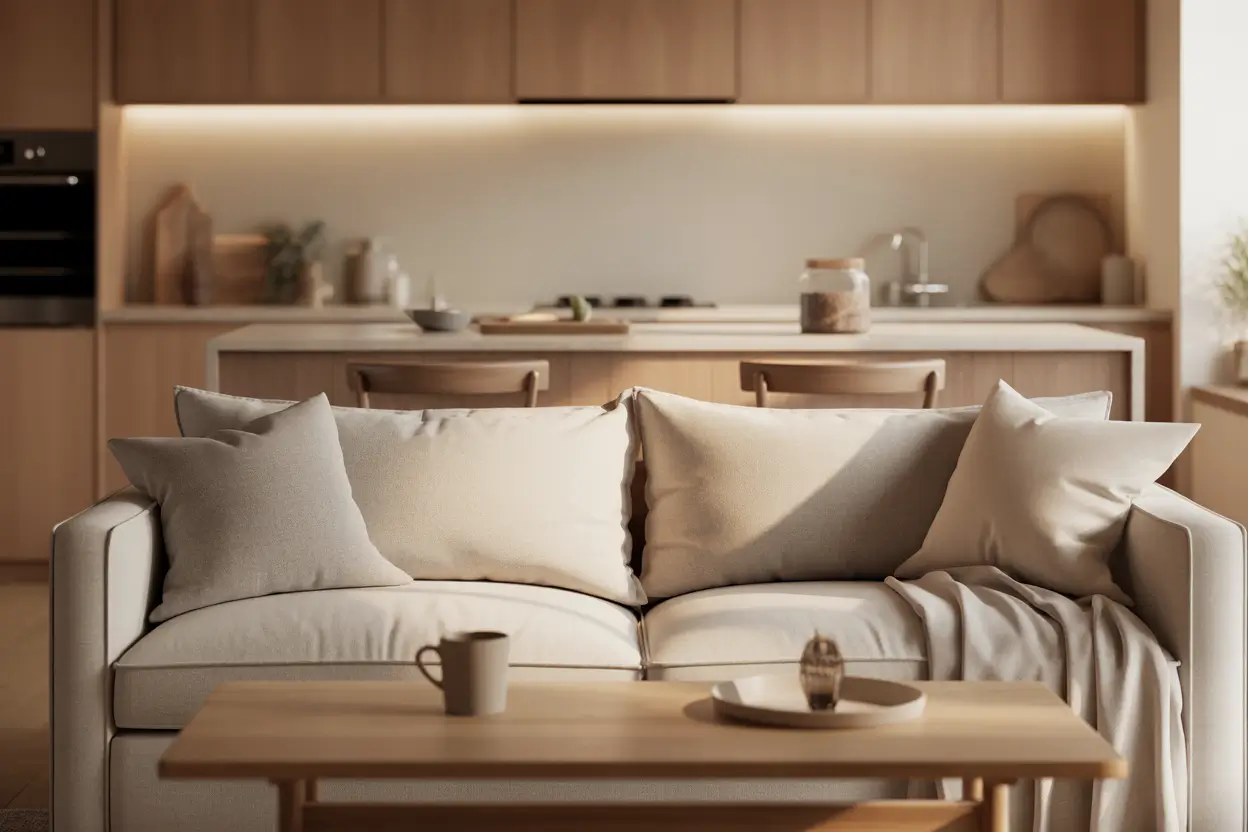
Creating a warm and inviting space where your living room and kitchen blend smoothly can completely change how your home feels. When done right, this shared area becomes more than just functional. It turns into a place where cooking, relaxing, and spending time together all happen naturally. Many homes today use open layouts, but making them feel cozy instead of empty or disconnected takes smart design choices.
In this guide, you will discover cozy living room and kitchen combo ideas that focus on comfort, style, and real-life use. Each idea is easy to apply and filled with visual details you can picture or recreate. Whether your space is small or spacious, these ideas will help you design a room that feels warm, balanced, and beautifully connected.
1. Soft Neutral Base with Warm Wood Layers
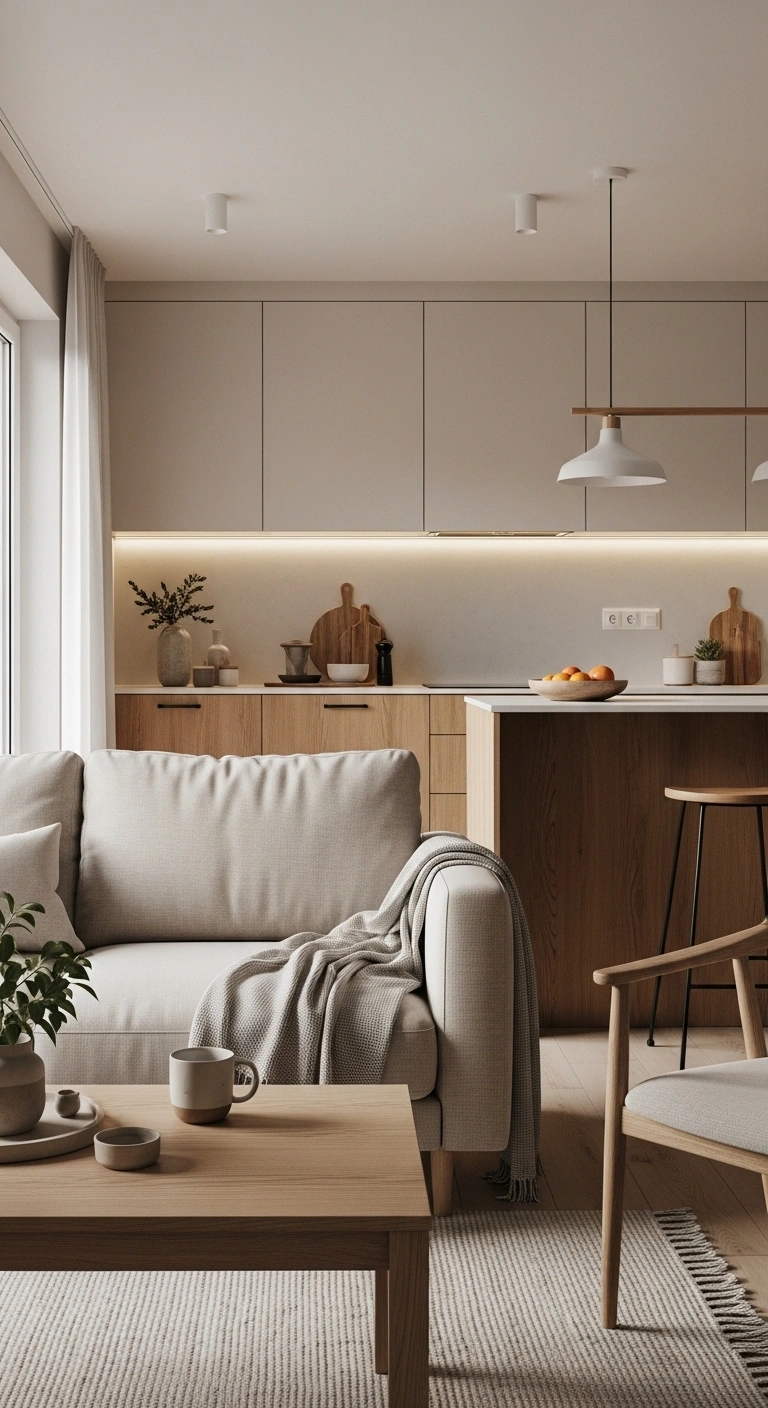
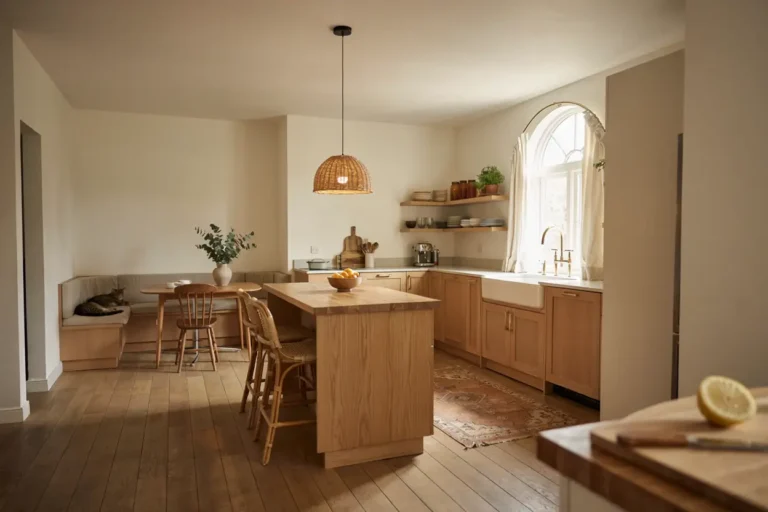
Start with a soft neutral color palette to instantly calm the space. Use shades like warm white, beige, or light taupe on walls and cabinets. These colors reflect light and make the room feel open, but not cold. Then layer in warm wood tones through flooring, shelves, or a kitchen island to add depth and comfort.
Add a linen sofa with textured cushions and place a wooden coffee table that matches the kitchen accents. Use warm lighting with soft yellow bulbs to tie everything together. This mix of smooth and textured surfaces makes the space feel balanced and inviting without overwhelming the eye.
2. Defined Zones with a Cozy Area Rug
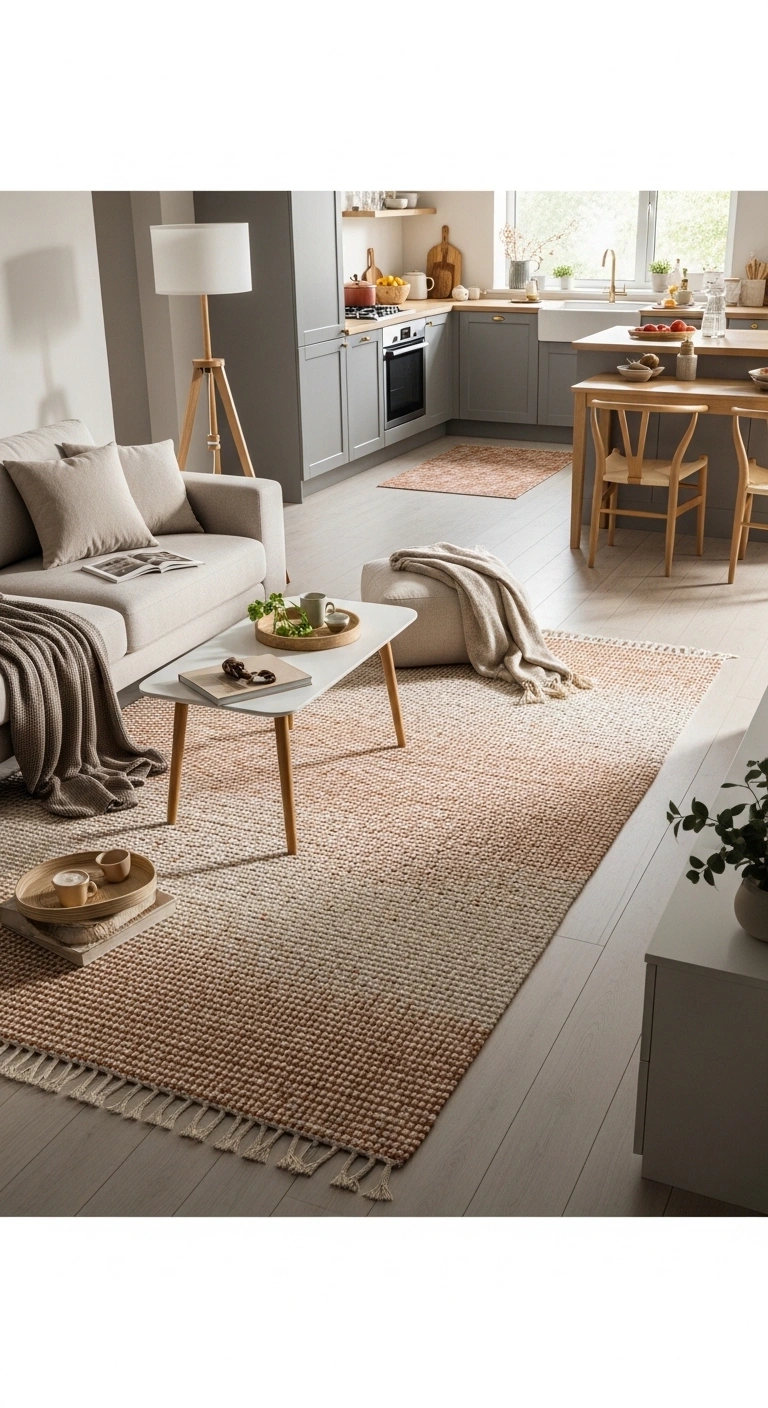
Use a large area rug to visually separate the living room from the kitchen without adding walls. Choose a plush rug in warm tones like rust, cream, or soft brown to anchor the seating area. This instantly creates a cozy “zone” where people can relax.
Keep the kitchen flooring slightly different, like tiles or polished wood, to subtly mark the transition. Add a low sofa facing away from the kitchen to strengthen the division. This layout helps the space feel organized while still open and easy to move through.
3. Two-Tone Color Harmony
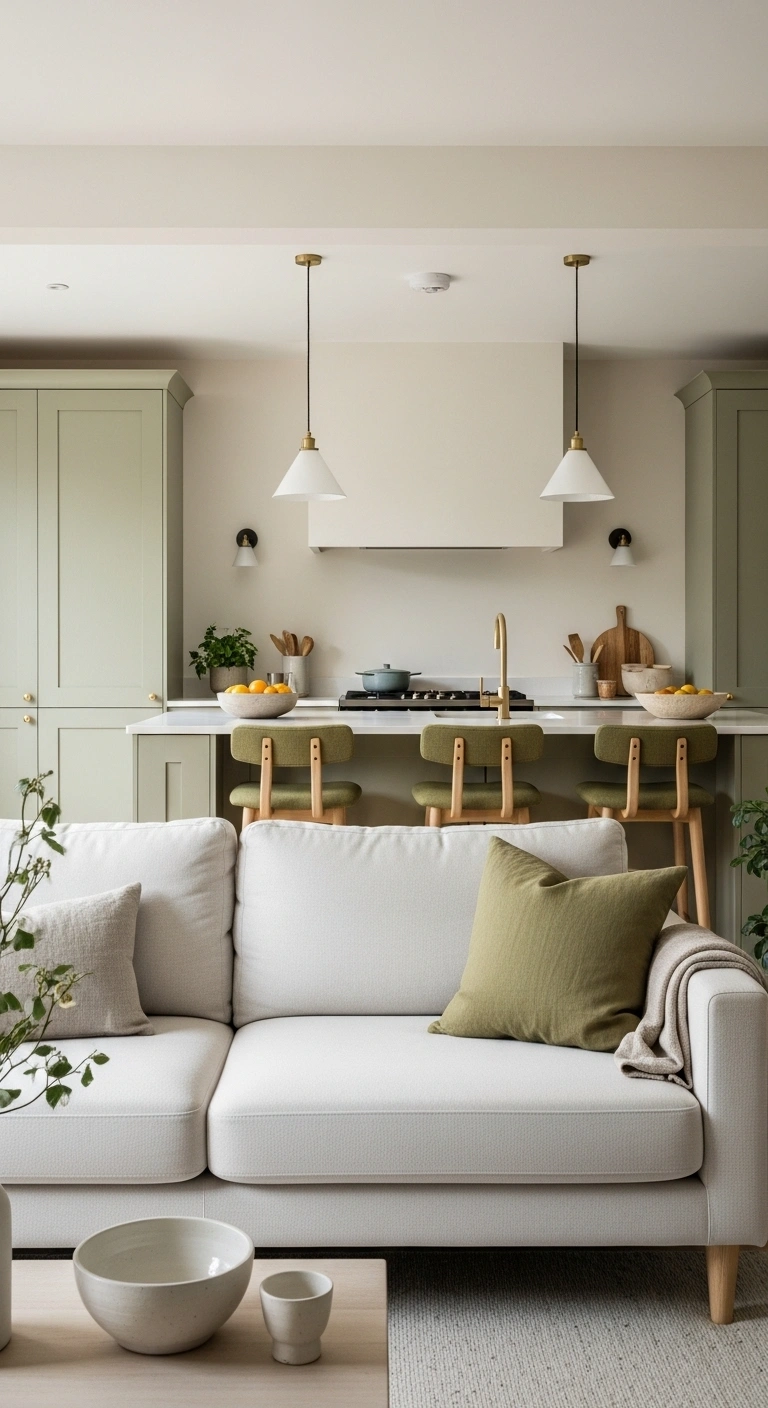
Create a clear but soft contrast by using two main colors across both areas. For example, pair deep olive green kitchen cabinets with a light cream living room setup. Repeat each color in small ways across the space to connect everything visually.
Add green throw pillows or a soft blanket in the living room, and include cream bar stools or pendant lights in the kitchen. This back-and-forth color flow makes the space feel designed and intentional while keeping it warm and cozy.
4. Statement Lighting That Connects Both Spaces
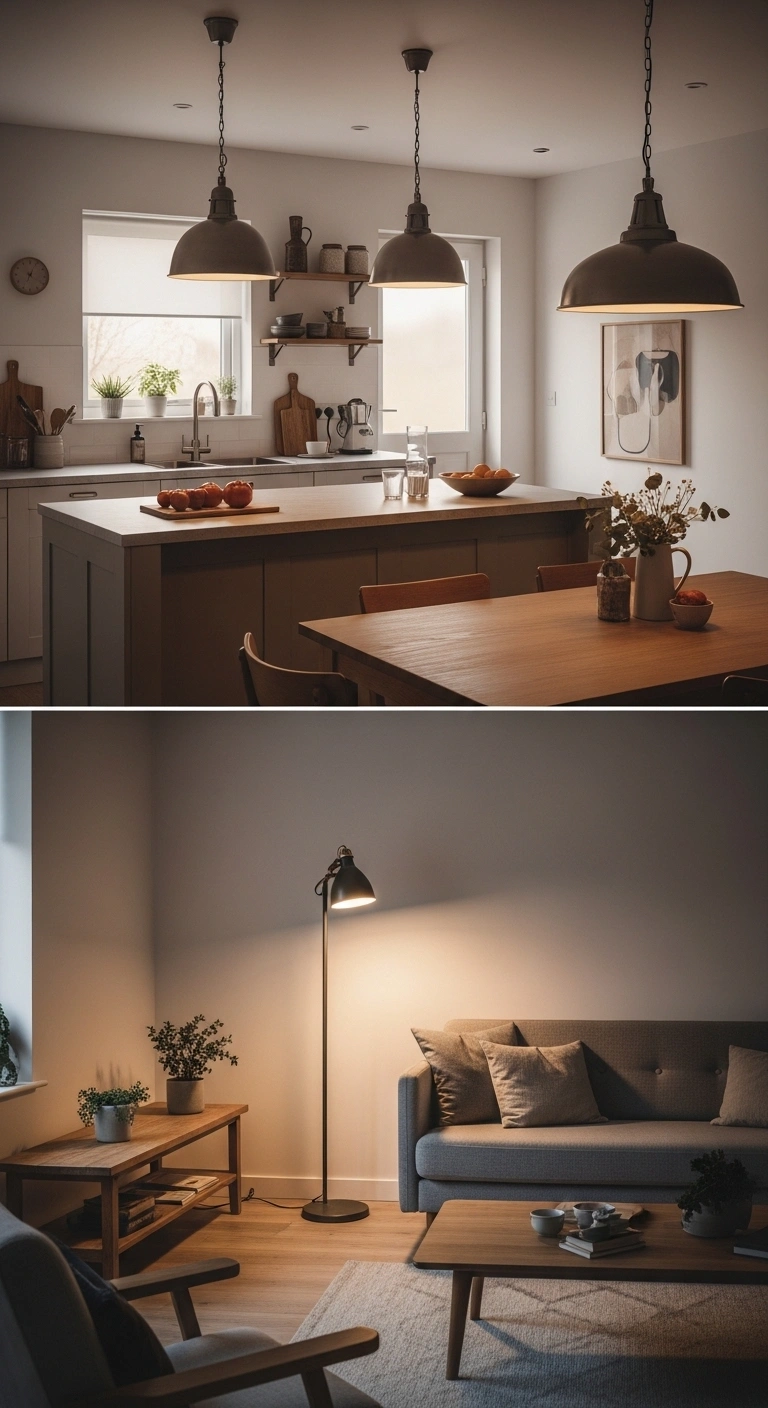
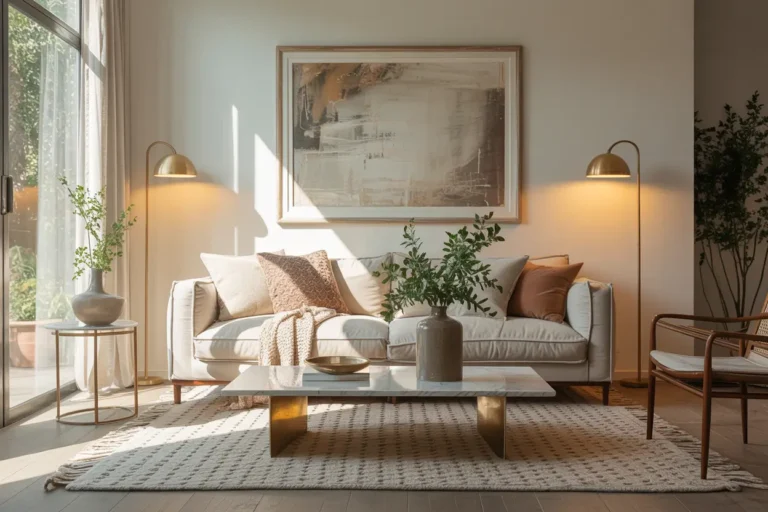
Lighting can tie the entire combo area together when used thoughtfully. Choose one style of lighting and repeat it in different forms. For example, use warm brass pendant lights above the kitchen island and match them with a floor lamp or wall sconce in the living room.
Keep the light temperature warm to create a relaxing mood. Avoid harsh white lighting, as it can make the space feel cold. Soft, glowing light adds comfort and makes both areas feel like part of the same cozy environment.
5. Open Shelving That Blends Style and Function
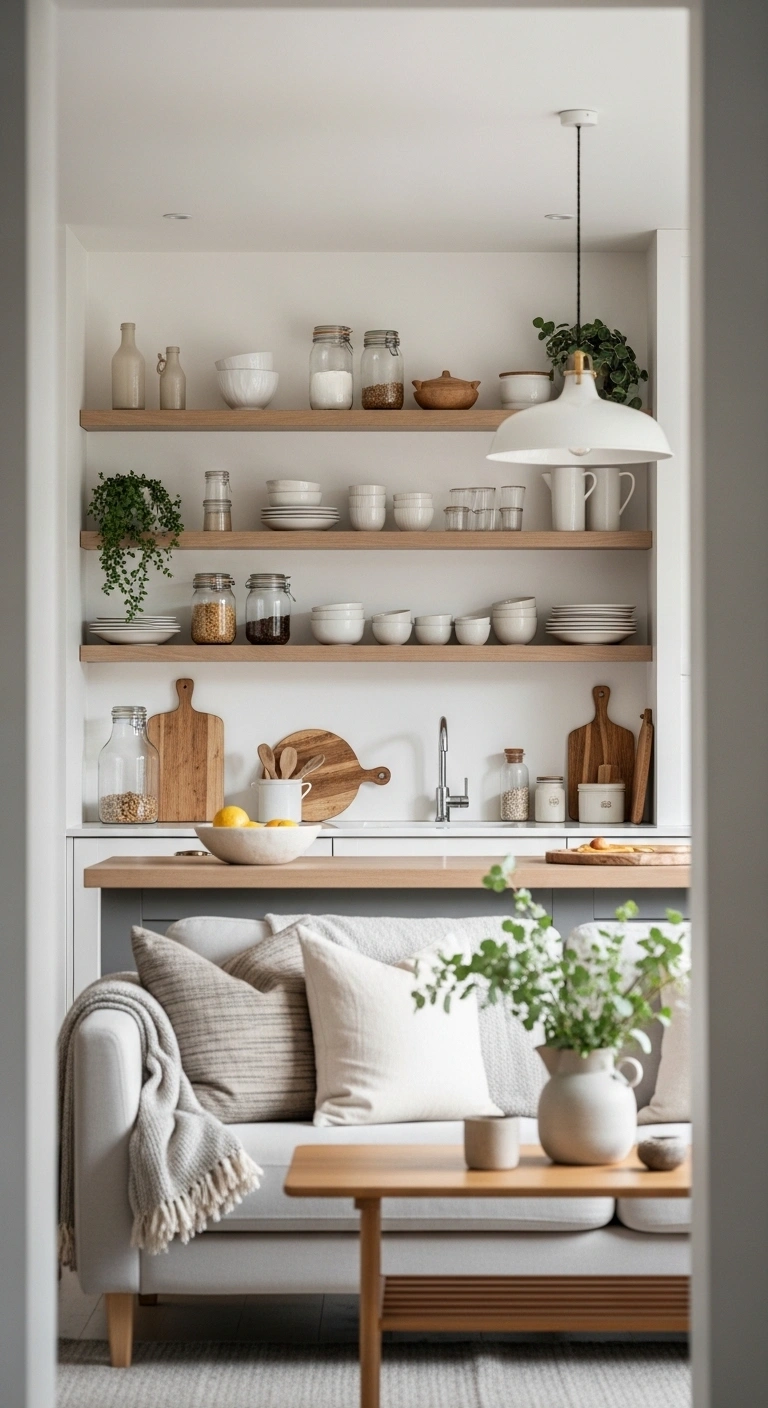
Install open shelves in the kitchen and style them so they visually connect with the living room. Use items like ceramic bowls, wooden trays, and neutral-toned jars that match your living room décor.
Add a few decorative pieces like small plants or framed art to soften the look. This approach makes the kitchen feel less separate and more like an extension of the living space, while still being practical for everyday use.
6. Low Furniture for Better Flow
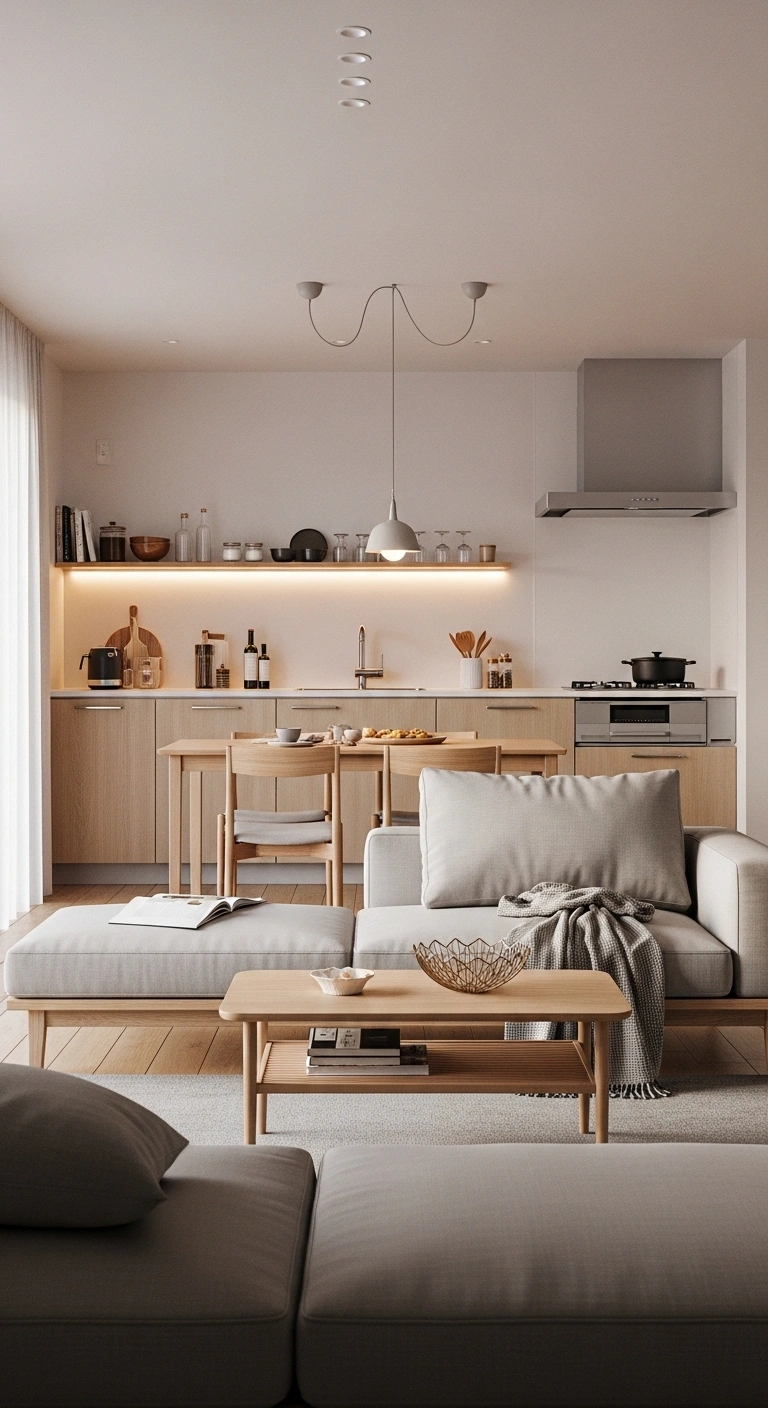
Choose low-profile furniture to keep the space feeling open and connected. A low sofa, compact coffee table, and simple dining chairs help maintain clear sightlines across both areas.
This setup allows natural light to travel freely, making the entire space feel brighter and more inviting. It also prevents the room from feeling crowded, which is important in combo layouts where everything shares the same visual space.
7. Cozy Corner Seating Near the Kitchen

Create a small seating nook close to the kitchen using a compact loveseat or two armchairs. Add a soft throw blanket and a small side table for drinks or snacks.
This setup makes it easy for someone to relax while others cook, keeping everyone connected. Use soft textures like knitted fabric or velvet to enhance comfort and warmth in the corner.
8. Natural Elements for a Relaxed Feel
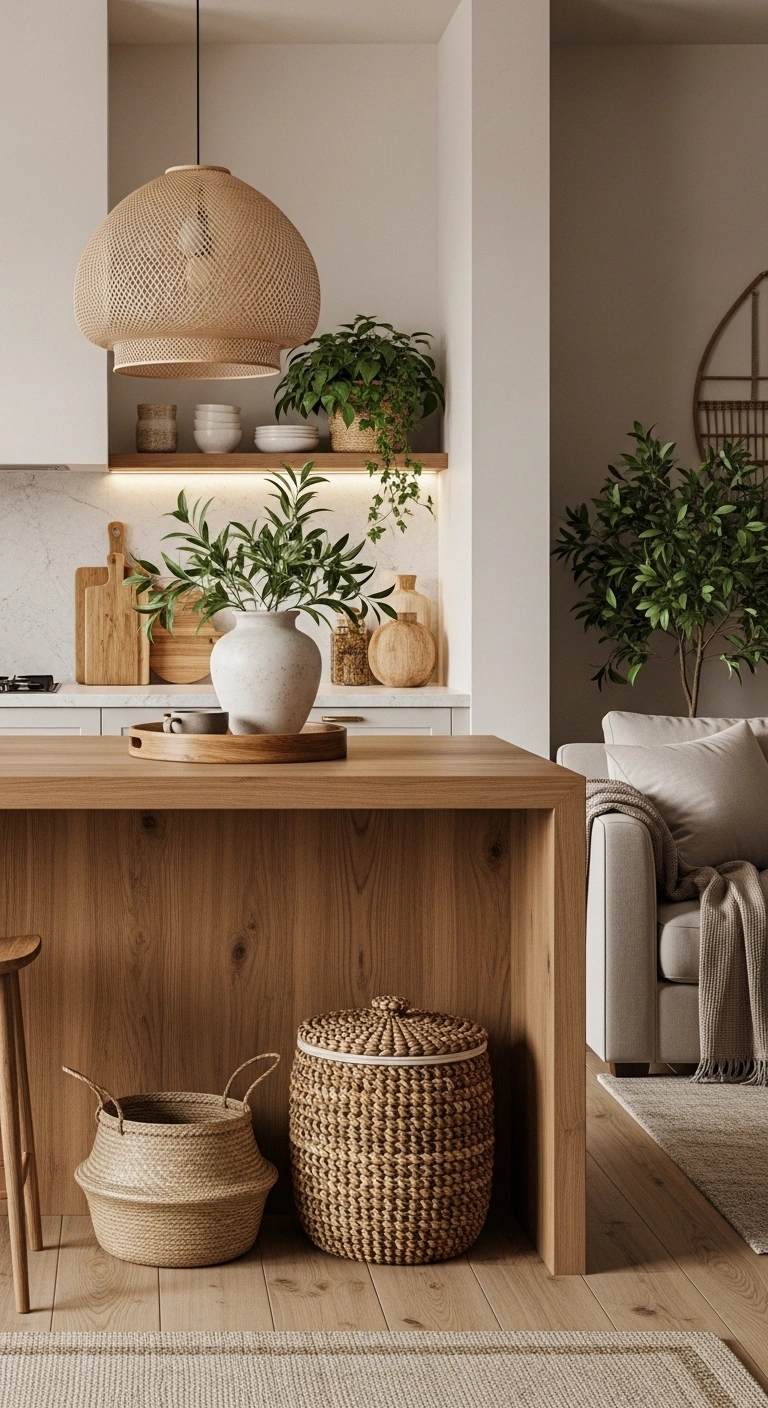
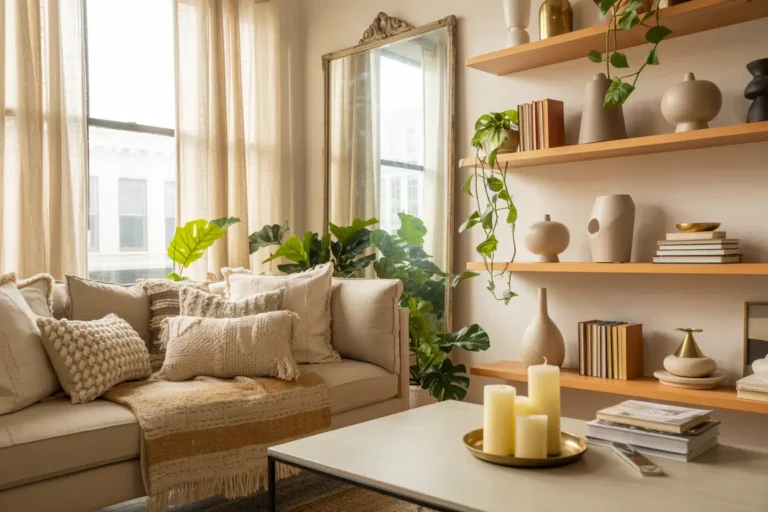
Bring in natural materials to make the space feel grounded and calm. Use indoor plants, wooden accents, stone countertops, or woven baskets.
Place a tall plant near the transition between the kitchen and living room to act as a soft divider. These organic elements add life and texture while making the entire space feel more welcoming and less structured.
9. Matching Textures Across Spaces
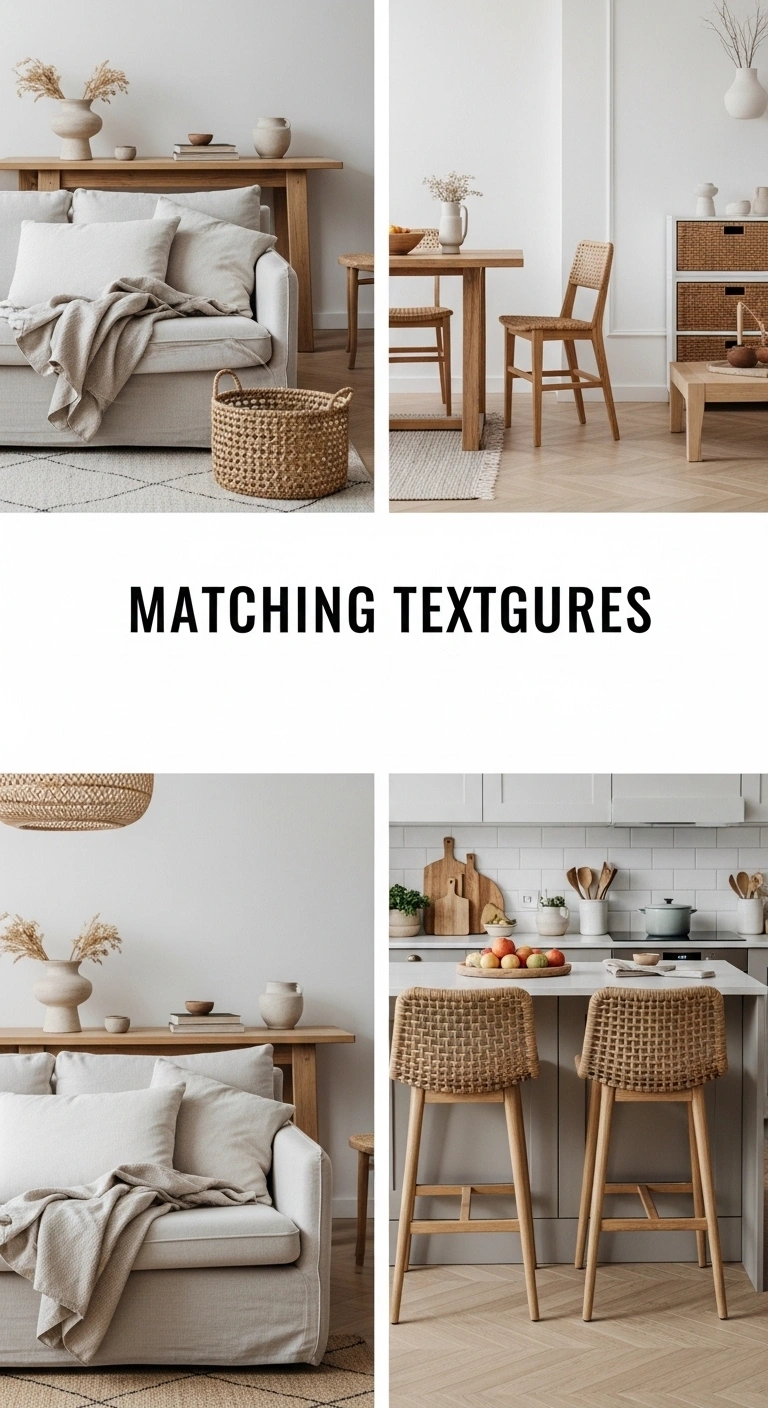
Repeat similar textures in both areas to create a smooth visual flow. For example, if you use a woven basket in the living room, add woven bar stools or placemats in the kitchen.
Mix materials like linen, wood, and soft wool to build layers without clutter. This consistency helps the space feel thoughtfully designed while still relaxed and comfortable.
10. Warm Accent Wall for Depth
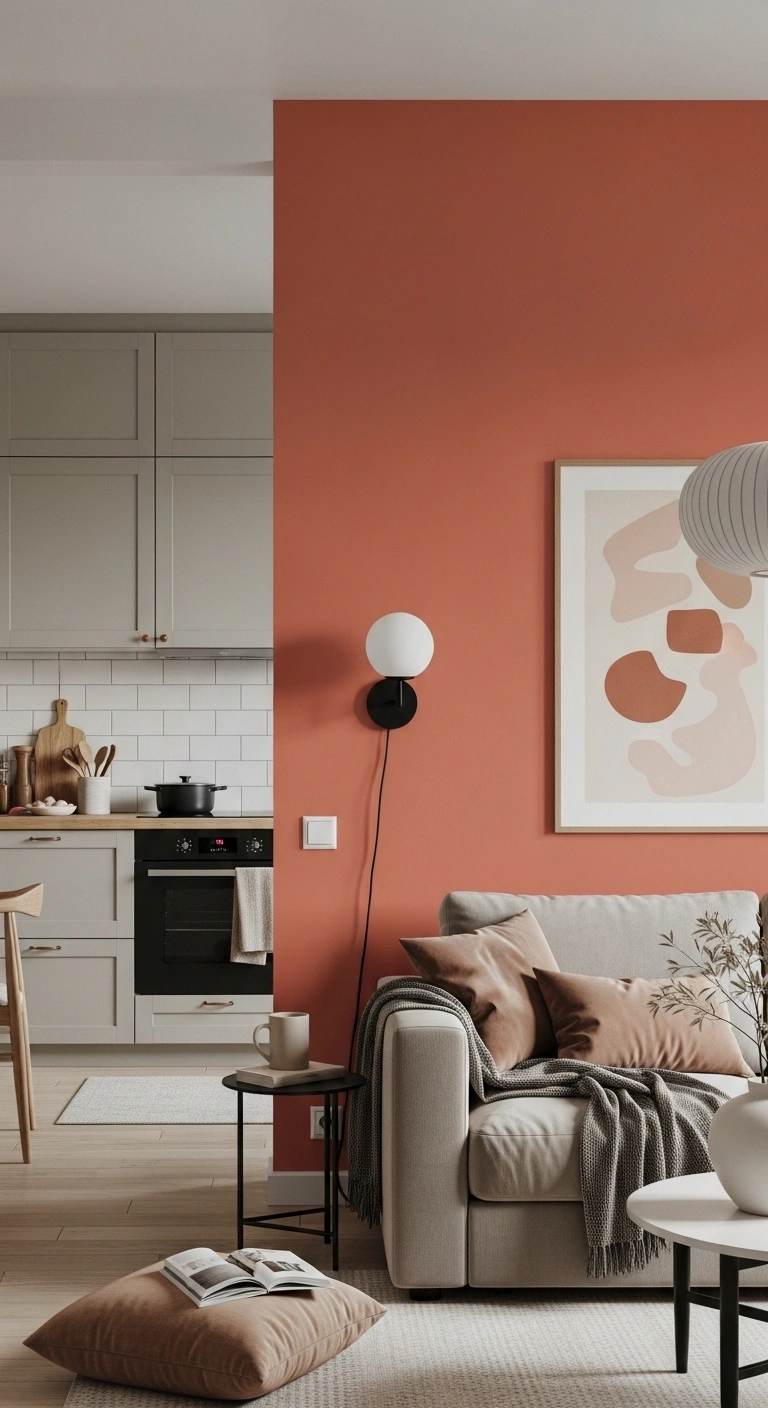
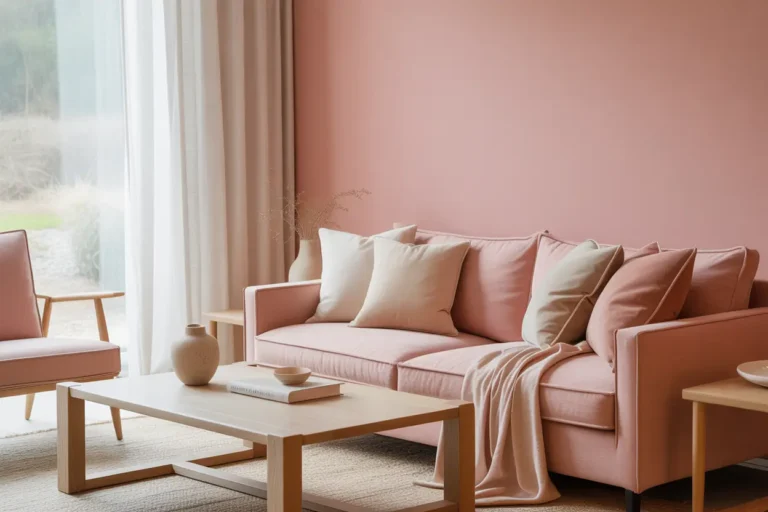
Add a warm-toned accent wall that can be seen from both the kitchen and living room. Choose colors like terracotta, muted mustard, or deep clay to bring warmth into the space.
Keep the rest of the walls light so the accent color stands out without overwhelming the room. This simple change adds depth and personality, making the entire combo area feel more intimate and cozy.
11. Built-In Bench That Connects Both Areas
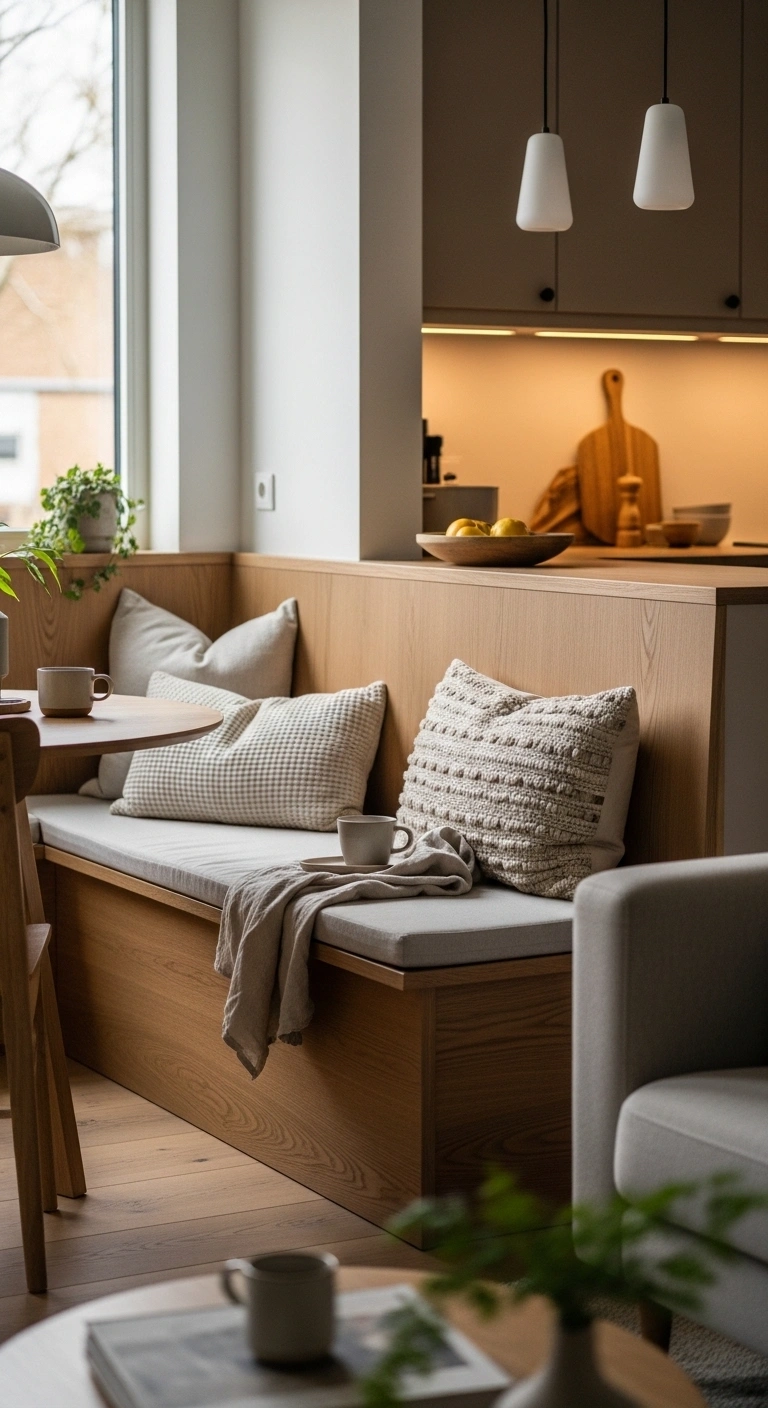
Add a built-in bench along the edge where the kitchen meets the living room to create a soft transition. Use warm wood for the base and layer it with thick cushions in neutral tones like cream or sand. This bench can act as extra dining seating or a relaxed lounge spot.
Place a small round table nearby so the space feels flexible and useful. Add textured pillows in earthy shades to tie it into the living room sofa. This idea works well for both small and large homes because it saves space while adding comfort and visual flow.
12. Layered Lighting for Day-to-Night Comfort
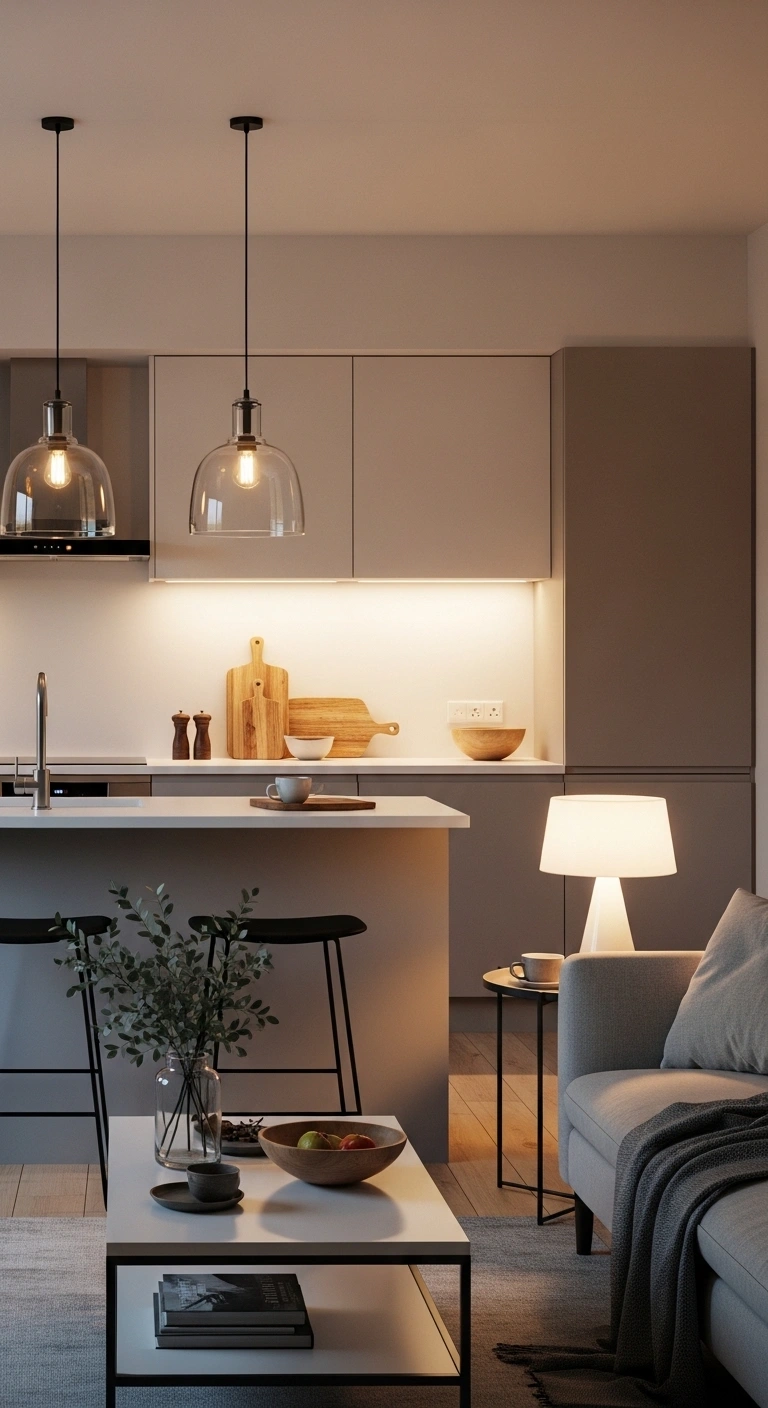
Use multiple layers of lighting to make the space feel cozy at any time of day. Combine ceiling lights, table lamps, under-cabinet lights, and even soft LED strips under shelves. Each layer should give off a warm glow.
Turn off bright overhead lights in the evening and rely on softer sources to create a calm mood. This approach helps the living room feel relaxing while the kitchen still stays functional. The mix of lighting levels adds depth and makes the space feel thoughtfully designed.
13. Curved Furniture for a Softer Layout
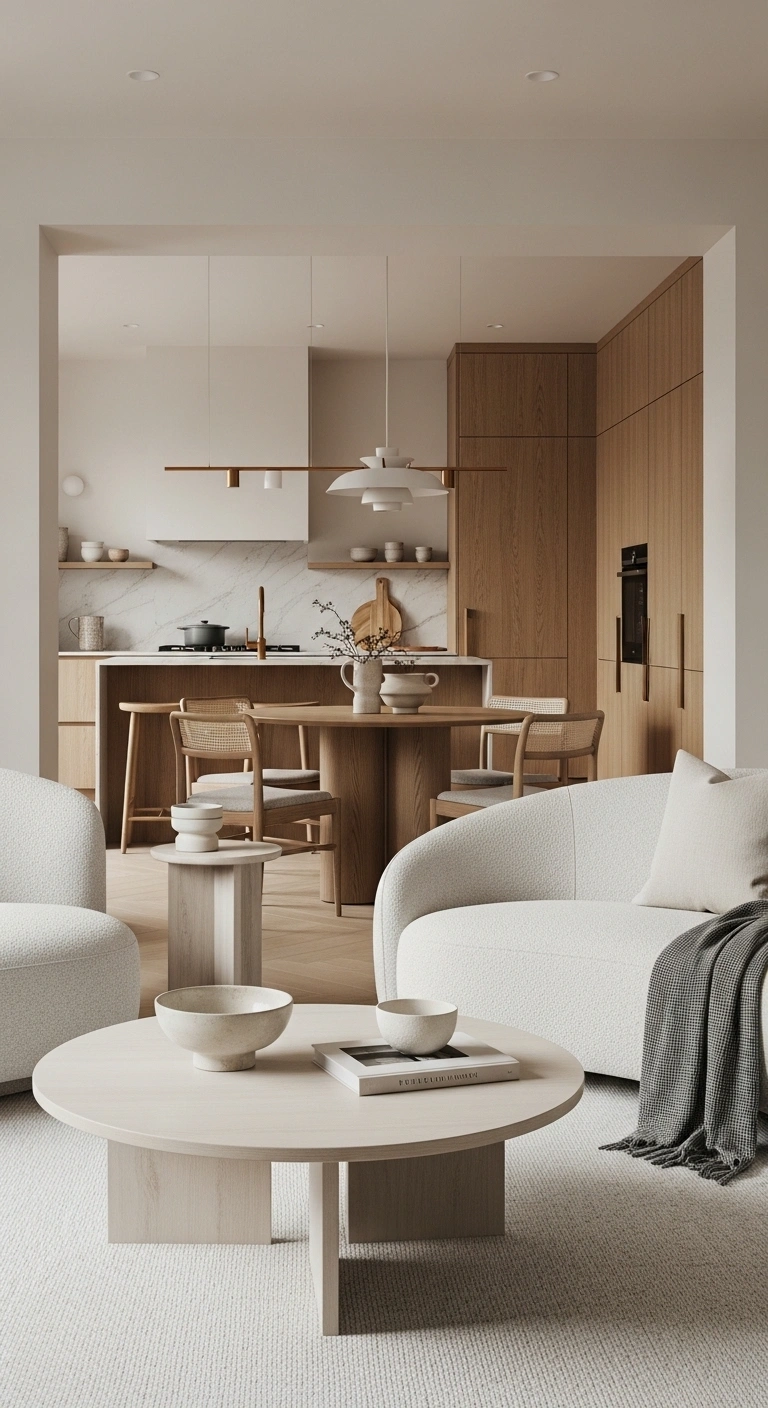
Bring in curved shapes to break the hard lines often found in kitchens. Use a rounded coffee table, curved sofa, or circular dining table to soften the overall look.
Curves make the space feel more inviting and easier to move through. Pair these shapes with soft fabrics like boucle or velvet for extra warmth. This design choice adds a subtle sense of comfort that makes the entire combo area feel more relaxed and welcoming.
14. Hidden Storage for a Clean Look

Keep the space cozy by reducing visual clutter with smart storage. Use cabinets that reach the ceiling, built-in drawers, or hidden compartments in furniture like ottomans or benches.
Store away items you don’t use daily to keep surfaces clean and calm. A clutter-free space feels more open and peaceful, which is key in a combined layout. This idea helps your home look organized while still feeling lived-in and comfortable.
15. Warm Metallic Accents
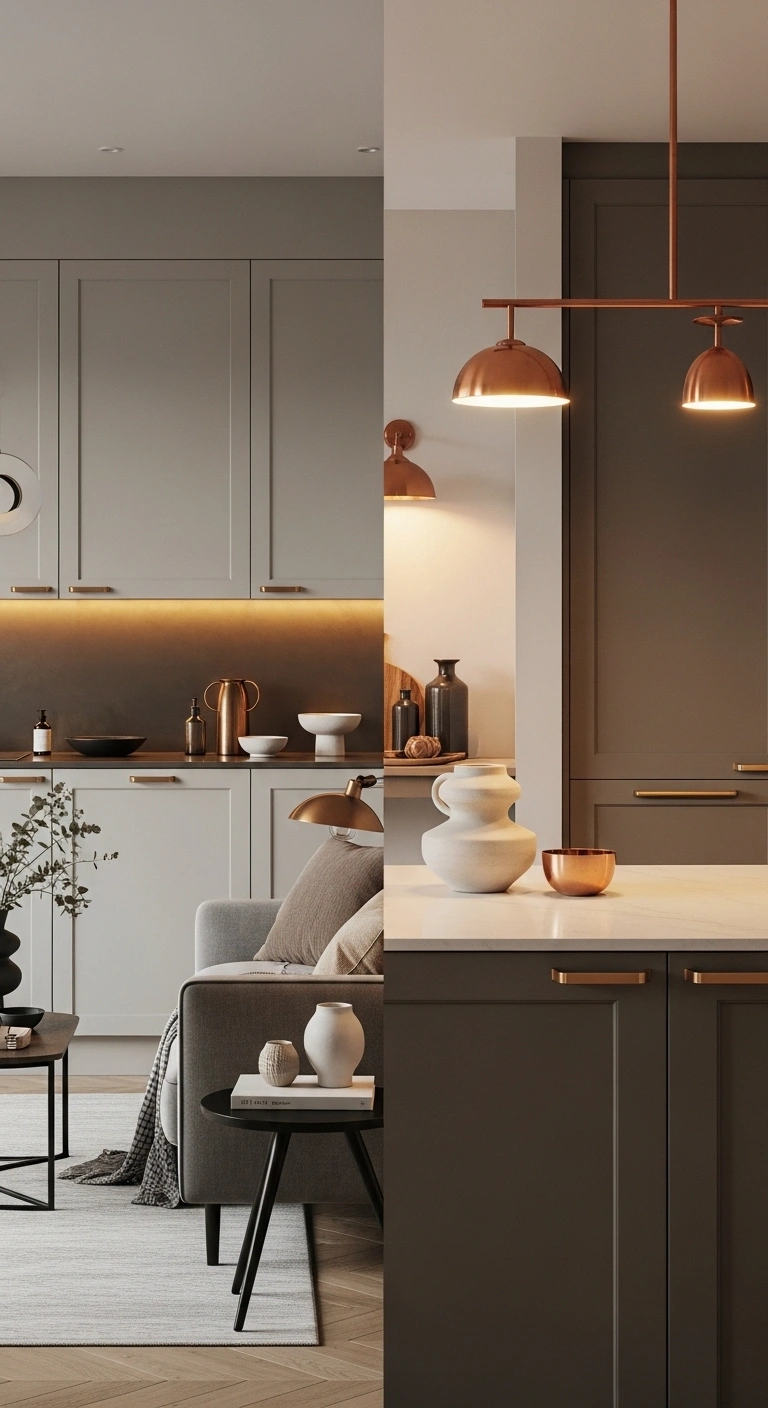
Introduce warm metallic finishes like brass, copper, or brushed gold across both spaces. Use them in kitchen handles, light fixtures, or small décor pieces like trays and vases.
Repeat the same metal tone in the living room through lamp bases or decorative objects. These accents reflect light softly and add a gentle glow that enhances the cozy feeling without being too bold or shiny.
16. Compact Dining Space with Soft Textiles
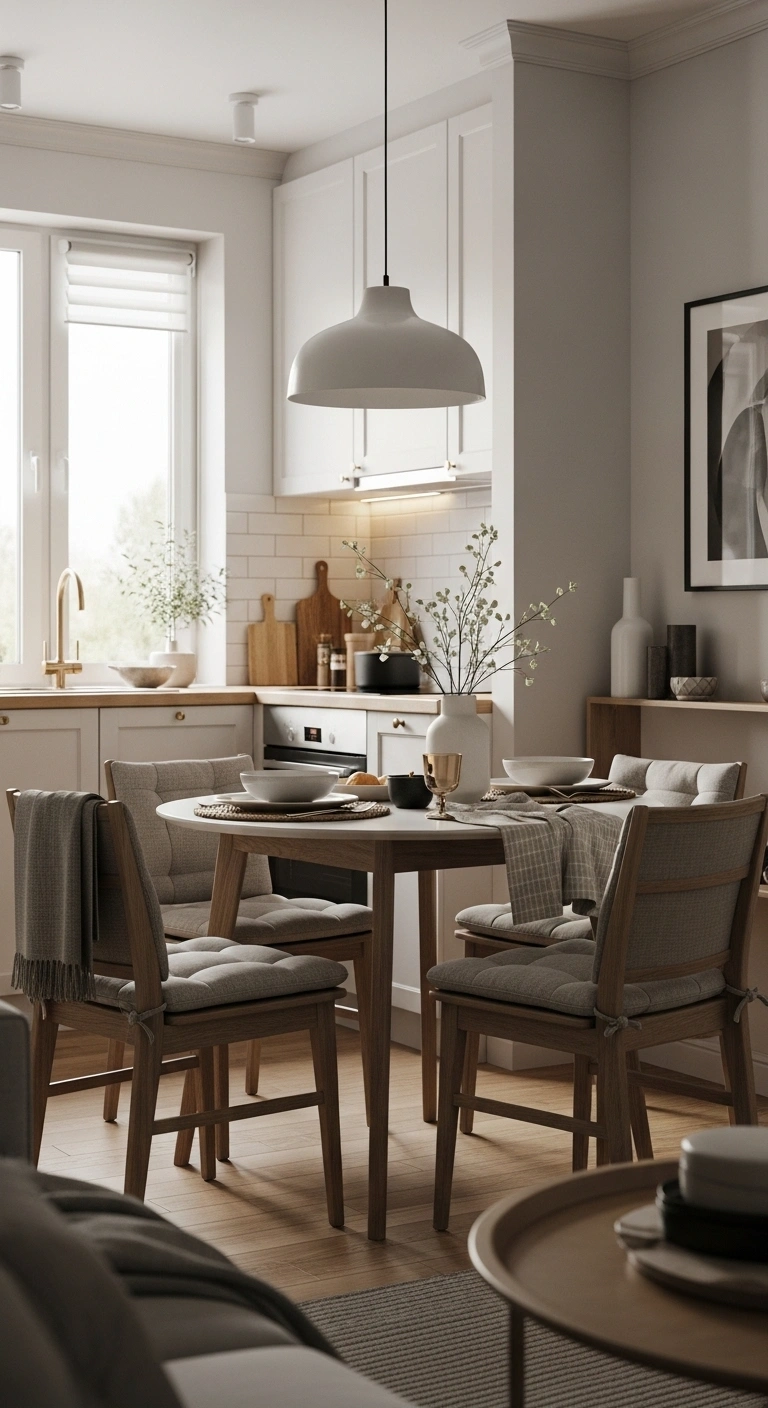
Create a small dining area between the kitchen and living room using a round or square table. Choose chairs with cushioned seats or add soft fabric covers to make them more comfortable.
Place a simple table runner or woven placemats to add texture. This setup keeps the space functional while maintaining a warm and inviting feel. It also helps define a middle zone that connects both areas naturally.
17. Floor-to-Ceiling Curtains for Softness
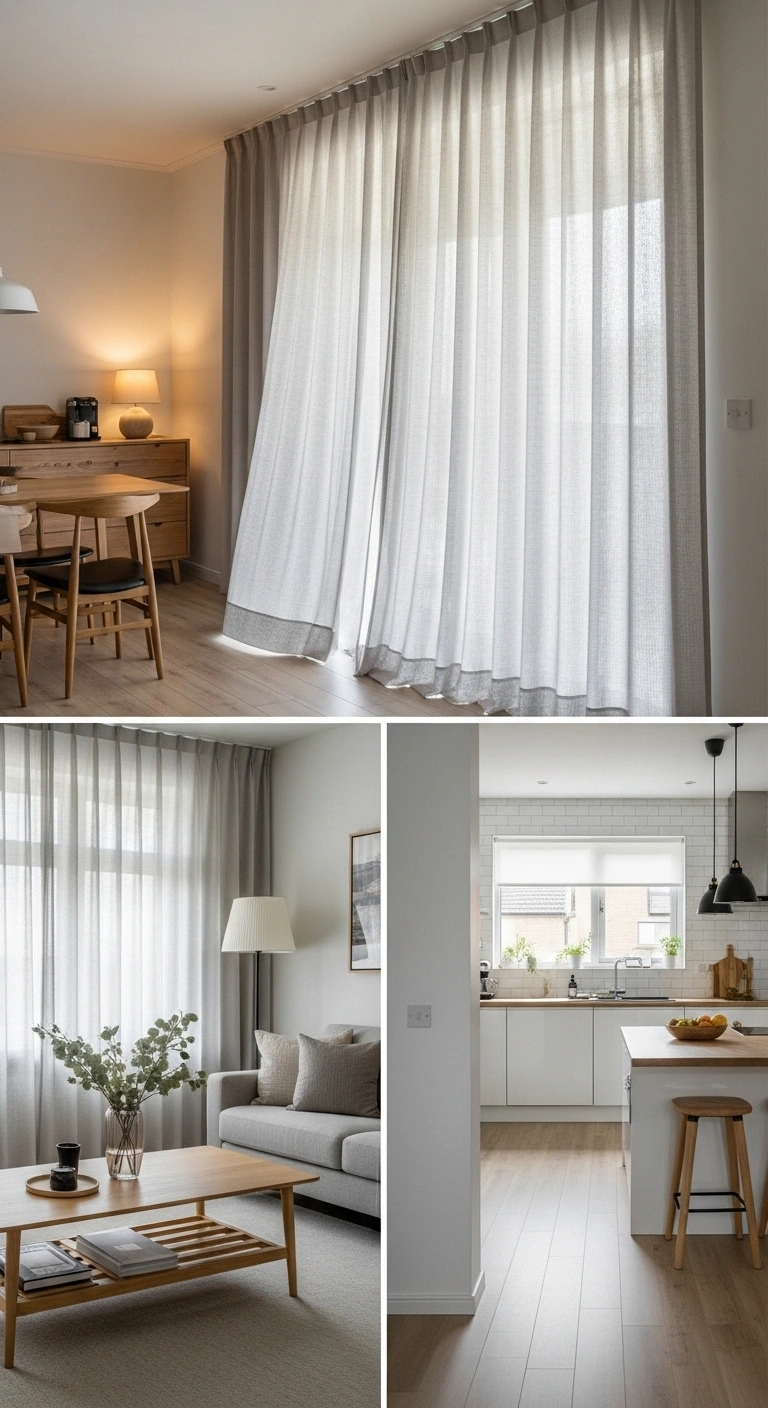
Use long, flowing curtains to add height and softness to the entire space. Choose light fabrics like linen in warm neutral tones so they gently filter natural light.
Hang the curtains high above the windows to make the room feel taller and more open. This adds a soft backdrop that blends both the kitchen and living room, making everything feel more connected and calm.
18. Cozy Fireplace as a Shared Focal Point

If possible, place a fireplace where both the kitchen and living room can see it. This creates a natural focal point that brings warmth to the entire area.
Decorate around it with simple elements like a wooden mantel, soft lighting, and a few personal items. Even a small electric fireplace can add a strong cozy effect. It becomes a central feature that draws people together.
19. Soft Color Blocking for Gentle Division
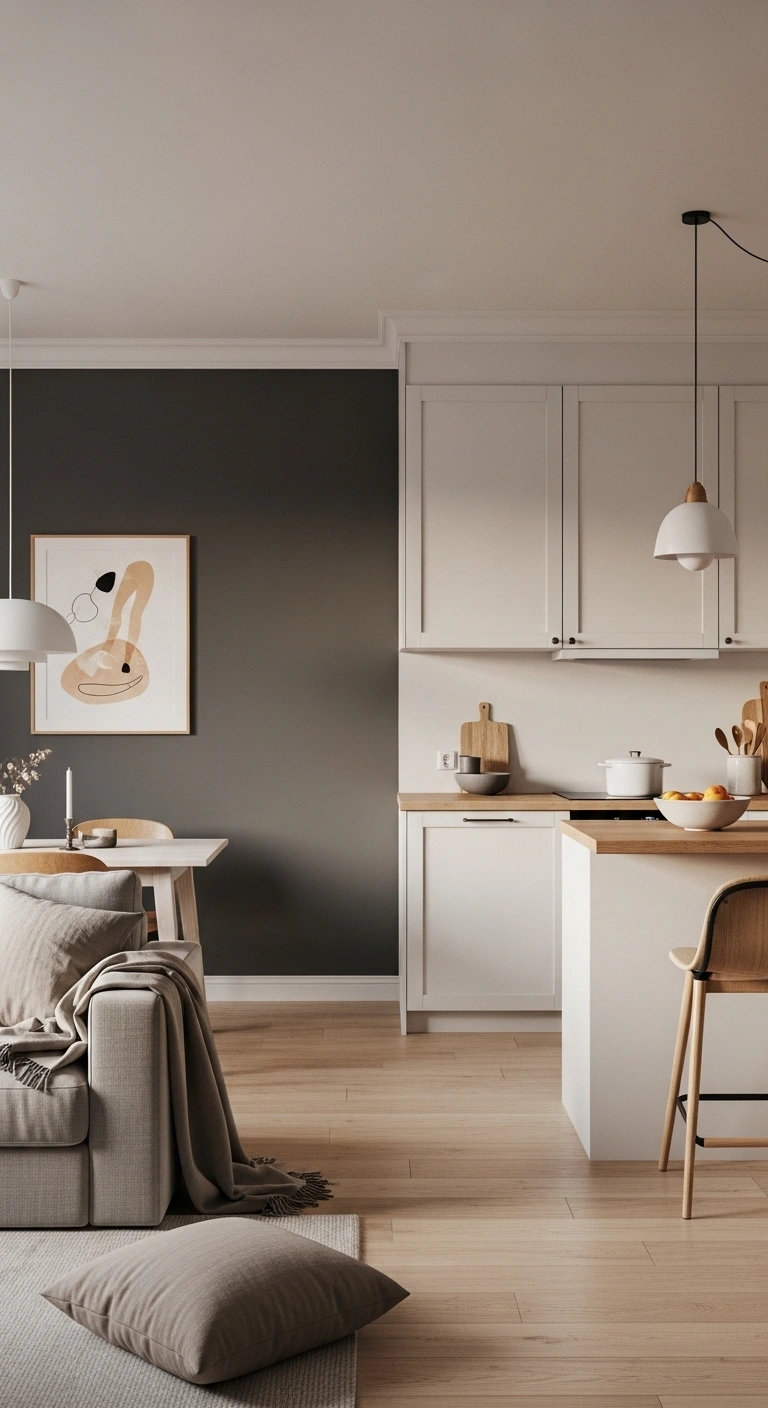
Use soft color blocking to separate spaces without harsh lines. Paint one wall in a slightly darker shade or use a subtle wallpaper pattern behind the living room area.
Keep the kitchen side lighter to maintain brightness. This gentle contrast helps define each space while still keeping the overall look cohesive. It’s a simple way to add interest without breaking the open feel.
20. Mixed Materials for Visual Interest
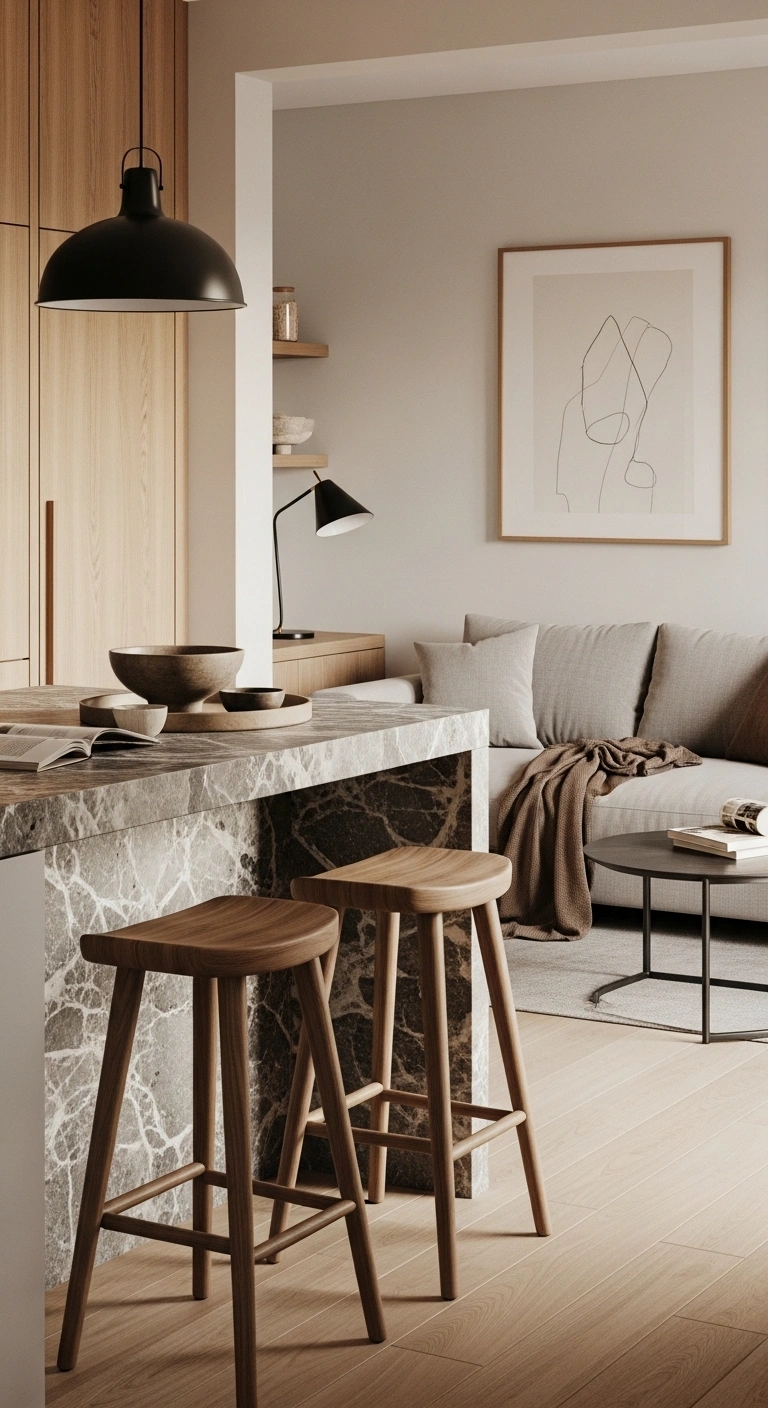
Combine different materials to make the space feel rich and layered. Pair smooth surfaces like marble or glass with rougher textures like wood or woven fabrics.
For example, use a stone countertop with wooden bar stools and a soft fabric sofa nearby. This mix keeps the eye moving and makes the space feel dynamic without being overwhelming. It adds depth while still keeping a cozy balance.
21. Personal Touches That Tell a Story
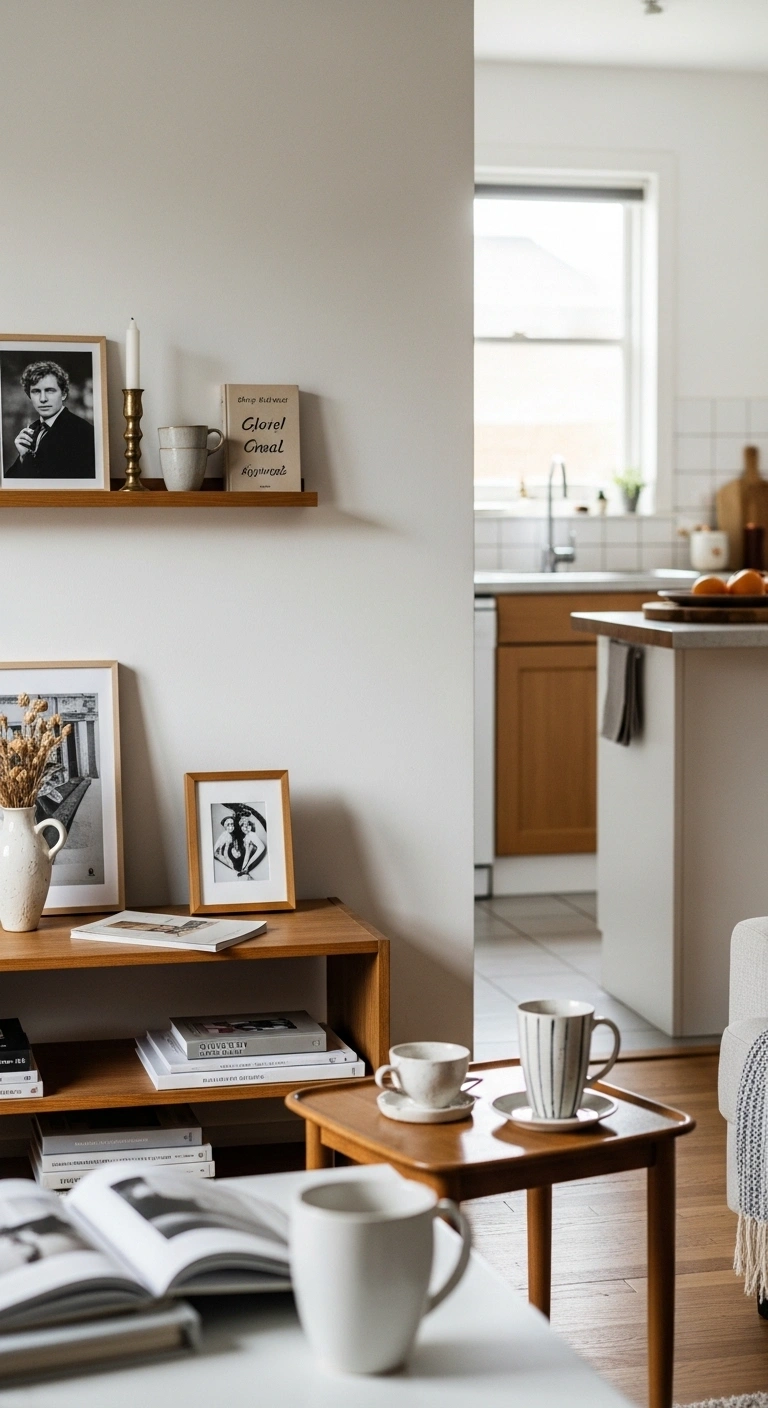
Add personal items that reflect your life and style. Display cookbooks, framed photos, or handmade pottery on shelves or tables.
Keep the color palette consistent so these items blend into the overall design. These small details make the space feel warm and lived-in, turning it from a styled room into a true home.
22. Scent and Sound for a Full Cozy Experience
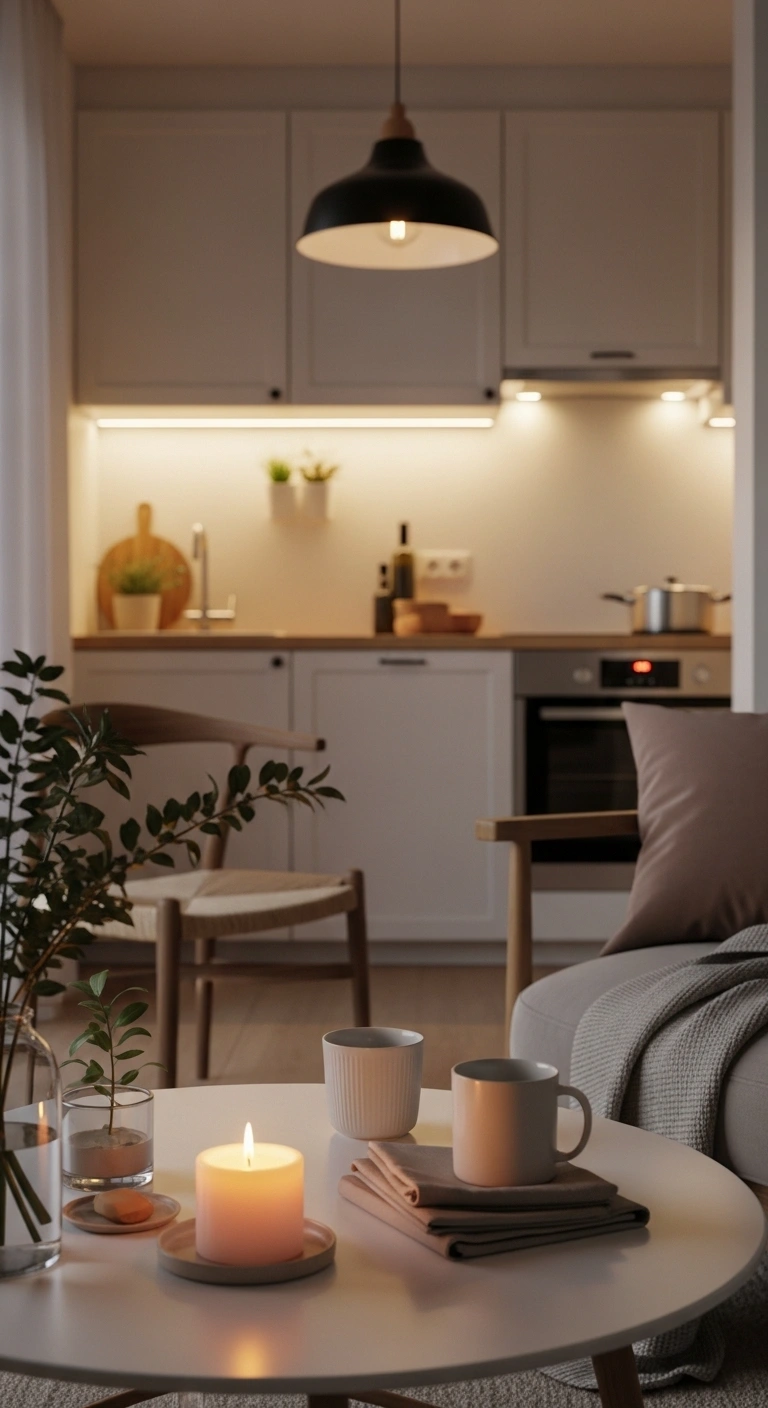
Create a cozy feeling beyond just visuals by adding soft scents and gentle sounds. Use candles, diffusers, or fresh herbs in the kitchen to bring natural fragrance into the space.
Play soft background music or let natural sounds like a simmering pot or a crackling fire fill the room. These sensory details make the space feel complete and comforting in a way that design alone cannot achieve.
Conclusion
Designing a cozy living room and kitchen combo is all about balance, warmth, and thoughtful details. Small choices like soft lighting, layered textures, and natural materials can completely change how the space feels. When both areas connect visually and function smoothly, your home becomes more inviting and easy to enjoy every day.
You don’t need a full renovation to make these ideas work. Start with one or two changes, like adding a warm rug or adjusting your lighting. Then build from there as you find what feels right for your space. Save your favorite ideas, try them step by step, and create a home that feels truly comfortable and connected.