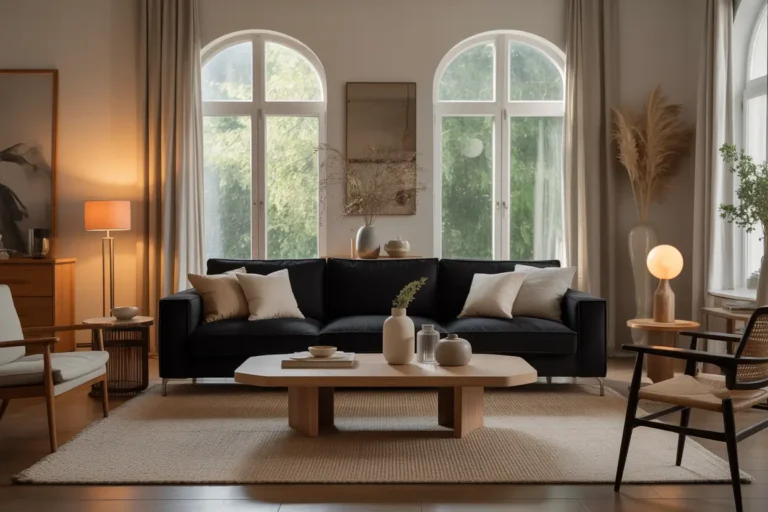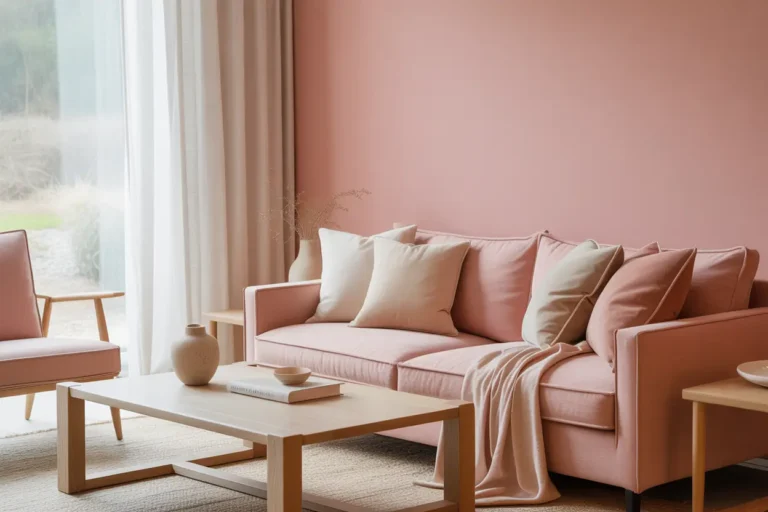
20 Tiny Living Room Ideas That Make Your Space Feel Bigger and Brighter

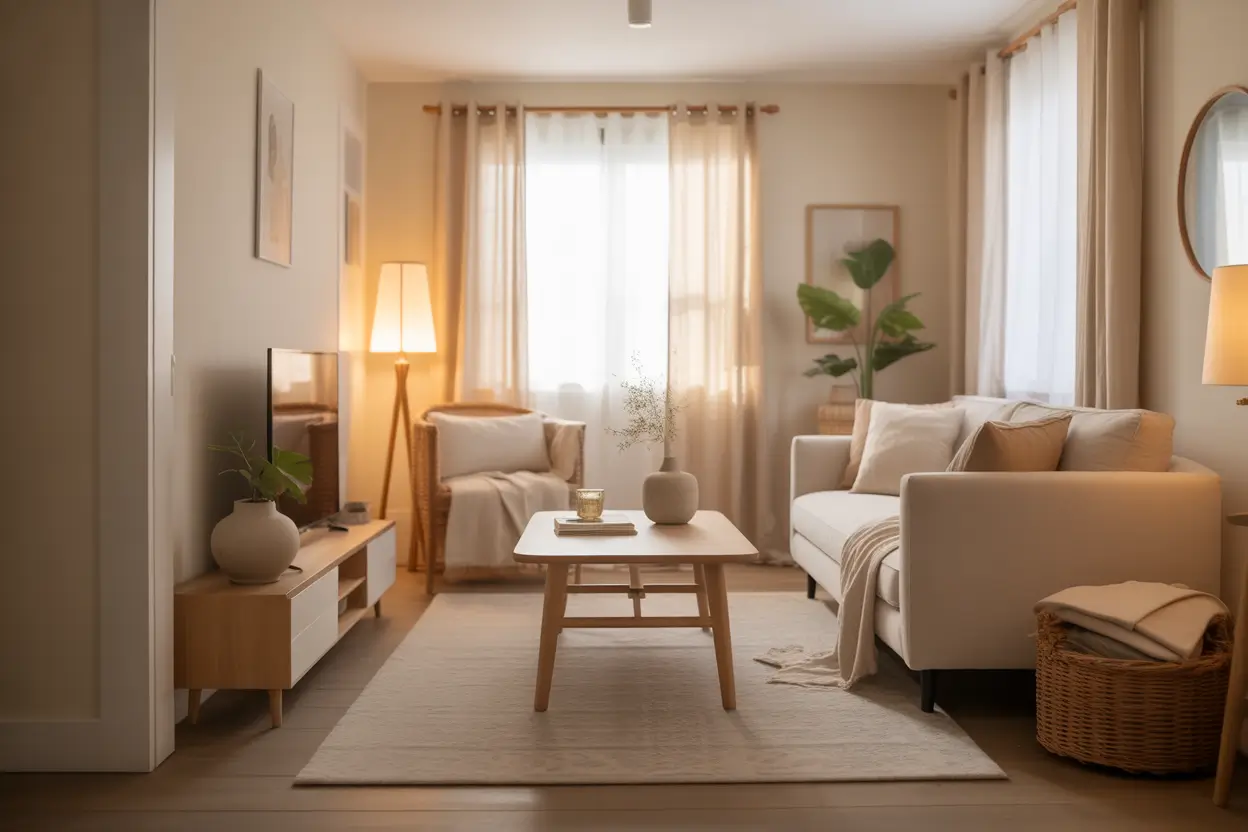
A tiny living room does not necessarily need less furniture. It needs furniture with the right scale, enough room to move around it, and a layout that keeps important sightlines open.
Before buying smaller versions of everything, look at what is actually making the room feel tight. An overly deep sofa may take up more useful space than a wide one. A rug that is too small can visually break up the floor. Heavy curtains can reduce daylight, while several small storage pieces can create more visual clutter than one well-planned cabinet.
The ideas below focus on practical ways to improve layout, furniture scale, light, storage, and visual flow so your living room feels more comfortable without sacrificing the things you actually use.
Start With the Problem, Not the Decor
| If your living room… | Try this first |
|---|---|
| Feels crowded | Reduce furniture depth and unnecessary pieces |
| Feels dark | Clear the windows and add lighting at different heights |
| Feels visually cluttered | Prioritize closed or hidden storage |
| Has a low-looking ceiling | Hang curtains higher and emphasize vertical lines selectively |
| Feels chopped into pieces | Use a larger rug and a more consistent palette |
| Has poor traffic flow | Simplify the route between doors and seating |
| Has little table space | Try a C-table, nesting table, or wall-mounted surface |
| Feels furniture-heavy | Choose pieces with visible legs or lighter visual profiles |
1. Use Soft Layered Neutrals Instead of Plain White
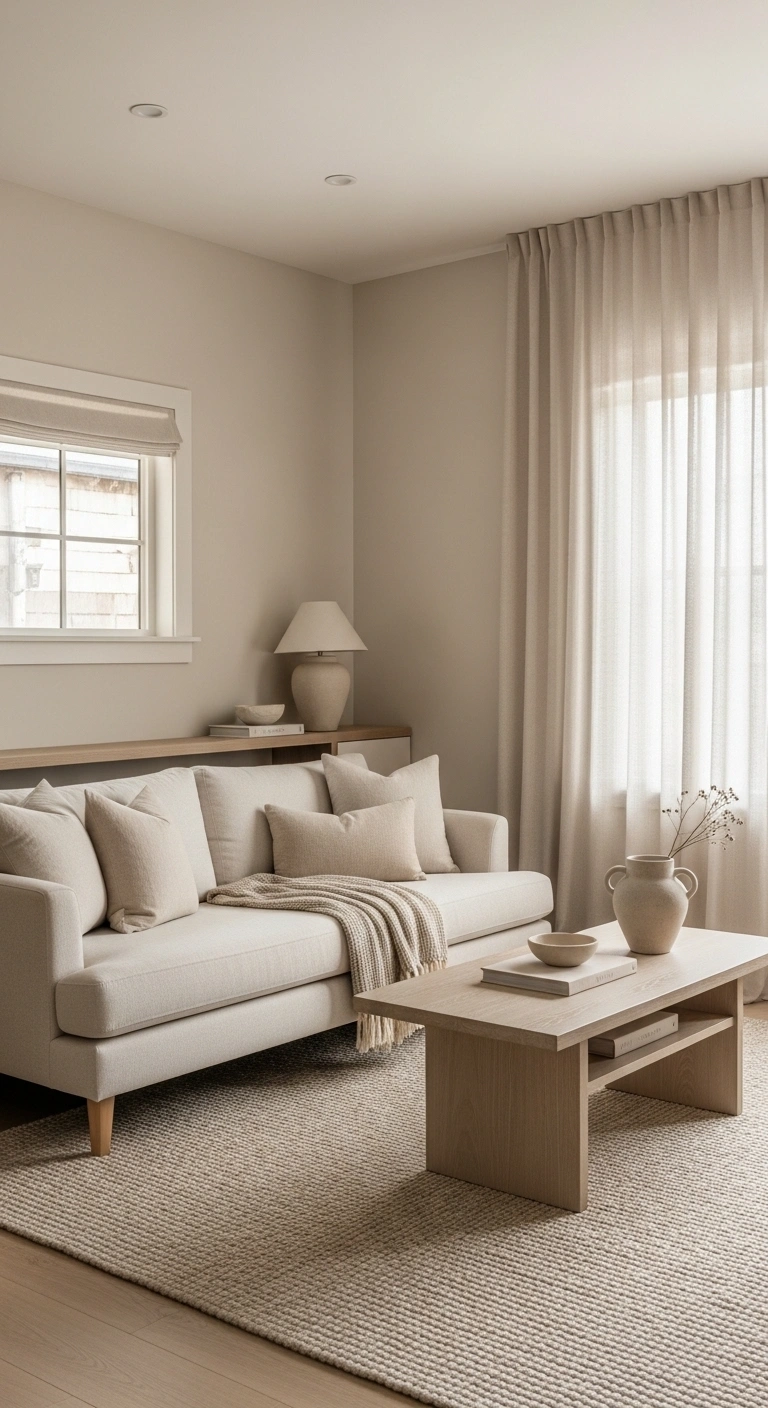
White can brighten a small living room, but covering every surface in stark white does not automatically make the room feel larger. In some spaces, it can emphasize shadows and make the room feel flat.
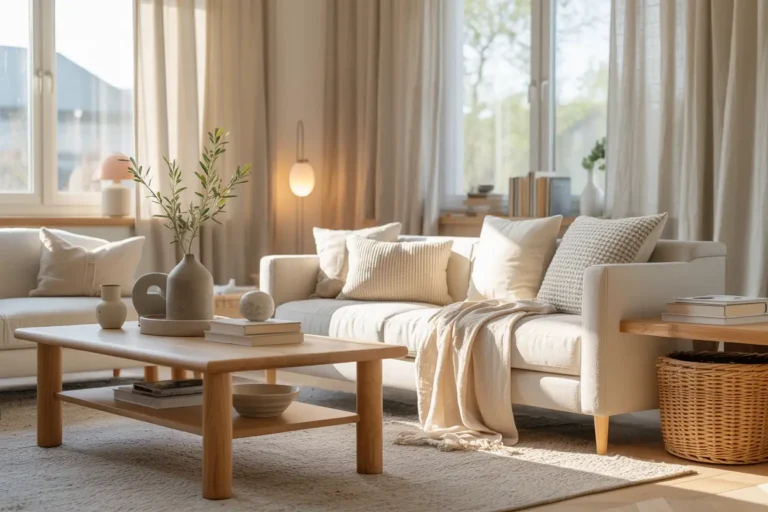
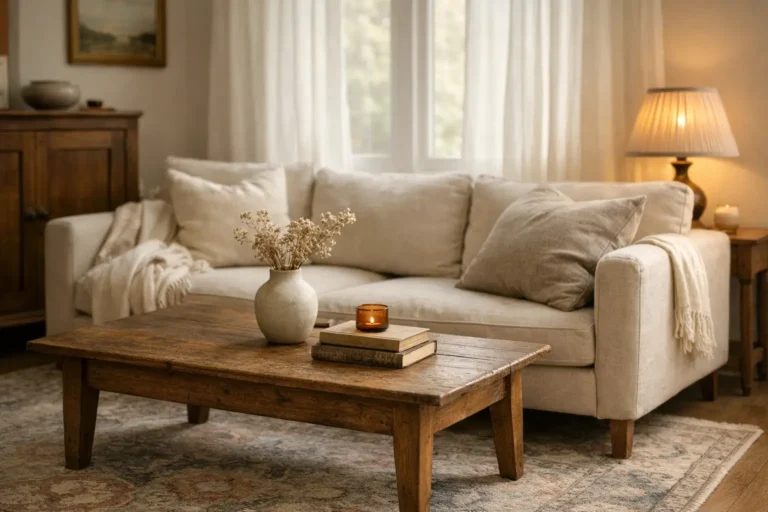
A softer approach is to keep the largest surfaces within a related light palette. Warm white walls might sit alongside an oatmeal sofa, pale oak furniture, and a light beige rug. The small changes in tone create depth without visually breaking the room into separate blocks.
If your room receives little daylight, pay particular attention to undertones. A cool gray-white can appear dull in weak or cool light, while a warmer off-white, cream, or pale beige may feel more inviting. You don’t have to avoid dark colors completely. A small amount of contrast through artwork, a lamp, or one furniture piece can give the room definition without dominating it.
Works especially well for: rooms with limited daylight or several large upholstered pieces.
2. Don’t Automatically Push Every Piece Against the Wall
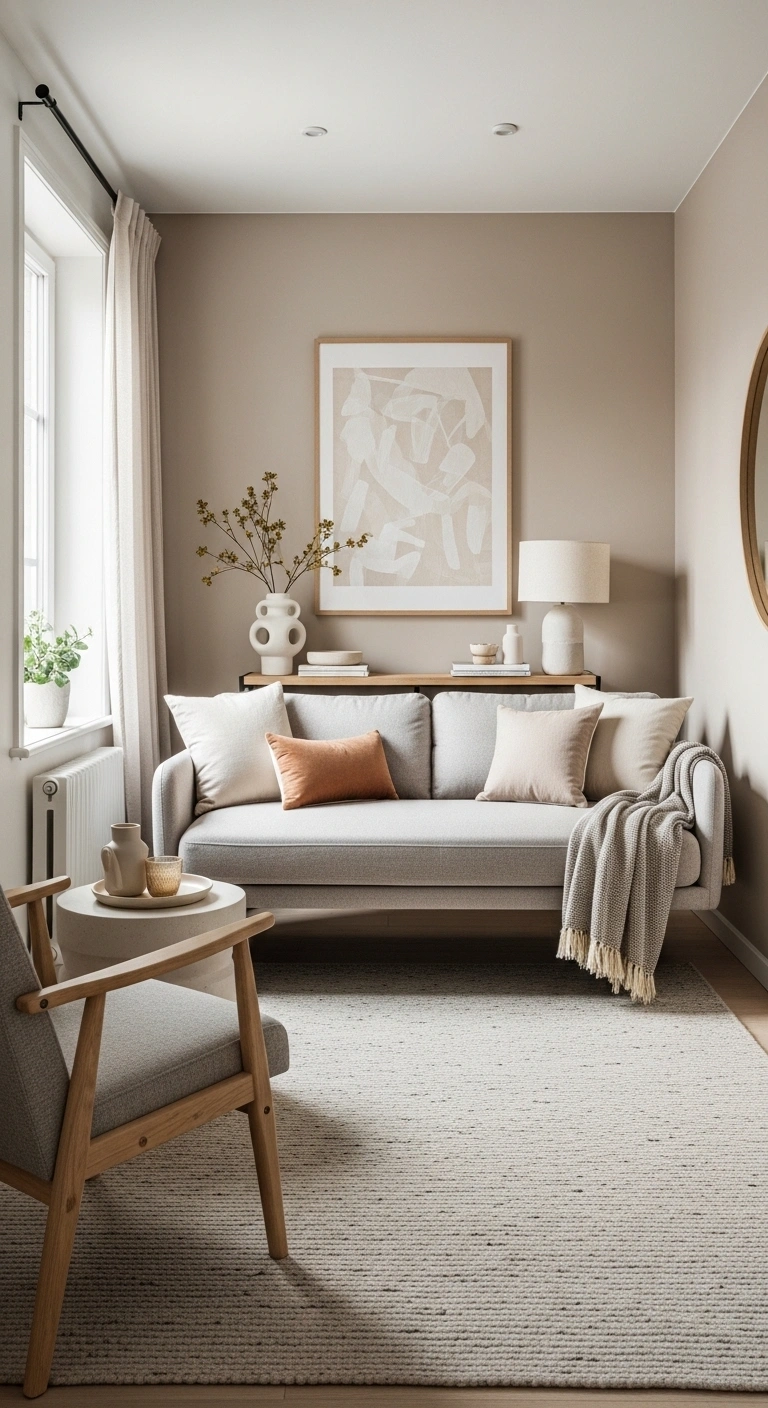
Pushing every piece of furniture against the walls can make a small living room feel rigid, but floating everything is not the answer either. Start with the largest piece, usually the sofa, and position it where it leaves the clearest path through the room. In a very compact space, keeping the sofa against a wall may actually give you more usable floor area. If you have a little extra room, pulling it forward by a few inches can create separation and make the layout feel less boxed in.
Avoid adding a console behind the sofa unless there is enough space to keep the main walkway comfortable. In a tiny room, those extra inches are often more useful as open floor space.
One thing I like adding behind a floating sofa is a slim console table. It gives you a spot for a lamp or small decor without making the room feel crowded. Keeping the surface simple helps define the seating area while maintaining an open and airy layout.
3. Hang Curtains to Make the Window Feel Larger
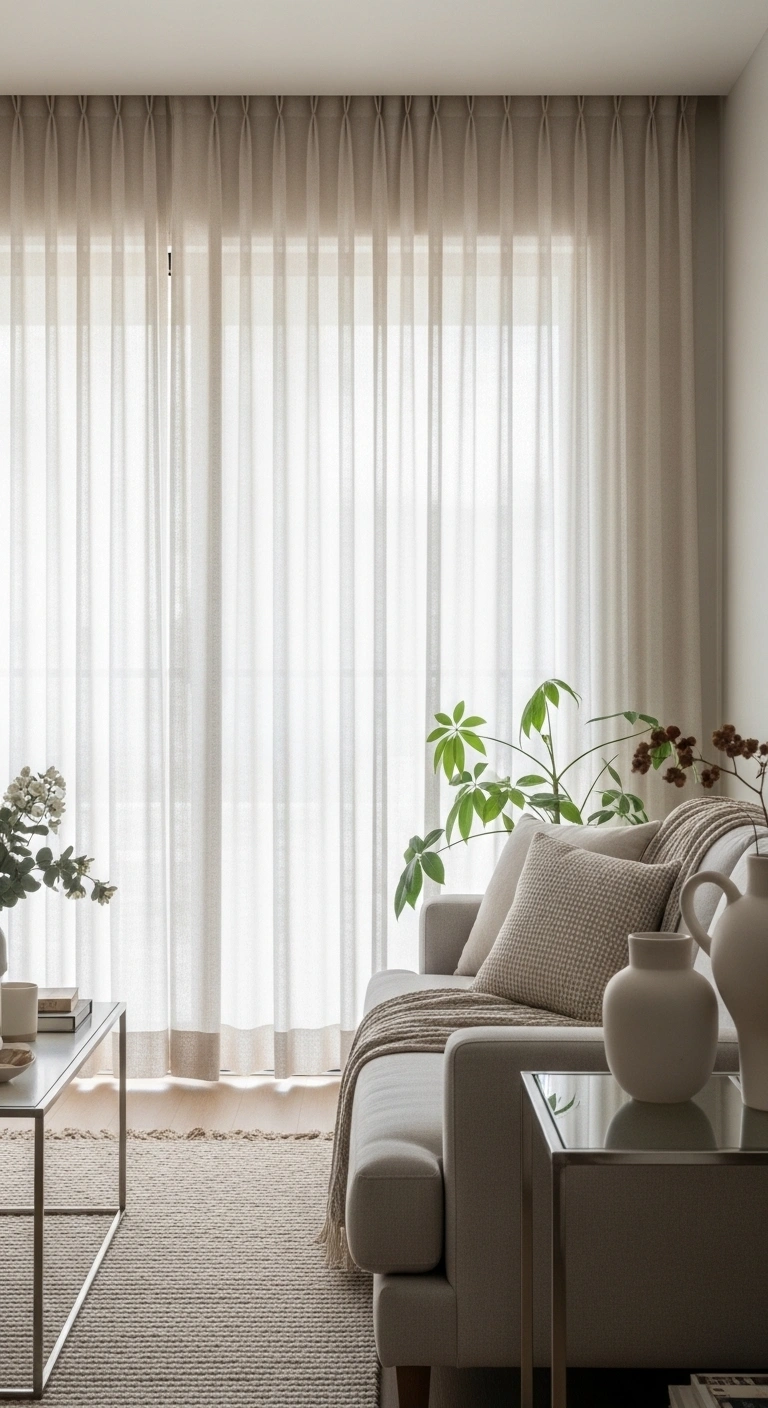
Curtain placement can change how large both the window and the wall appear. Mount the rod above the window frame when ceiling height allows, and extend it slightly beyond each side of the window.
This lets open curtain panels sit beside the glass instead of covering it, allowing more daylight into the room. Floor-length curtains also create a longer vertical line that can make the ceiling feel higher. Choose sheer or lightweight fabrics when privacy allows. If you need more coverage, pair light curtains with a blind or shade rather than using bulky panels that block much of the window. Keeping the curtains close to the wall color can create an even more continuous look.
Avoid: short curtains or thick panels that cover a large part of the glass even when fully open.
4. Use One Statement Piece Instead of Many Small Items
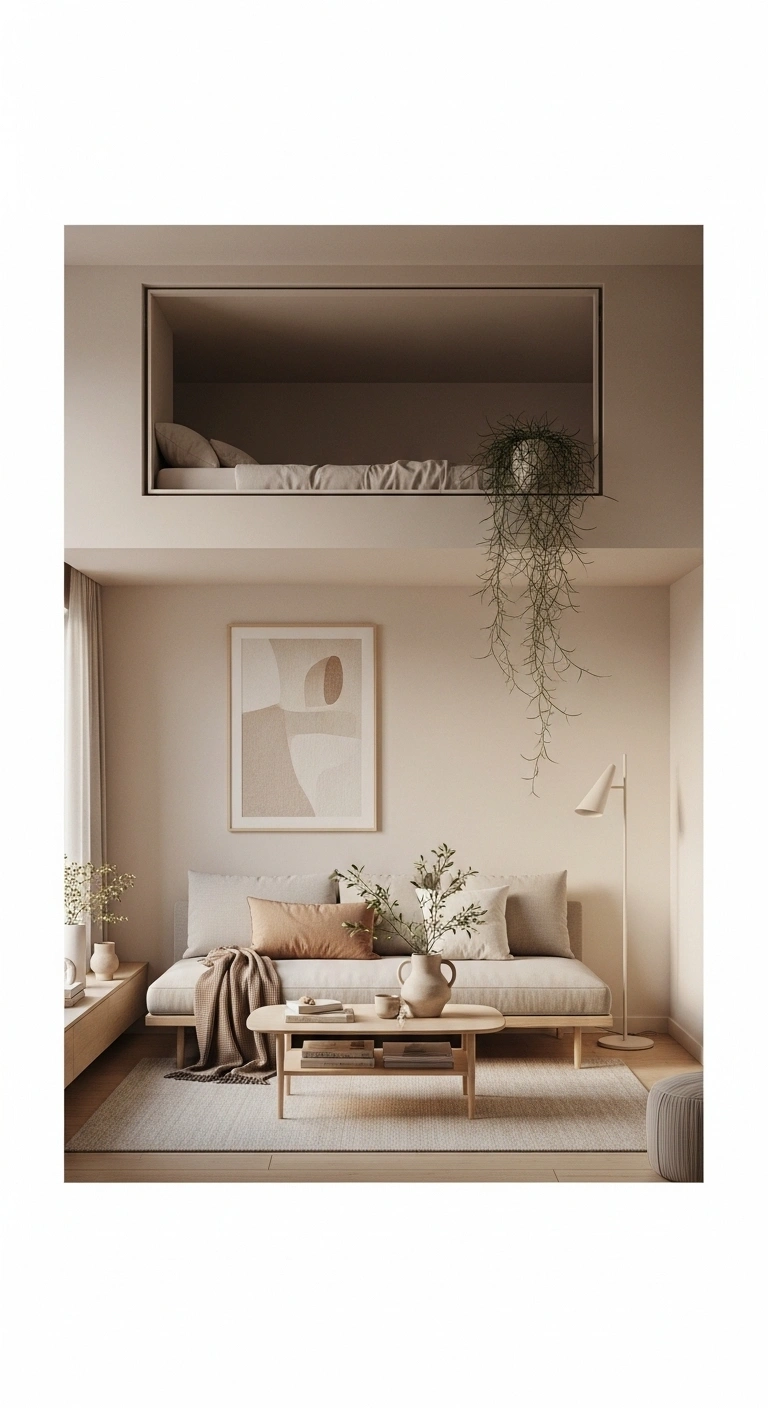
A tiny living room can actually feel more crowded when everything in it is small. Several little frames, side tables, baskets, and decorative objects create lots of separate visual points, making the room harder for the eye to process.
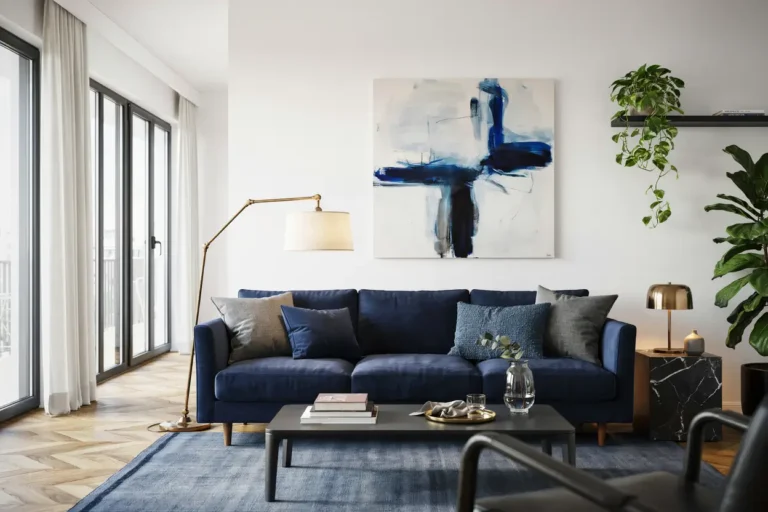
Instead, choose one or two larger pieces that give the room a clear focal point. A single piece of artwork above the sofa, a sculptural coffee table, or one substantial floor lamp can have more impact without filling every available surface.
Scale still matters. Artwork above a sofa should feel connected to the furniture below it rather than looking like a small object floating on a large wall. As a starting point, artwork around two-thirds the width of the sofa often creates balanced proportions.
You do not need to remove all smaller decor. Keep a few pieces you genuinely like and leave some empty space around them.
5. Add a Mirror Opposite a Light Source
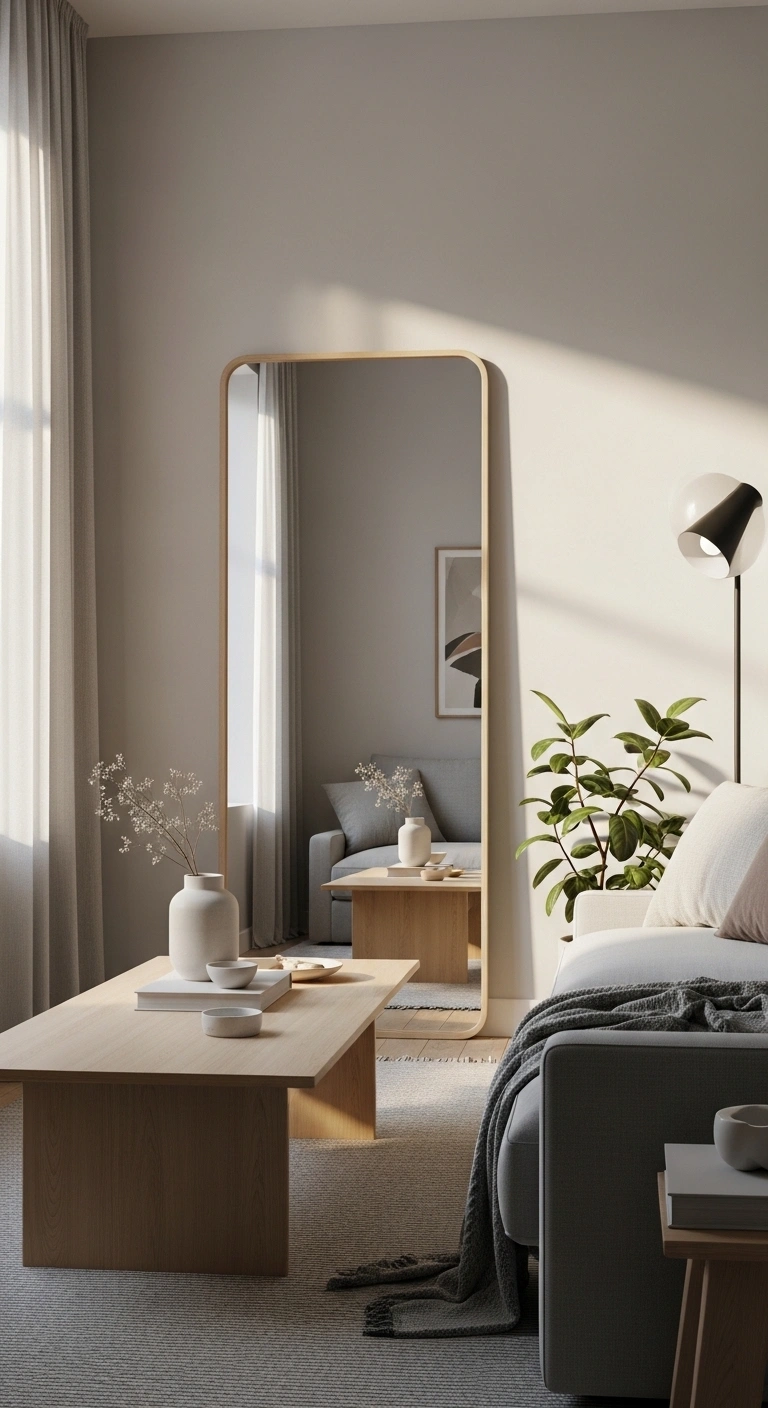
A mirror can make a tiny living room feel brighter and more open, but placement matters more than simply adding one to an empty wall.
Look at what the mirror will reflect before hanging it. Positioning it opposite or at an angle to a window can help carry daylight deeper into the room. If that is not possible, place it where it reflects an open doorway, a light-colored wall, or another attractive part of the room. For a larger blank wall, one substantial mirror often looks cleaner than a collection of small decorative mirrors. A slim frame also keeps the piece from adding unnecessary visual weight.
Be careful with placement around televisions, cluttered shelving, or busy entryways. A mirror doubles whatever appears in it, so an untidy reflection can make the room feel busier rather than larger.
Best for: dark corners, rooms with one main window, and narrow living spaces.
Avoid: hanging a mirror before checking the reflection from your normal seating position.
6. Use Low-Profile Furniture to Open Up Vertical Space
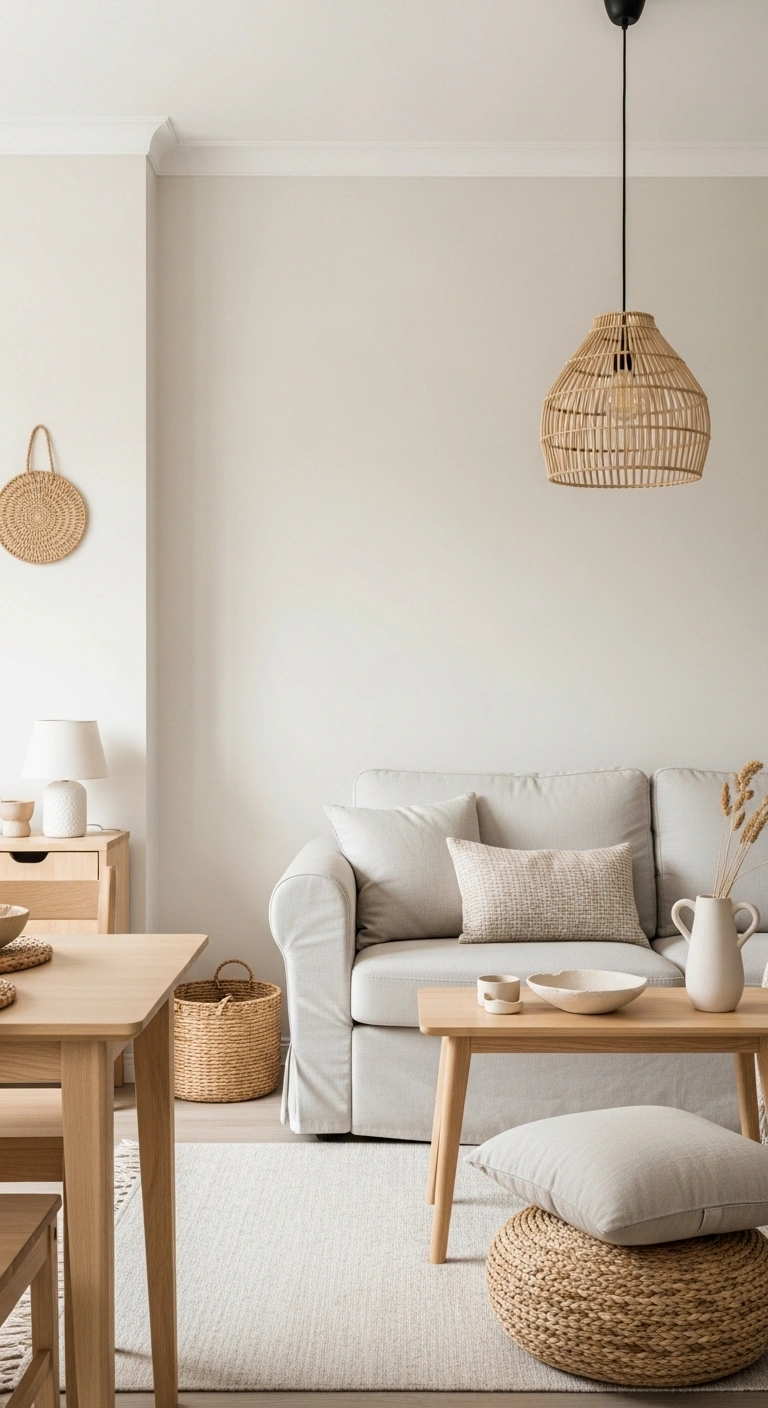
Furniture does not have to be tiny to work in a tiny living room. What matters is how much physical and visual space each piece occupies. A sofa with narrow arms and visible legs can look lighter than a sofa of similar width with thick arms, a high back, and a base that reaches all the way to the floor. The extra visible floor underneath furniture helps maintain a more open sightline.
Pay attention to depth as well as width. An extra-deep sofa can extend far into the center of a narrow room and leave too little space for a coffee table or comfortable walkway. When comparing furniture, look at:
- overall depth;
- arm width;
- back height;
- leg visibility;
- space underneath;
- cushion bulk.
Low-profile furniture can also leave more visible wall above it, but don’t make every piece low. One taller lamp, plant, or shelving unit can provide enough vertical contrast to keep the room balanced.
7. Keep a Clear Color Flow Across the Room
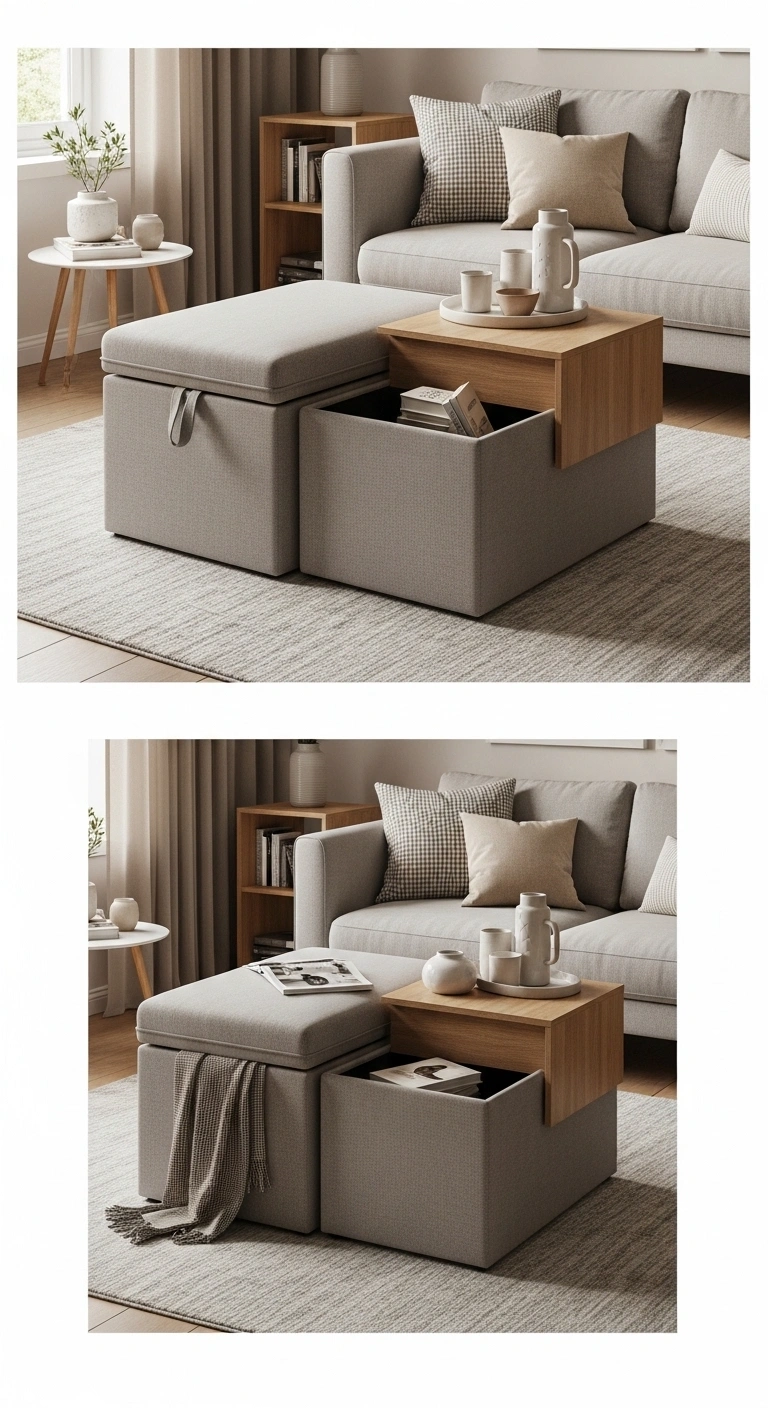
Too many strong color changes can visually divide a tiny living room into smaller sections. A more connected palette allows the eye to move across the room with fewer interruptions. Start with the largest surfaces: walls, sofa, curtains, and rug. They do not need to match, but keeping them within related tones can create a calmer backdrop.
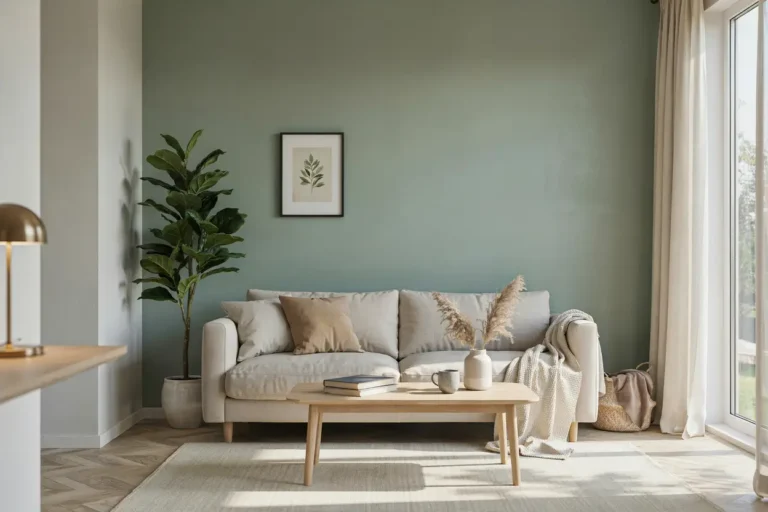
For example, warm white walls can work with an oatmeal sofa, pale beige rug, and natural oak. A pale greige room could use soft gray upholstery, light wood, and muted blue accents. Then use smaller objects such as cushions, artwork, ceramics, and throws to introduce stronger colors. Texture is particularly useful here. Linen, wool, woven fibers, wood grain, and smooth ceramics can create variation even when their colors are similar.
Best for: open-plan apartments and rooms containing several necessary furniture pieces.
8. Use Multi-Functional Furniture with Hidden Storage
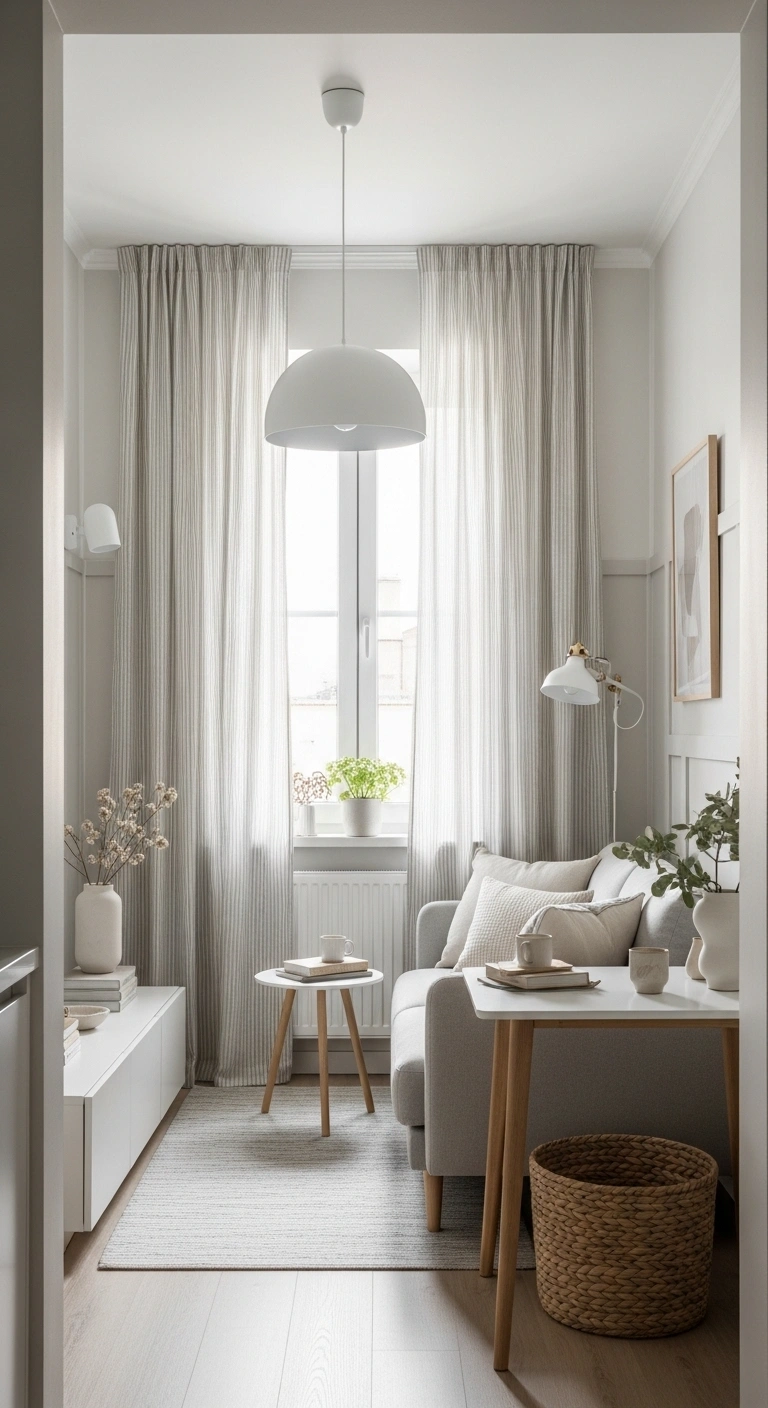
Visible clutter takes up no additional square footage, but it can make a tiny room feel much busier. Start by identifying what regularly ends up on the sofa, coffee table, or floor. Blankets may need an ottoman with internal storage. Remotes and chargers may only need a coffee-table drawer. Games and children’s items may be easier to manage inside a closed media cabinet.
This works better than buying generic storage baskets and then deciding what to put in them. Multi-purpose furniture can also reduce the total number of pieces in the room. A storage ottoman can work as a footrest, occasional seat, and hidden storage. Nesting tables provide extra surfaces when needed but occupy a smaller footprint when stacked.
Best for: family living rooms and spaces that also serve as work or play areas.
9. Introduce Subtle Vertical Patterns

When floor space is limited, use the walls strategically. A tall narrow bookcase can provide useful storage without requiring a wide footprint. Floating shelves can hold a small collection of books or decor while leaving the floor underneath visible. Wall-mounted lighting can eliminate the need for another side table.
But vertical storage should not mean covering every wall. Leave some empty wall space around shelves, artwork, and taller furniture. This gives individual elements room to breathe and prevents the upper half of the room from becoming visually crowded. You can also use one strong vertical feature—a tall plant, narrow shelving unit, long curtains, or vertically oriented artwork—to draw attention upward.
Best for: rooms with limited floor storage but usable wall height.
10. Let Natural Light Stay Unblocked
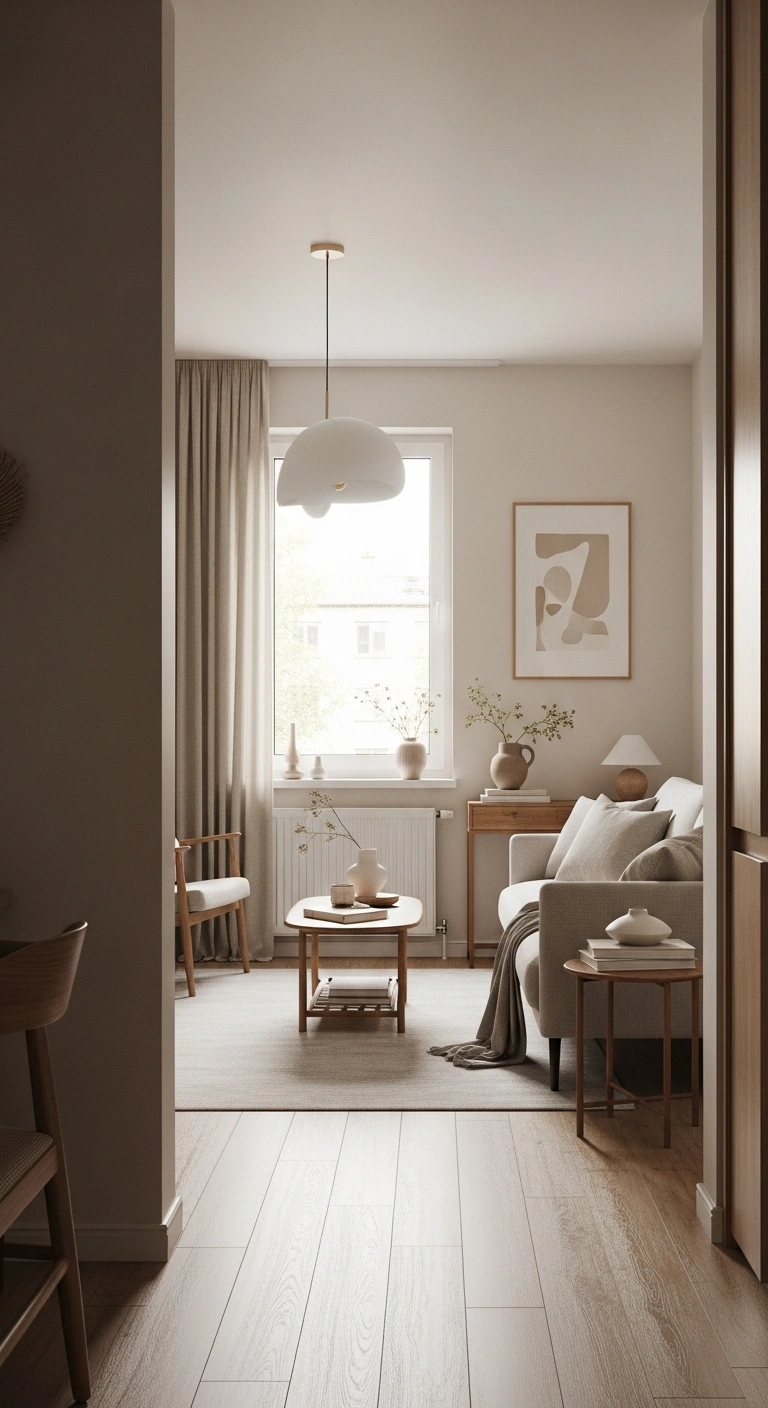
A bright window cannot do much for the room if a large sofa, cabinet, or heavy window treatment blocks most of its light. Keep the area immediately around your main window relatively open. If furniture needs to sit beneath it, choose a piece low enough that it does not cover a significant portion of the glass.
Also consider where daylight travels after entering the room. Tall furniture placed immediately beside a window can create deeper shadows, while lighter and lower pieces allow light to spread more freely. For privacy, blinds, shades, or sheer curtains can provide coverage without permanently blocking daylight. A mirror or light-colored surface across from the window can help distribute that light farther into the room.
Best for: apartments with only one living-room window or rooms that feel noticeably darker away from the window.
11. Use Glass and Acrylic Pieces to Reduce Visual Weight

Furniture feels lighter when you can see some of the room through or underneath it. A glass coffee table, acrylic side table, open metal base, or slim-legged wooden table can provide the surface you need without creating another large visual block in the center of the room. You don’t need to make every piece transparent. One visually lightweight table can be enough when the sofa and chairs are already upholstered and substantial.
If glass is impractical for your household, look for an open-base table instead. A simple frame with visible floor underneath can create a similar sense of openness.
Best for: narrow rooms where the coffee table sits directly in the main sightline.
Avoid: choosing a delicate-looking table purely for appearance if it does not suit how you actually use the room.
12. Create a Diagonal Layout for a Dynamic Feel
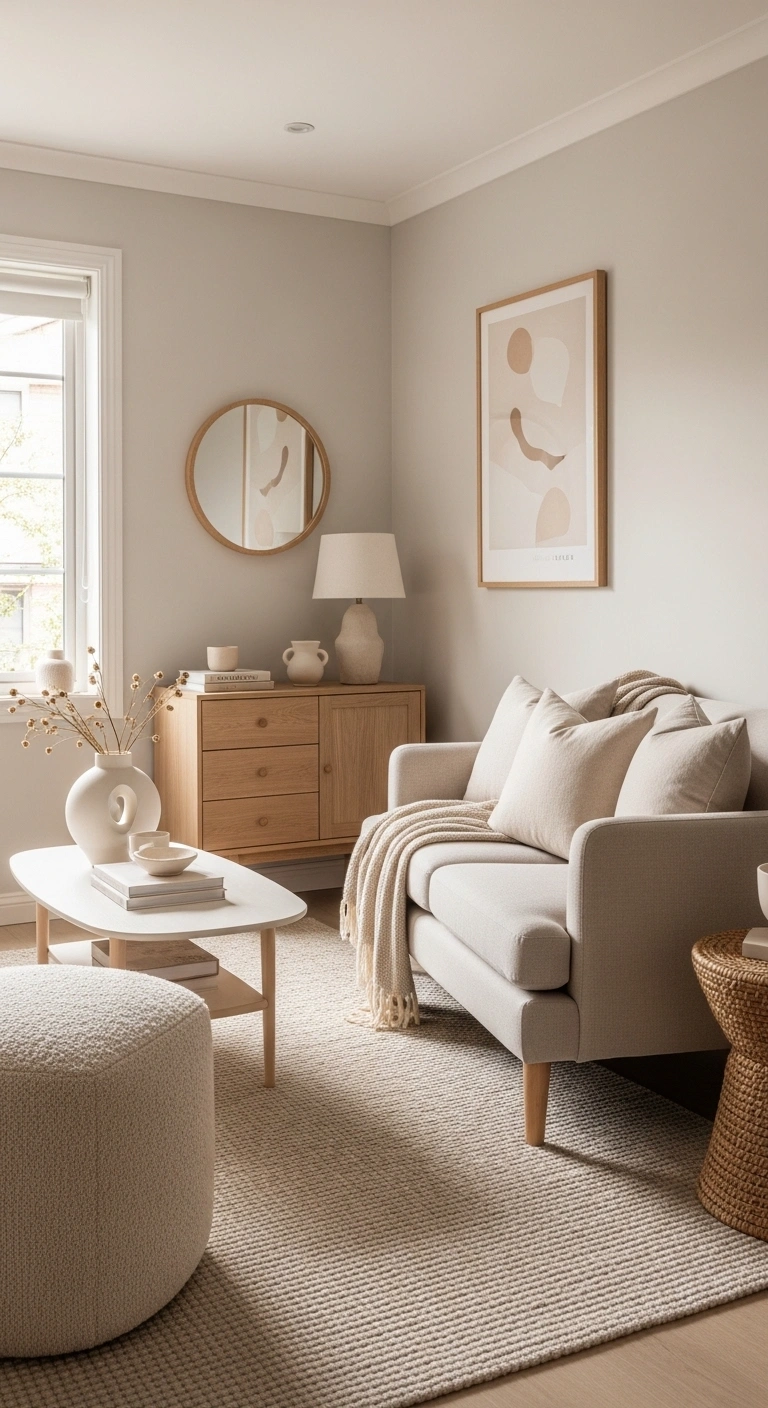
When shopping for a tiny living room, width usually gets all the attention. In a narrow room, sofa depth can be just as important. A deep sofa projects farther into the room, reducing the space available between the sofa and coffee table, TV unit, or opposite seating.
Before buying, mark the sofa dimensions on the floor with painter’s tape. Include the full depth rather than marking only its width against the wall. Then place the coffee table or other furniture within the remaining area and check whether the layout still feels comfortable.
Also consider arm thickness. Wide rolled arms can consume valuable seating width without giving you another seat. A slightly longer sofa with slim arms and moderate depth can sometimes use a tiny room more efficiently than a short, bulky loveseat.
13. Blend Wall and Furniture Colors for a Seamless Look
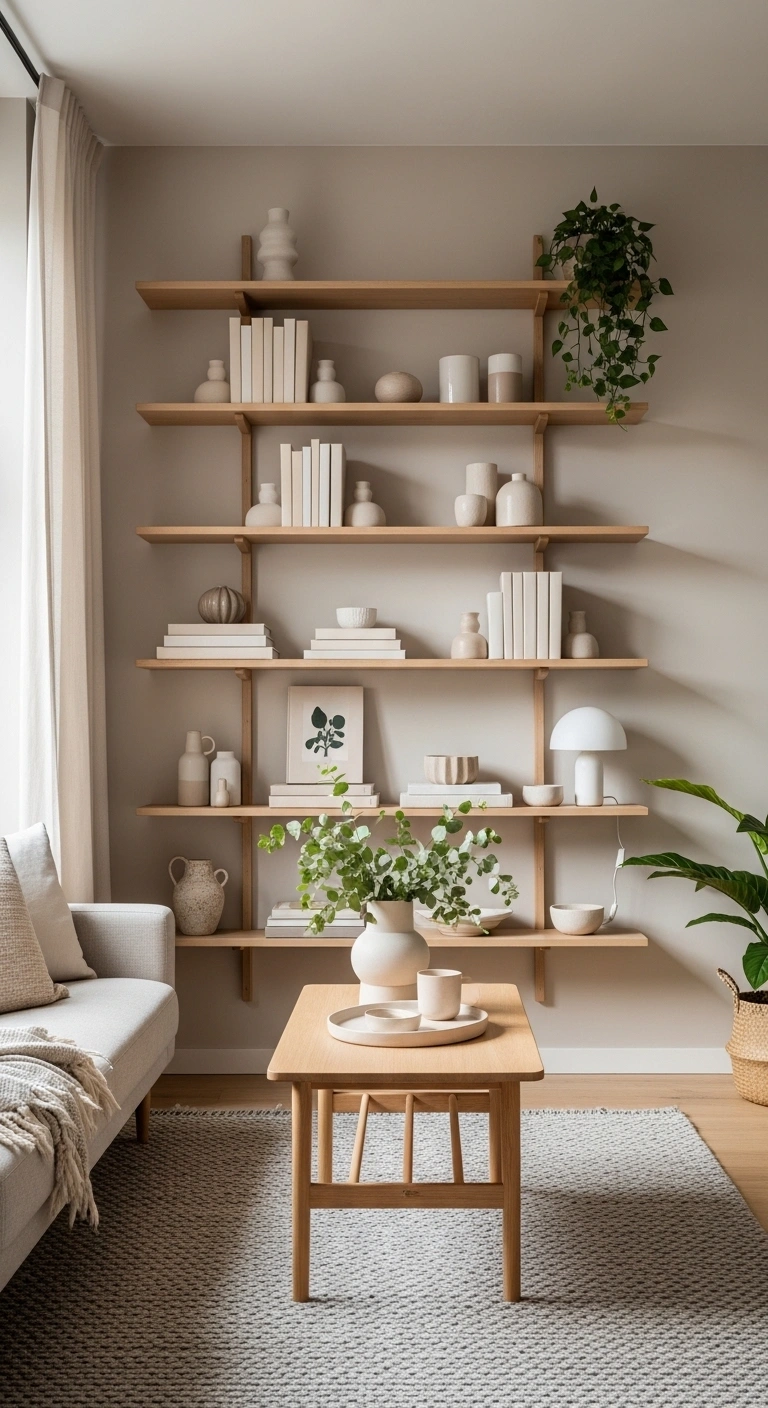
A rug that is too small can visually separate the sofa and chairs into individual pieces. A larger rug helps the seating arrangement read as one connected zone. Whenever possible, choose a size that allows at least the front legs of the main seating pieces to sit on the rug. This creates a stronger visual connection between the sofa, chairs, and coffee table.
Before ordering, mark the rug dimensions on the floor with painter’s tape. This makes it much easier to see whether the rug will anchor the furniture or look like a small rectangle floating in the middle. In many compact living rooms, a 6 × 9 ft or 8 × 10 ft rug may work better than a 5 × 7 ft rug, but room dimensions and furniture placement should determine the final size.
Keep some flooring visible around the rug rather than trying to imitate wall-to-wall carpet.
Avoid: choosing a smaller rug simply because the room itself is small.
14. Use Lighting in Layers Instead of One Bright Source
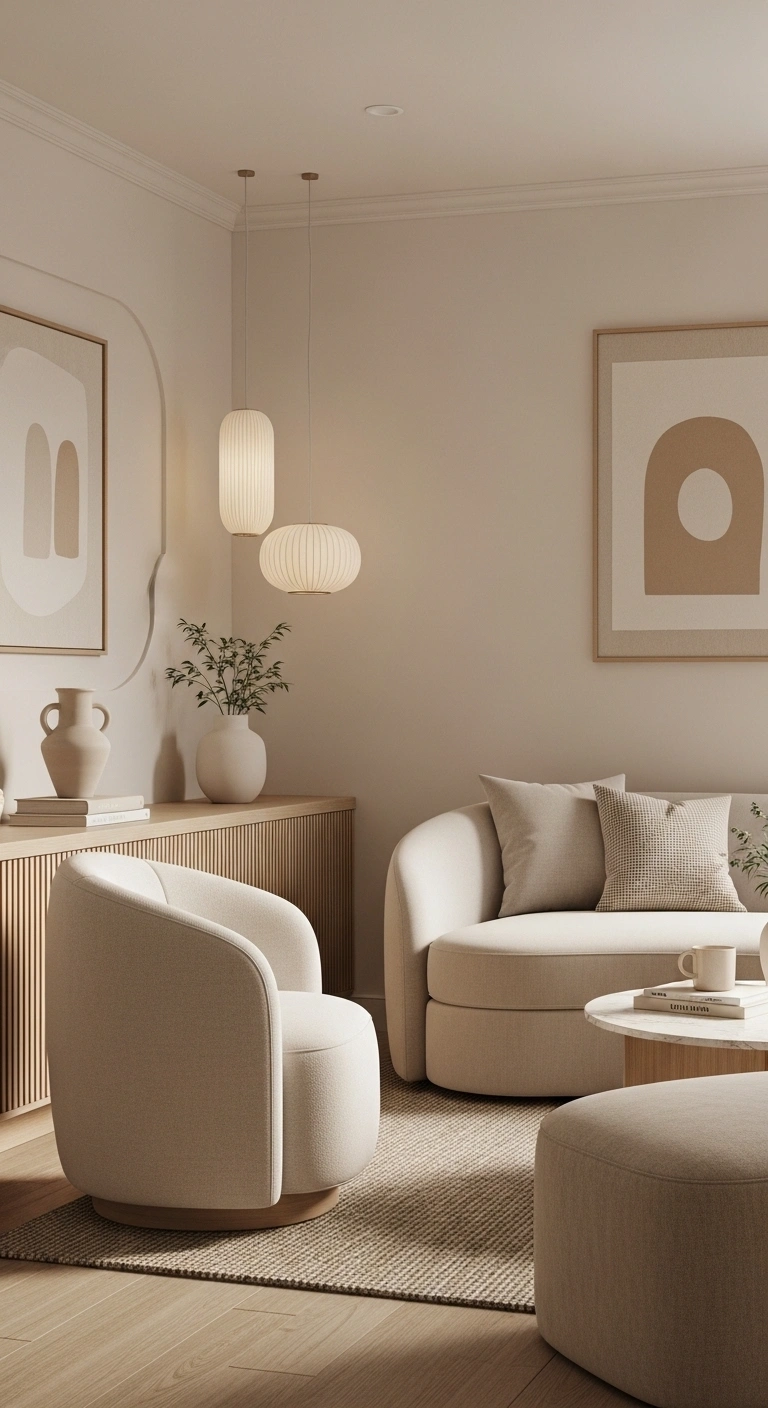
One ceiling fixture often illuminates the center of a room while leaving the corners comparatively dark. Those dark areas can make the boundaries of a tiny living room feel more pronounced. Use more than one level of light instead. An overhead fixture can provide general illumination, while a slim floor lamp, table lamp, wall sconce, or reading light fills areas the ceiling light does not reach.
You don’t need all of these. Two or three well-positioned sources are usually more useful than filling a small room with lamps. Wall-mounted sconces are particularly helpful when there is no room for side tables. A slim floor lamp can work in a corner where a larger table-and-lamp combination would consume too much space.
Keep the light temperature reasonably consistent between fixtures so the room feels connected rather than divided into noticeably different pools of light.
15. Use a Larger Rug to Visually Widen the Seating Area
A tiny rug can make a tiny living room feel even smaller because it creates a separate little island in the middle of the floor. A larger rug connects the main furniture and makes the seating area read as one continuous space. As a practical starting point, choose a rug large enough for the front legs of the sofa and nearby chairs to sit on it. If the rug only fits beneath the coffee table, it is often too small for the arrangement.
Before buying, use painter’s tape to mark the rug dimensions on the floor. This gives you a much better sense of scale than trying to judge rug sizes online. You also don’t need the rug to reach every wall. Leaving some visible flooring around the edges keeps the room defined without making the rug look like fitted carpet.
Best for: living rooms where the sofa, chairs, and coffee table currently feel disconnected.
Avoid: automatically buying a 5 × 7 ft rug simply because the room is small. Furniture placement should determine the rug size.
16. Keep Decor at Eye Level or Lower
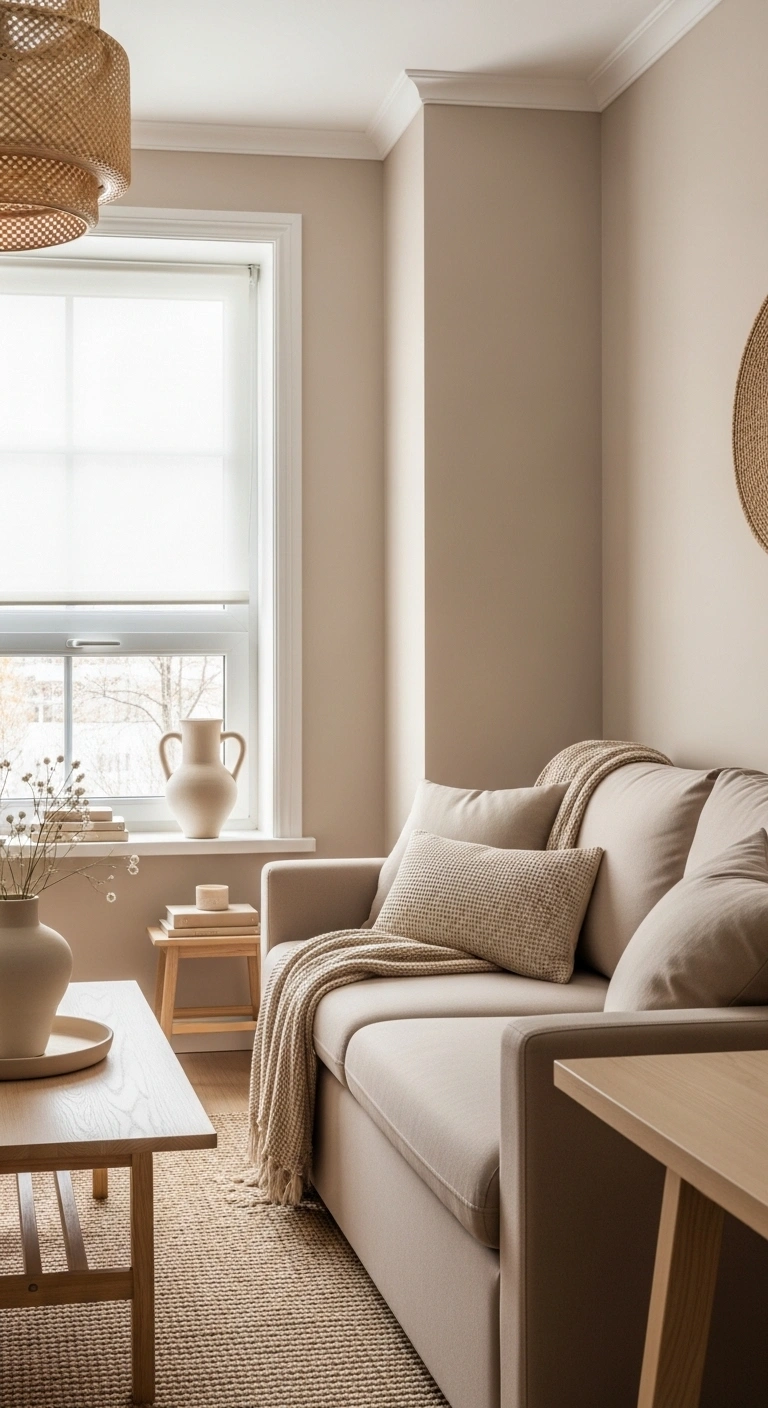
Empty walls are useful in a small living room, but filling them from floor to ceiling can create just as much visual clutter as overcrowding the floor. Choose a few intentional vertical elements instead. One tall bookcase, a vertical piece of artwork, long curtains, or a slim floor lamp can draw the eye upward and emphasize ceiling height.
For artwork, consider the furniture underneath it. A piece above the sofa should visually relate to the sofa rather than floating high on the wall. Keeping artwork grouped around a clear focal area usually feels calmer than scattering small pieces across several walls. Floating shelves can also work, but leave visible gaps between objects rather than filling every inch. The goal is to use height while preserving some negative space.
Best for: rooms with limited floor space but useful wall height.
Avoid: placing small decor at many different heights simply to fill empty wall space.
17. Introduce Soft Curves to Break Sharp Edges
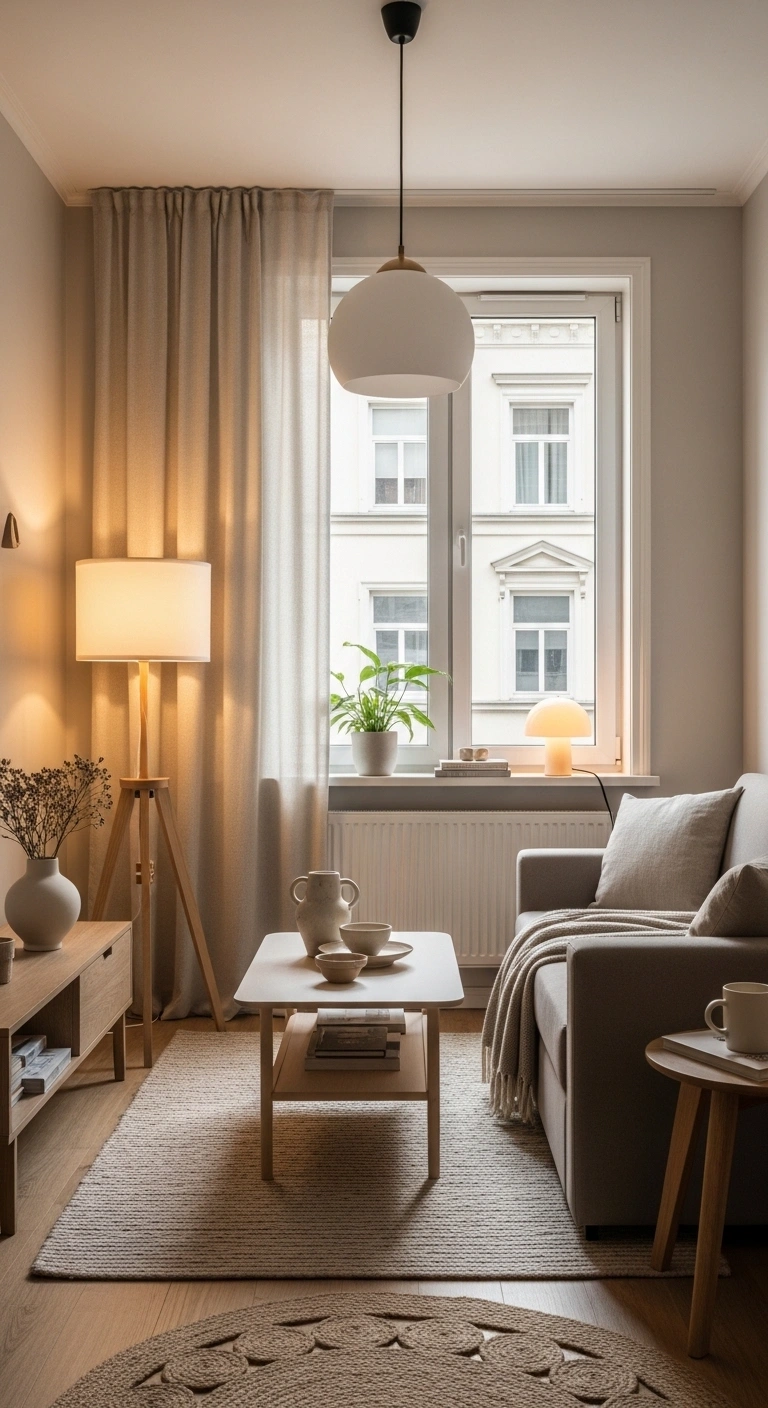
Curved furniture can be especially useful when people regularly walk around the edge of a coffee table or chair. A round coffee table removes sharp corners from the center of a tight seating arrangement. A small round side table can also fit more comfortably beside a sofa than a bulky square cabinet.
This does not mean every piece should be curved. Too many rounded objects can make the room feel overly themed. Instead, use curves where they solve a practical problem. For example, if the walkway between your sofa and coffee table feels tight, replacing a large rectangular table with a smaller round or oval one may improve circulation without eliminating the surface completely.
18. Use Open Shelving with Breathing Space
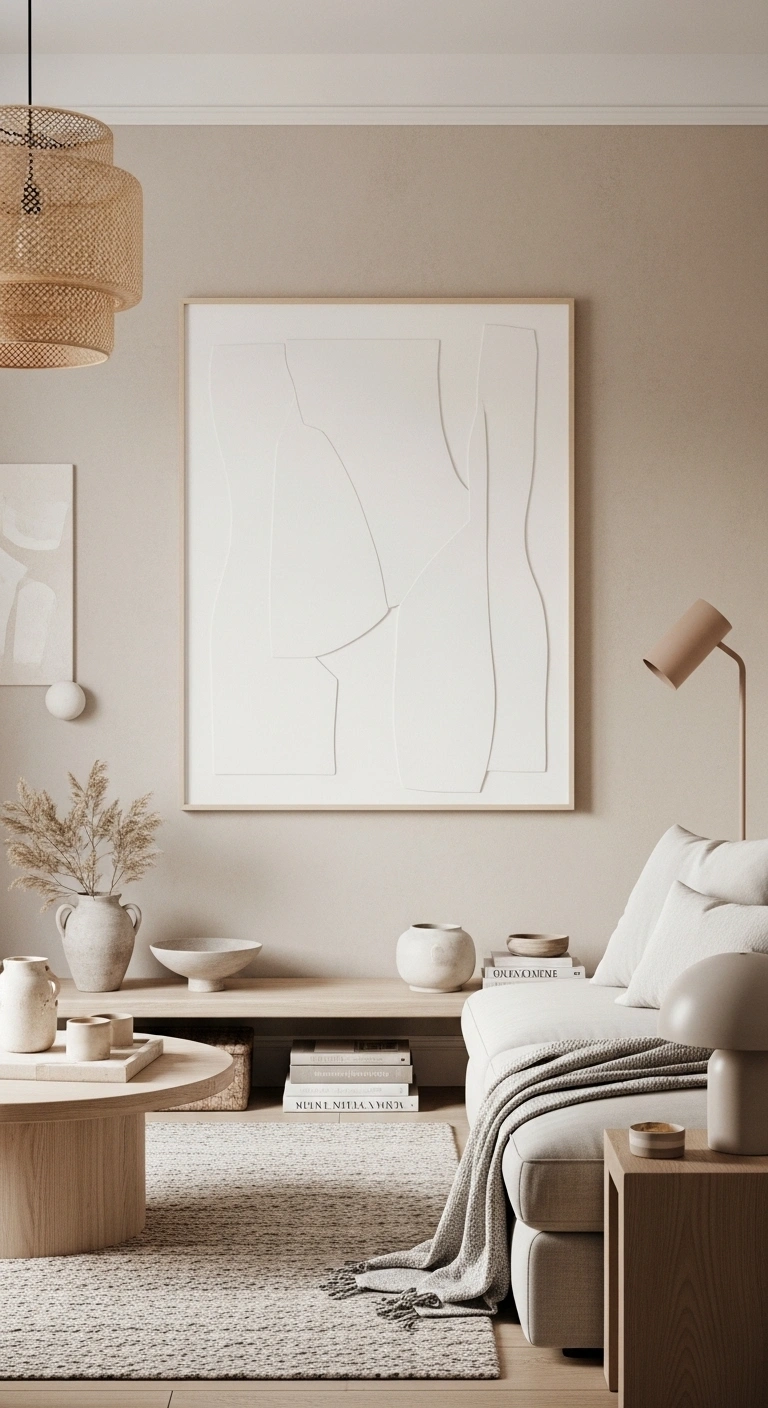
Open shelving can make storage feel lighter, but using it for everything often creates visible clutter. A better solution in a hardworking small living room is to combine closed storage for everyday items with a limited amount of open display space.
Use drawers or cabinet doors for chargers, paperwork, games, extra cables, and other practical items. Reserve open shelves for a smaller number of books, ceramics, framed photos, or objects you actually want to see. When styling an open shelf, don’t feel obligated to fill every section. Empty space between groups of objects helps the shelving look intentional and makes individual pieces easier to notice.
If floor space is particularly limited, wall-mounted shelving or a tall narrow unit can provide storage without requiring a wide footprint.
19. Add a Single Tall Element to Draw the Eye Up
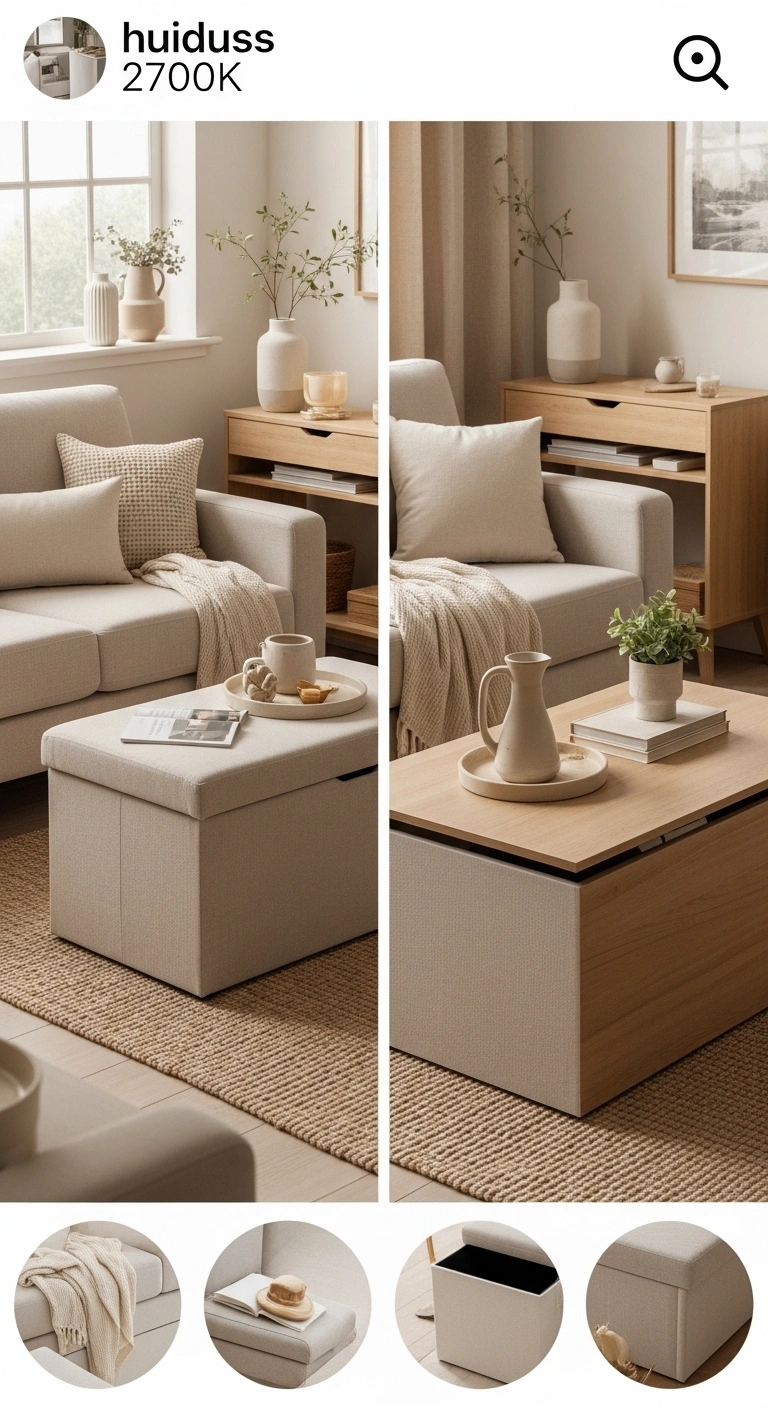
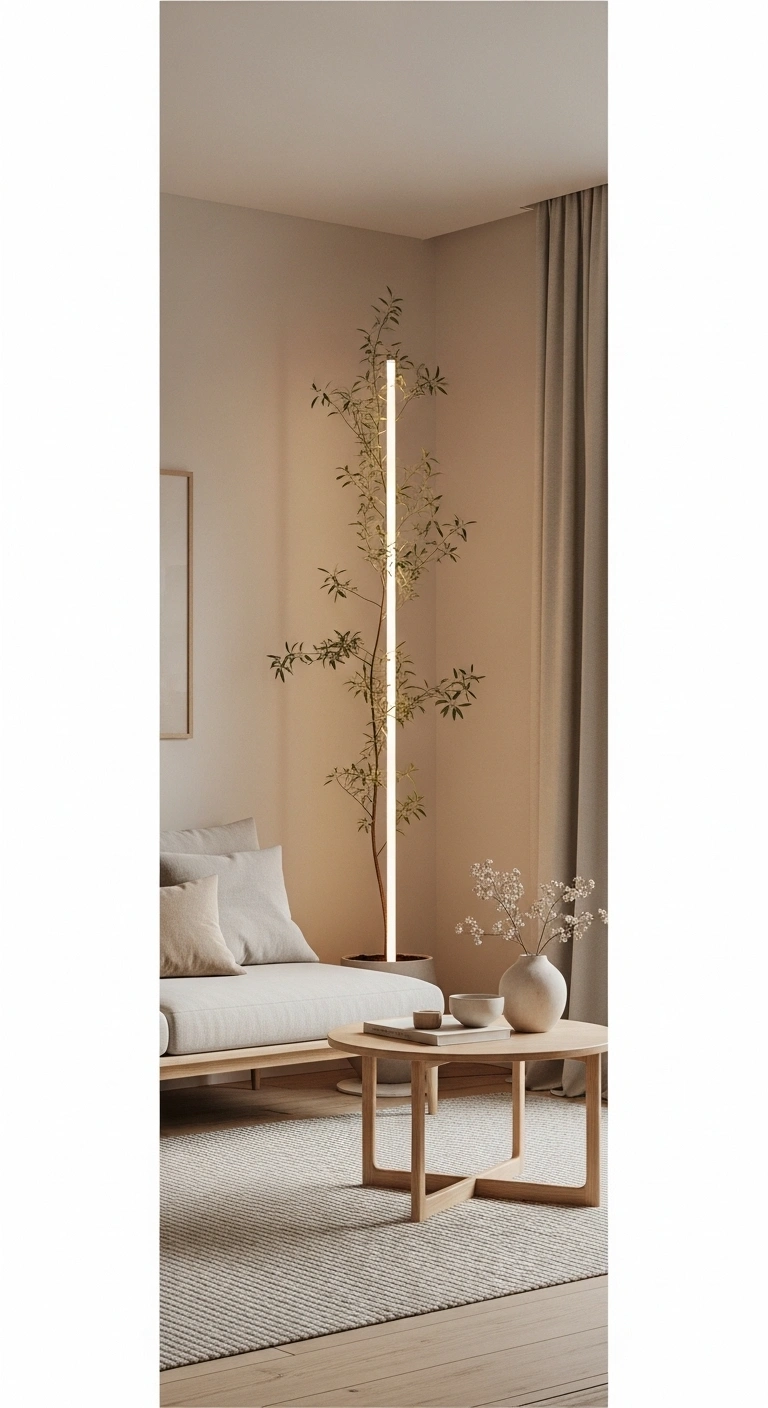
A small room benefits from one strong vertical element that pulls the eye upward. This could be a tall plant, a slim floor lamp, or a narrow shelving unit. The goal is to create height without adding bulk.
Choose something with a light structure so it doesn’t feel heavy. A tall indoor plant with airy leaves works especially well. This vertical focus makes ceilings appear higher and balances lower furniture pieces. It adds interest while helping the room feel more open and lifted.
I’ve found that a tall indoor plant stand helps lift greenery higher without taking up much floor space. It naturally draws your eyes upward and adds a little height to the room. Pair it with an airy plant to keep the look light and relaxed.
20. Keep Pathways Clear for Easy Movement

A cramped layout can make even a bright room feel small. Make sure there is a clear path for walking through the space. Avoid placing furniture where it blocks natural movement. Even a few extra inches of open space can make a big difference.
Arrange seating so it feels connected but not crowded. Use smaller side tables or wall-mounted options to free up floor space. When movement feels easy and natural, the room instantly feels larger. A clear layout improves both comfort and visual openness at the same time.
One thing I like using in smaller rooms is a wall-mounted floating shelf instead of another side table. It keeps everyday items within reach while leaving more floor space open. Clear walkways make the entire room feel easier to move through and more inviting.
A Quick Small Living Room Layout Check
Before buying anything new, stand at the main entrance to your living room and check these five things:
- Can you see a reasonably clear path through the room?
- Is any furniture noticeably deeper or bulkier than everything around it?
- Is daylight being blocked by furniture or heavy window treatments?
- Does most everyday clutter have somewhere hidden to go?
- Are the sofa, rug, tables, and chairs scaled to one another rather than simply chosen because each item is labeled “small”?
If several answers reveal problems, fix the layout and scale first. Decorative changes will have much more impact afterward.
Conclusion
Making a tiny living room feel bigger is less about finding clever decorating tricks and more about using the available space efficiently.
Start with the changes that affect the largest parts of the room. Check the sofa depth, protect the main walkway, expose as much natural light as possible, and make sure the rug connects the seating area. Then tackle visual clutter with hidden storage and a more consistent palette.
You do not need to use all 20 ideas. If your room feels crowded, start with furniture scale and circulation. If it feels dark, focus on the windows, mirrors, and layered lighting. If it simply looks busy, reduce the number of visible objects and give larger pieces more breathing room.
A small living room can still be comfortable, functional, and full of personality. The goal isn’t to make it look empty—it’s to make every piece earn the space it takes up.