22 Living Room Ideas to Help You Find Your Decorating Style

Walk into any furniture store and you will see ten different living rooms set up, each one pulling you in a slightly different direction. That mix of options is exciting, but it can also leave you stuck, unsure whether you lean more cozy farmhouse or clean modern or something in between. The good news is you do not have to pick a single style off a magazine cover and copy it exactly. Most real living rooms borrow a little from a few different looks and still feel put together. This list walks through twenty two living room ideas, from furniture choices to lighting to small styling details, so you can see which ones catch your eye. Read through them, notice which ideas you keep coming back to, and let that pattern guide the direction of your own room.
1. Neutral Boucle Sofa
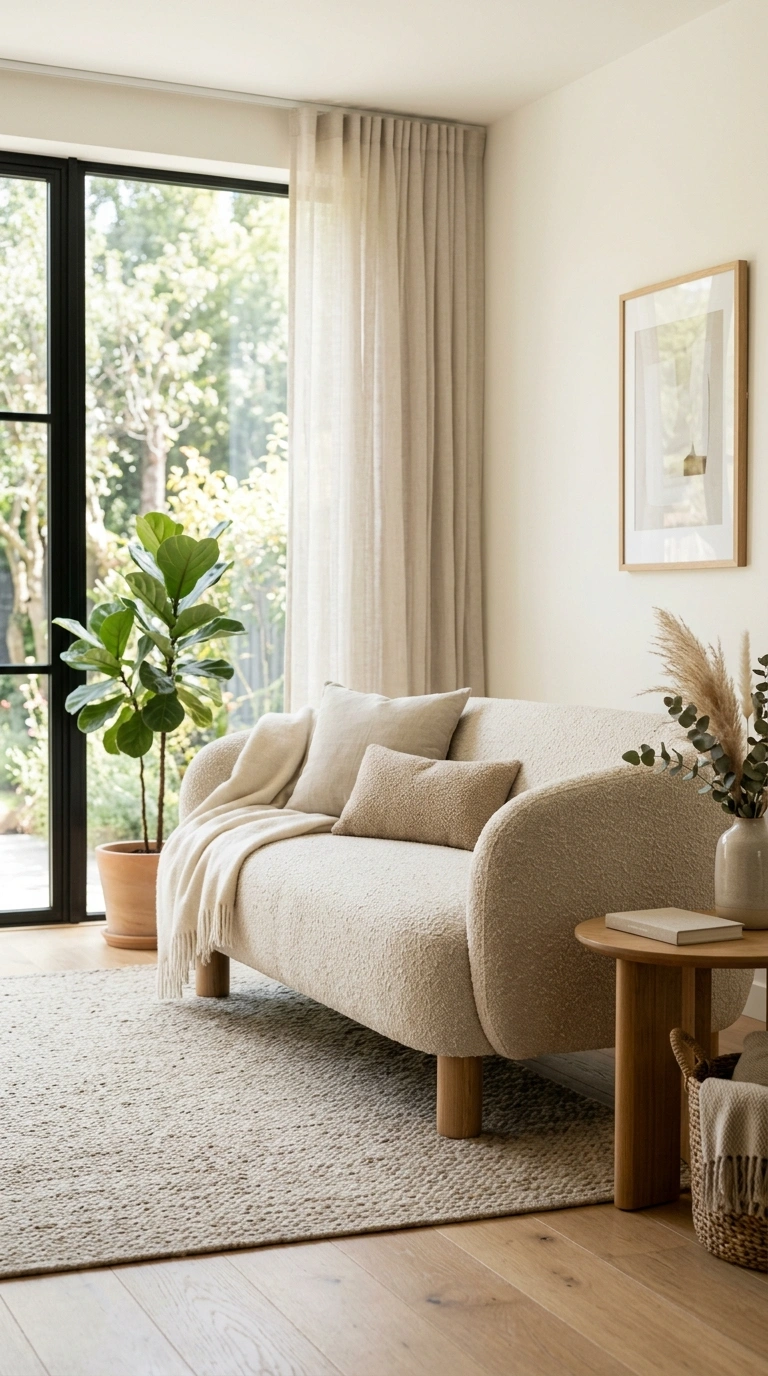
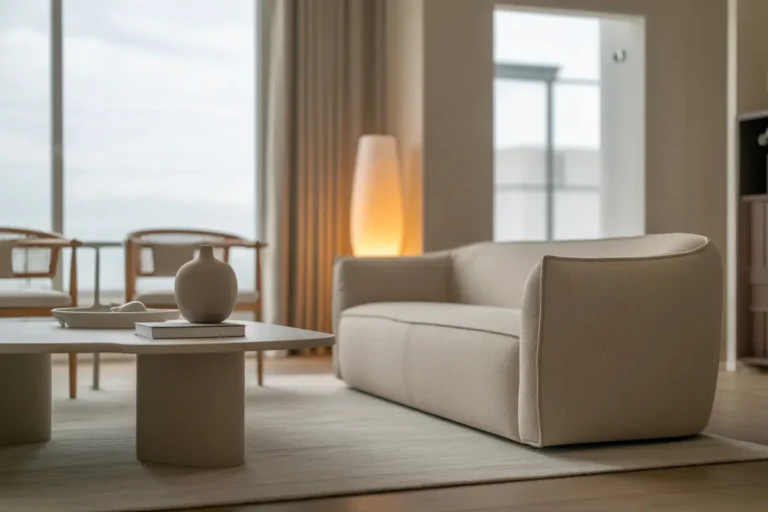
A boucle sofa in a soft neutral shade like oatmeal, cream, or light grey has become a favorite anchor piece for modern living rooms because the nubby texture adds visual interest without adding color or pattern. It works in almost any style of room, from minimalist to boho, since the fabric itself does most of the visual work.
Place the sofa as the main seating piece and build the rest of the room around its neutral tone, adding color through pillows, art, or a rug instead. Boucle shows texture best in natural light, so position the sofa near a window if possible. Pair it with rounded wood or brass legs for a slightly warmer, less clinical modern look.
2. Gallery Wall Display
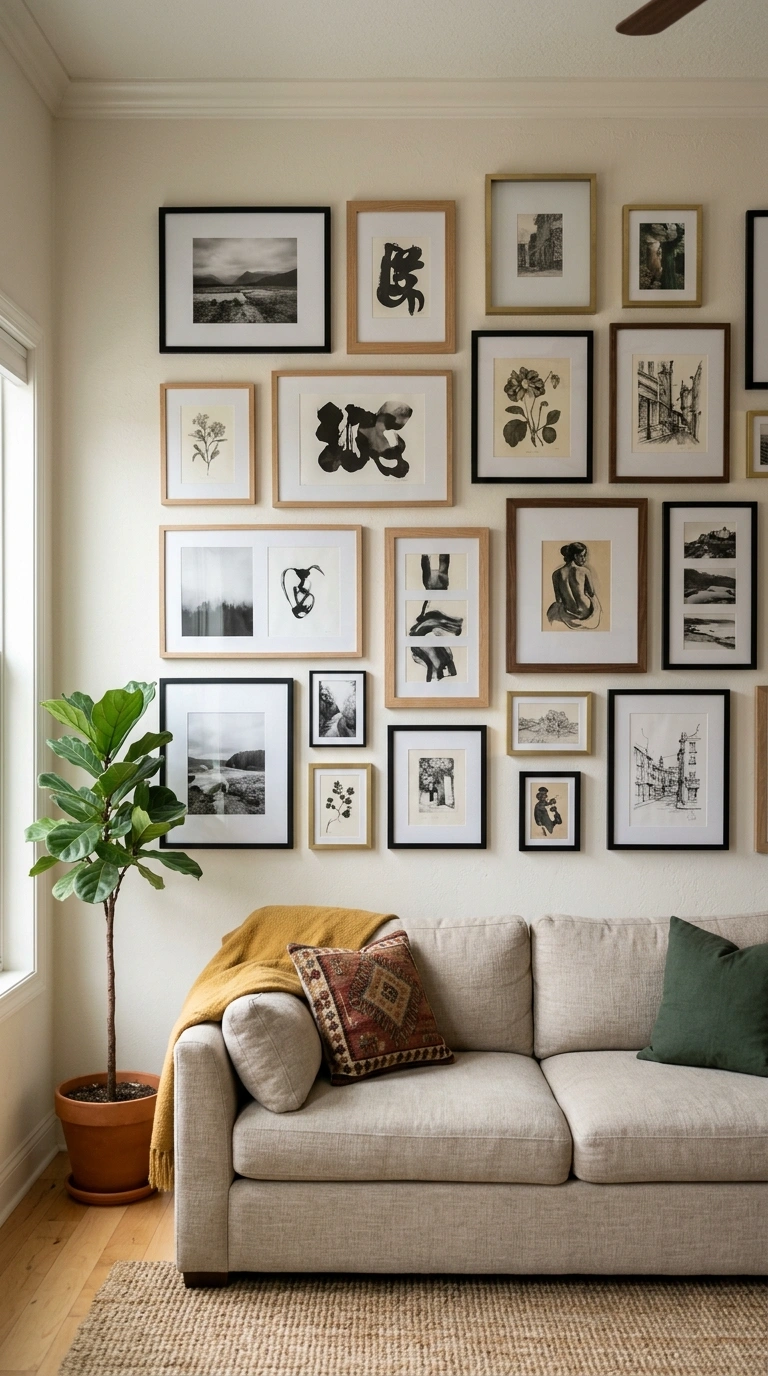
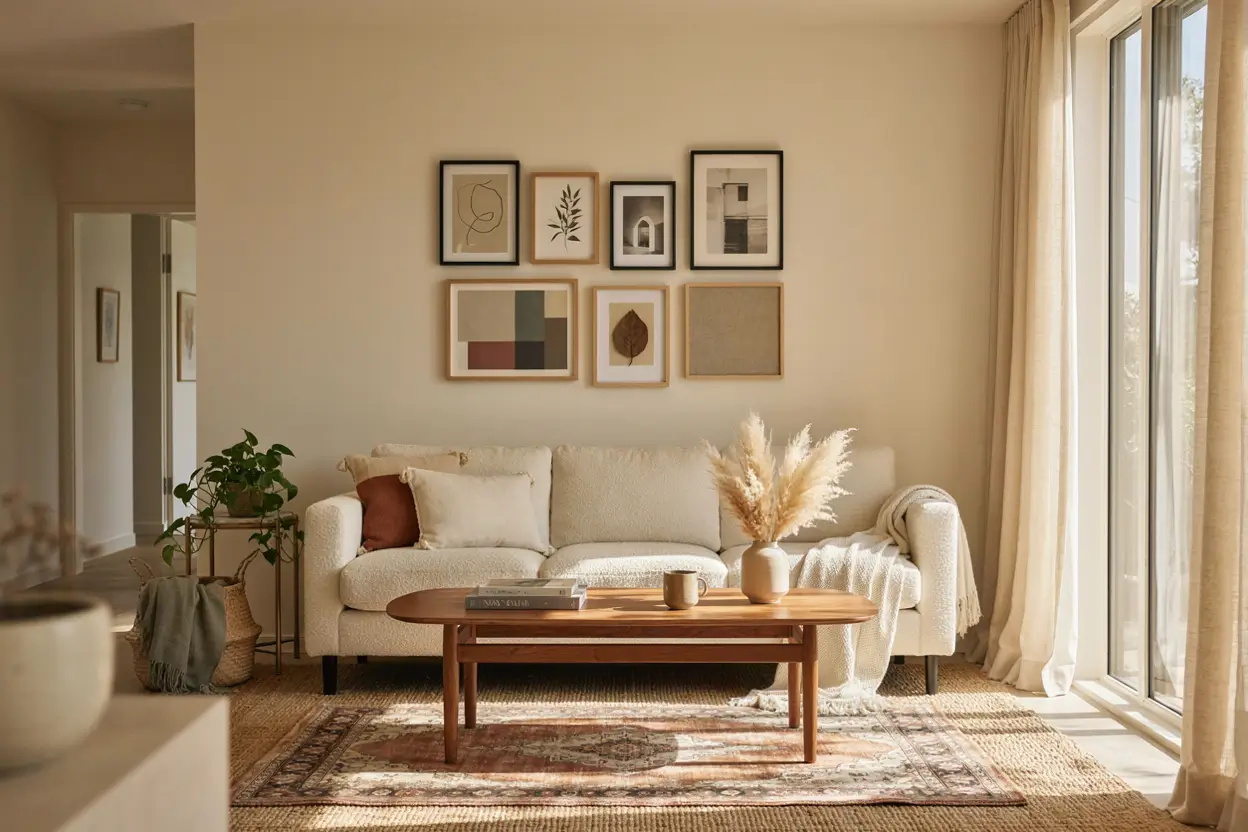
A gallery wall turns a plain stretch of wall into the most personal part of the living room, since it can include family photos, art prints, and small mirrors all in one arrangement. This idea works especially well above a sofa or along a stairway wall where there is enough space to spread frames out.
Mix frame sizes and a few finishes, like black, wood, and brass, rather than using all matching frames for a more collected, lived in look. Lay the frames out on the floor first to plan the arrangement before hanging anything on the wall. Keep about two to three inches of space between each frame so the display feels organized rather than crowded.
3. Layered Area Rugs
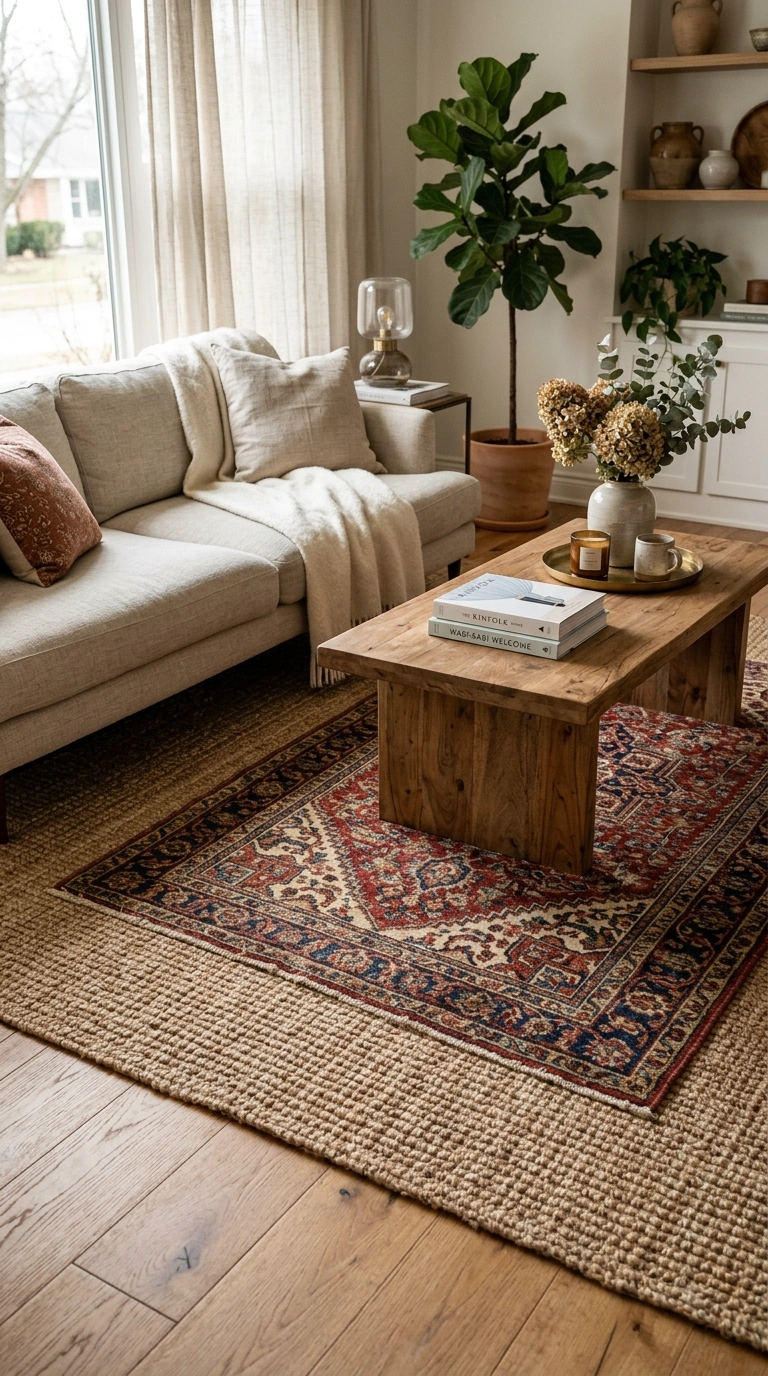
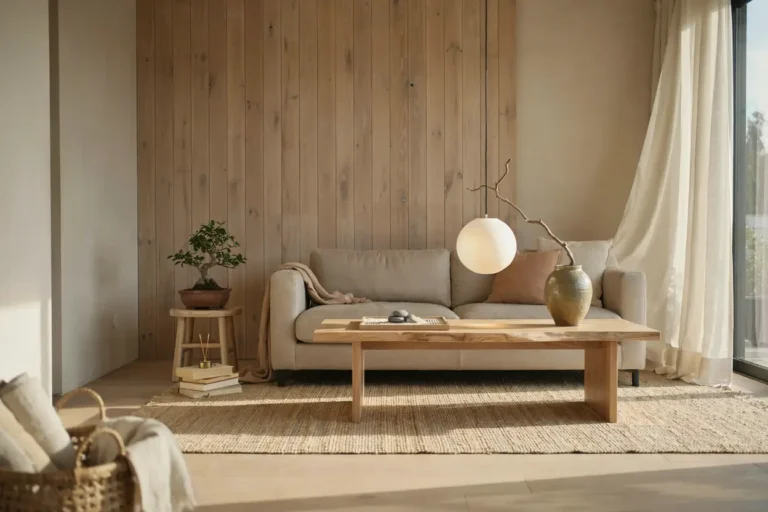
Layering a smaller patterned rug over a larger neutral jute or sisal rug adds texture and warmth to a living room floor without covering the whole space in one busy pattern. This idea works especially well under a coffee table or in a reading corner, where the smaller rug helps define that specific area of the room.
Choose a natural fiber rug, like jute or seagrass, as the base layer since its texture pairs well with almost any pattern on top. A vintage style or kilim rug works beautifully as the top layer, adding color and history to the space. Keep the top rug slightly smaller than the furniture grouping so it looks intentional rather than accidental.
4. Warm Wood Accents
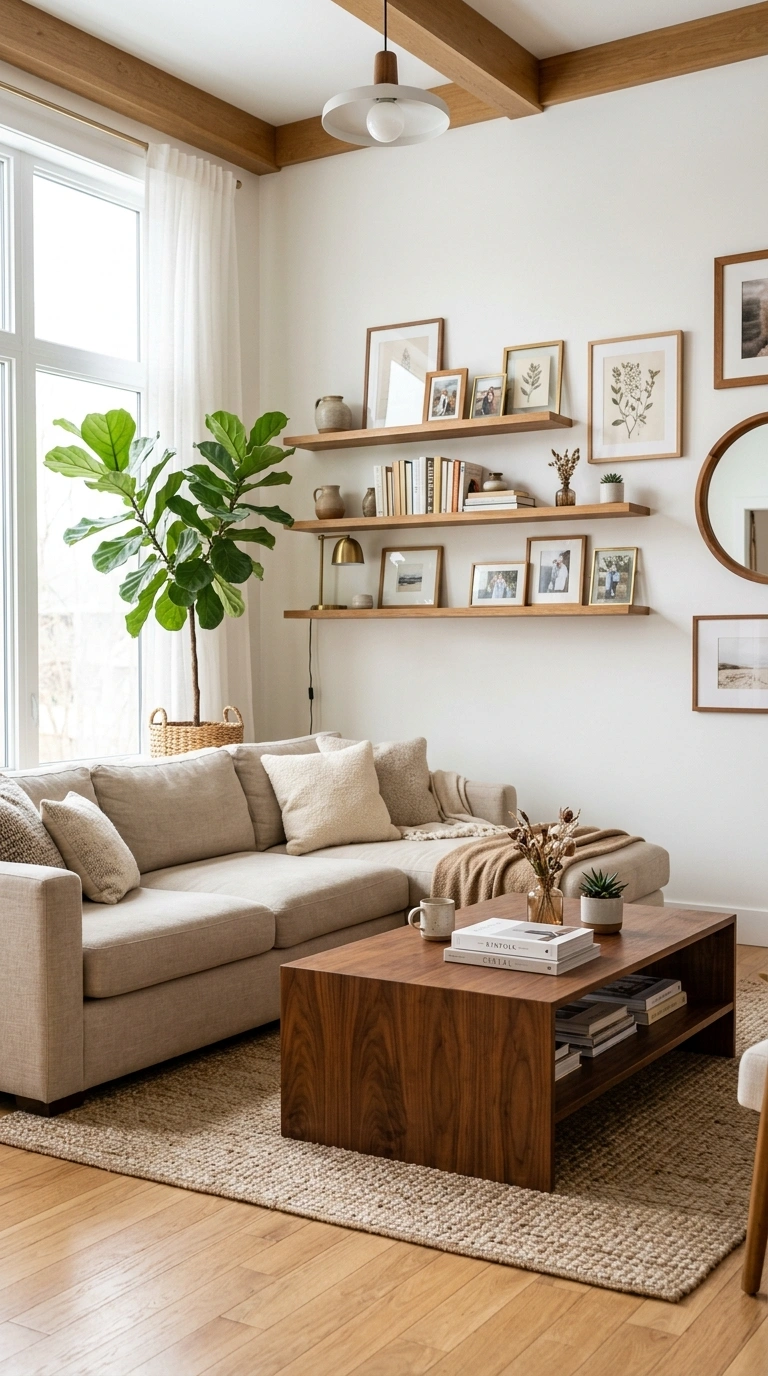
Bringing warm toned wood into a living room through furniture, shelving, or trim work softens a space that might otherwise feel too cool or sterile, especially in rooms with a lot of white walls or grey furniture. This idea suits nearly every style, from Scandinavian to traditional, since wood tones ground a room and make it feel more livable.
Choose pieces in a medium warm wood, like walnut or oak, rather than very dark or very pale wood, for the most versatile look. A wooden coffee table, a set of open shelves, or even simple picture frames all bring in this warmth. Mixing a couple of different wood tones is fine as long as they share similar warm undertones rather than clashing cool and warm shades.
5. Statement Coffee Table
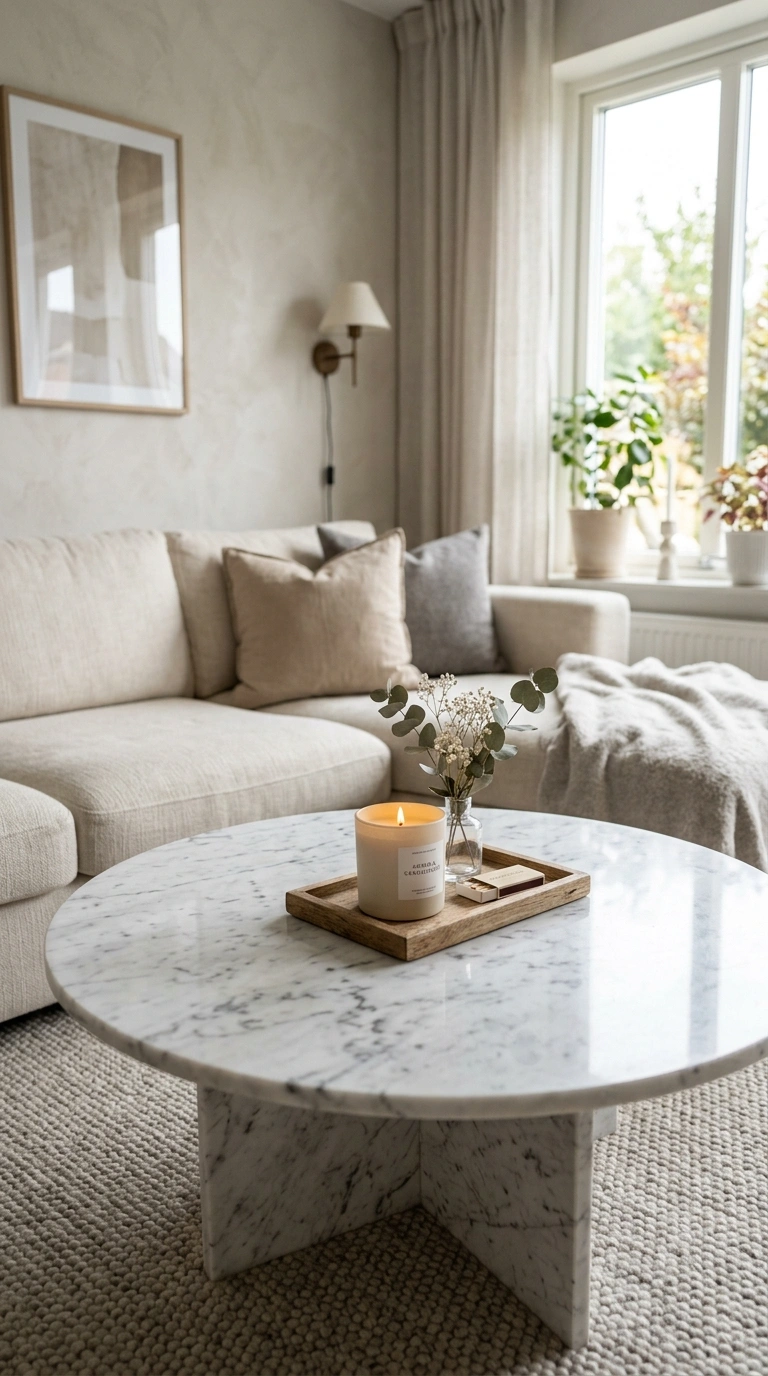
A coffee table with an unusual shape, material, or size can become the focal point of a living room in the same way a piece of art might. A round marble table, a carved wood trunk, or an oversized square ottoman all pull attention and give the room a stronger sense of style than a plain rectangular table.
Choose a statement table that fits the scale of your seating area, since a table that is too small will look lost next to a large sofa. Style the top simply, with one tray, a small stack of books, and a single candle or small plant, so the table’s shape and material stay visible rather than hidden under too many objects.
6. Bold Accent Wall
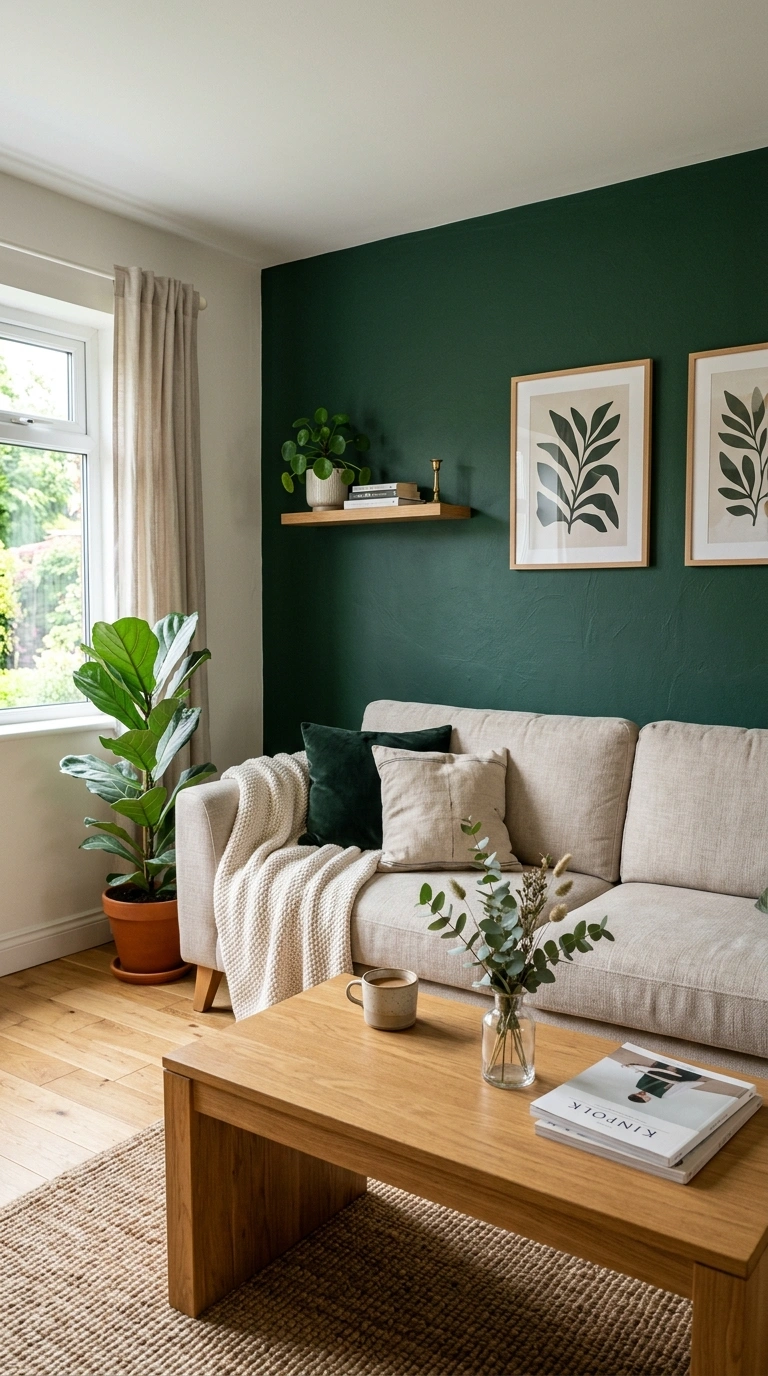
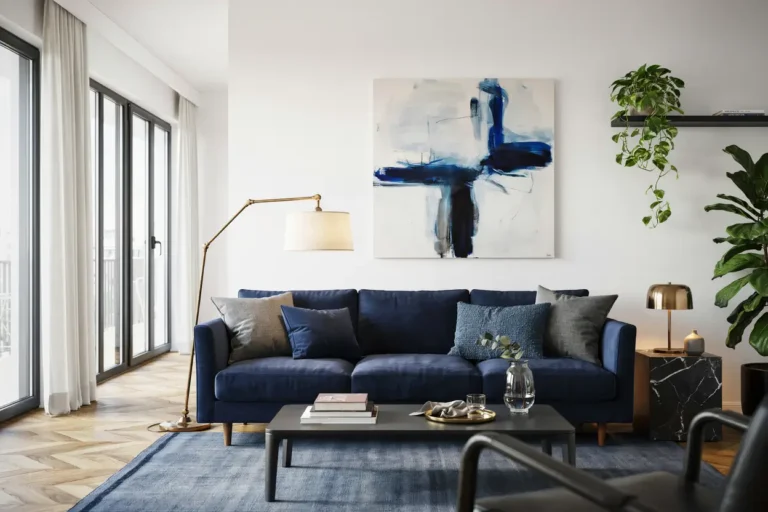
Painting or wallpapering one wall in a living room in a bold color or pattern gives the room depth and personality without committing to that intensity across every wall. This idea works especially well behind a sofa or around a fireplace, where the accent wall naturally becomes the backdrop for the main seating area.
Choose a deep, saturated color like forest green, terracotta, or navy for the boldest effect, or a patterned wallpaper for a softer, more textured statement. Keep the remaining walls in a plain neutral shade so the accent wall has room to stand out. Furniture and decor in front of the accent wall should stay fairly simple in color so the wall remains the star of the room.
7. Textured Throw Pillows
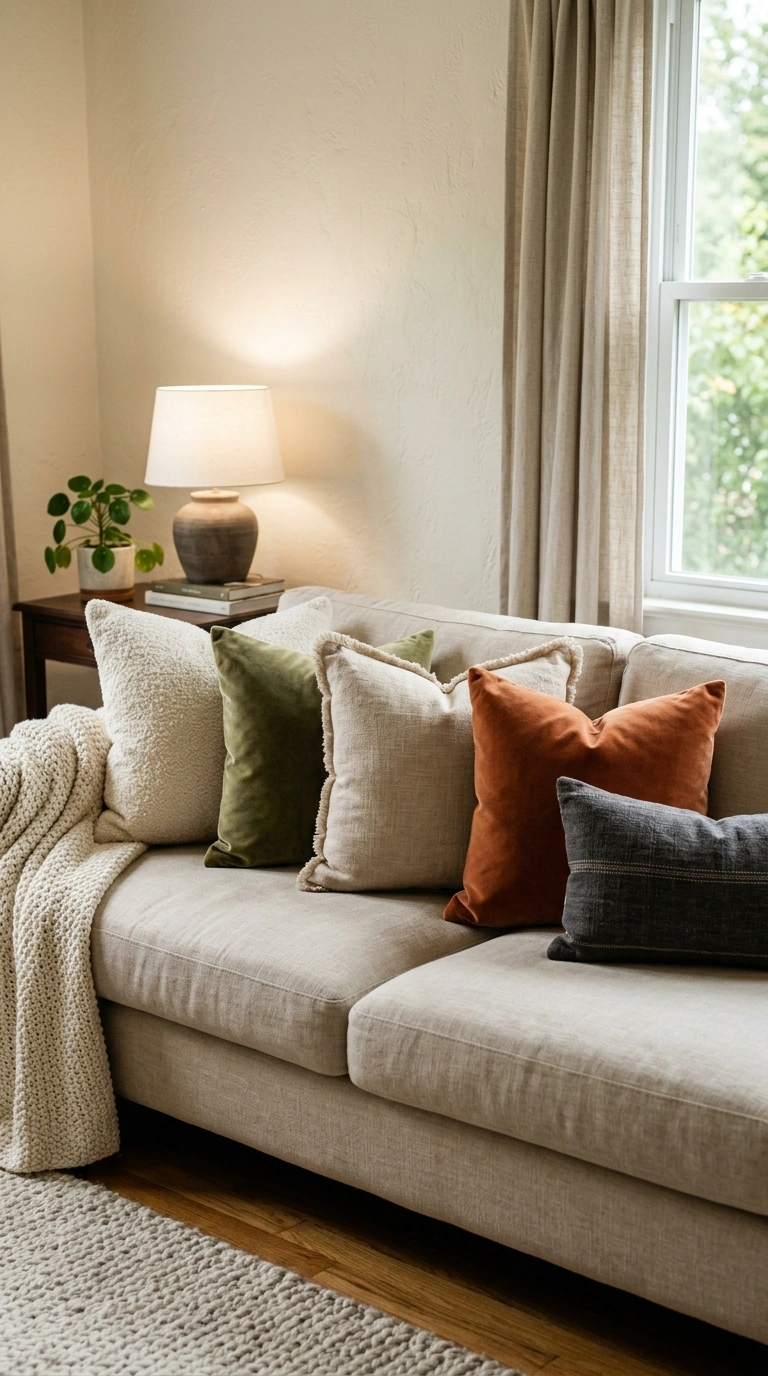
Mixing throw pillows in different textures, like linen, boucle, velvet, and knit, adds depth to a sofa without needing a busy mix of patterns or colors. This idea is one of the easiest and cheapest ways to update a living room’s look, since pillows can be swapped out seasonally or whenever you want a change.
Stick to two or three colors across all the pillows so the mix feels curated rather than random. Combine one larger square pillow, one smaller lumbar pillow, and one textured knit or boucle pillow for a balanced, layered arrangement. Odd numbers, like three or five pillows total, tend to look more relaxed and natural than a perfectly even number.
8. Vintage Rug Style
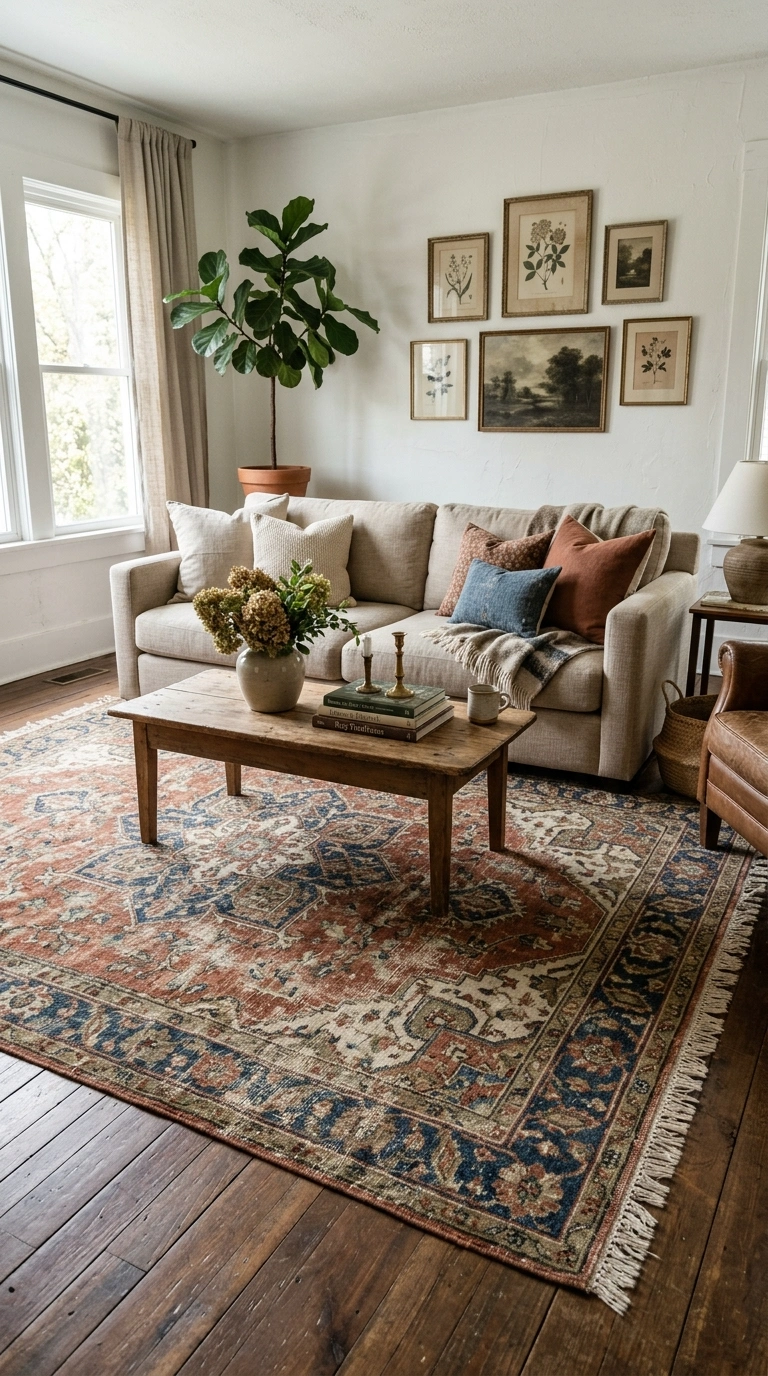
A vintage or vintage style rug with a slightly faded, worn in pattern brings instant warmth and history into a living room, even if every other piece in the space is brand new. This idea works beautifully as a way to add color and pattern to an otherwise neutral, modern room without it feeling too matched or showroom perfect.
Look for a rug with a muted color palette, soft rust, faded blue, dusty pink, since these tones pair easily with most existing furniture. Center the rug under the main seating area, with at least the front legs of the sofa and chairs resting on top of it, so the room feels grounded and connected rather than pieces floating separately around the floor.
9. Minimalist Open Shelving
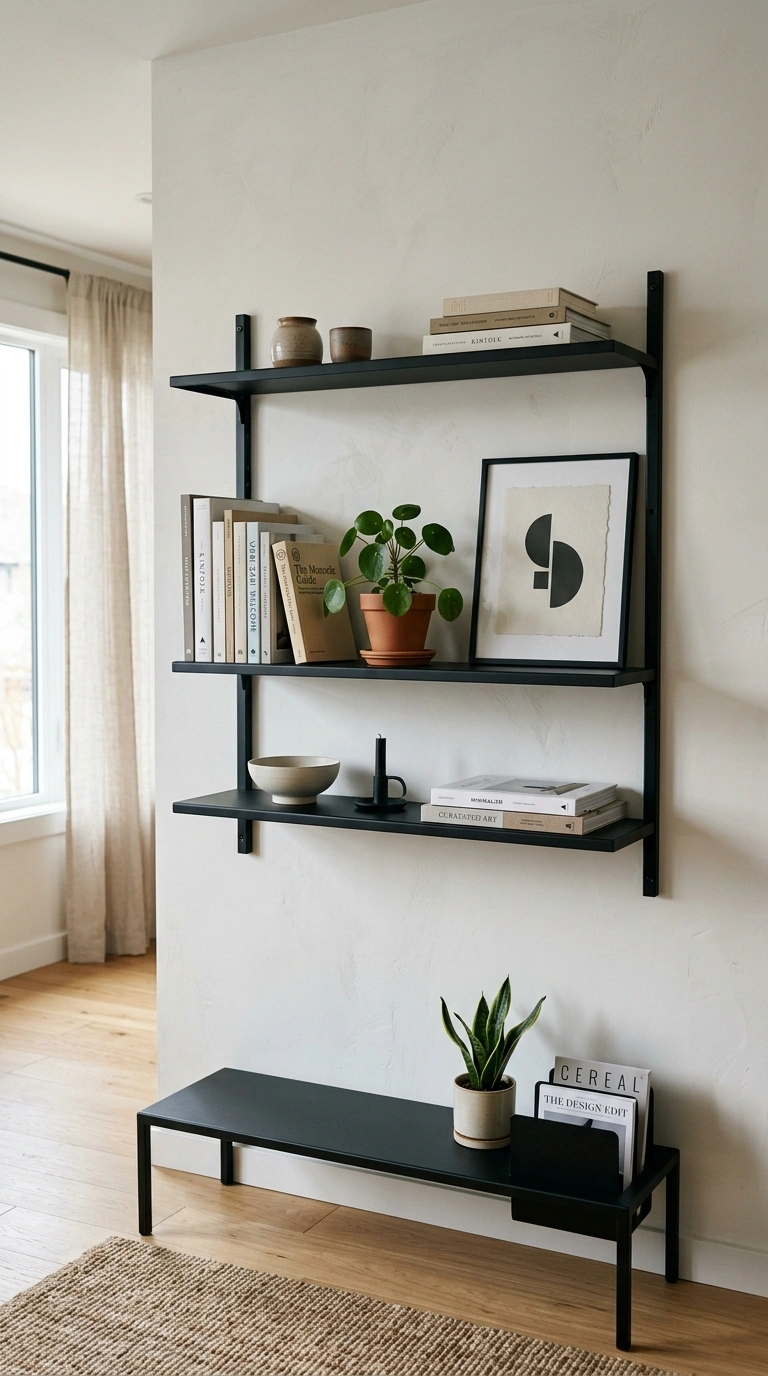
Open shelving instead of a closed cabinet keeps a living room feeling light and airy while still offering storage and display space for books, small decor, and plants. This idea suits rooms with a minimalist or Scandinavian style, where fewer, more intentional objects on display create a calmer overall look.
Choose simple wood or black metal shelving with clean lines rather than ornate detailing. Style each shelf with a mix of items at different heights, a stack of books, one small plant, one piece of art leaning against the wall, leaving some empty space on each shelf so it does not feel packed. This breathing room is what keeps open shelving from looking cluttered.
10. Industrial Metal Accents
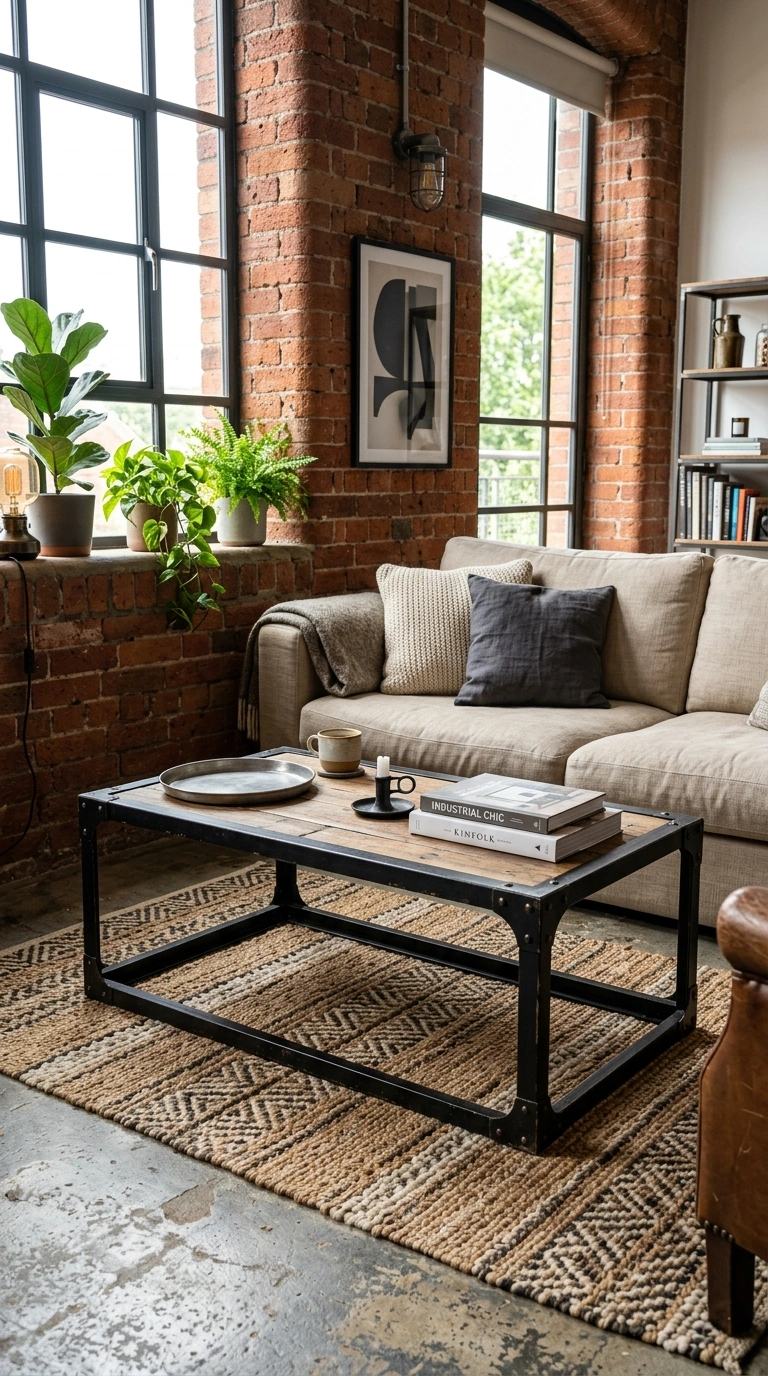
Bringing in black or dark metal accents through light fixtures, shelving brackets, or furniture legs gives a living room an industrial edge that pairs surprisingly well with soft furniture and warm wood tones. This idea works well in loft style apartments, converted spaces, or any room with exposed brick or concrete elements already present.
Choose one or two metal finishes, like matte black or aged brass, rather than mixing several different metals throughout the room. A metal framed coffee table, a pendant light with an exposed bulb, or metal legged shelving all introduce this style without overwhelming the space. Balance the harder metal edges with a soft rug and plenty of textured pillows so the room still feels comfortable.
11. Coastal Linen Decor
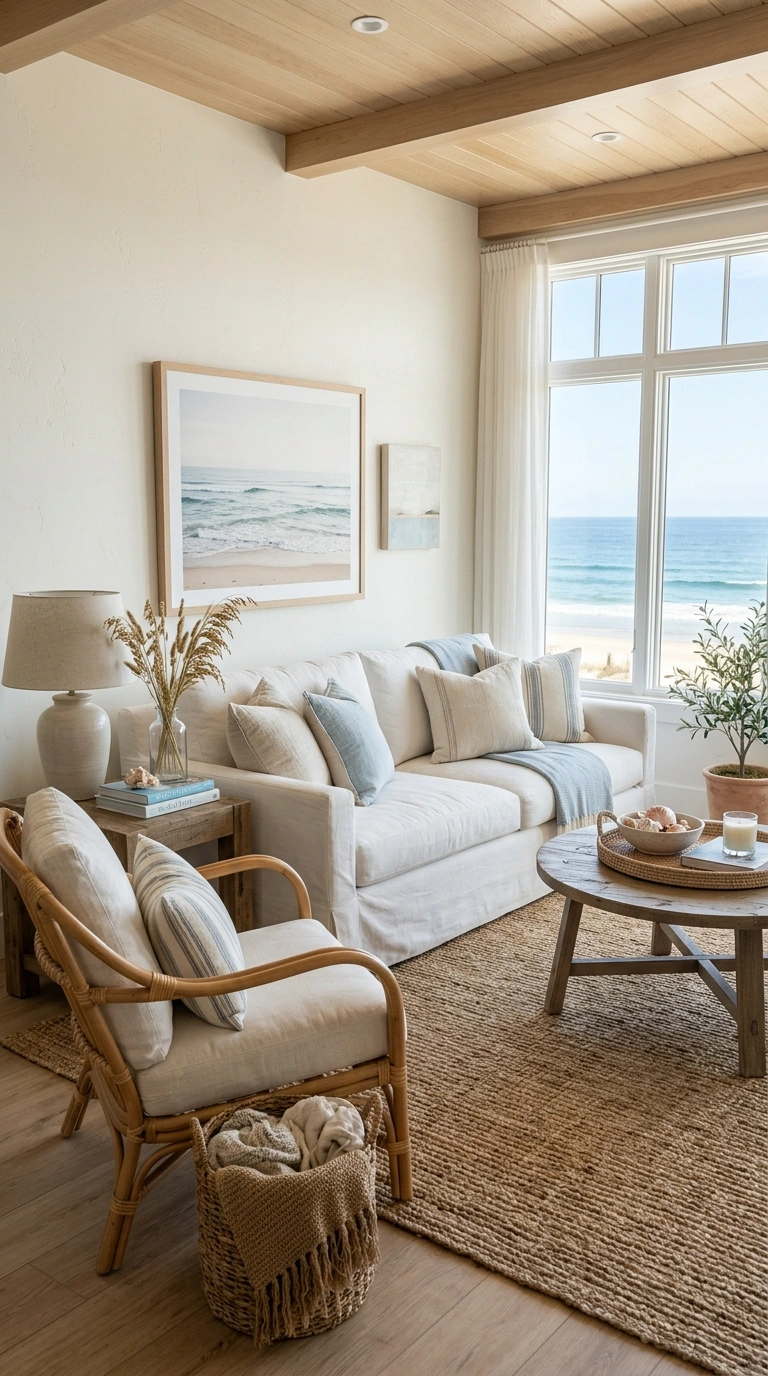
A coastal living room leans on light, breathable linen fabrics, whites, soft blues, and natural textures like rattan and rope to create a relaxed, beachy feeling even in a home nowhere near the water. This style suits sunny rooms with lots of natural light, since the pale color palette reflects light beautifully rather than absorbing it.
Choose a linen slipcovered sofa in white or a pale sandy tone as the anchor piece. Add a rattan chair, a jute rug, and light wood accents to round out the natural textures. Keep artwork simple, botanical prints or abstract pieces in soft blues and greens, so the whole room feels calm and uncluttered rather than themed too literally around the beach.
12. Farmhouse Wood Beams
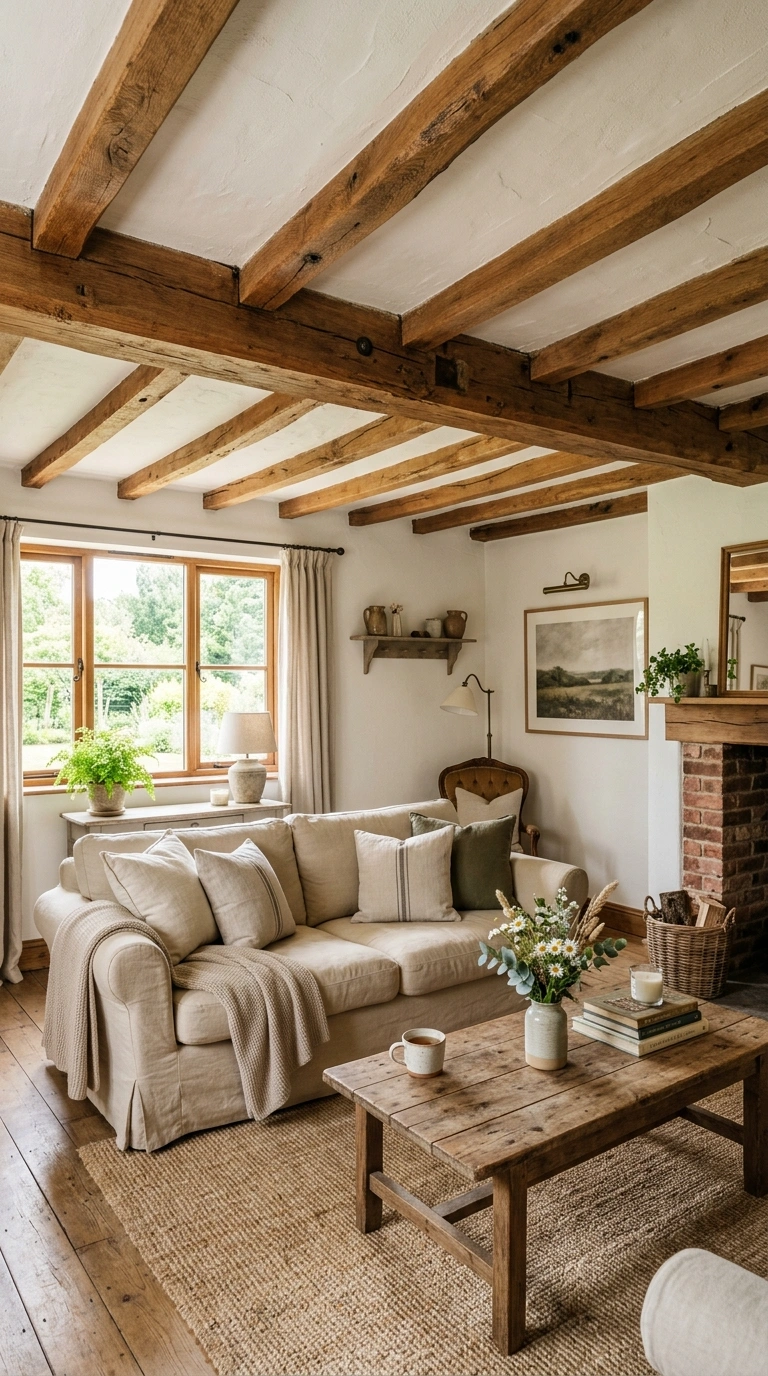
Exposed wood ceiling beams, whether real structural beams or added decorative ones, bring instant farmhouse character to a living room and draw the eye upward, which also makes the ceiling feel higher than it actually is. This idea works especially well in rooms with vaulted or high ceilings where the beams have enough space to stand out.
Choose a beam finish that contrasts gently with the ceiling color, like a warm brown beam against a white ceiling, for the clearest visual impact. Pair the beams with farmhouse style furniture below, a slipcovered sofa, a wood coffee table, simple woven baskets for storage. Keep the lighting warm and soft rather than bright white to match the cozy, rustic feeling the beams create.
13. Mid Century Furniture
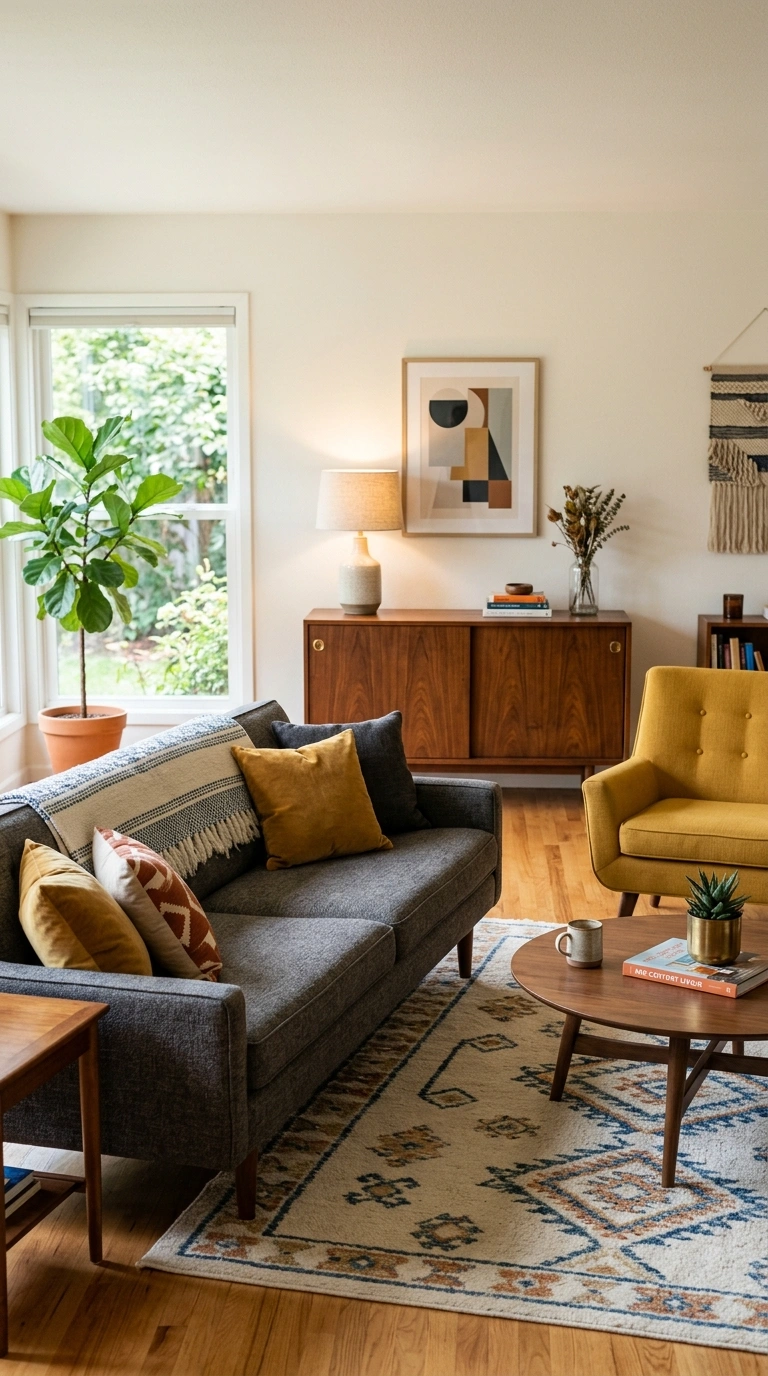
Furniture with tapered wood legs, rounded edges, and simple clean lines brings a mid century modern feel into a living room without requiring a full themed renovation. This style has stayed popular for decades because the furniture shapes feel timeless rather than trendy, and they pair easily with both modern and more eclectic decor styles.
Look for a low profile sofa or armchair with visible wood legs rather than a fully upholstered base. Add a walnut credenza or side table with simple hardware to reinforce the look. Keep colors warm, mustard, burnt orange, olive green, since these shades were common in mid century interiors and still feel fresh and inviting in a living room today.
14. Bohemian Macrame Wall
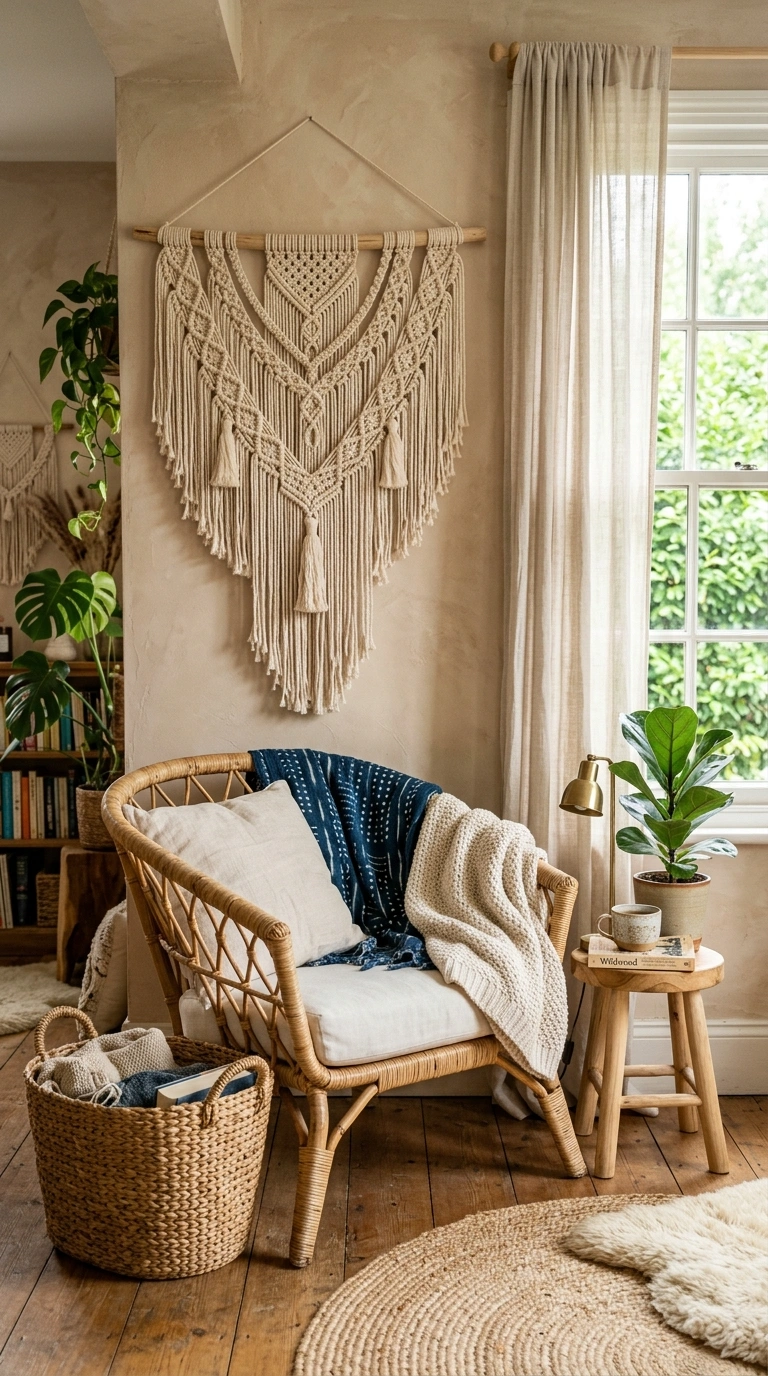
A large macrame wall hanging adds texture, shadow, and a handmade quality to a living room wall that a flat piece of art simply cannot replicate. This idea works especially well above a sofa or in a reading nook, where the woven texture becomes the focal point of that corner of the room.
Choose a macrame piece in natural cream or off white cotton rope for the most versatile look, since it pairs with almost any color scheme already in the room. Hang it on a simple wood dowel for an authentic, handmade feel. Pair the macrame with other natural textures nearby, a rattan chair, a woven basket, or a wood side table, to keep the bohemian style feeling cohesive rather than scattered.
15. Curved Furniture Lines
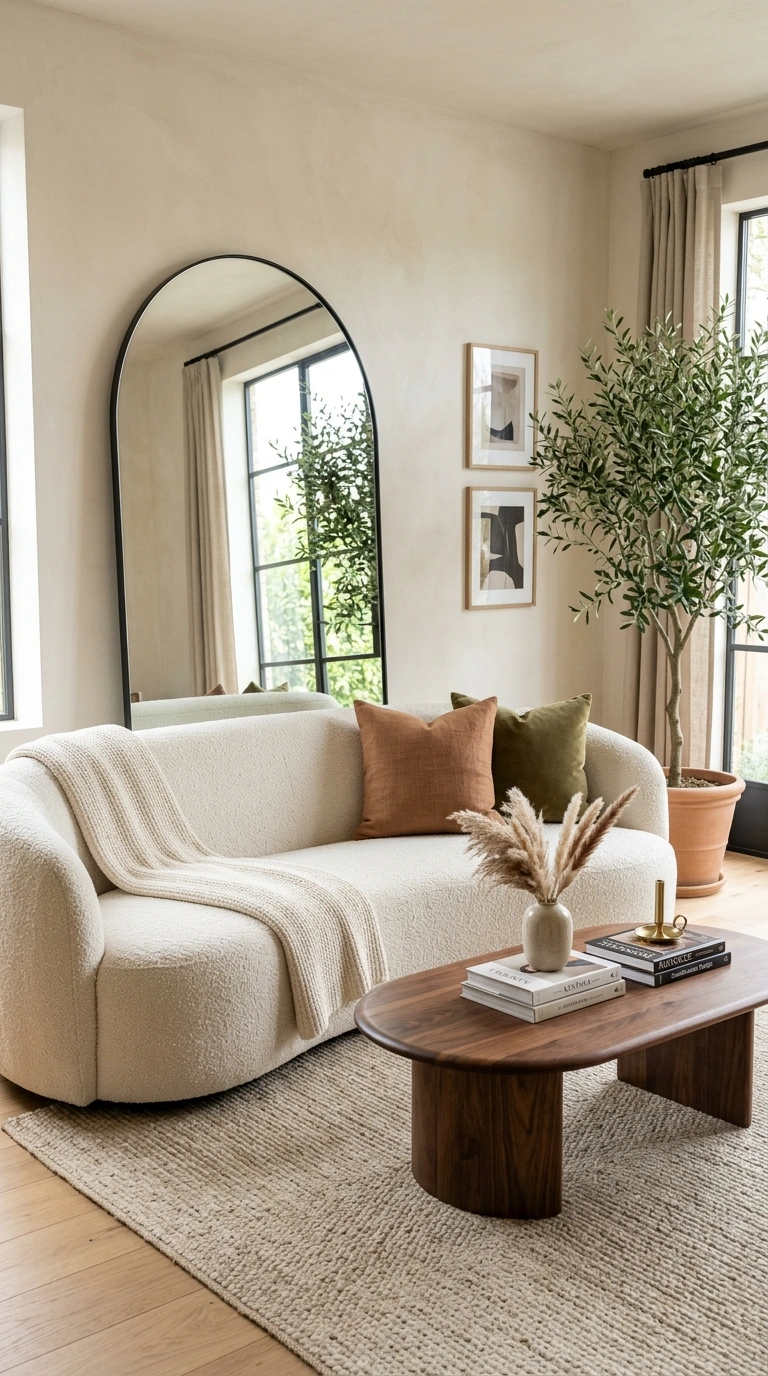
Furniture with soft, rounded shapes, a curved sofa, an oval coffee table, an arched mirror, gives a living room a gentle, welcoming feel that sharp angular furniture does not offer. This idea has become especially popular in modern living rooms because the curves soften what might otherwise be a very straight, boxy room layout.
Start with one curved anchor piece, most often the sofa, since it has the biggest visual impact in the room. Add smaller curved accents around it, a round coffee table, an arched floor mirror, or curved side tables, to carry the shape through the space. Keep the rug and rest of the furniture simple so the curves remain the standout design feature.
16. Built In Bookshelves
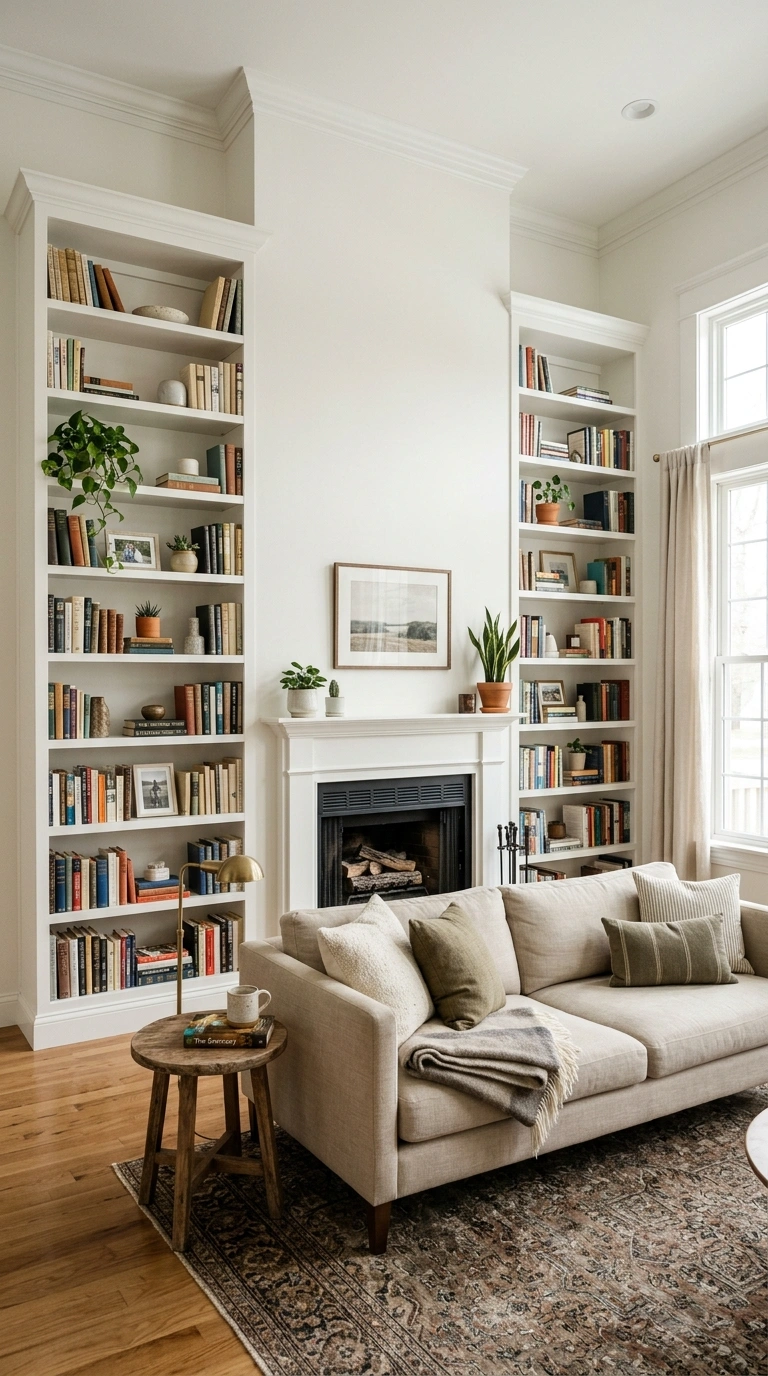
Built in bookshelves along one wall, especially flanking a fireplace or window, give a living room a custom, architectural quality that freestanding furniture cannot match. This idea works well in homes where you plan to stay long term, since built ins add both storage and real value to the space.
Paint the built ins the same color as the wall for a seamless, quiet look, or paint them a contrasting color for a bolder statement. Style the shelves with a mix of books stacked both vertically and horizontally, a few small plants, and one or two framed pieces leaned rather than hung. Leave some shelves lighter than others so the whole wall does not feel too busy or heavy.
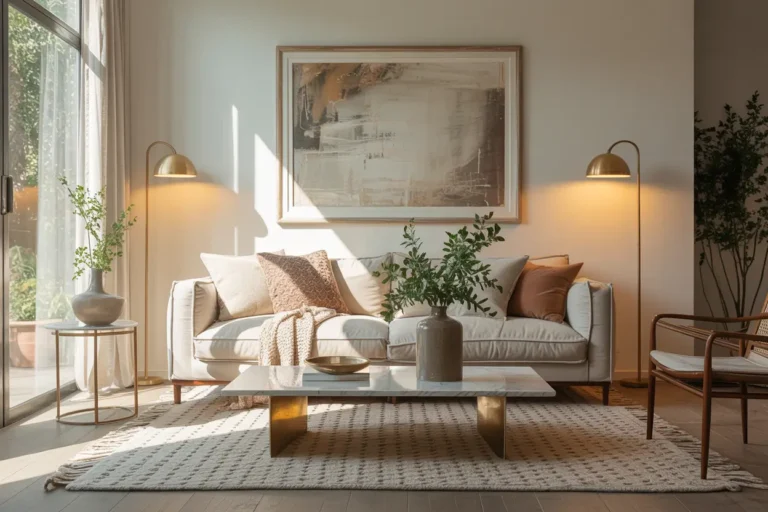
17. Statement Floor Lamp
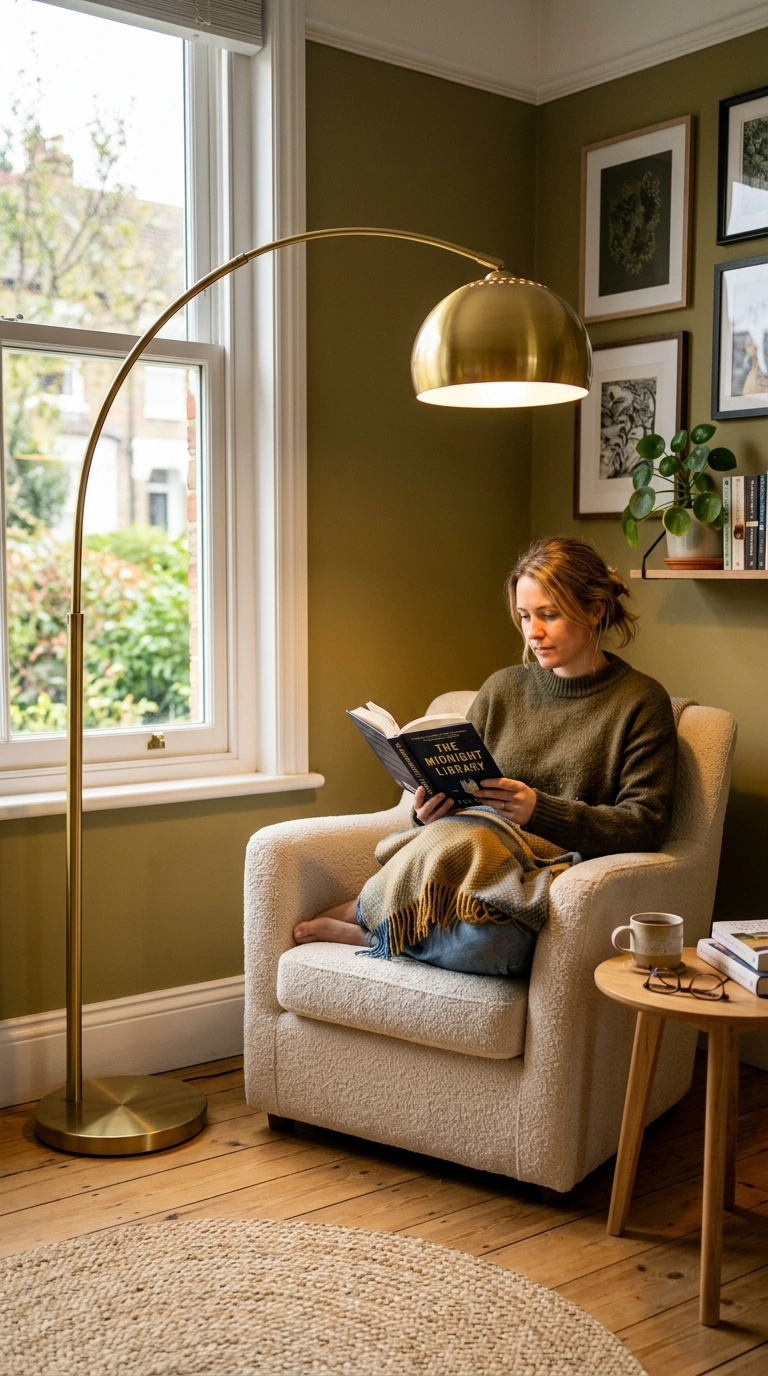
A floor lamp with an interesting shape, an arched design, a tripod base, a sculptural silhouette, can function almost like a piece of art in a living room while still providing useful reading or ambient light. This idea is especially helpful in living rooms without a lot of natural overhead lighting options.
Place the lamp beside a reading chair or behind the end of the sofa so the light falls naturally over that seating area. Choose a warm toned bulb rather than a cool white one for a cozier evening glow. A brass or black arched floor lamp over a side table works particularly well, since the arm can extend the light exactly where it is needed most.
18. Layered Table Lighting
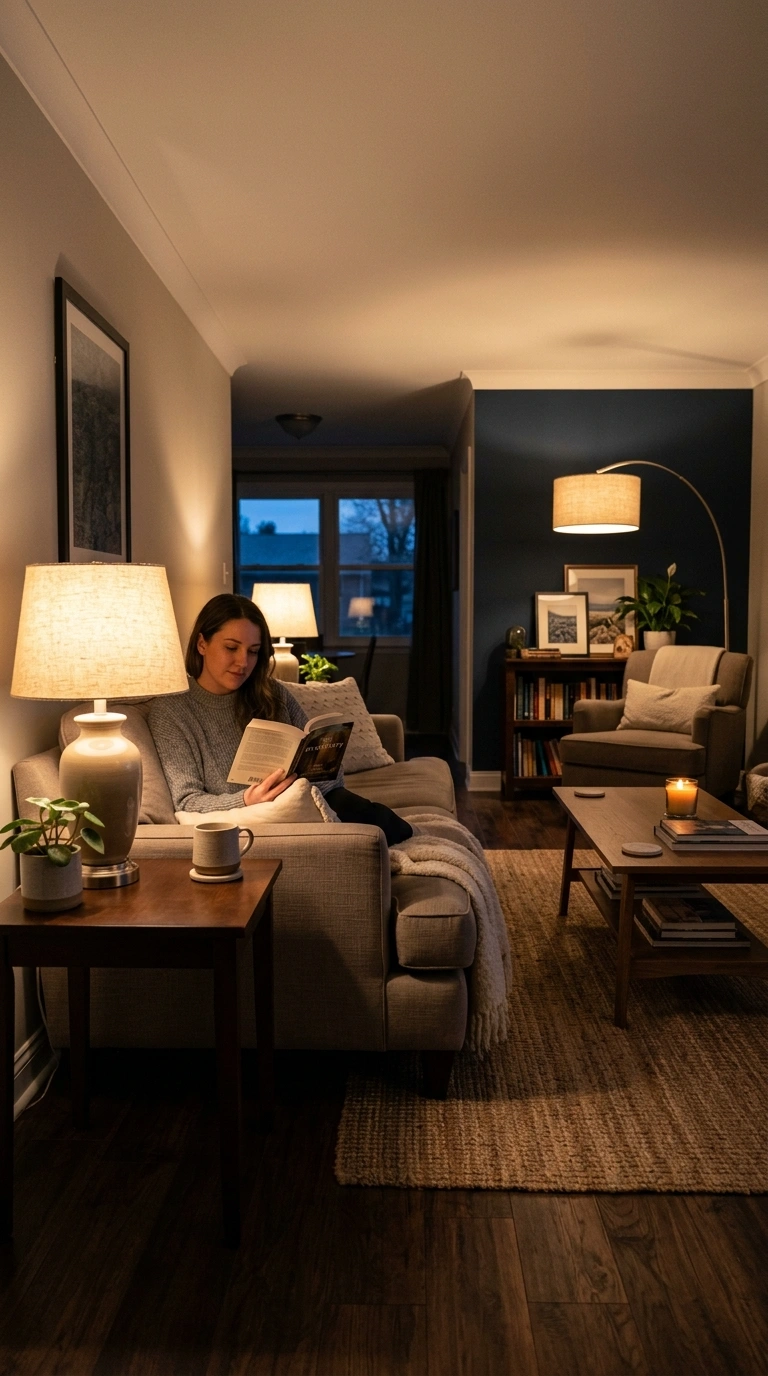
Instead of relying on one bright overhead light, using several smaller lamps around a living room, a table lamp, a floor lamp, a small accent light, creates a warmer, more layered glow that makes the whole space feel cozier in the evening. This idea works in any living room style, since the lighting layers adjust the mood rather than the decor itself.
Place one lamp on a side table near the sofa, another across the room on a console or shelf, and consider a small plug in sconce near a reading corner. Keep all the bulbs the same warm color temperature so the light feels consistent throughout the room. Turning off the main overhead light and relying on these lamps alone instantly makes evenings in the living room feel more relaxed.
19. Botanical Plant Corner
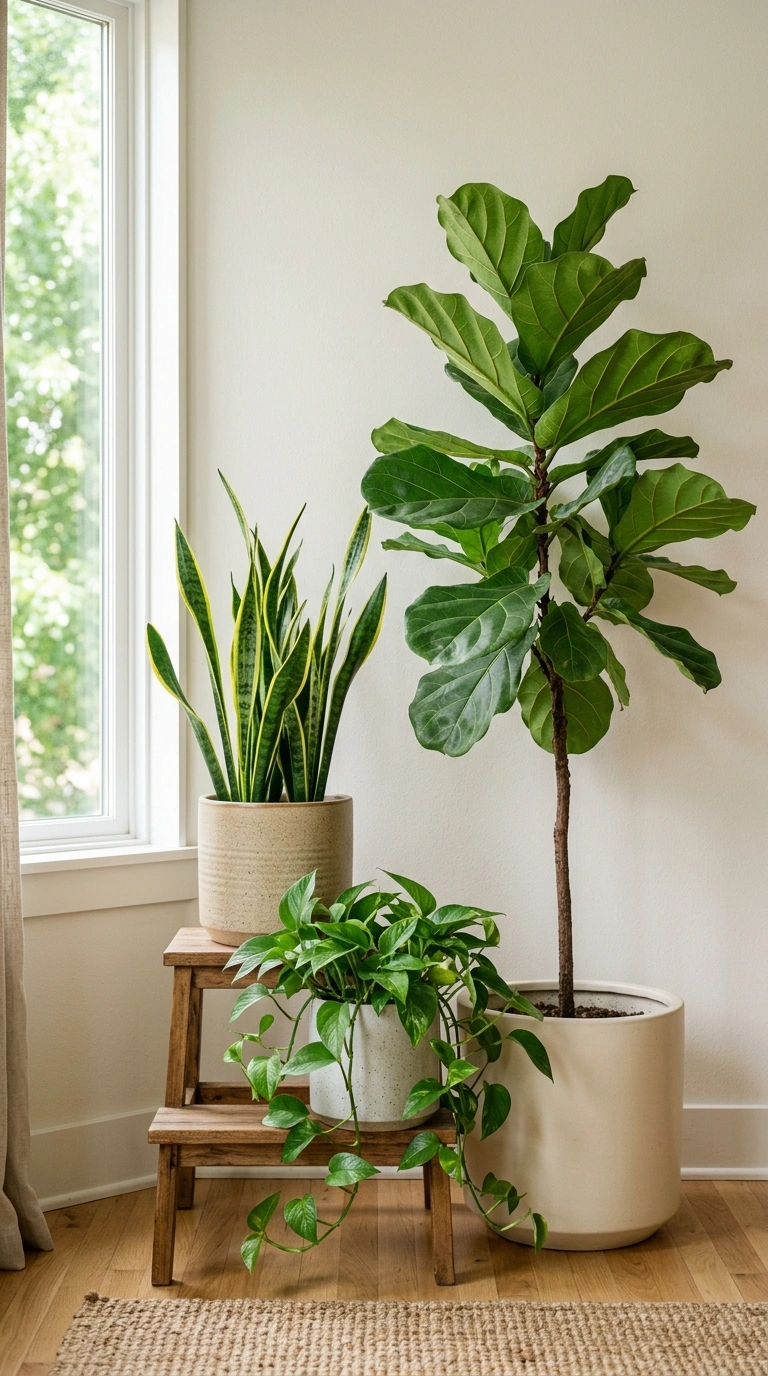
Grouping two or three plants of different heights in one corner of the living room creates a small indoor garden feel that brings life and color into the space without needing much furniture or decor. This idea works especially well in an empty corner that has never quite known what to do with itself.
Choose plants with varying heights, a tall fiddle leaf fig or snake plant in the back, a medium pothos or peace lily in the middle, and a small trailing plant in front. Group them on the floor with woven baskets or simple ceramic pots in coordinating neutral tones. Rotate the pots occasionally toward the nearest window so each plant gets even light and continues to grow well.
20. Cozy Reading Nook
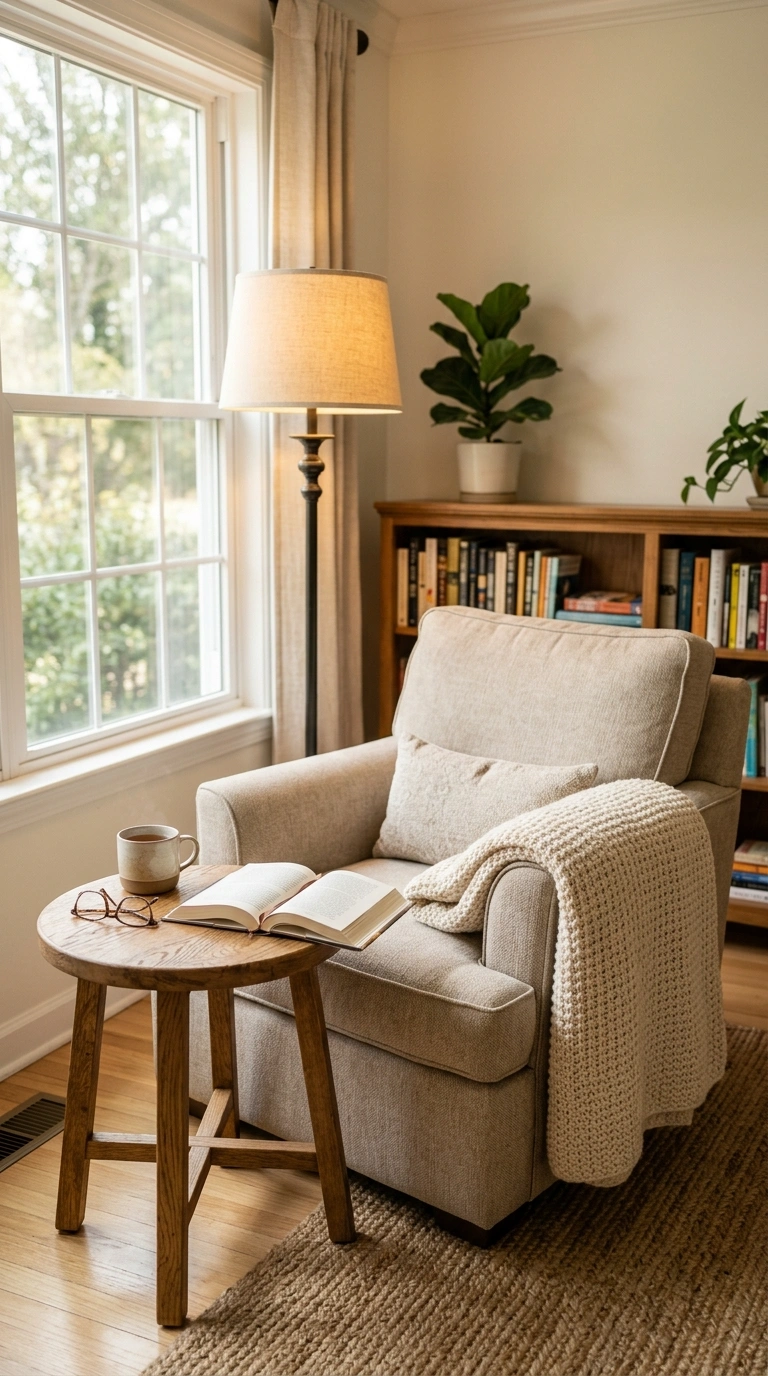
A small reading nook, one comfortable chair, a side table, and a floor lamp, tucked into a corner or beside a window gives a living room a quiet, purposeful spot that feels separate from the main seating area. This idea works especially well in larger living rooms that have an unused corner or awkward extra space.
Choose a chair with a deep seat and soft upholstery, since comfort matters more here than in the main sofa area. Add a small side table for a cup of tea or a stack of books, along with a floor lamp positioned just behind the chair’s shoulder for good reading light. A soft throw blanket draped over the arm of the chair completes the cozy, inviting feel.
21. Monochrome Color Scheme
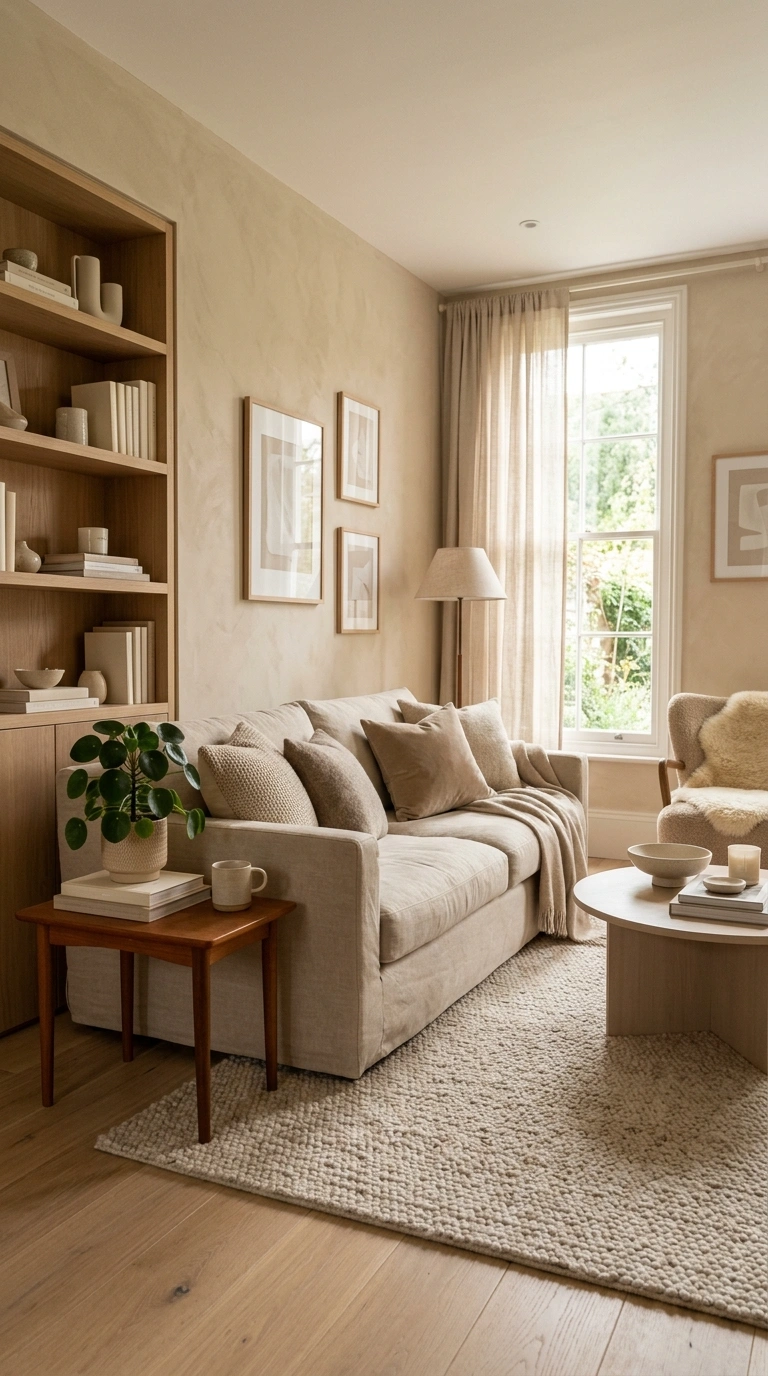
Decorating a living room in different shades of a single color, several tones of grey, several shades of warm beige, creates a calm, cohesive look that feels intentional and sophisticated without requiring a strict color matching effort. This idea works especially well for people who feel overwhelmed trying to combine several different colors in one room.
Choose one base color and use it across the walls, sofa, and rug in slightly different shades and tones, then add texture through materials like linen, wood, and wool rather than through additional colors. A single small accent color, like one dark green plant or one black picture frame, keeps the monochrome scheme from feeling flat while still respecting the overall calm effect.
22. Woven Basket Storage
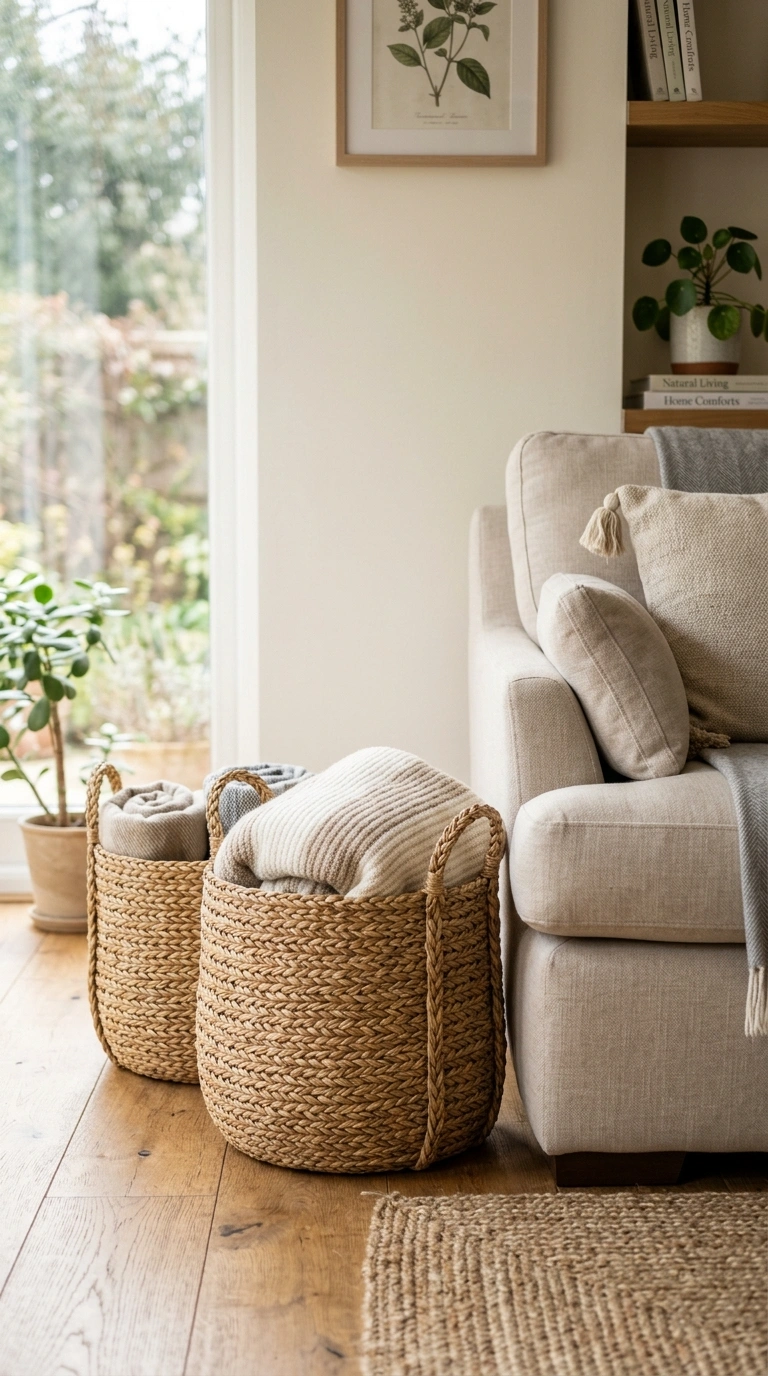
Large woven baskets tucked beside a sofa or under a console table give a living room extra storage for blankets, toys, or magazines while adding natural texture at the same time. This idea works in nearly every decor style, since baskets read as both practical and decorative rather than purely functional storage bins.
Choose baskets in a natural seagrass or rattan material for the most versatile look, or a woven fabric basket if you prefer a softer texture. Group two baskets of different sizes together rather than using just one, since the varied heights create more visual interest. Keep a folded blanket peeking out of the top of one basket for a lived in, ready to use appearance.
Finding your decorating style is less about picking one look from a magazine and more about noticing what you keep gravitating toward. Try one or two ideas from this list first, live with them for a week, and let that feeling guide the next change you make in the room.
FAQs
How do I figure out my living room decorating style?
Look through the ideas that catch your attention the most, whether that is warm wood tones, bold color, or clean minimal lines, and notice the pattern. Most people find they are drawn to two or three consistent elements, which usually points toward their true style.
Can I mix different living room styles together?
Yes, most real living rooms combine elements from a few different styles rather than following one look perfectly. A boho macrame piece can sit comfortably in a mostly modern room as long as the color palette stays connected throughout the space.
What is the easiest way to update a living room on a small budget?
Swapping throw pillows, adding a new rug layer, or rearranging existing furniture and lamps are some of the cheapest and fastest ways to change the feel of a living room without buying anything expensive.
How many pieces of furniture does a small living room need?
A small living room usually looks best with one sofa, one or two chairs, a coffee table, and one or two side tables, rather than trying to fit in every furniture piece from a larger showroom layout.
Do all the wood tones in a living room need to match exactly?
No, wood tones do not need to match perfectly. They just need to share similar warm or cool undertones so the room feels connected rather than mismatched.