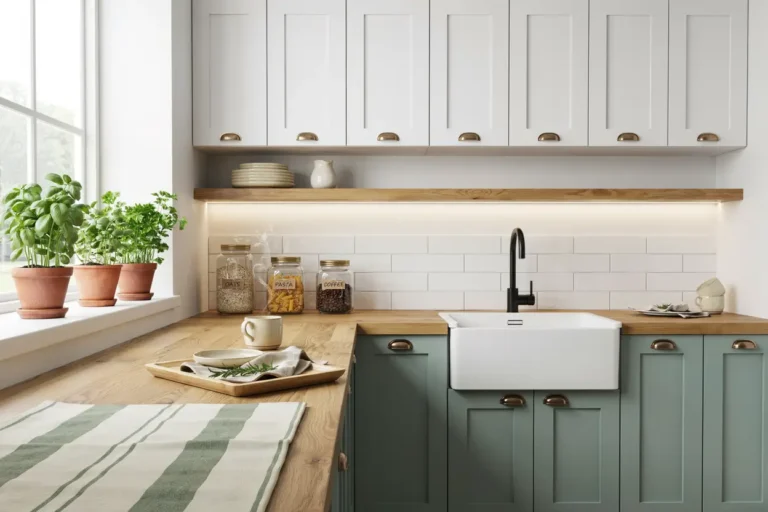
22 Kitchen Organization Tricks That Make Daily Life Easier

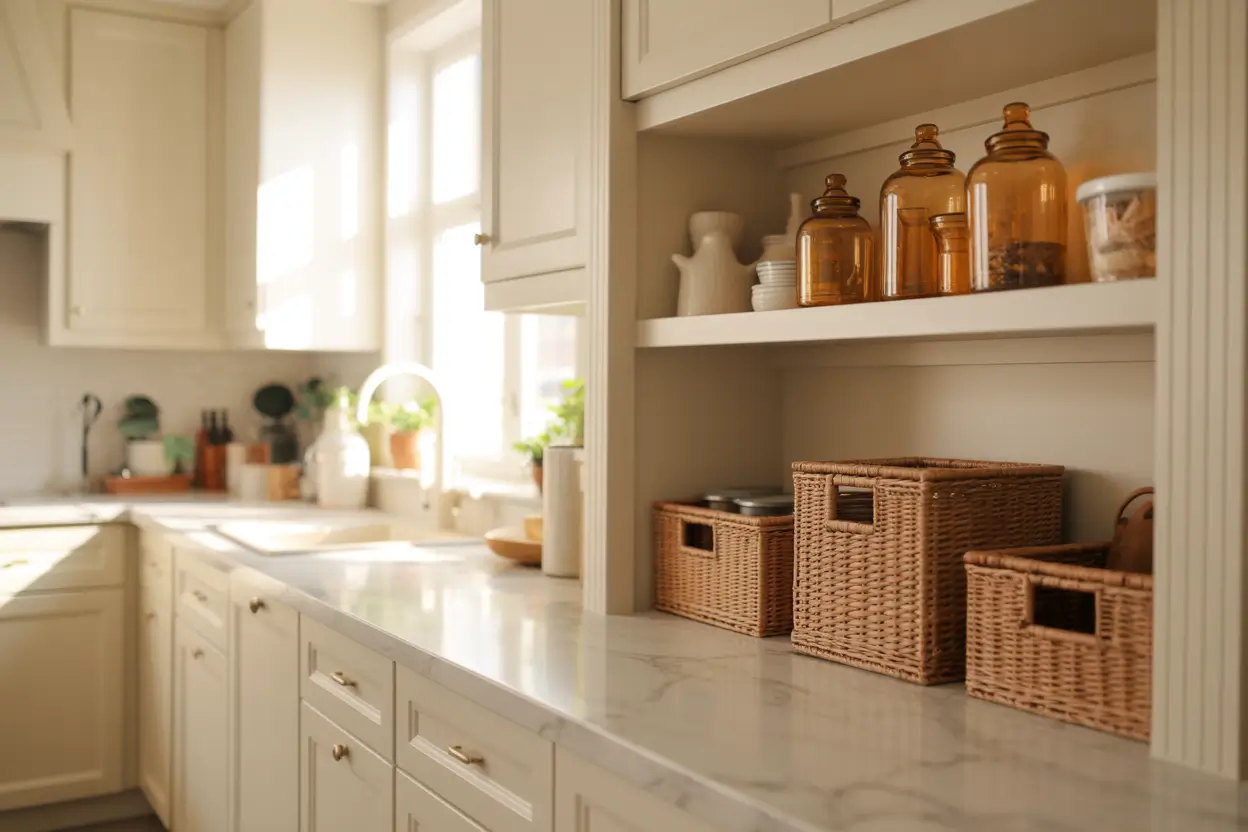
My kitchen used to be the one room in my house that made me tired just walking into it. Drawers that stuck, a pantry shelf that avalanched every time I reached for pasta, mugs stacked three high and wobbling. None of that changed overnight, and none of it took a big budget either. It changed one small habit and one small bin at a time. If your kitchen feels like it is working against you instead of for you, this list is for you. These are the tricks that actually stuck around in my house long after the initial cleanup high wore off, the ones that hold up on a Tuesday morning when you are rushing to pack lunches and find your keys. Grab a coffee and read through these, then pick two or three to try this weekend.
1. Clear Glass Canisters
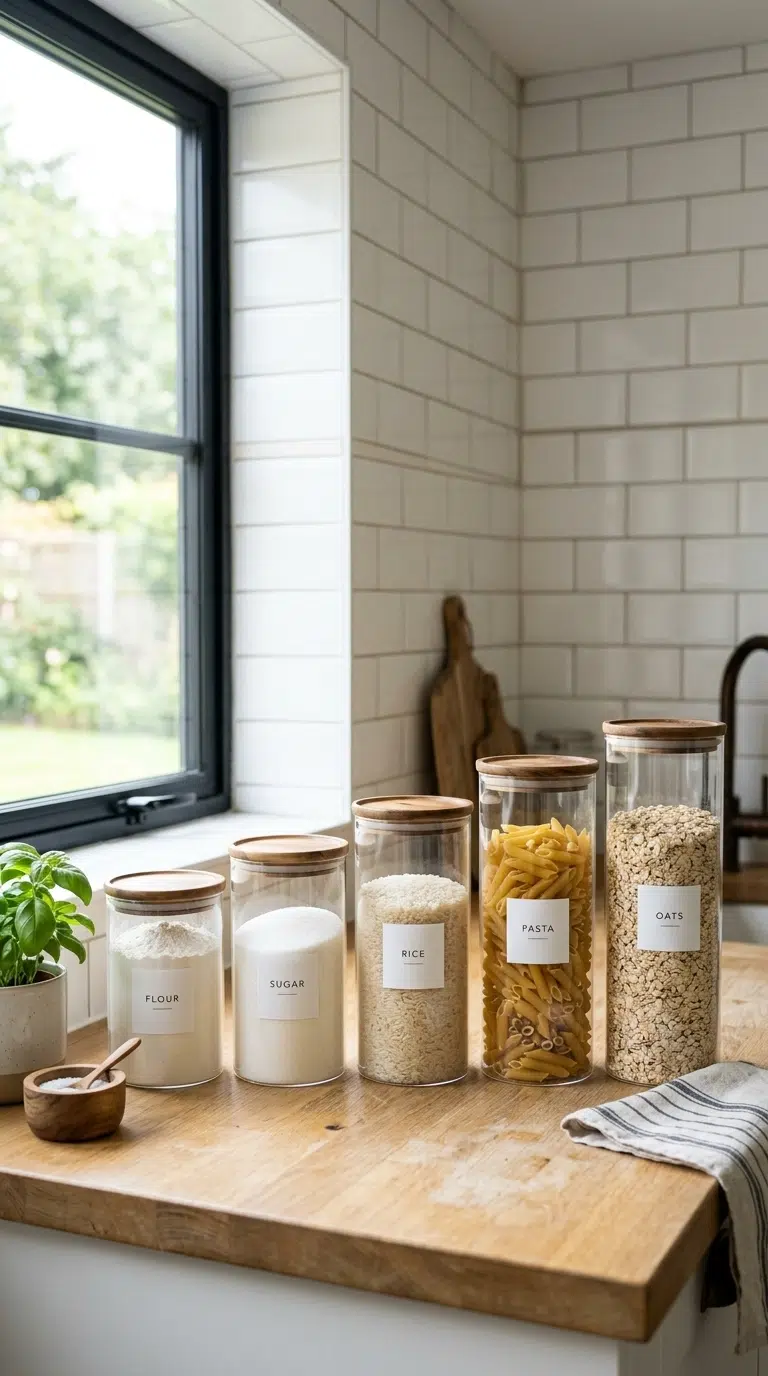
Swap your flour, sugar, rice, and pasta bags for a matching set of clear glass canisters on your counter or open pantry shelf. Glass lets you see exactly how much you have left, so you never open a bag expecting flour and find an inch of dust. Choose canisters with airtight lids to keep food fresher longer and to stop pantry moths before they start. Line them up by height on a shelf or counter corner near your baking supplies, tallest in back, shortest in front, so every label is visible at a glance. Add a small chalkboard tag or a strip of washi tape with the name and a fill date if you like to track freshness. This trick works in kitchens of any size, from a tiny apartment galley to a full walk-in pantry, and it instantly makes shelves look tidier because everything matches. Refill canisters straight from the store bag the moment groceries come home, before anything gets shoved onto a shelf still in its original packaging.
2. Labeled Spice Drawer
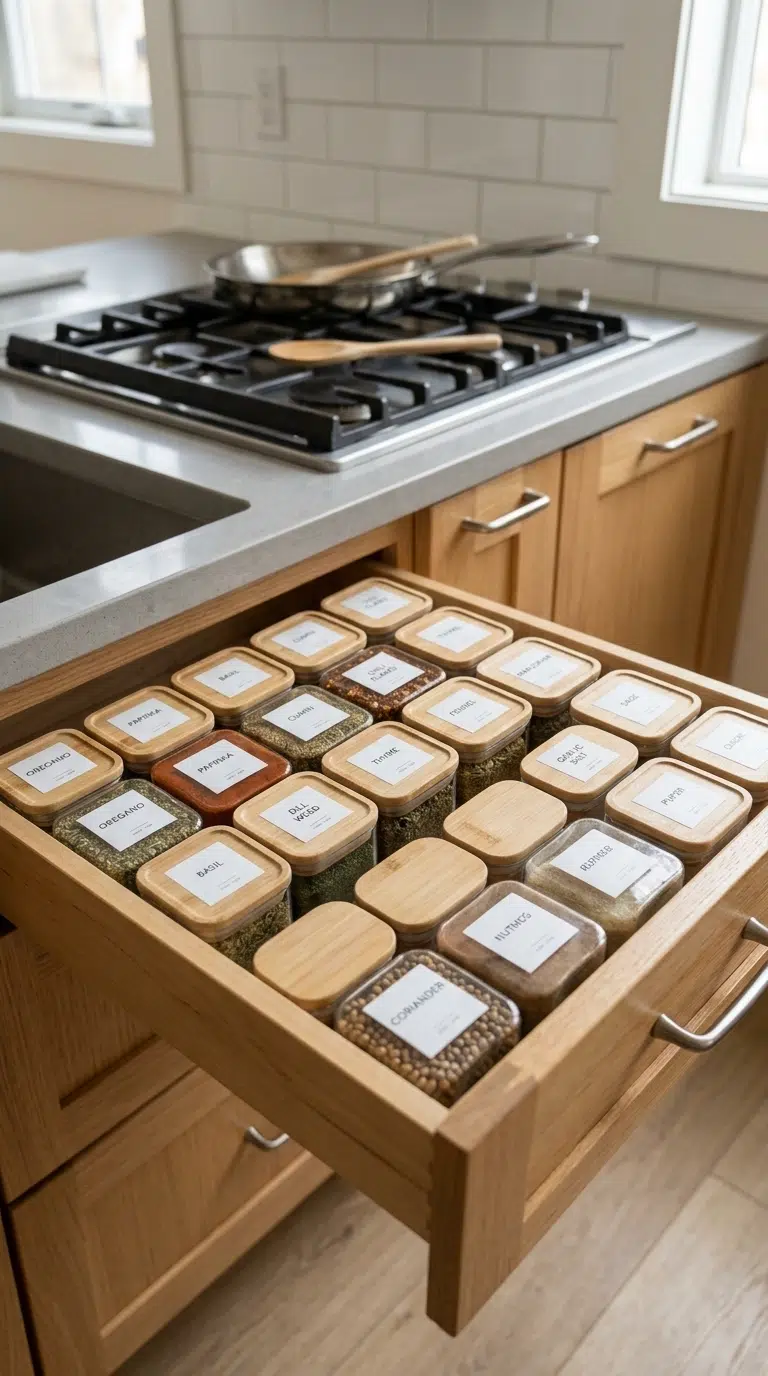
Instead of a spinning spice rack that always seems to hide the one jar you need, try laying spices flat in a shallow drawer near your stove. Use small square or round jars of the same size so they sit in neat rows, and label the lids rather than the sides so you can read everything from above. A drawer insert with slanted rows works well too if you want jars angled toward you. Group spices by how often you use them, everyday basics like salt, pepper, and garlic powder up front, specialty spices toward the back. This setup means you can find cumin in three seconds flat while something is sizzling on the stove, no digging through a crowded cabinet shelf. It also keeps spices out of direct light, which helps them stay flavorful longer. Refill small jars from bulk containers instead of storing giant bags loose, and wipe the drawer out every few months since spice dust does build up over time.
3. Under-Sink Bins
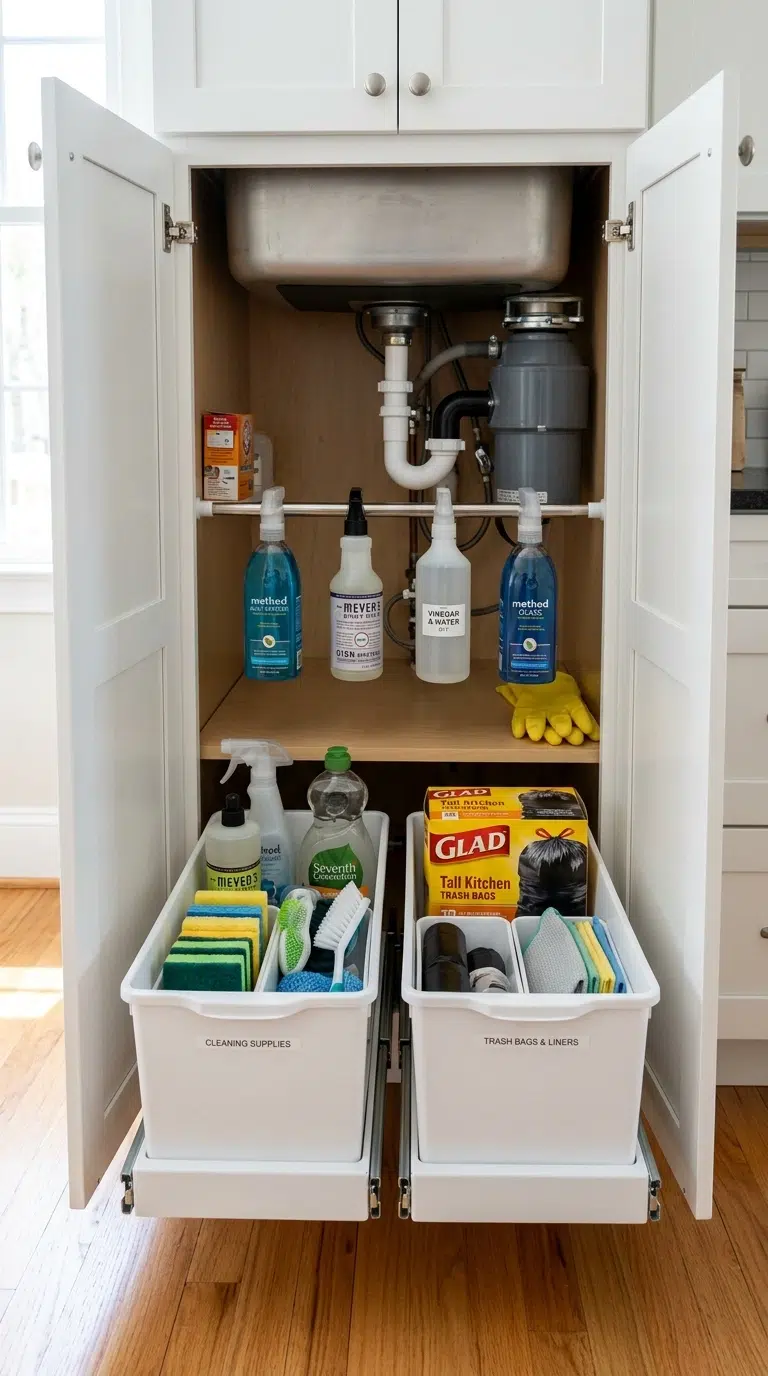
The area under your kitchen sink is usually a jumble of spray bottles, sponges, and stray plastic bags, but a few labeled bins can turn it into one of the most organized spots in the room. Use narrow pull-out bins or a two-tier sliding organizer to work around the pipes instead of fighting them. Group items by task, one bin for dish soap and sponges, one for surface cleaners, one for trash bags and gloves. A tension rod mounted across the cabinet is a classic trick for hanging spray bottles by their necks, which frees up floor space below for taller items. Add a small lazy Susan in the back corner for items you forget you own, like drain cleaner or extra scrub brushes. Wipe down the cabinet floor before you start, since it collects grime nobody sees. This is a same-day project, most people can finish it in under an hour, and it makes cleaning supplies easy to grab without kneeling and rummaging.
4. Vertical Pan Rack
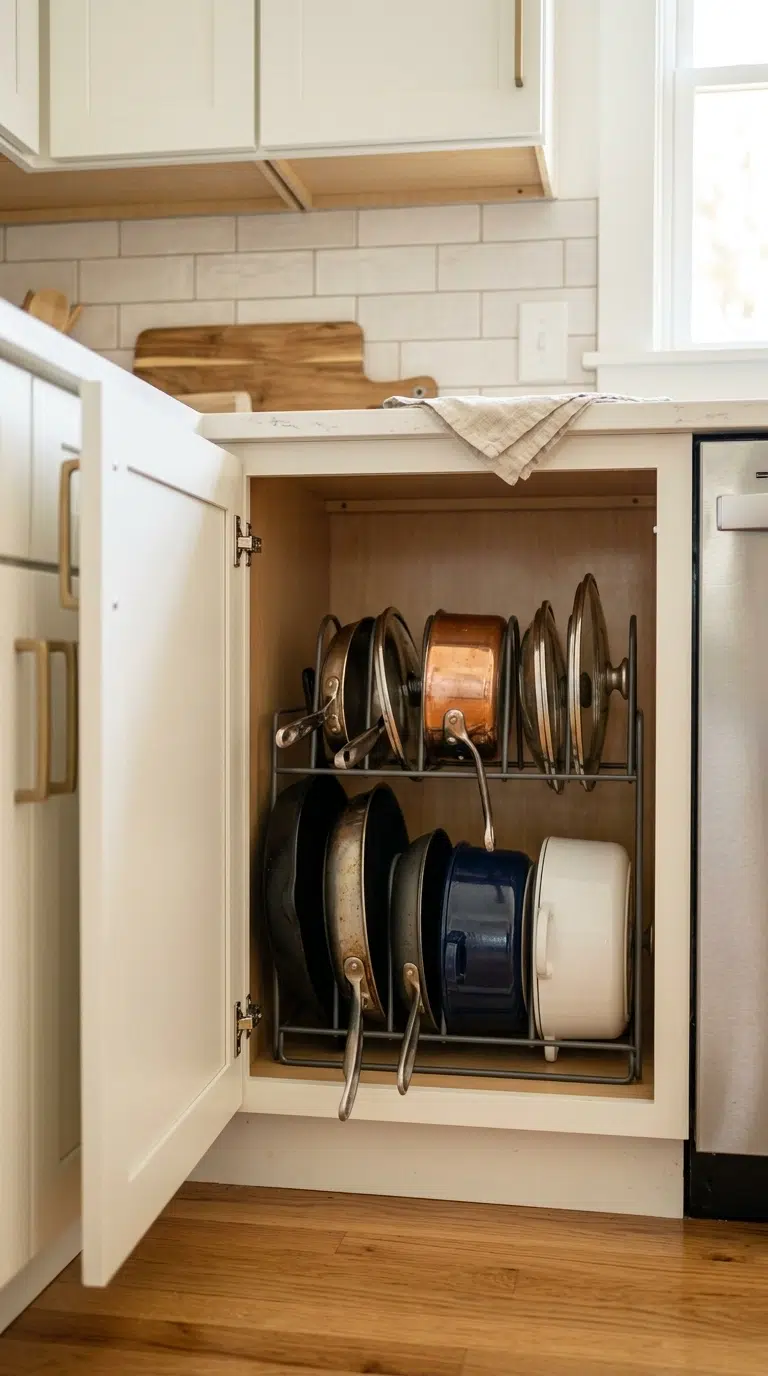
Stop stacking pots and pans in a heavy pile that forces you to unload three pans just to reach the one on the bottom. Instead, install a vertical rack or file-style divider inside a lower cabinet so each pan slides in and out like a book on a shelf. You can also hang a wall-mounted rack above a counter or island if you have the space and like the look of exposed cookware. Group pans by size, and keep lids in a separate slim rack or a lid organizer mounted to the inside of the cabinet door. This trick saves your wrists from the daily wrestling match and keeps nonstick coatings from scratching against each other. It also makes your cookware visible, so you actually use that saucepan sitting in the back instead of forgetting it exists. A simple wire or bamboo divider from a home store is enough, no need for anything fancy or expensive to make this work.
5. Drawer Dividers Everywhere
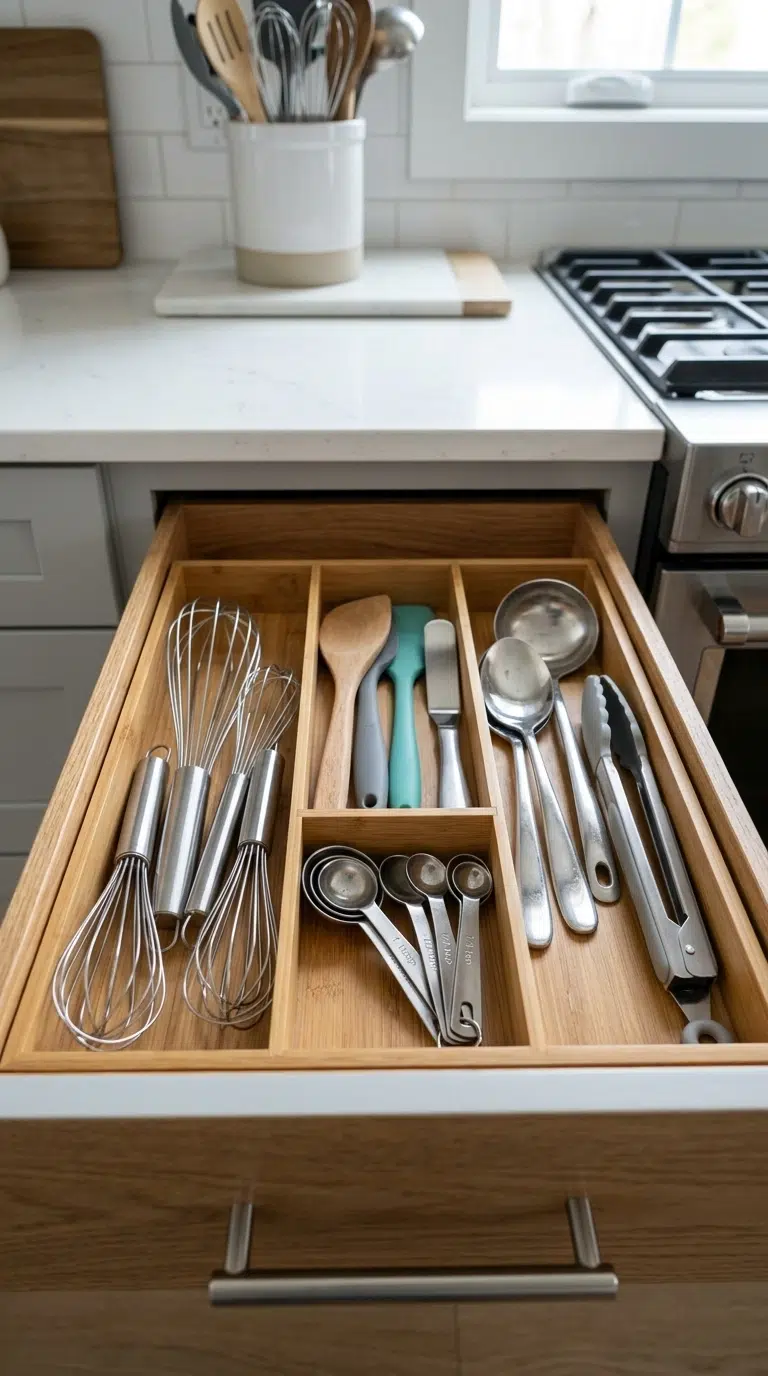
Junk drawers happen to every household, but a few inexpensive dividers can stop that one messy drawer from taking over your whole kitchen. Use adjustable bamboo or plastic dividers to split large drawers into smaller sections, one for takeout menus and twist ties, one for batteries and rubber bands, one for notepads and pens. For your utensil drawer, choose a divider tray with slots sized for spatulas, whisks, and measuring spoons so nothing gets tangled together. Measure your drawer before buying dividers, since kitchen drawers vary more in depth than people expect. Once everything has a defined spot, it becomes much easier to put things back correctly instead of tossing them in wherever there is room. This is one of the fastest kitchen projects on this list, most drawers can be sorted and divided in fifteen minutes. Do one drawer at a time rather than pulling everything out at once, so the project never feels overwhelming.
6. Open Shelf Baskets
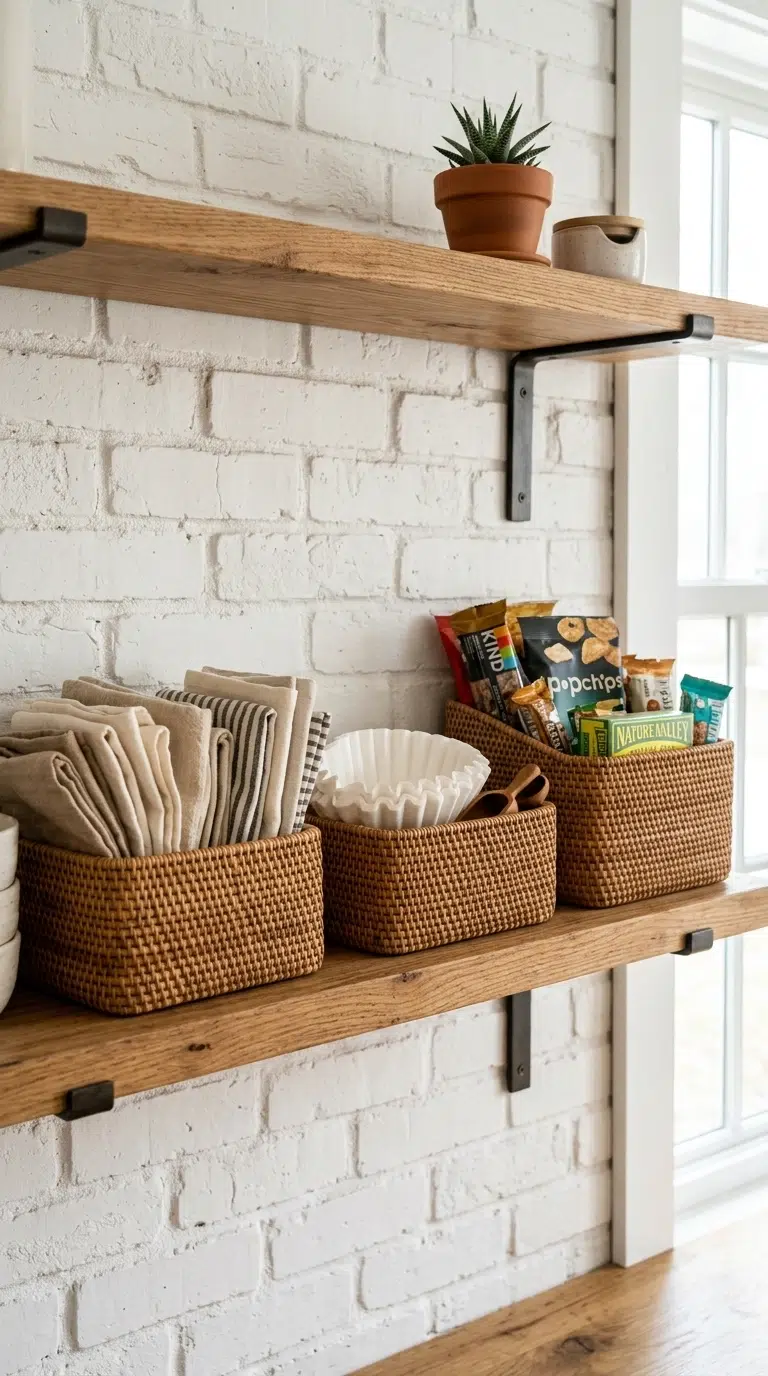
If you have open shelving in your kitchen, woven baskets or metal wire bins can group loose items into tidy, photogenic clusters instead of a scattered mess. Use one basket for cloth napkins, one for snack bags, one for coffee filters and tea bags, so the shelf reads as organized sections rather than random clutter. Choose baskets in a matching material, like natural rattan or black wire, to keep the whole shelf feeling cohesive rather than mismatched. Label each basket with a small wooden tag or a piece of twine and a paper tag if you want guests and family members to know where things belong. Leave a little breathing room between baskets rather than packing the shelf edge to edge, since a slightly loose arrangement photographs better and feels calmer to look at. This trick works especially well in kitchens without much cabinet space, turning open shelves into functional storage that still looks intentional and decorated rather than exposed and messy.
7. Lazy Susan Corners
Corner cabinets are notorious for swallowing items whole, so a lazy Susan turntable is one of the most useful upgrades you can add without any tools. Choose a two-tier turntable for tall corner cabinets so you get double the usable space, and reserve it for bottles, oils, and jars that tend to get lost in the back. In the pantry, a smaller lazy Susan works well for spice blends, salad dressings, or snack packets that would otherwise fall behind bigger boxes. The turning motion means you never have to reach and dig blindly into a dark corner again, everything simply rotates into view. Group similar items together on each tier, oils and vinegars on top, condiments below, so your hand goes straight to what it needs. This is a same-day fix, most turntables just sit on the shelf with no installation required. It is one of the simplest ways to reclaim wasted corner space in almost any kitchen layout.
8. Hanging Mug Rail
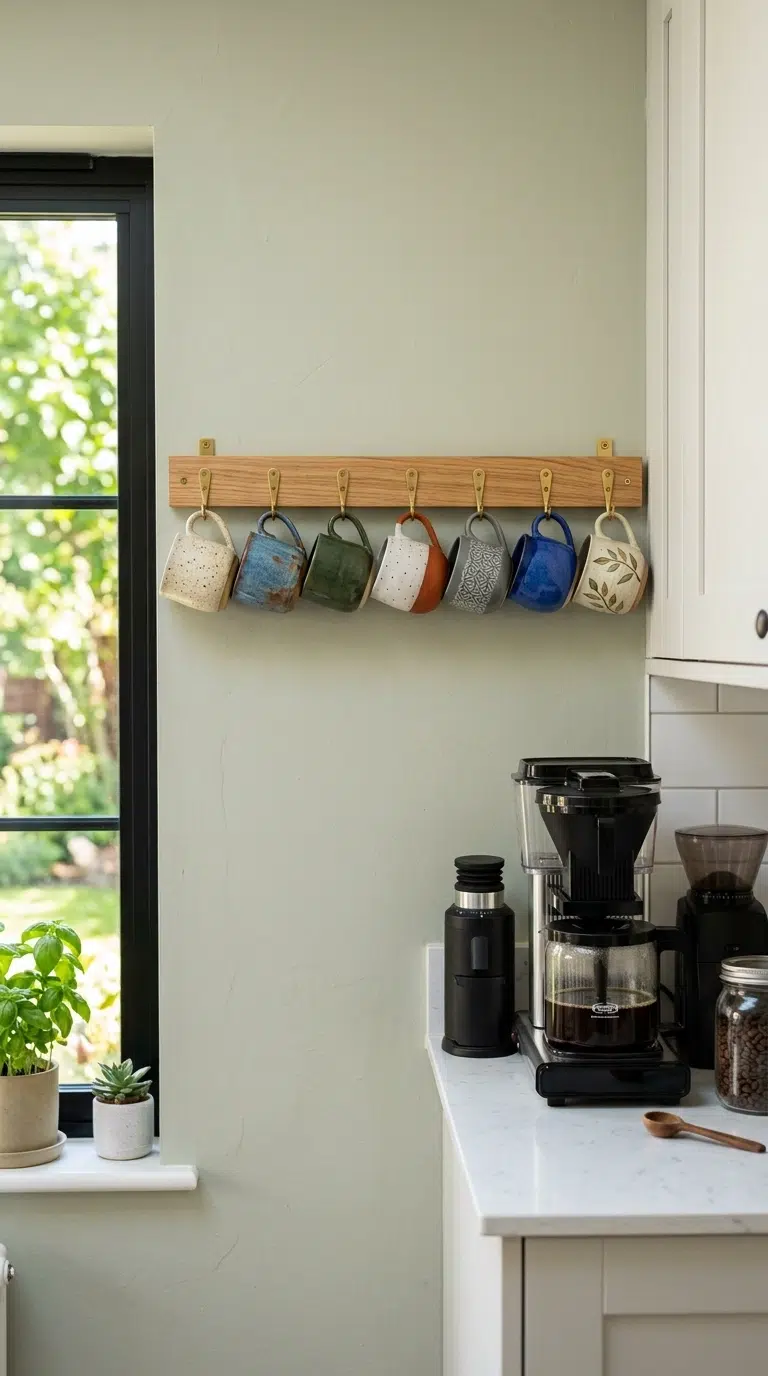
If your mug collection has taken over a full cabinet shelf, a hanging rail mounted under an upper cabinet or along a bare wall can free up that space instantly. Choose a simple wooden or metal rail with hooks spaced evenly, and hang mugs by their handles so each one is visible and easy to grab with one hand. This works especially well near your coffee station, since it keeps mugs within arm’s reach of the coffee maker without opening a single cabinet door. Mix in a few patterned mugs with plain ones for a display that looks curated rather than cluttered, and keep the rail to eight or ten mugs so it never feels crowded. Install the rail with a level and a stud finder if you are mounting into drywall, or use adhesive strips rated for the weight if you want to skip drilling. This is a small change that makes your morning coffee routine noticeably smoother.
9. Cutting Board Slots
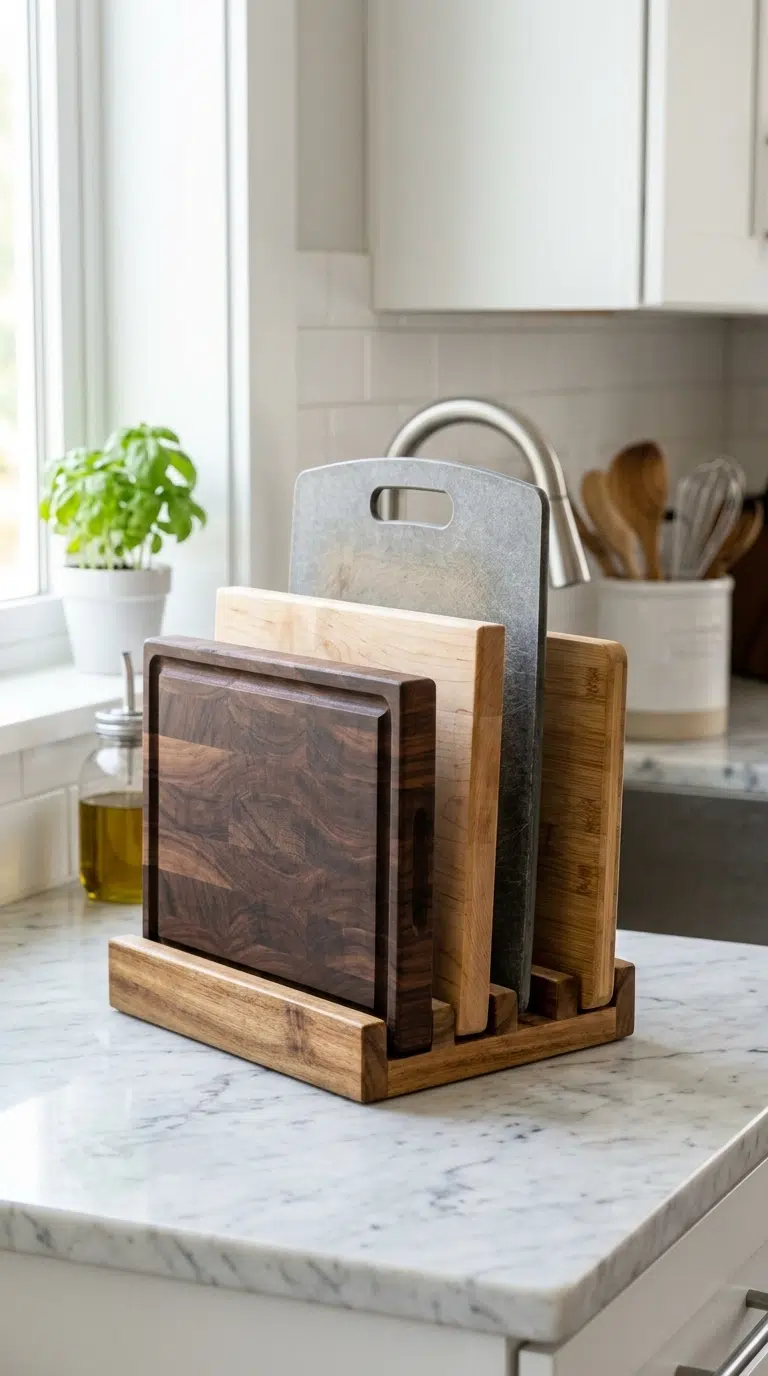
Stacked cutting boards are heavy, awkward, and usually stored in the worst possible spot, wedged sideways in a cabinet where they scrape against baking sheets. A vertical slot organizer, either a freestanding wire rack or a built-in slotted cabinet insert, solves this by keeping each board upright and separated. Store the rack in a lower cabinet near your prep area, or leave it on the counter if you have the space and like the look of wooden boards on display. Group boards by material, wood boards together and plastic boards together, since they often need different cleaning routines. This setup also lets boards air dry properly between uses instead of trapping moisture against another surface, which helps them last longer and stay more sanitary. If you are short on cabinet space, a slim slot rack can slide into the gap beside a refrigerator or oven, turning unused dead space into a functional storage spot.
10. Tiered Pantry Shelves
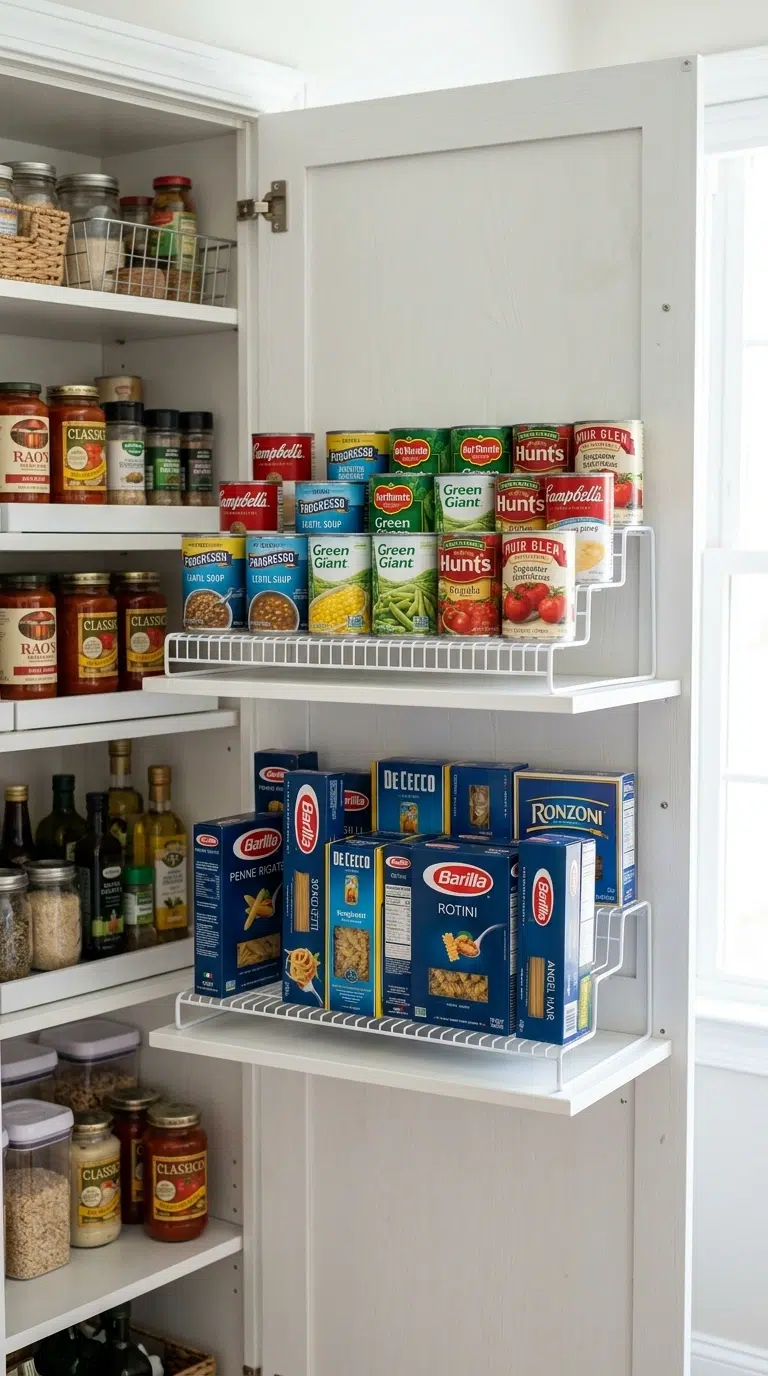
A pantry with flat, deep shelves usually means cans and boxes get lost behind each other, forcing you to move ten items just to find the one in back. Adding tiered wire or acrylic risers turns each shelf into a staircase, so every can, jar, and box is visible from the front without digging. Use one riser for canned goods, arranged by type, and another for boxed items like pasta and cereal, so similar things sit at the same eye level. This trick is especially helpful for smaller pantries or single cabinet pantries, since it makes the most of vertical space that would otherwise go to waste. Group items by category first, then place them on the risers so your eye can scan the shelf and find what you need in seconds. Most tiered risers are freestanding and need no tools to install, so this is an easy weekend project that makes a noticeable difference in how your pantry functions every day.
11. Utensil Crock Station
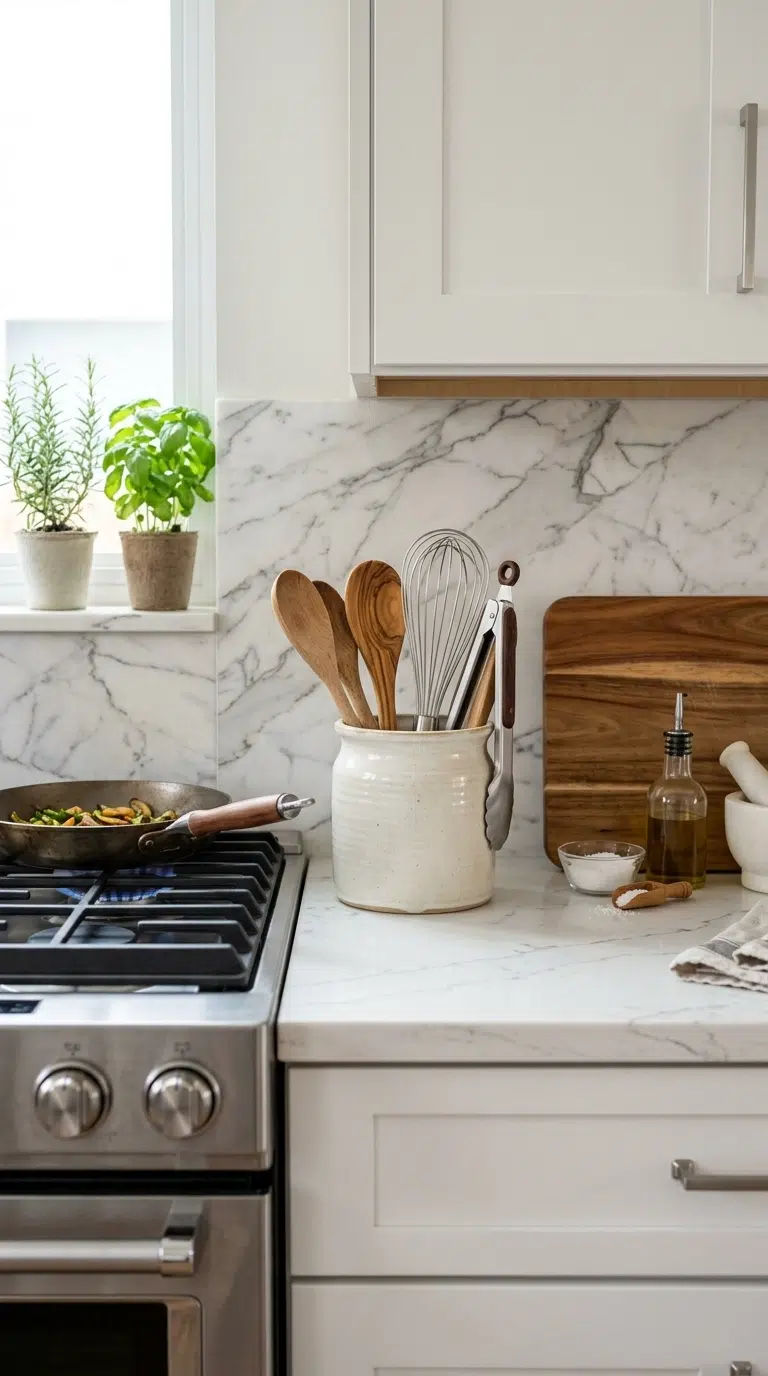
A single utensil crock sitting beside your stove keeps your most-used spoons, spatulas, and tongs within arm’s reach instead of buried in a drawer across the kitchen. Choose a ceramic, stoneware, or galvanized metal crock that matches your kitchen’s finishes, and fill it only with tools you reach for daily, wooden spoons, a slotted spatula, tongs, and a whisk. Leave the rarely used gadgets, like a melon baller or a garlic press, in a drawer instead, so the crock never gets overcrowded or messy looking. Position the crock on the counter closest to your stovetop, ideally within a single step, so you are not carrying dripping spoons across the room while cooking. A crock with a wide base and a bit of weight will not tip over easily when you pull a spoon out in a hurry. This tiny station makes cooking feel more natural, since your hand finds the right tool without any searching or thinking.
12. Fridge Bin System
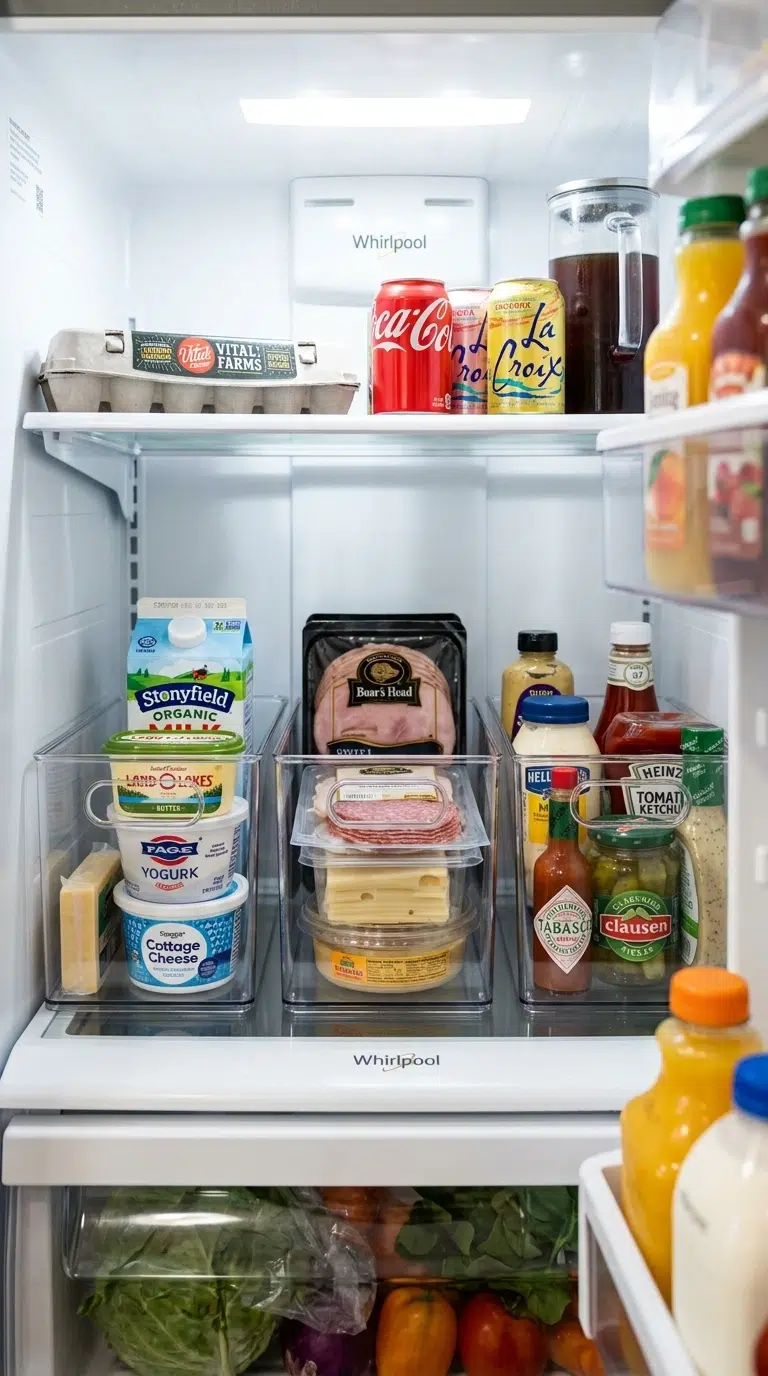
An unorganized fridge is one of the biggest daily time wasters in a kitchen, so clear bins turn chaos into a system you can see through at a glance. Use one bin for dairy, one for deli meats and cheese, one for snack-sized items kids can grab themselves, and one for sauces and condiments that tend to roll around. Choose bins with open tops or handles so you can pull the whole bin out to wipe crumbs and spills rather than scrubbing individual shelves. Label each bin with a small removable tag so everyone in the house knows exactly where things belong and puts them back correctly. This system also makes grocery day faster, since you can see at a glance which bin is running low and needs restocking. Clear plastic works best because it lets light through and makes contents visible even in the back of a dim fridge shelf. Wipe bins out weekly to keep things fresh and spill free.
13. Coffee Station Tray
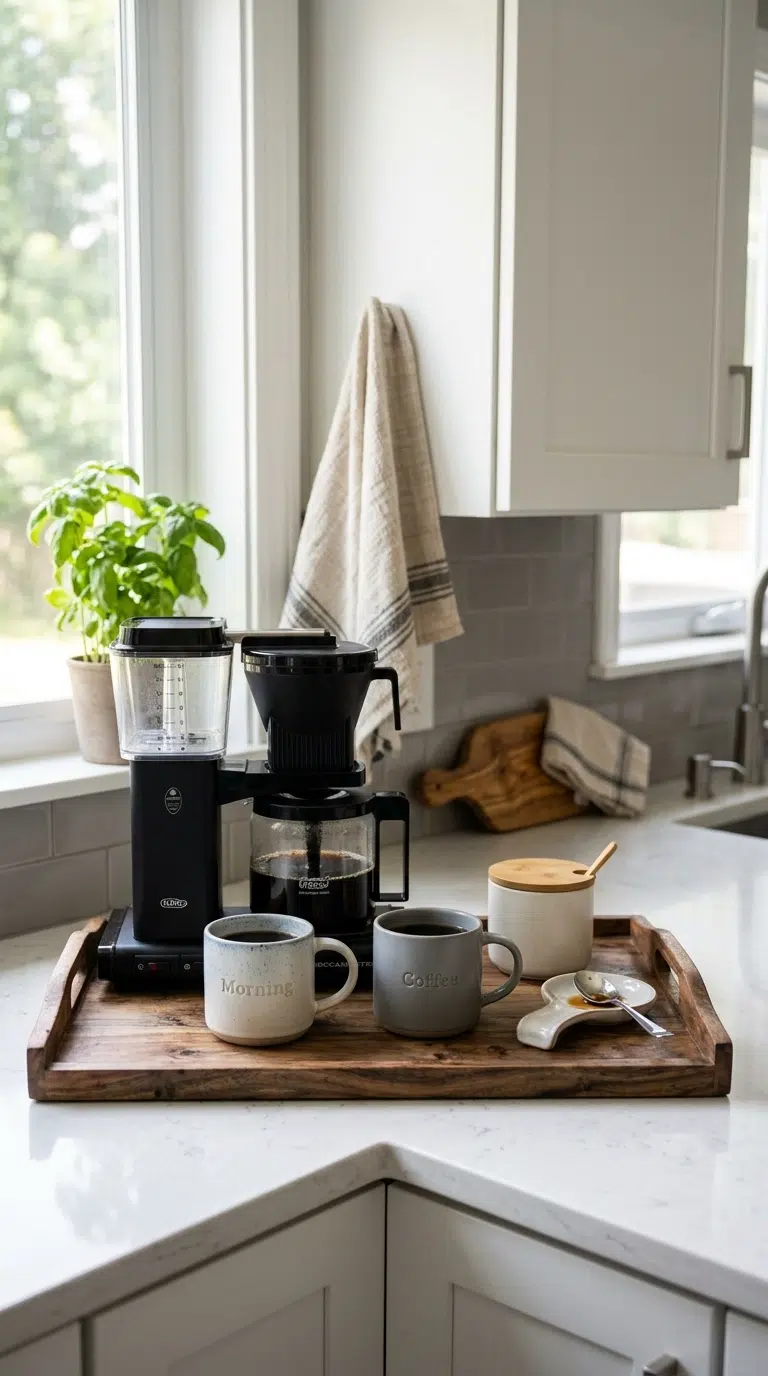
A dedicated coffee tray on your counter groups your coffee maker, mugs, sugar, and syrups into one tidy zone instead of scattering them across the whole kitchen. Choose a wooden or metal tray large enough to hold your machine plus a small canister of sugar, a spoon rest, and two or three favorite mugs. Keeping everything on a tray means you can lift the whole station off the counter in seconds to wipe underneath, which keeps coffee grounds and spills from building up in one spot. Position the tray near an outlet so cords stay tucked and out of sight, and add a small plant or a piece of art behind it if you want the corner to feel a little more finished. This trick works in kitchens of every size, from a studio apartment counter to a full butler’s pantry, and it turns a purely functional corner into one that feels calm and put together every morning.
14. Under-Cabinet Hooks
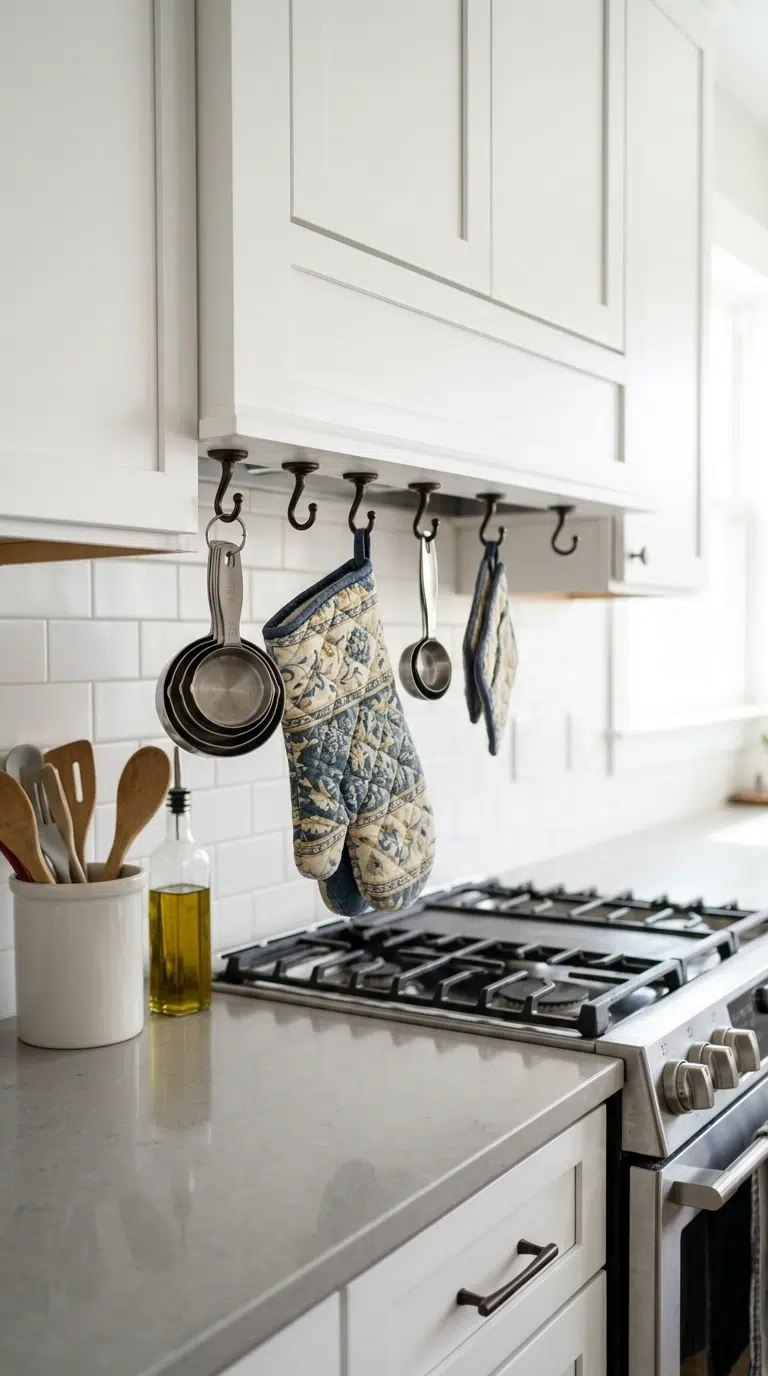
The strip of space just under your upper cabinets is often completely empty, but a row of small hooks can turn it into a home for mugs, oven mitts, and measuring cups. Choose adhesive hooks or a mounted hook rail, spaced a few inches apart, and hang lightweight items that would otherwise clutter a drawer or shelf. This spot works especially well near the stove for oven mitts and pot holders, since you want those within instant reach while cooking, not buried in a drawer three steps away. Keep the hooks limited to items you use often, since an under-cabinet rail that is too crowded starts to look cluttered instead of tidy. This is one of the easiest same-day upgrades on this list, most adhesive hooks install in under a minute with no tools and no drilling required, making it perfect for renters who cannot make permanent changes to their kitchen.
15. Stackable Food Bins
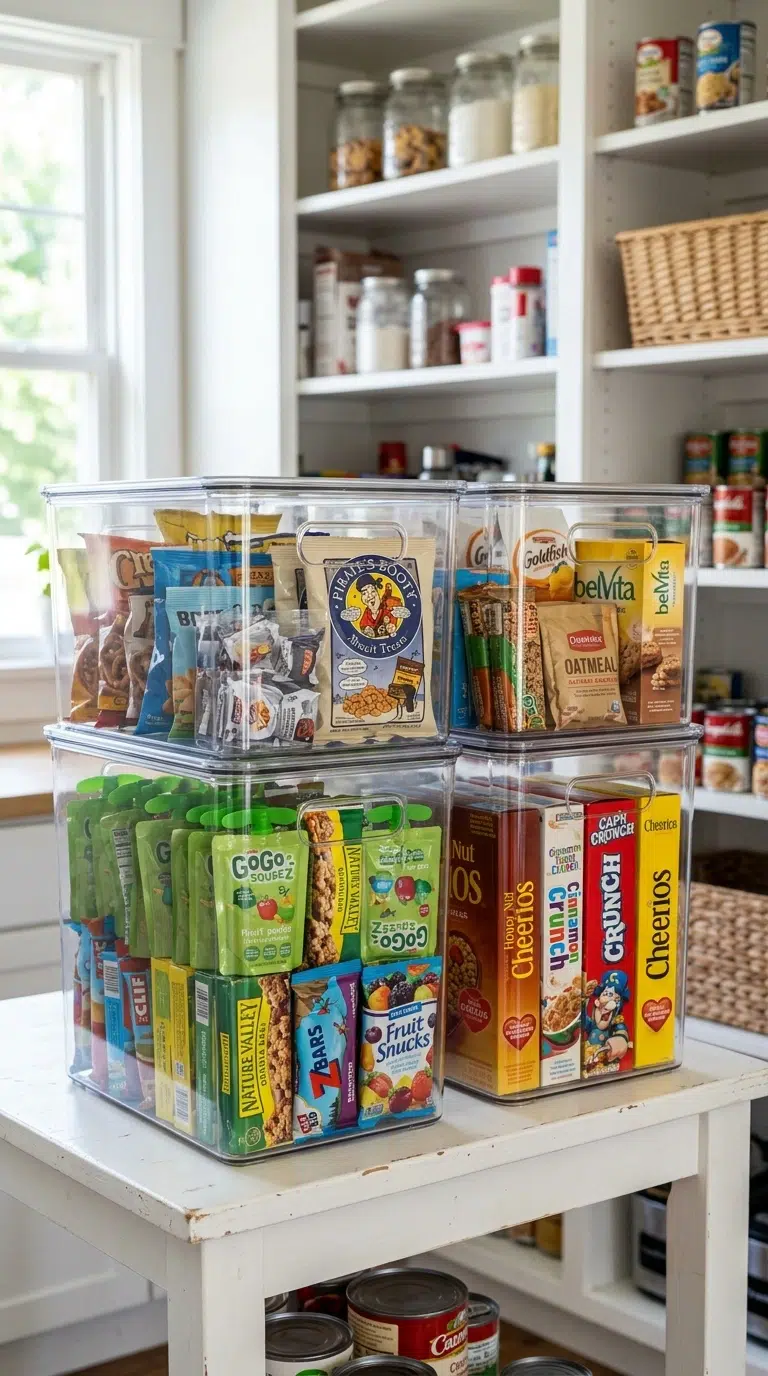
Deep pantry shelves waste a lot of vertical space when bags and boxes are just piled on top of each other. Stackable clear bins solve this by creating a grid system, so you can see and reach every item without unstacking a leaning tower of snacks. Use shorter bins for packets and pouches, and taller bins for boxed items like cereal or crackers, then stack two bins high on each shelf to double your storage without adding a single new shelf. Group bins by meal or category, breakfast items in one stack, snacks in another, baking supplies in a third, so grabbing what you need takes seconds. Choose bins with the same footprint so they nest and stack evenly instead of wobbling. This trick is especially useful in small kitchens or apartments with a single narrow pantry cabinet, since it makes the most of every inch of shelf height rather than leaving air space wasted above shorter items.
16. Baking Sheet Dividers
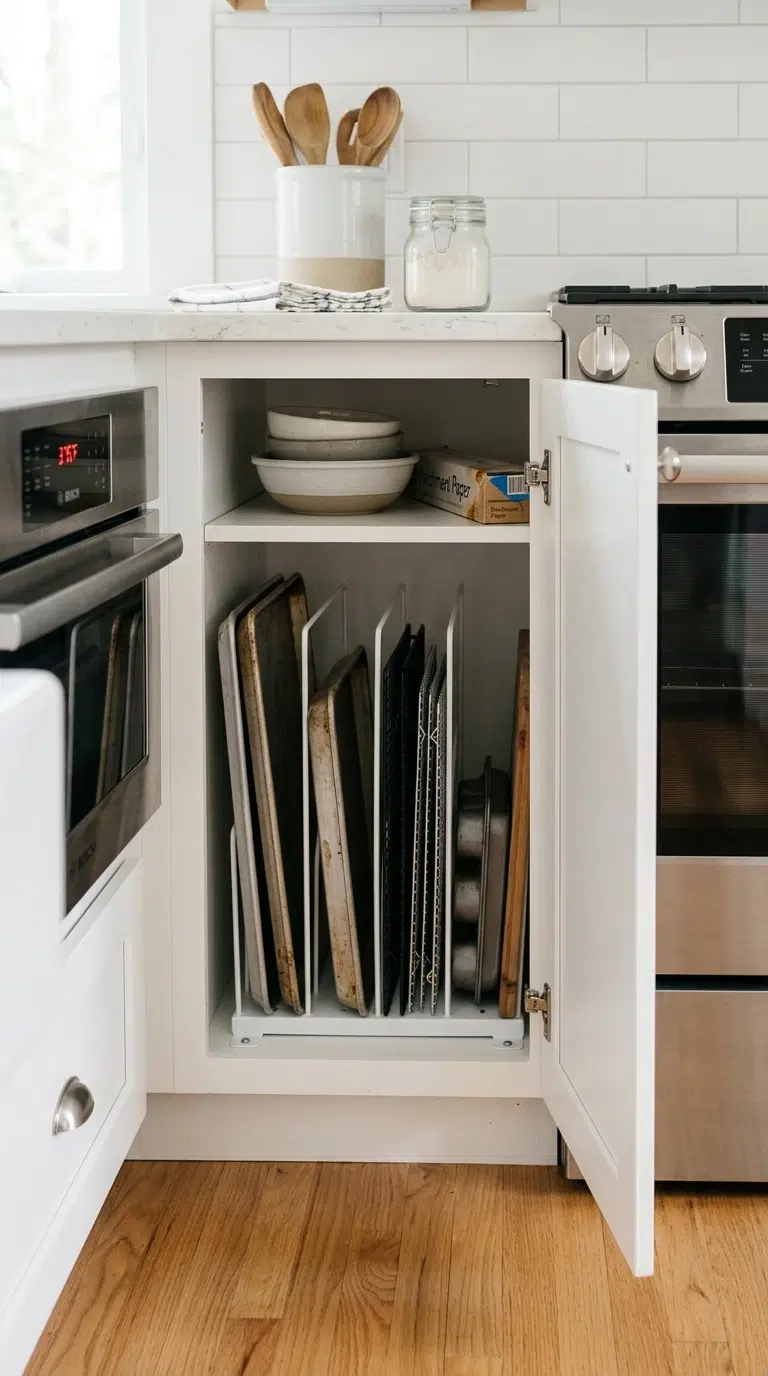
Baking sheets, cooling racks, and cutting boards are some of the most awkward items to store because they are flat, wide, and heavy all at once. A vertical divider mounted inside a lower cabinet, similar to a file organizer for pans, keeps each sheet upright and easy to slide out without disturbing the others. Install the divider in a cabinet near your oven so baking supplies stay close to where you actually use them, and group items by size, largest sheets in the back slots, smaller ones toward the front. This setup stops the common problem of stacking sheets directly on top of each other, which usually means pulling out four pans just to reach the one you need on the bottom. Add a small bin beside the dividers for cupcake liners and parchment paper rolls so your entire baking kit lives in one cabinet. This project usually takes less than half an hour and makes baking day noticeably less frustrating.
17. Command Center Wall
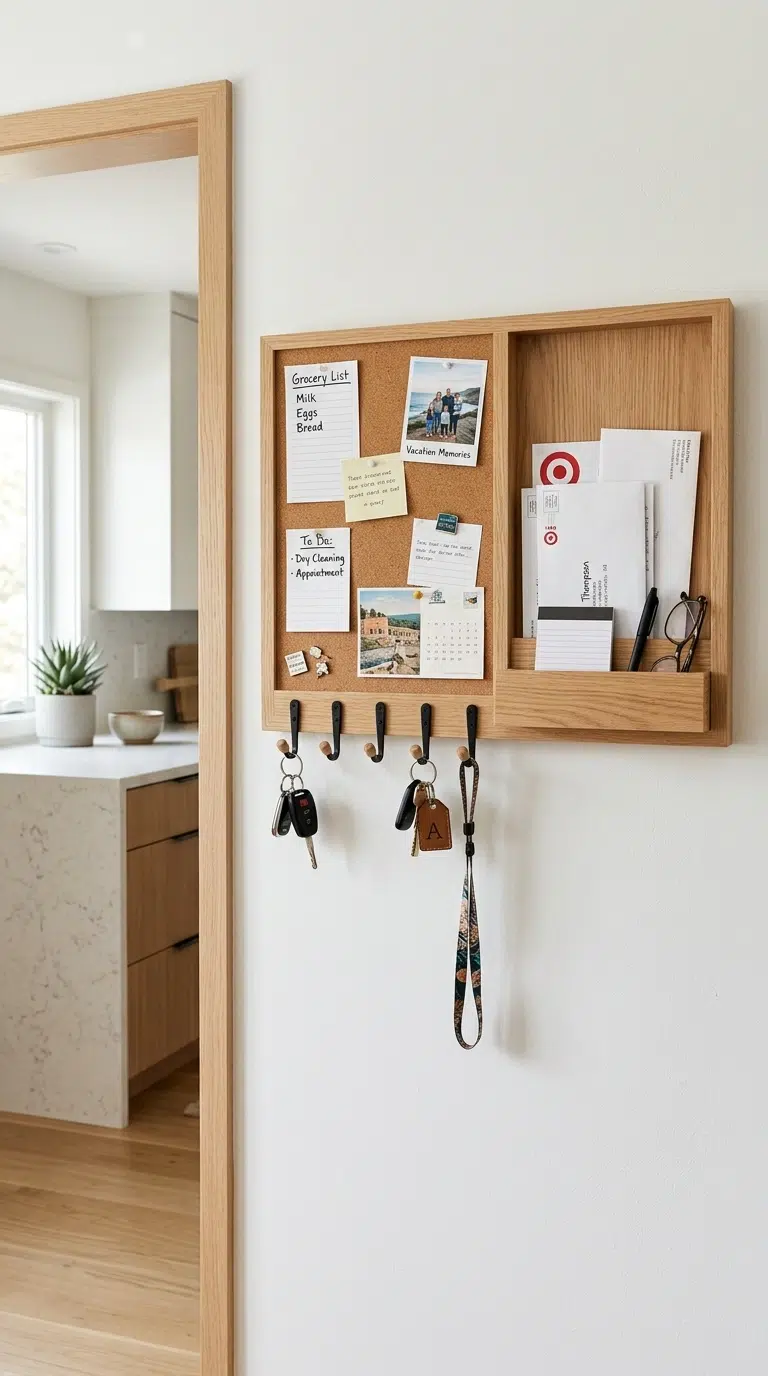
A small stretch of wall near your kitchen entrance can become a command center that keeps mail, keys, and daily notes from spreading across your counters. Mount a corkboard or a magnetic board for reminders, add a row of hooks below for keys and reusable bags, and include a small shallow tray or basket for mail that needs action. Keep the whole setup within a two-foot section of wall so it stays contained rather than sprawling, and choose frames or hooks in a matching finish so the corner feels styled rather than thrown together. This trick keeps the actual kitchen counters clear for cooking, since incoming clutter has its own designated home the moment it enters the house. Add a small chalkboard or whiteboard section for a running grocery list, so everyone in the household can jot down items as they run low instead of trying to remember at the store. This is one of the most useful daily habit changes on this whole list.
18. Rolling Cart Storage
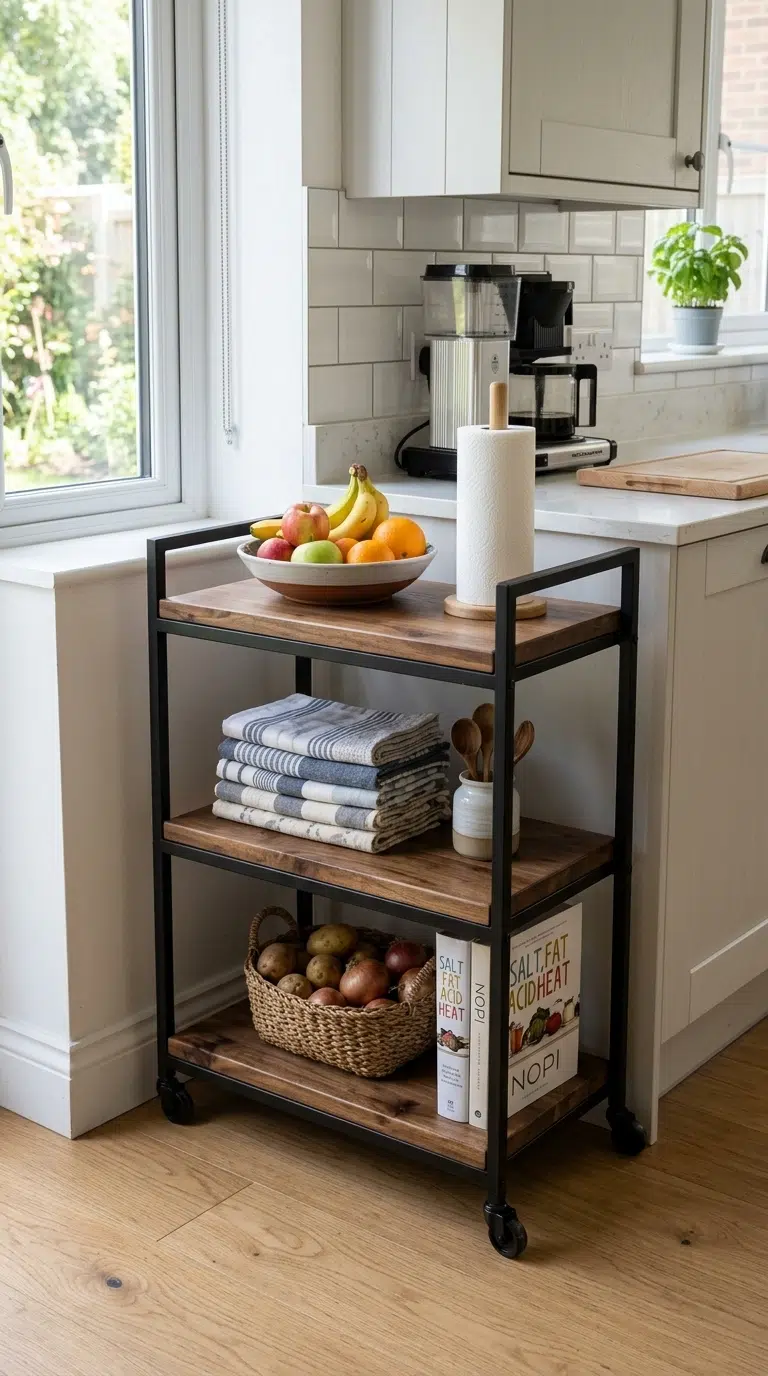
A rolling cart with two or three tiers can act as extra pantry or counter space in kitchens that feel tight on storage, and it moves wherever you need it most. Use the top tier for items you reach for daily, like cutting boards or a fruit bowl, and the lower tiers for bulkier pantry items like bottled water or extra paper towels. Choose a cart with a wood or metal top so it can double as a small prep surface when you need extra counter room during a big cooking day. Position the cart in a dead corner of the kitchen, beside the fridge or at the end of a counter run, so it fills space that would otherwise sit empty. Because it rolls, you can pull it out for easy access while cooking and tuck it back against the wall when you are done. This trick is especially helpful in small kitchens, rentals, and apartments where built-in storage is limited.
19. Drawer Liner Trays
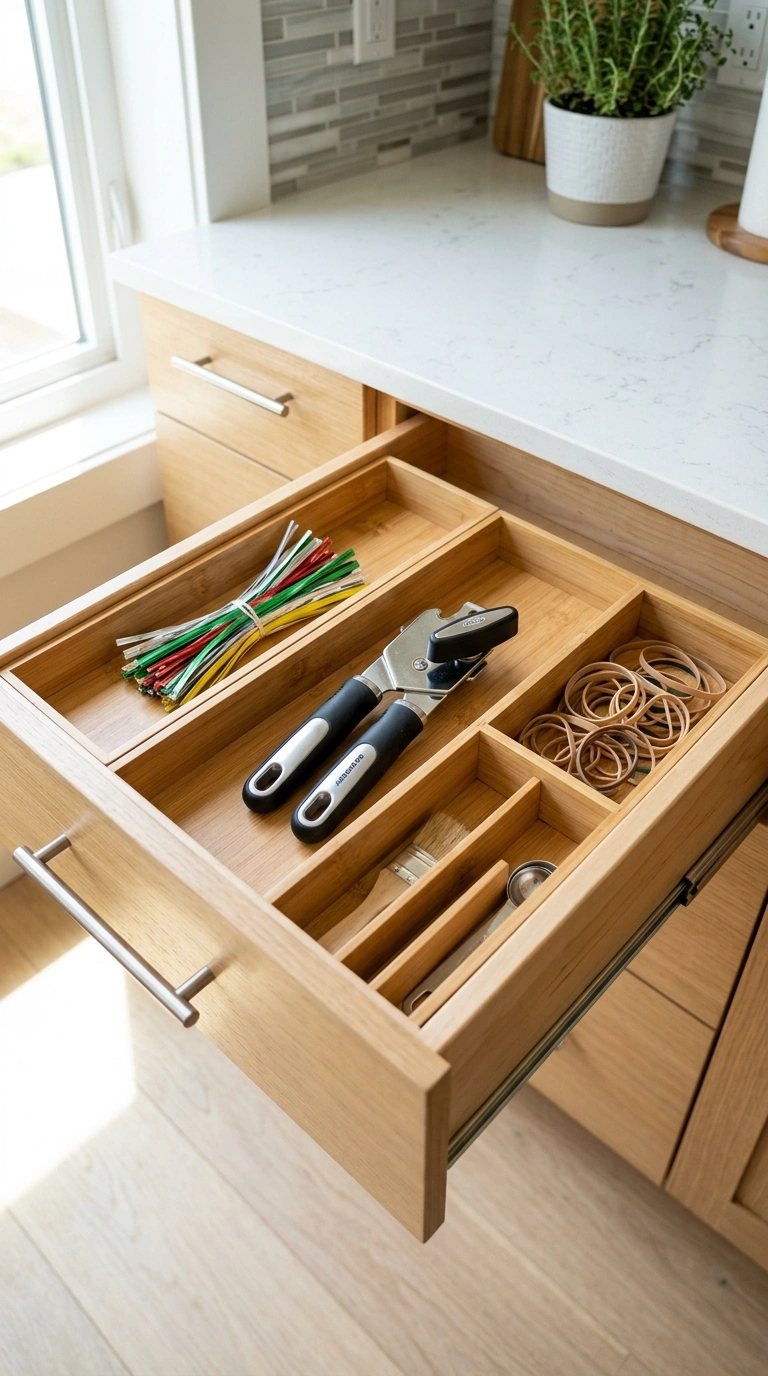
Loose items rattling around in an unlined drawer create noise and mess every time you open it, so a set of shallow drawer trays or bin liners keeps everything contained and quiet. Measure your drawer and choose trays sized to fit snugly, then sort items into groups, one tray for twist ties and clips, one for small tools like a can opener, one for spare rubber bands and chip clips. Bamboo or acrylic trays both work well and are easy to wipe clean when crumbs inevitably fall in. This trick prevents the common problem of opening a drawer and having everything slide to one side, since each tray keeps its contents locked in a defined space even when the drawer is opened and closed quickly. It also makes drawers easier to clean out completely, since you can lift a full tray out at once to wipe underneath rather than removing dozens of loose items one at a time.
20. Wall-Mounted Rail
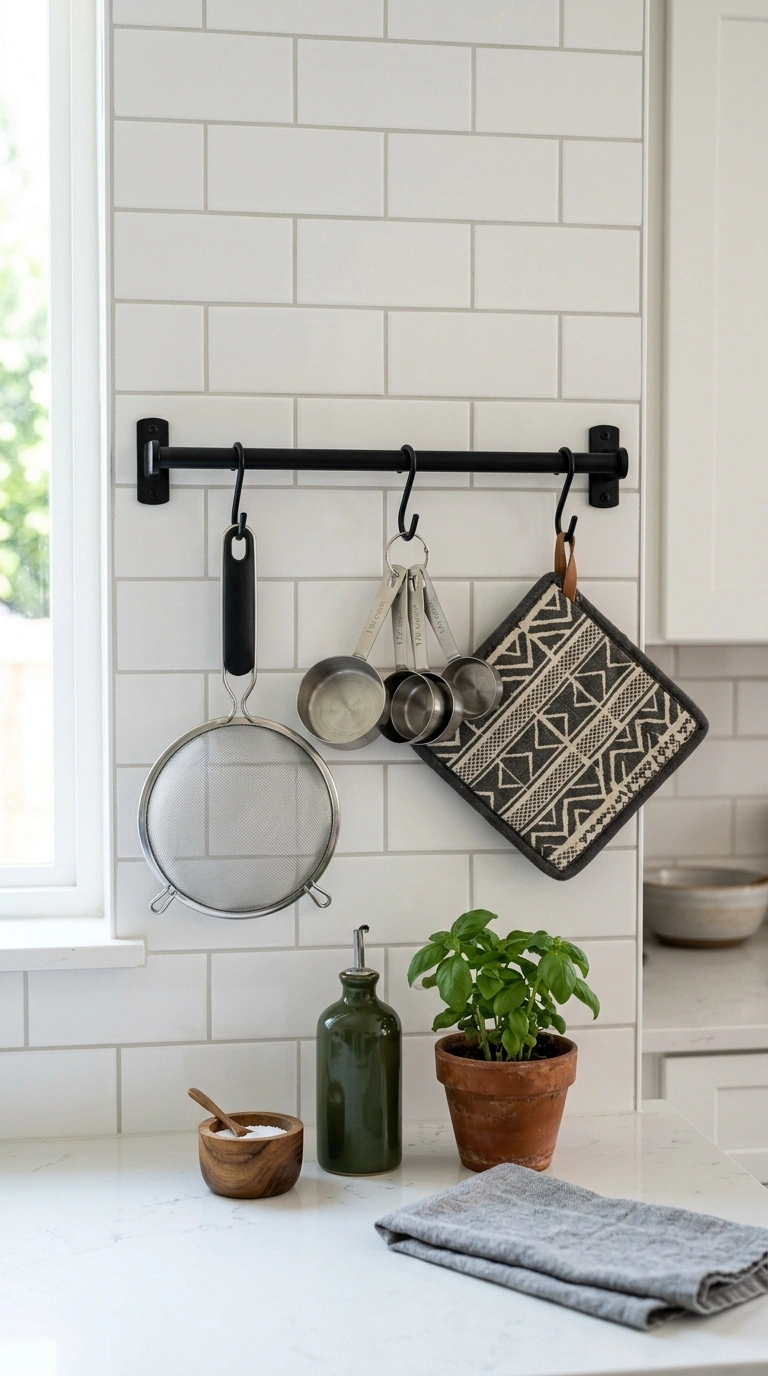
A slim metal rail mounted along a backsplash or bare wall section can hold small S-hooks for frequently used tools like measuring cups, strainers, and pot holders. Position the rail within easy reach of your stove or prep counter, and hang only the items you use several times a week so the display stays functional rather than crowded. This trick works especially well in small kitchens where cabinet space is limited, since it turns an empty vertical strip of wall into genuinely useful storage. Choose a rail finish that matches your other hardware, like matte black or brushed brass, so it reads as an intentional design choice rather than an obvious storage fix. Mount the rail with anchors rated for the weight of what you plan to hang, especially if you are hanging heavier cast iron tools. Once installed, this trick means your hands find the right tool without opening a single drawer or cabinet.
21. Cookbook Shelf Nook
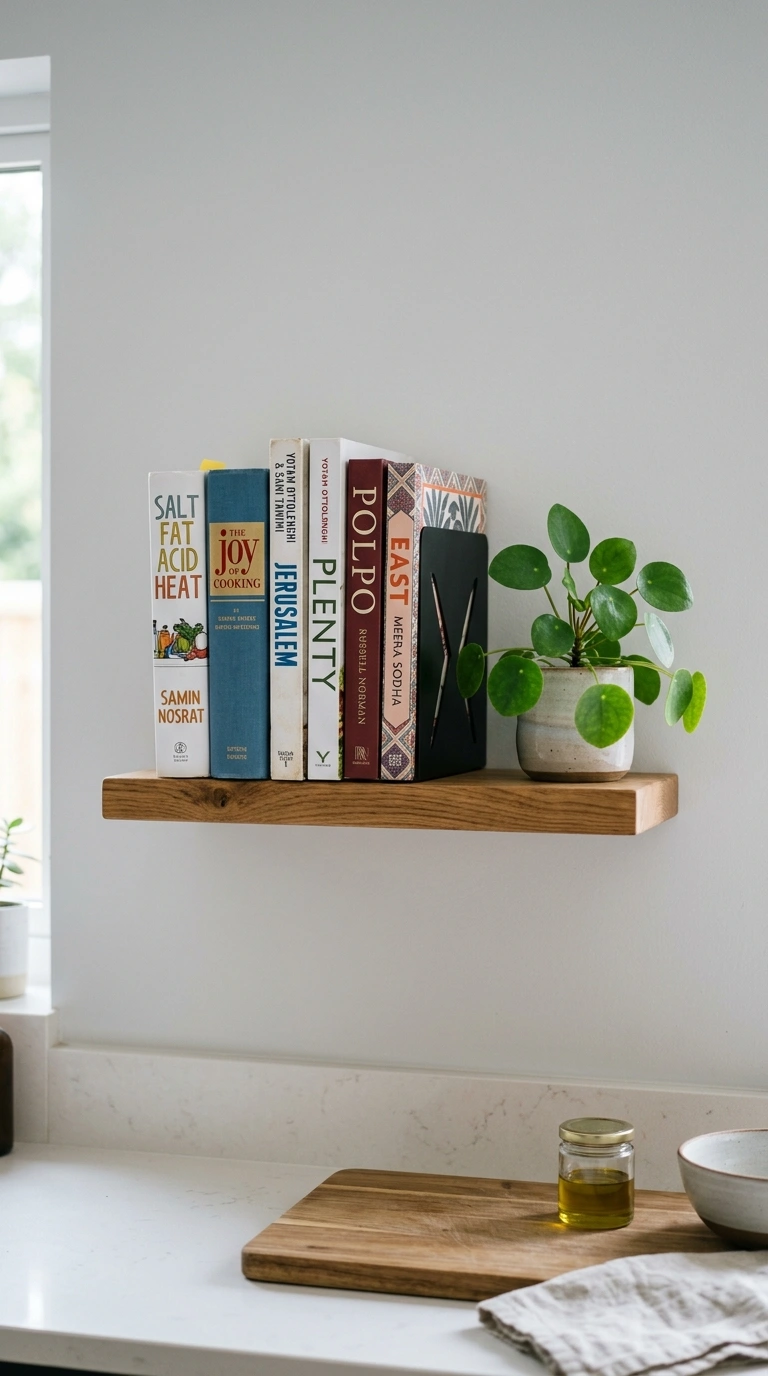
If cookbooks have taken over your counter in a leaning, unstable pile, a small dedicated shelf or nook gives them a real home while adding a warm, lived-in touch to your kitchen. Use a floating shelf above your counter, a slim bookend on an open cabinet shelf, or even a small vintage crate turned on its side to hold five or six of your most-used cookbooks upright. Keep the collection edited down to books you actually cook from regularly, and store the rest elsewhere, since an overflowing cookbook shelf just becomes another cluttered surface. Add a small plant, a framed print, or a stack of folded linens beside the books to soften the display and make the corner feel styled rather than purely functional. Position the shelf near your prep counter so you can flip to a recipe while cooking without walking across the kitchen. This trick doubles as both storage and simple, everyday decor.
22. Cleaning Caddy Station
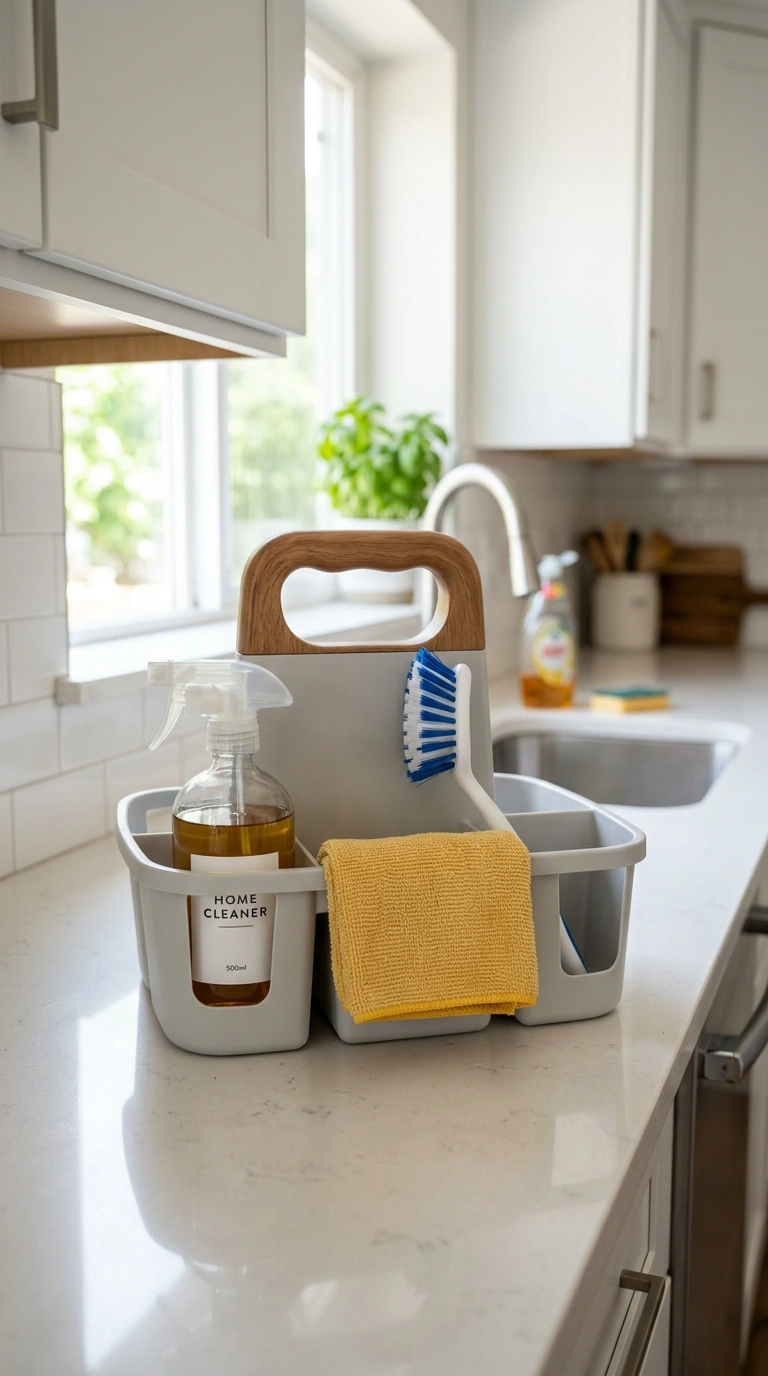
A portable caddy filled with your everyday cleaning supplies means you never have to hunt through three different cabinets to wipe down a counter or mop up a spill. Choose a caddy with a sturdy handle and a few compartments, and fill it with an all-purpose spray, a microfiber cloth, dish soap, and a small scrub brush, then store it under the sink or in a nearby lower cabinet. Keep the caddy stocked so it is always ready to grab in one motion rather than gathering supplies from scattered spots every time something spills. This trick is especially useful for quick daily wipe-downs, since the caddy can travel with you from the kitchen counter to the stovetop to the table without multiple trips back to the cabinet. Restock the caddy once a week, checking spray bottles and swapping out a worn cloth, so it stays functional and ready every single day without any extra thought.
Wrapping Up
None of these tricks require a full renovation or a big budget, just a little intention about where things live. Start with the drawer or shelf that annoys you the most, fix that one first, and let the momentum carry you through the rest of the list over the next few weekends.
FAQs
What is the easiest kitchen organization trick to start with?
Drawer dividers are the fastest win. Most people can sort and divide a single drawer in about fifteen minutes with no tools required.
Do I need to spend a lot of money to organize my kitchen?
No. Many of these tricks use items you already own, and the ones that need new supplies, like bins or trays, are inexpensive and widely available at home stores.
How often should I redo my pantry or fridge bins?
A quick check every week keeps things running smoothly, with a deeper reset every couple of months as habits and grocery lists change.
What if I rent my home and cannot drill into the walls?
Stick to freestanding solutions like risers, bins, rolling carts, and adhesive hooks rated for renters, which give you the same organization without permanent changes.
Can small kitchens really use all of these tricks?
Yes. Several ideas on this list, like tiered risers, rolling carts, and under-cabinet hooks, were designed specifically to make the most of limited space.