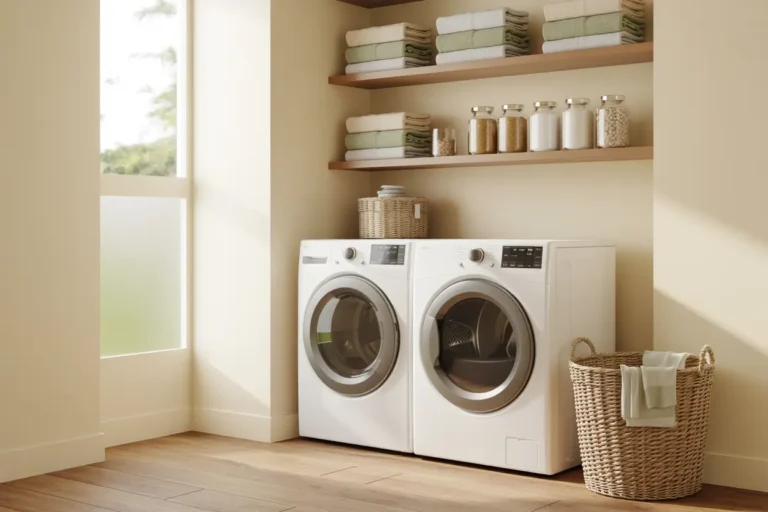
23 Smart Ways to Fit a Top Loader Into a Narrow Laundry Room

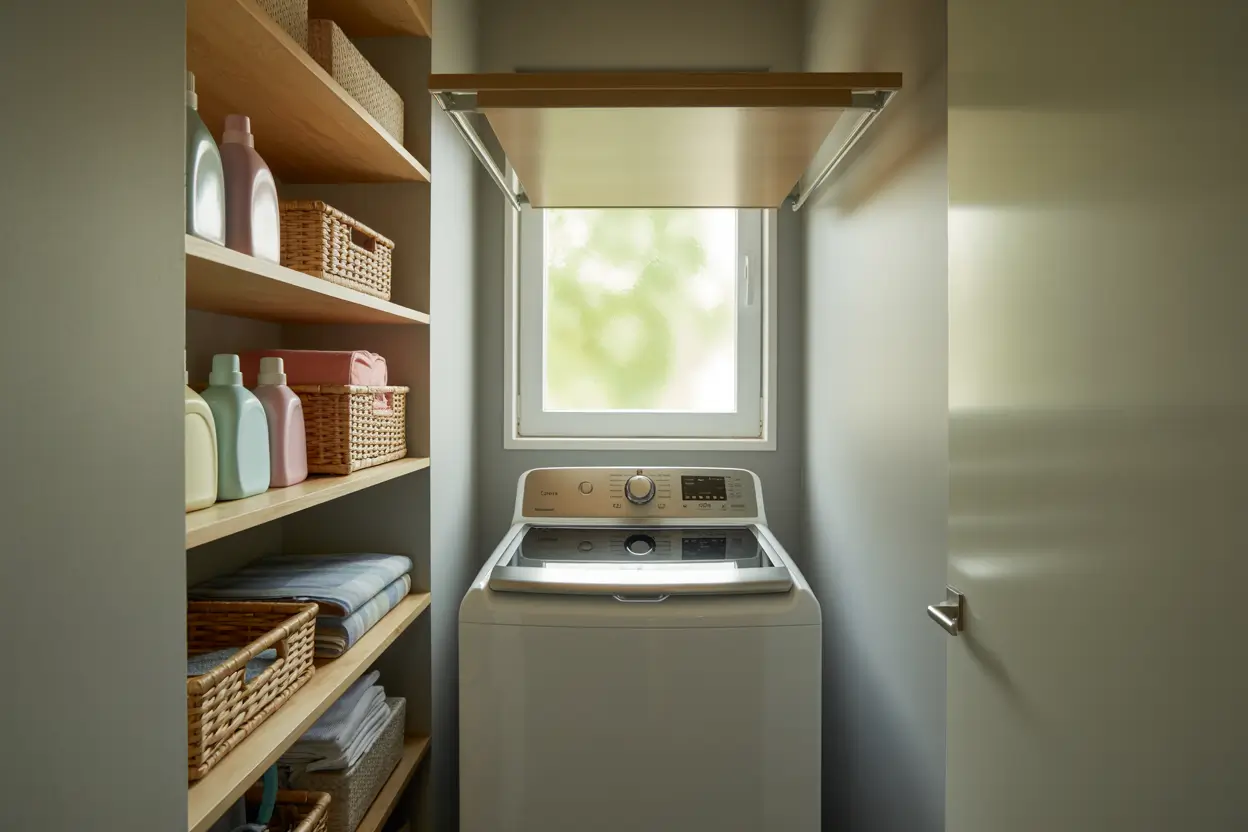
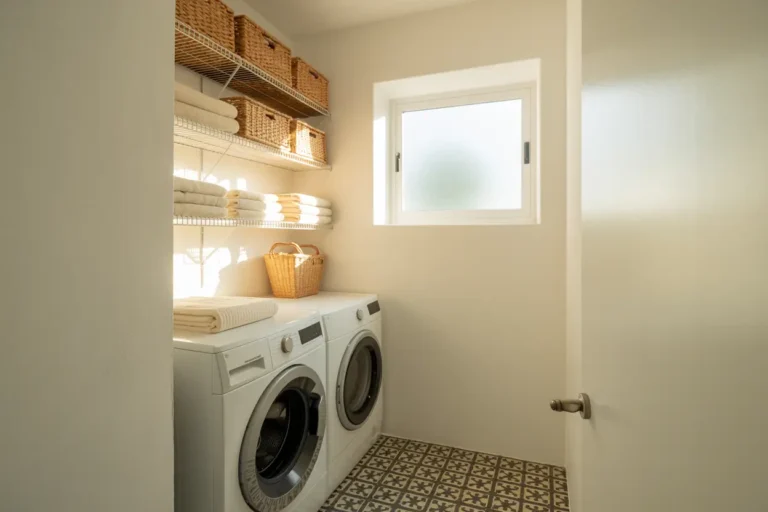
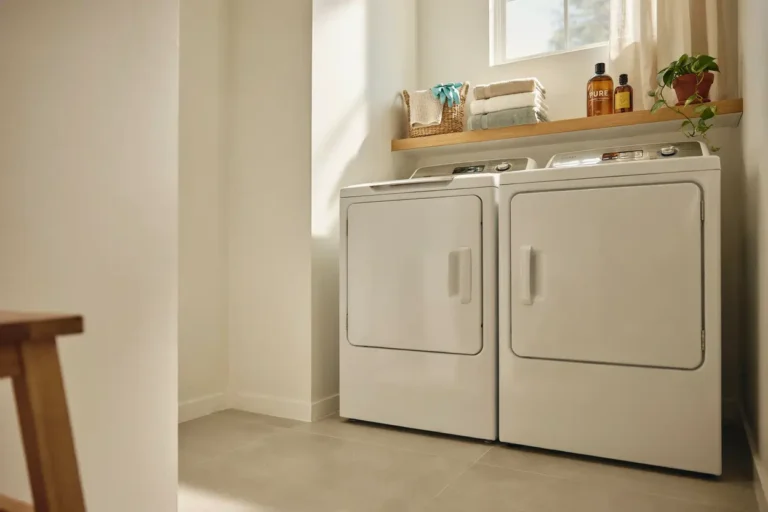
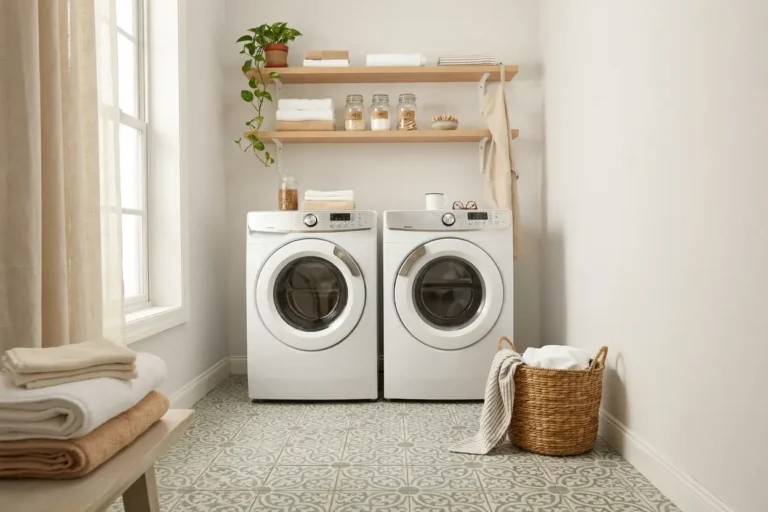
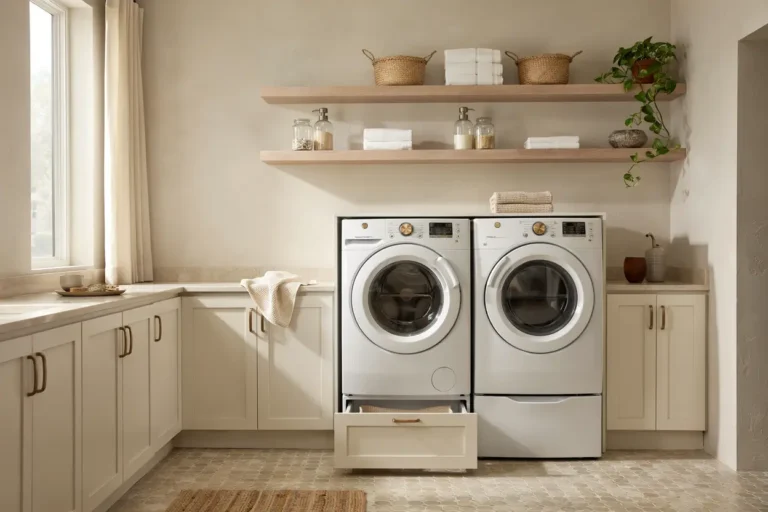
A reader messaged me last month asking how on earth she was supposed to fit a top loading washer into a laundry closet that barely fit a broom. I get some version of this question all the time, since top loaders take up more vertical clearance than front loaders and narrow laundry rooms rarely give you much room to work with. The good news is that a tight laundry space does not have to feel like a punishment every wash day. With the right shelving, a few smart storage pieces, and some careful planning around the lid opening, even a hallway sized laundry closet can feel organized and even a little bit pretty. I pulled together 23 ideas below that are all built specifically around the quirks of a top loader in a narrow room, from where to put your detergent to how to squeeze in a folding surface. Let’s get into it.
1. Slim Shelving Beside Machine
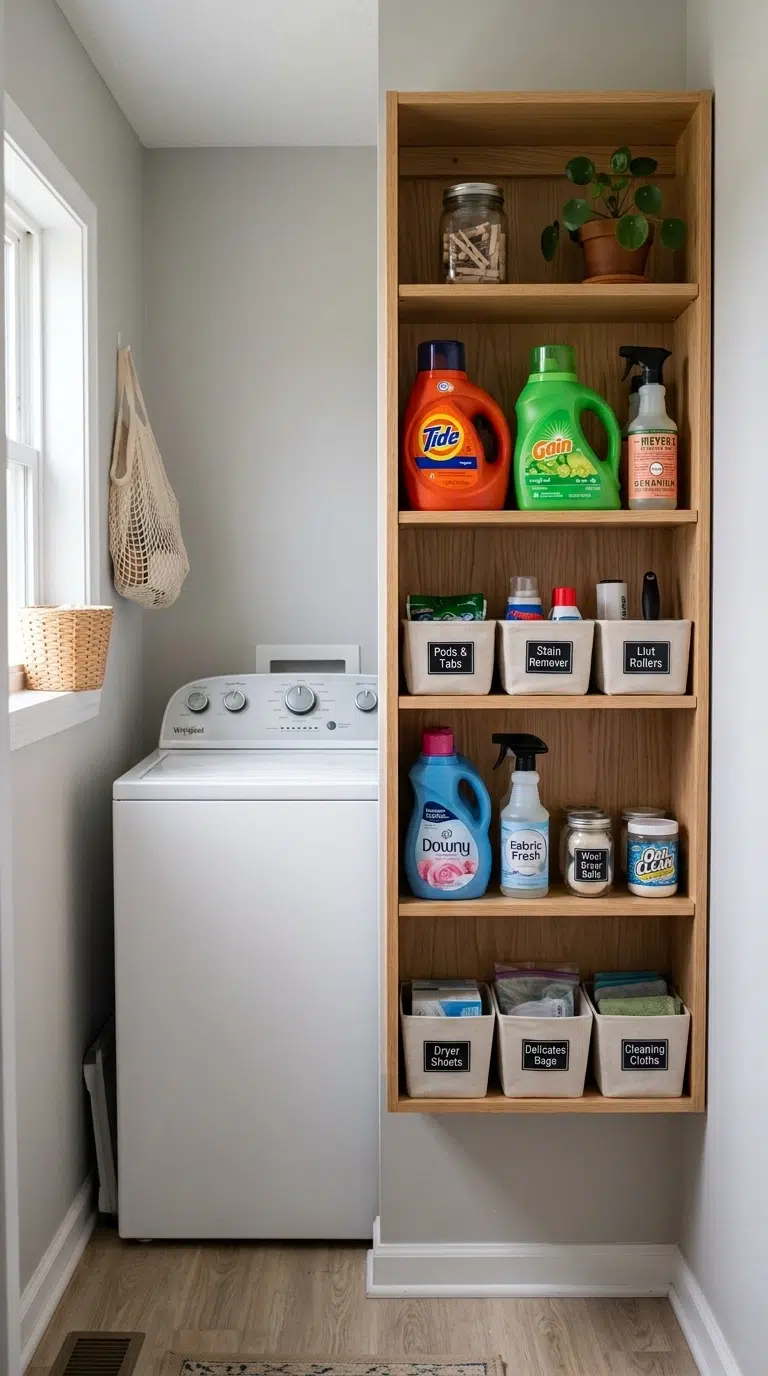
The strip of wall running down the side of a top loader is one of the most overlooked storage spots in a narrow laundry room. Even a gap of six to eight inches is enough room for a set of slim, shallow shelves that can hold detergent bottles, stain sticks, and a small basket of clothespins without ever getting in the way of the lid opening up and down.
Look for shelves that are no deeper than five or six inches so they do not stick out past the edge of the machine, and mount them at different heights so you can reach the items you use daily without bending or stretching. Wood or wire shelving both work well here, though wire tends to handle drips and spills a bit better over time. Add small labeled bins on each shelf to keep loose items like dryer balls or stain pens from tipping over every time you walk past.
2. Fold-Down Wall Counter
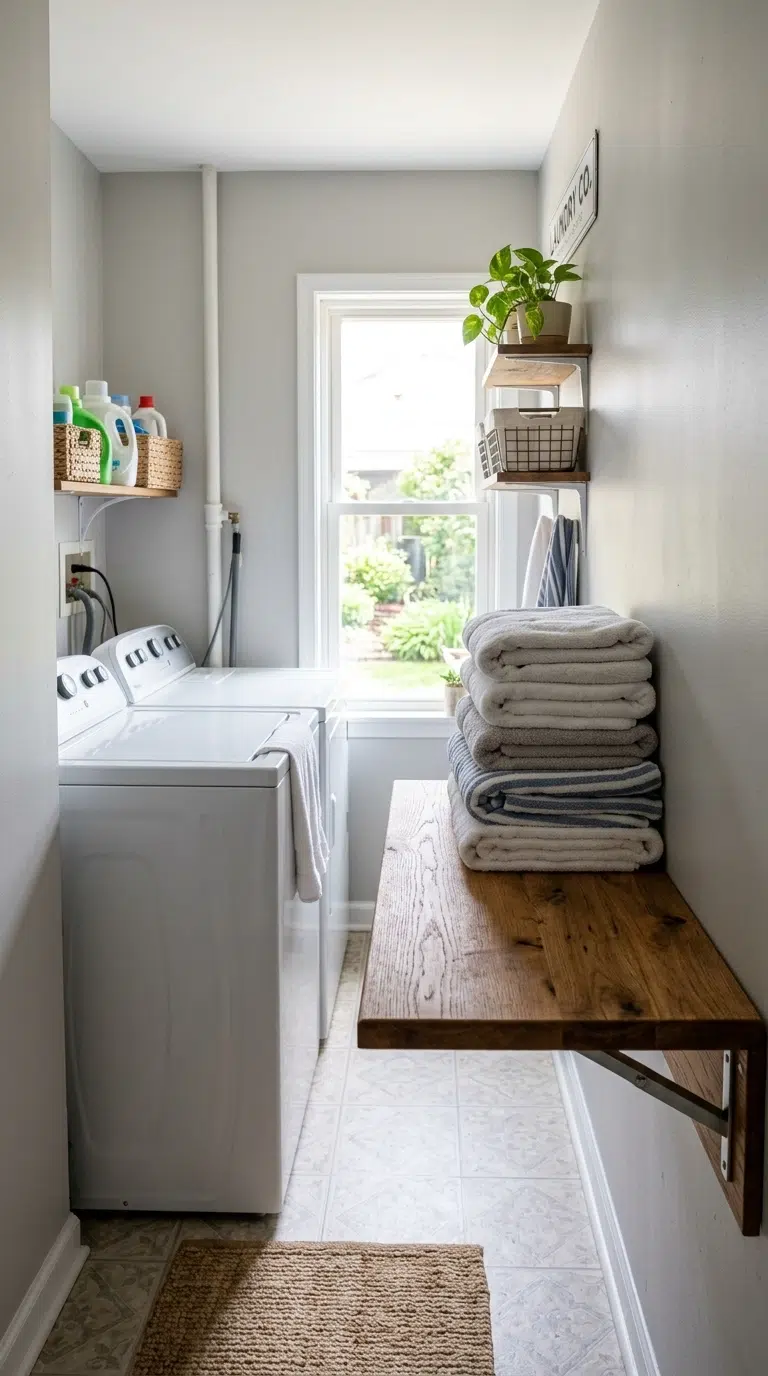
A narrow laundry room rarely has space for a permanent folding table, but a fold-down counter mounted to the wall solves that problem without eating up floor space the rest of the day. When you need to fold a load of towels, you simply lower the counter, and when you are done, it folds flat against the wall out of the way.
Mount the counter at standard countertop height, around thirty-six inches, so it feels natural to work at without hunching over. A butcher block or laminate surface holds up well to the occasional damp item straight from the dryer. Choose sturdy folding brackets rated for at least fifty pounds so the counter feels stable even when piled high with laundry. This works especially well on the wall opposite the top loader, giving you a clear path to fold and load in just a couple of steps.
3. Wall-Mounted Ironing Board
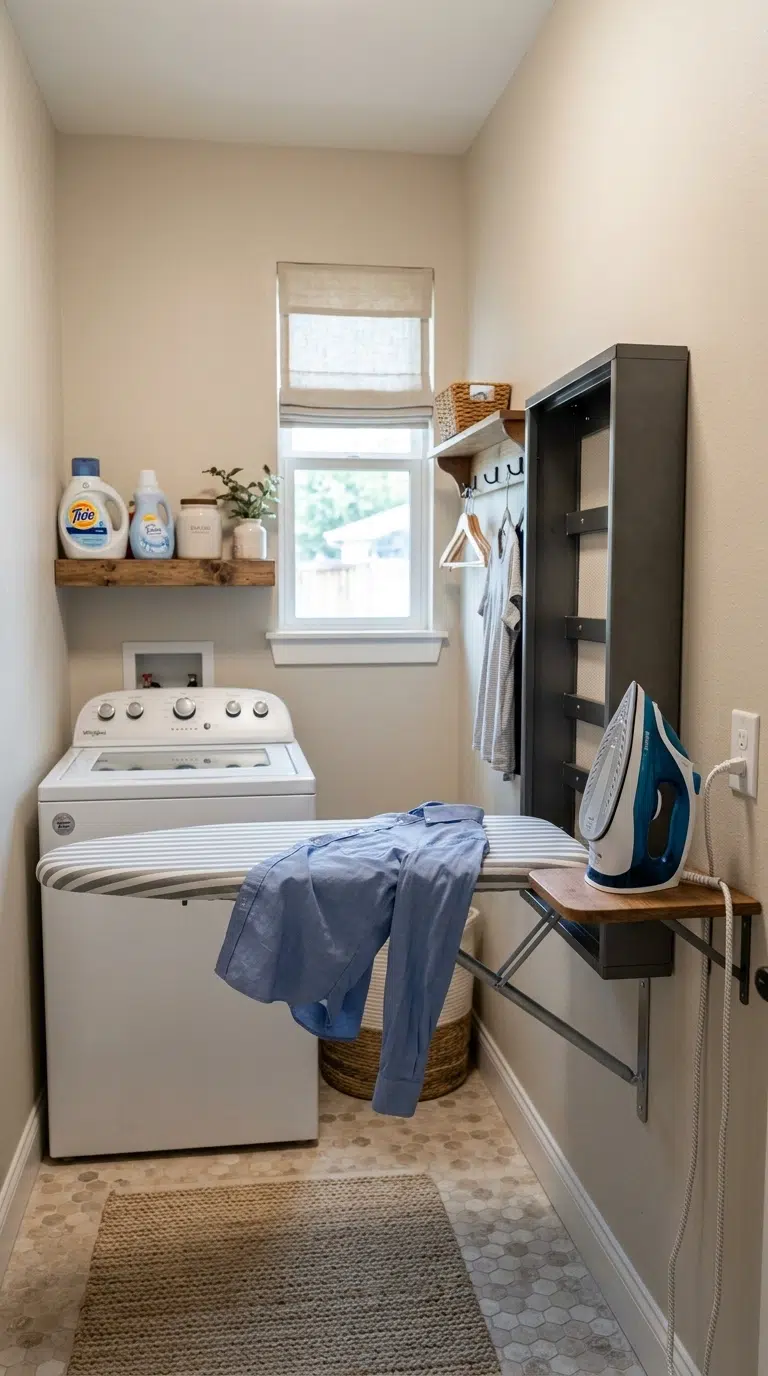
A traditional ironing board and its stand can eat up more floor space than the washer itself, which makes it one of the first things to rethink in a narrow laundry room. A wall-mounted ironing board folds flat against the wall when not in use and swings down into position only when you actually need to iron something.
Install it on an empty stretch of wall near an outlet so your iron cord can reach comfortably, and pick a cabinet style version if you want the board to disappear behind a door entirely when closed. These units usually include a small shelf or hook for the iron itself, keeping everything related to ironing in one compact spot. This single swap can free up several feet of floor space that a standalone board and stand would otherwise take up permanently.
4. Tall Storage Tower
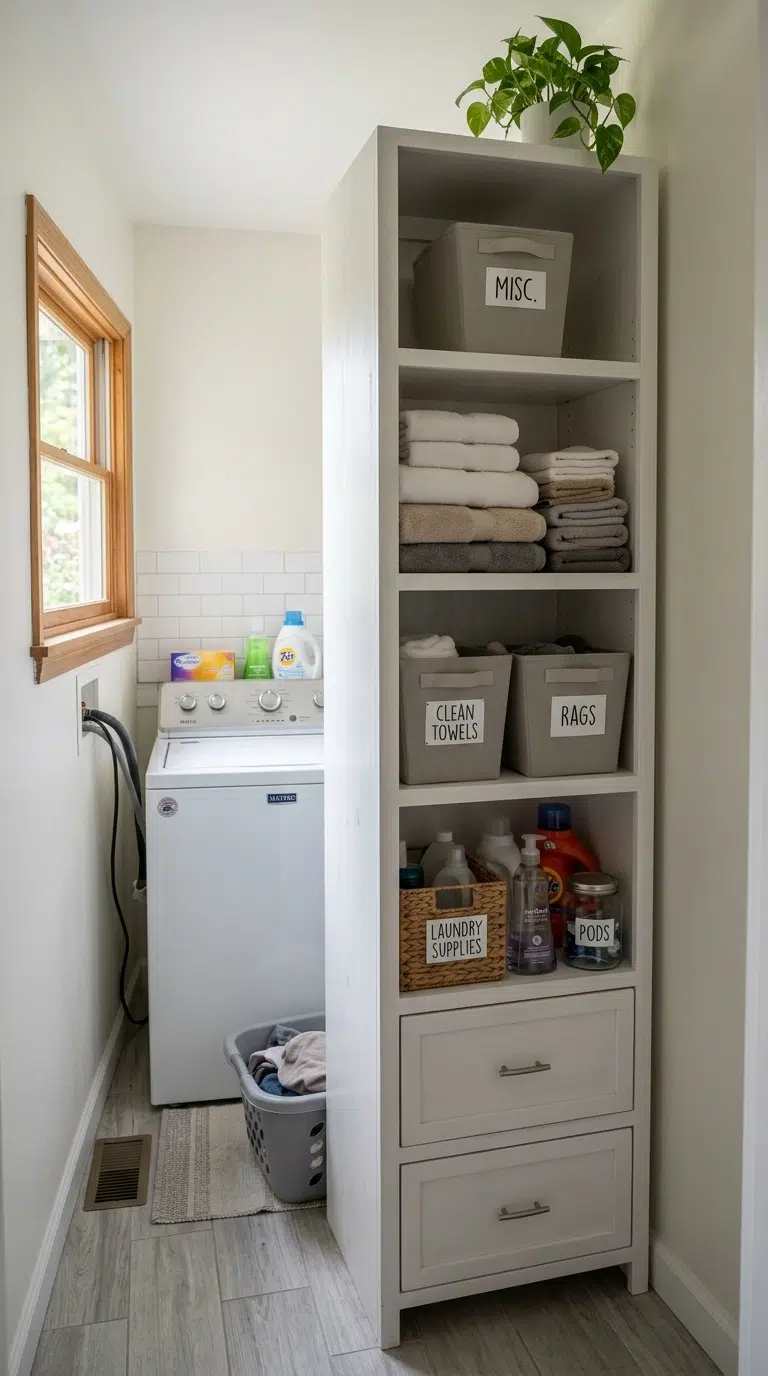
When floor space is too tight for wide cabinets, height becomes your best friend. A tall, narrow storage tower, sometimes only twelve to eighteen inches wide, can slide into the gap beside a top loader or at the end of a row of appliances and still hold a surprising amount of laundry supplies.
Look for a tower with a mix of open shelves and closed drawers so you can display a few pretty items while hiding the less attractive ones like dryer sheets or stain remover bottles. Slim rolling towers on casters are especially handy since you can pull them out for full access, then tuck them right back into their gap when you are done. This is one of the simplest ways to add real storage capacity to a laundry room that only offers a sliver of unused space.
5. Open Shelf Above Machine
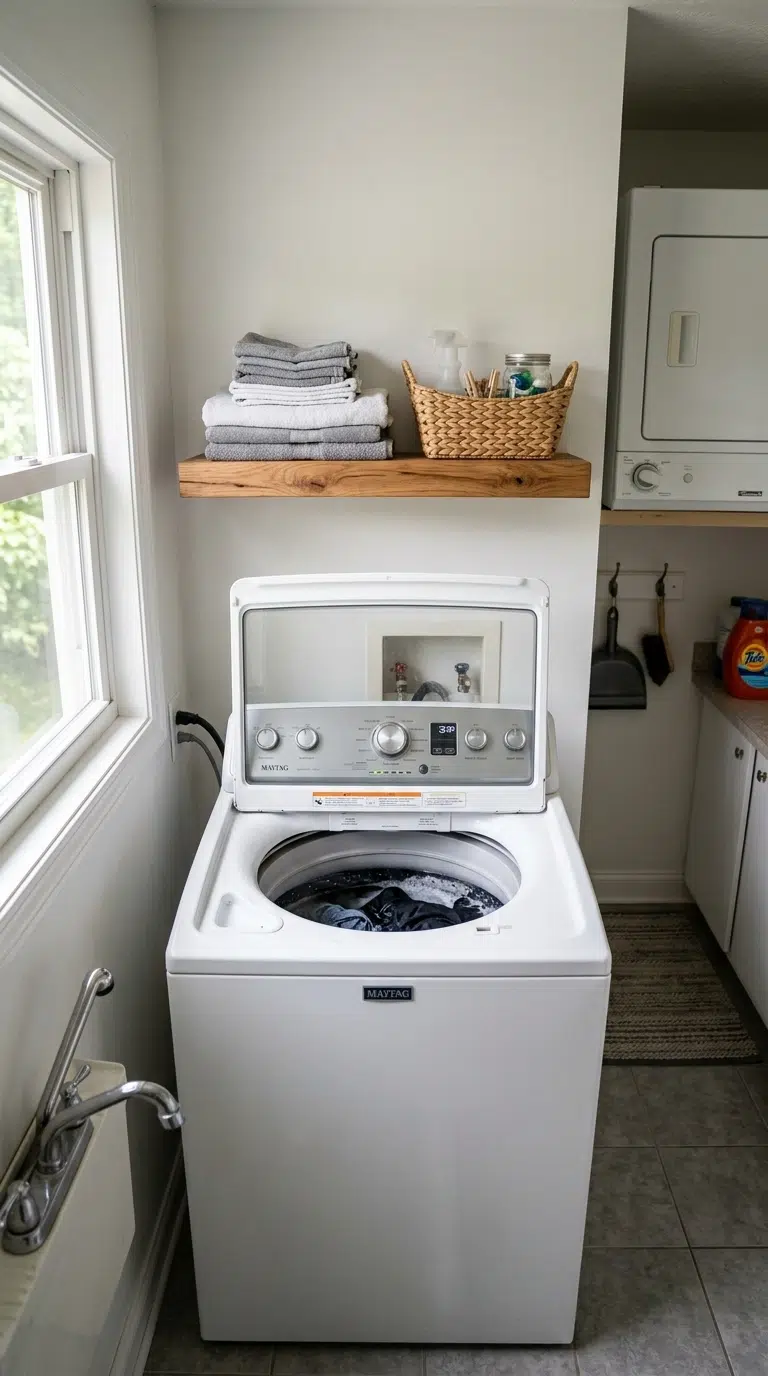
The wall space directly above a top loader is often left empty because people assume the lid opening will get in the way. In most narrow laundry rooms, though, a single open shelf mounted about eighteen inches above the closed lid gives you plenty of clearance to open the machine fully while still gaining useful storage overhead.
Use this shelf for lighter items like folded rags, a small basket of clothes pins, or a stack of laundry bags, since anything heavier should stay lower down for safety and easy reach. A simple wood or floating shelf bracket keeps the look clean and modern. Adding a small strip of trim along the front edge of the shelf can also stop smaller items from sliding off when the machine vibrates during a spin cycle.
6. Ladder Style Towel Rack
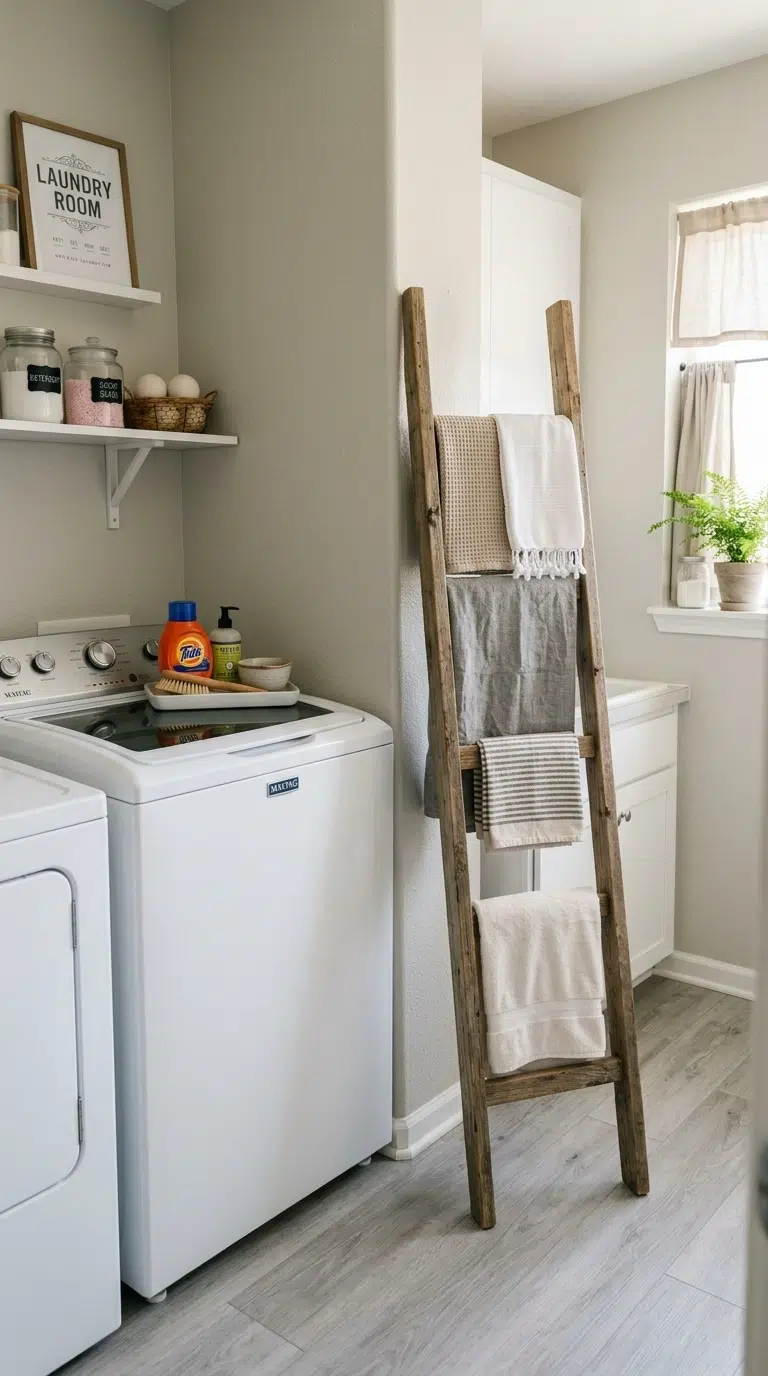
A ladder style rack leaned against an empty wall or the end of a cabinet run gives you a place to hang hand towels, rags, or even a few hangers without needing to mount anything permanently. This works especially well in laundry rooms where wall space is limited but a small floor footprint is available.
Choose a wood ladder rack in a warm tone to add a bit of texture to what is often an all-white or all-gray room. Since it leans rather than mounts, you can move it around easily if you rearrange the room later, which is helpful in a narrow space where every inch might get reworked eventually. Use the lower rungs for folded rags and the top rung for a hand towel you use often, keeping the most frequently grabbed items within easy reach.
7. Rolling Laundry Cart
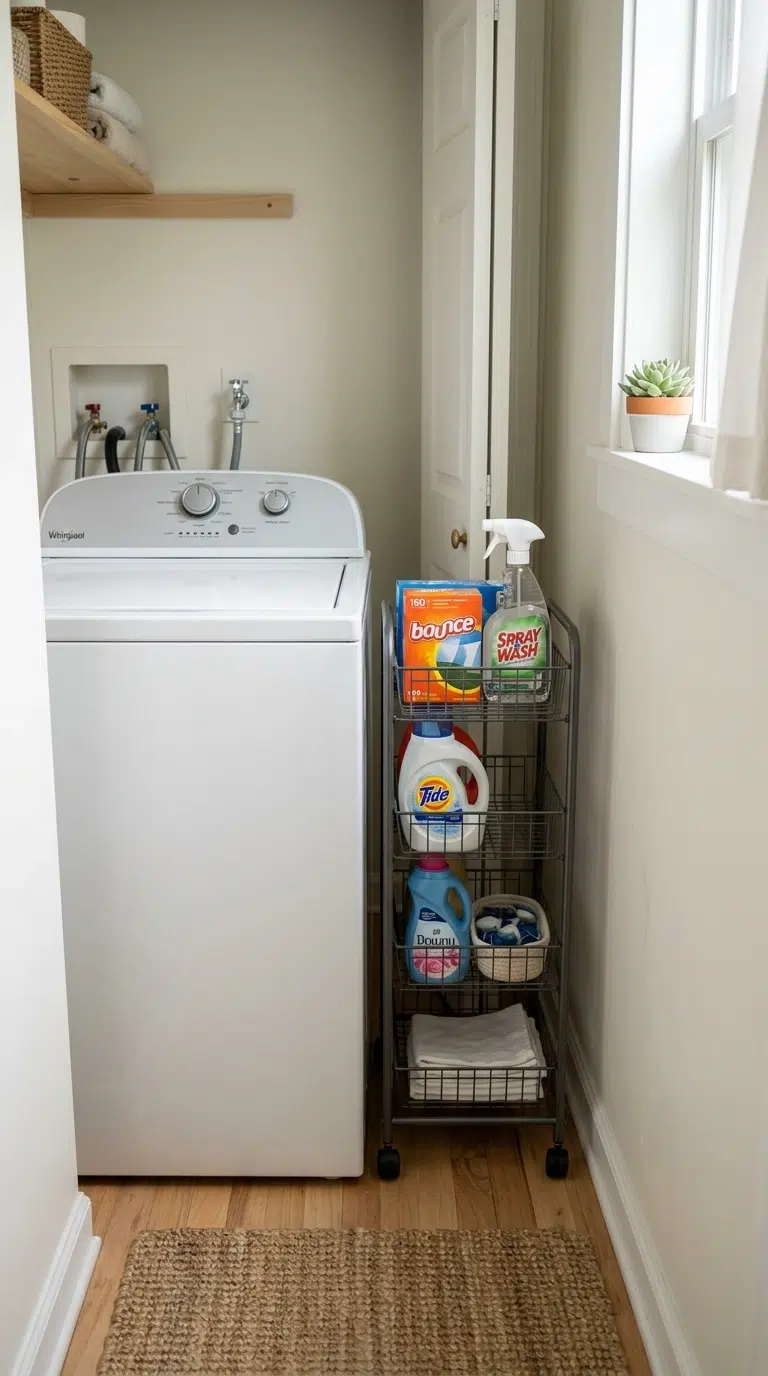
A rolling cart is one of the most flexible storage pieces you can add to a narrow laundry room, since it can be tucked into a gap beside the top loader and pulled out only when you need full access to its shelves or baskets. This kind of mobility matters a lot in tight spaces where a fixed piece of furniture might block your path to the machine.
Look for a slim cart, ideally under twelve inches wide, with wire or fabric baskets that let air circulate around damp items like cleaning rags. Add locking casters so the cart stays put during a spin cycle instead of drifting across the floor. Stock the top shelf with items you reach for daily, like stain spray or dryer sheets, and use the lower baskets for bulkier items like a spare bottle of detergent.
8. Pegboard Tool Wall
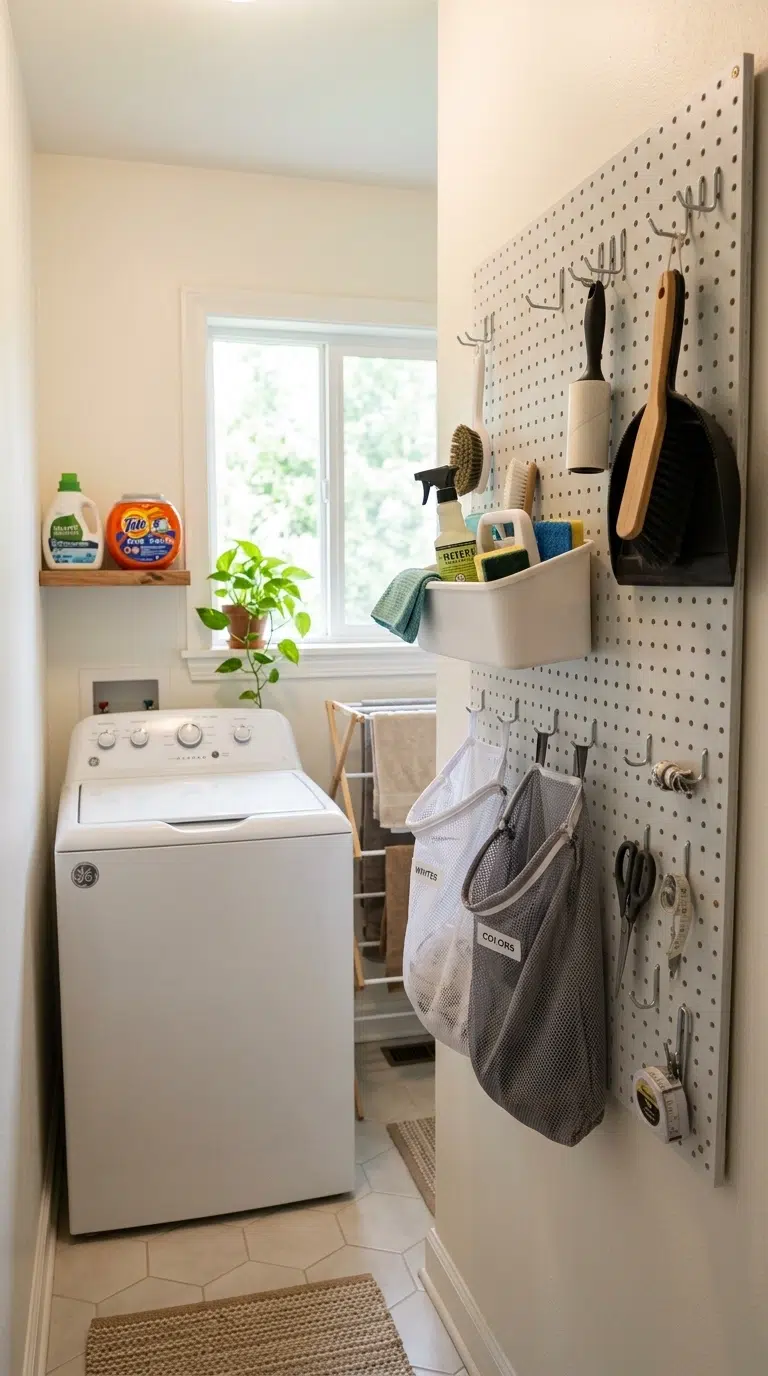
A pegboard mounted on an empty wall turns unused vertical space into a fully customizable storage system, which is especially useful in a narrow laundry room where cabinets simply will not fit. Hooks, small baskets, and shelves can all be added or rearranged on a pegboard as your storage needs change over time.
Paint the pegboard to match your wall color for a built-in look, or choose a contrasting color if you want it to stand out as a design feature. Hang a small caddy of cleaning sprays, a hook for your ironing spray bottle, and a mesh bag or two for delicates, keeping everything visible and easy to grab. Since pegboards use standard hardware, you can move hooks around in minutes whenever your laundry routine changes.
9. Retractable Drying Rack
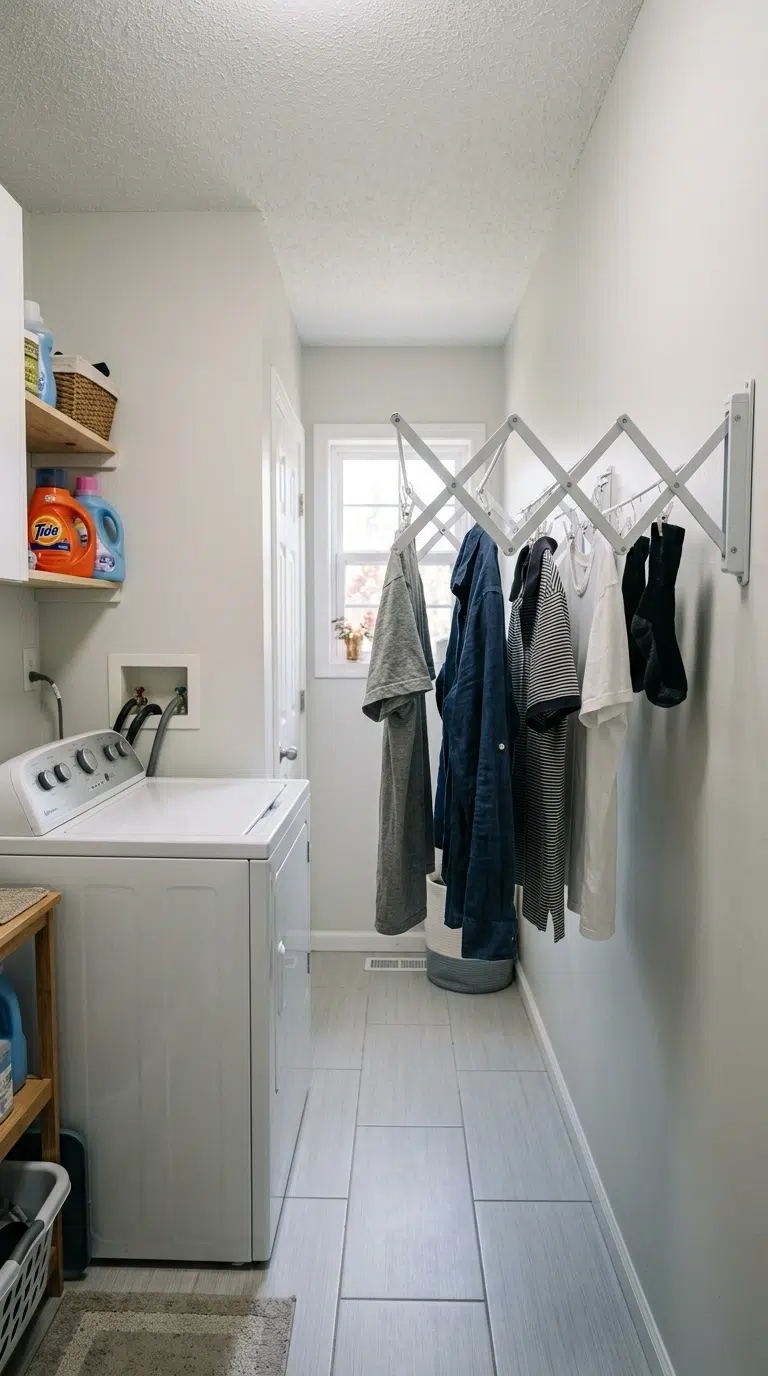
A wall-mounted retractable drying rack pulls out with an accordion style arm when you need to hang damp clothes, then folds flat against the wall when you are finished, which makes it a smart fit for a laundry room too narrow for a standalone drying rack. This is especially useful for delicate items that should not go in the dryer.
Mount the rack on the wall across from your top loader so there is enough room for the arms to extend fully without bumping into the machine. Choose a model with a weight rating that matches what you typically hang, whether that is a few blouses or a full load of delicates. Since the whole unit folds flat, it adds almost no visual clutter to the room when it is not actively in use.
10. Narrow Broom Cabinet
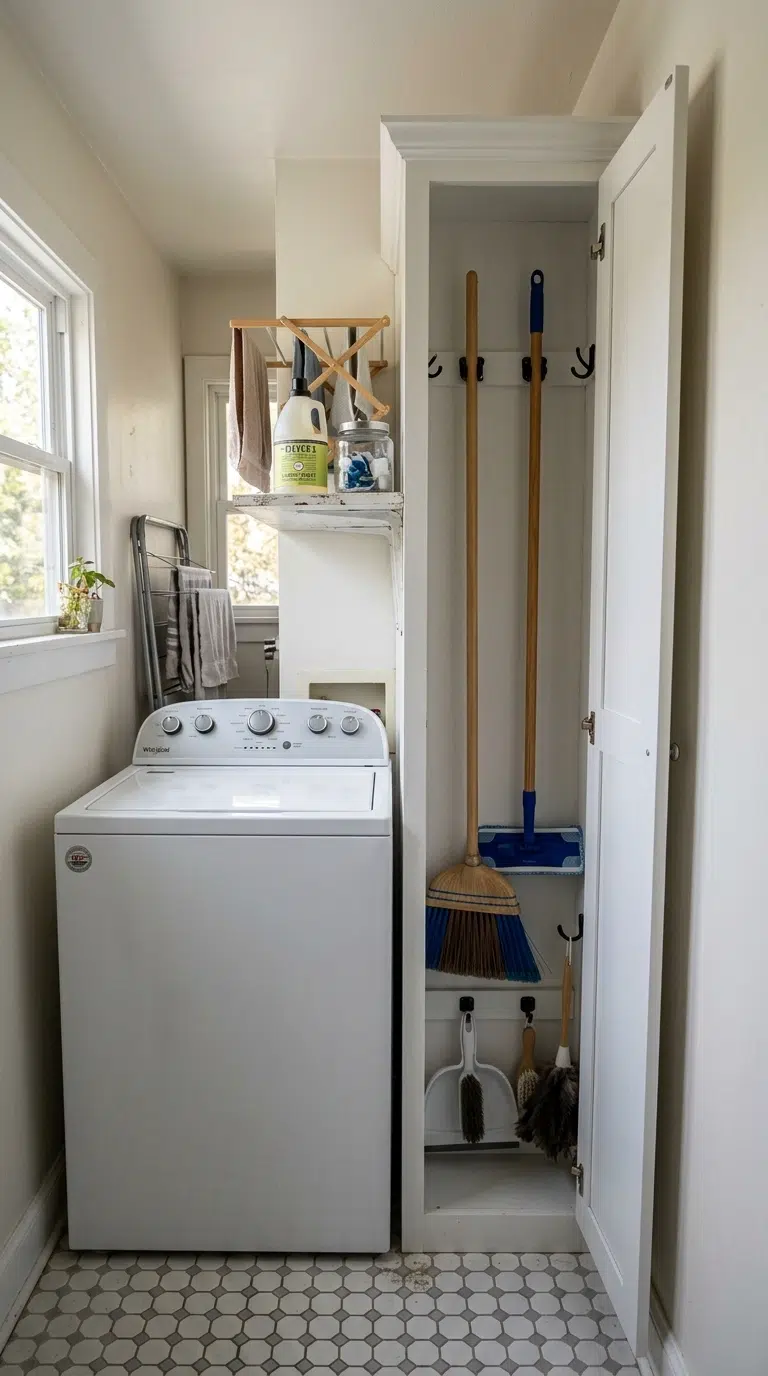
A tall, slim cabinet built specifically for brooms and mops can slide into a gap as narrow as ten to twelve inches, making it one of the best ways to hide cleaning tools in a laundry room where floor space is precious. Keeping brooms and mops behind a door also keeps the room looking tidier at a glance.
Look for a cabinet with built-in hooks or a bracket system inside so the tools hang neatly rather than leaning against each other and falling over every time the door opens. Position the cabinet at the end of your appliance row or in any leftover gap along the wall, and add a small shelf on top of the cabinet for extra storage if the ceiling height allows. This keeps everything related to cleaning contained in one narrow footprint.
11. Corner Utility Sink
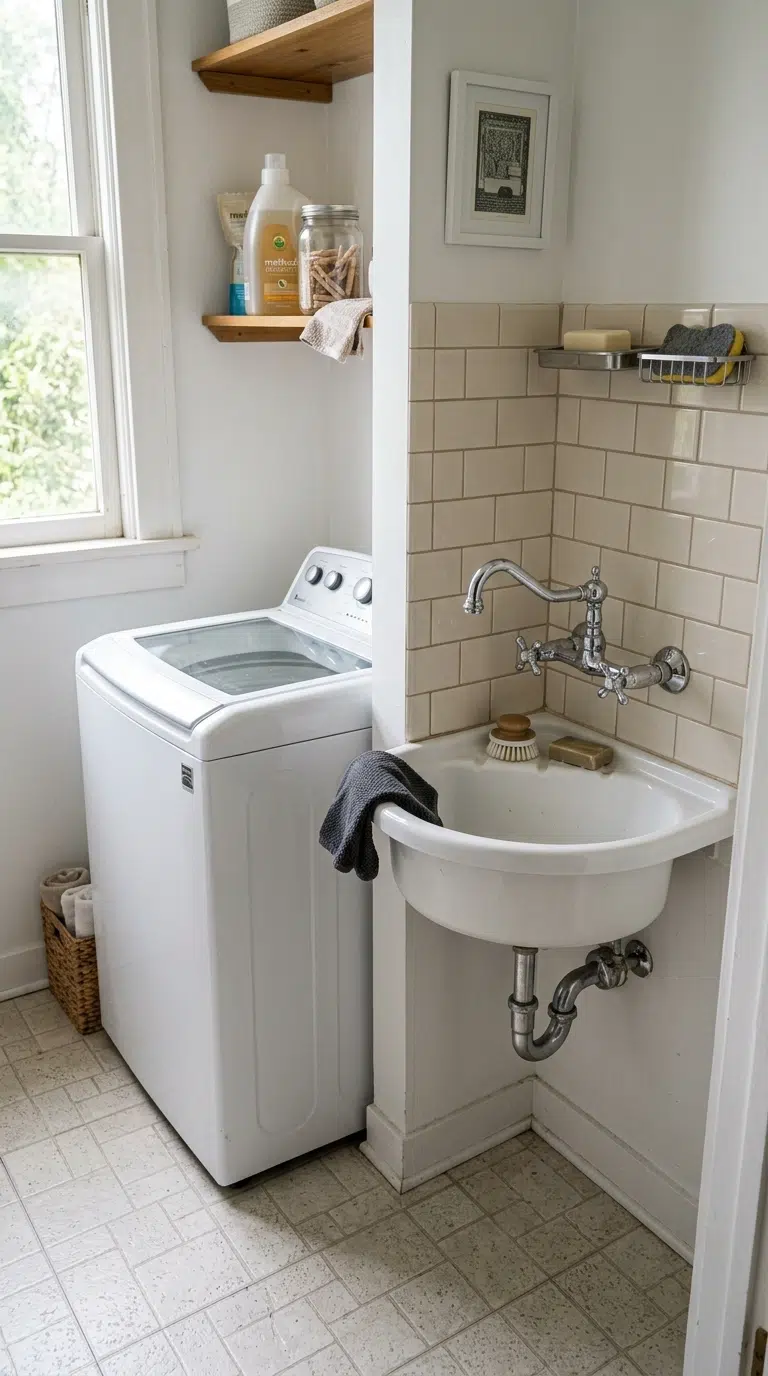
A slim corner utility sink can fit into an awkward triangle of space that would otherwise go completely unused in a narrow laundry room. Having a sink nearby makes it much easier to hand wash delicate items, rinse out stains before a full wash, or fill a bucket for mopping without walking to another room.
Choose a corner-specific basin designed to tuck neatly against two walls rather than trying to fit a standard rectangular sink into the space. A wall-mounted faucet frees up counter space around the basin itself. If plumbing changes are not an option right now, even a large basin or bucket set on a small stand in that corner can serve a similar purpose until a real sink installation becomes possible.
12. Stacked Wicker Baskets
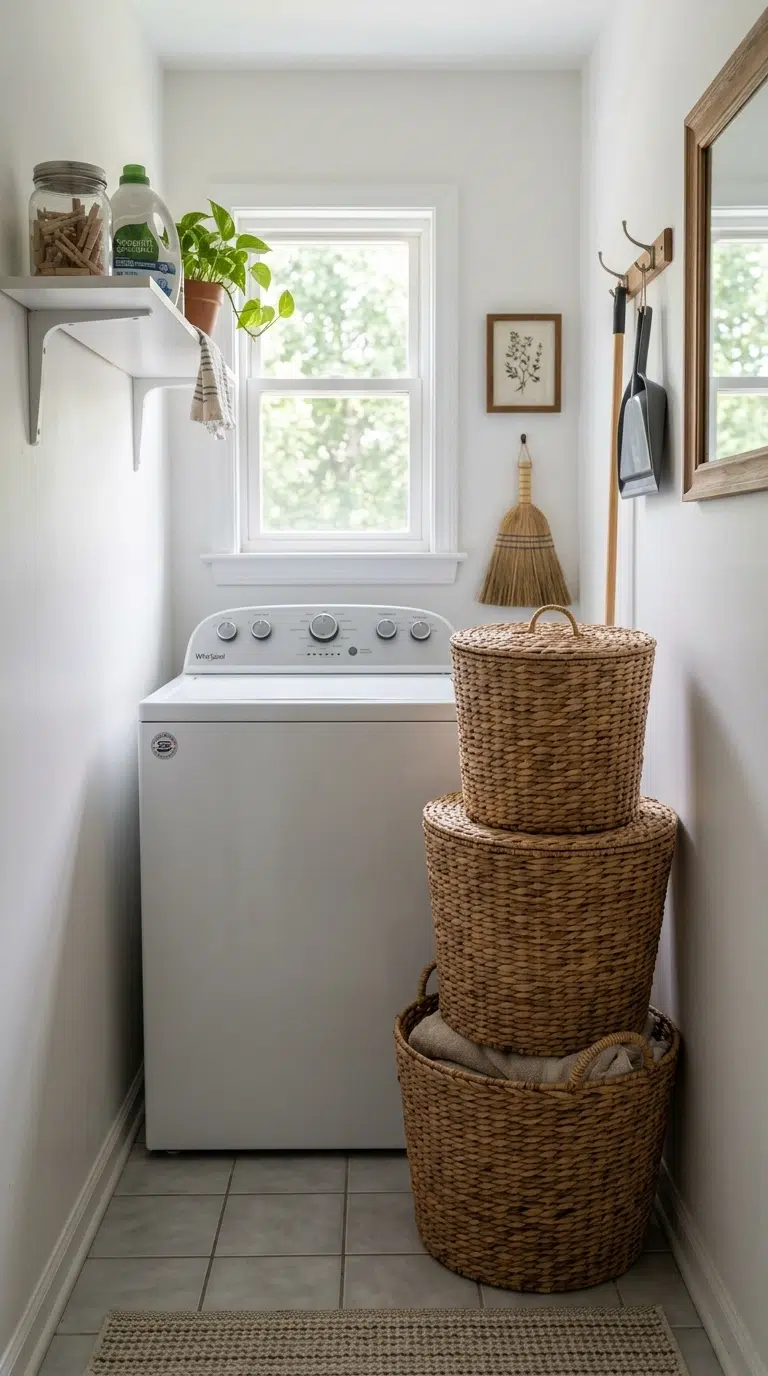
Stacking two or three wicker baskets in a corner or on a shelf gives you soft, textural storage for items like linens, rags, or out of season clothing waiting to be washed. Baskets add warmth to a laundry room that might otherwise feel cold and purely functional with all its hard surfaces.
Choose baskets in graduated sizes so they nest visually even when stacked, and pick one with a lid for anything you want to keep dust free, like folded guest towels. This works especially well in the corner across from a top loader where a hard shelving unit might feel too bulky for the space. Label each basket with a small wood or leather tag so everyone in the house knows exactly where things belong.
13. Slide-Out Hamper Drawer
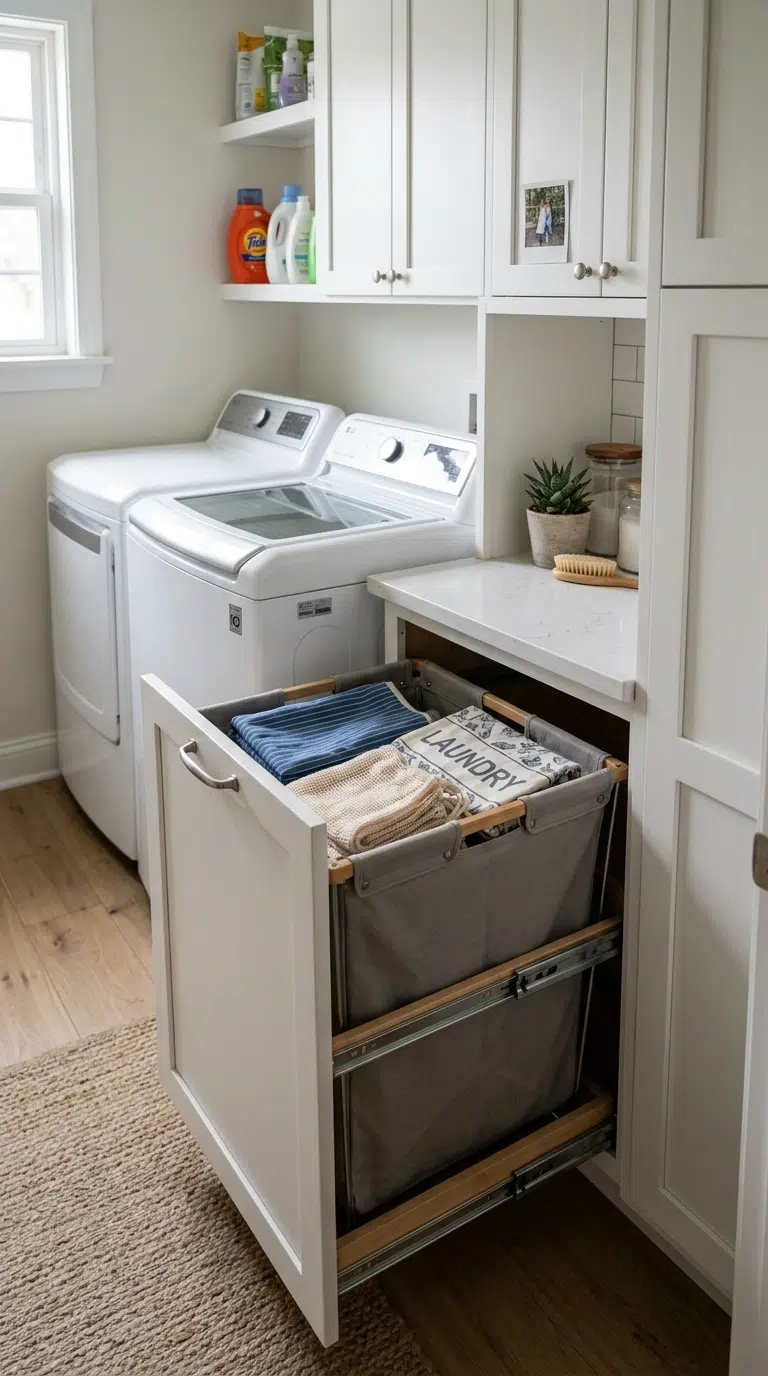
A slide-out hamper built into a lower cabinet or a gap beside the washer keeps dirty laundry contained and out of sight until wash day, which matters a lot in a small room where a freestanding hamper would otherwise take up floor space. These drawers usually use a removable canvas or mesh bag that lifts out for easy transport to the machine.
Look for a slim model, often around fourteen to eighteen inches wide, that can slide into the gap next to your top loader without blocking the lid from opening. Multiple bag inserts let you separate lights and darks right at the source, saving you a sorting step later. Since the bag lifts straight out, you can carry it right to the machine and dump the load in without any extra handling.
14. Under-Sink Storage Bins
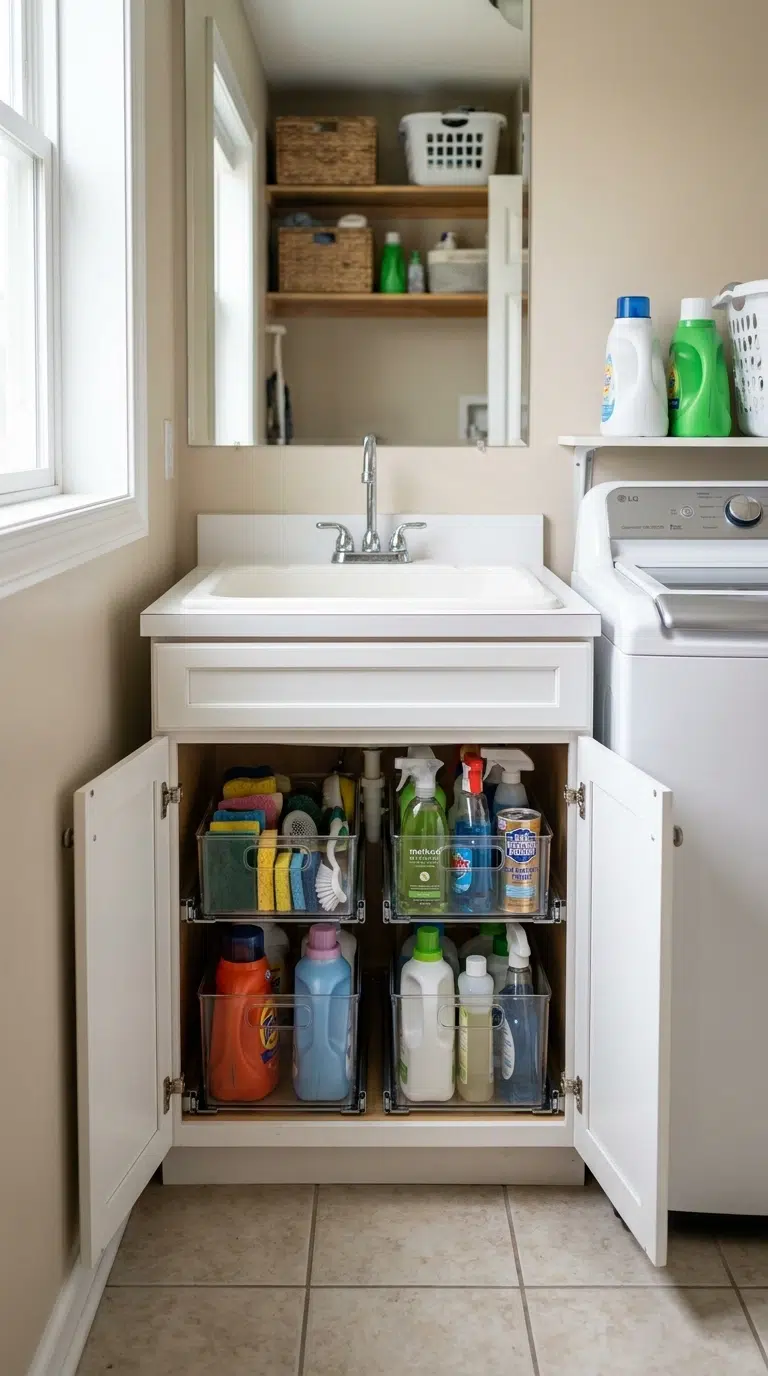
If your narrow laundry room includes a small sink, the cabinet underneath is often wasted space filled with random bottles pushed to the back. Adding pull-out bins or stackable containers under the sink turns that awkward area into organized storage for cleaning supplies, extra sponges, or backup detergent.
Measure the cabinet depth carefully before buying bins, since under-sink cabinets are often shallower than they look due to plumbing pipes running through the middle. Clear bins let you see what is inside at a glance, which is helpful when you are in a hurry and just need to grab a stain remover quickly. Adding a small tension rod partway up the cabinet also gives you a spot to hang spray bottles by their trigger handles, freeing up even more floor space inside.
15. Cabinet Above the Machine
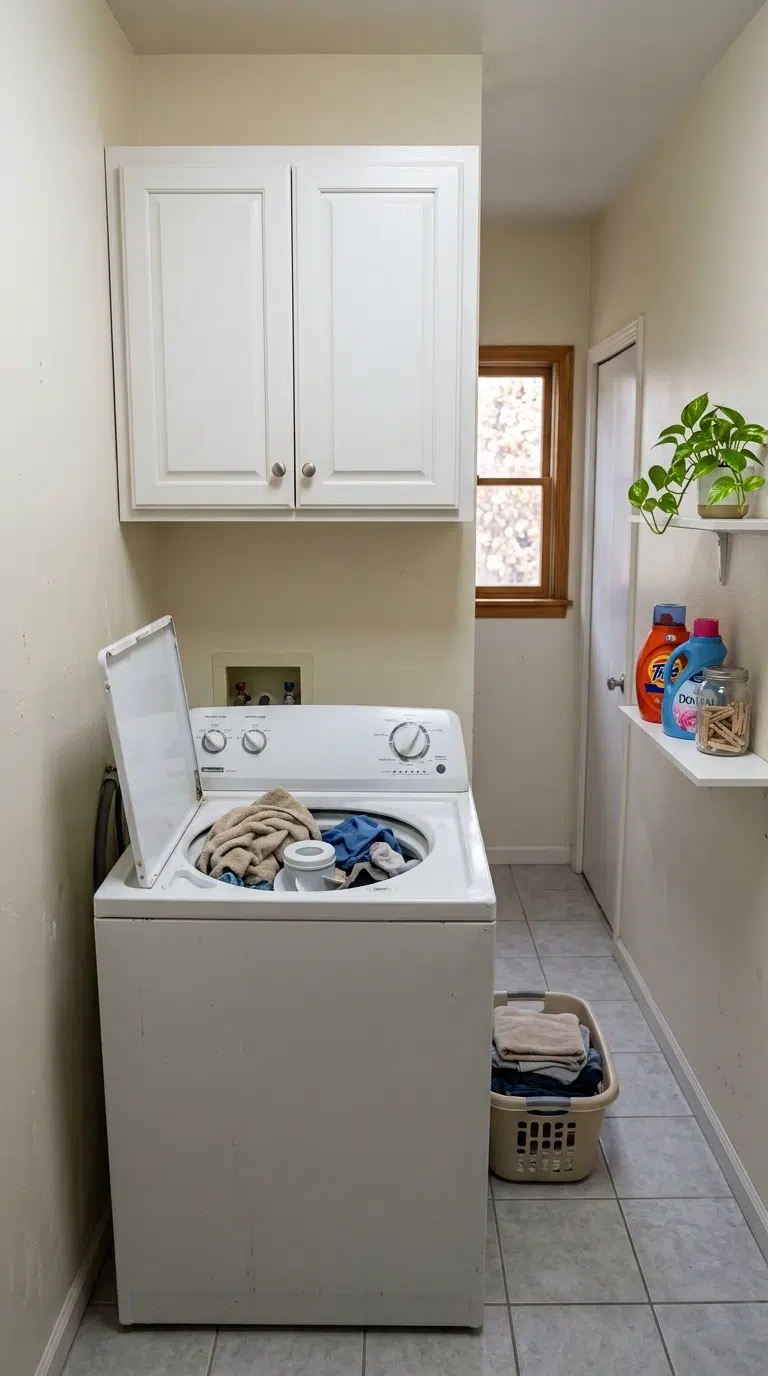
A wall cabinet mounted above a top loader, positioned high enough to clear the open lid, gives you enclosed storage that hides clutter behind closed doors rather than leaving everything on open shelves. This is especially useful in a laundry room that doubles as a mudroom or gets seen by guests passing through.
Measure carefully from the top of the closed lid to make sure the cabinet clears the fully opened lid with a few extra inches to spare. A shallow cabinet, around twelve inches deep, keeps the room from feeling closed in despite the added storage. Use the inside for bulkier items like spare detergent jugs or seasonal linens that you do not need to access every single day, keeping your more frequently used items on lower, easier to reach shelves instead.
16. Fold-Out Drying Rail
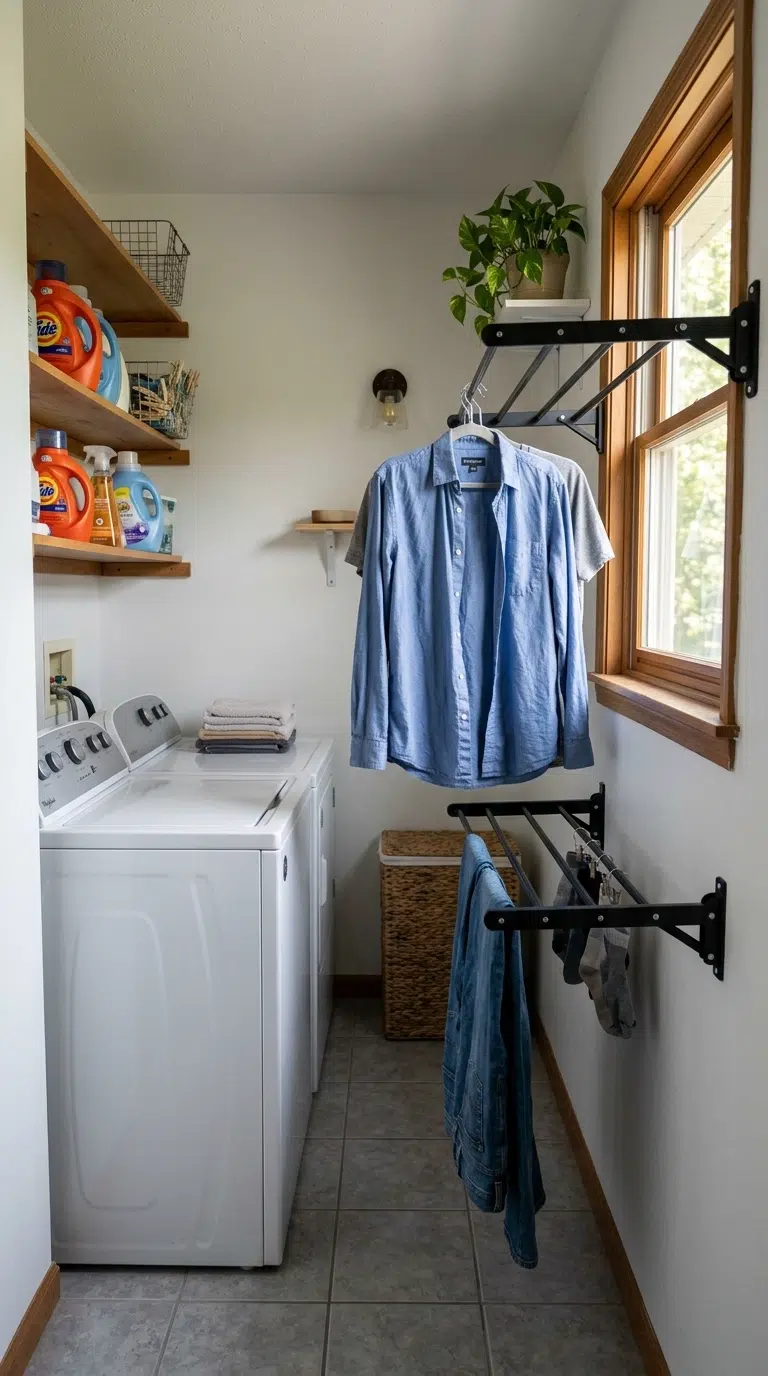
A fold-out drying rail mounted to the wall works similarly to a towel bar but extends outward on a hinge to give you a temporary spot to hang a few damp items. Unlike a full drying rack, this takes up almost no space when folded flat, making it a smart fit for the tightest laundry rooms.
Install two or three rails at slightly different heights so you can hang both short and long items without them touching the floor or each other. This works especially well mounted on the wall directly across from the top loader, giving you a short, convenient path from washer to drying spot. Fold the rails flat against the wall as soon as items are dry so the space stays clear for everyday movement through the room.
17. Slim Rolling Cart Fit
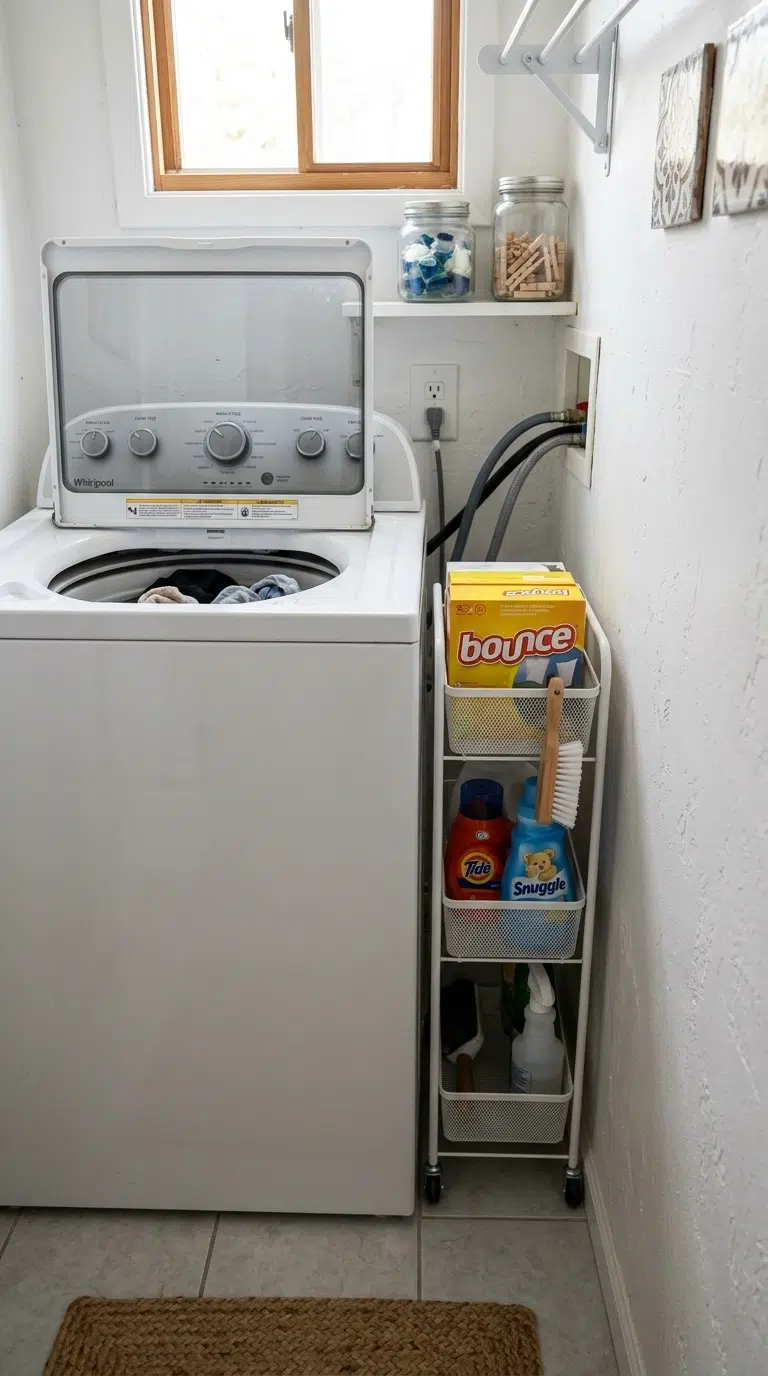
Beyond a general utility cart, a rolling cart built specifically to slide into the gap between a washer and a side wall can turn a completely wasted sliver of space into useful storage. These carts are often only four to six inches wide, designed to squeeze into spots most furniture could never fit.
Fill the cart with items you use during nearly every laundry cycle, like dryer sheets, stain pens, and a small brush for lint traps, since the narrow shelves are best suited to lightweight, flat items rather than bulky bottles. Pull the cart out fully when doing a load, then slide it right back into its gap when finished. This idea works particularly well in laundry closets where a top loader sits with only a few inches of clearance on either side.
18. Floating Detergent Shelf
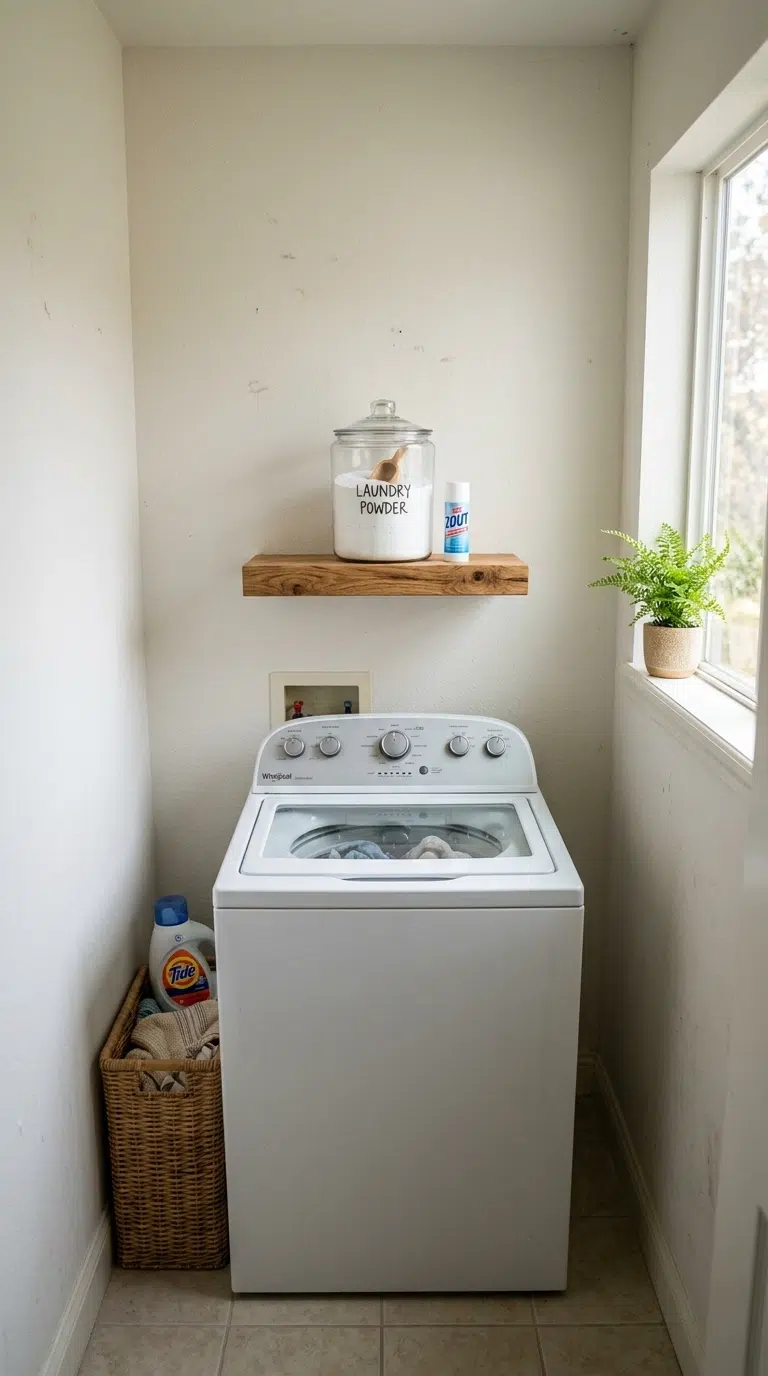
A single floating shelf sized just for your detergent, fabric softener, and a stain stick keeps the essentials within arm’s reach without requiring a full shelving unit. This is a simple, low-cost fix for a laundry room too narrow for bigger furniture but still in need of a landing spot for everyday supplies.
Mount the shelf at a comfortable reaching height, typically around chest level, and consider adding a small lip or raised edge along the front to keep bottles from sliding off during the vibration of a wash cycle. Decanting detergent into a matching pump bottle or glass jar also gives the shelf a cleaner, more finished look than a shelf full of mismatched plastic packaging. Keep it to just a few items so the shelf does not become another cluttered surface over time.
19. Compact Fold-Down Bench
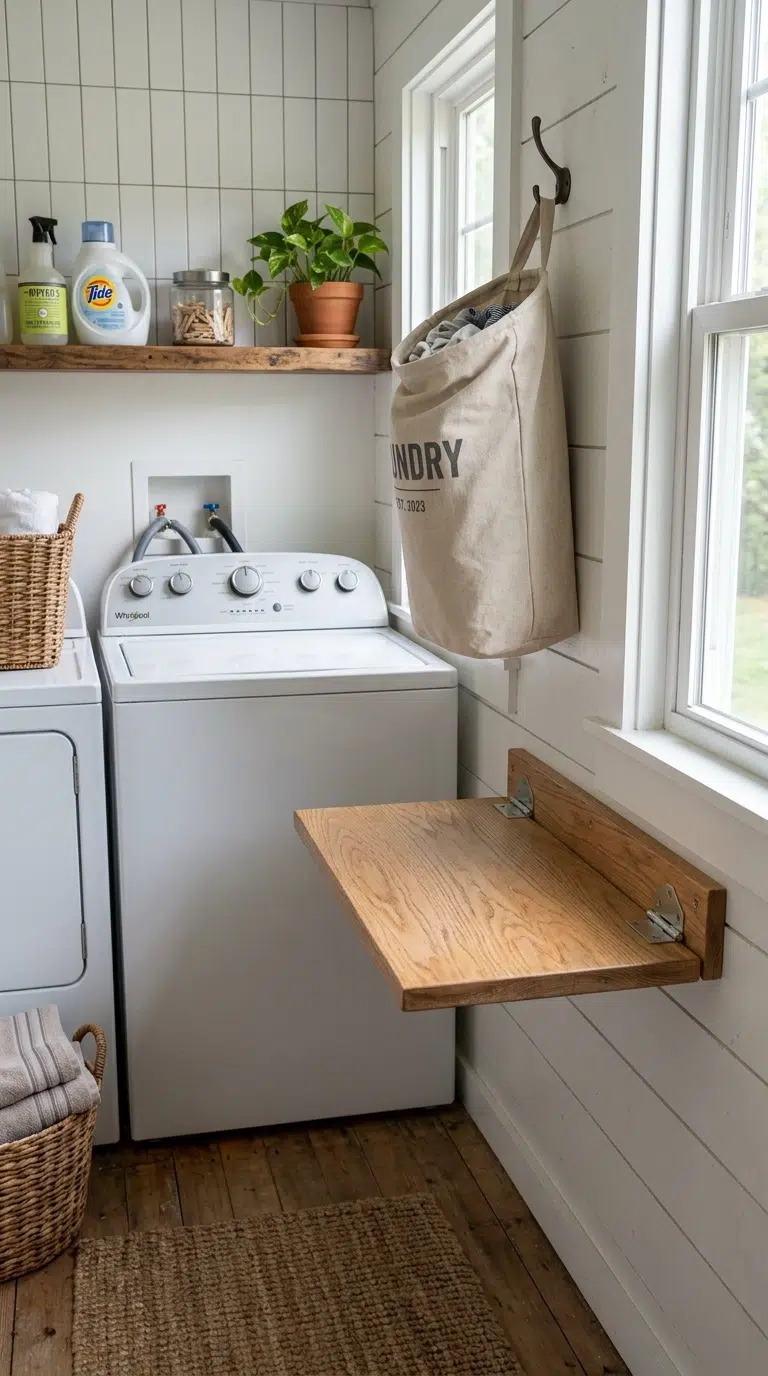
A small fold-down bench mounted to the wall gives you a place to sit while untying shoes, sorting socks, or simply resting for a moment, without permanently taking up floor space in a narrow laundry room. When not in use, the bench folds flush against the wall just like a fold-down counter.
Choose a bench with a padded or cushioned top if the room doubles as a mudroom entry point, or a simple wood surface if it is used purely for laundry tasks. Mount it at a comfortable sitting height of about eighteen inches and make sure the folded position does not block access to the top loader’s lid. Adding a hook or two above the bench for a jacket or laundry bag makes this small addition even more useful throughout the day.
20. Curtain Divider Panel
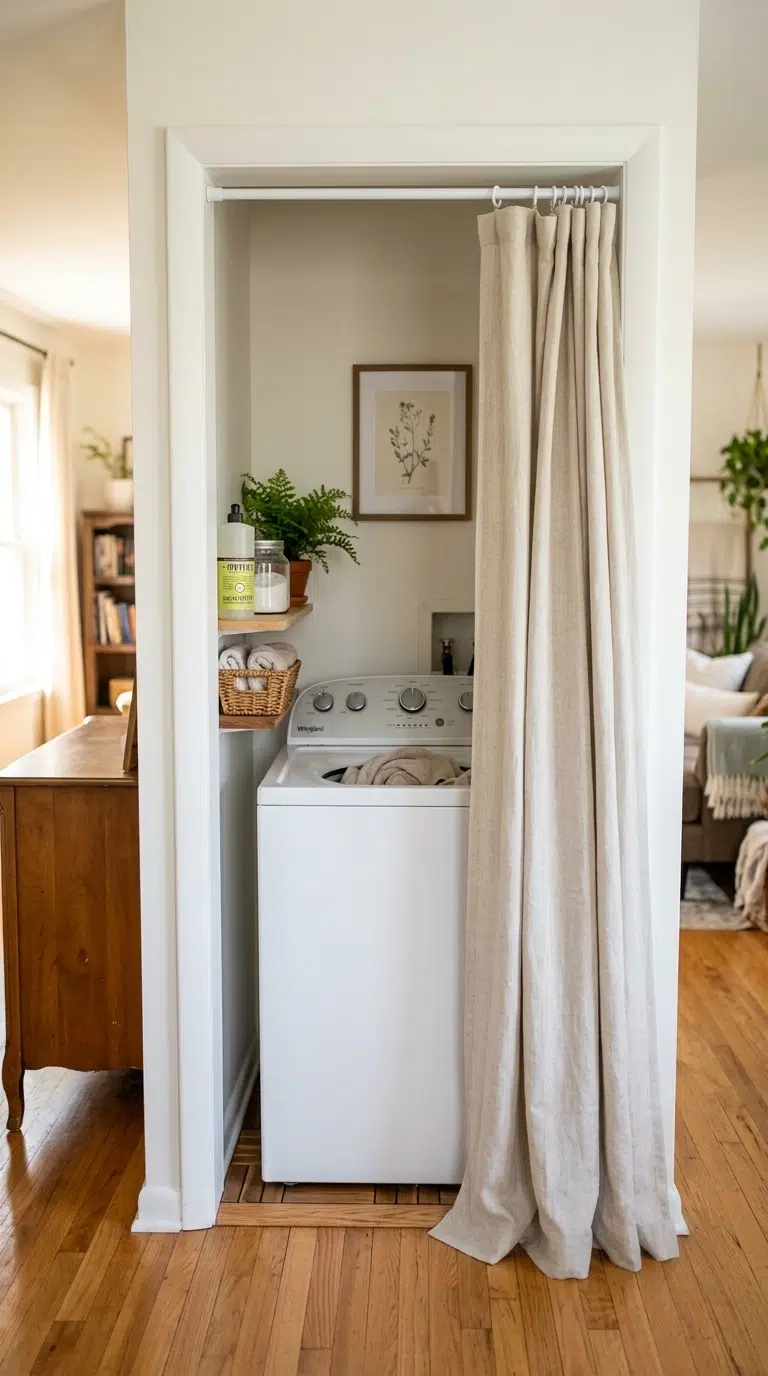
In a narrow laundry room that is part of a larger space, like a kitchen or hallway, a simple curtain panel on a tension rod can visually separate the laundry area without the cost or bulk of an actual door or wall. This keeps the top loader and its supplies tucked out of sight when not in use.
Choose a fabric that matches the rest of your home’s color palette rather than a purely utilitarian print, so the curtain feels like an intentional design choice rather than something hiding a mess. A simple rod mounted just outside the appliance nook allows the curtain to slide open fully when you need complete access to the machine. This is one of the easiest updates on this list, often taking less than an hour from start to finish.
21. Narrow Floor Runner
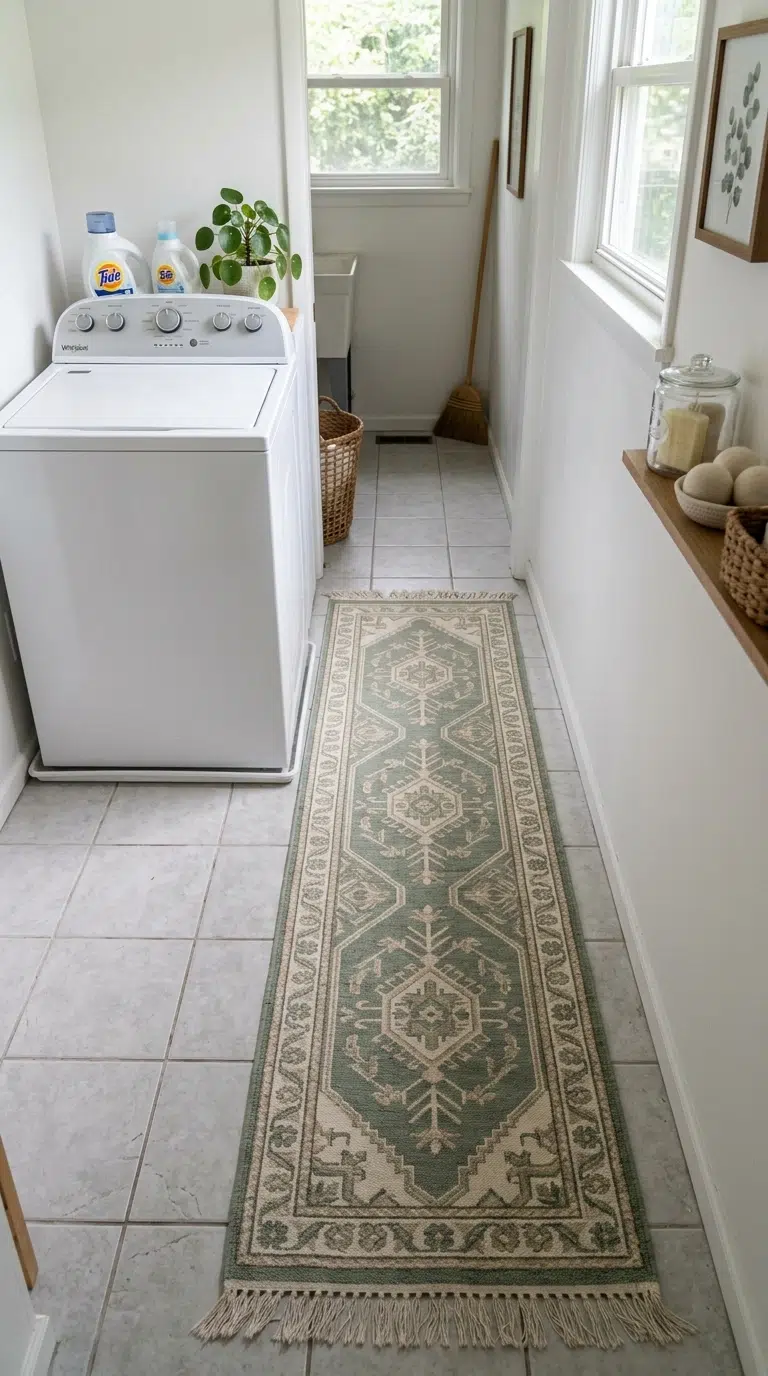
A slim floor runner placed in front of a top loader adds a bit of softness and color to a room that is often all hard surfaces and appliance fronts. It also gives your feet a warmer, more comfortable spot to stand while loading or unloading laundry, especially over cold tile or vinyl flooring.
Choose a runner made from a low pile, washable material since laundry rooms deal with more moisture and stray lint than most other rooms in the house. A pattern in navy, sage, or a warm terracotta tone can hide small stains better than a plain white or cream runner. Make sure the runner sits flat against the floor rather than bunching up near the machine, since a loose edge can become a tripping hazard in such a tight walking space.
22. Wall Mounted Hook Rail
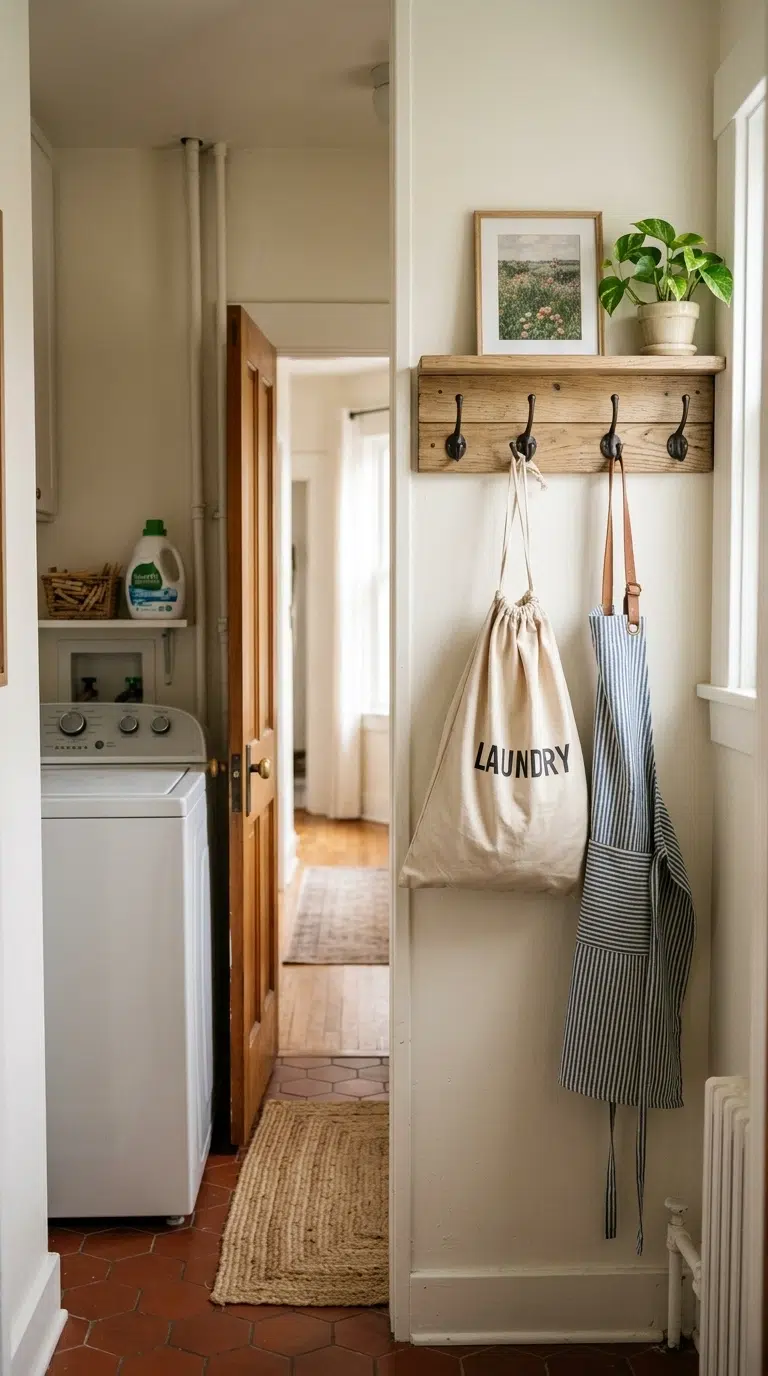
A simple row of hooks mounted at the end of a laundry room gives you a spot to hang a laundry bag, an apron, or even hangers with clothes waiting to be put away, all without taking up any floor space at all. This is one of the cheapest and fastest additions on this entire list.
Space the hooks about four to six inches apart along a small rail, and mount the rail at a height that works for the tallest person in your household who regularly uses the room. A mix of hook sizes lets you hang both lightweight items like a lint roller and heavier ones like a full laundry bag. Placing the rail near the doorway of the laundry room also gives you a natural spot to grab or drop off items on your way in and out.
23. Mini Countertop Folding Zone
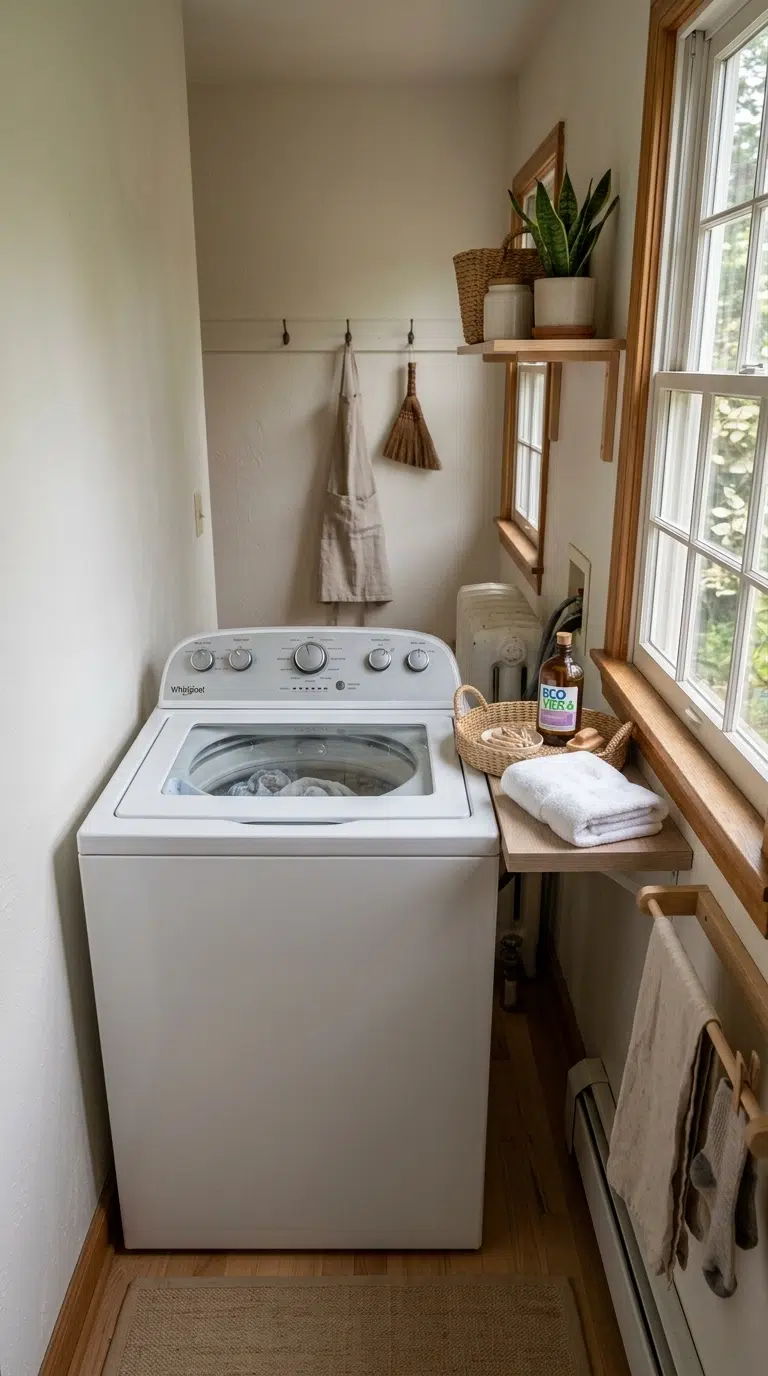
Even eighteen inches of counter space is enough to create a small dedicated folding zone if there is no room for a full fold-down counter elsewhere in the layout. This tiny surface, often installed beside or behind the top loader, gives you just enough room to fold a hand towel or match a pair of socks without carrying laundry to another room.
Use a durable, easy to wipe material like laminate or sealed butcher block for this small surface, since it will likely double as a spot to set down a detergent cap or stray sock along the way. Keep the area completely clear of decor or extra items so the full surface stays usable when you need it. Adding a small shallow tray on one corner gives you a spot to collect loose change or buttons found in pockets before a wash.
FAQs
How much side clearance does a top loader actually need?
Most top loaders need at least a few inches of clearance on the lid side for the door to open fully, though many narrow room solutions on this list are designed to work around that limited space rather than needing more of it.
What is the best storage option for a laundry room only a few feet wide?
A tall, narrow storage tower or a slim rolling cart tends to work best in the tightest rooms since both add real capacity without needing much floor footprint at all.
Can I still add a folding surface if there is no room for a table?
Yes. A fold-down wall counter or a small mini countertop folding zone can give you a usable folding surface that disappears when not needed.
What is the easiest and cheapest idea to start with today?
A wall mounted hook rail or a curtain divider panel are both simple, low-cost updates you can add in under an hour with basic tools.
A narrow laundry room does not have to feel like a squeeze every time you do a load. Pick two or three ideas that match your layout, start with whatever is easiest to install this weekend, and build from there as your storage needs change.