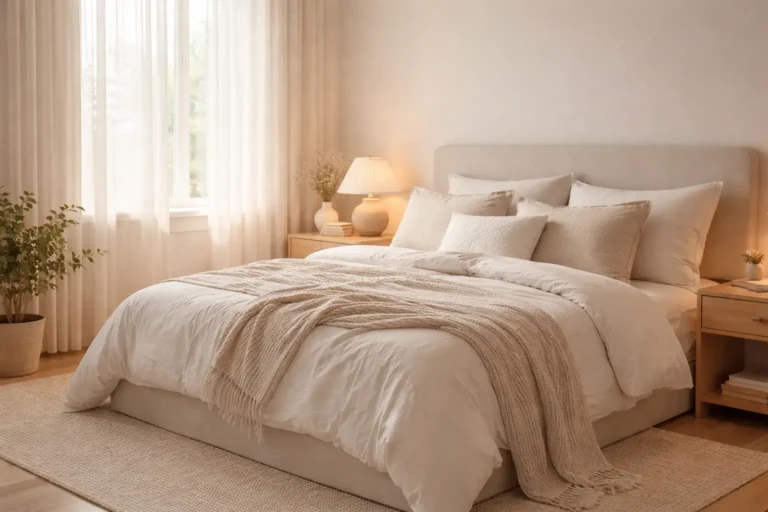
22 Hotel Style Bedroom Ideas That Work Beautifully in Small Rooms

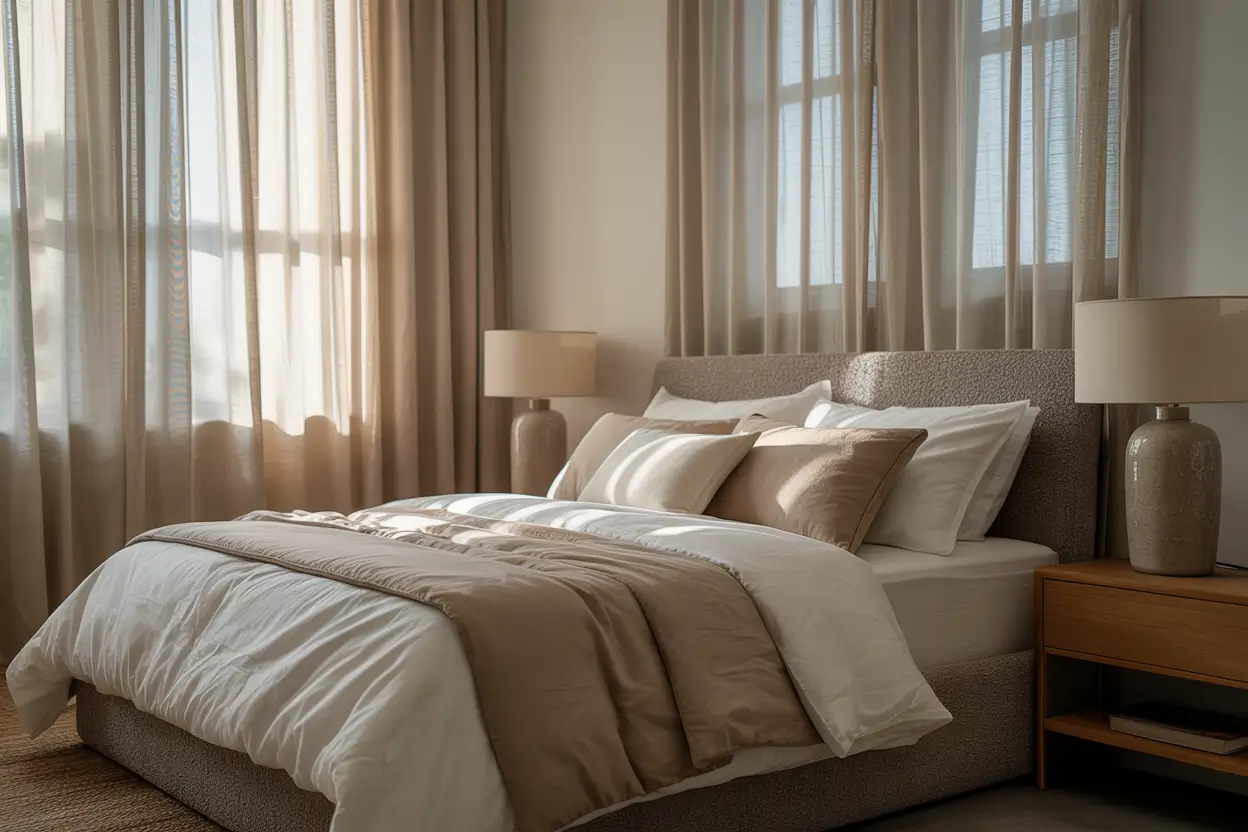
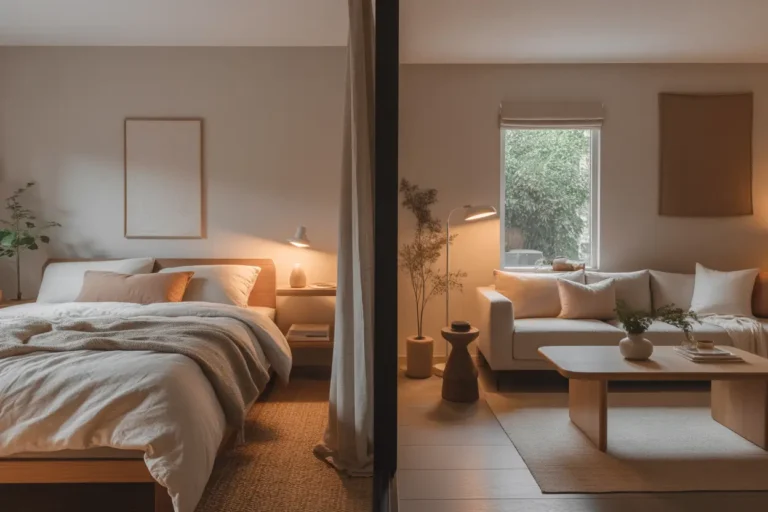
Walking into a nice hotel room does something to your mood right away. The bed looks impossibly soft, the lighting is warm instead of harsh, and nothing feels cluttered even though the room is often smaller than you expect. The good news is that none of that comes from square footage. It comes from small, repeatable choices, like how the pillows are stacked, where the lamps sit, and how much stuff is left out on the surfaces. A tiny bedroom can absolutely pull off a hotel look, sometimes even better than a huge one, because everything sits closer together and reads as one cohesive scene. This list breaks down twenty-two ideas that work in real small bedrooms, not just spacious hotel suites with unlimited square footage. Some ideas take five minutes, like adding a tray to your nightstand. Others take a weekend, like adding an upholstered headboard wall. Pick a few that fit your space and budget, and the hotel feeling will follow.
1. Layered Neutral Bedding
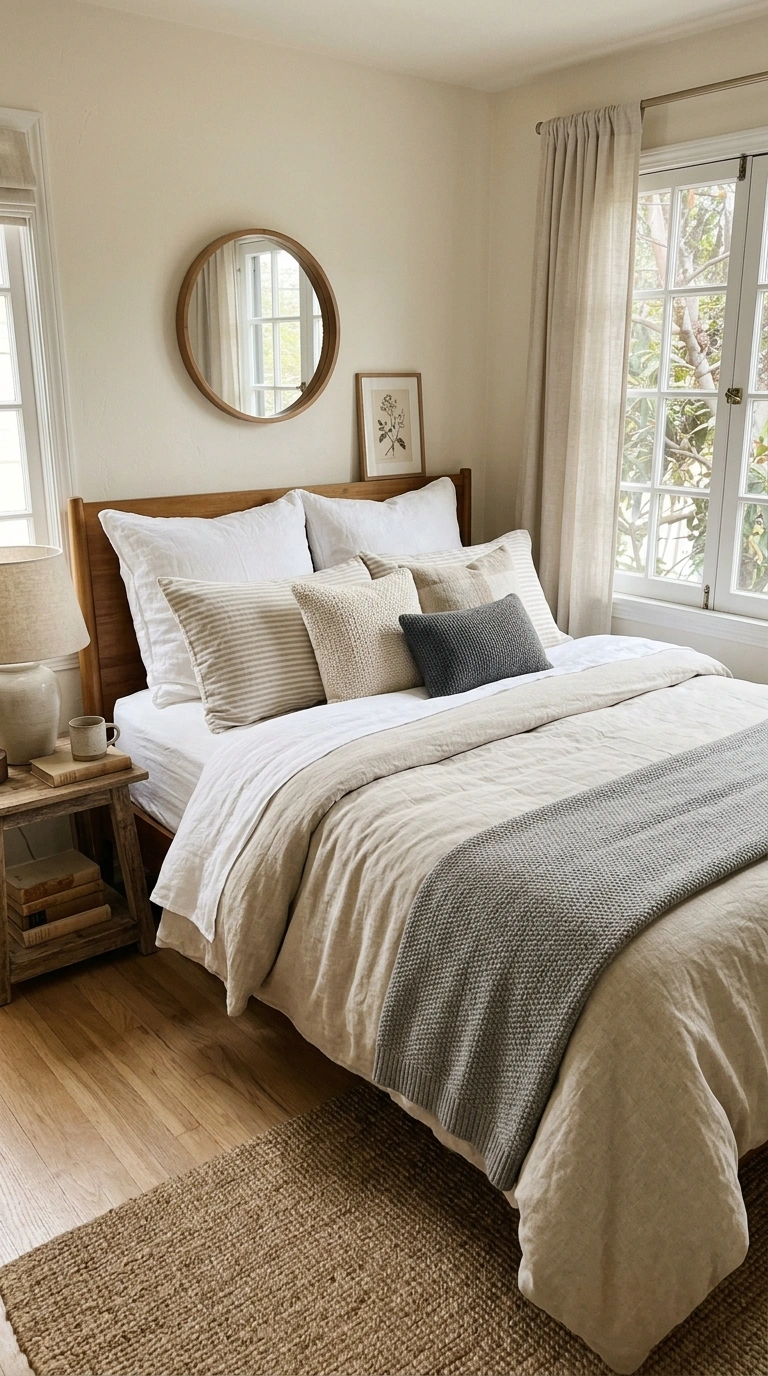
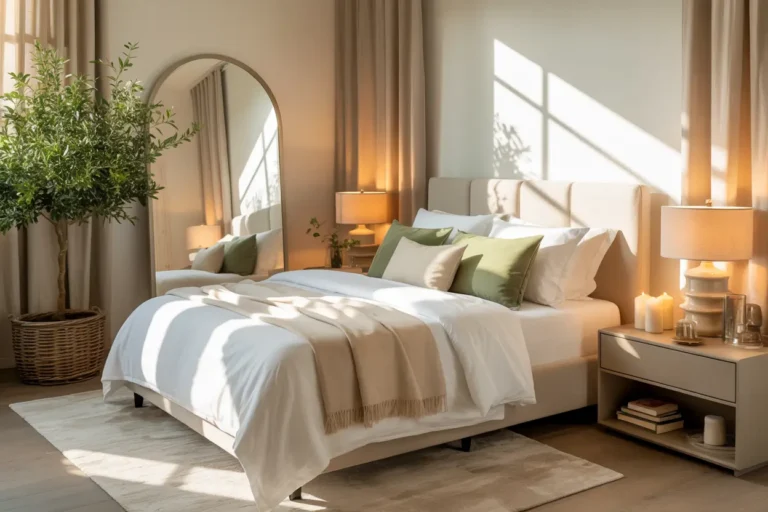
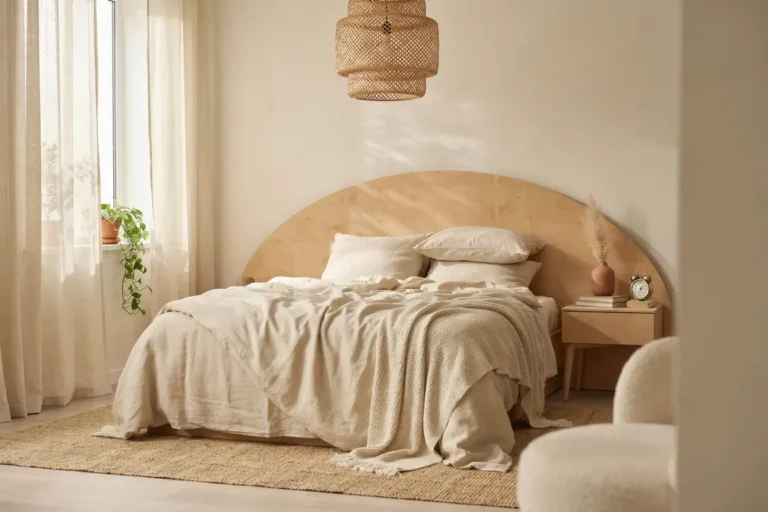
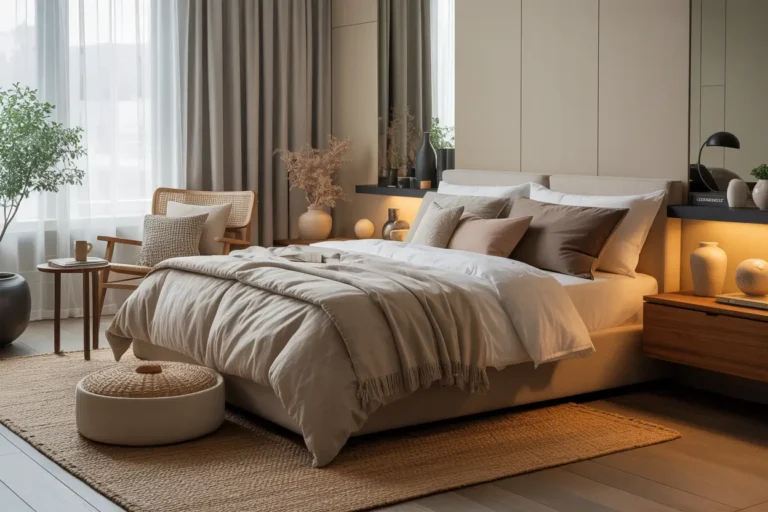
The bed is the first thing anyone notices in a bedroom, so this is the single most important idea on the entire list. Start with a fitted sheet and flat sheet in white or a soft off-white, then add a duvet or coverlet in a slightly deeper neutral tone, like oatmeal, taupe, or light gray. Layer a folded throw blanket across the foot of the bed, and finish with at least four to six pillows, mixing standard sleeping pillows with one or two decorative lumbar pillows in a matching neutral tone. The key to the hotel look is sticking to two or three shades total rather than mixing bright colors or bold patterns. Fluff every pillow and smooth the duvet flat before styling, since wrinkled bedding immediately breaks the polished look. This idea costs very little if you already own basic bedding, and it works in a room of any size, since a well-made bed instantly becomes the anchor point for the whole space.
2. Upholstered Headboard Wall
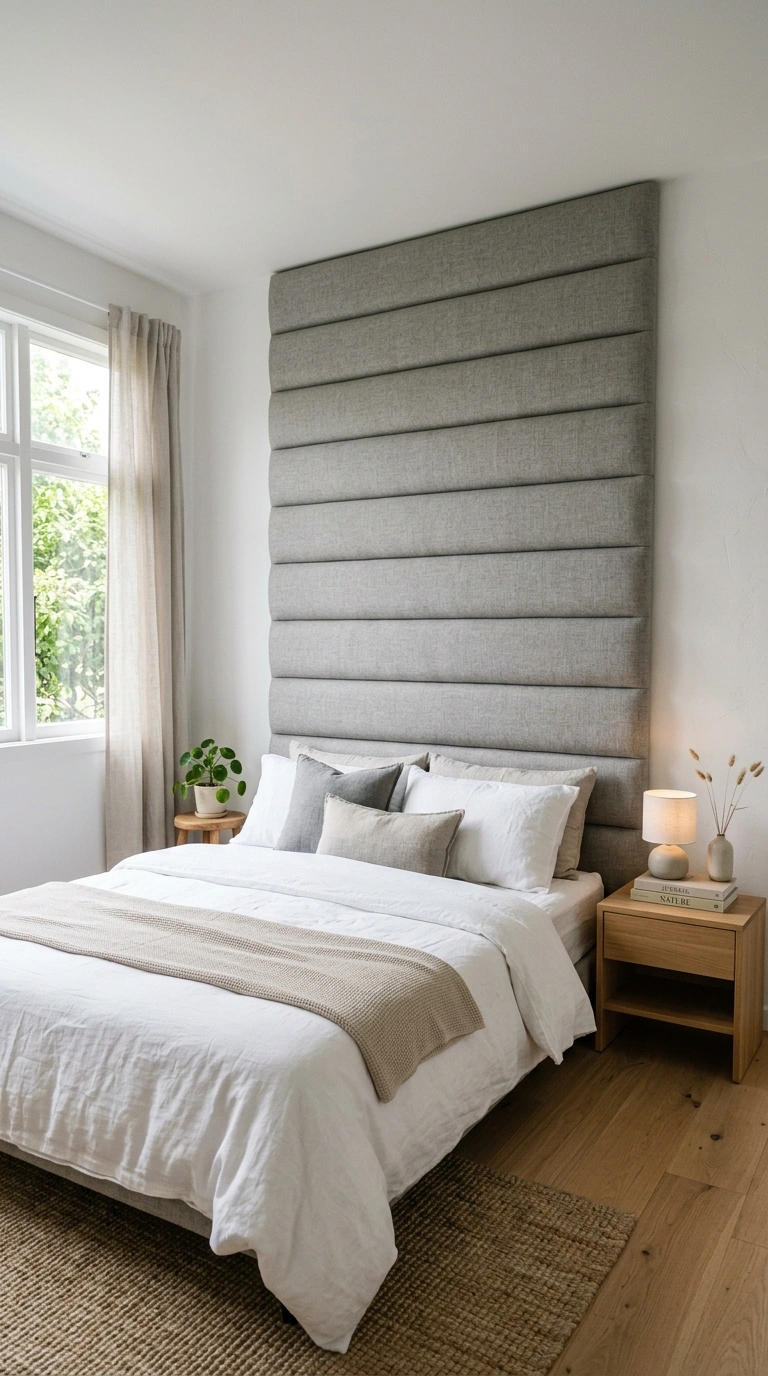
An upholstered headboard, or a full upholstered wall panel behind the bed, adds instant softness and a sense of luxury to even the smallest bedroom. Choose a neutral fabric like linen, boucle, or velvet in a soft gray, cream, or muted blue tone, and select a headboard style with simple channel tufting or a plain padded shape rather than anything overly ornate. If a full headboard feels too large for the room, upholstered wall panels installed directly behind the pillows create a similar effect using less depth. This idea works especially well in small bedrooms because it adds visual softness without taking up any actual floor space, unlike a large wood headboard that can feel heavy in a tight room. Keep the wall color behind the headboard simple and light so the fabric texture stands out clearly. This single change often does more to create a hotel feeling than almost any other item in the room, since it frames the entire bed.
3. Matching Nightstand Lamps
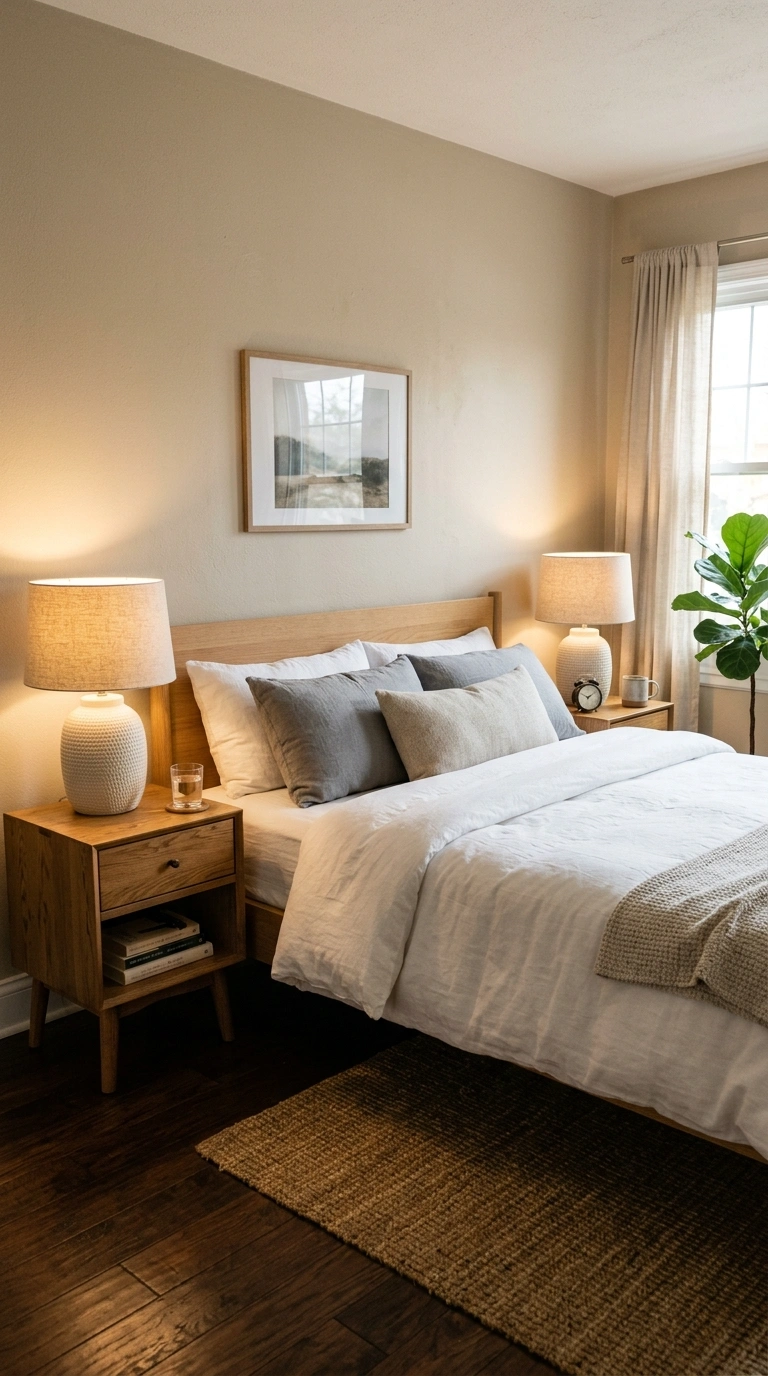
A pair of matching lamps, one on each side of the bed, is one of the most recognizable hotel bedroom details. Choose lamps with a simple ceramic or glass base and a plain linen shade, avoiding anything too tall or too patterned, since the goal is soft, even lighting rather than a bold statement piece. In a small bedroom where floor space is tight, mount wall sconces above each nightstand instead of using tabletop lamps, freeing up the small surface below for a book or a glass of water. Warm bulbs, rather than bright white ones, make a huge difference in how relaxing the room feels in the evening. Keep both lamps at the same height and turned on at the same brightness so the symmetry reads clearly from the doorway. This small, affordable swap is one of the fastest ways to make a plain bedroom feel intentionally designed rather than thrown together with mismatched leftover furniture.
4. Plush Bench Seat
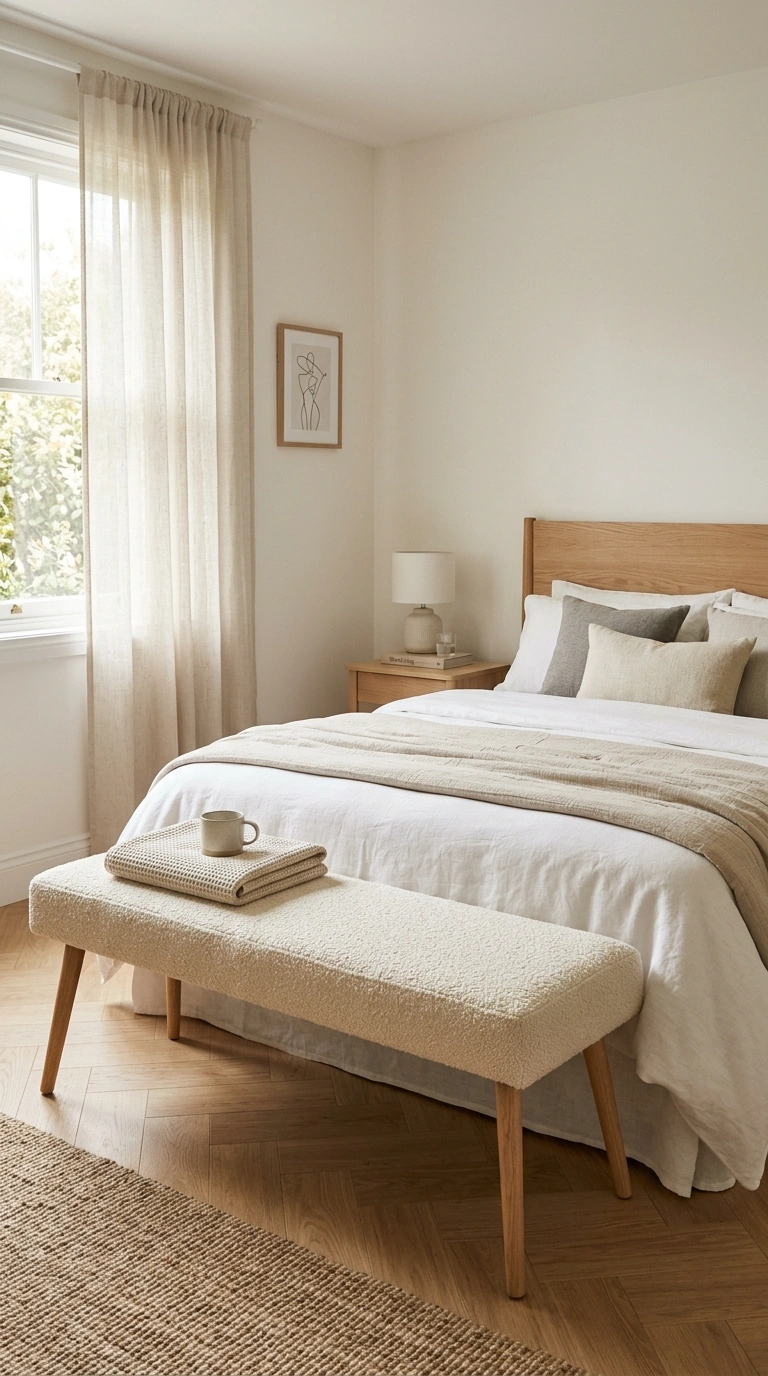
A small upholstered bench placed at the foot of the bed adds both function and that classic hotel look, even in a room with limited floor space. Choose a bench roughly the same width as the bed or slightly narrower, upholstered in a neutral fabric like boucle or linen to match the bedding. In a small bedroom, a slim bench with thin metal or wood legs keeps the piece from feeling bulky, while still giving you a spot to set a suitcase, fold a blanket, or sit down to put on shoes. This idea works especially well when the bench color echoes one of the throw pillows or the blanket at the foot of the bed, tying the whole layout together visually. If a full bench does not fit your space, a smaller upholstered stool or ottoman at the corner of the bed creates a similar effect. It is a small addition that makes the whole room feel more finished.
5. Sheer Curtain Panels
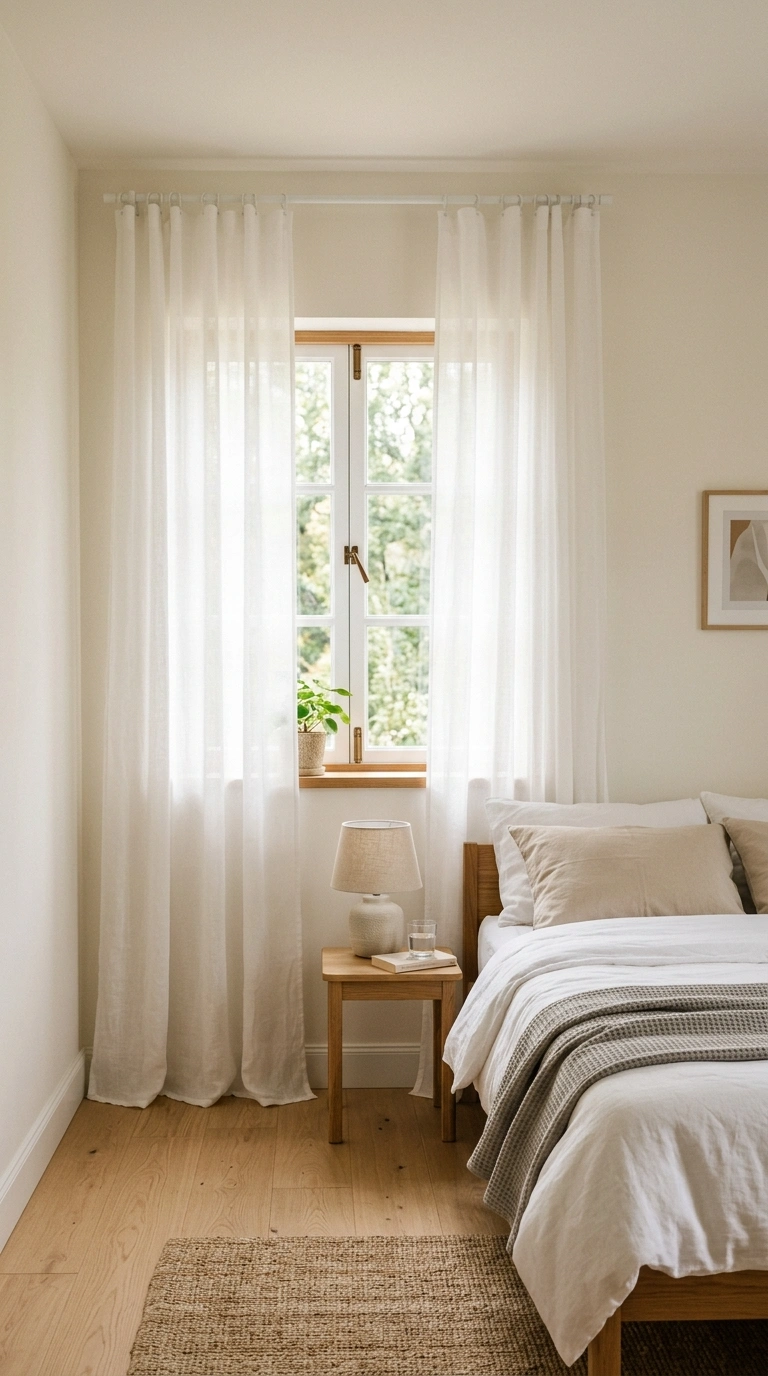
Long, flowing sheer curtains add softness and height to a bedroom window, even a small one, and they are a staple in almost every well-styled hotel room. Choose curtains in a light, airy fabric like linen or a soft sheer weave in white or off-white, and hang the curtain rod as close to the ceiling as possible, well above the actual window frame. This trick makes the ceiling feel taller and the window feel bigger than it really is, which matters even more in a small room where every inch of perceived height counts. Let the curtains puddle slightly at the floor or hang just above it, rather than stopping short at the windowsill, since floor-length curtains read as more polished. Pair sheer panels with a simple blackout liner behind them if you need to block light at night while keeping the soft look during the day. This is one of the most affordable, high-impact changes on the entire list.
6. Statement Ceiling Light
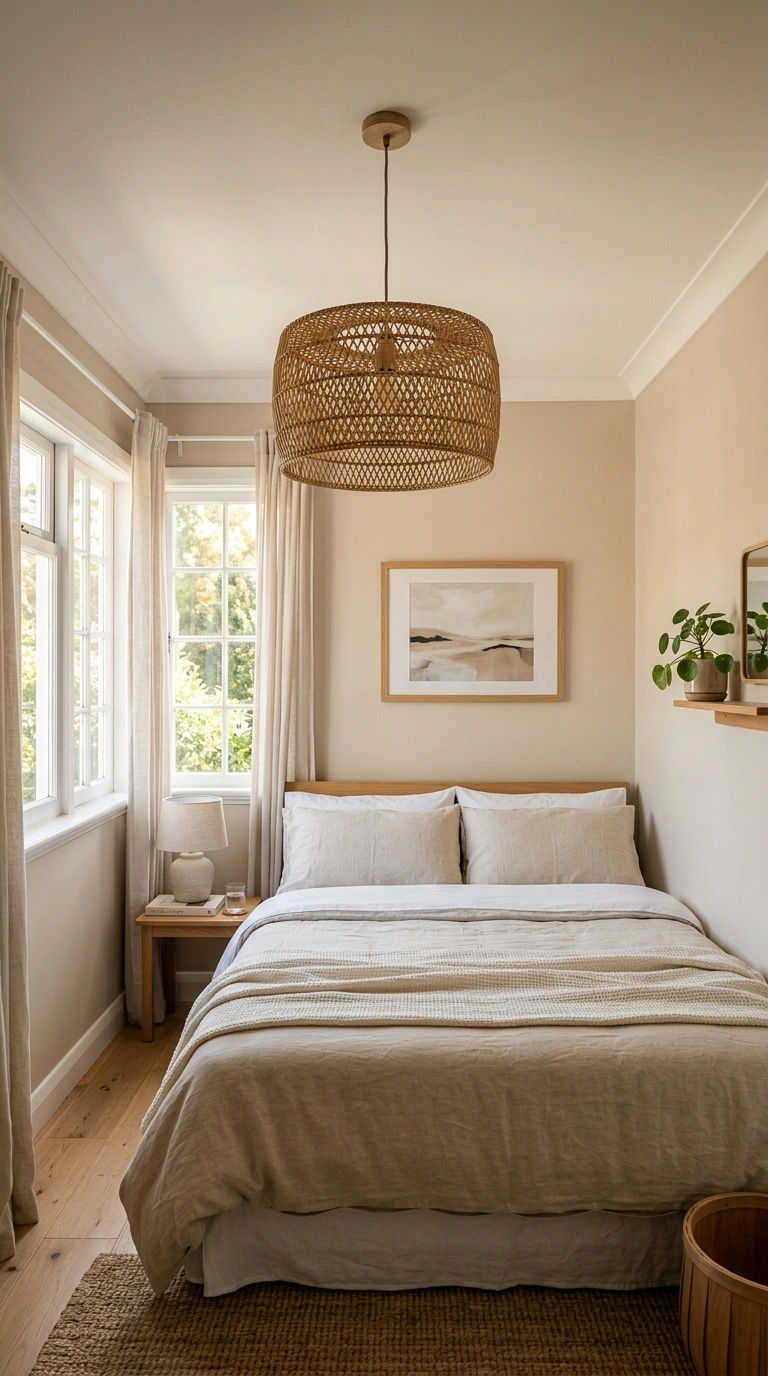
Swapping a plain ceiling fixture for a statement pendant or a simple woven drum shade instantly draws the eye upward, making a small bedroom feel taller and more considered. Choose a fixture that fits the scale of the room, since an oversized chandelier can overwhelm a small space, while a simple round pendant or a woven rattan shade adds warmth without taking over. Hang the fixture low enough to feel intentional but high enough to clear anyone walking underneath it comfortably. This idea works particularly well in bedrooms with lower ceilings, since a well-chosen fixture draws attention away from the ceiling height and toward the design detail itself. Pair the light with a warm, dimmable bulb so the room can shift from bright and functional during the day to soft and relaxing at night. A single updated light fixture is a small investment that changes the entire feeling of the room the moment you walk in.
7. Blackout Drapery Layer
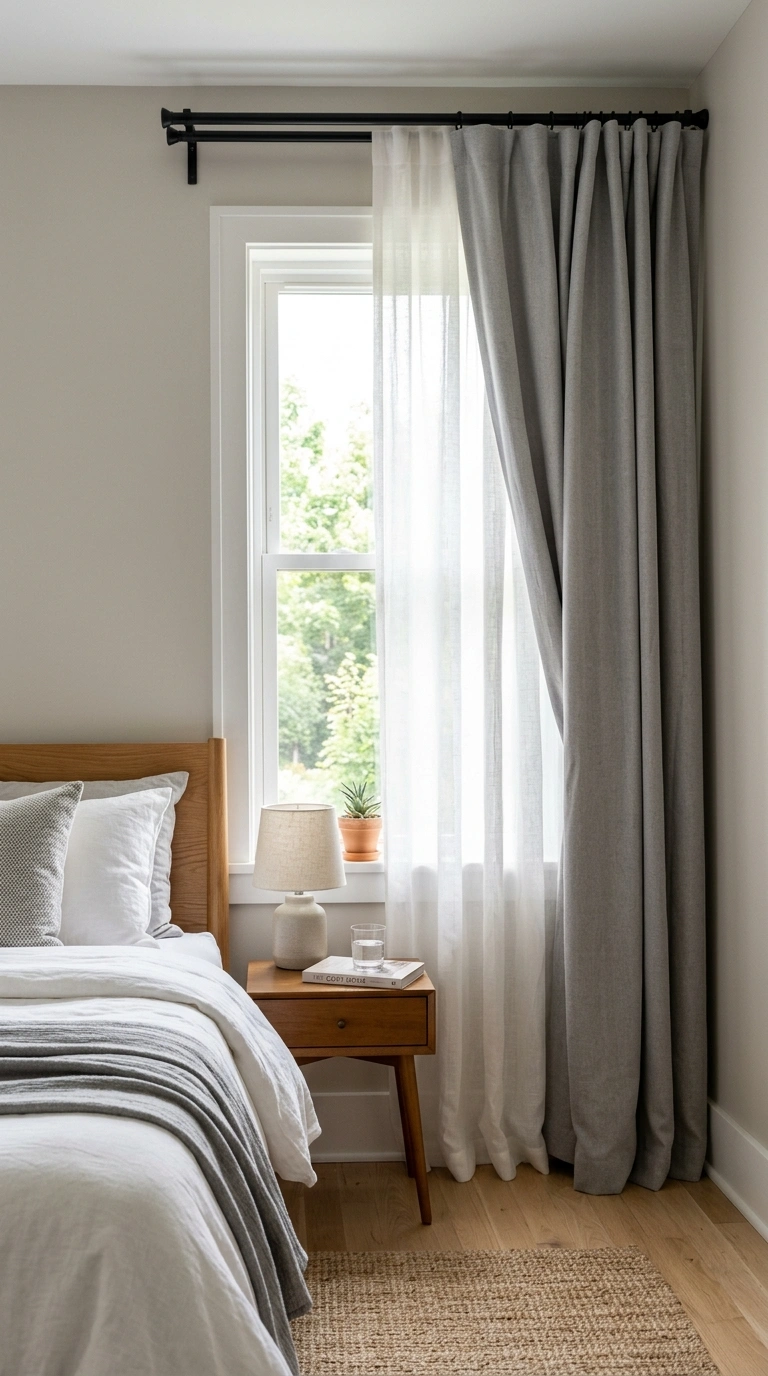
Layering blackout drapes behind sheer curtains gives a bedroom both the soft, airy hotel look during the day and full darkness at night, which is exactly how most hotel rooms are set up. Choose blackout drapes in a color that matches or complements your wall color, like a soft gray, cream, or deep neutral, and hang them on a double curtain rod along with the sheer panels in front. In a small bedroom, this layered look adds visual depth to the window wall without requiring any extra floor space, since both curtain layers hang flat against the same area. Keep the drapes pulled fully open during the day so the sheers remain the visible layer, and close them fully at night for a true blackout effect. This idea is especially useful in bedrooms that face early morning sun or streetlights, giving the room a practical upgrade that still looks polished and intentional rather than purely functional.
8. Oversized Wall Art
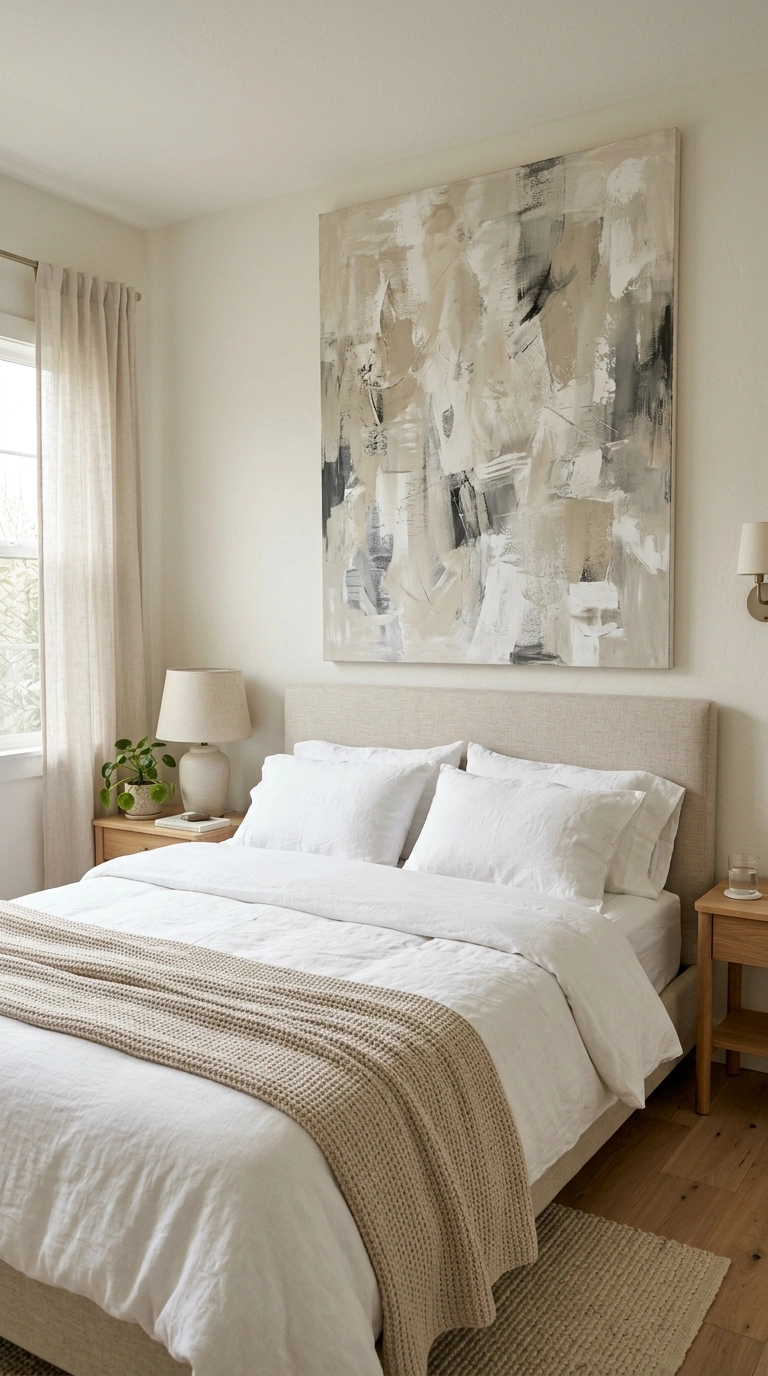
A single large piece of art above the bed does more visual work than several small pieces scattered around the room, especially in a small bedroom where wall space is limited. Choose one piece roughly two-thirds the width of the headboard, in a calm, neutral palette like abstract beige tones, soft landscape photography, or simple line art. Hang it so the bottom edge sits about eight to twelve inches above the headboard, keeping it centered over the bed rather than off to one side. This idea creates an instant focal point the moment someone walks into the room, similar to the statement art found above the bed in most hotel rooms. In a small space, one oversized piece actually reads as cleaner and more intentional than a busy gallery wall, since it avoids adding visual clutter. Choose a simple frame in black, wood, or no frame at all, depending on the mood you want the piece to set.
9. Wood Accent Wall
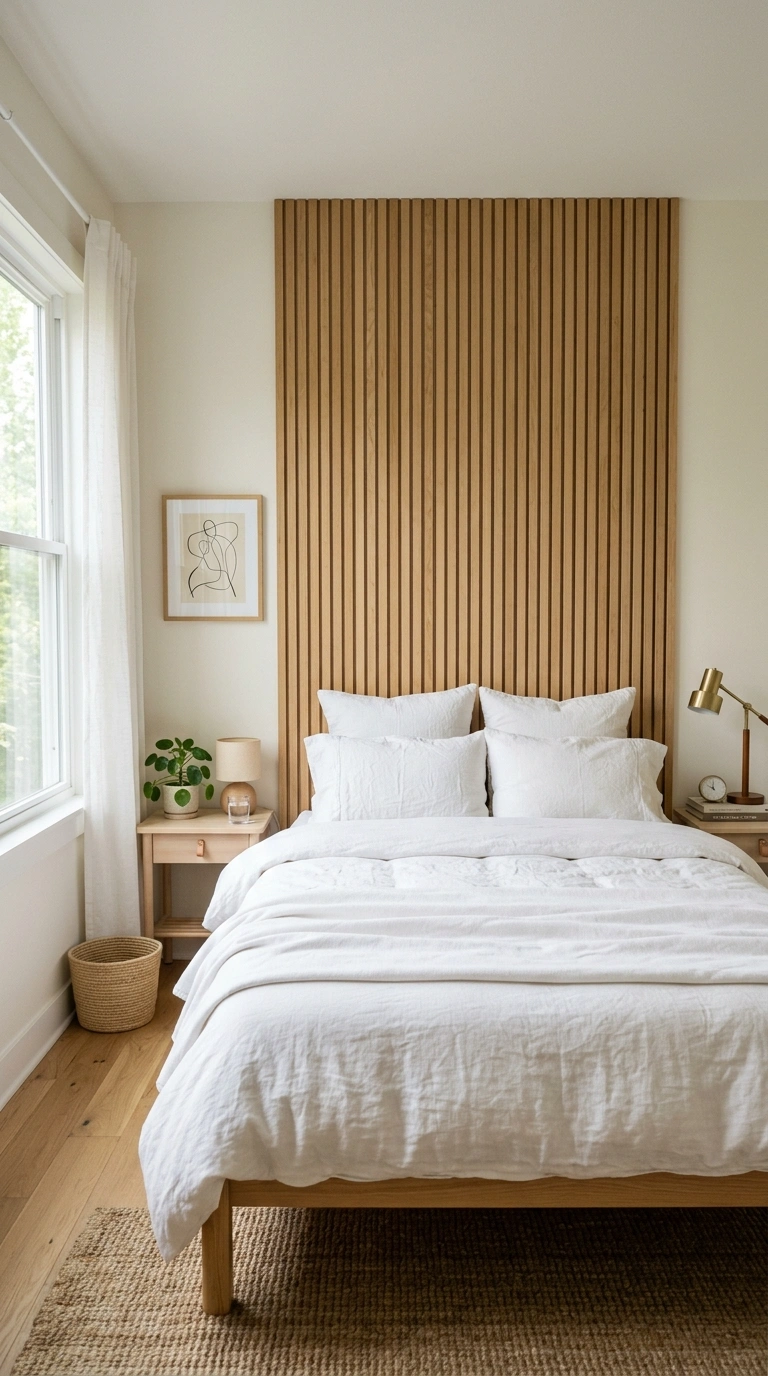
A wood slat or wood panel accent wall behind the bed adds warmth and texture without requiring any extra floor space, making it a smart choice for small bedrooms. Choose vertical wood slats in a light natural tone or a warm walnut shade, and install them only on the wall directly behind the headboard rather than the entire room, keeping the rest of the walls plain and painted. This creates a clear focal point that mimics the feature walls found in many boutique hotel rooms. Vertical slats in particular can make a low ceiling feel taller, since the eye naturally follows the lines upward. Pair the wood wall with simple, uncluttered bedding and minimal art, letting the texture of the wall itself be the main visual interest in the room. Prefabricated slat wall panels are widely available and can usually be installed directly over existing drywall in a single afternoon, making this a realistic weekend project rather than a full renovation.
10. Cozy Reading Nook
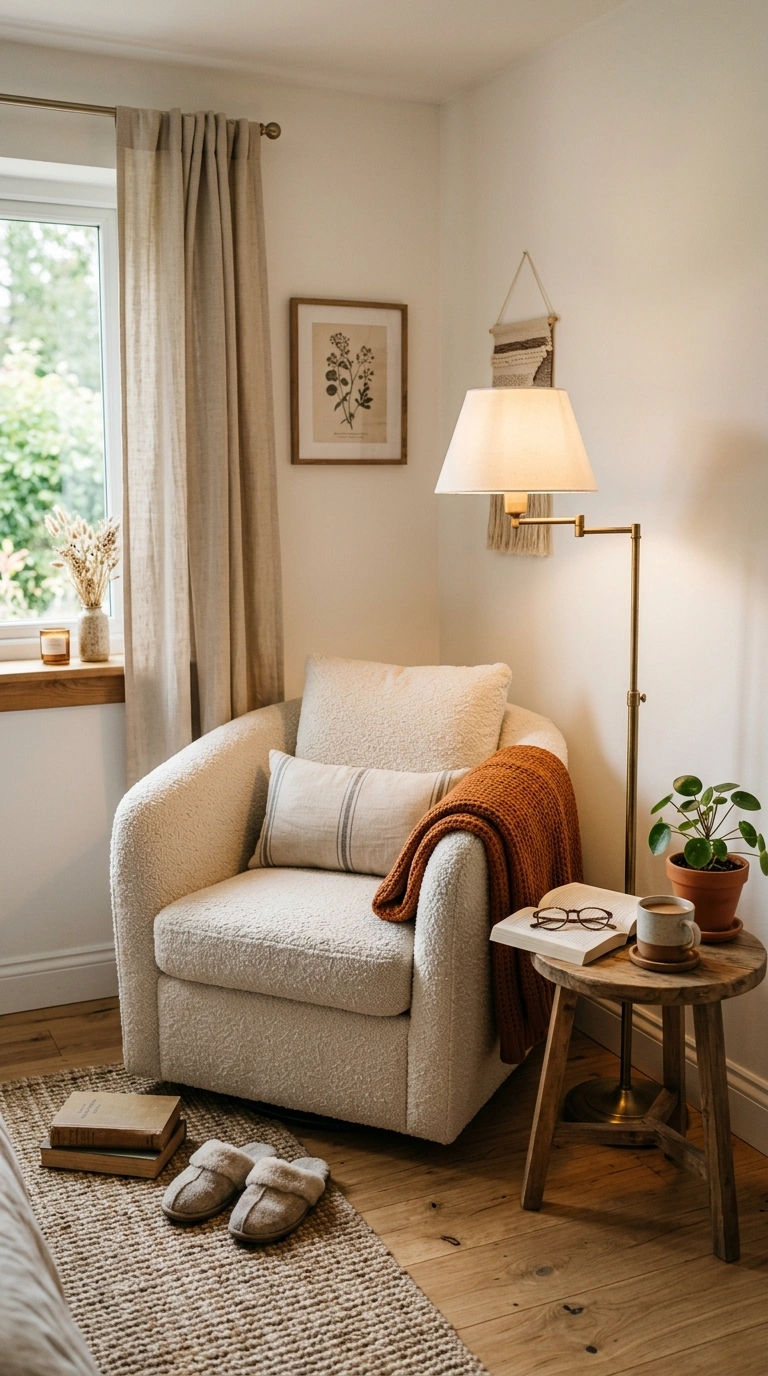
A small reading nook tucked into an unused corner of the bedroom, even a tight one, adds a hotel-suite feeling by giving the room a second purpose beyond just sleeping. All you really need is one comfortable chair, a small side table, and a floor lamp positioned to cast warm light directly onto the chair. Choose a chair in a soft fabric that complements the bedding, like boucle or linen, and keep the side table simple, just enough surface for a book and a cup of tea. In a small bedroom, tucking this setup into an unused corner near the window makes the most of natural light during the day while still leaving the rest of the room open. This idea works especially well paired with a folded throw blanket draped over the arm of the chair, echoing the layered bedding on the bed itself. A reading nook turns an empty corner into one of the most inviting spots in the room.
11. Minimal Floating Shelf
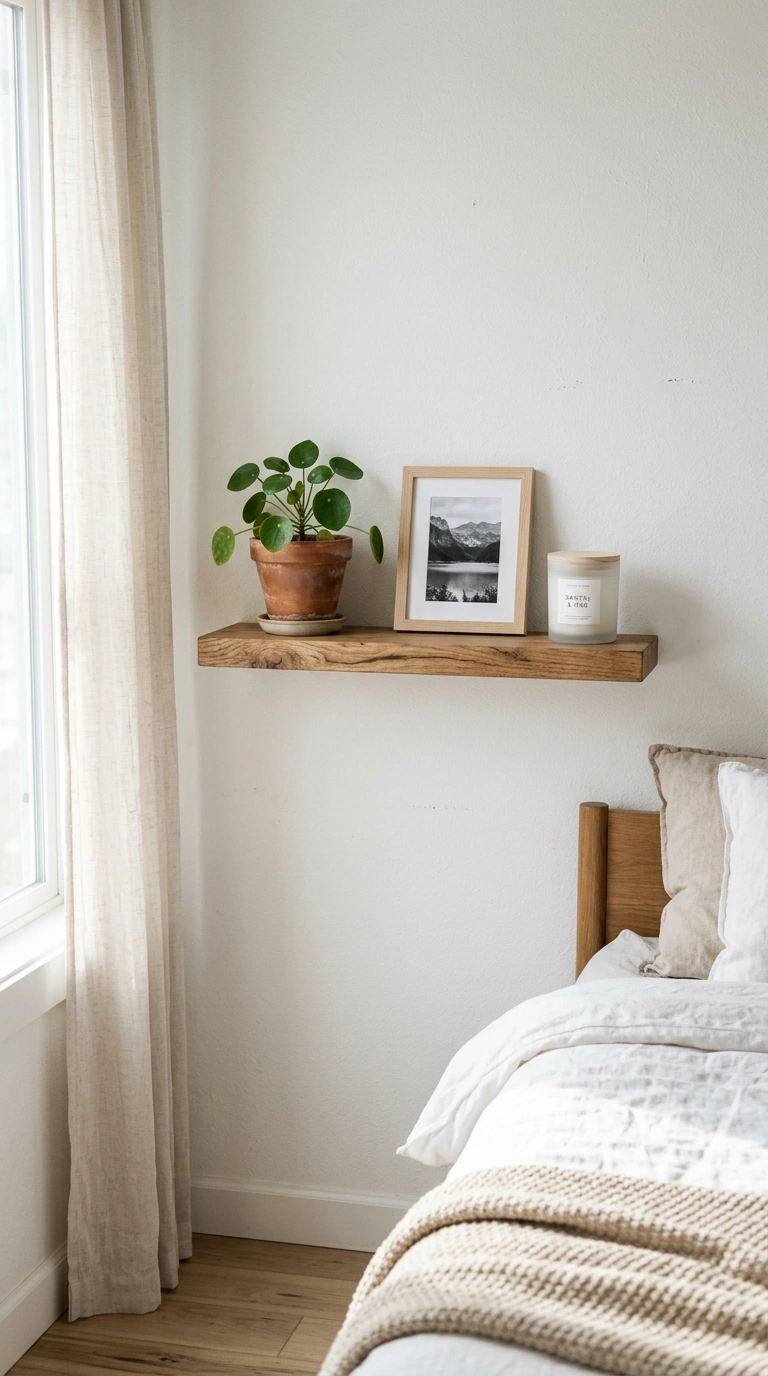
A single floating shelf mounted above the bed or beside it gives a small bedroom a place for a few styled objects without taking up any floor space at all. Keep the styling minimal, just one small plant, one framed photo, and one candle, leaving plenty of open space on the shelf rather than filling every inch. This restraint is actually what makes the shelf feel like it belongs in a hotel room rather than a cluttered bedroom, since hotel styling almost always favors a few well-chosen objects over many small ones. Choose a shelf in a simple wood or matte black finish that matches the other metal or wood tones already in the room, like the lamp bases or bed frame. Mount the shelf slightly above eye level so it does not interfere with pillows or movement around the bed. This is one of the lowest-cost, lowest-effort ideas on the list, but it adds a genuine styled touch to an otherwise blank wall.
12. Faux Fur Throw
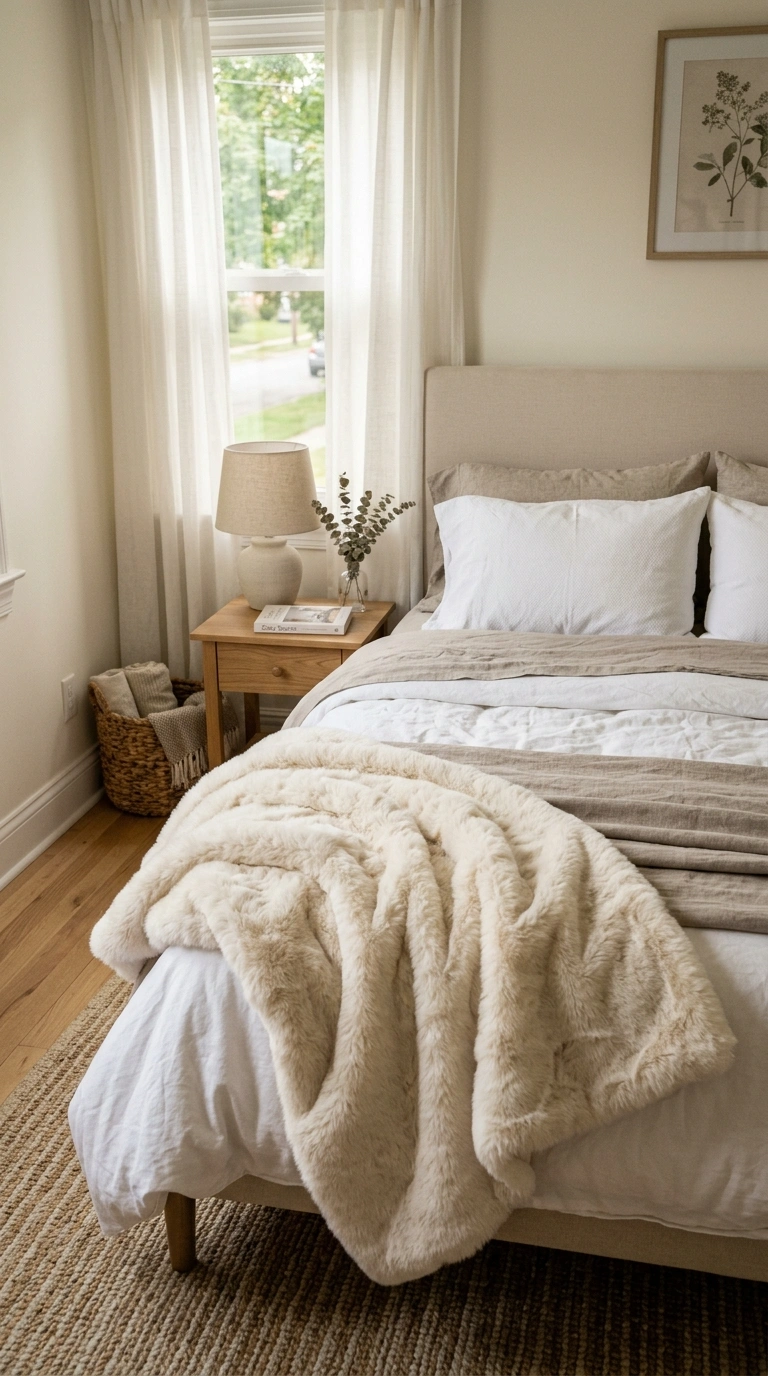
A single faux fur or heavily textured throw blanket draped across the foot of the bed or over the arm of a chair adds a layer of texture that instantly reads as cozy and upscale. Choose a neutral shade like cream, light gray, or soft taupe so the throw blends with the rest of the bedding rather than standing out as a bold accent color. Fold it loosely in thirds and drape it across the lower third of the bed, letting one corner hang slightly over the edge for a relaxed, natural look rather than a stiff, perfectly folded square. This small texture layer is a favorite trick in boutique hotel styling because it adds visual warmth without requiring any structural changes to the room. In a small bedroom, this is an easy, low-cost way to add depth to the bed without cluttering the space, since it takes up no extra room beyond the blanket itself.
13. Round Accent Mirror
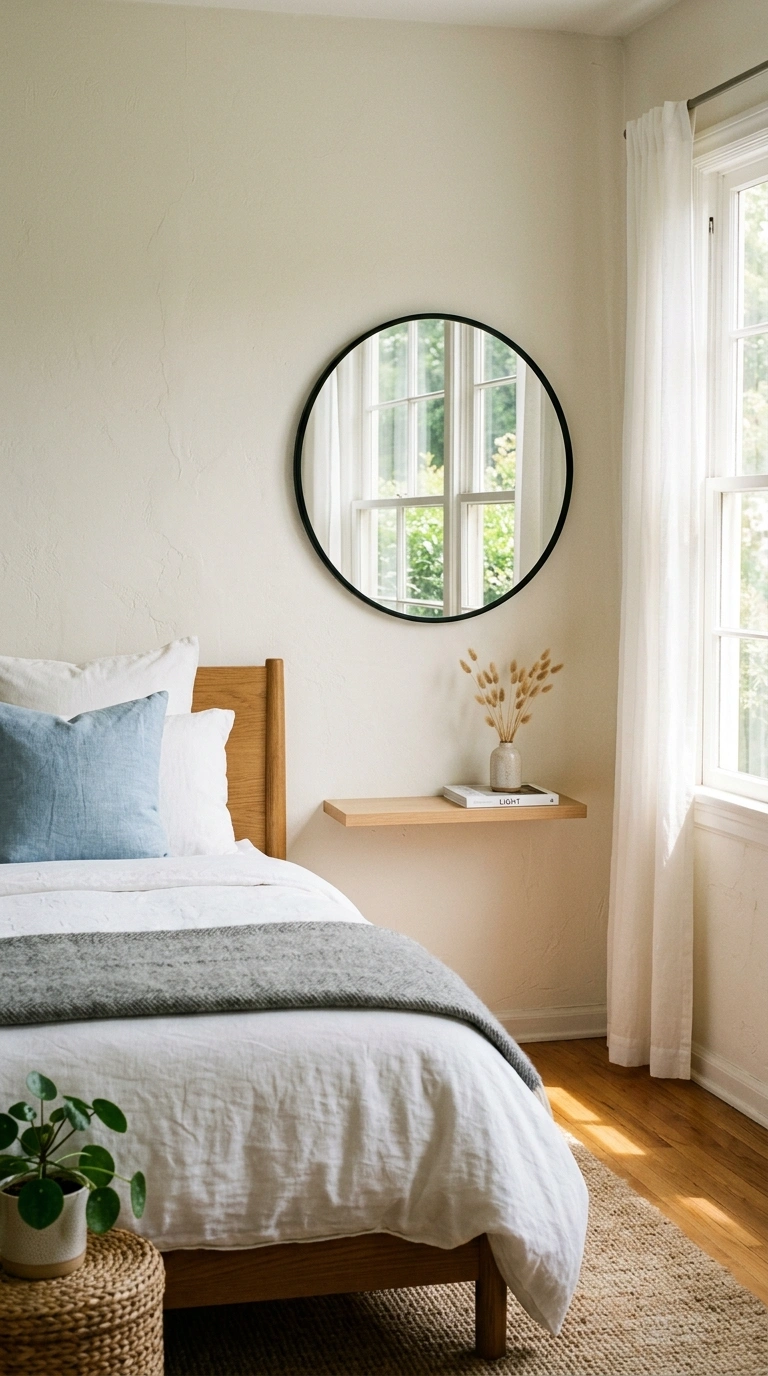
A round mirror hung on the wall opposite the window bounces natural light back into the room, which makes a small bedroom feel noticeably brighter and larger throughout the day. Choose a simple frame in brass, black, or wood, depending on the metal tones already used in the lamps or bed frame, and hang the mirror at a height where it reflects either the window or a piece of art rather than a blank wall. In many hotel rooms, a well-placed mirror also doubles as a quick check-yourself spot near the door or closet, which is a practical touch worth copying at home. Avoid oversized mirrors in a small room, since a mid-size round mirror, roughly twenty-four to thirty inches wide, tends to look more intentional and proportional to the rest of the furniture. This idea is both decorative and functional, adding light, depth, and a soft curved shape to a room that is often full of straight lines and hard edges.
14. Hotel Style Tray
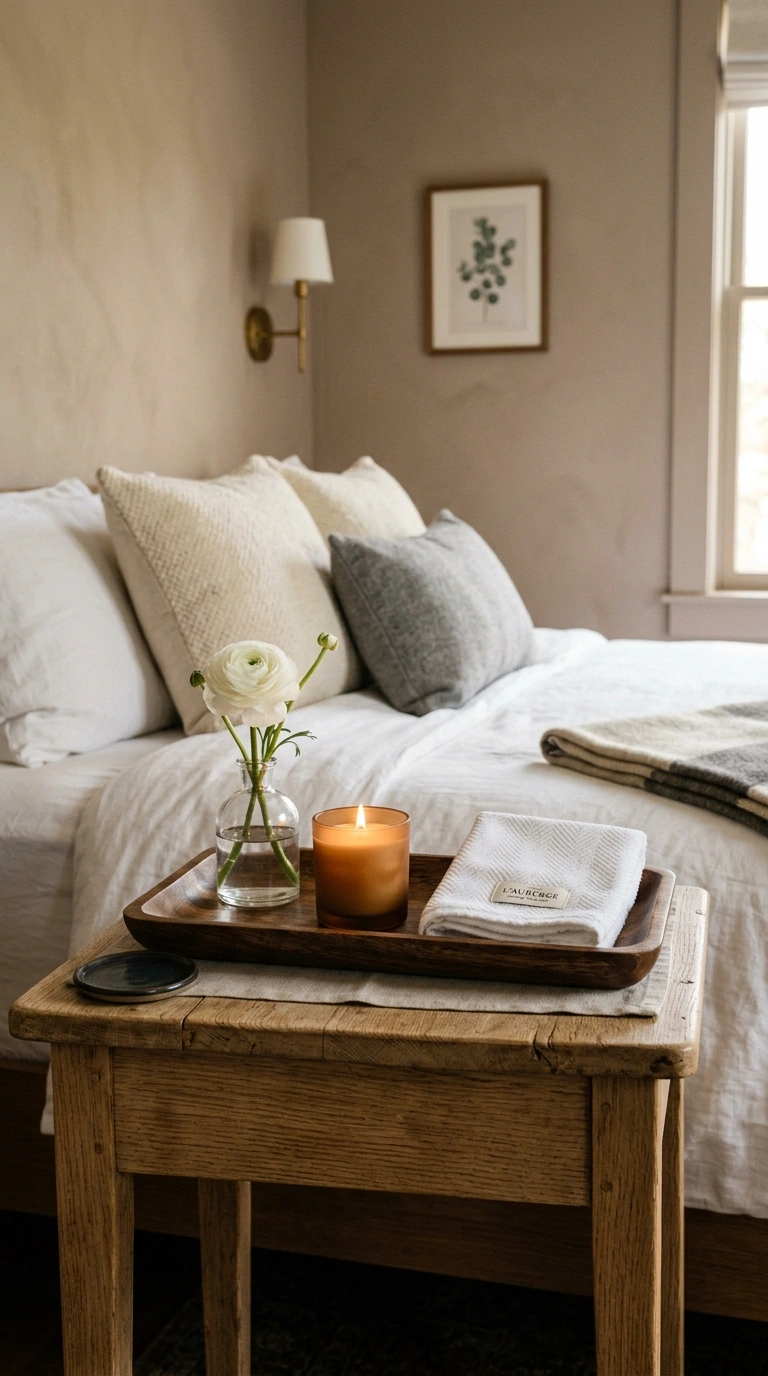
A simple styled tray placed on the dresser or nightstand is a small detail that makes a big difference in how polished a bedroom feels. Choose a wood, marble, or matte metal tray and place a few coordinated items on top, like a small vase with one or two stems, a candle, and a neatly folded hand towel if the tray sits near a water carafe. This idea mimics the little amenity trays found in most hotel rooms and instantly signals that the space has been thought through rather than just furnished. Keep the items on the tray to three or four pieces at most, since an overcrowded tray loses the clean, curated look you are going for. This works especially well on a small nightstand in a tight bedroom, since the tray corrals a few pretty objects into one contained spot instead of letting them spread across the whole surface. It takes only a few minutes to set up and costs very little.
15. Dimmable Wall Sconces
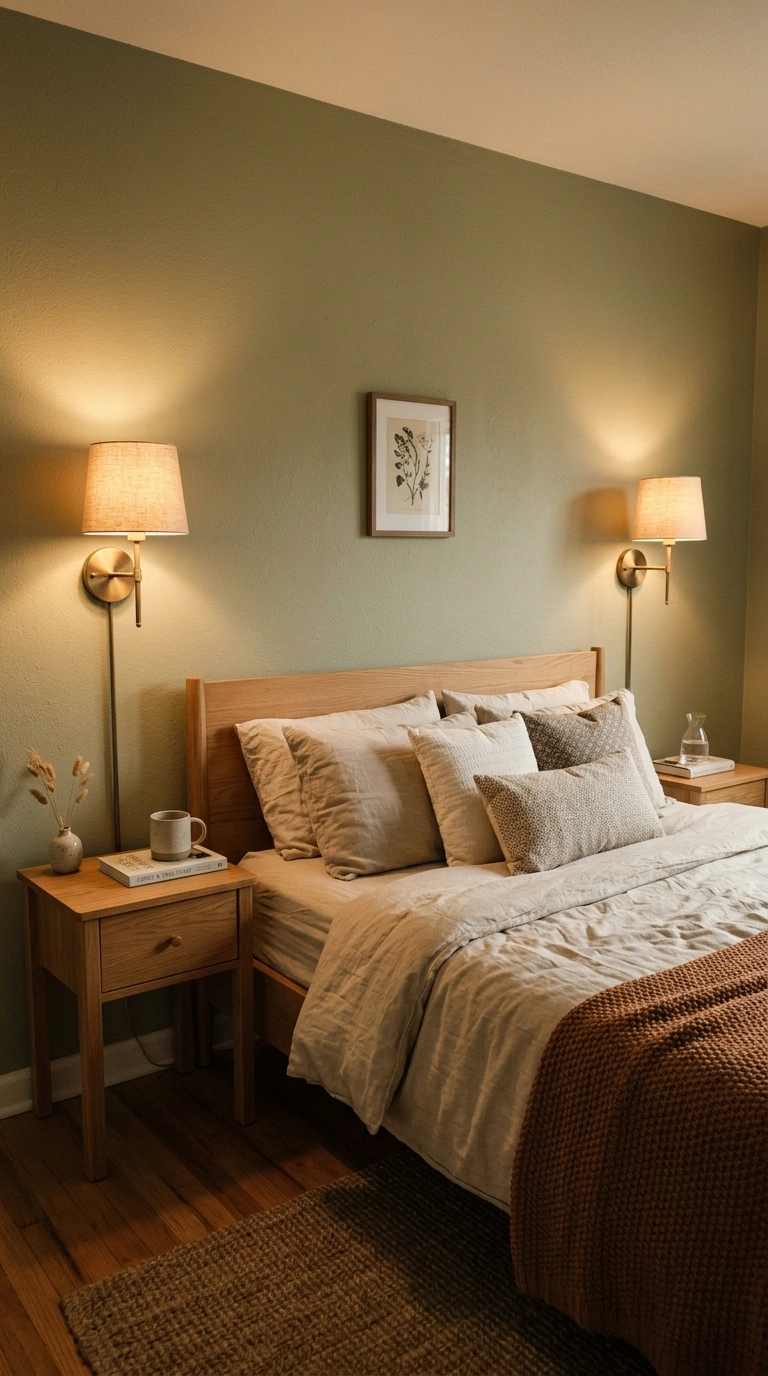
Wall-mounted sconces on either side of the bed free up nightstand space while giving the room the same soft, layered lighting found in most hotel rooms. Choose sconces with a simple linen or glass shade, mounted at a height where the light falls just above where someone’s head would rest while reading in bed. Installing these on a dimmer switch is worth the small extra effort, since the ability to lower the light in the evening makes the whole room feel calmer and more relaxing before sleep. In a small bedroom, wall sconces are especially useful because they eliminate the need for bulky table lamps, leaving more surface space on the nightstands for books, water glasses, or a small tray. Choose the same fixture on both sides of the bed to keep the symmetry that gives hotel rooms their calm, balanced feeling. This upgrade usually requires an electrician, but the payoff in both style and function is significant.
16. Neutral Rug Layer
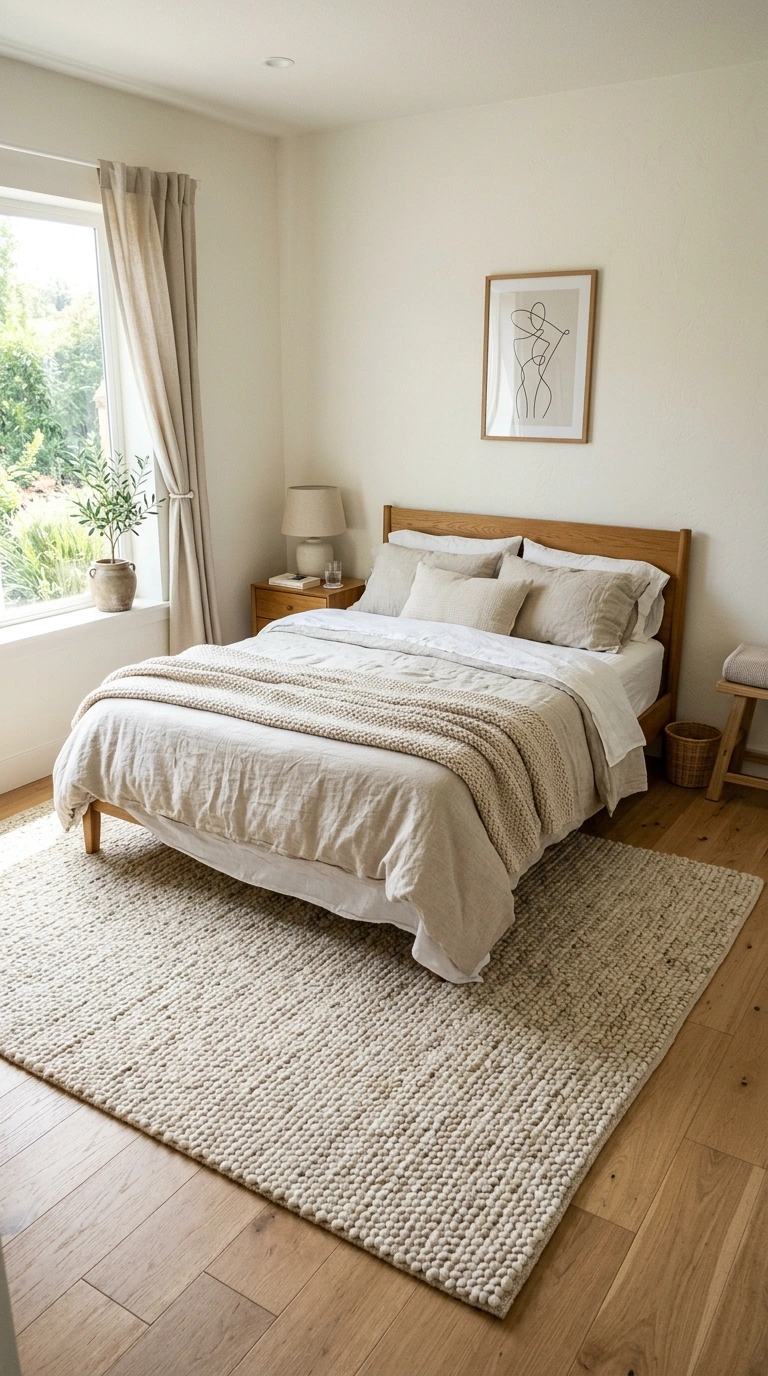
A soft area rug placed beneath the bed, extending out on both sides, adds warmth underfoot and visually anchors the whole room, much like the rugs found in nearly every well-designed hotel bedroom. Choose a rug in a neutral tone with subtle texture, like a chunky wool weave or a soft low-pile design, rather than a bold pattern that competes with the bedding. In a small bedroom, position the rug so it extends at least eighteen inches beyond each side of the bed, which helps the room feel larger by creating one continuous visual plane rather than breaking the floor into small mismatched sections. A rug also softens the transition between the bed and the rest of the room, adding comfort for bare feet first thing in the morning. This is a simple, high-impact addition, and even a modestly priced rug can dramatically change how finished and cozy a bedroom feels compared to bare flooring.
17. Velvet Accent Chair
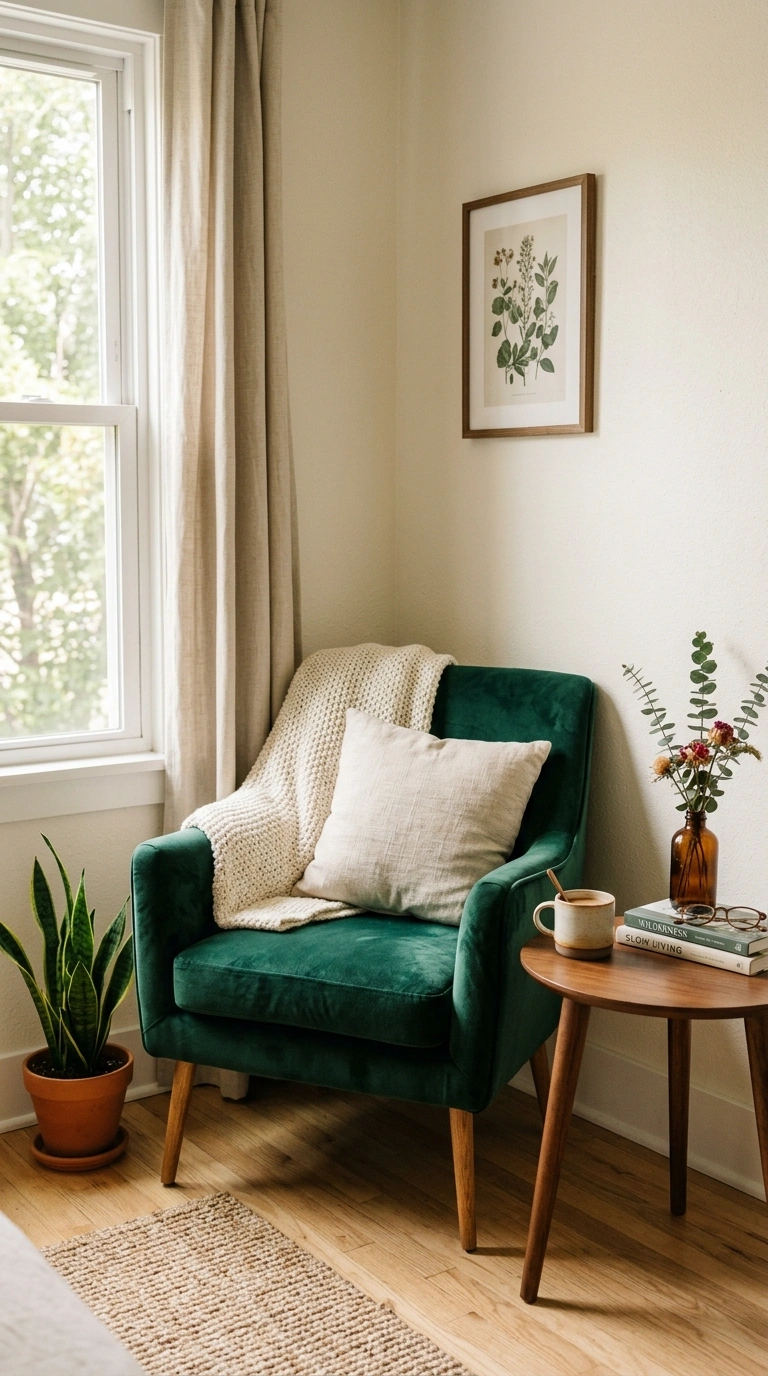
A single velvet accent chair placed in the corner of the bedroom adds a pop of texture and a touch of quiet luxury, even in the smallest of rooms. Choose a chair in a deep, muted color like emerald, navy, or dusty rose if the rest of the room is neutral, allowing the chair to serve as a soft focal point without overwhelming the space. Keep the chair’s footprint small, opting for a slim frame with visible wood or metal legs rather than a bulky, overstuffed style that eats up floor space. Position the chair near the window if possible, taking advantage of natural light during the day. This idea works particularly well when paired with a small round side table and a single table lamp, creating a mini seating area that feels intentional rather than like leftover furniture. A well-placed accent chair signals that the room was designed with care, which is exactly the feeling most hotel bedrooms aim for.
18. Fresh Flower Vase
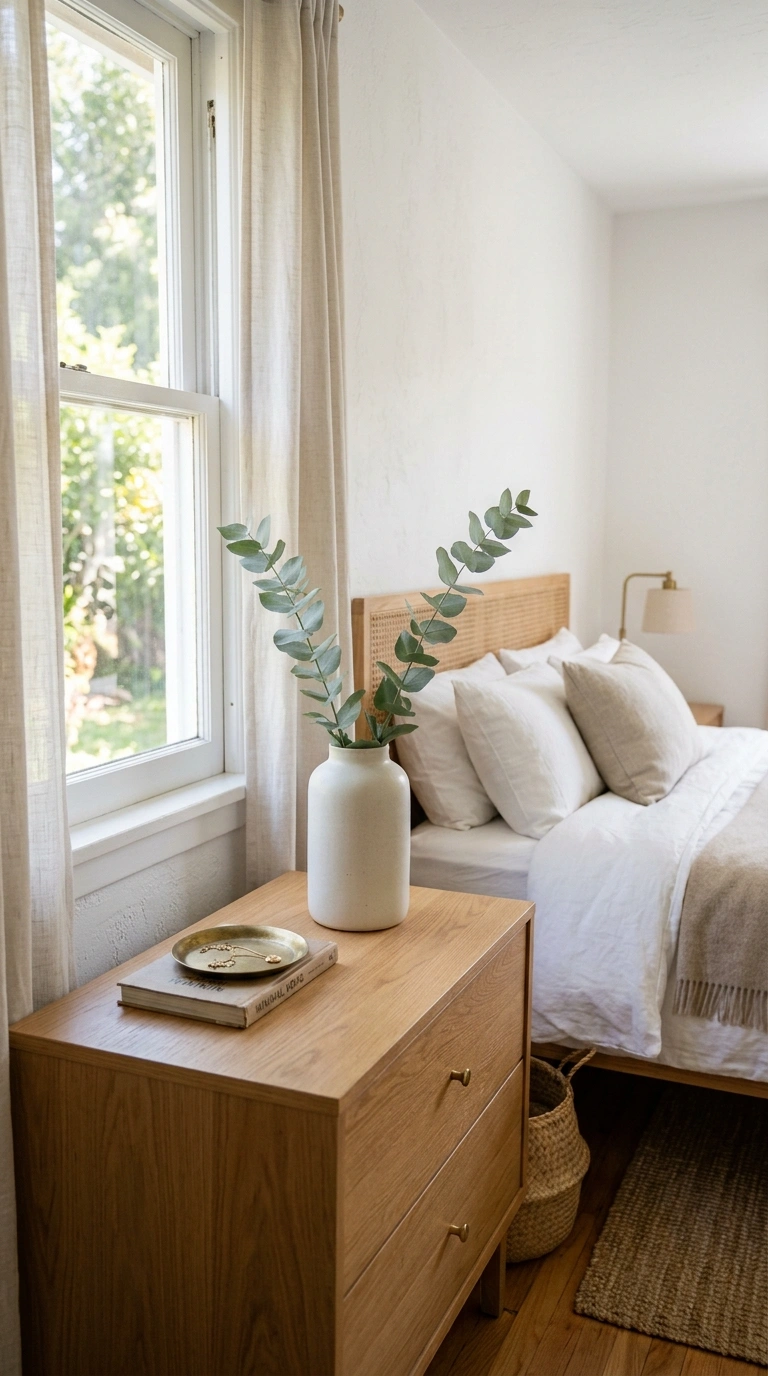
A single vase of fresh flowers or greenery on the dresser or nightstand adds color and life to a bedroom in a way that almost nothing else can match. Choose one or two stems rather than a large, full bouquet, since a minimal arrangement tends to look more modern and less fussy in a small space. Simple options like eucalyptus, a single stem of ranunculus, or a small branch of greenery work well and last longer than delicate blooms. Place the vase where it catches a bit of natural light, such as near the window or on a dresser across from the bed. This small, ever-changing detail is one of the easiest ways to keep a bedroom feeling fresh, since swapping the stems every week or two instantly refreshes the whole room without any real effort or cost. If fresh flowers are not practical, a well-made faux stem in a simple ceramic vase creates a similar effect.
19. Woven Basket Storage
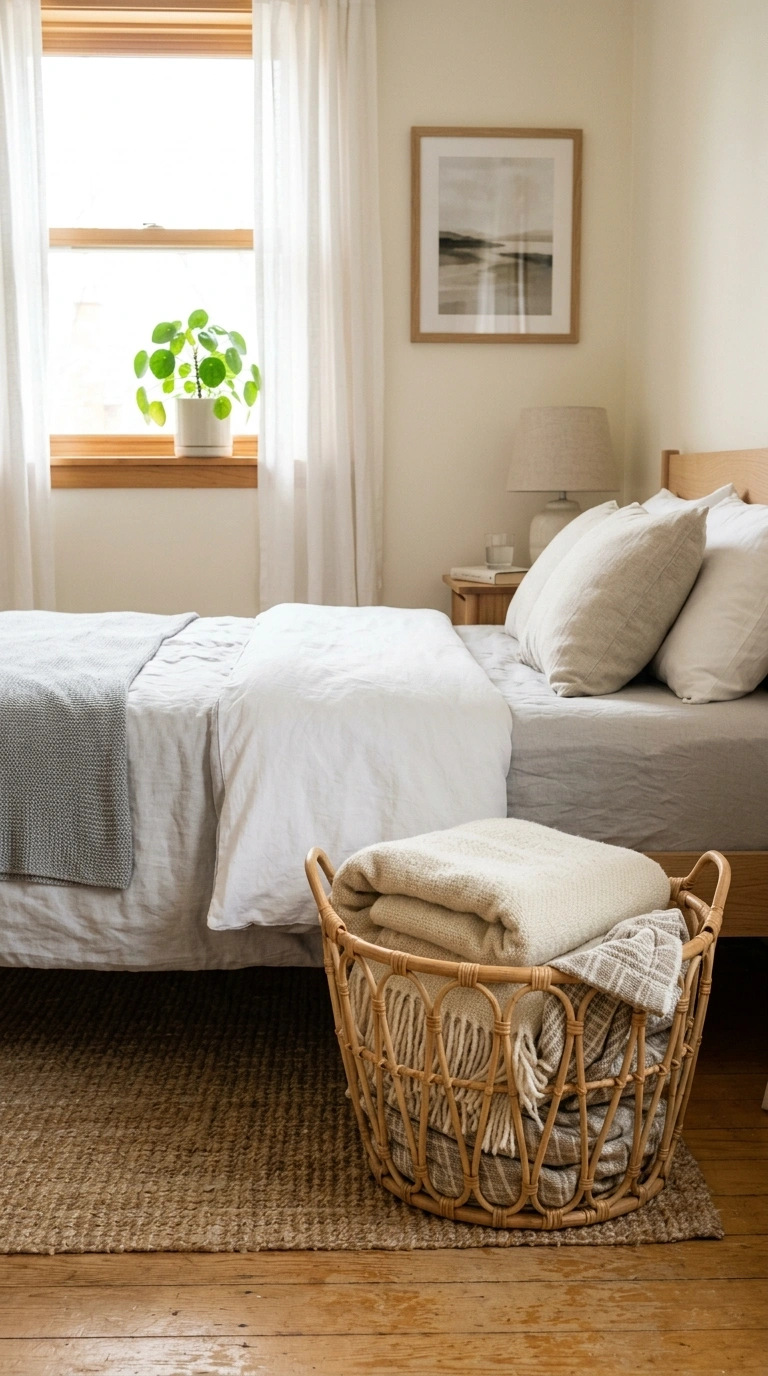
A woven basket placed in the corner of the bedroom or at the foot of the bed adds texture while giving you a stylish spot to stash an extra blanket or a few pillows that do not fit on the bed itself. Choose a basket in natural rattan or seagrass, which brings warmth into a room that might otherwise feel cool and neutral. In a small bedroom, a single well-placed basket does double duty, working as both storage and a decorative object, which matters when every square foot needs to earn its place. Keep the basket in view rather than tucking it into a closet, since the natural texture is part of what makes the room feel layered and complete. This idea pairs nicely with a faux fur throw or a woven rug, since repeating natural materials throughout the room creates a cohesive, grounded feeling rather than a space that looks randomly assembled from different styles.
20. Tall Potted Plant
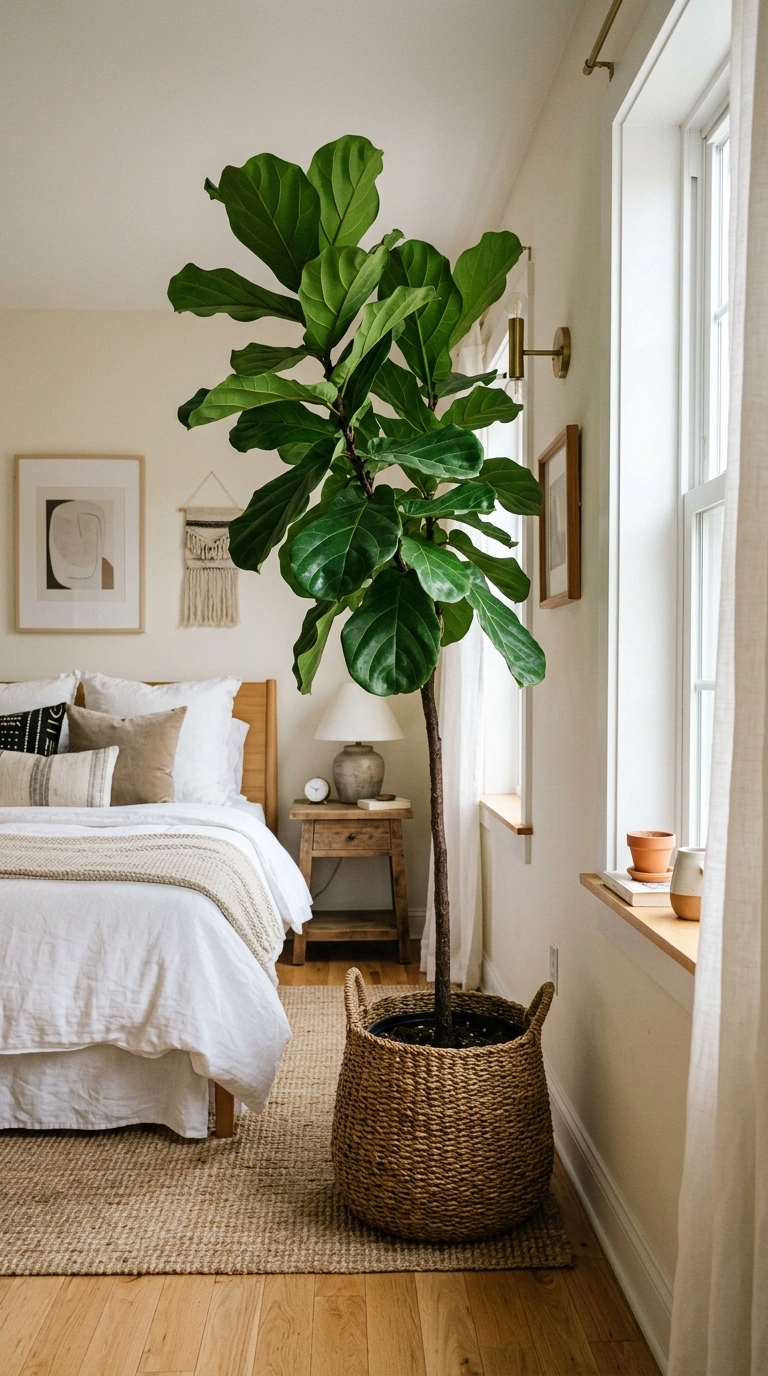
A tall potted plant placed in an empty corner of the bedroom adds height, life, and a sense of calm that is common in higher-end hotel rooms. Choose a low-maintenance option like a fiddle leaf fig, a snake plant, or a faux version if natural light is limited in the room. Place the plant in a simple woven or ceramic pot that matches the other natural materials already used in the space, like the rug or baskets. In a small bedroom, a single tall plant in a corner draws the eye upward and makes the ceiling feel higher, while also filling an awkward empty space that might otherwise go unused. Avoid placing multiple plants around a small room, since one well-chosen tall plant reads as intentional, while several scattered smaller plants can start to feel cluttered. This is a simple, affordable way to bring a bit of nature and softness into a room dominated by hard furniture edges.
21. Framed Art Trio
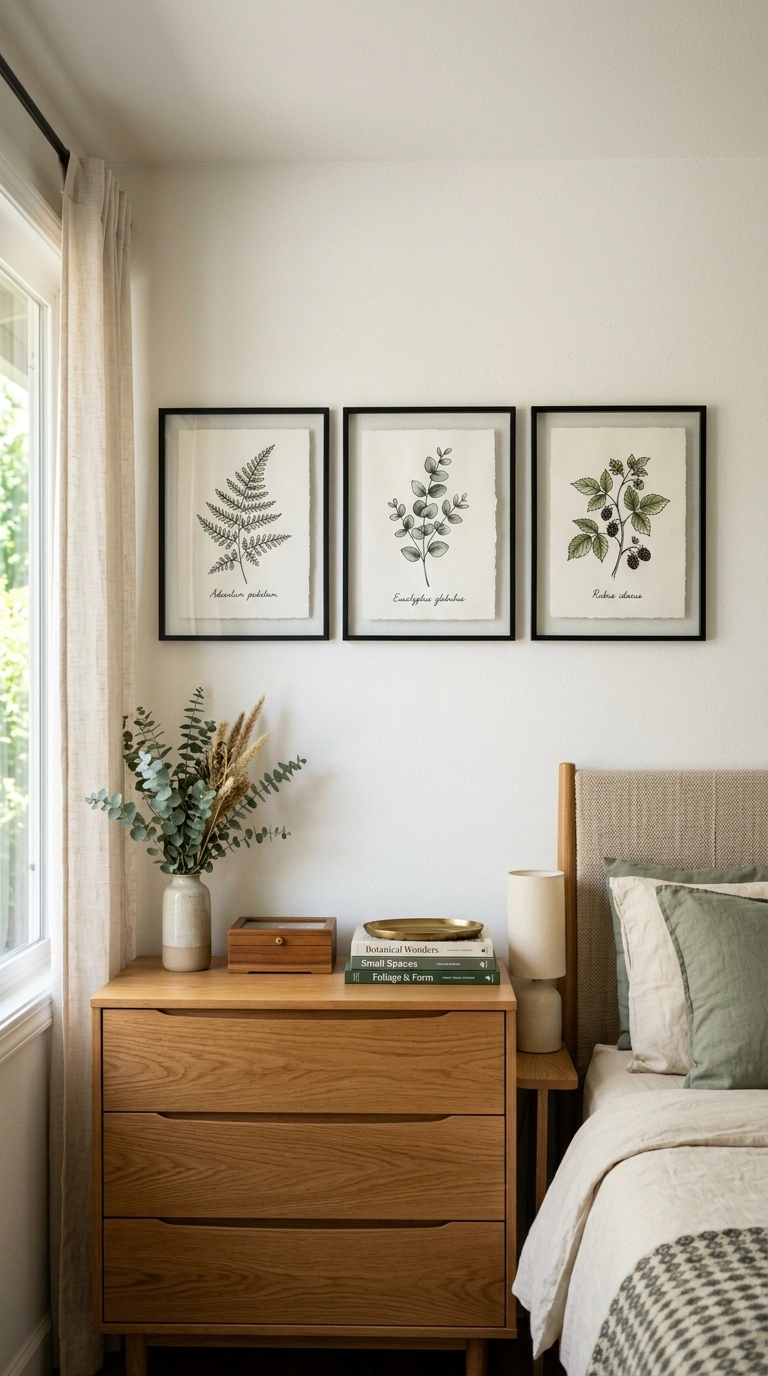
Instead of one large piece of art, a trio of smaller matching frames arranged in a straight horizontal row above the dresser or bed adds a curated, gallery-style detail without overwhelming a small room. Choose three pieces that share a common color palette or theme, like simple botanical sketches or abstract shapes in soft neutral tones, and use identical frames so the grouping reads as one cohesive unit rather than three separate pieces. Space the frames evenly, leaving about two to three inches between each one, and center the whole row above the furniture piece below it. This idea works especially well on a wall that is too narrow for one oversized piece of art but still needs some visual interest. A framed trio adds personality and detail to the room without requiring much wall space, making it a smart choice for small bedrooms where every design decision has to work a little harder than it would in a larger room.
22. Soft Ambient Lighting
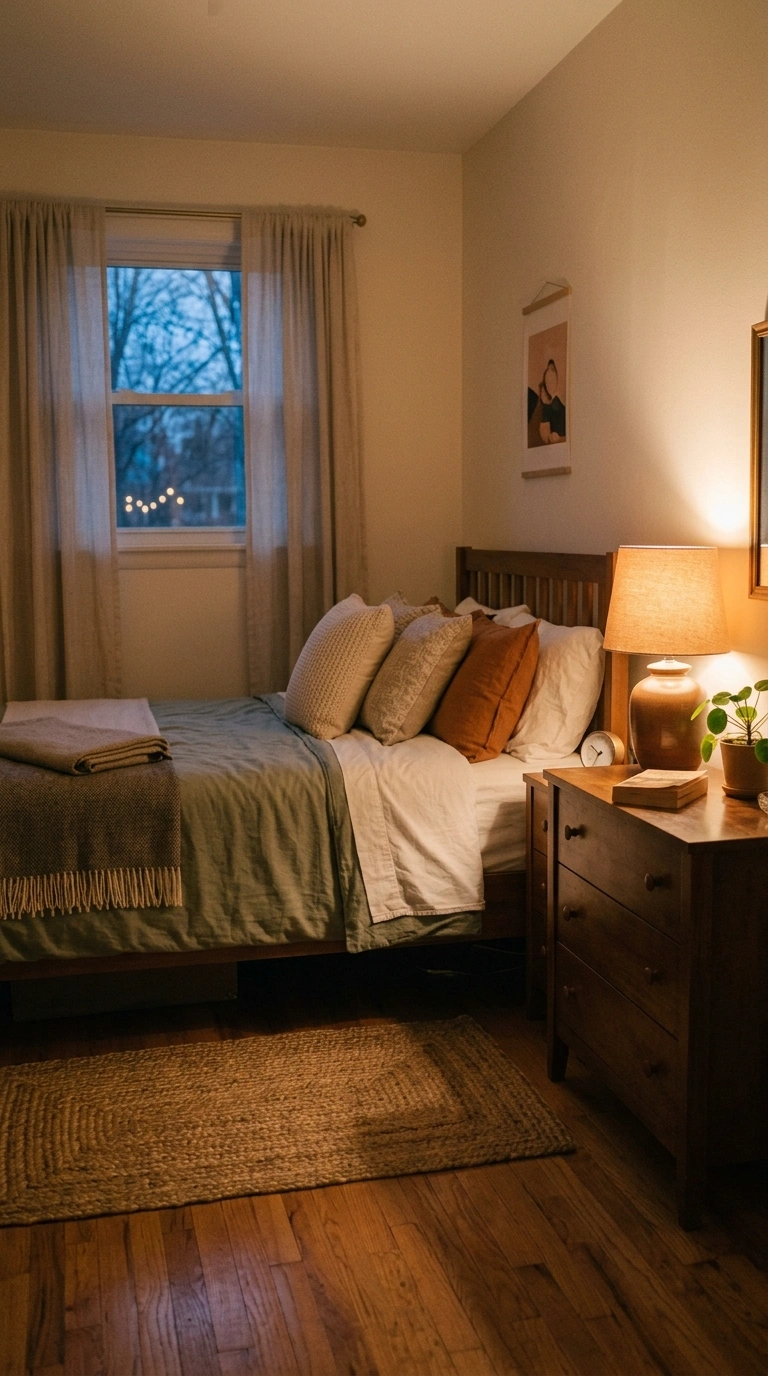
Beyond the main light fixture and lamps, adding one extra layer of soft ambient lighting, like a small plug-in wall light or a low-glow lamp on the dresser, gives a bedroom the layered lighting found in almost every well-designed hotel room. The goal is to avoid relying on a single bright overhead light, since layered lighting from multiple lower sources creates a warmer, more relaxing atmosphere in the evening. Place this extra light source somewhere it can stay on quietly through the night, like a corner of the dresser or beside the reading chair, giving the room a soft glow without needing to turn on the main light. In a small bedroom, this layered approach makes the space feel considered rather than just functional, since it mimics the way hotel rooms are lit from several soft points rather than one harsh source. This is one of the simplest, lowest-cost ideas on the list, but it makes a noticeable difference every single evening.
FAQs
How can I make a small bedroom feel like a hotel room on a budget?
Start with the bed itself. Layered neutral bedding, a pair of matching lamps, and one soft throw blanket cost very little but make the biggest visible difference in how put-together the room feels.
What colors make a bedroom feel more like a hotel?
Soft neutrals like white, warm beige, taupe, and light gray are the most common hotel bedroom colors, since they feel calm and let texture, like bedding and rugs, stand out instead of bold color.
Do I need a lot of furniture to get a hotel look in a small room?
No, and in fact less furniture usually looks better in a small space. A well-made bed, one chair, and simple lighting go further than a room packed with too many pieces.
What lighting works best for a hotel style bedroom?
Warm, dimmable lighting from multiple sources, like bedside lamps or sconces plus one soft ambient light, feels closer to a hotel room than one bright overhead fixture used alone.
How do I choose art for a small hotel style bedroom?
One oversized piece above the bed or a small trio of matching frames both work well. Stick to calm, neutral tones so the art fits the room instead of competing with the bedding or rug.