23 Beautiful Living Room and Bedroom Combo Ideas

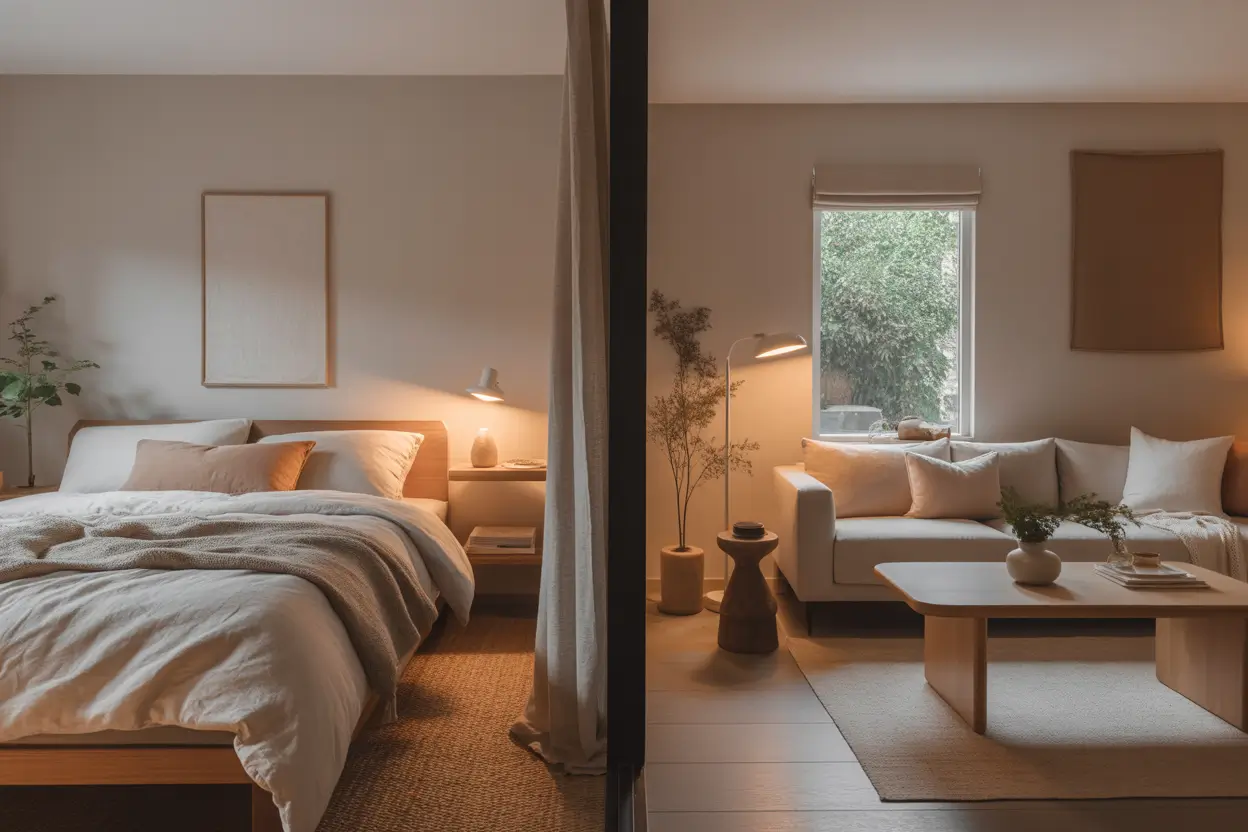
Small homes can feel big when you design them with purpose. A living room and bedroom in one space may sound tricky, but it opens the door to creative layouts, smart storage, and cozy styling. You don’t need extra walls to make your space feel complete. With the right mix of color, lighting, and furniture placement, you can build a room that feels both relaxing and functional.
In this guide, you’ll find beautiful living room and bedroom combo ideas that feel fresh, practical, and easy to try. Each idea focuses on real-life use, visual comfort, and Pinterest-worthy details you can imagine or apply right away. Whether you live in a studio or want to upgrade a multi-use room, these ideas will help you create a space that feels balanced, stylish, and truly yours.
1. Soft Curtain Divider for a Flexible Layout
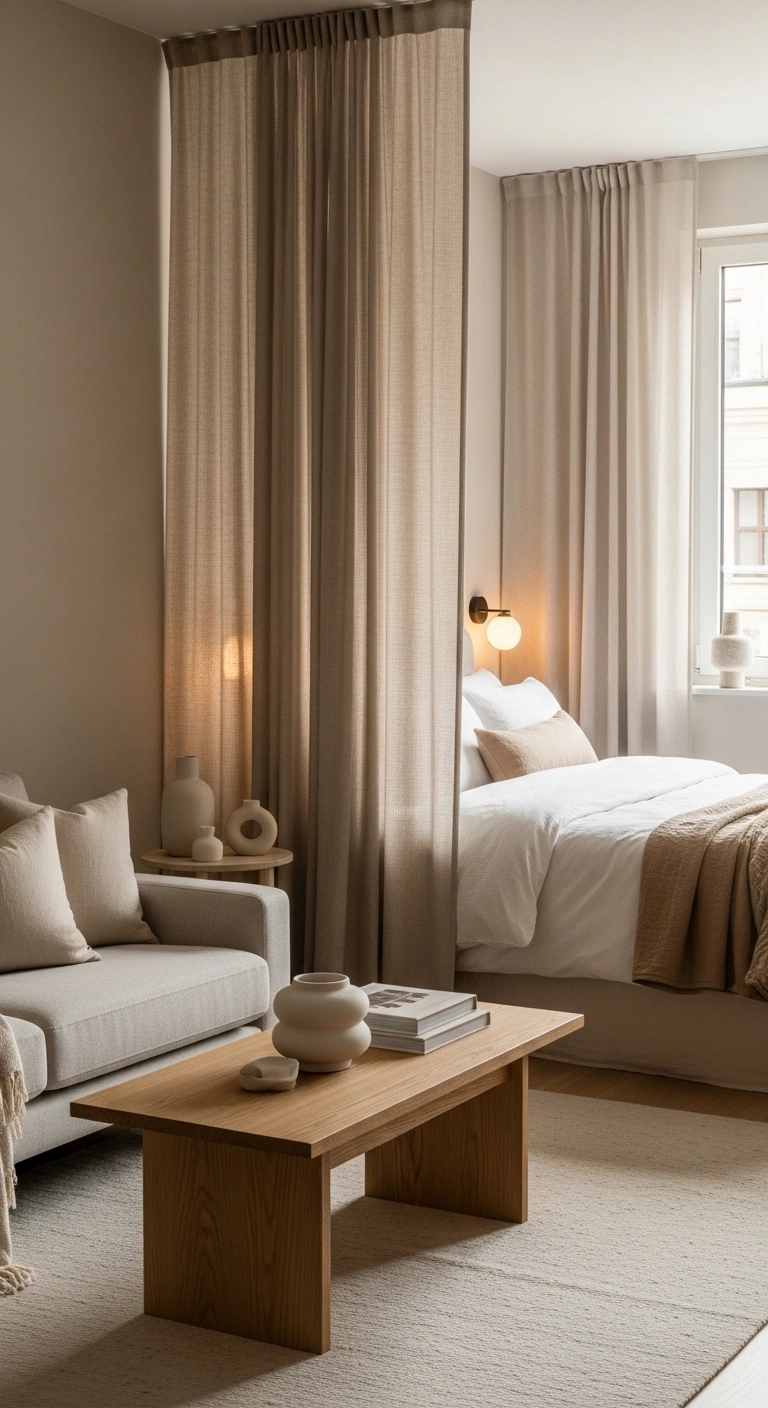
Use a soft, floor-to-ceiling curtain to separate your sleeping area from your living zone. This idea works well because it creates privacy without making the room feel closed. Choose light fabrics like linen or cotton in warm neutrals such as beige, cream, or soft gray. These tones keep the space bright while adding a gentle texture.
Place the bed behind the curtain and keep the sofa in the open area. During the day, pull the curtain back to let light flow through. At night, close it for a calm, private sleeping corner. Add warm string lights behind the curtain for a soft glow that makes the bedroom feel cozy without extra lamps.
2. Low Shelf Divider with Decor Display
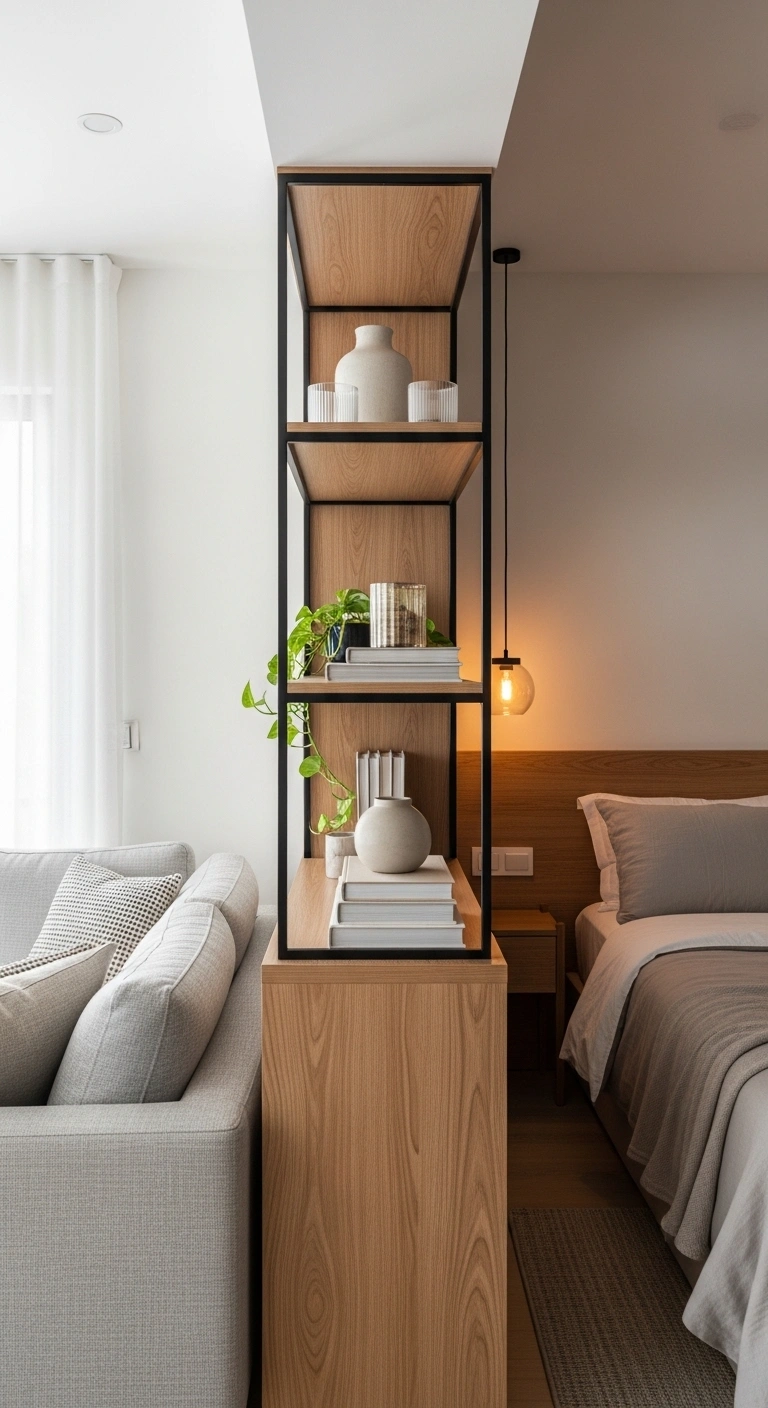
A low open shelf can divide your space while still keeping it airy. This setup works best when you place the shelf between the sofa and bed. Use it to display books, small plants, candles, or textured baskets. Keep the color palette simple so it feels calm and not cluttered.
The low height allows natural light to travel across the room, which makes both areas feel connected. You can also use the lower shelves for storage boxes to hide everyday items. This idea adds function and style at the same time, making your combo room feel organized and visually balanced.
3. Elevated Bed Platform with Hidden Storage

Create a clear zone by placing your bed on a slightly raised platform. This small height difference visually separates the sleeping area from the living space without using walls. Use wood tones like light oak or walnut to bring warmth and natural texture.
Inside the platform, add hidden drawers or lift-up storage for bedding and seasonal items. Pair the platform with soft rugs in the living area to contrast the levels. This setup feels modern and clean while giving you extra storage, which is perfect for smaller homes.
4. Matching Color Palette for Seamless Flow

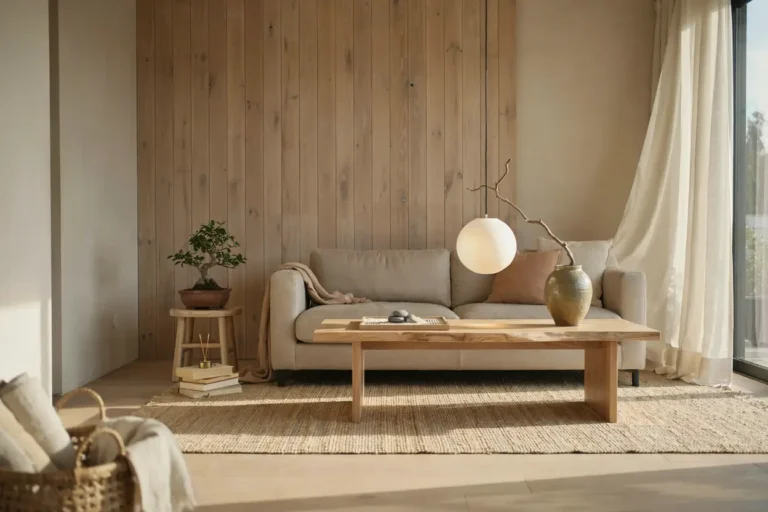
Use one consistent color palette across both zones to make the room feel larger and more connected. Choose 2–3 main colors, such as warm white, soft sage green, and light wood tones. Apply these shades in your bedding, sofa cushions, curtains, and rugs.
This creates a smooth visual flow that avoids harsh separation. Add small contrast through textures like knitted throws, velvet cushions, or woven rugs. The goal is to keep everything cohesive so your living room and bedroom feel like one thoughtfully designed space.
5. Sofa Facing Away from the Bed
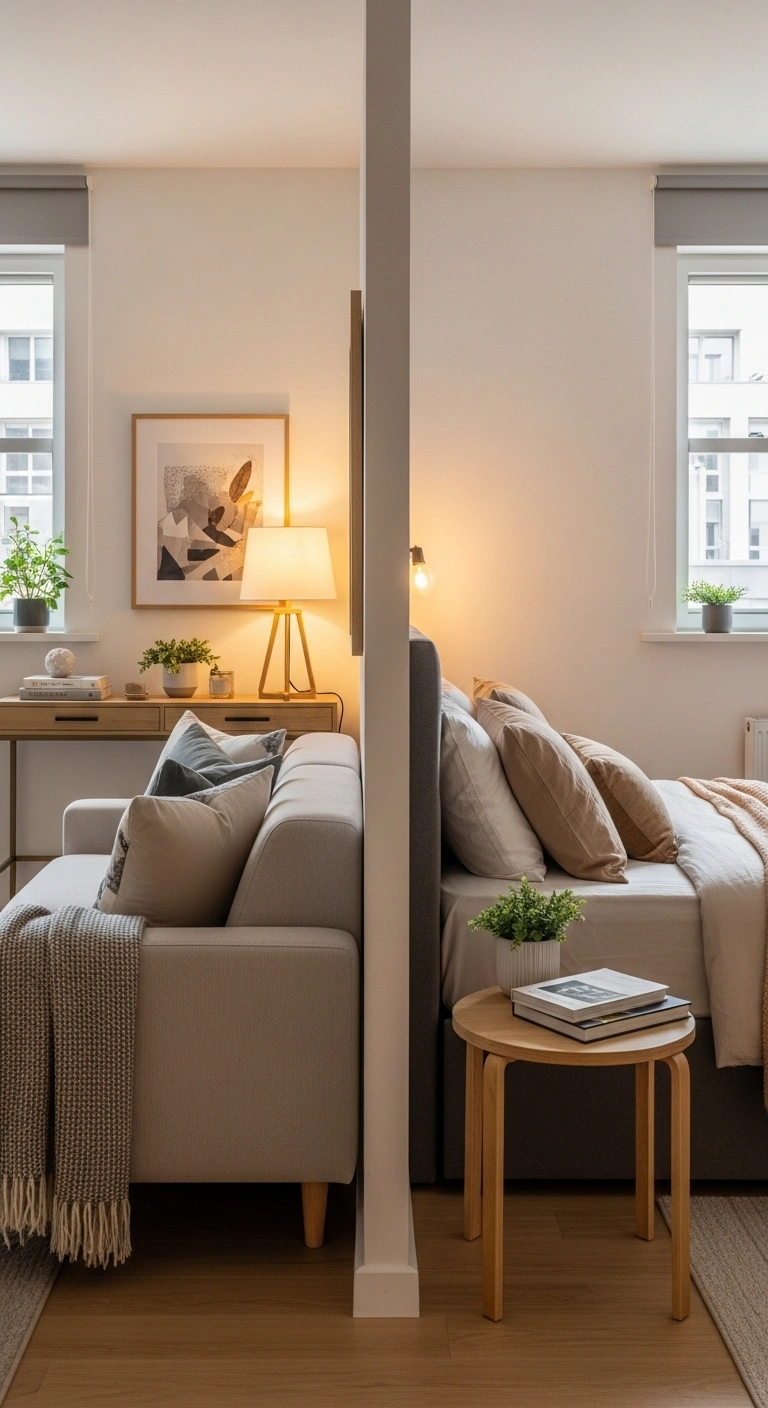
Position your sofa with its back facing the bed to create a natural divider. This layout clearly defines the living area without adding any extra furniture. Choose a sofa with a clean back design so it looks good from both sides.
Behind the sofa, place your bed with a soft headboard and layered bedding. Add a slim console table behind the sofa to hold lamps or decor. This arrangement gives each area its own identity while keeping the room open and easy to move around.
6. Foldable Furniture for Multi-Use Space
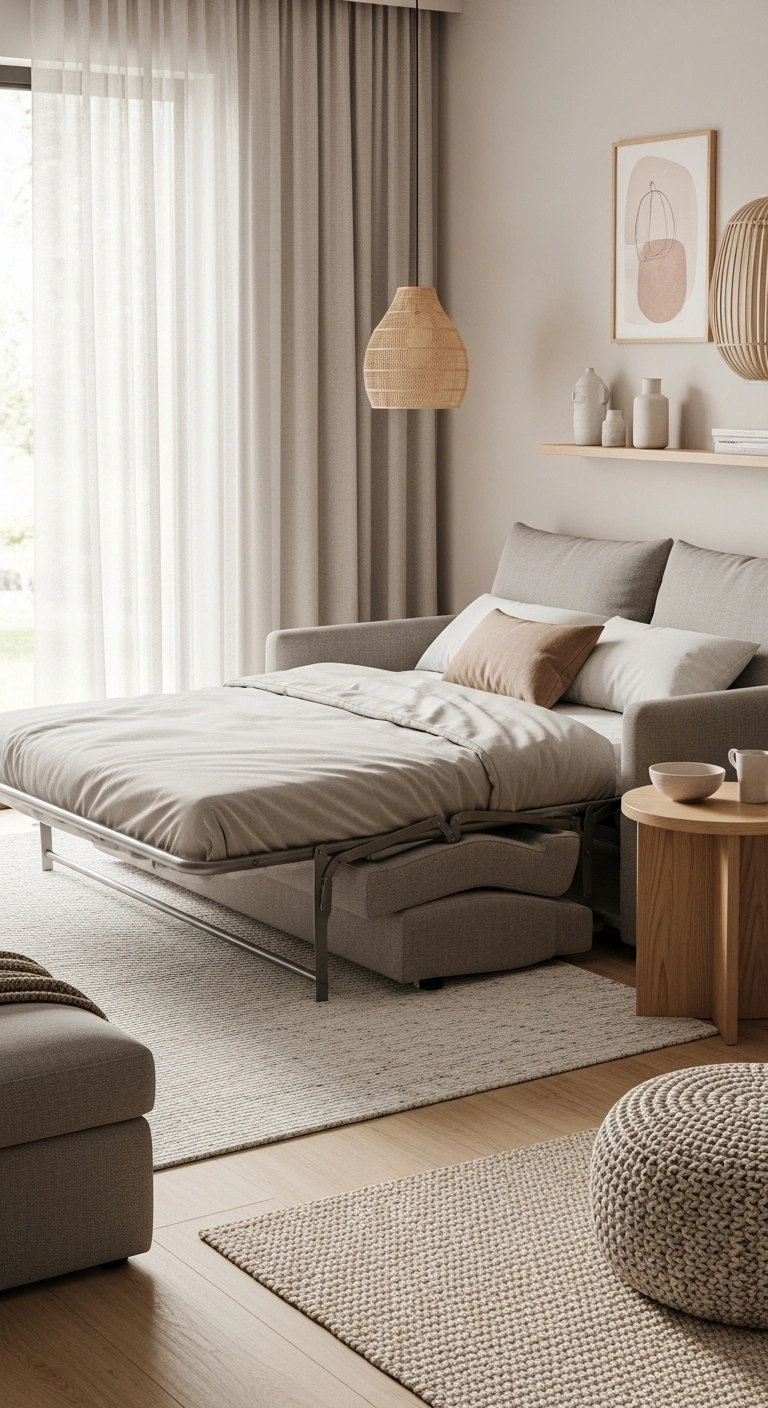
Use foldable or convertible furniture to switch between living and sleeping modes easily. A fold-out sofa bed or a wall-mounted Murphy bed works well in compact rooms. During the day, you have a full living space, and at night, it turns into a bedroom.
Pair this with lightweight furniture like nesting tables or stackable stools. Keep colors light and materials simple so the space doesn’t feel crowded. This idea is perfect if you want maximum flexibility without sacrificing comfort or style.
7. Area Rugs to Define Each Zone
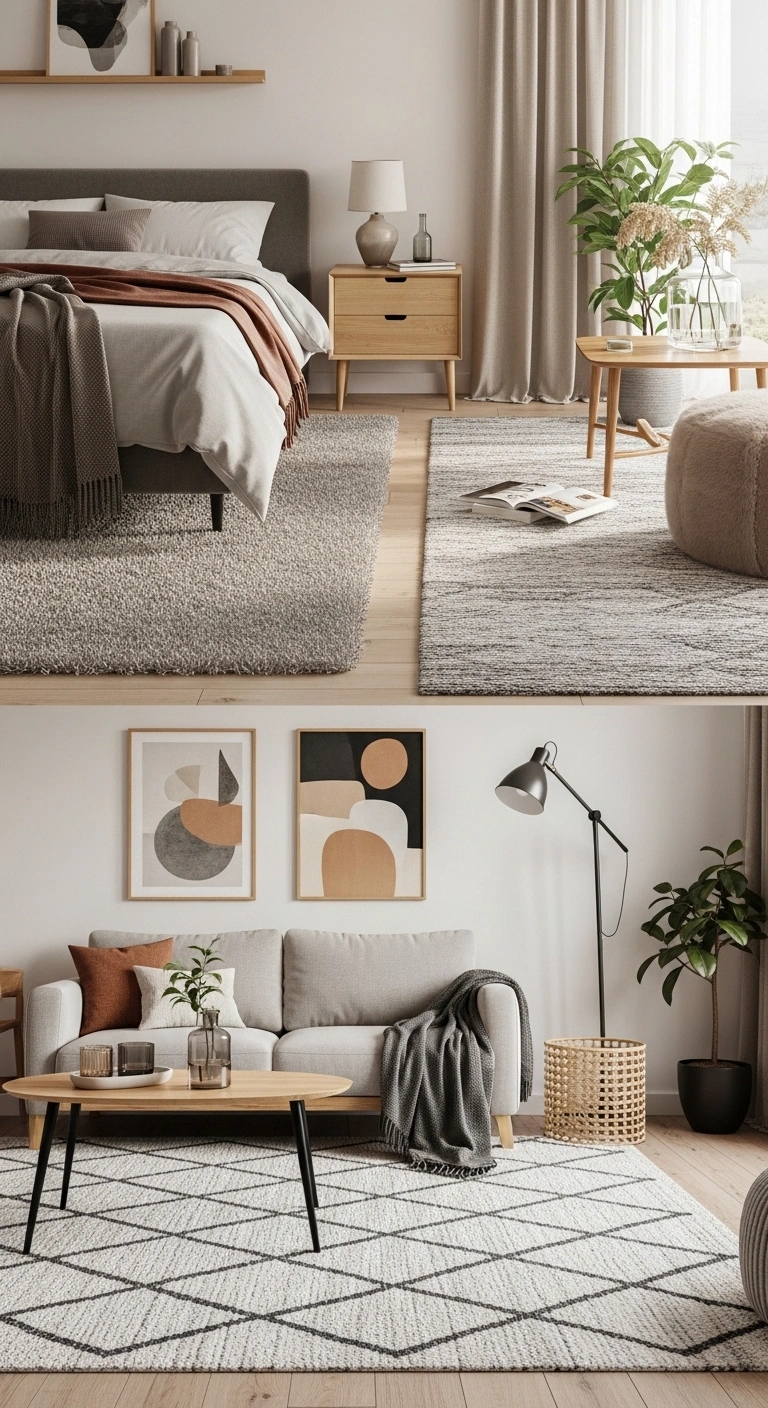
Use different rugs to mark the living and sleeping areas. For example, place a soft, plush rug under the bed and a patterned or textured rug under the sofa. This creates a clear visual boundary without adding physical barriers.
Choose rugs that share similar colors so they still feel connected. This layering of textures adds depth and warmth to the room. It also makes each area feel intentional and comfortable, especially when walking barefoot.
8. Wall-Mounted Lighting to Save Space
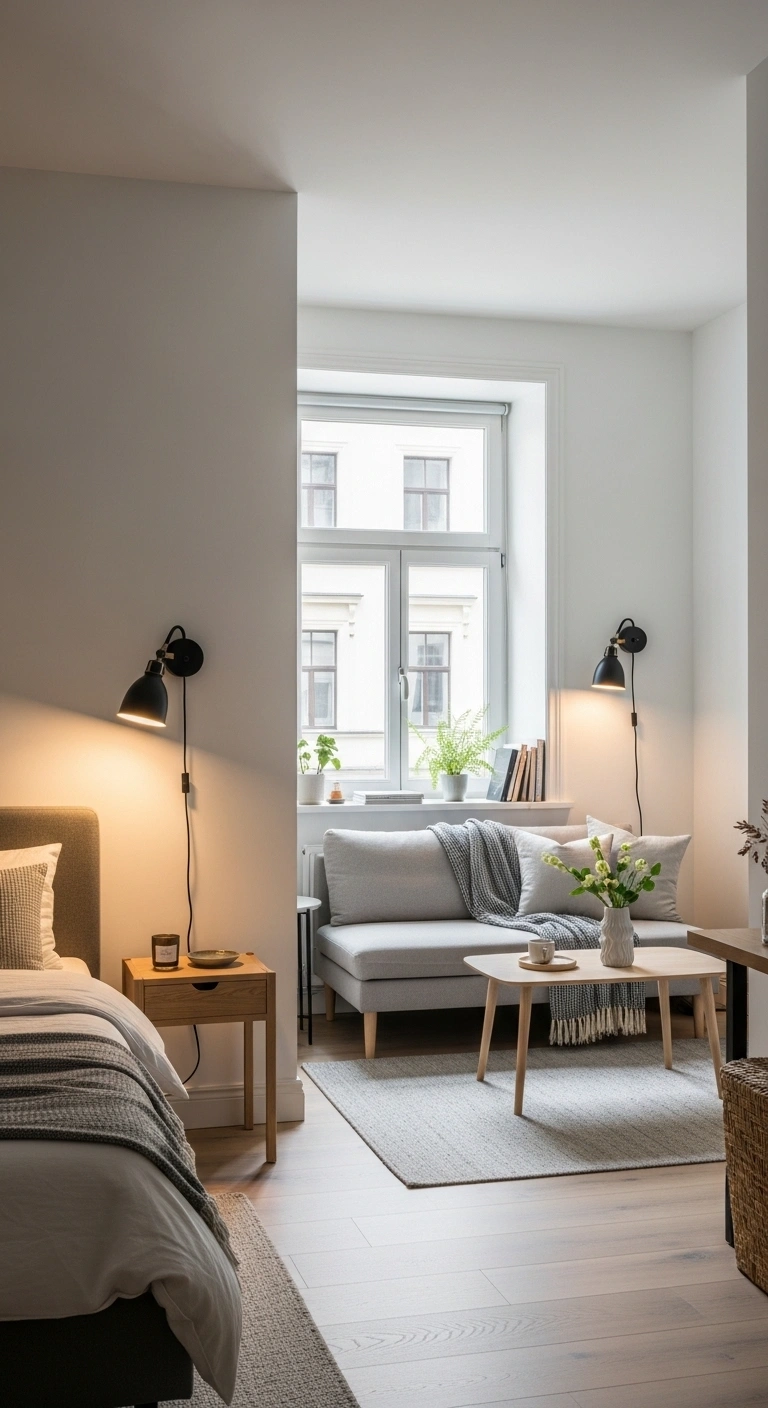
Free up floor space by using wall-mounted lights instead of bulky lamps. Install sconces beside the bed for reading and add adjustable wall lights near the sofa for a cozy living feel.
Choose warm lighting to create a relaxed mood across both zones. Black metal fixtures add contrast, while brass or gold tones bring warmth. This approach keeps surfaces clean and makes the room feel more open and organized.
9. Glass Partition for Light and Separation
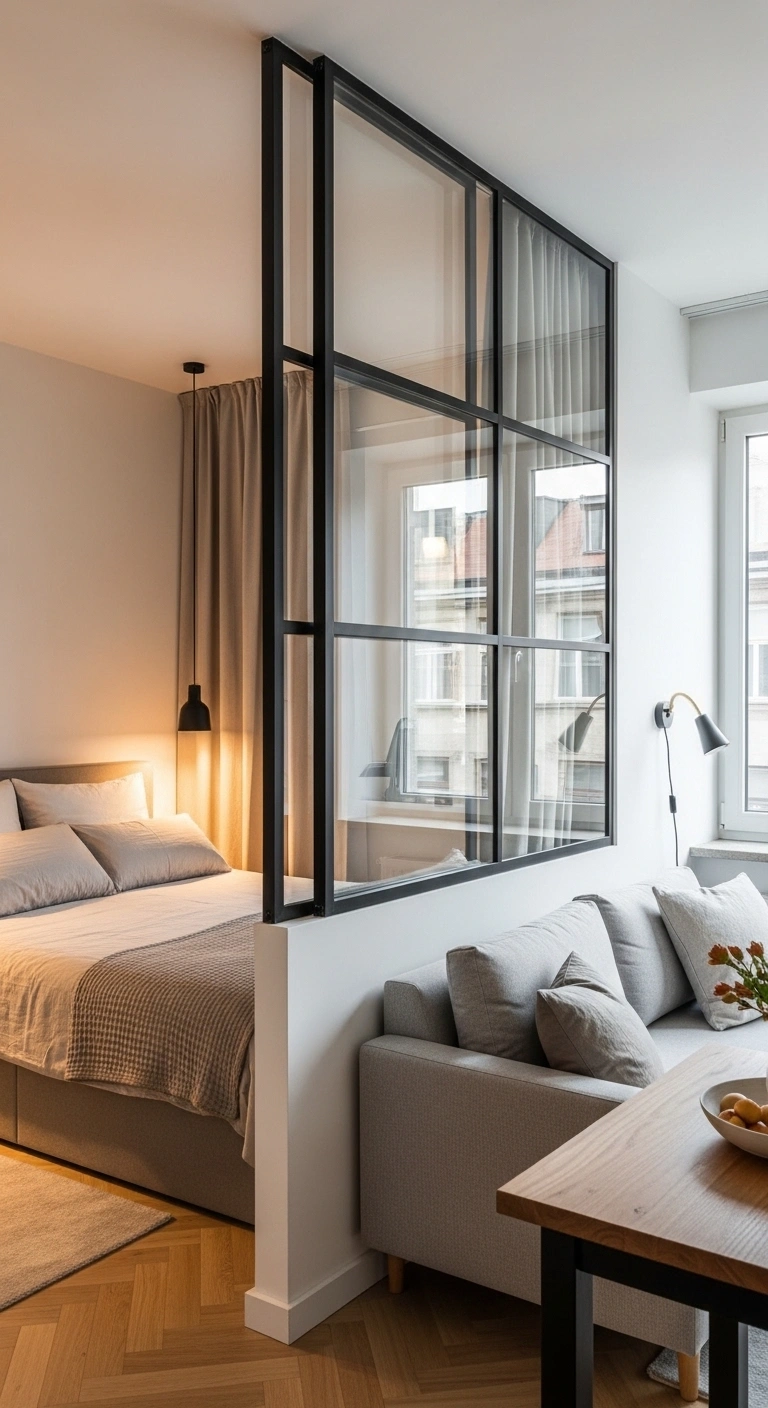
A glass divider can separate your bedroom and living area while keeping the room bright. Use clear or lightly frosted glass with slim black or wooden frames for a modern look.
This setup works well in small apartments because it allows light to pass through while still giving structure. You can soften the look with sheer curtains on one side. It creates a stylish, studio-like feel that looks clean and intentional.
10. Compact Workspace Between Zones
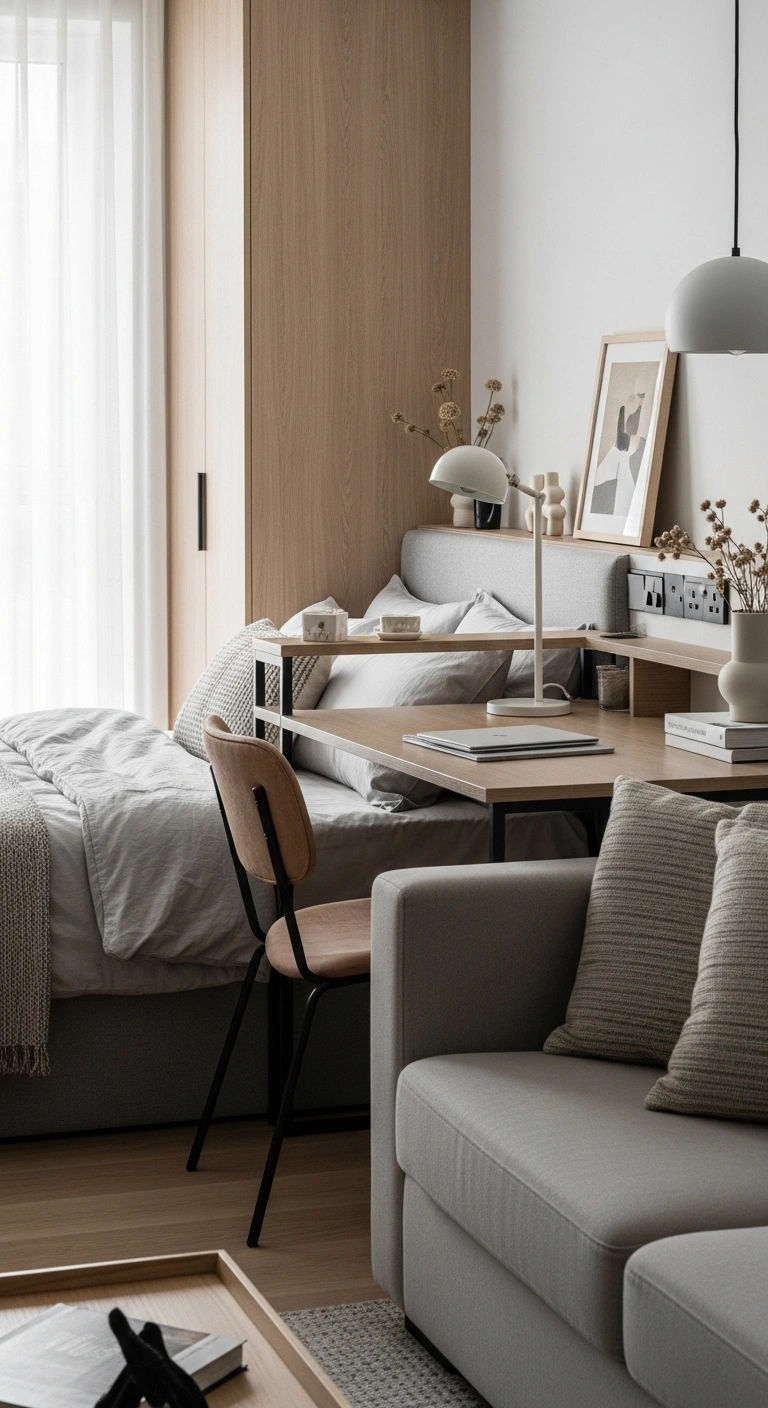
Place a small desk between your bed and sofa to act as a functional divider. This creates a third mini-zone without taking up much space. Choose a slim desk in light wood or white to keep the room feeling open.
Add a comfortable chair and a simple table lamp for focus. This setup works well if you need a work-from-home spot without sacrificing comfort. It also helps separate relaxation and productivity areas in a natural way.
11. Sliding Panel Doors for Hidden Privacy
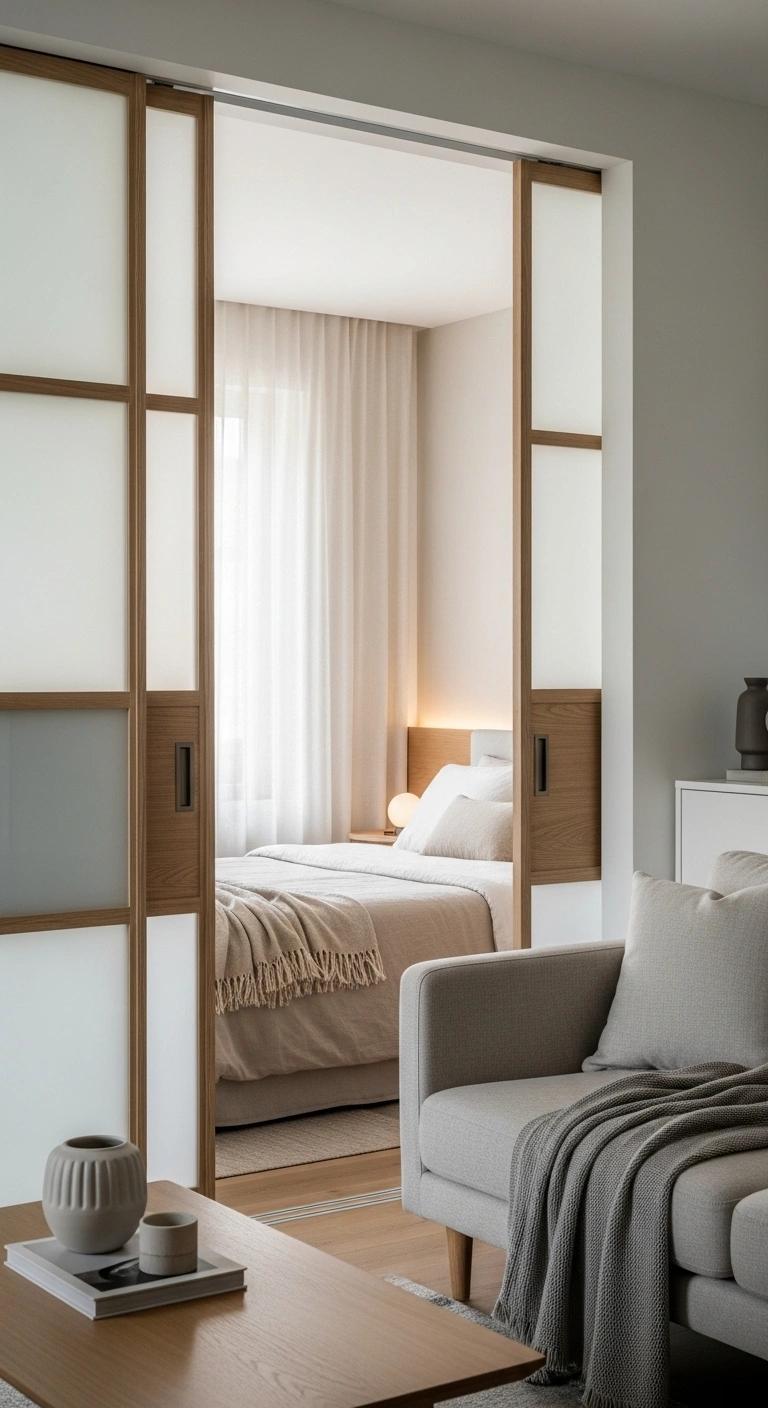
Use slim sliding panels to create a clean divide between your living and sleeping areas. These panels glide smoothly, so you can open the space during the day and close it at night. Choose light wood, frosted glass, or soft fabric panels to match your style. Neutral tones like warm white or soft beige keep the room feeling calm and open.
Place the bed behind the panels and keep your sofa in the main area. Add a soft rug and layered bedding to make the hidden bedroom feel inviting. This idea works well because it gives you control over privacy without adding bulky walls, and it keeps the design modern and simple.
12. Daybed That Blends Into Living Decor
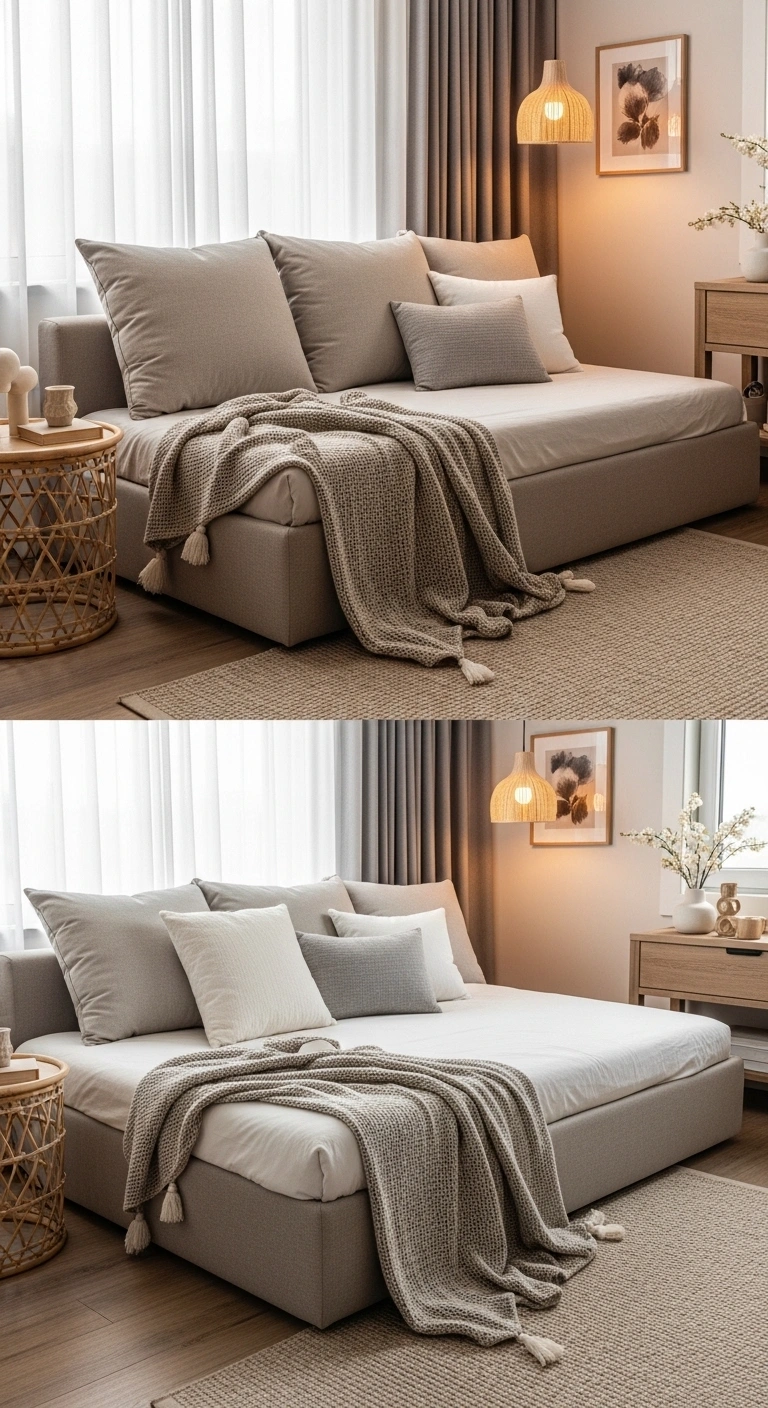
A daybed can work as both a sofa and a bed without looking out of place. Choose a design with clean lines and soft upholstery in shades like light gray, cream, or muted blue. Add large cushions and textured throws so it feels like a cozy couch during the day.
At night, switch to simple bedding that matches your color palette. Place a small side table and a warm lamp nearby for comfort. This setup keeps the room stylish and practical while saving space, making it ideal for smaller homes or studio layouts.
13. Wooden Slat Divider for Warm Texture
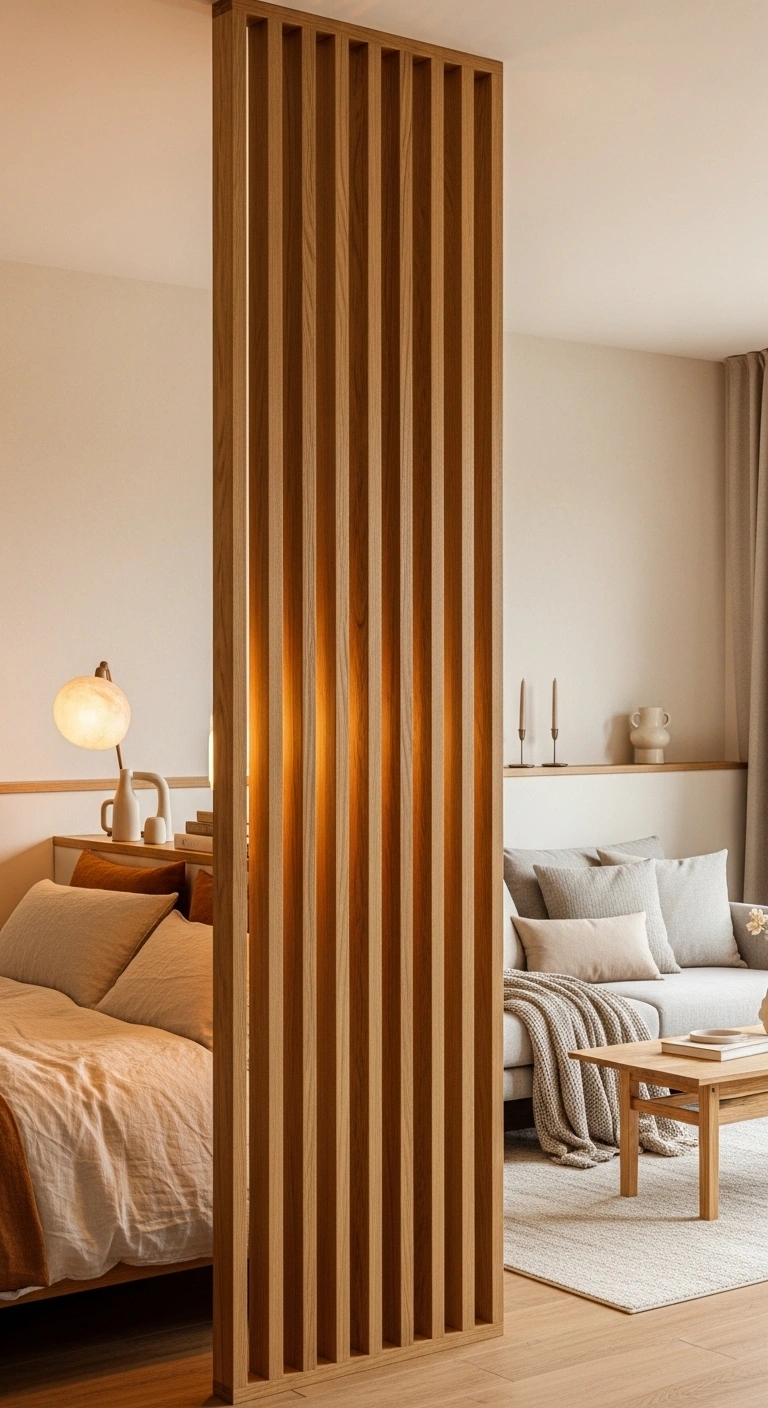
Install a vertical wooden slat divider to add both separation and style. The gaps between the slats allow light to pass through while still defining each area. Choose natural wood tones like oak or walnut to bring warmth into the room.
Position the divider between the bed and sofa, and keep the rest of the decor simple. Pair it with soft fabrics like linen curtains and woven rugs. This idea adds texture and depth while keeping the space open and airy, which makes the room feel thoughtfully designed.
14. Neutral Base with Bold Accent Corner
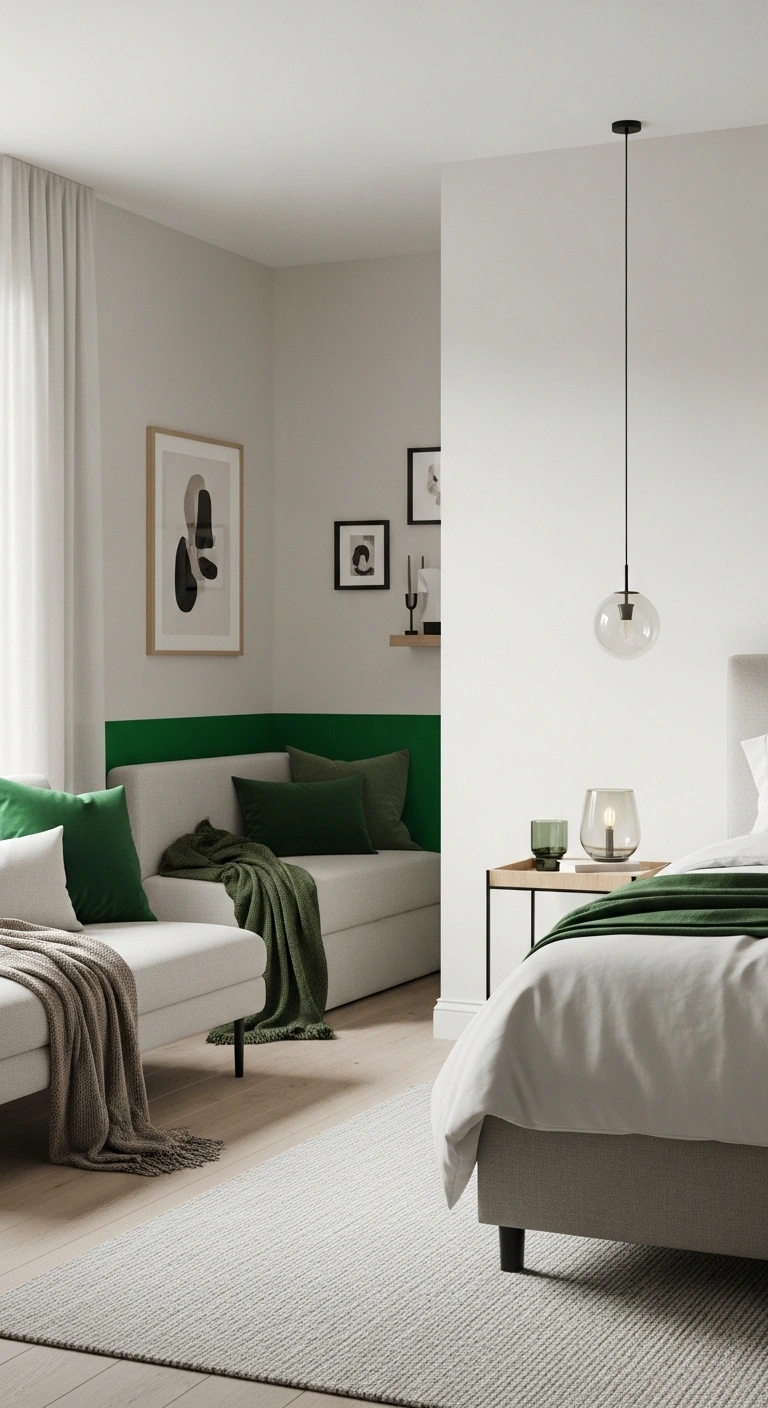
Keep the main space neutral, then create a bold accent area in either the bedroom or living zone. Use shades like white, beige, and soft gray as your base. Then add a rich color like deep green, navy, or terracotta through cushions, a throw, or a feature wall.
This approach keeps the room balanced while adding personality. Place the bold accents in one zone to give it identity without overwhelming the space. The contrast draws the eye and makes the room feel styled, not crowded.
15. Floating Bed with Open Space Below

A floating bed frame creates the illusion of more space by keeping the floor visible. Choose a simple design with hidden support so it appears to hover slightly above the ground. Light wood or matte white finishes work best for a clean look.
Under the bed, you can place storage baskets or keep it open for an airy feel. Pair this with a low-profile sofa and minimal decor. This idea makes the room feel modern and spacious, even in compact layouts.
16. Layered Lighting for Mood Control
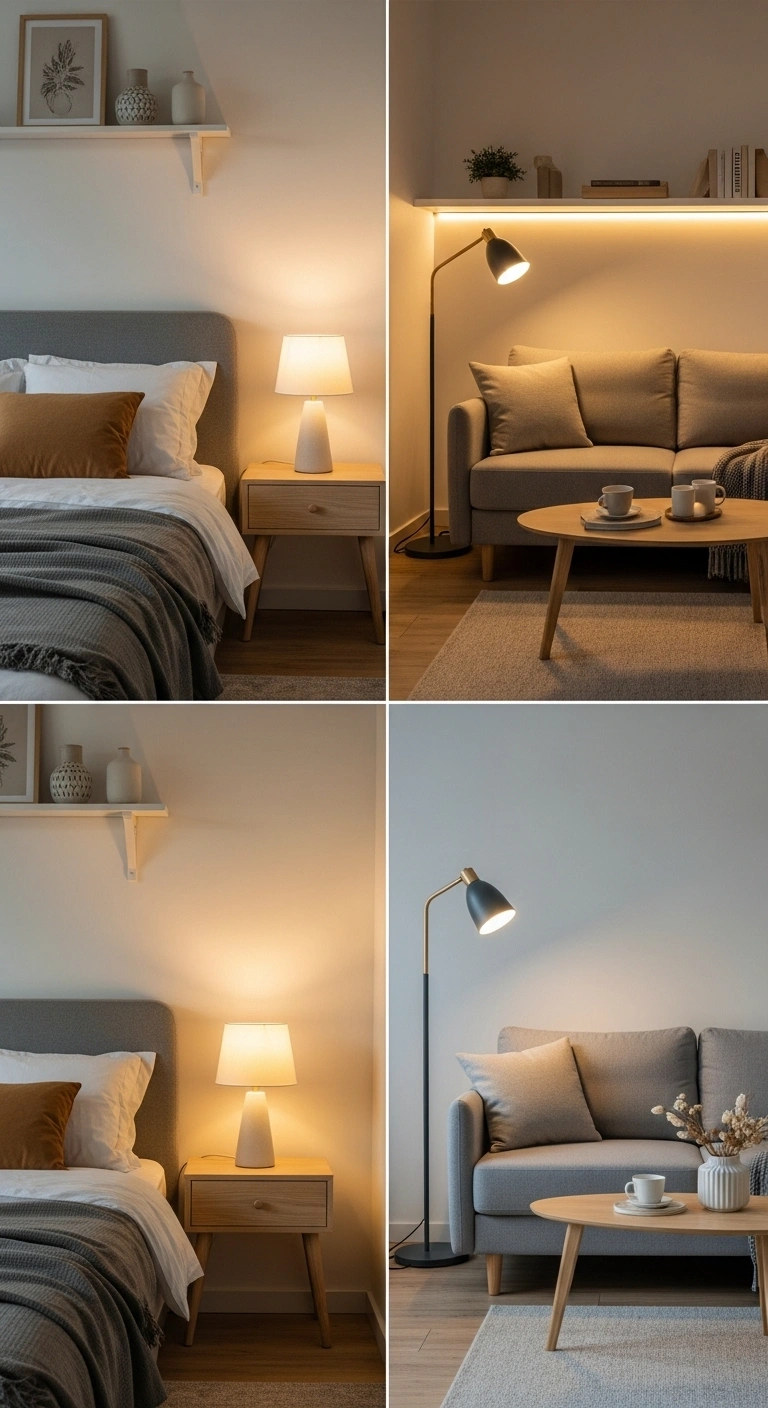
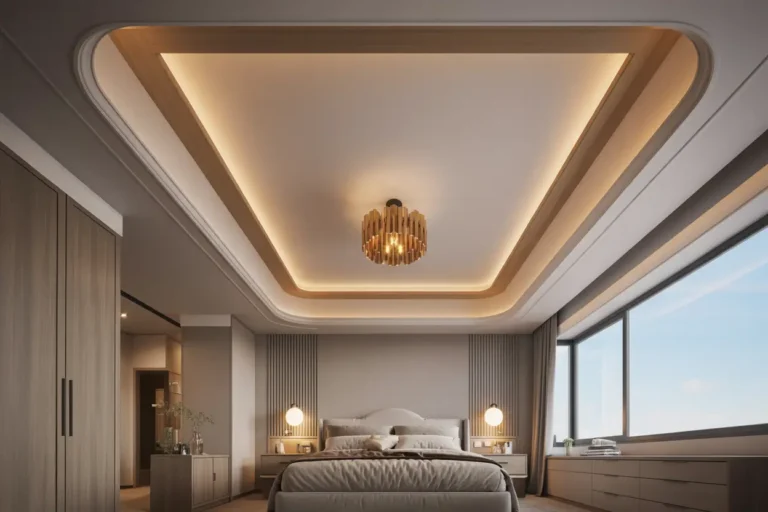
Use different types of lighting to define each zone. Add warm bedside lamps for the sleeping area and soft floor or table lamps for the living space. You can also include hidden LED strips behind shelves or headboards for a gentle glow.
Keep the lighting warm and soft to create a relaxed mood. This layered approach helps you switch between activities easily, from relaxing on the sofa to winding down in bed. It also adds depth and comfort to the overall design.
17. Compact Wardrobe as a Divider
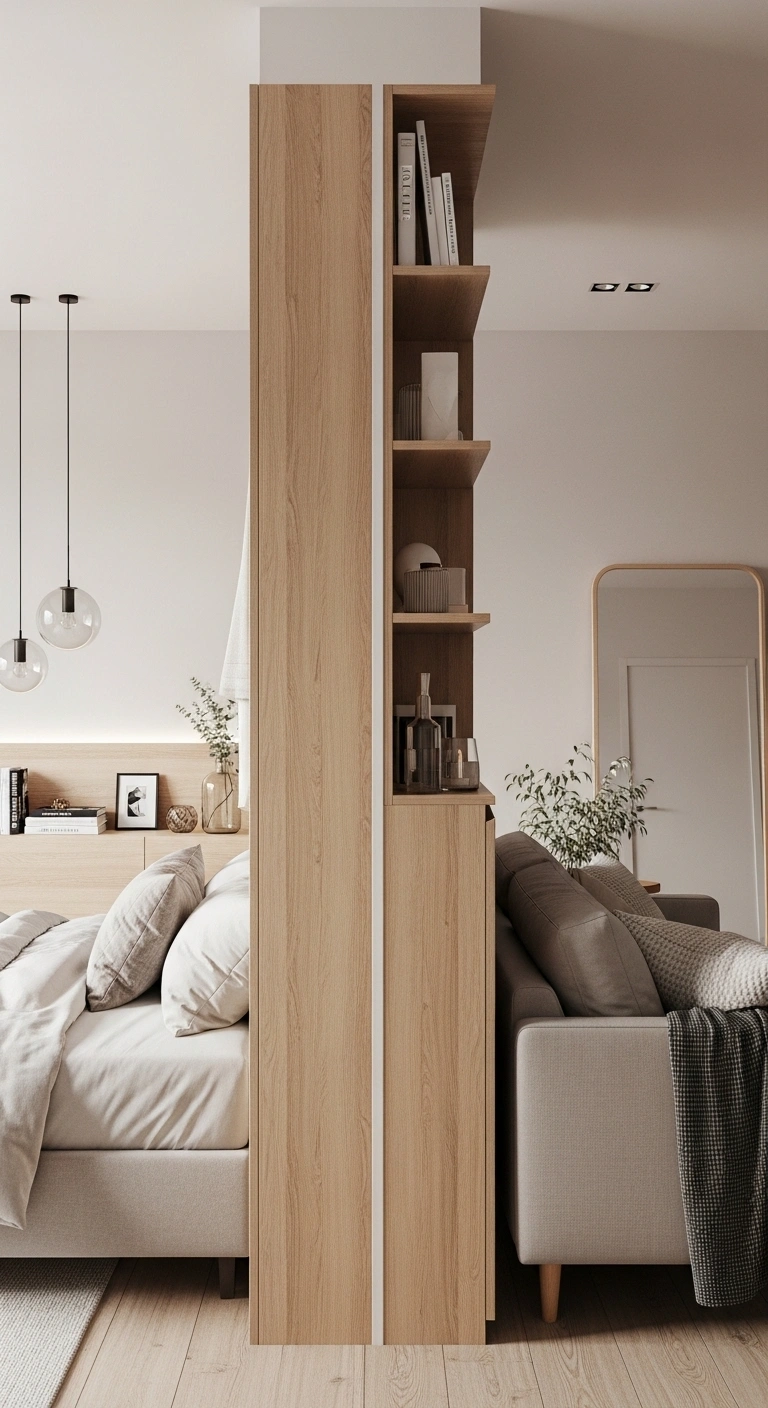
Place a slim wardrobe or cabinet between your bed and sofa to act as a divider. Choose a design with clean lines and a light finish to avoid making the room feel heavy. Sliding doors work best in tight spaces.
Use one side for clothing storage and decorate the other side with a mirror or artwork facing the living area. This idea combines storage with smart layout planning, helping you stay organized while clearly separating the zones.
18. Mirror Placement to Expand Space
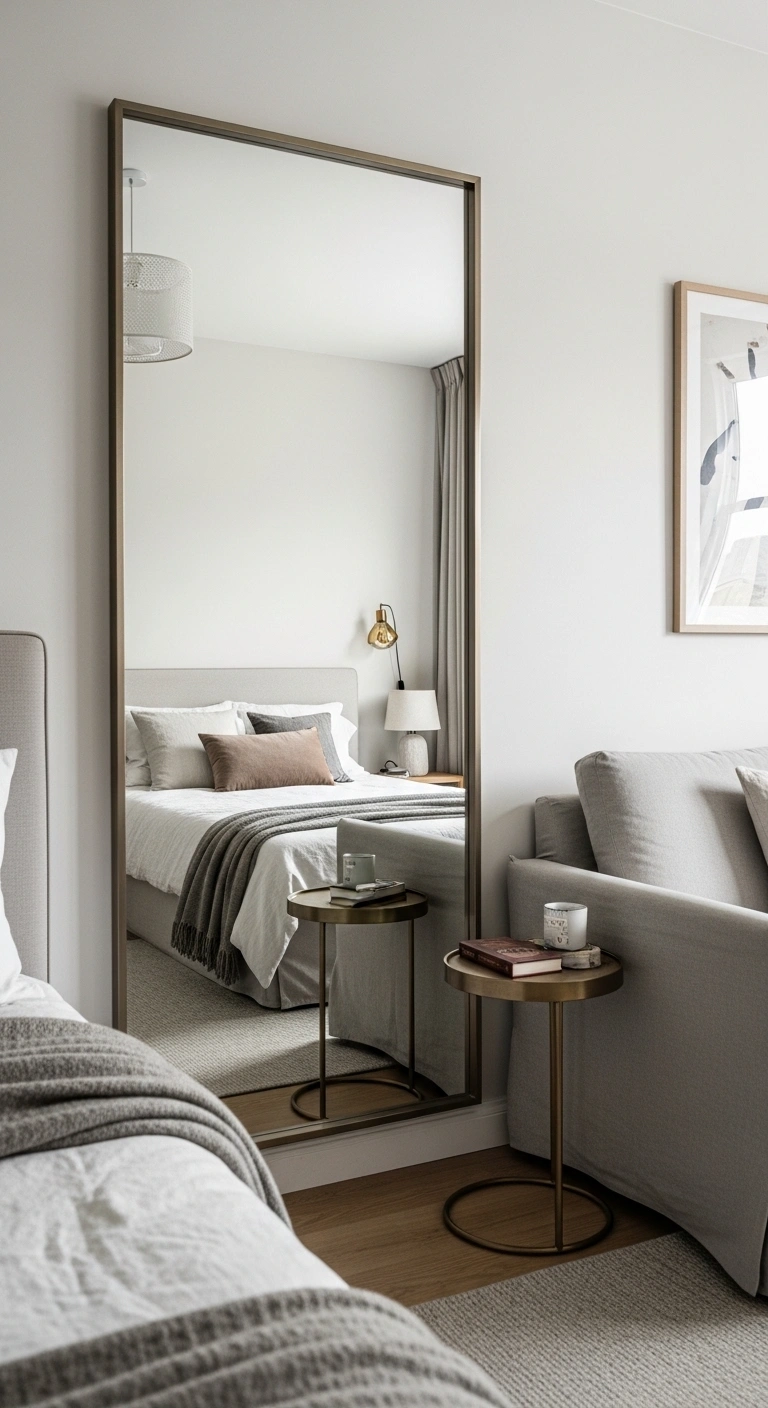
Use large mirrors to reflect light and make the room feel bigger. Place a tall mirror near the boundary between the living and sleeping areas. This helps visually extend both zones.
Choose a simple frame in black, gold, or wood to match your decor. Mirrors also bounce natural light around the room, making it feel brighter and more open. This simple trick adds depth without adding extra furniture.
19. L-Shaped Layout for Clear Zoning
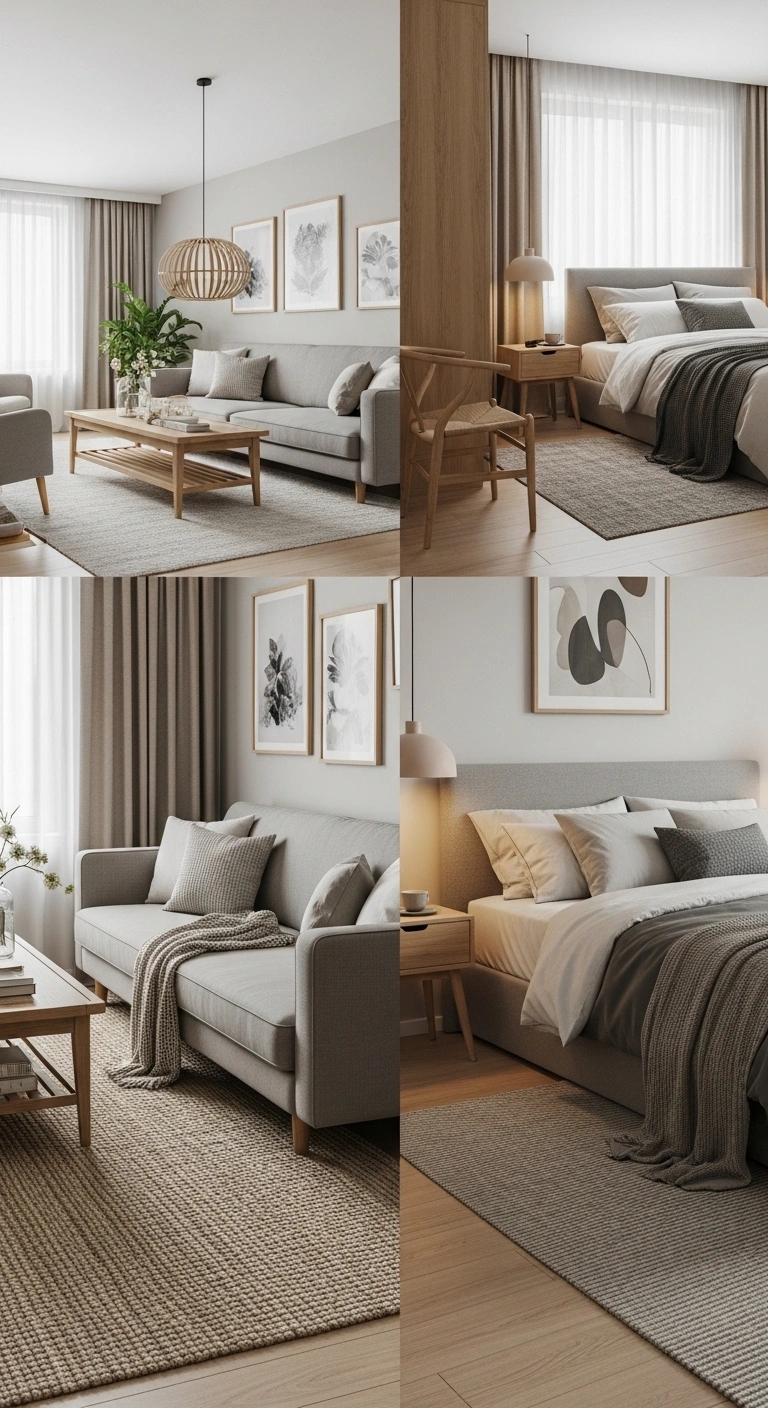
Arrange your furniture in an L-shape to create natural separation. Place the sofa along one wall and position the bed along the adjacent wall. This layout keeps both areas distinct while maintaining an open flow.
Add a rug under each zone to strengthen the layout. Keep the colors consistent to tie everything together. This setup works well in square rooms and helps you use every corner efficiently without crowding the space.
20. Soft Canopy Over the Bed Area
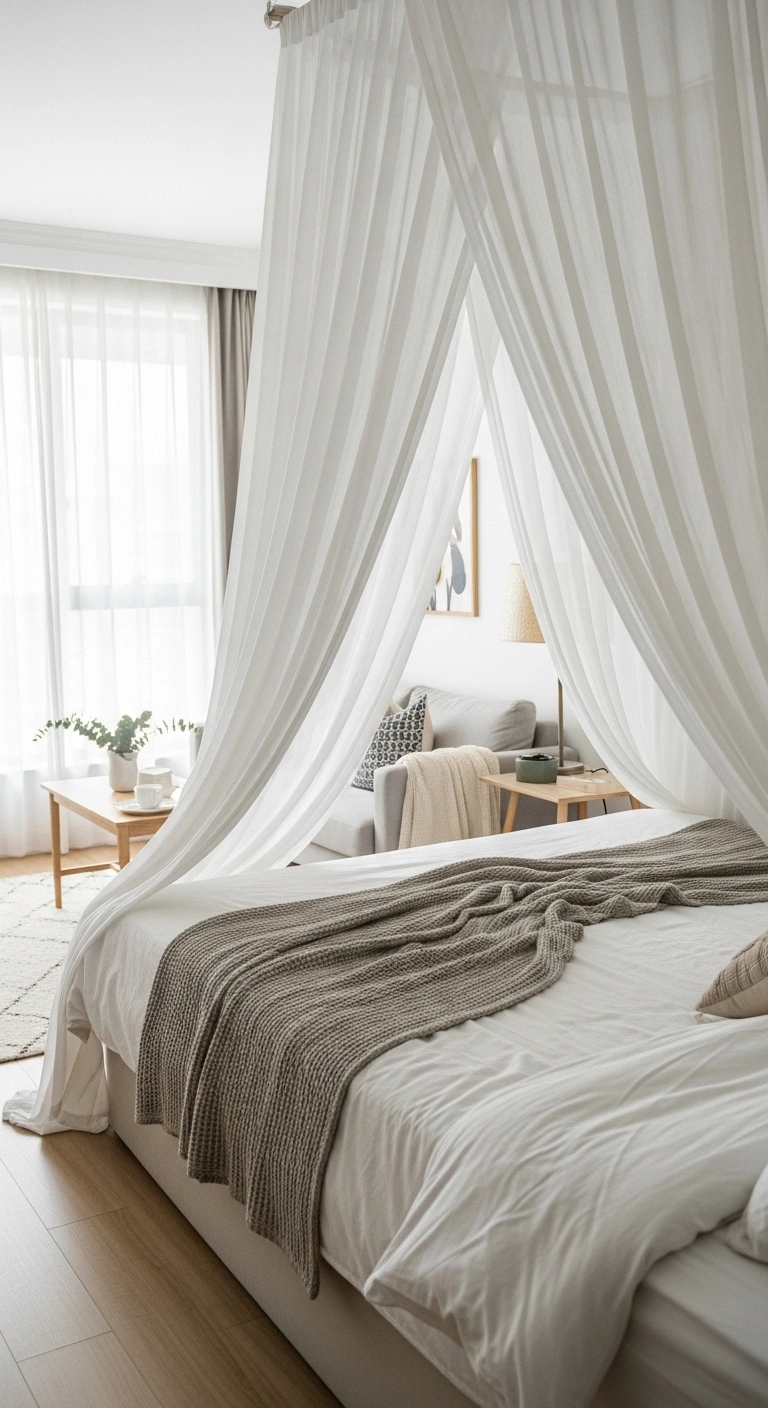
Add a light canopy over your bed to create a cozy sleeping corner. Use sheer fabrics like white or cream to keep it soft and airy. Hang it from the ceiling so it gently frames the bed.
This creates a subtle boundary without blocking light. Pair it with soft bedding and warm lighting for a relaxing feel. The canopy adds a touch of comfort and makes the bedroom area feel special within a shared space.
21. Multi-Level Shelving Wall
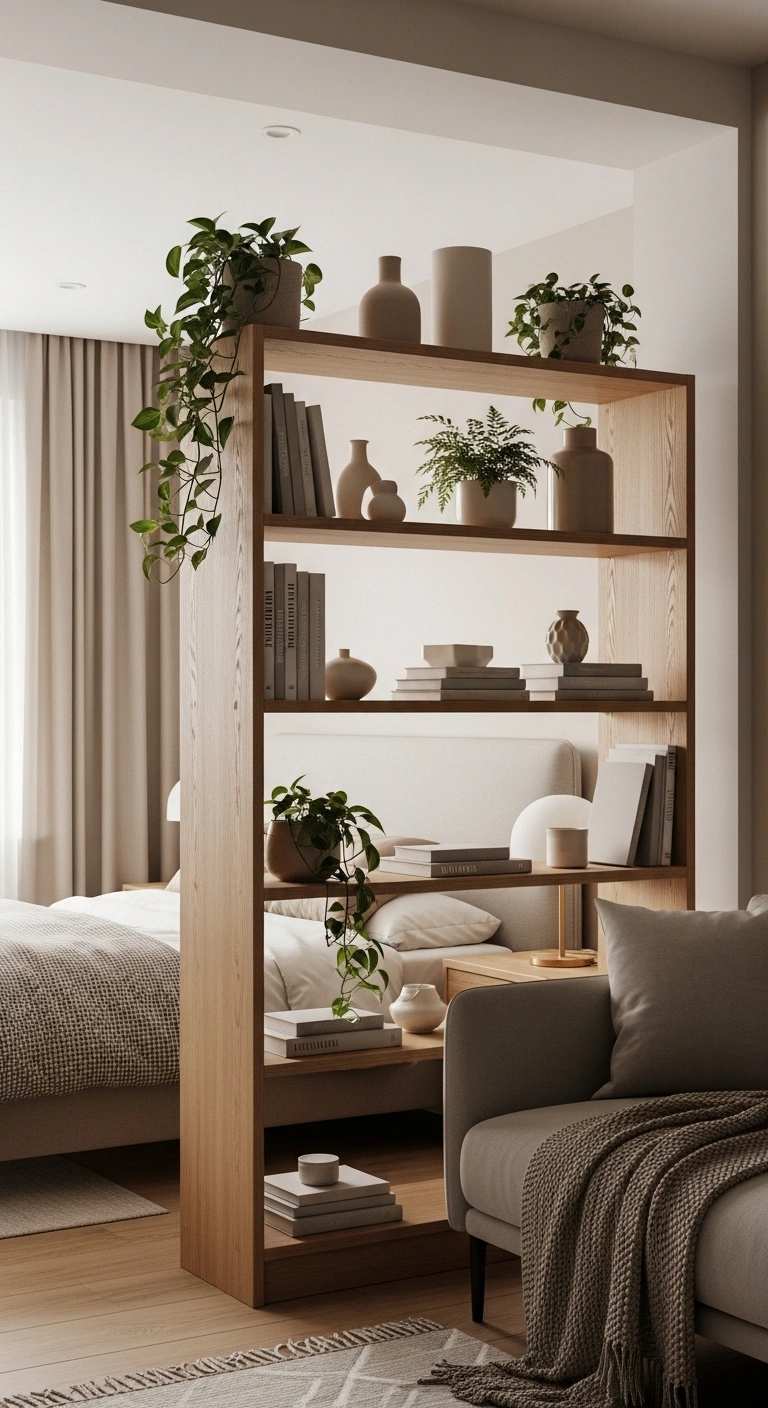
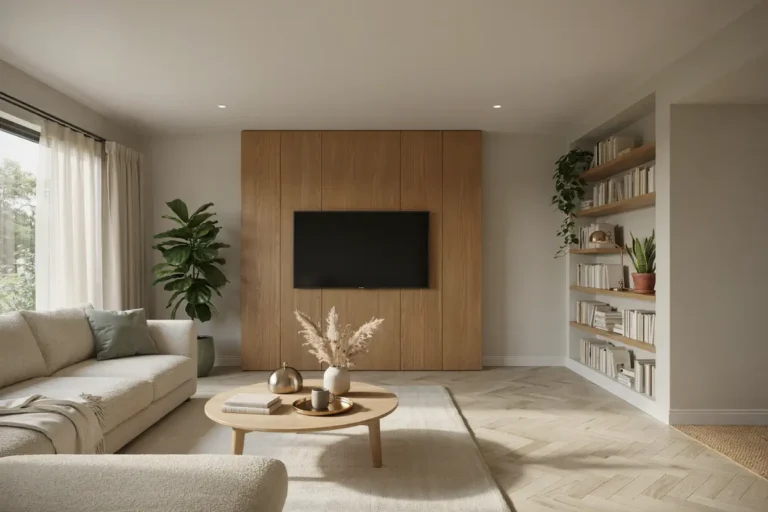
Build a shelving wall that works as both storage and a divider. Use open shelves with different heights to display decor, books, and plants. Keep the design light and avoid overfilling it.
Place the shelves between the bed and sofa, and use baskets for hidden storage. This idea adds function while keeping the room visually interesting. It also allows you to personalize the space with small decorative touches.
22. Textured Wall to Define the Bedroom Zone
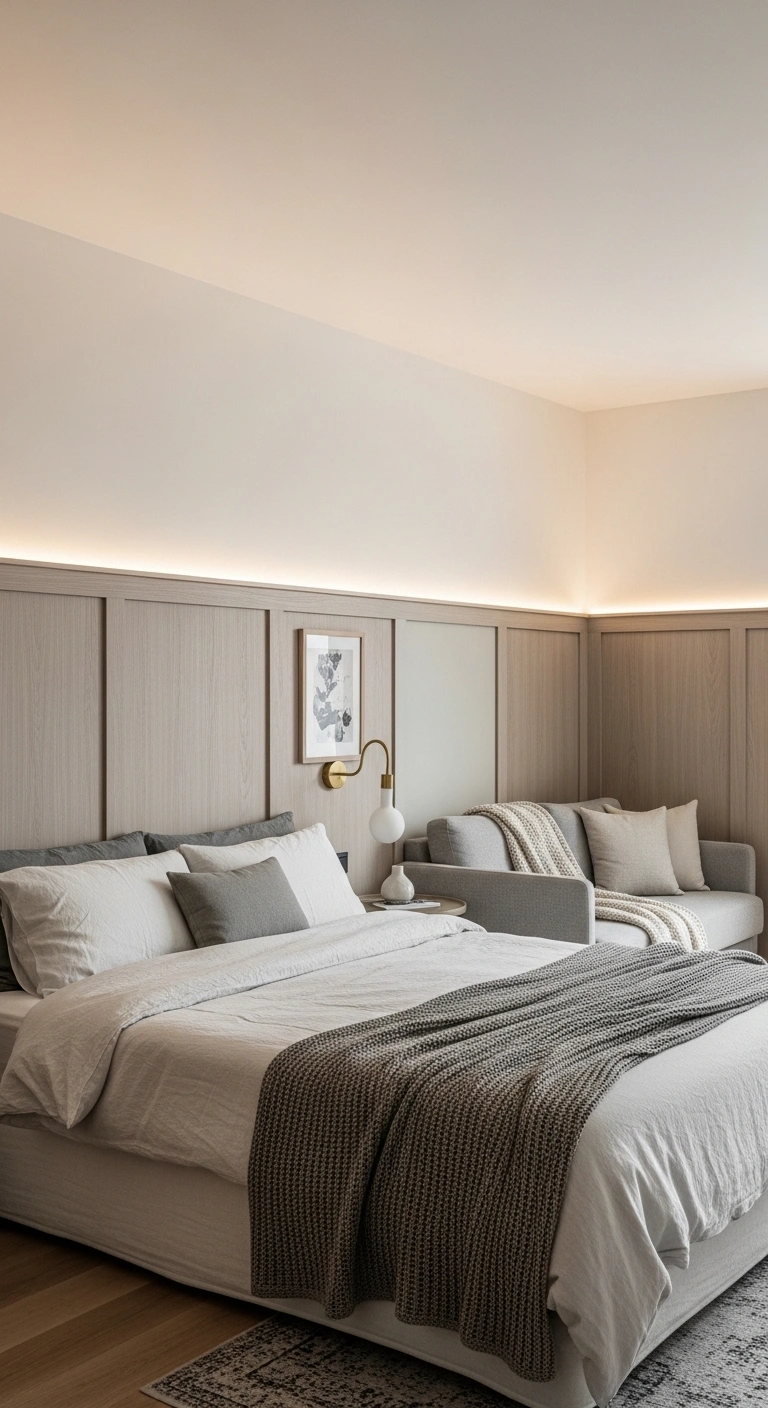
Create a feature wall behind your bed using textured materials like wood panels, fabric, or subtle wallpaper. Choose soft tones that match your overall palette to keep the look calm.
This wall naturally defines the sleeping area without adding physical barriers. Pair it with simple decor in the living area to maintain balance. The texture adds depth and makes the bedroom feel more grounded.
23. Minimal Layout with Open Floor Space
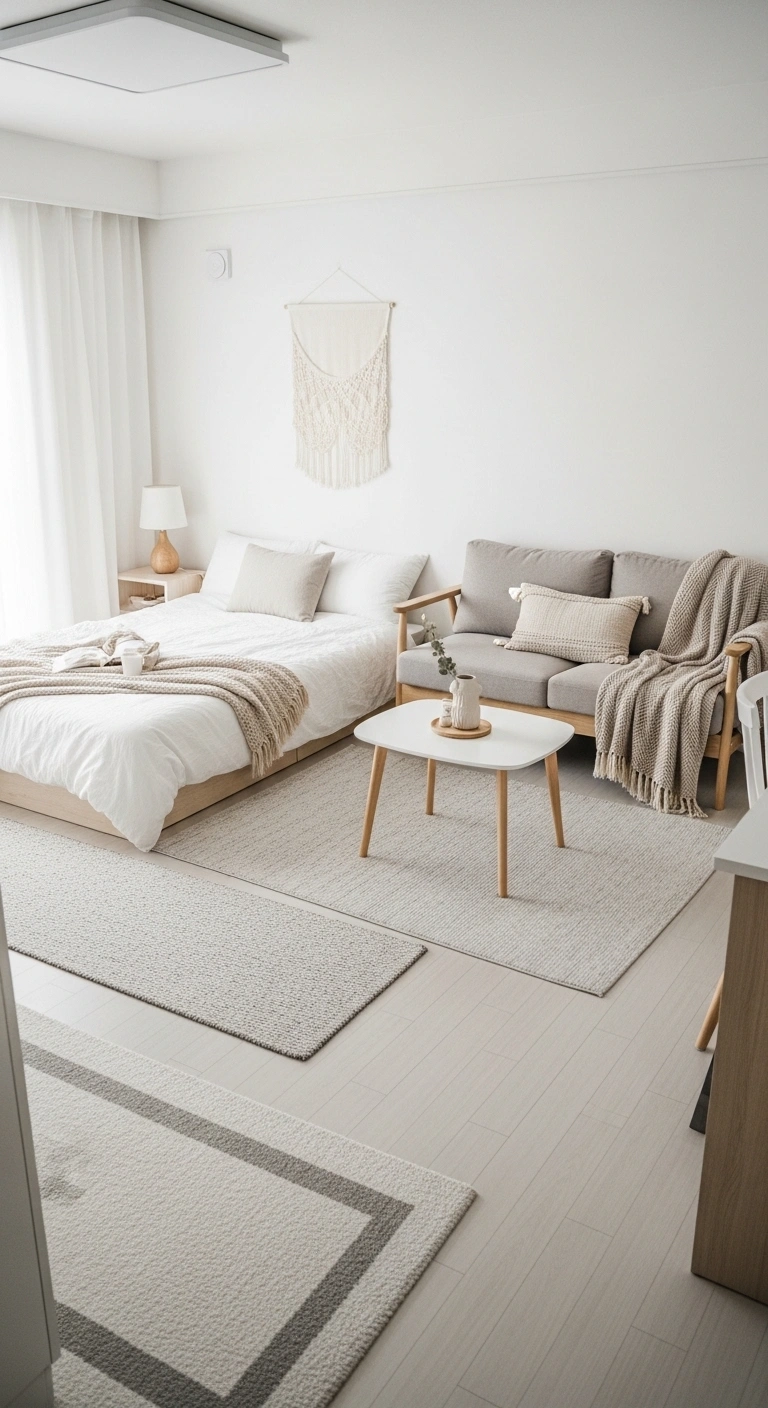
Keep your layout simple by using only essential furniture. Choose a compact sofa, a low bed, and a small table. Leave open floor space between zones to make the room feel larger.
Stick to a light color palette and avoid heavy decor. Add a few soft textures like a rug or throw for comfort. This approach focuses on clarity and ease, helping your living room and bedroom combo feel calm, open, and easy to live in.
Conclusion
Designing a shared space becomes easier when you focus on balance, comfort, and smart layout choices. These beautiful living room and bedroom combo ideas show that you don’t need extra rooms to create a space that feels complete. With the right mix of color, texture, lighting, and furniture placement, you can shape one room into two clear and functional zones.
Start with one idea that fits your space and build from there. Try a simple divider, adjust your layout, or update your lighting to see an instant change. Save the ideas that inspire you most and use them as a guide when styling your own room. Small changes can make a big difference when every detail works together.