21 Laundry Room Ideas Designed for Top-Load Washers

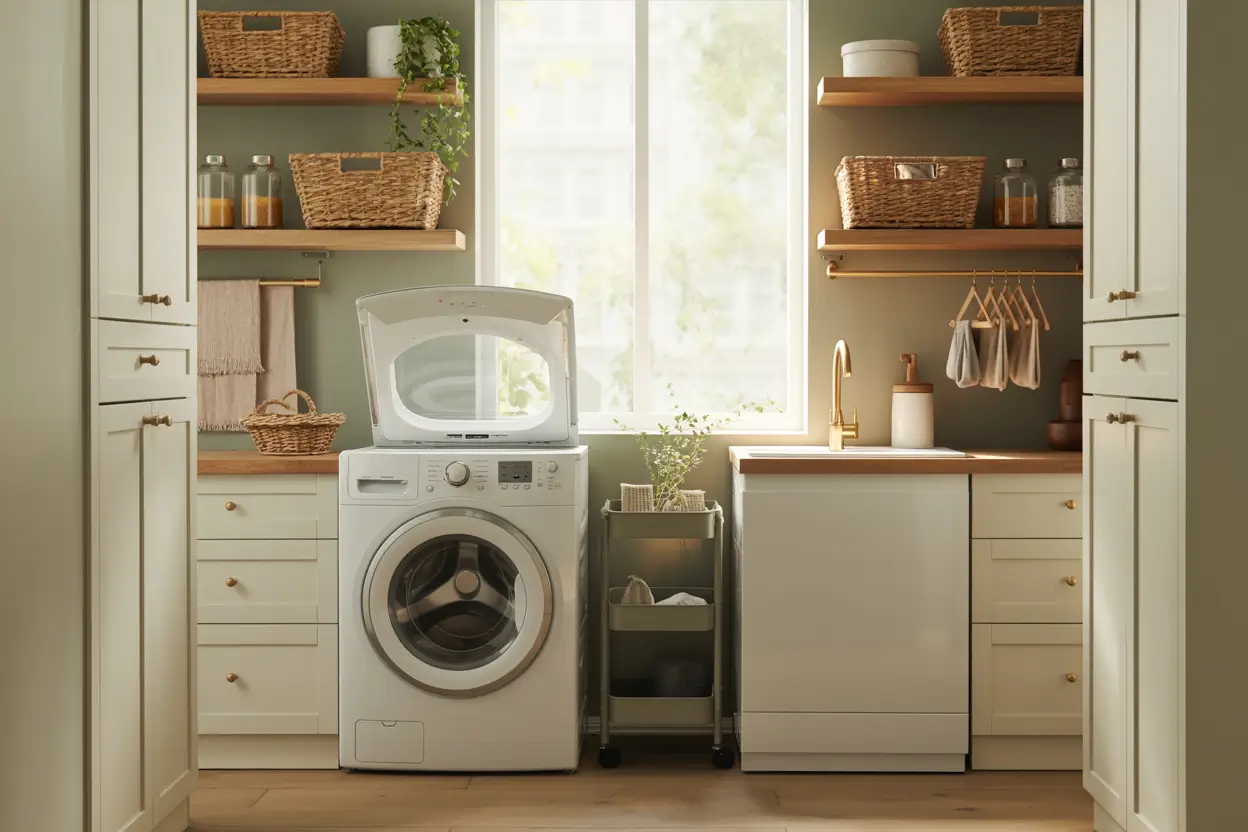
Top-load washers get a bad rap in design blogs, but they shouldn’t. They’re gentle on your back, easy to reach into, and often cheaper to run and repair.
The one catch? That lid needs room to swing up. Plan around it, and a top-loader laundry room can look just as polished as any fancy front-load setup.
This guide gives you 21 laundry room ideas designed for top-load washers — real layouts that respect the lid, hide the clutter, and squeeze storage out of every corner. Each idea comes with exact finishes and a quick tip you can act on this weekend.
Whether you’ve got a full room or a narrow closet, there’s a smart fix here. Let’s make your laundry space work with your washer, not against it.
1. Open Shelving Above, Nothing Blocking the Lid
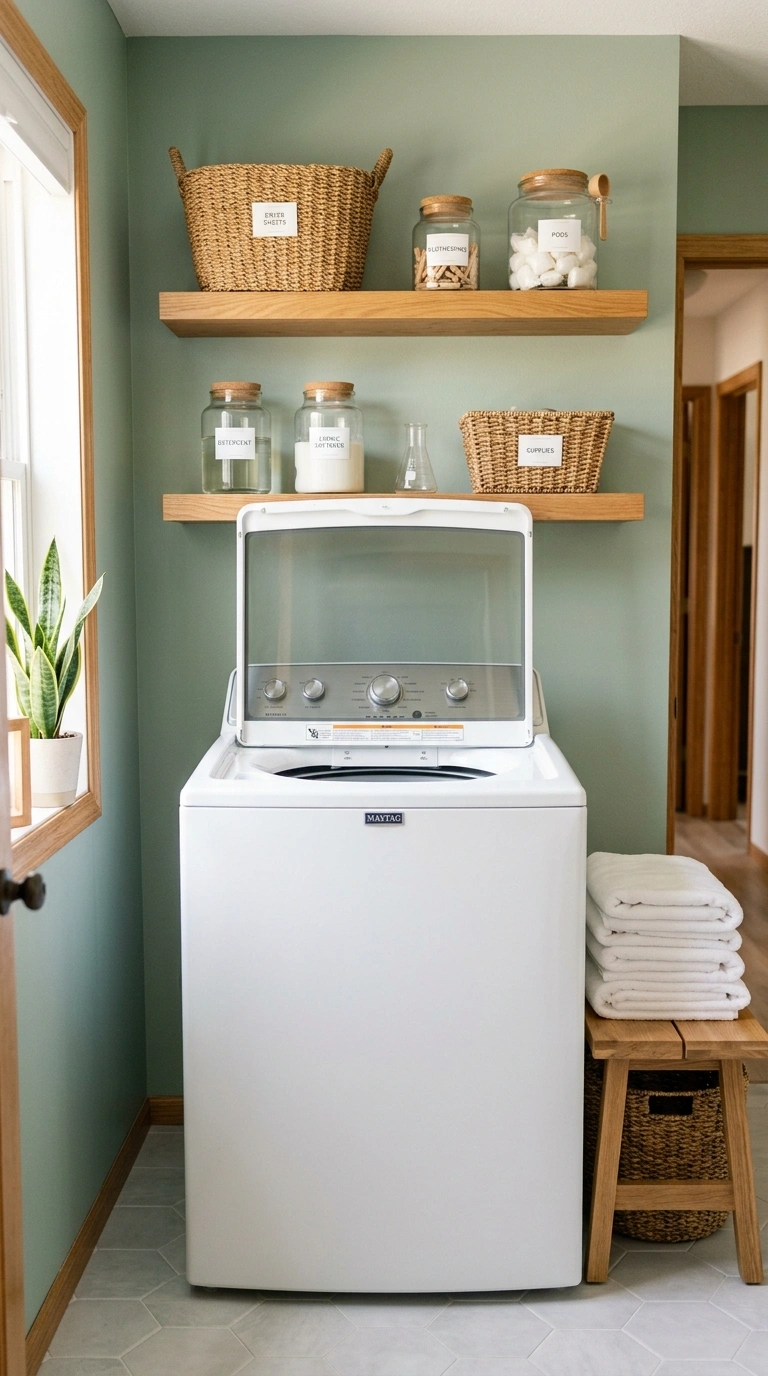
The golden rule of a top-load laundry room: keep the space directly above the lid clear. Mount your first shelf high enough that the open lid never hits it.
Measure from the floor to the top of the raised lid, then add a couple of inches before your lowest shelf begins.
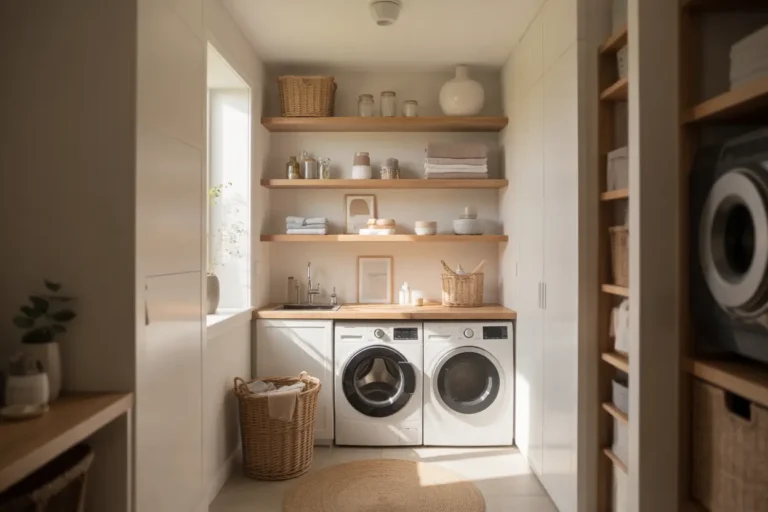
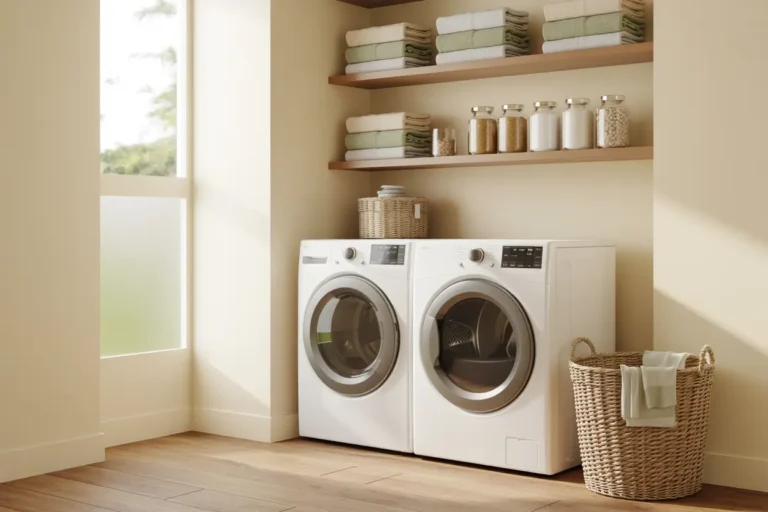
Use warm oak floating shelves against a soft sage green wall, styled with woven baskets and glass detergent jars. The airy gap over the machine keeps the room feeling open.
Try this weekend: Open your washer lid all the way and mark that height on the wall with painter’s tape. That line is your no-shelf zone.
I like keeping everyday laundry items off the counter so the room feels more open. One thing I always reach for is solid wood floating shelves because they add storage while leaving enough space for the washer lid to open without getting in the way.
2. A Rolling Cart Between Washer and Dryer
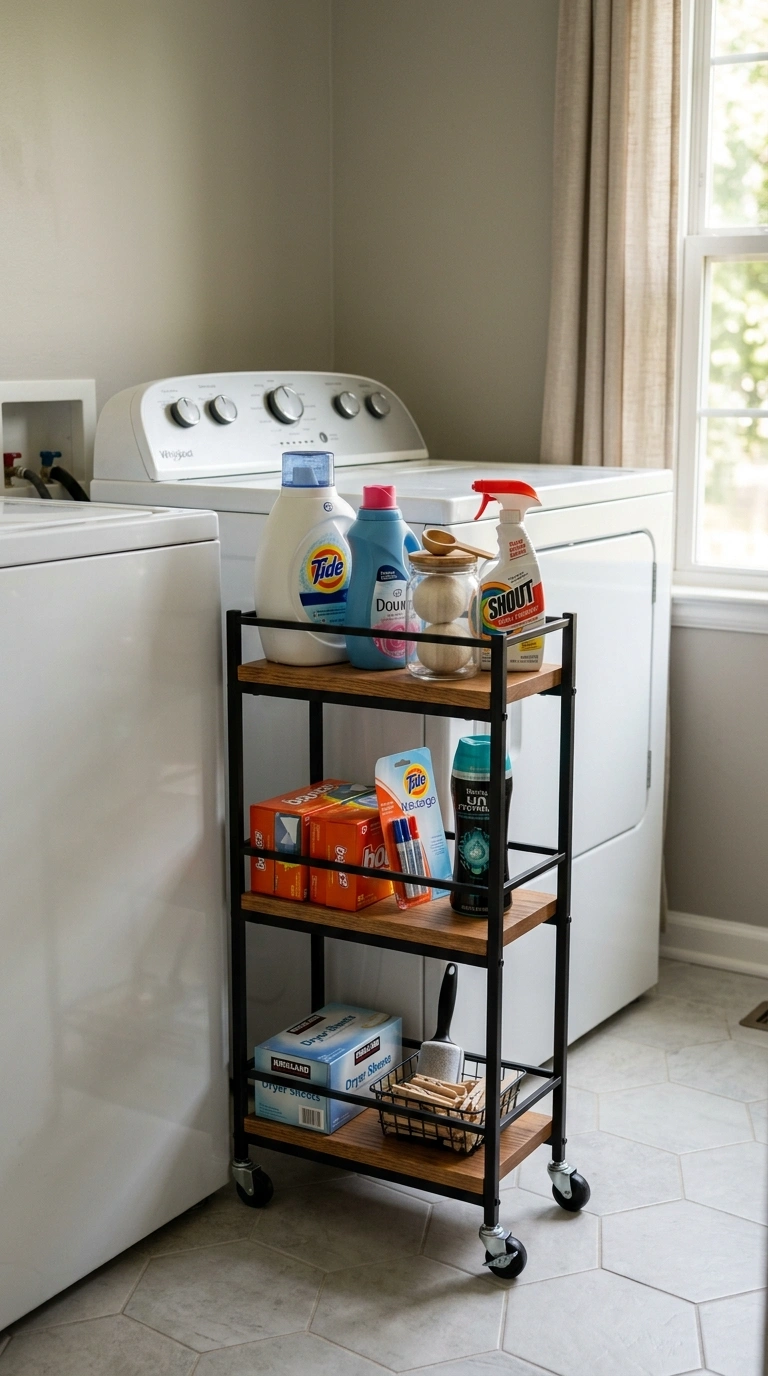
Top-loaders don’t stack, so use the floor smartly instead. Slide a slim rolling cart into the gap between the machines for detergent, stain sticks, and dryer sheets.
Lock the wheels while you work, then roll it out for cleaning behind the machines.
Pick a matte black metal cart with warm oak shelves. It fills dead space and gives you a mobile supply station right where you need it.
Try this weekend: Measure the gap between your machines and find a cart one inch narrower so it glides in easily.
I’ve found that narrow spaces can do a lot more than collect dust. A slim rolling storage cart keeps detergent and stain removers within reach, and it rolls out easily whenever it’s time to clean behind the machines.
3. A Fold-Down Drying Rack on the Wall
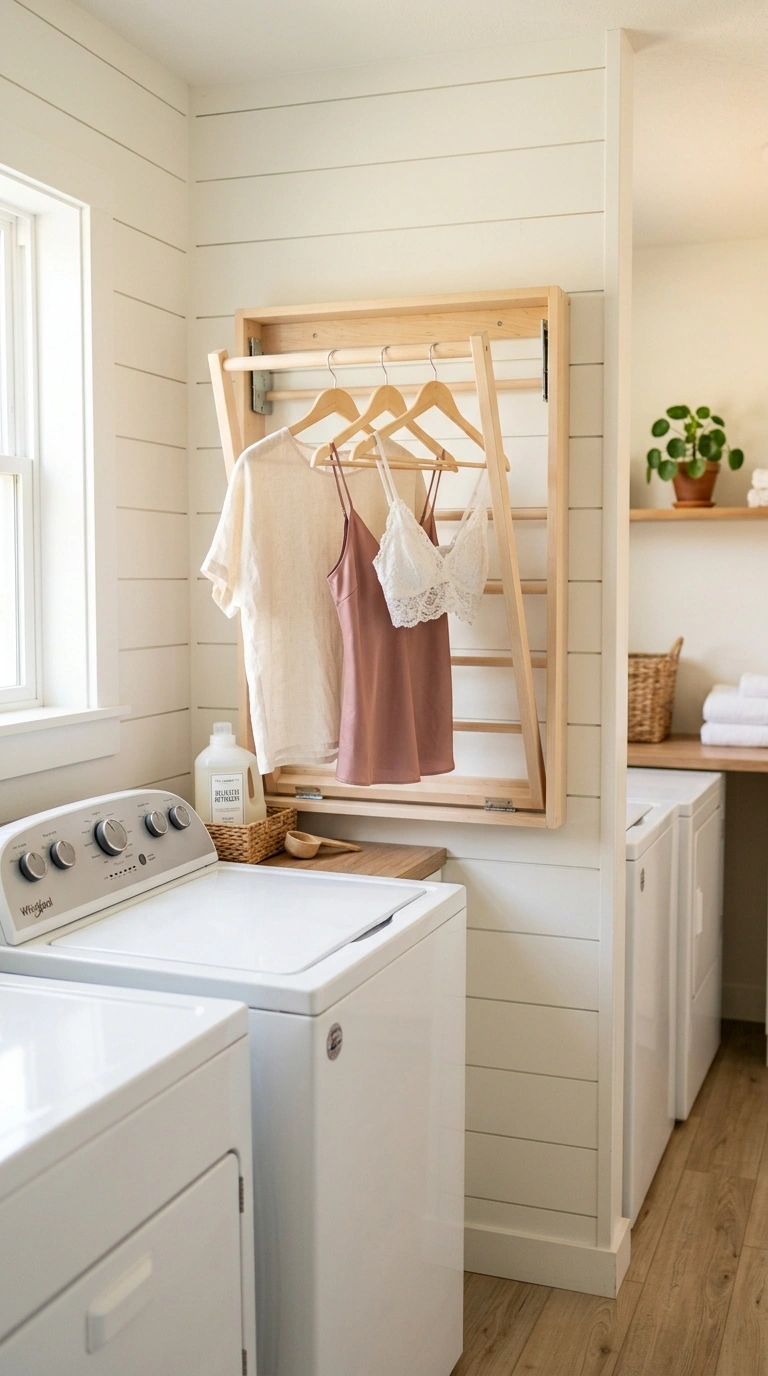
Since you can’t stack a folding surface on top of a top-loader, put drying space on the wall instead. A fold-down wooden rack tucks flat when you’re done.
Mount it beside the machines, not above them, so a wet lid never drips onto hanging clothes.
Use a natural birch rack against warm white shiplap. Folded up, it looks like simple wall trim; folded down, it holds a full load of delicates.
Try this weekend: Hold a towel against the wall where you’d hang clothes and check it clears the washer lid’s swing.
One thing I always reach for when planning a laundry room is a wall-mounted drying rack. It gives delicate clothes a place to air dry and folds flat afterward, so the room still feels open and easy to move around in.
4. A Countertop That Skips the Washer
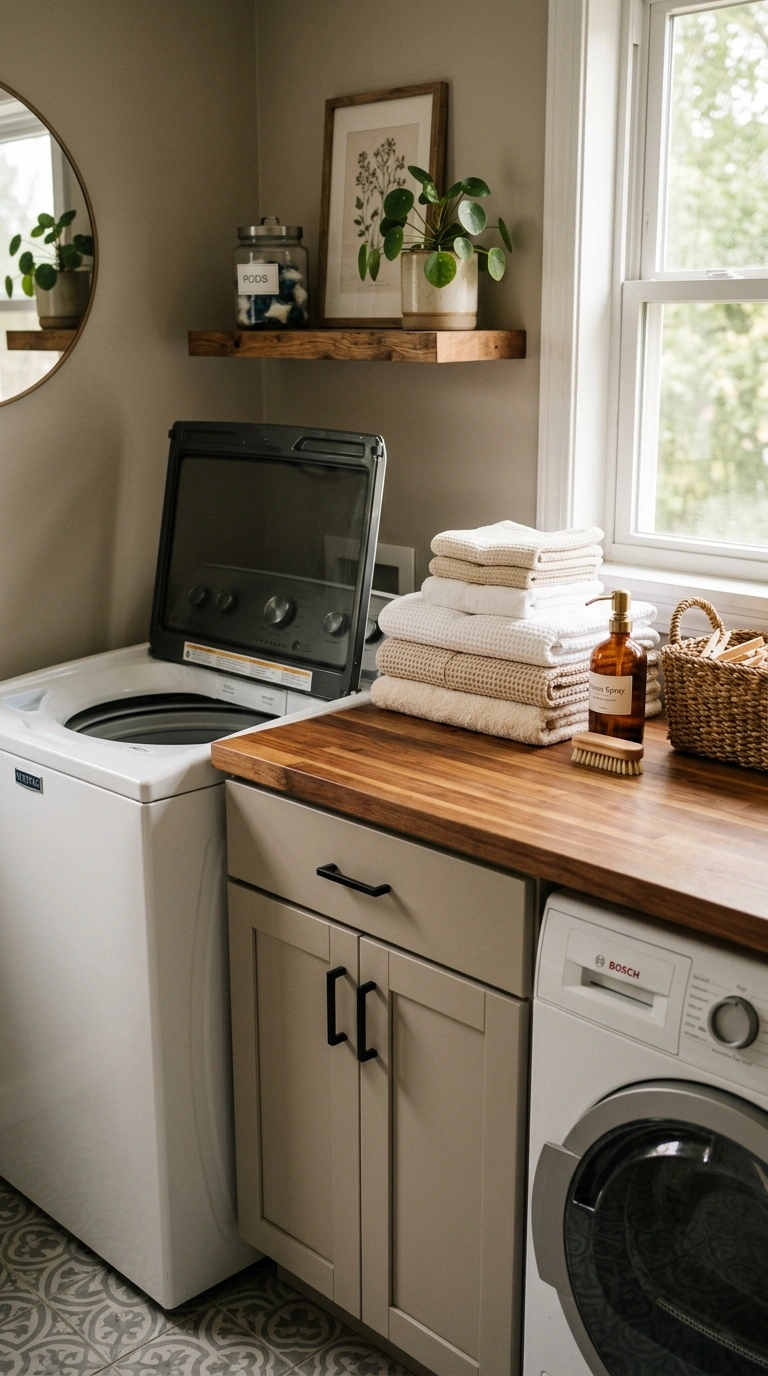
Full countertops don’t work over top-loaders, so build a partial one. Run counter space over the dryer and any base cabinets, and leave the washer open to the sky.
This gives you a folding surface without trapping the lid.
Finish it in butcher-block over greige shaker cabinets. The wood warms up the room and gives you a spot to fold straight out of the dryer.
Try this weekend: Sketch your machines side by side and draw the counter only over the dryer and cabinets. See how much folding space you gain.
5. Tall Cabinets Flanking the Machines
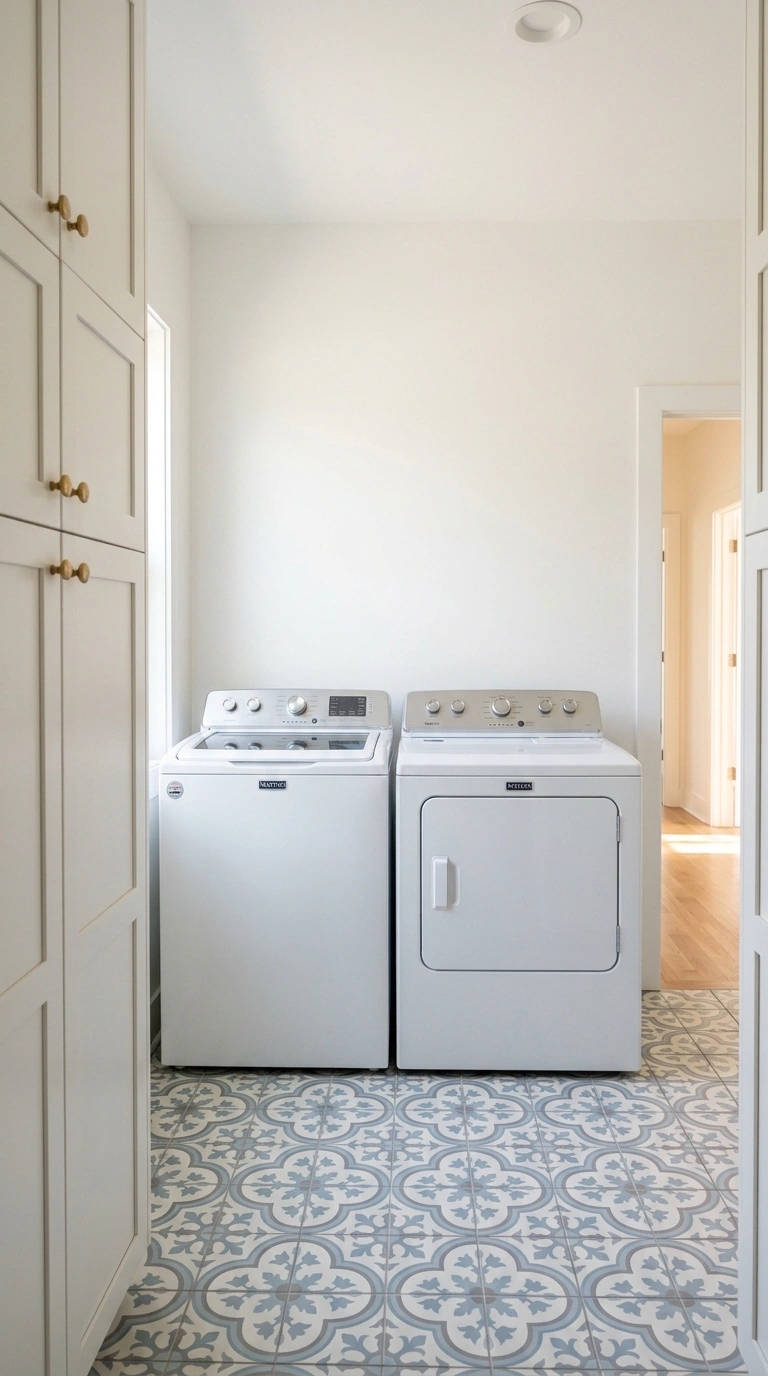
Go vertical on the sides where the lid doesn’t reach. Tall pantry-style cabinets on either side of your washer and dryer hold everything from soap to spare linens.
Keep the middle open above the lid and pack storage into the columns.
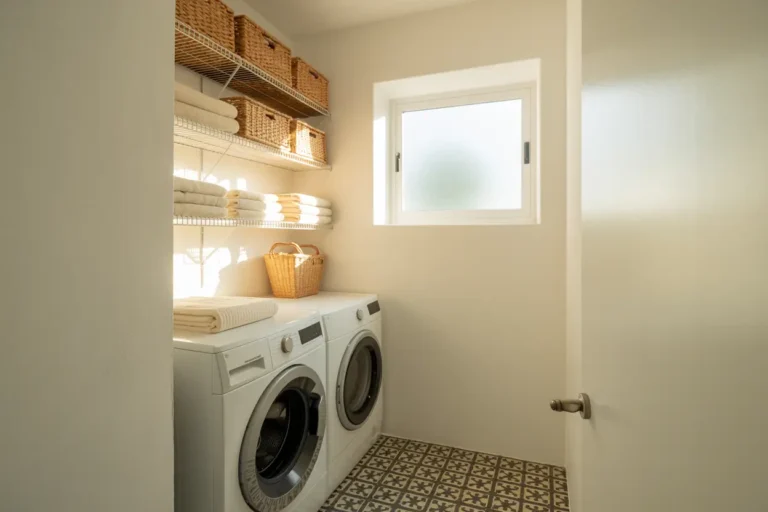
Pair soft white cabinetry with brushed brass knobs and a patterned cement-tile floor. The tall towers frame the machines like bookends.
Try this weekend: Note the wall space to the left and right of your machines — that’s where your storage columns go.
I like using woven storage baskets inside tall cabinets because they keep smaller laundry supplies grouped together instead of scattered across shelves. They also add a little texture, which helps the storage feel more like part of the room’s design.
6. A Pull-Out Hamper Tower
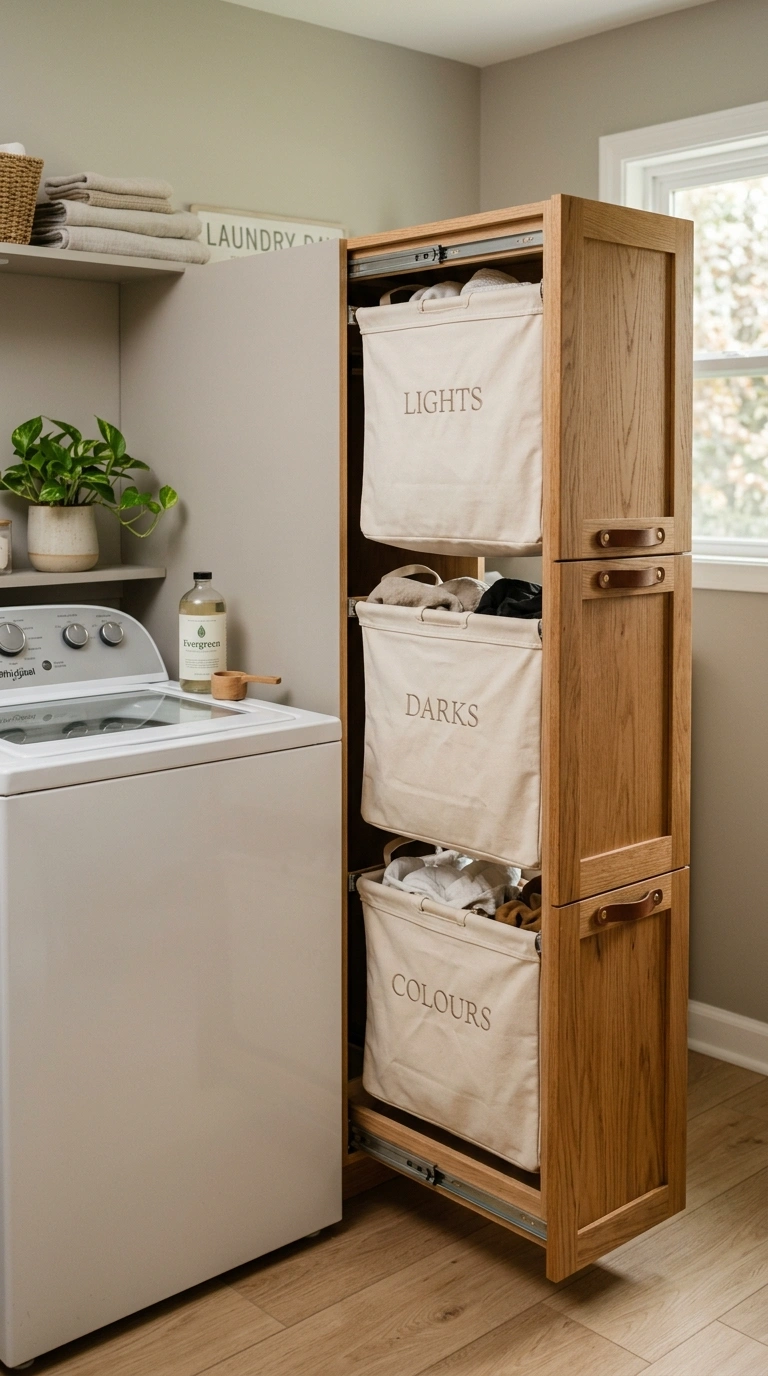
A slim cabinet with two or three pull-out canvas hampers sorts lights, darks, and delicates before they ever hit the washer. Everything stays hidden behind one door.
Place it beside the washer so sorted loads drop straight in from the top.
Use warm oak fronts with leather tab pulls and cream canvas bags inside. The natural mix keeps a laundry chore feeling calm.
Try this weekend: Count how many sorting piles your family makes and pick a tower with that many bags.
7. A Backsplash Behind the Machines
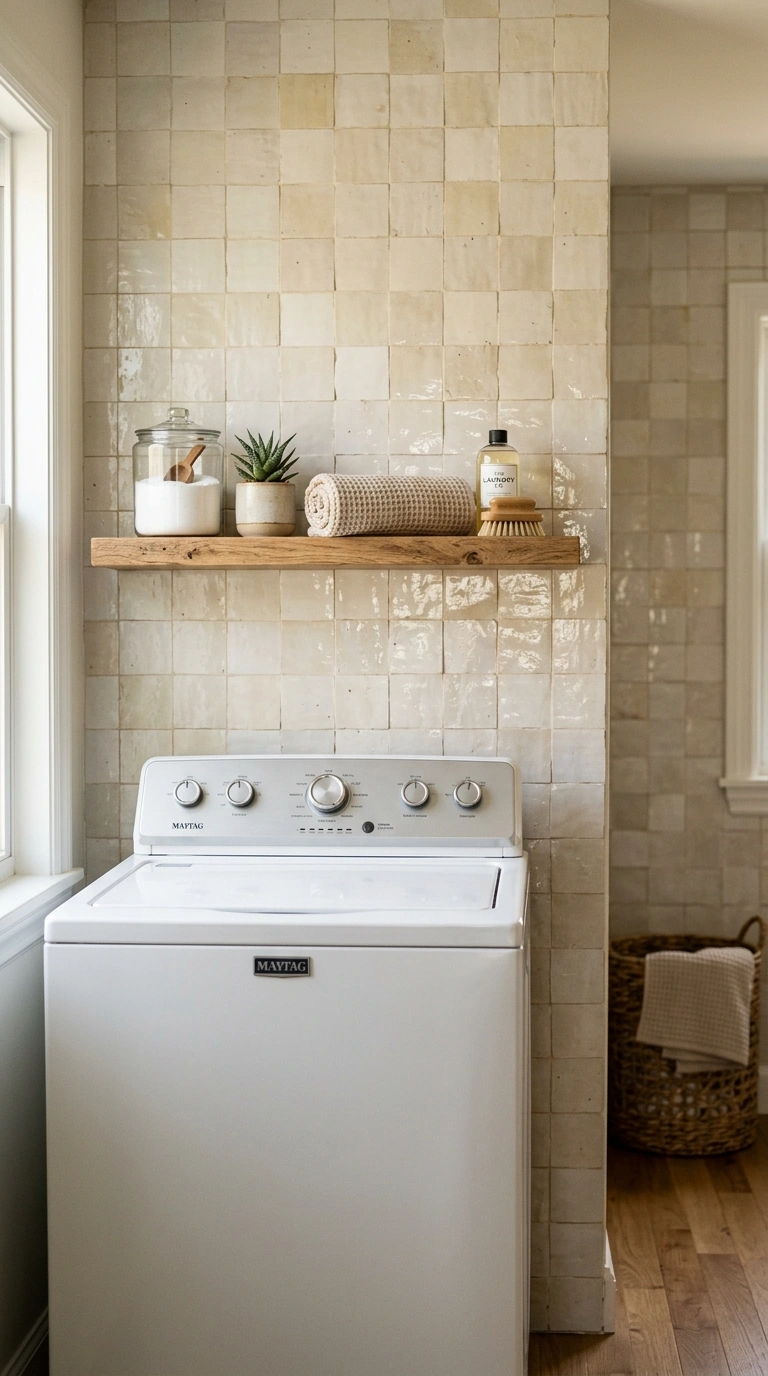
Top-loaders sit against the wall, and that wall takes splashes and lint. A wipeable backsplash keeps it clean and adds a pop of style.
Run the tile from behind the machines up to your first shelf.
Try zellige tile in warm ivory with a slight glaze variation. The handmade look adds texture, and a quick wipe keeps it spotless.
Try this weekend: Wipe the wall behind your washer and note any water marks. That’s the zone a backsplash protects.
8. A Hanging Rod Off to the Side
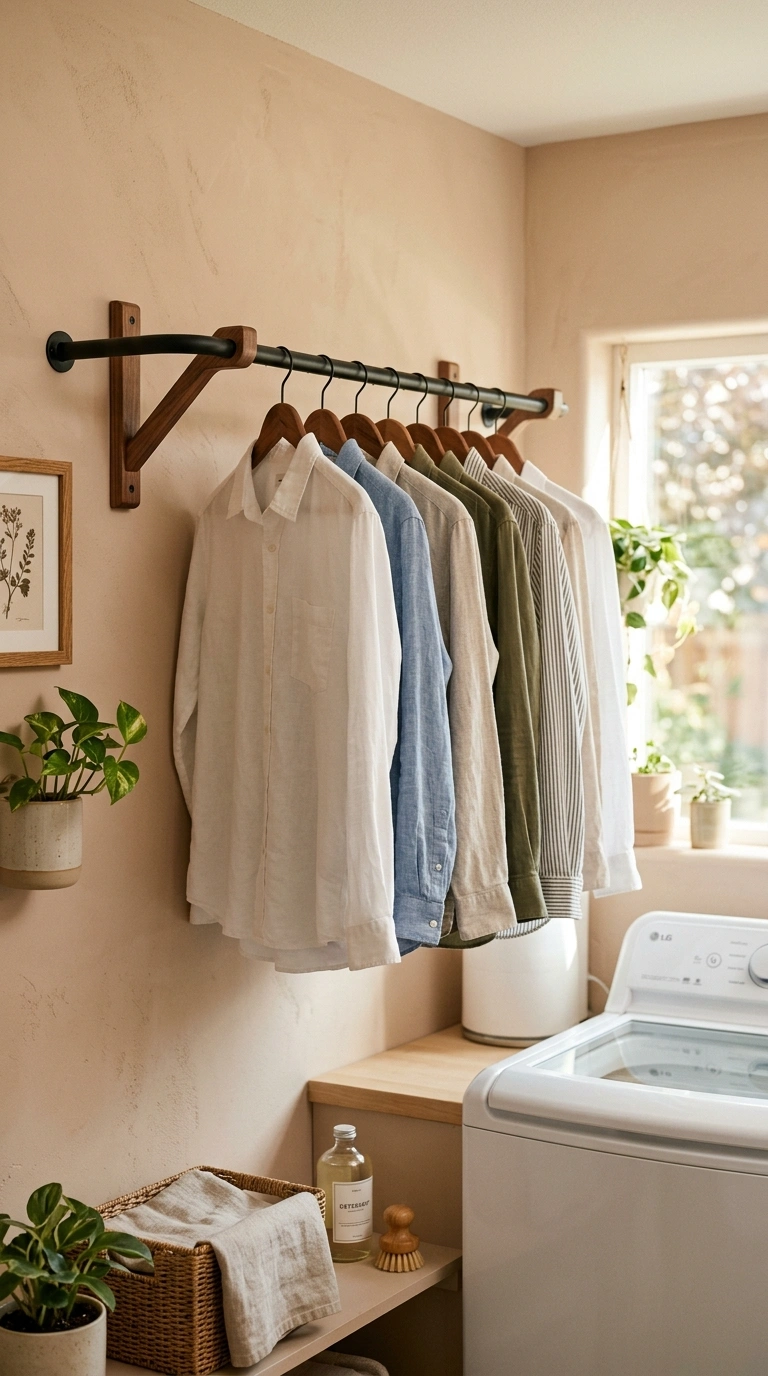
You need somewhere to hang shirts fresh out of the dryer, but not over an open lid. Mount a wall rod or a small nook rod to the side of the machines.
Position it where drips won’t land on the washer or the floor path.
Use a matte black rod with warm wood brackets against a pale clay wall. Wooden hangers in a neat row make the corner look boutique, not utilitarian.
Try this weekend: Find a clear stretch of wall beside your machines and hold up a hanger to test the height.
I’ve found that freshly dried shirts stay looking neater when they go straight onto wooden clothes hangers. They help clothes keep their shape and make the hanging area feel tidy instead of looking like temporary storage.
9. A Sink Station Beside the Washer
A utility sink next to your top-loader handles hand-washing and soaking without leaning over the machine. Keep it on the opposite side from the lid hinge for easy access.
Add a cabinet below for a hidden bin and cleaning supplies.
Finish with a fireclay farmhouse sink, warm oak cabinetry, and an unlacquered brass faucet. It turns a work sink into a design feature.
Try this weekend: Fill a bucket where you’d want a sink and confirm you have room to stand and scrub comfortably.
10. Under-Machine Pedestal Drawers (The DIY Version)
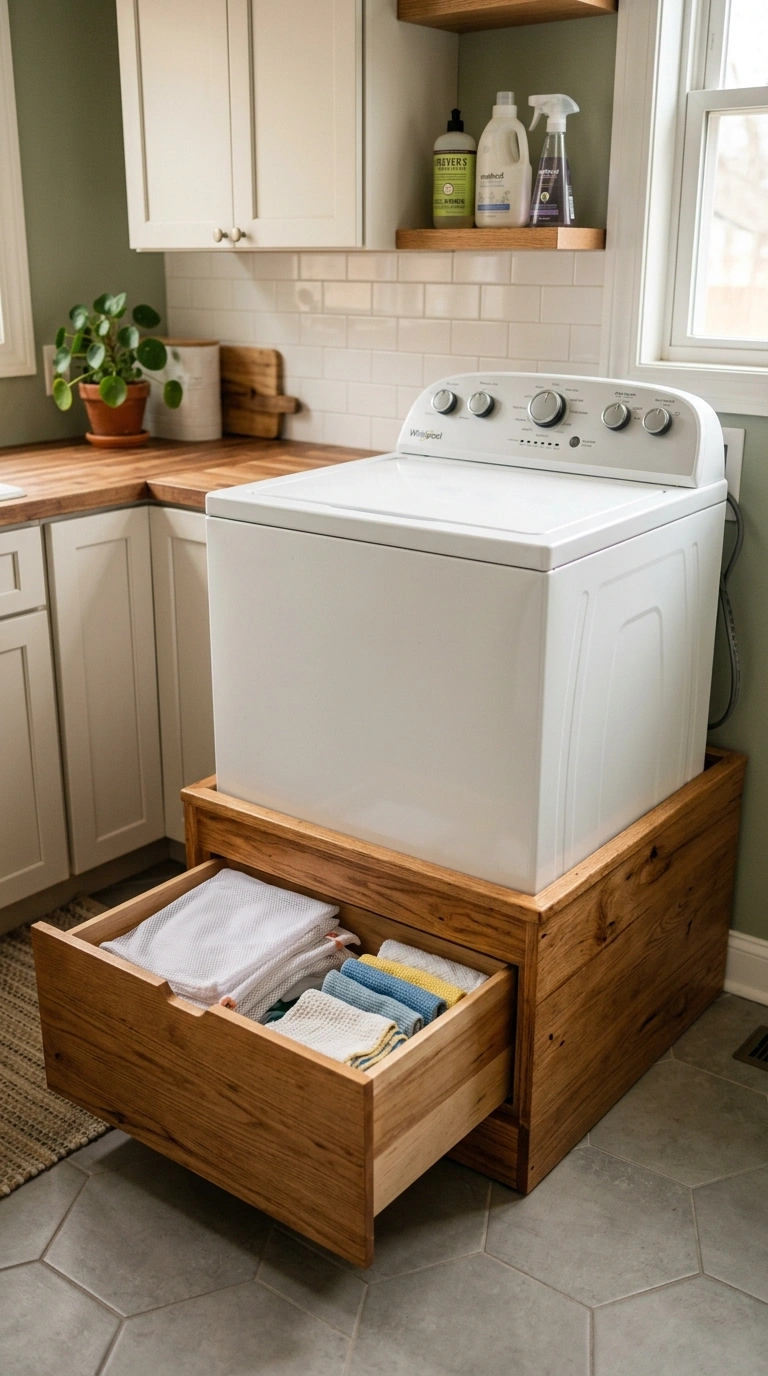
Front-loaders get fancy pedestal drawers, but you can lift a top-loader too. Build a sturdy platform base with a wide pull-out drawer underneath.
Raising the washer also means less bending to load it — a win for your back.
Use a warm oak platform with a single deep drawer for cleaning rags and mesh bags. Match it to the machines’ footprint for a built-in look.
Try this weekend: Measure your washer’s weight rating needs and plan a platform strong enough to hold it safely.
11. A Bright, Wipeable Wall Color
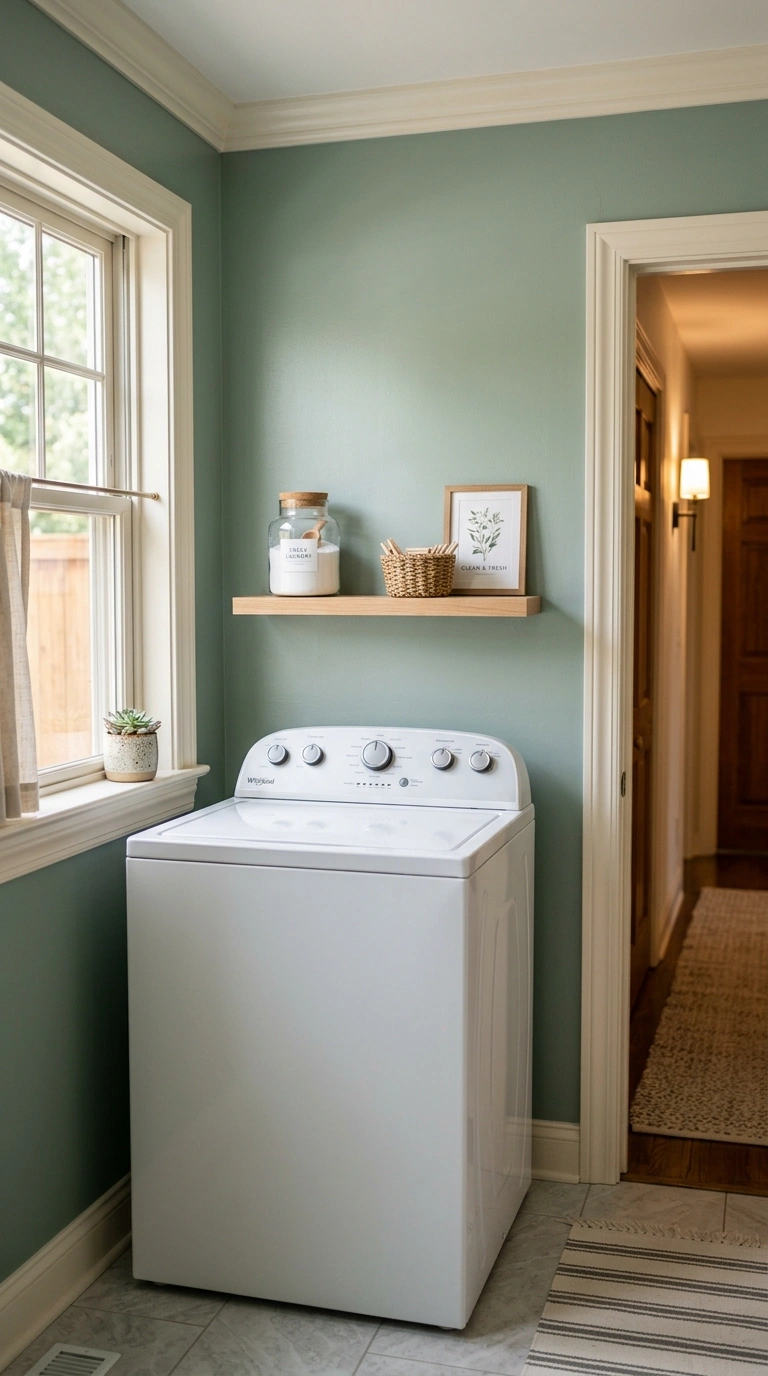
Laundry rooms take moisture and lint, so skip flat paint. A satin or semi-gloss finish wipes clean and bounces light around a small space.
Pick a color that feels fresh and hides the occasional soap splash.
Try a soft eucalyptus green in satin against warm white trim. The subtle sheen keeps the walls easy to clean and the room feeling airy.
Try this weekend: Test a satin swatch beside your current wall and wipe both with a damp cloth to feel the difference.
12. A Slim Pull-Out Between Wall and Washer
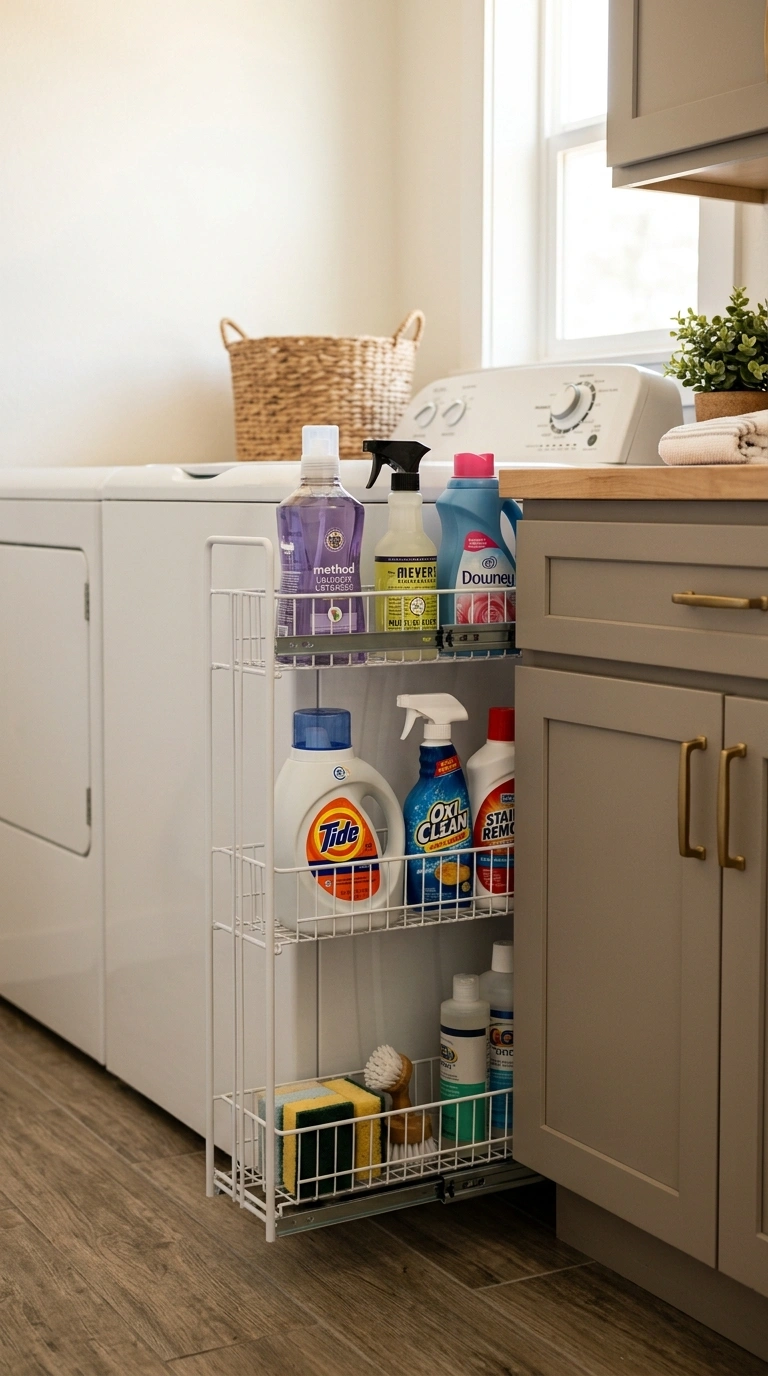
The narrow gap between your washer and the wall usually collects dust. Fill it with a slim pull-out rack for detergent bottles and spray cleaners.
Even a four-inch gap becomes real storage when it slides out toward you.
Use a white metal pull-out with wire shelves against warm greige cabinets. The bottles stay upright and visible instead of tipping behind the machine.
Try this weekend: Measure the gap beside your washer and look for a pull-out rack that fits that exact width.
13. A Lift-Up Folding Counter on the Side Wall
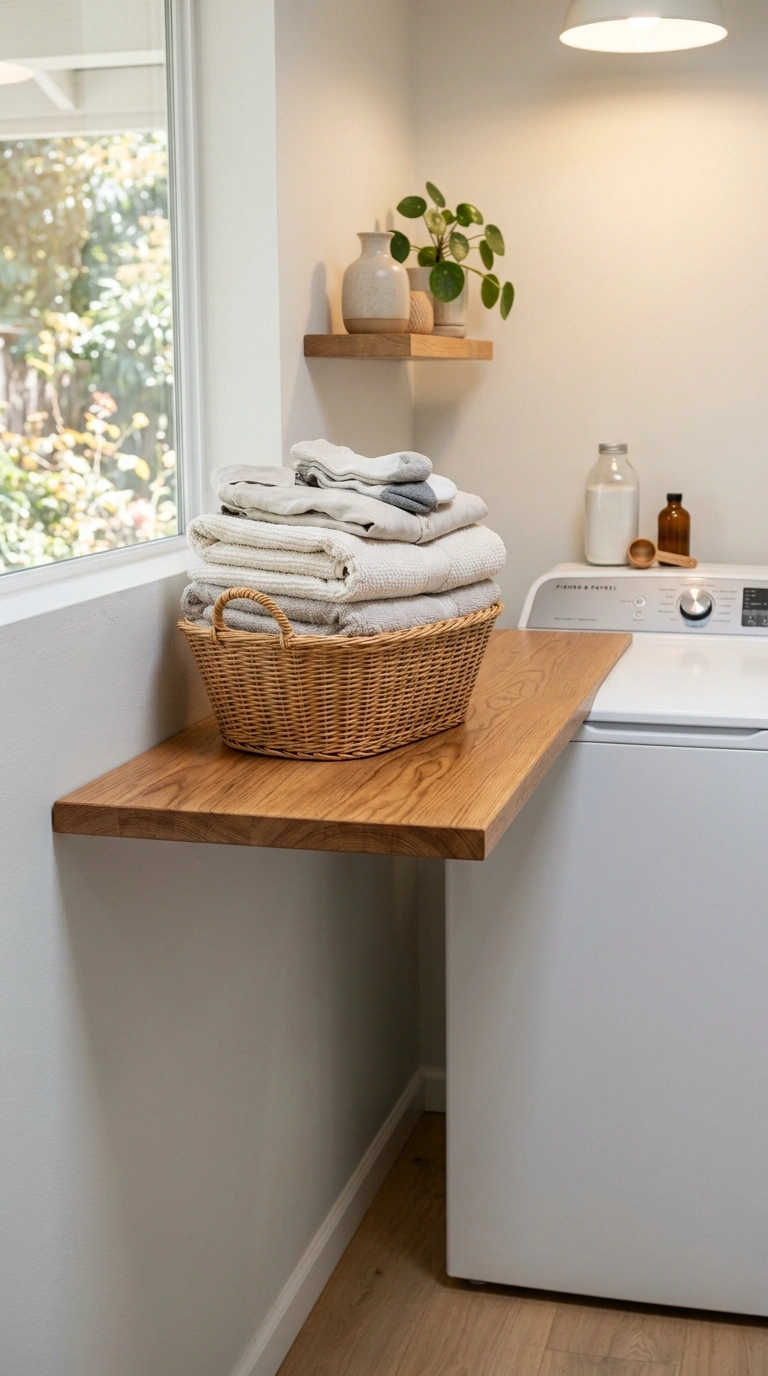
If a permanent counter won’t fit, mount a fold-up shelf on the side wall. Lift it to fold clothes, drop it down when you’re done to reclaim the floor.
Keep it clear of the washer lid’s arc so both can open at once.
Finish it in warm oak with a matte black bracket. It disappears against the wall when folded and holds a full basket of laundry when up.
Try this weekend: Mark where a fold-up counter would sit and swing the washer lid to confirm they don’t collide.
14. Baskets Labeled by Family Member
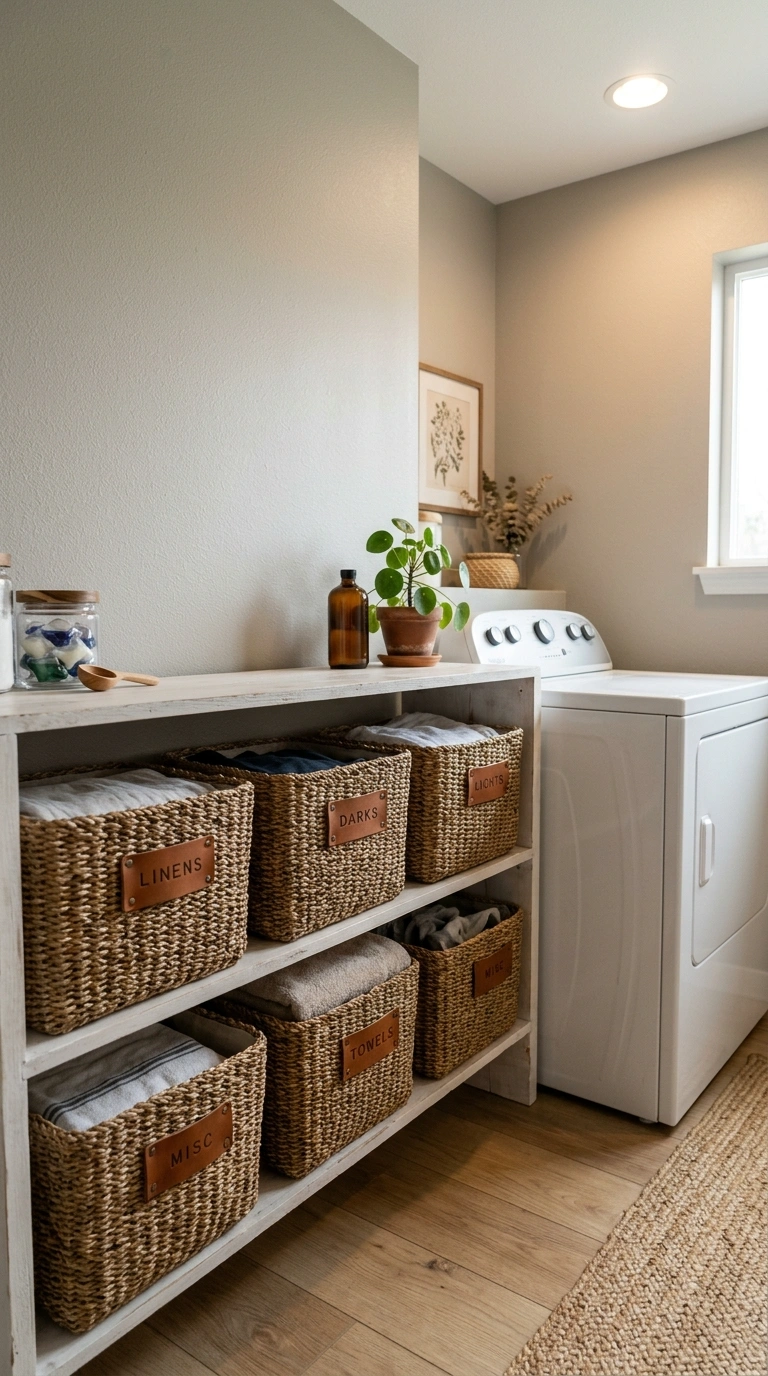
Give everyone their own woven basket on an open shelf so clean laundry sorts itself. No more mixing up whose socks are whose.
Line them up on a low shelf within easy reach of the folding zone.
Use seagrass baskets with warm leather name tags against a soft greige wall. The natural texture keeps a practical system looking pretty.
Try this weekend: Grab one basket per household member and clip on a simple tag to start the system today.
I like giving everyone their own seagrass storage baskets because it makes sorting clean laundry much simpler. The natural texture also softens the room and blends nicely with both modern and farmhouse-style laundry spaces.
15. A Toe-Kick Step for Reaching the Bottom
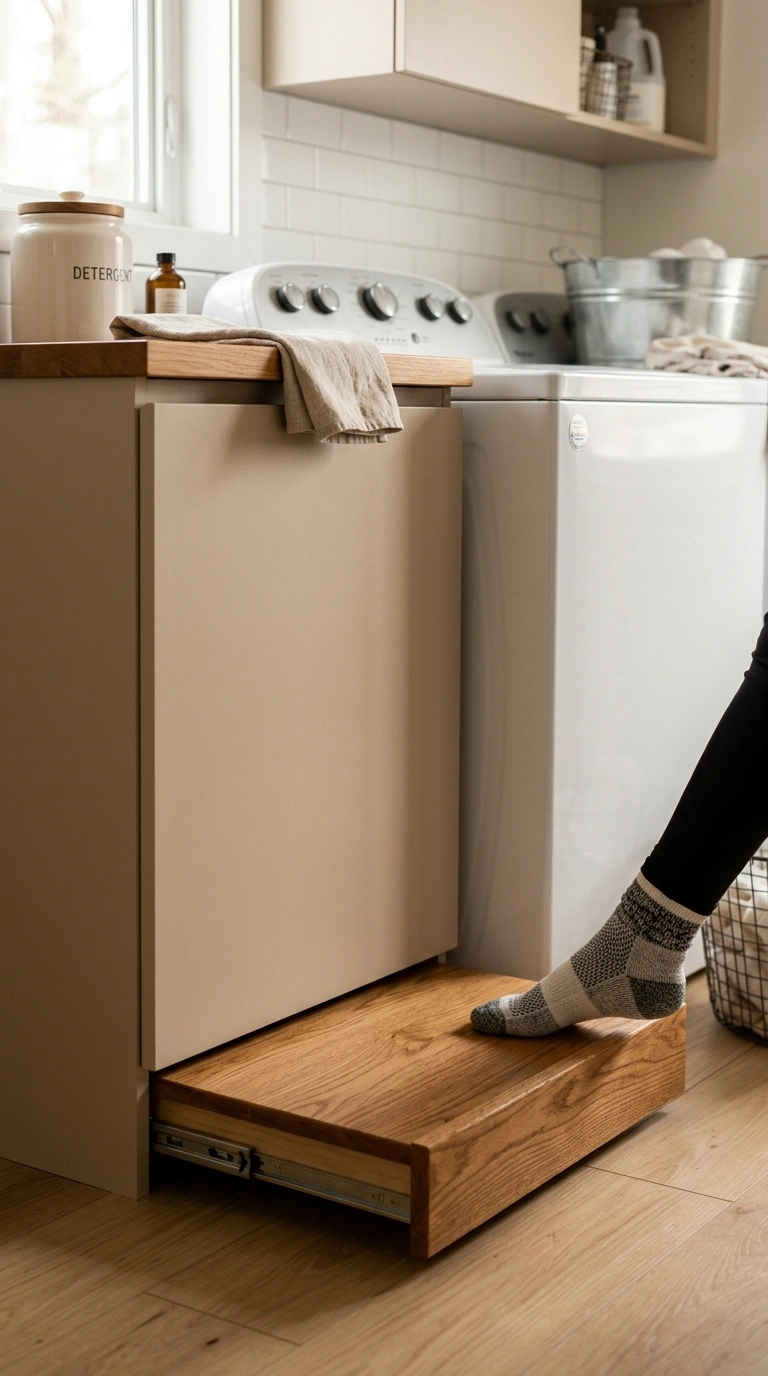
Top-loaders are deep, and reaching the last sock at the bottom is a stretch. A pull-out toe-kick step gives shorter folks a boost right at the machine.
Tuck it into a base cabinet beside the washer so it hides when not in use.
Match the step front to almond cabinets with no visible pull. It slides away cleanly and saves you from diving headfirst into the drum.
Try this weekend: Stand at your washer and reach the bottom. If you’re on tiptoe, a small step will help.
16. A Peg Rail for Tools and Brushes
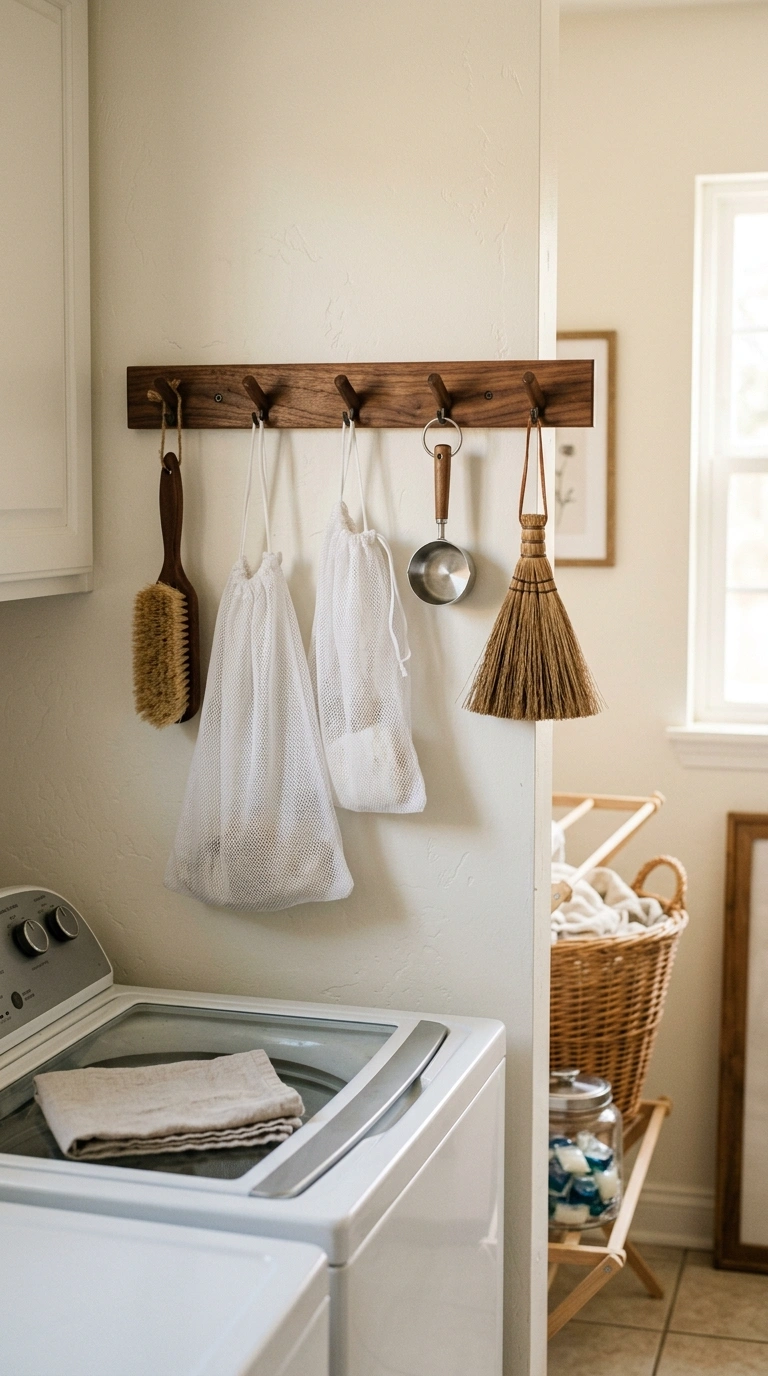
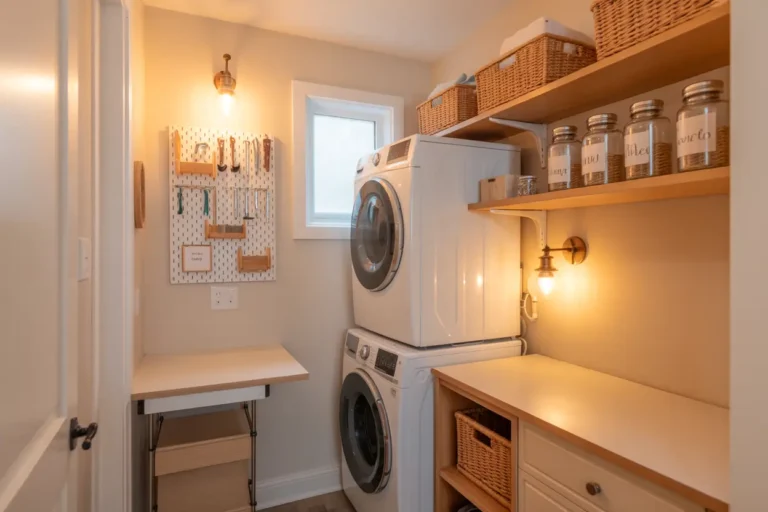
Mount a simple peg rail on a clear wall to hang lint brushes, mesh bags, measuring scoops, and a small hand broom. Everything stays visible and off the counter.
Keep it away from the lid’s swing so nothing knocks off when you open the machine.
Use a warm walnut Shaker peg rail against warm white walls. The row of hanging tools adds a tidy, farmhouse-cabin charm.
Try this weekend: Gather the small tools that clutter your laundry surface and count the pegs you’ll need.
One thing I always reach for in a small laundry room is a wooden wall peg rail. It keeps brushes, mesh bags, and other small tools easy to grab while freeing up valuable counter space for folding clothes.
17. A Curtain to Hide the Machines
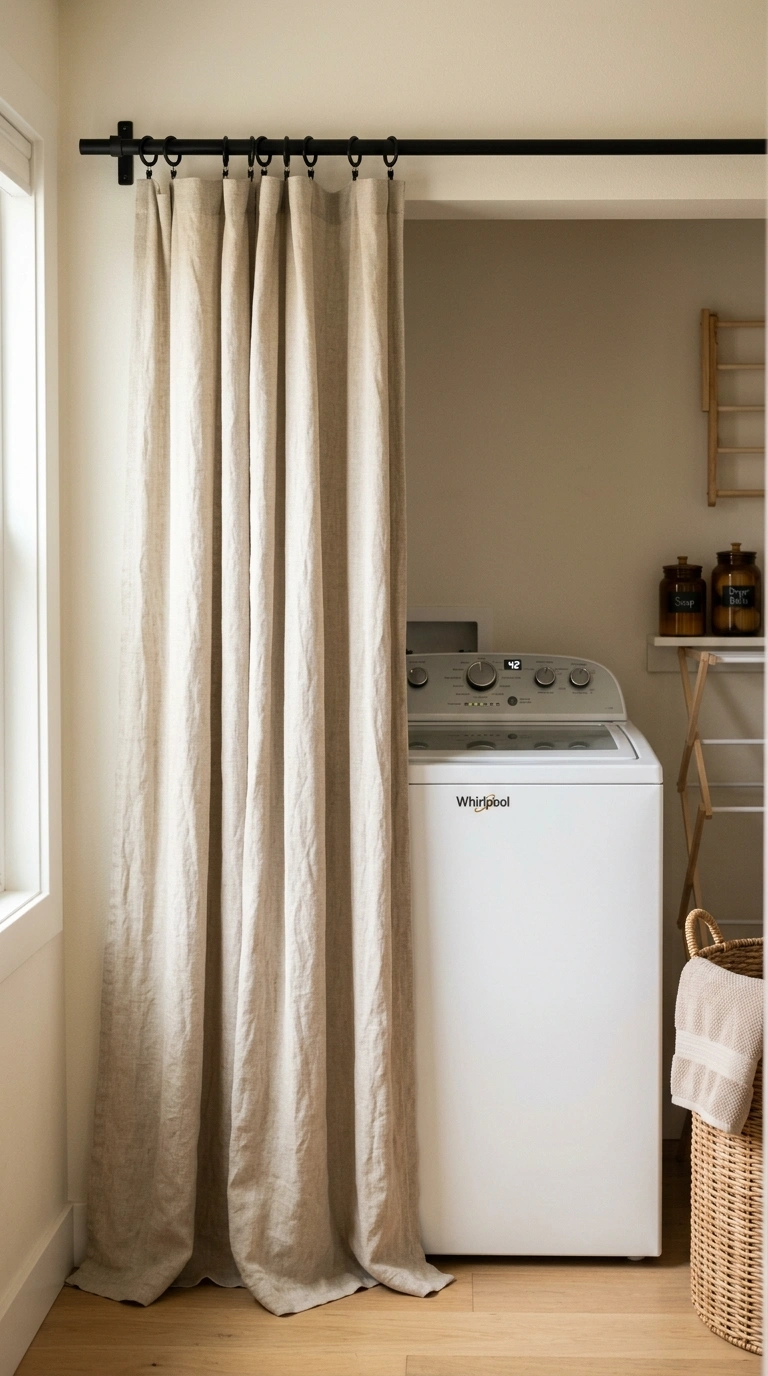
Renting or on a budget? A simple curtain on a rod hides top-loaders when they’re not in use. Choose a fabric that clears the lid so you can lift it without moving much.
Mount the rod high and let the curtain fall to the floor for a soft, finished look.
Use a natural linen curtain in warm oatmeal on a matte black rod. It softens the room and turns a machine wall into a calm backdrop.
Try this weekend: Hang a spare curtain or sheet to test the look before buying a rod and panel.
18. A Compact Counter-Height Cabinet Run
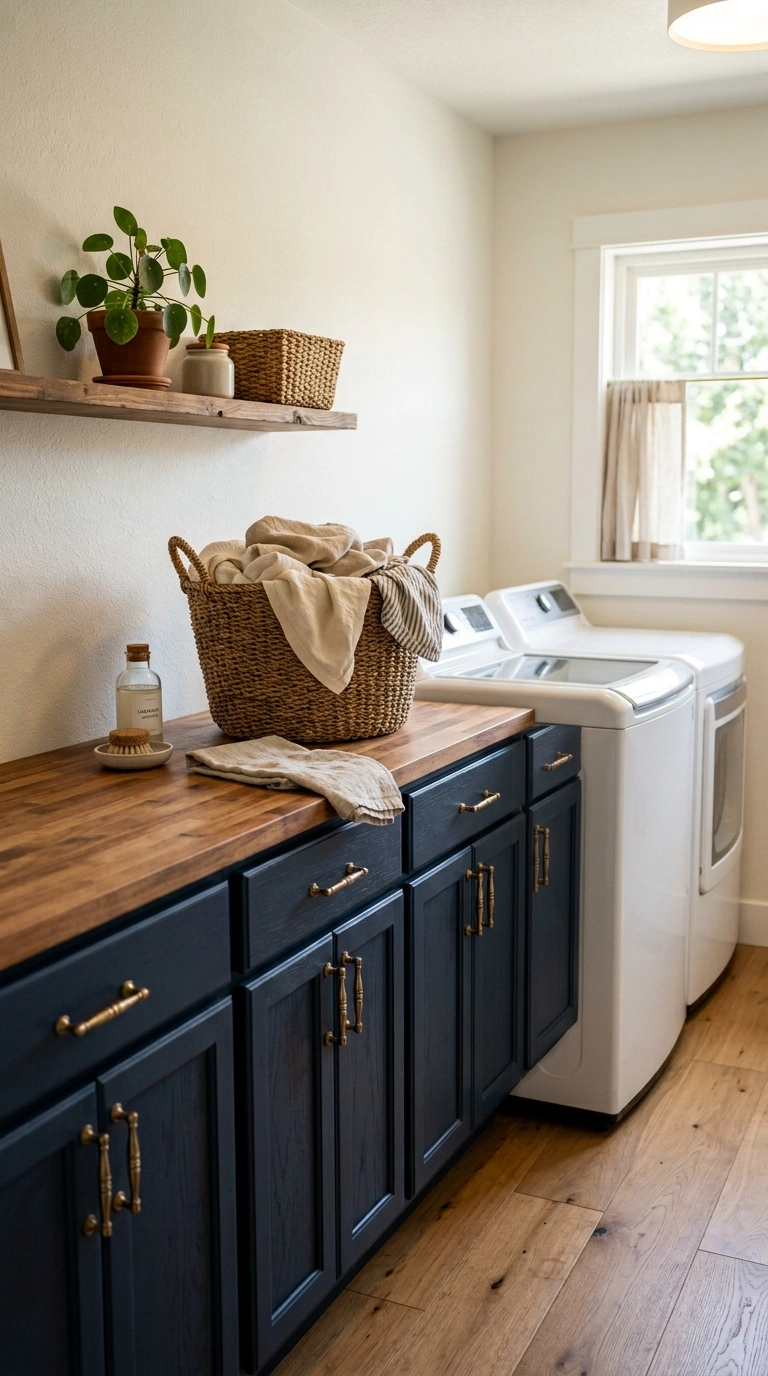
Build a low run of cabinets at counter height along the wall opposite your machines. It gives you folding space, hidden storage, and a spot for a basket drop.
Since it’s across from the washer, the lid never interferes.
Finish it in deep navy Shaker with a warm butcher-block top and brushed brass pulls. The dark cabinets ground the room and hide scuffs well.
Try this weekend: Measure the wall across from your machines to see how long a cabinet run could run.
19. Good Task Lighting Over the Work Zone
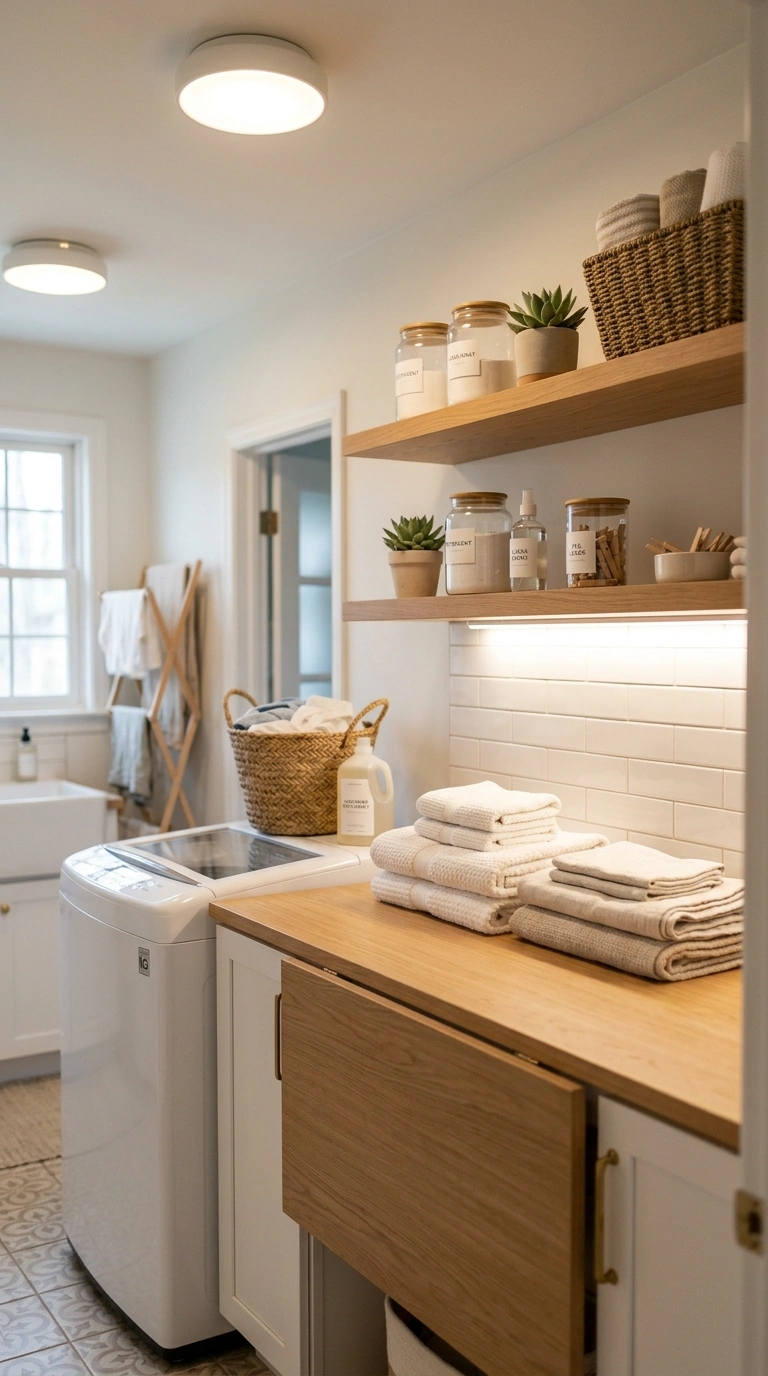
Laundry needs light — you’re checking for stains and reading care labels. Add focused task lighting over your folding and sorting area, not just one dim ceiling bulb.
Warm, bright light makes the small room feel welcoming instead of dungeon-like.
Use two flush warm-white fixtures with warm 3000K bulbs over the counter, plus an under-shelf strip. The layered glow kills shadows on the folding zone.
Try this weekend: Stand where you fold and notice the shadows. Add a small plug-in light there tonight to test the spot.
I’ve found that even a small under-cabinet LED light strip makes folding clothes easier because it reduces shadows on the work surface. It also gives the laundry room a warmer, more finished look without changing the whole lighting setup.
20. A Drop Zone for Pockets and Lost Items
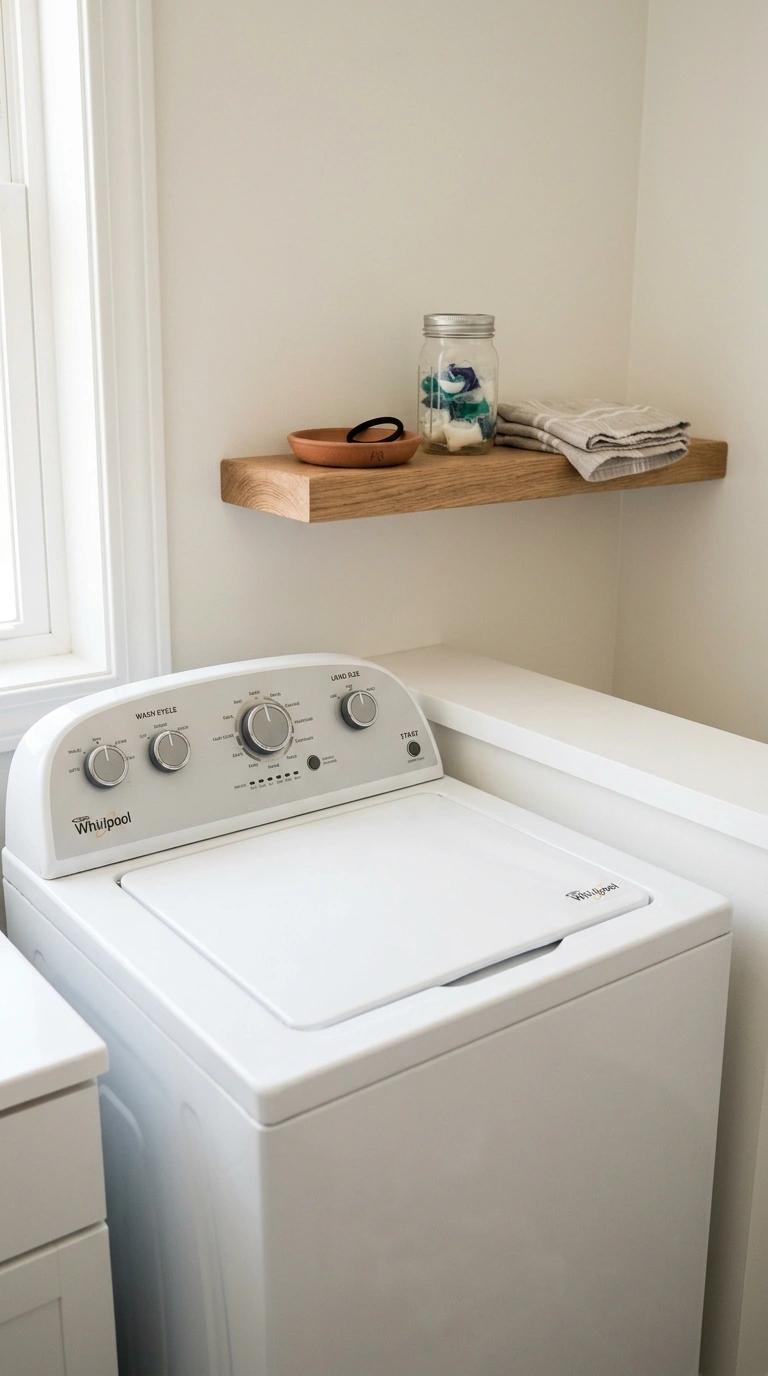
Every laundry room needs a home for the coins, hair ties, and random screws that fall out of pockets. Set a small dish or wall tray near the washer.
It saves your machine’s drain and gives lost treasures a place to wait.
Use a matte stoneware dish in warm terracotta on a floating oak ledge. The little dish is practical and adds a warm, human touch.
Try this weekend: Empty your dryer’s lint trap area of stray coins into one dish and give it a permanent spot.
I like keeping a decorative catchall bowl close to the washer for loose change, buttons, and keys found in pockets. It helps keep those little items from disappearing and adds a simple decorative touch at the same time.
21. A Cohesive Color and Texture Palette
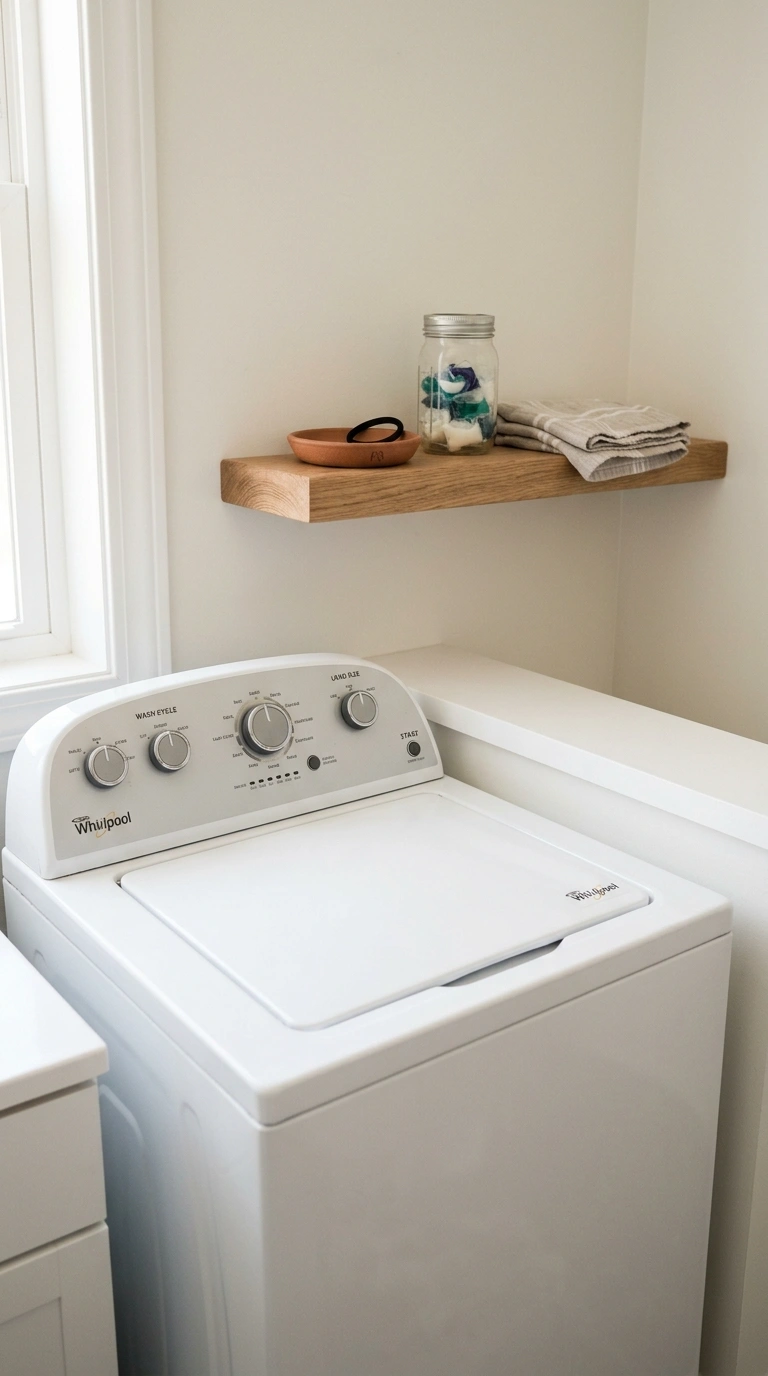
Tie the whole room together with two colors and a few repeating textures, just like any well-designed space. A cohesive palette makes even a tiny top-load laundry feel intentional.
Repeat your accent color in baskets, jars, and the odd towel.
Anchor the room in warm white and sage green, then layer oak, seagrass, and brushed brass throughout. The repetition makes the space feel calm and finished, not thrown together.
Try this weekend: Pick two colors you love and remove any item in the room that fights them.
I’ve found that a small faux potted plant is an easy way to repeat the natural textures used throughout the room. It adds a little softness to shelves or countertops while helping the whole space feel more connected and welcoming.
Making Peace With the Lid
A top-load washer isn’t a design problem — it’s just a machine that needs a little headroom. Keep the space above the lid clear, push your storage to the sides and walls, and use carts, fold-down racks, and slim pull-outs to fill every gap. Add warm lighting and a two-color palette, and the room pulls together fast.
Start with the ideas that fix your daily friction — the sorting, the folding, the stray socks. Plan one this weekend, tape out your lid clearance first, and save your favorite layouts to Pinterest for when you’re ready to build.
FAQs
How do I add storage above a top-load washer without blocking the lid?
Measure from the floor to the top of the fully raised lid, add a couple of inches, and mount your lowest shelf above that line. Floating shelves or open cubbies work well because they keep the room feeling open. Push heavier storage into tall cabinets on either side of the machines instead of directly overhead.
Can you put a countertop over a top-load washer?
Not a full one, since the lid needs to swing up. The best fix is a partial counter that runs over the dryer and any base cabinets while leaving the washer open to the sky. A fold-up wall shelf on the side gives you extra folding space without covering the lid.
What’s the best way to fold laundry in a top-load laundry room?
Use a fold-up wall counter, a partial counter over the dryer, or a low cabinet run on the opposite wall — anywhere the washer lid won’t get in the way. Add warm task lighting over that zone so you can see stains clearly. Keep labeled baskets nearby so folded clothes sort straight into piles.
How can renters style a laundry room with a top-load washer?
Renters can use freestanding pieces that don’t need installation, like a rolling cart between the machines, a curtain on a tension rod to hide them, and open shelves or baskets for supplies. A peg rail and a couple of matching jars add style without drilling much. Stick to two colors so the temporary setup still looks pulled together.
What storage fits in the gap next to a top-load washer?
Even a narrow gap fits a slim pull-out rack with wire shelves for detergent and spray bottles. Measure the exact width first so the rack glides in and out easily. These slim pull-outs keep bottles upright and visible instead of falling behind the machine.