21 Ways to Bring More Color and Personality Into Your Living Room

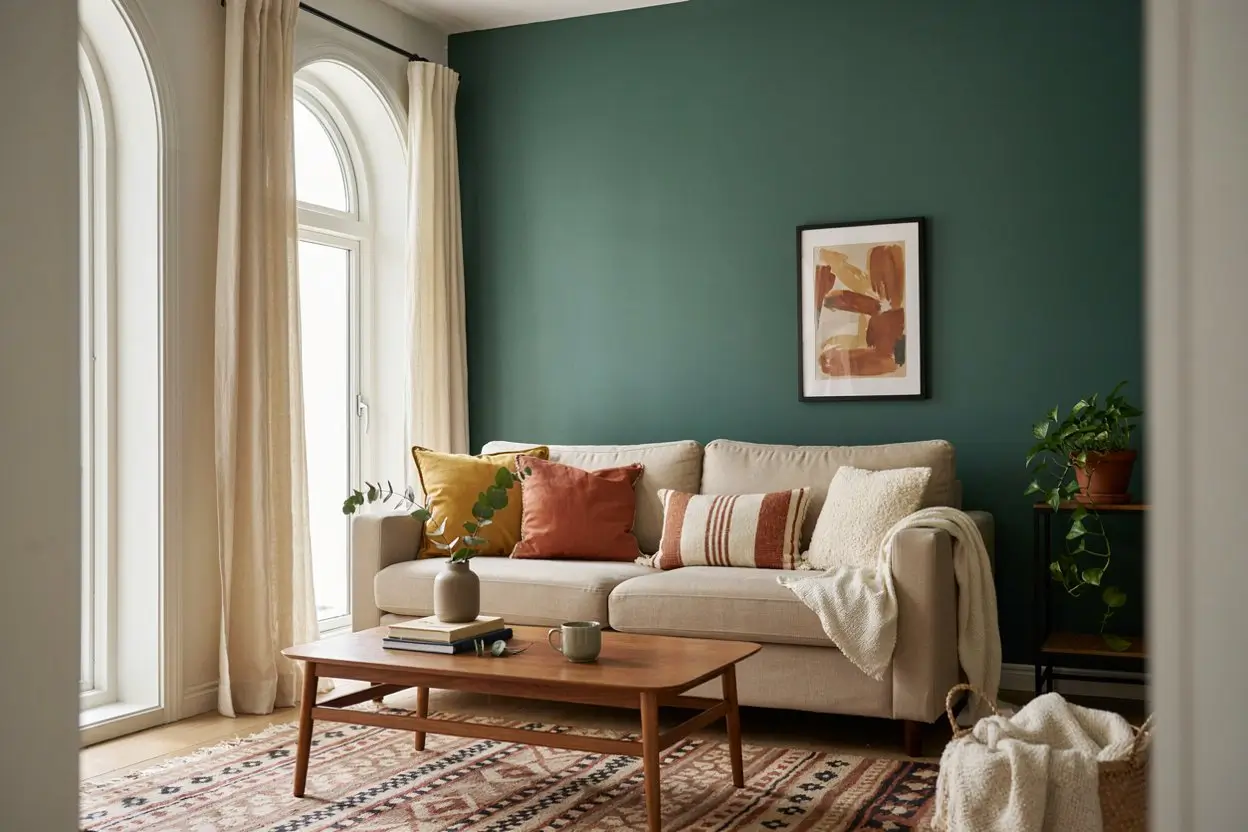
For years my living room looked like a furniture showroom, all beige and gray and perfectly matched, and it never once felt like mine. It was safe, sure, but it was also a little boring, and I would catch myself scrolling through photos of other people’s colorful, lived in rooms wishing I had the nerve to try something similar. Eventually I did, starting small with a few pillows and a rug, and every new piece I added made the room feel more like it actually belonged to me. You do not have to repaint every wall or replace your whole sofa to bring more life into your space. Small, layered changes add up fast, and they are a lot more forgiving than people think. Here are 21 ways to bring color and personality into your living room, one piece at a time.
1. Paint an Accent Wall Bold
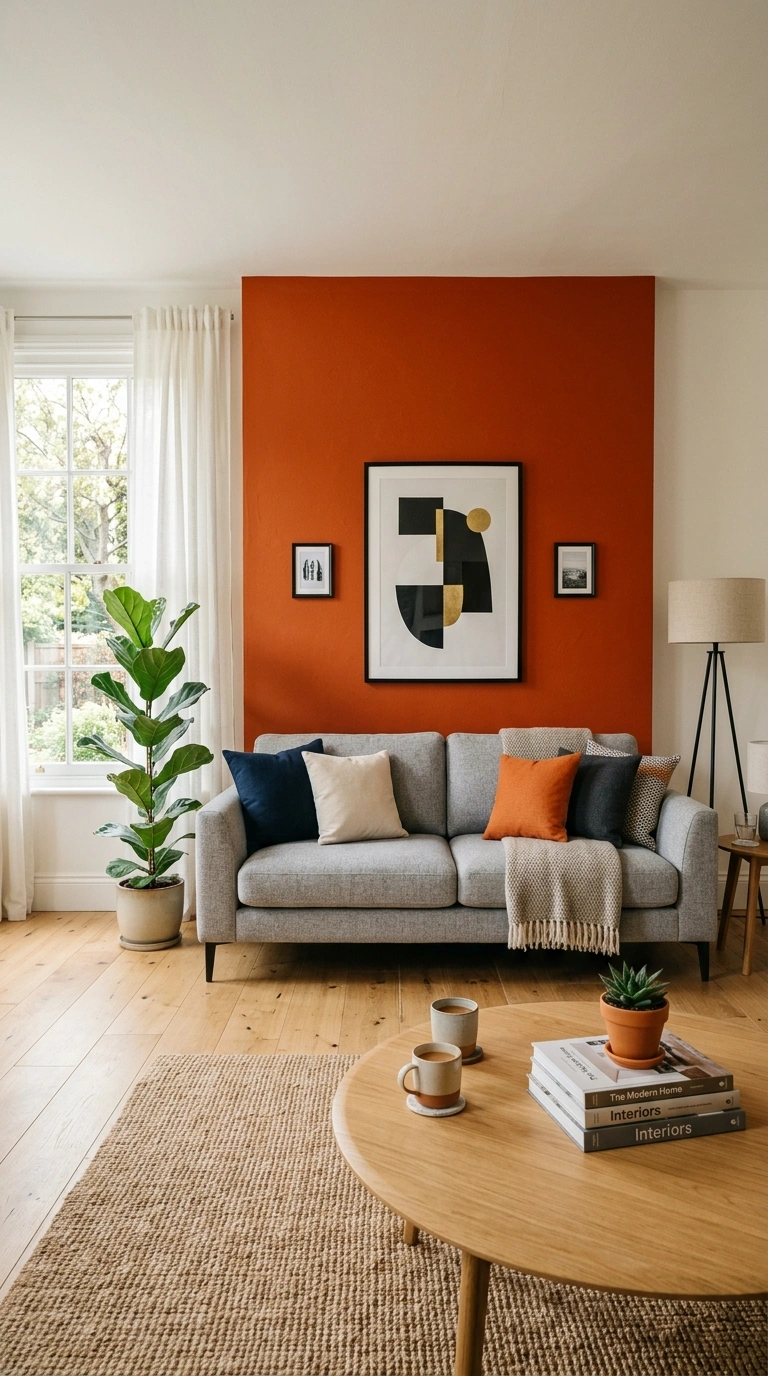
An accent wall is still one of the simplest ways to bring real color into a living room without repainting the whole space. Choose a wall that naturally draws the eye, like the one behind your sofa or the wall your entryway leads into, and pick a color that feels bold enough to notice, like deep forest green, burnt orange, or a rich terracotta. Keep the other walls a neutral shade so the accent color has room to stand out rather than competing with itself.
This idea works in almost any living room layout, but it has the most impact in open concept spaces where a pop of color can help define the living area from the kitchen or dining space nearby. Test a sample patch on the wall first and look at it in both daylight and lamp light before committing, since colors can shift quite a bit depending on the light in the room. One coat of bold paint can change the whole personality of a space in an afternoon.
2. Layer Colorful Throw Pillows
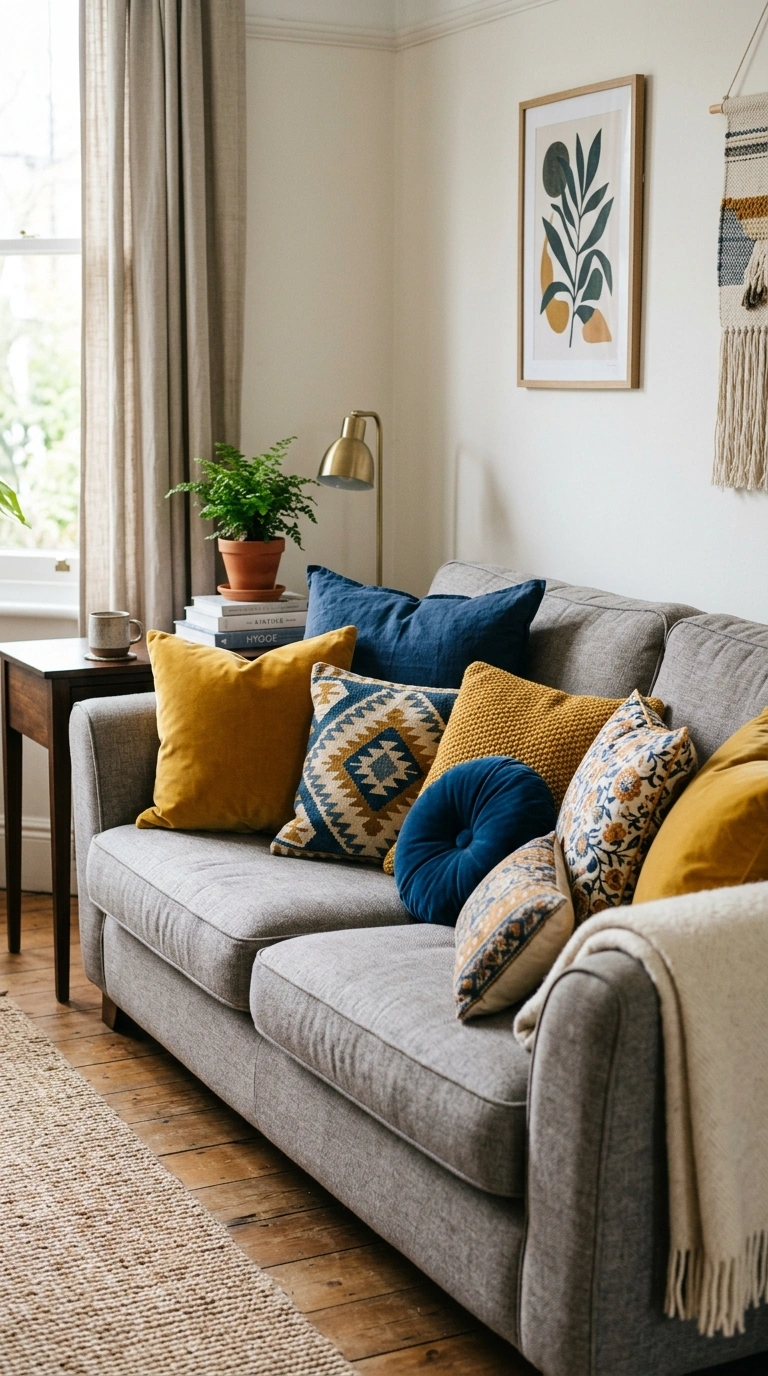
Throw pillows are one of the easiest and cheapest ways to add color, since you can swap them out anytime without touching your furniture. Mix two or three different patterns in colors that share at least one common shade, like a floral, a stripe, and a solid that all include some version of mustard yellow or deep blue. Vary the pillow sizes slightly, using a couple of larger squares in the back and one or two smaller ones layered in front.
This idea works on any sofa, armchair, or window seat, and it is especially useful if your furniture itself is a neutral color like gray or cream. Rotate your pillow covers seasonally if you want an easy refresh twice a year without buying new furniture at all. Because pillow covers are lightweight and simple to store, this is one of the lowest commitment ways to experiment with bold color combinations before trying them somewhere more permanent.
3. Add a Patterned Area Rug
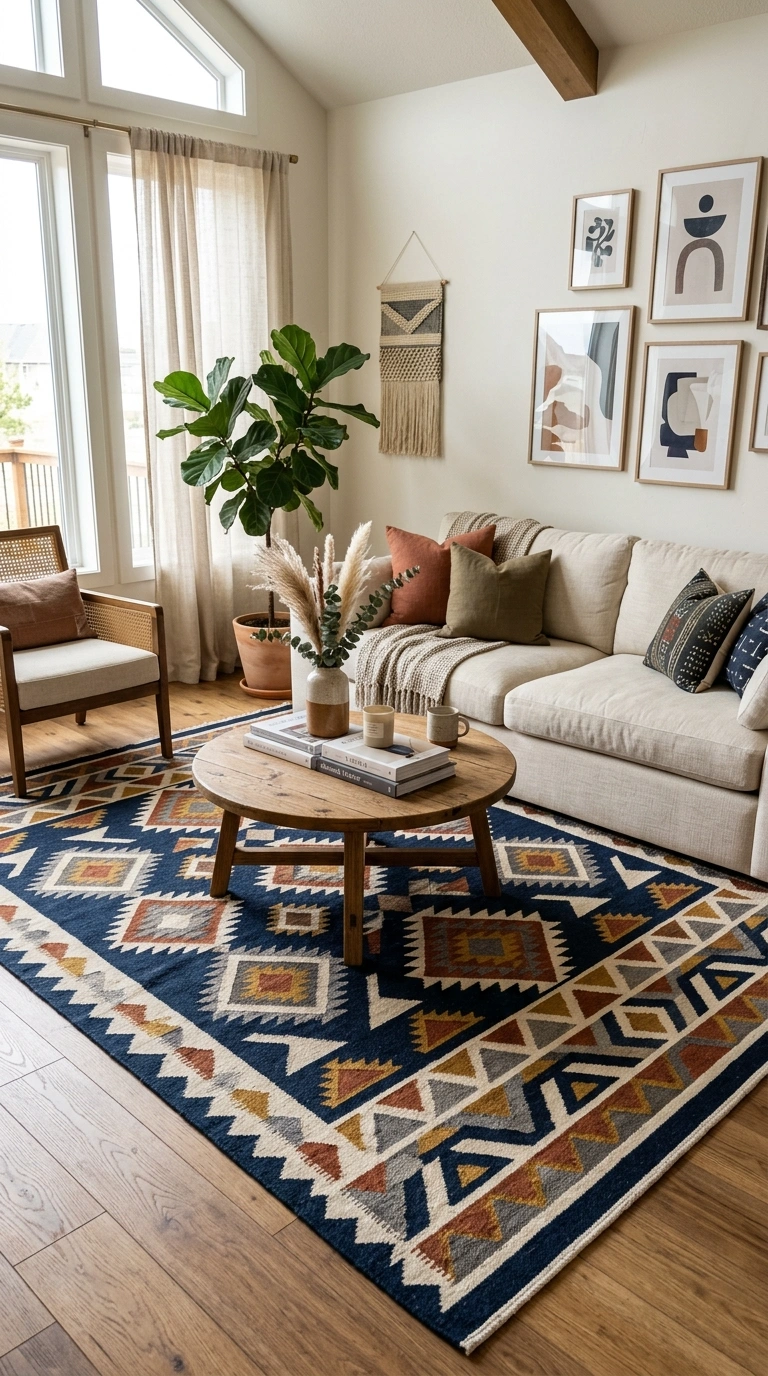
A patterned rug grounds a living room while giving you a big, bold dose of color right on the floor. Look for a rug with a pattern that includes several colors you already have in the room, like a Persian style rug with deep reds and blues, or a more modern geometric rug in bright, contrasting shades. Size the rug so the front legs of your main furniture pieces sit on top of it, which helps the room feel intentionally arranged rather than random.
This idea works especially well in living rooms with plain wood or tile flooring, since the rug becomes the visual anchor for the whole space. It also helps tie together furniture pieces that might not otherwise feel connected, like a solid colored sofa and a couple of mismatched accent chairs. A colorful rug is one of the fastest ways to make a room feel finished and full of personality in a single afternoon.
4. Hang a Gallery Wall
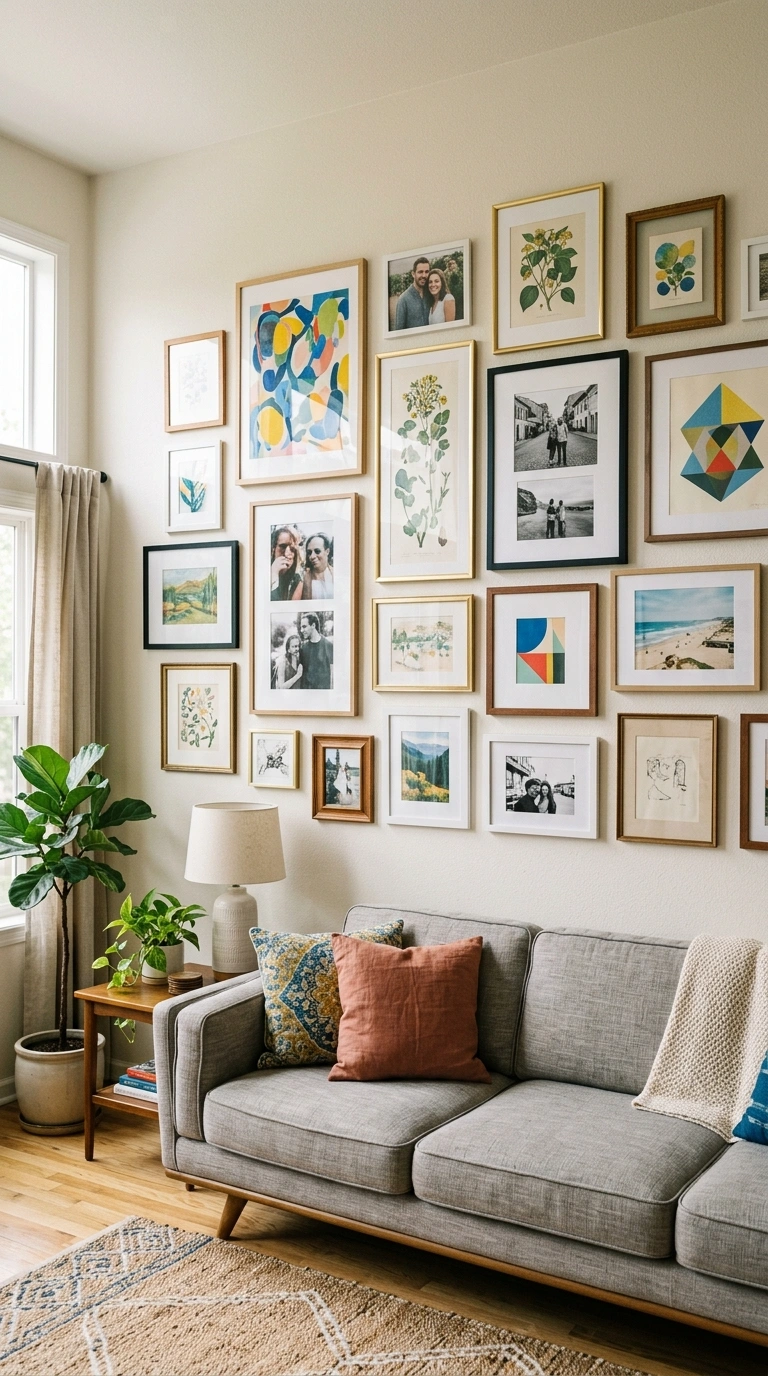
A gallery wall filled with colorful prints, photos, and small paintings turns a plain wall into a personal, story filled focal point. Mix different frame colors and sizes for a collected over time look, or keep frames consistent and let the artwork itself carry the color and pattern. Lay the pieces out on the floor first to plan your spacing before hanging anything, keeping about two to three inches between each frame.
This idea works especially well above a sofa or console table, where it fills the empty wall space that often gets left bare. Include a mix of art, mirrors, and even small shelves in the arrangement for added texture and dimension rather than using flat prints alone. A gallery wall is also one of the more personal additions on this list, since you can include travel photos, gifts, or pieces collected over the years that would not fit anywhere else in the room.
5. Mix Bold Furniture Pieces
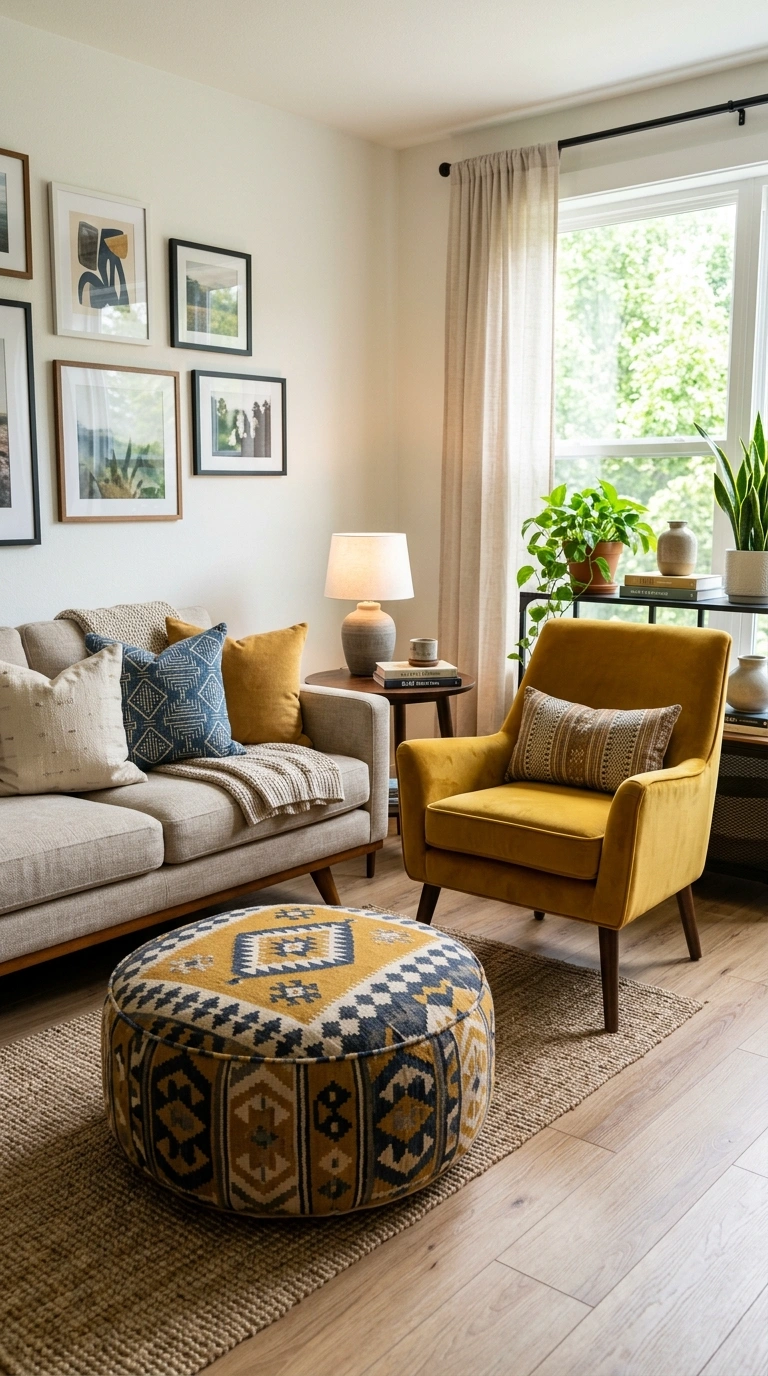
Instead of matching every piece of furniture, try mixing in one or two bold pieces alongside more neutral ones for a room that feels collected rather than showroom perfect. A colorful accent chair next to a neutral sofa, or a patterned ottoman beside plain end tables, gives the eye something interesting to land on without overwhelming the whole room. Choose your bold piece first, then build the rest of the room’s color palette around it.
This idea works well for anyone redecorating gradually, since you do not need to replace your entire furniture set at once to see a difference. Secondhand shops and marketplace listings are great places to find unique, colorful furniture pieces for much less than retail price. A single statement piece, placed with intention, often does more for a room’s personality than several smaller, safer choices combined.
6. Use a Statement Sofa
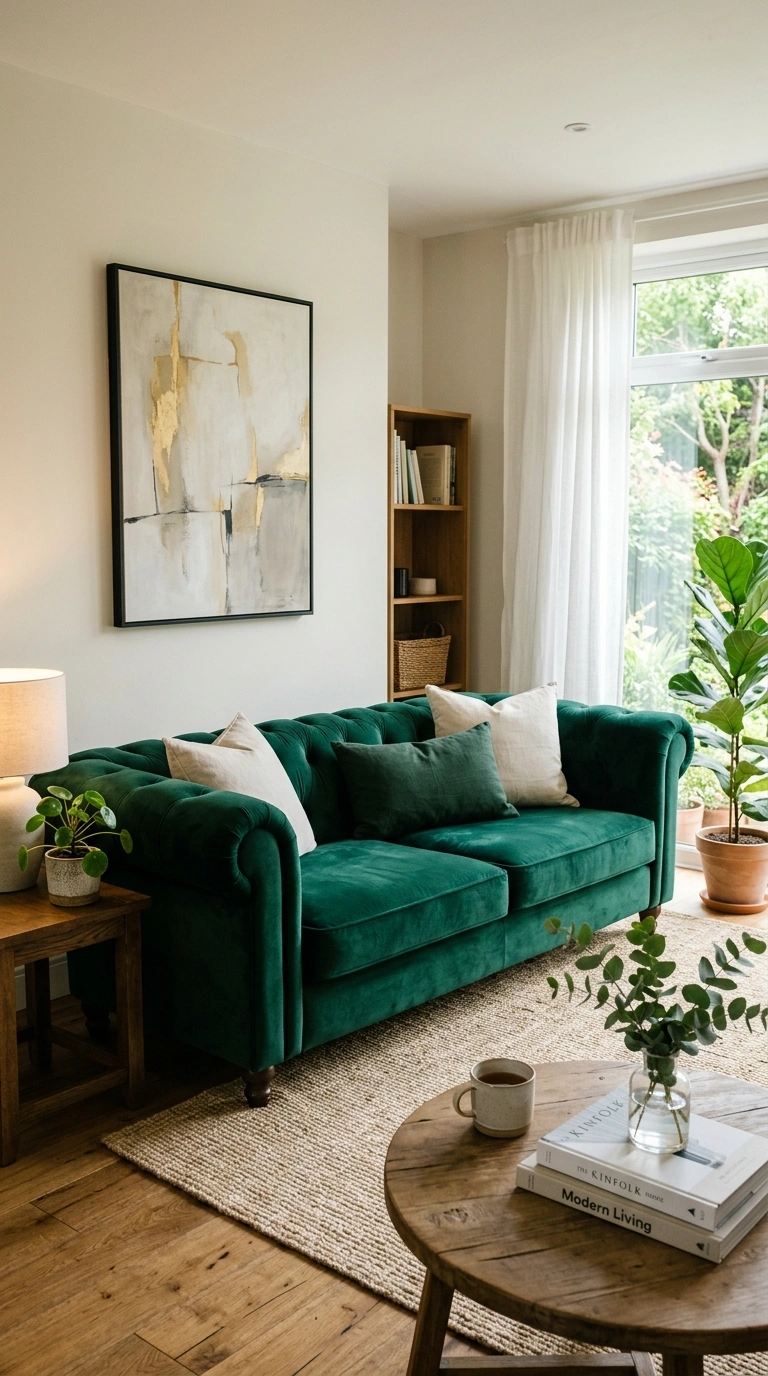
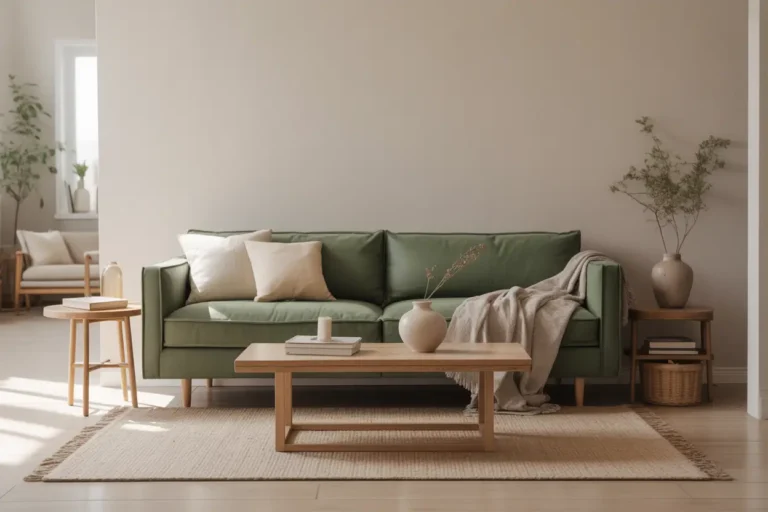
If you are ready for a bigger change, a colorful sofa becomes the anchor piece that the rest of the room’s color story builds around. Deep green velvet, burnt orange linen, or a rich navy blue are all popular choices that feel bold without becoming overwhelming in a few years. Keep your walls and larger furniture pieces neutral so the sofa has room to be the star of the space.
This idea works especially well in smaller living rooms, where one bold piece can carry the whole room’s personality without needing a lot of extra decor layered on top. Pair the sofa with a couple of simple, solid colored pillows rather than heavily patterned ones, so the sofa’s own color and texture stay the main focus. A statement sofa is a bigger investment than most ideas on this list, but it also tends to last many years as the centerpiece of the room.
7. Add Colorful Curtains
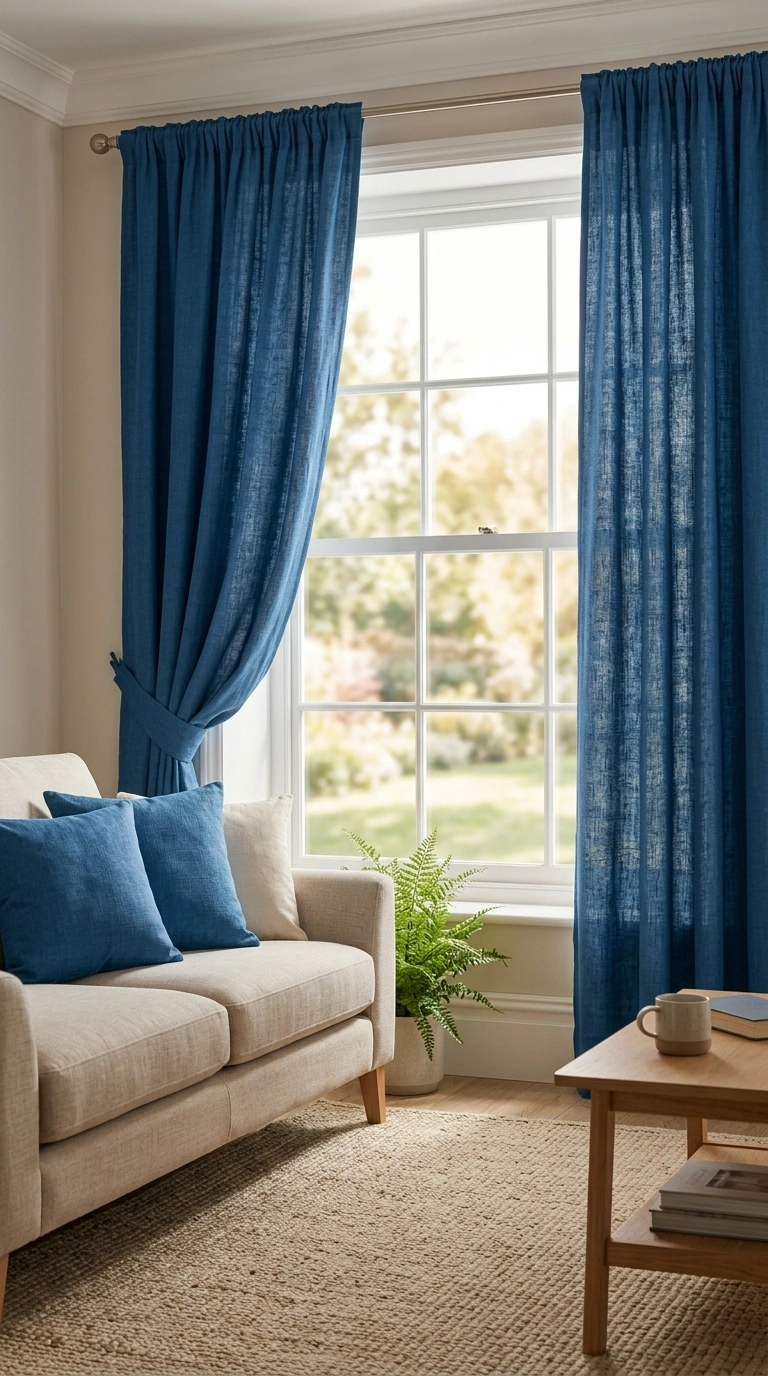
Curtains cover a large amount of visual space in a living room, which makes them a great opportunity to bring in color without repainting or buying new furniture. Choose a curtain color that either matches an accent color already in your room, like your pillows or rug, or pick a bold contrasting shade if you want the windows to stand out as their own feature. Hang the curtain rod close to the ceiling rather than right above the window frame, which makes the windows look taller and the room feel bigger.
This idea works in every living room, but it makes the biggest difference in rooms with plain white walls, since the curtains become one of the only sources of color in the space. Linen and cotton both hold color well and drape softly, giving a more relaxed feel than heavier fabrics. Because curtains are simple to swap, this is an easy way to change the room’s mood with the seasons.
8. Display Books by Color
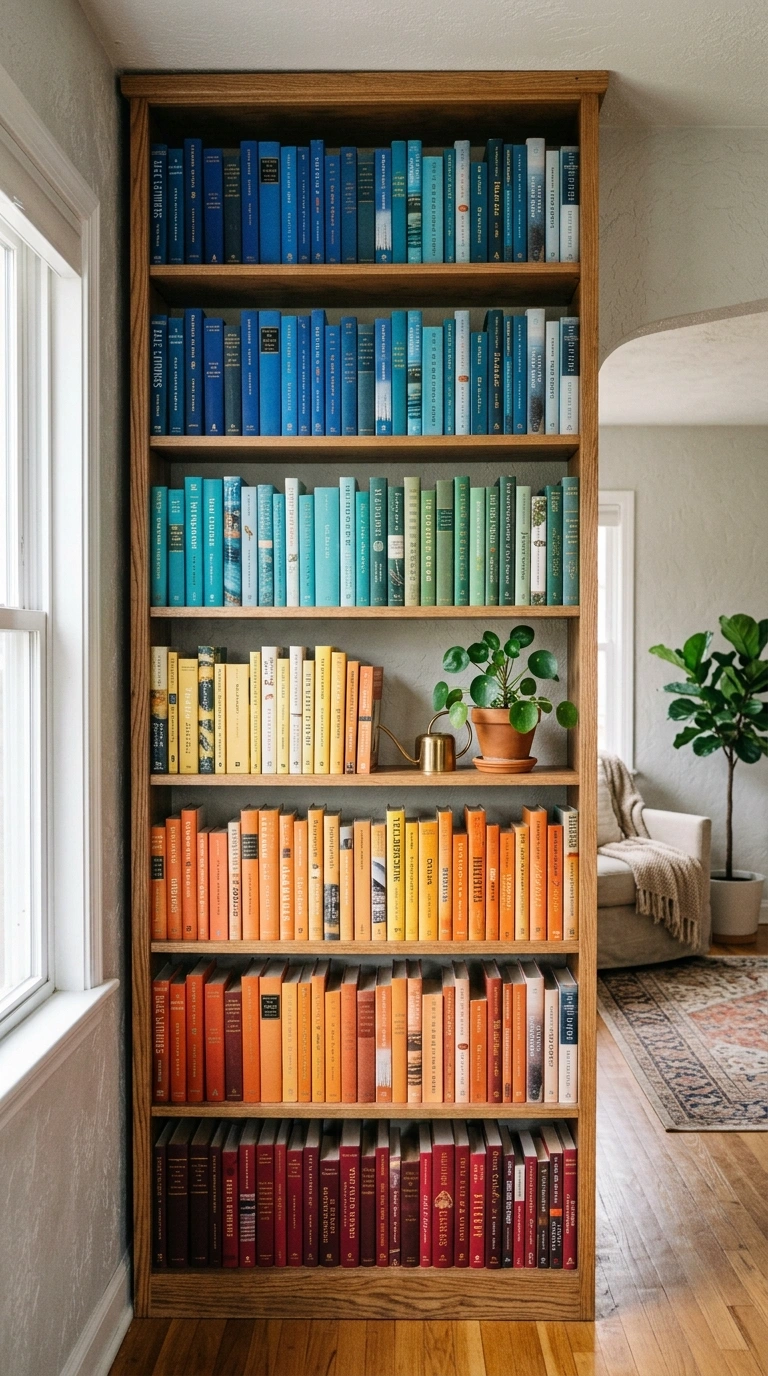
If you already own a bookshelf, arranging your books by color turns them into a decorative feature instead of just storage. Group your books into color families, like all the blues together and all the warm reds and oranges together, then arrange those groups in a gradient across the shelves. Add small decor pieces, like a plant or a small framed photo, between book stacks to break up the visual rhythm.
This idea works especially well on open shelving or a bookcase that is already a main feature in the room, since it turns everyday items into something that looks styled and intentional. It is also completely free if you already own the books, making it one of the more budget friendly ways to bring in a rainbow of color without buying anything new. This works best when the shelf is visible from the main seating area, so the color arrangement is actually part of the view.
9. Add a Bold Bookshelf
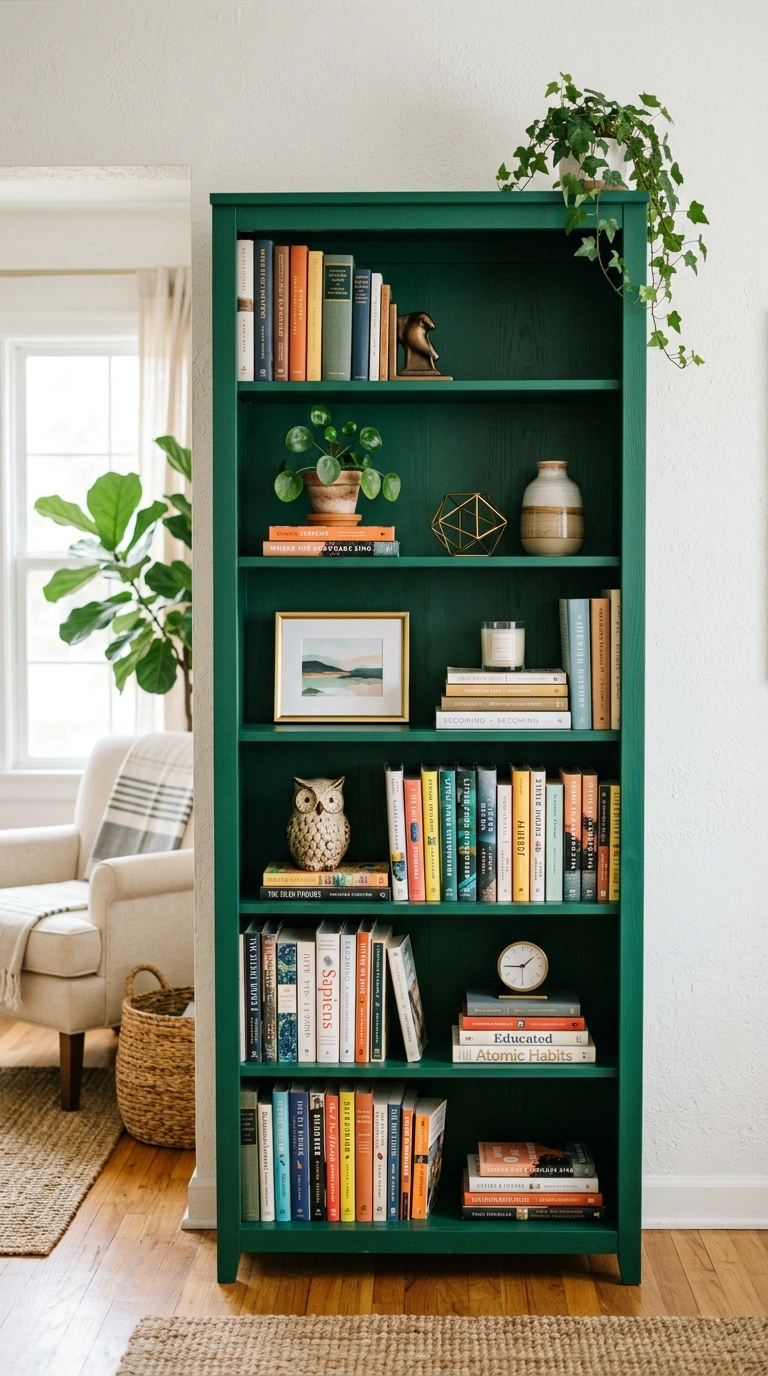
Painting the back panel of a bookshelf, or painting the entire shelf itself, is a simple way to add a pop of color to a room that might otherwise be full of neutral furniture. Choose a color that contrasts with your walls, like a deep emerald green shelf against a soft white wall, so the piece reads as an intentional design choice rather than an accident. Paint the back panel a different, complementary color from the shelf frame for extra depth.
This idea works especially well in living rooms where the bookshelf is one of the larger furniture pieces in the room, since painting it gives you a big visual impact for a fairly small project. Style the shelves afterward with a mix of books, small plants, and a few decorative objects in colors that echo the paint. A bold bookshelf becomes a natural focal point that draws the eye across the whole room.
10. Use Woven Baskets
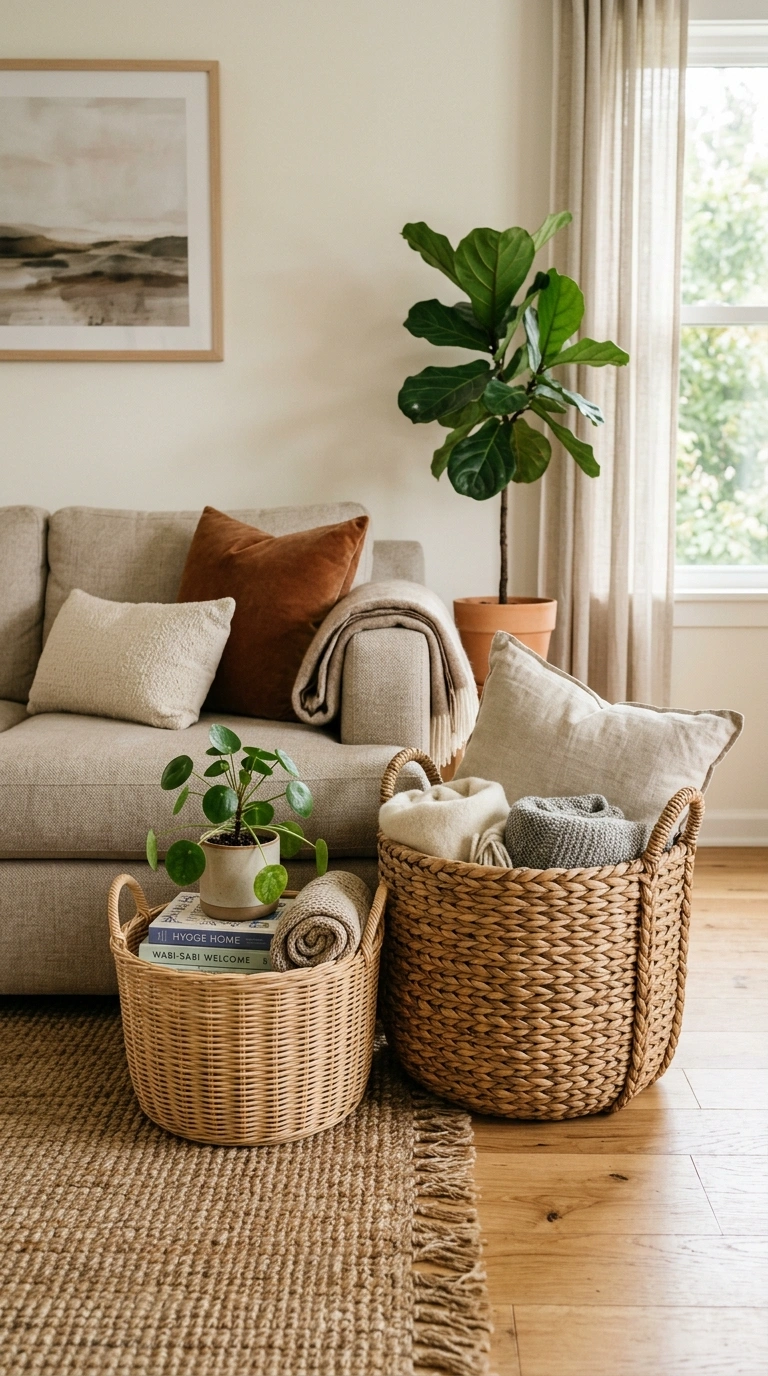
Woven baskets in warm, earthy tones add color and texture to a living room while also giving you extra storage for blankets, magazines, or toys. Look for baskets in natural rattan, seagrass, or dyed jute in colors like terracotta, mustard, or deep rust to bring warmth into the space. Group two or three baskets of different sizes together near the sofa or beside a media console rather than scattering single baskets around the room.
This idea works especially well in living rooms that lean toward a natural or boho style, since the woven texture pairs nicely with plants, wood furniture, and linen fabrics already in the space. It is also a practical choice, since the baskets double as storage and help keep the room tidy while still looking decorative. Because baskets are lightweight, they are easy to move around the room until you find the placement that feels right.
11. Add Plants and Greenery
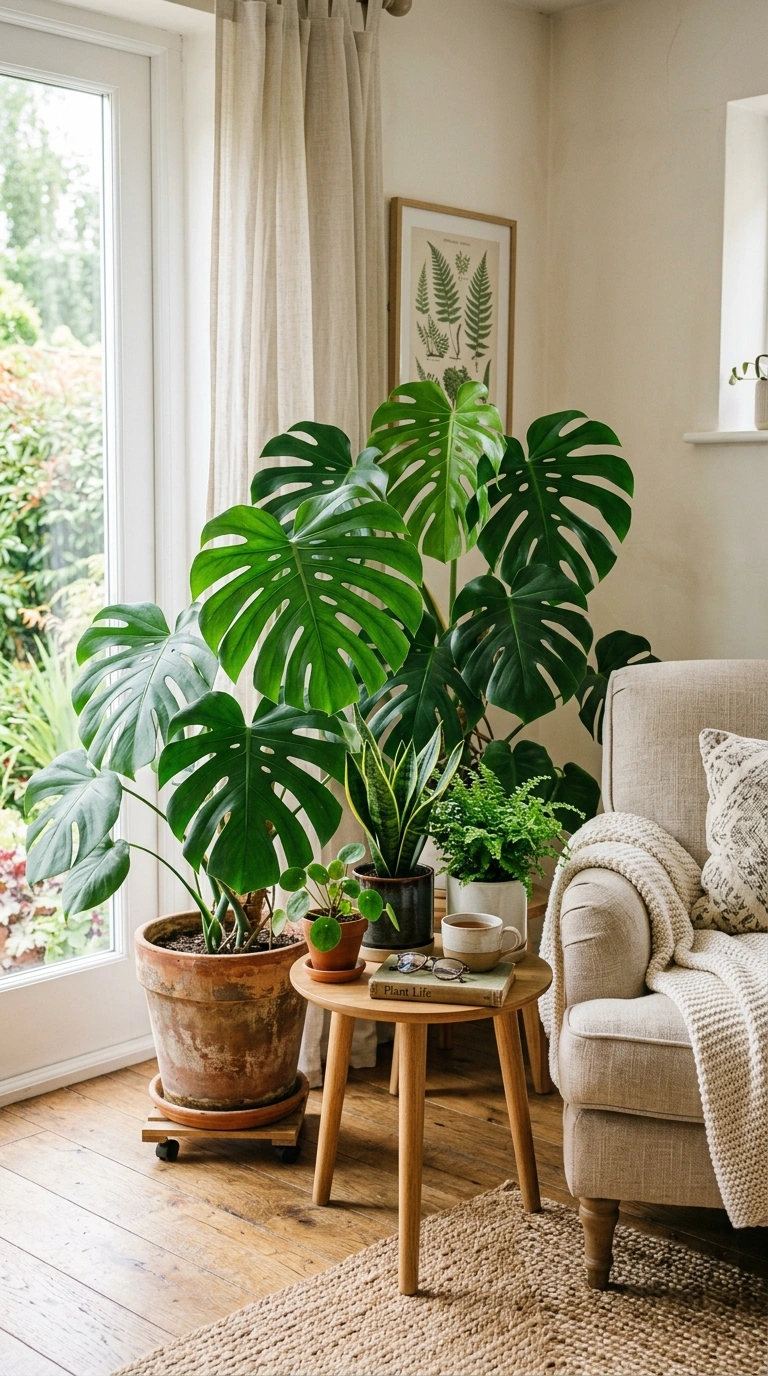
Plants bring a natural pop of green into a living room, and their leafy shapes add softness and life that furniture alone cannot provide. Choose a large floor plant, like a fiddle leaf fig or a snake plant, for an empty corner, and add a few smaller potted plants on side tables or window sills for smaller bursts of color throughout the room. Mix pot colors, like terracotta, white ceramic, and woven baskets, for added visual variety.
This idea works in almost every living room, and it is one of the few decor choices that continues to change and grow over time, giving the room a slightly different look as the plants fill out. Faux plants are a good option if natural light is limited or you tend to forget watering schedules, and modern versions look surprisingly realistic. Grouping plants of different heights together creates a fuller, more lived in look than spacing them evenly apart.
12. Hang a Large Tapestry
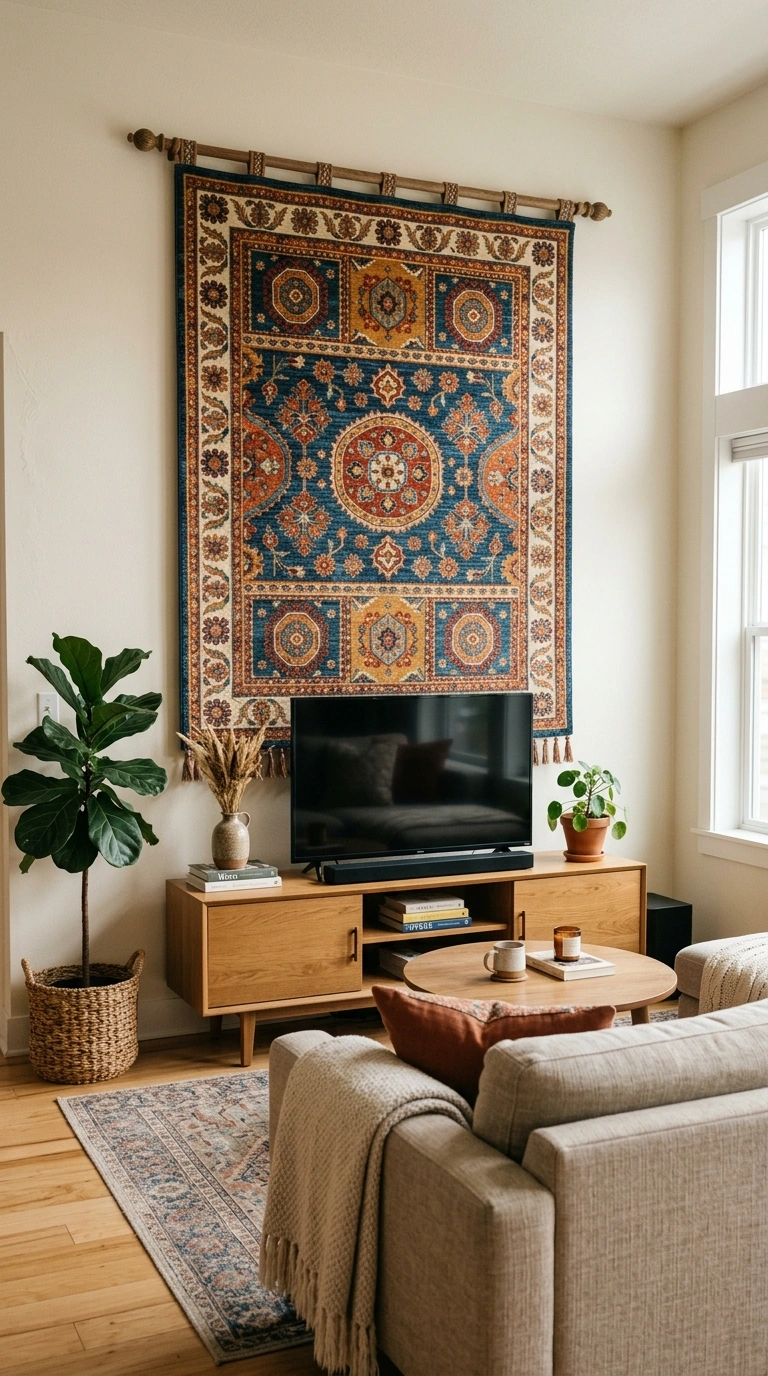
A large tapestry hung on a bigger wall brings in color, pattern, and texture all at once, especially in rooms with high or oddly shaped walls that are hard to decorate with standard sized frames. Choose a tapestry with a bold pattern and rich colors if the rest of your room is fairly neutral, letting it act as the main statement piece in the space. Hang it using a wooden dowel and two simple hooks so it drapes naturally along the wall.
This idea works especially well above a sofa or media console, filling a large wall space in one simple step rather than needing several smaller pieces of art. It also softens the room slightly, since fabric absorbs sound differently than a flat painted wall does. Because tapestries are lightweight, this is an easy way to test a bold color or pattern before committing to something more permanent, like paint or wallpaper.
13. Use a Colorful Accent Chair
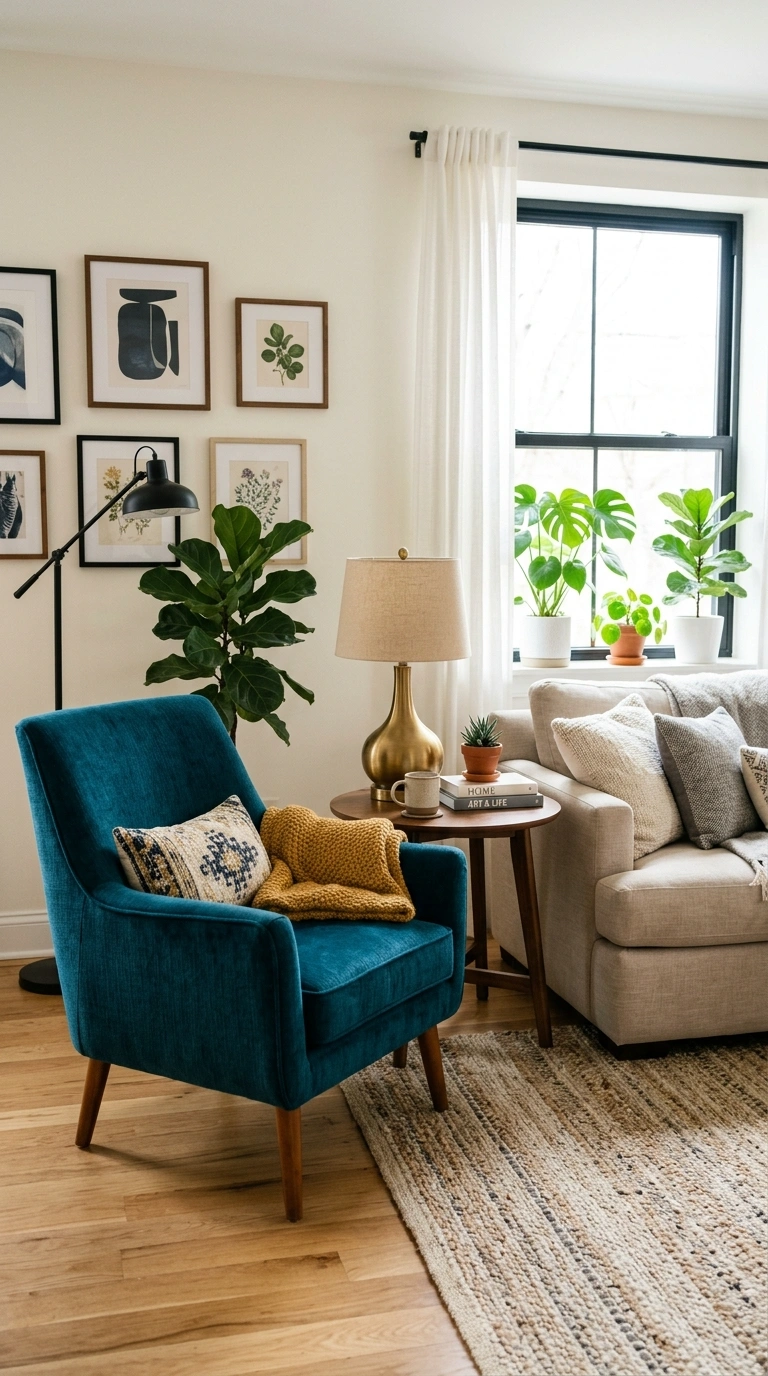
A single colorful accent chair can change the whole feel of a seating area without requiring you to replace your main sofa. Choose a chair in a bold solid color, like mustard yellow or deep teal, or a fun pattern like a bold floral or geometric print, and place it at an angle to your sofa to create a more relaxed, conversational layout. Add a small side table and a simple lamp nearby to round out the seating area.
This idea works especially well in living rooms that feel a little flat or too matched, since one unexpected piece of furniture adds instant personality and visual interest. Secondhand and vintage shops are great places to find unique accent chairs, and reupholstering an older chair in a bold fabric is often cheaper than buying new. A colorful accent chair also gives guests an inviting extra seat that stands out as a genuine design choice.
14. Add a Painted Coffee Table
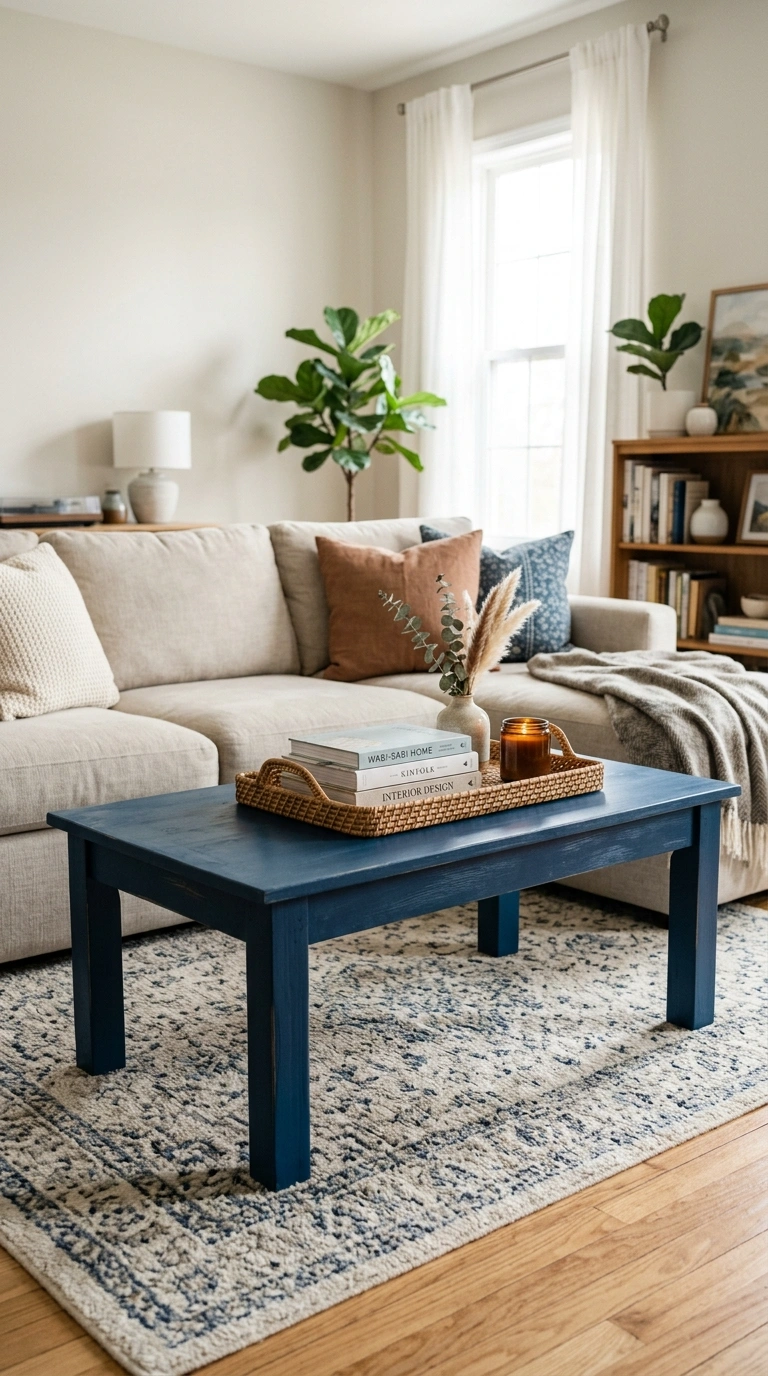
Painting your coffee table is a simple weekend project that brings color right into the center of the room, since a coffee table is usually one of the most visible pieces of furniture in a living room. Sand the surface lightly first so the paint adheres well, then apply two thin coats of a bold color, like deep blue, forest green, or even a bright coral if your style leans more playful. Seal the finished piece with a clear topcoat to protect it from daily use.
This idea works especially well if the rest of your furniture is neutral, since the coffee table becomes a clear focal point without clashing with anything else in the room. It is also a budget friendly alternative to buying a brand new colorful table, especially if you already have a plain wood or laminate table that could use an update. Style the finished table with a tray, a small stack of books, and a candle to complete the look.
15. Use Layered Lighting
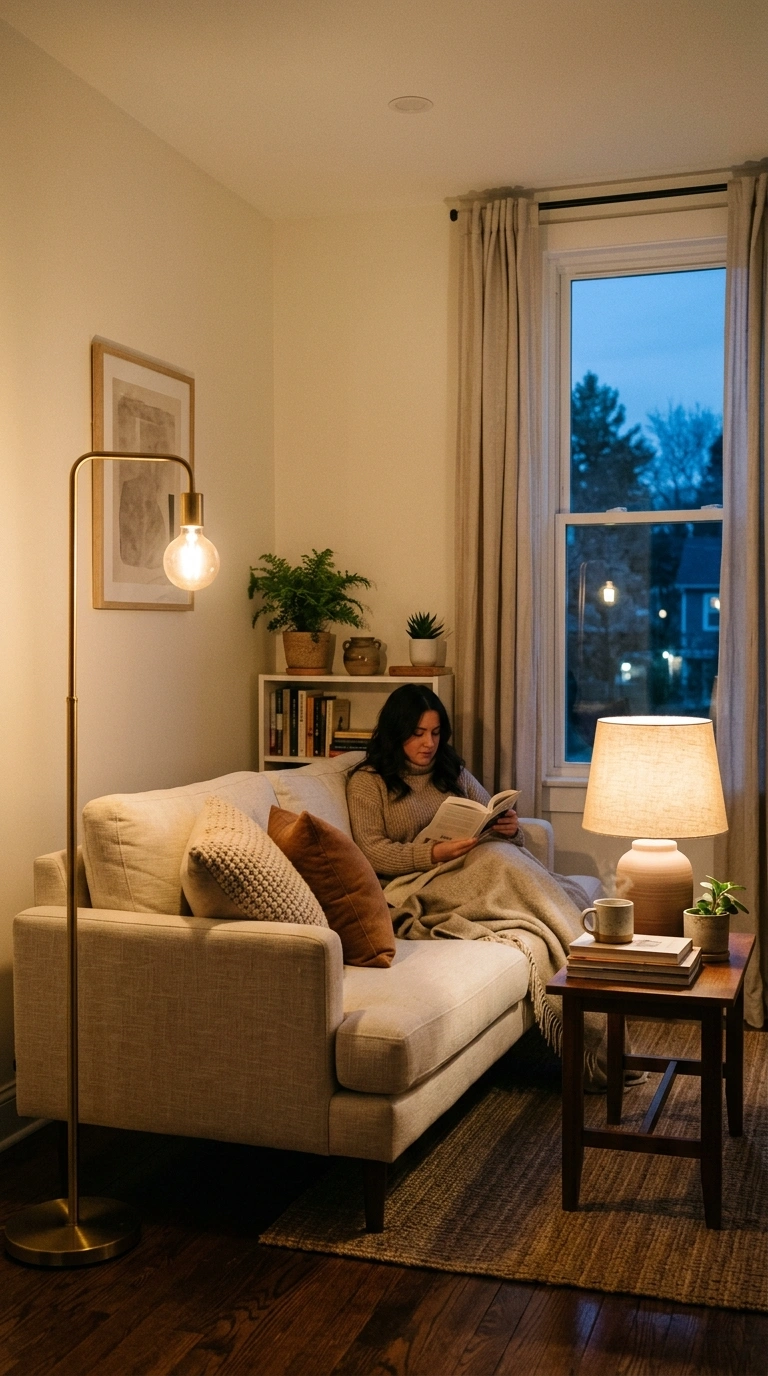
Combining a few different light sources, like a floor lamp, a table lamp, and string lights, gives a living room warmth and depth that a single overhead light cannot achieve on its own. Choose lamp shades or fixtures in warm tones, like brass, amber glass, or woven rattan, to add both color and texture to the room even when the lights are off. Place lamps at different heights around the room so the light feels layered rather than flat.
This idea works in every living room, but it makes the biggest difference in the evening, when good lighting can make even a simple, neutral room feel cozy and inviting. Warm bulbs, rather than bright white ones, help colors throughout the room look richer and more saturated after dark. Layered lighting is also a practical upgrade, since it lets you adjust the mood of the room depending on whether you are hosting guests or relaxing alone.
16. Add a Bold Ottoman
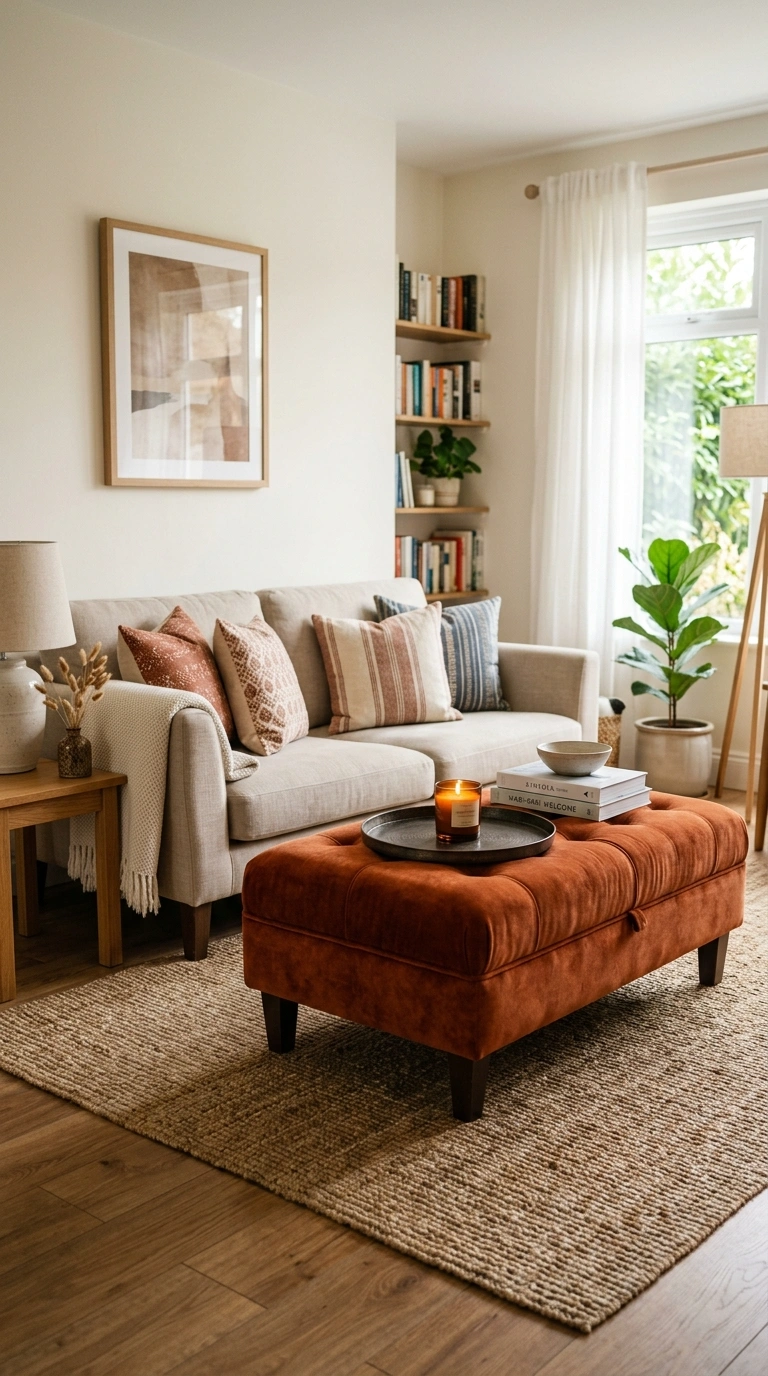
A colorful ottoman works as extra seating, a footrest, or even a makeshift coffee table, all while adding a solid block of color to the room. Choose a bold solid shade, like rust orange or deep emerald, or a fun pattern like ikat or stripes, and place it in front of your sofa or beside your accent chair. A tray placed on top turns it into a functional surface for drinks or snacks when needed.
This idea works especially well in smaller living rooms, where a multipurpose piece like an ottoman saves space while still making a real style statement. It is also a lower commitment way to bring in bold color compared to a full sofa or large rug, since ottomans are smaller and easier to swap out later if your taste changes. Pair it with neutral surrounding furniture so the ottoman’s color has plenty of room to stand out.
17. Hang Statement Wall Art
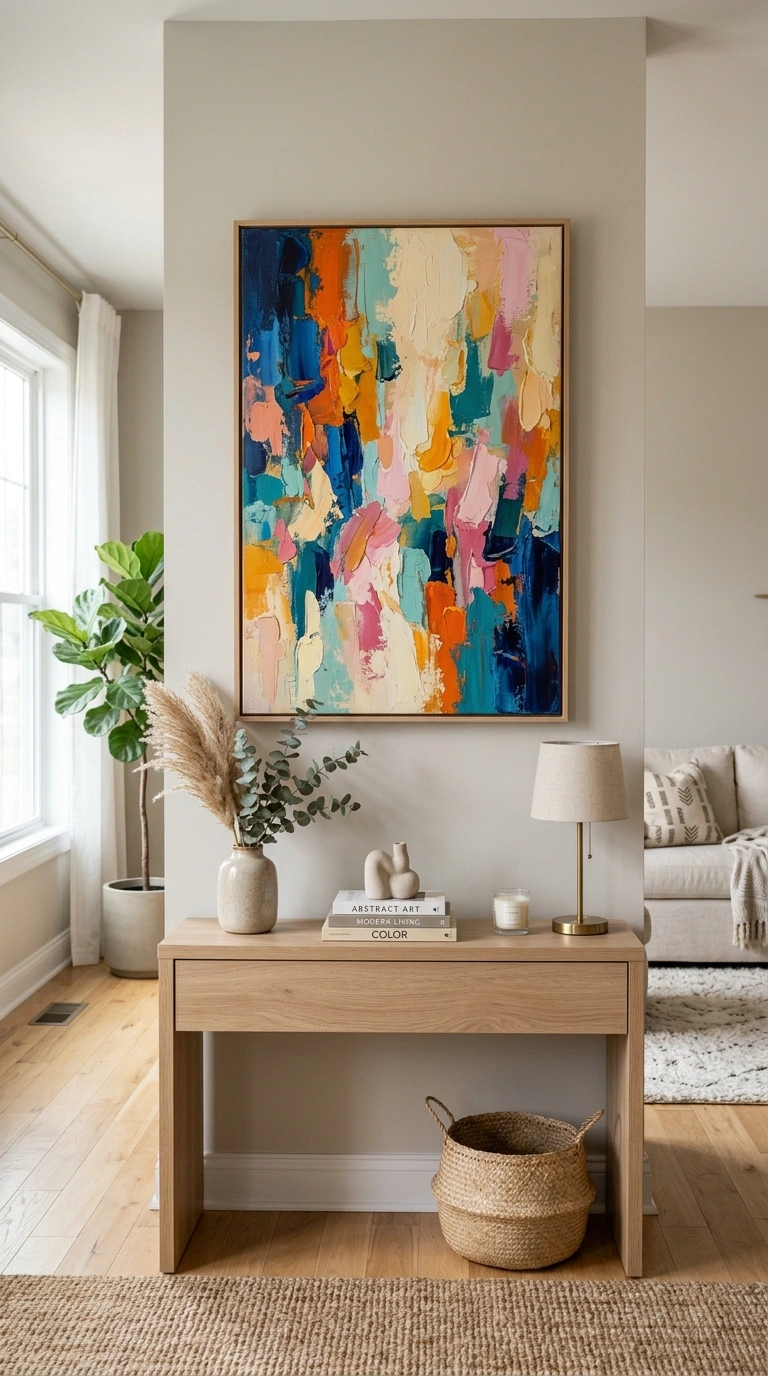
One large piece of colorful wall art can do more for a room’s personality than several smaller, safer pieces combined. Choose a piece with bold colors and an interesting composition, whether that is an abstract painting, a bold botanical print, or a colorful photograph, and hang it on the wall that gets the most natural light so the colors really show. Size the art so it fills at least two thirds of the width of the furniture below it, like the sofa or console table.
This idea works especially well as the anchor piece in a room that otherwise leans neutral, since one bold piece of art can set the tone for every other color choice in the space. Local art fairs, print shops, and online marketplaces are good places to find affordable large scale art without paying gallery prices. A single statement piece, given room to breathe on the wall, often reads as more intentional than a cluttered arrangement of smaller pieces.
18. Use Patterned Wallpaper
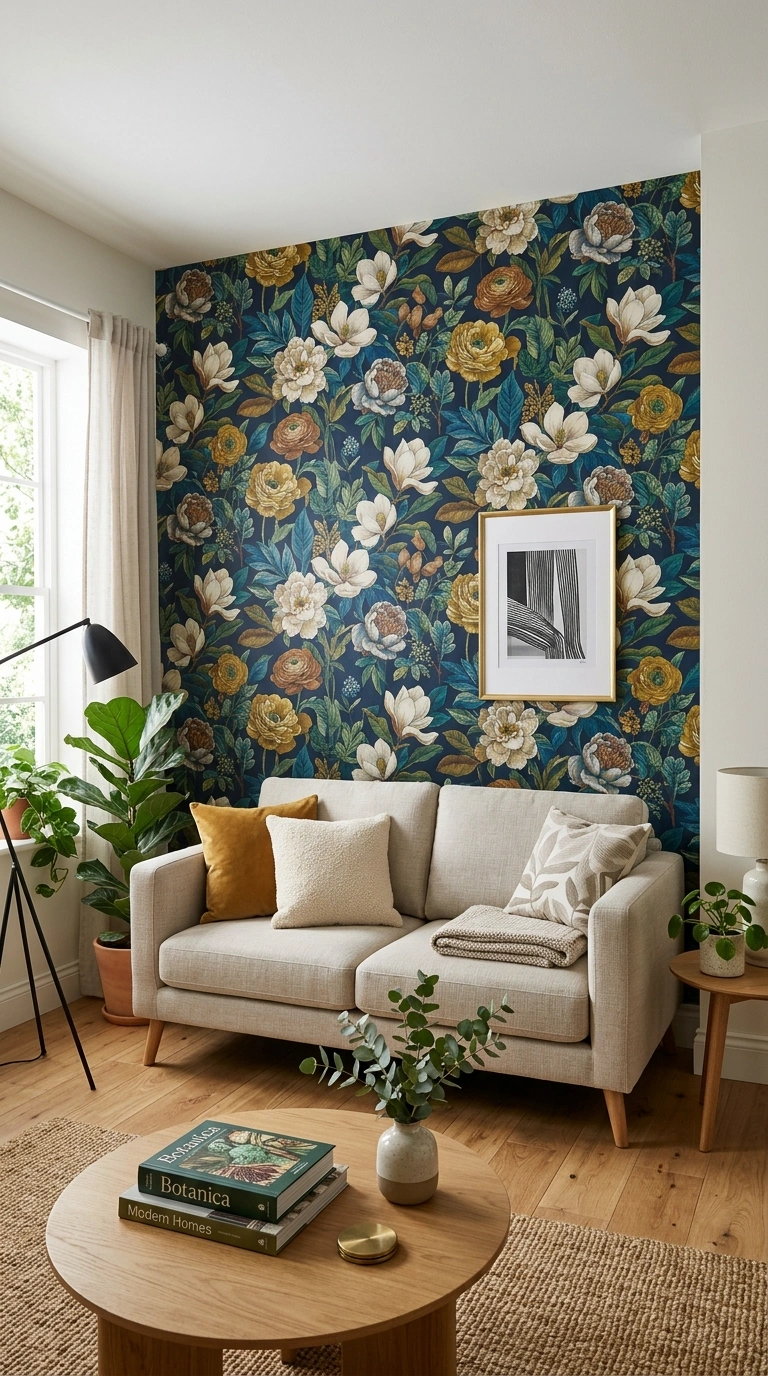
Wallpaper brings pattern and color into a living room in a way that paint alone cannot quite match, especially with today’s wide range of peel-and-stick options that make the project renter friendly. Choose a pattern that fits your room’s mood, like a bold floral for a romantic feel, a graphic print for something modern, or a subtle textured pattern if you want color without too much visual noise. Apply wallpaper to one accent wall rather than the whole room to keep the look bold instead of overwhelming.
This idea works especially well behind a sofa or in a small nook, like a reading corner, where the pattern can shine without competing with too much furniture in front of it. Measure your wall carefully before ordering so you have enough material without excess waste. A wallpapered accent wall often becomes the first thing guests notice when they walk into the room, making it a strong personality statement for a relatively small project.
19. Add Colorful Vases and Decor
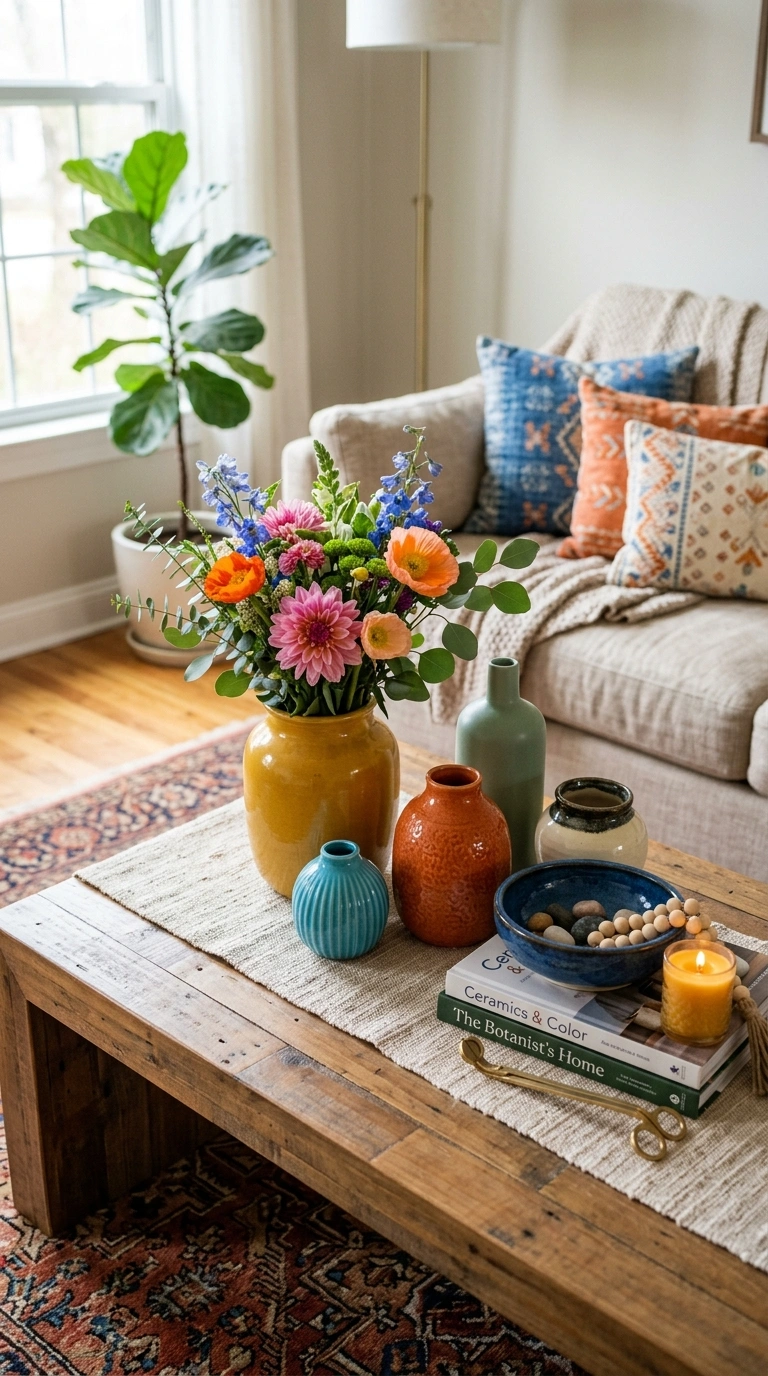
Small decorative objects, like vases, bowls, and candle holders, are an easy way to sprinkle color throughout a living room without committing to anything large or permanent. Choose a few pieces in colors that echo your pillows or rug, and group them together on a coffee table, console, or shelf rather than spreading single items around the room. Add fresh or faux flowers to a colorful vase for an extra layer of natural color that changes with the seasons.
This idea works in every living room style, and it is one of the most affordable ways to test out new colors before committing to bigger changes like paint or furniture. Thrift stores and flea markets are great places to find unique, colorful vases and bowls for very little money. Because these pieces are small, you can rearrange them often, which keeps the room feeling fresh without any real effort or cost involved.
20. Mix Textures With Throws
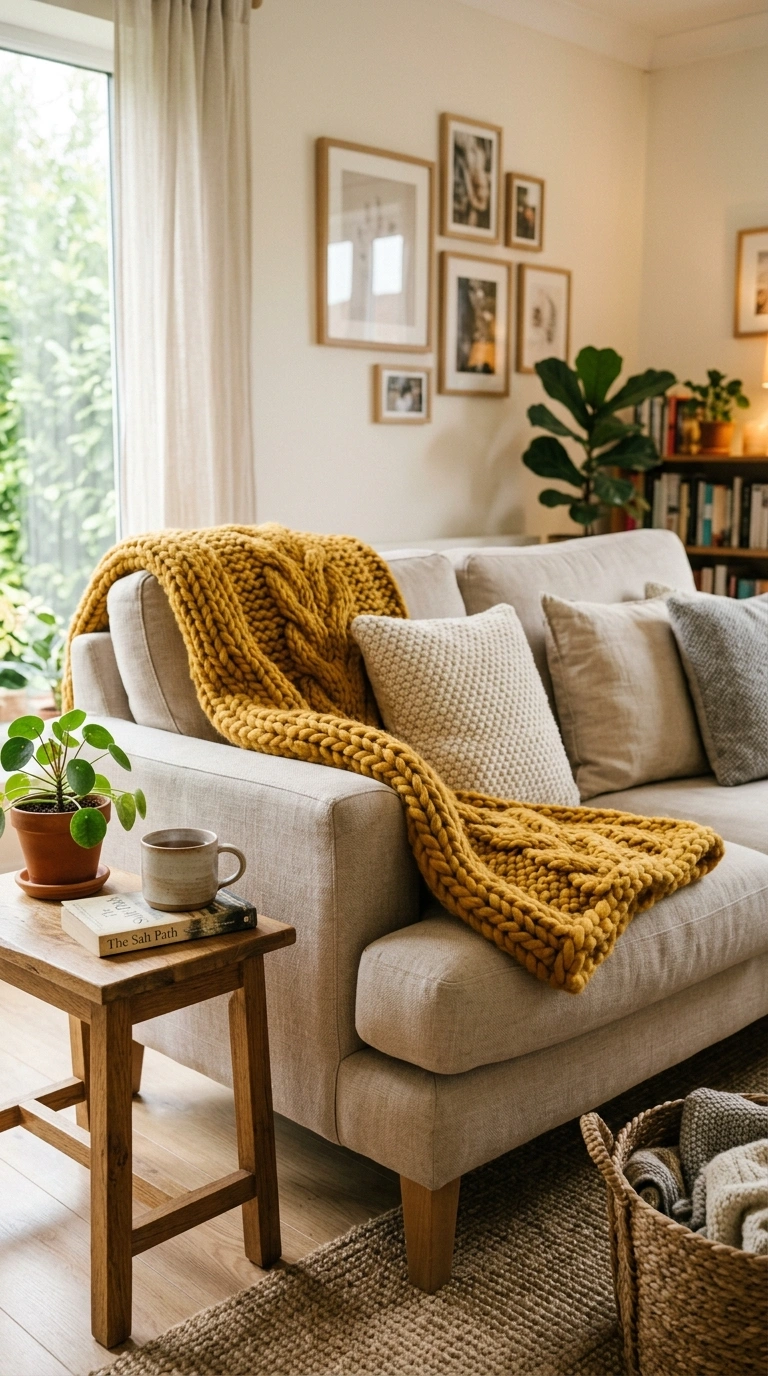
Draping a colorful throw blanket over the arm of a sofa or the back of an accent chair adds both color and texture in one simple step. Choose a chunky knit throw in a bold solid color for a cozy, textured look, or a woven throw with a pattern that pulls in a few different shades from around the room. Fold the throw loosely rather than perfectly, letting it drape naturally for a relaxed, lived in feel.
This idea works especially well layered with your existing pillows, since the throw adds another texture and color to the mix without overwhelming the seating area. It is also one of the most practical ideas on this list, since a throw blanket gets used often for actual comfort, not just decoration. Keep a couple of throws in rotation so you can switch the room’s color palette slightly with the seasons.
21. Add a Vintage Rug
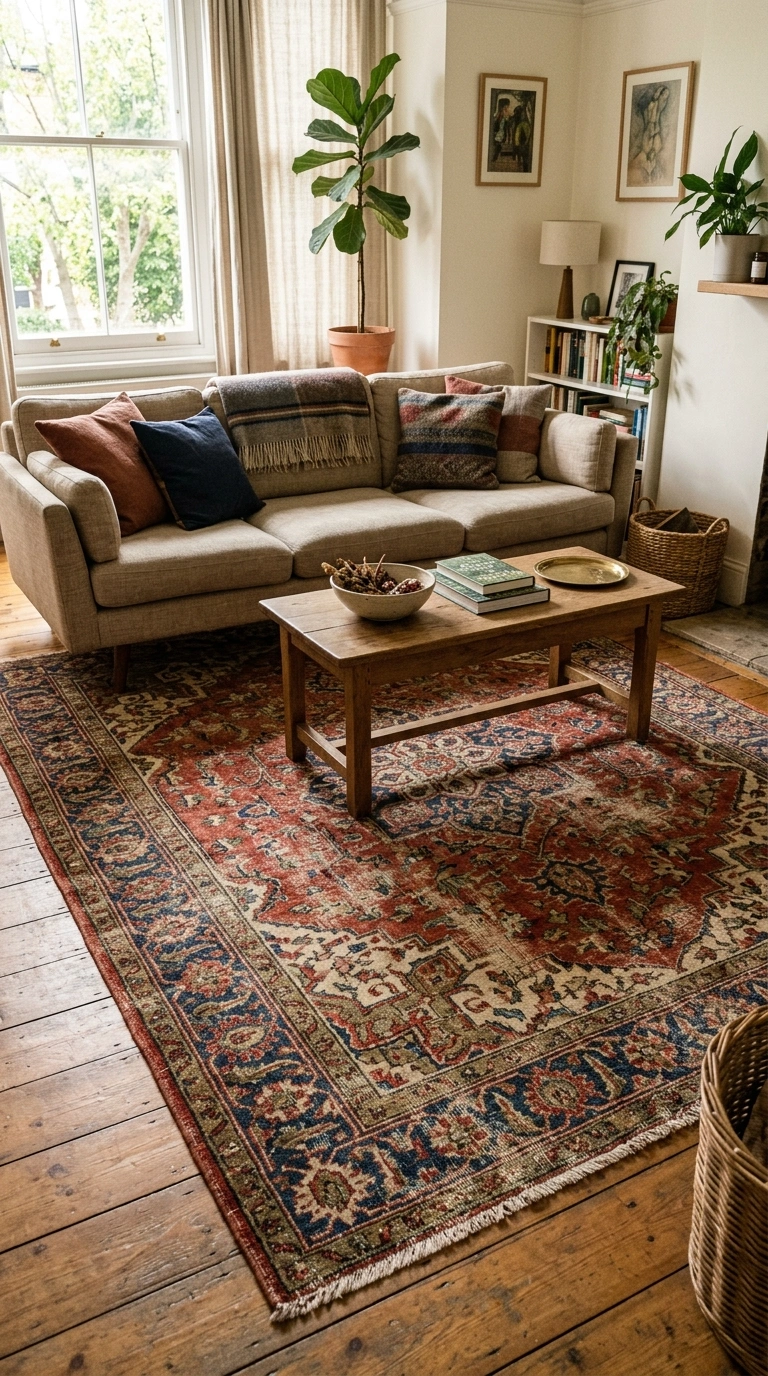
A vintage or well worn rug brings in faded, rich colors and a sense of history that a brand new rug often cannot match. Look for one with warm reds, muted blues, or soft golds, and layer it over a plain jute rug for extra texture underfoot. Position the vintage rug in the main seating area so it grounds the sofa and chairs, and let the slightly imperfect, worn look add character rather than trying to hide it.
This idea works especially well in living rooms that already lean toward a collected, eclectic style, since a vintage rug fits naturally alongside mixed furniture and thrifted decor. Estate sales, vintage shops, and online marketplaces are good places to find one within budget, and the slightly higher price is often worth it since these rugs tend to be well made and long lasting. A vintage rug is often the single piece that ties an entire colorful room together.
Bringing more color and personality into your living room does not need to happen all at once. Start with one or two ideas from this list, live with them for a while, and keep adding pieces as you find things you truly love.
FAQs
What is the easiest way to add color to a living room?
Throw pillows and a colorful rug are usually the easiest and cheapest starting points, since they do not require any painting or furniture changes.
How many colors should a living room have?
A good general guide is to build around two to three main colors, then use different shades and textures of those colors throughout the room for variety without visual chaos.
Will bold colors make my living room feel smaller?
Not necessarily. Bold colors used on one accent wall, or in smaller doses like pillows and decor, can actually add depth and warmth to a room rather than shrinking it.
How do I mix patterns without it looking too busy?
Stick to patterns that share at least one common color, and vary the scale, pairing a large floral with a small stripe or a tight geometric print, so the patterns feel connected rather than competing.