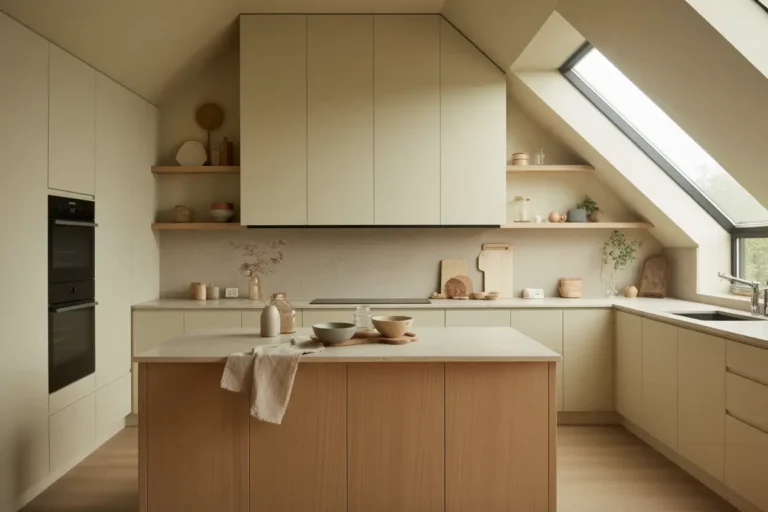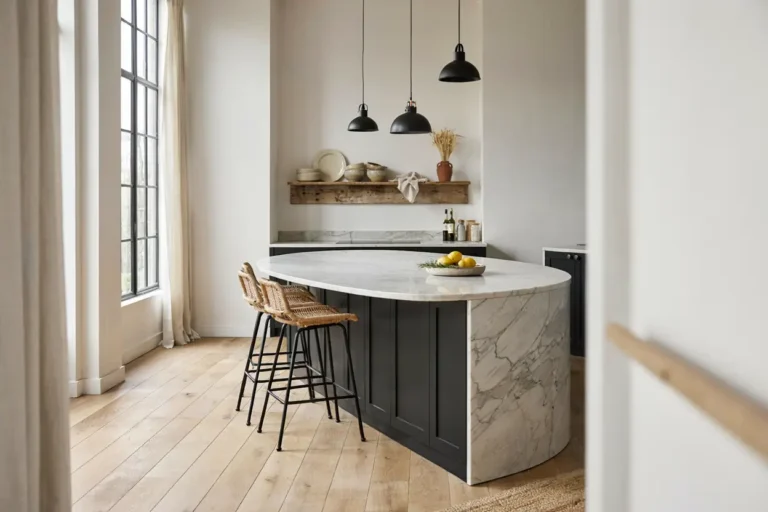
28 Gorgeous Modern Kitchen Backsplashes That Stand Out

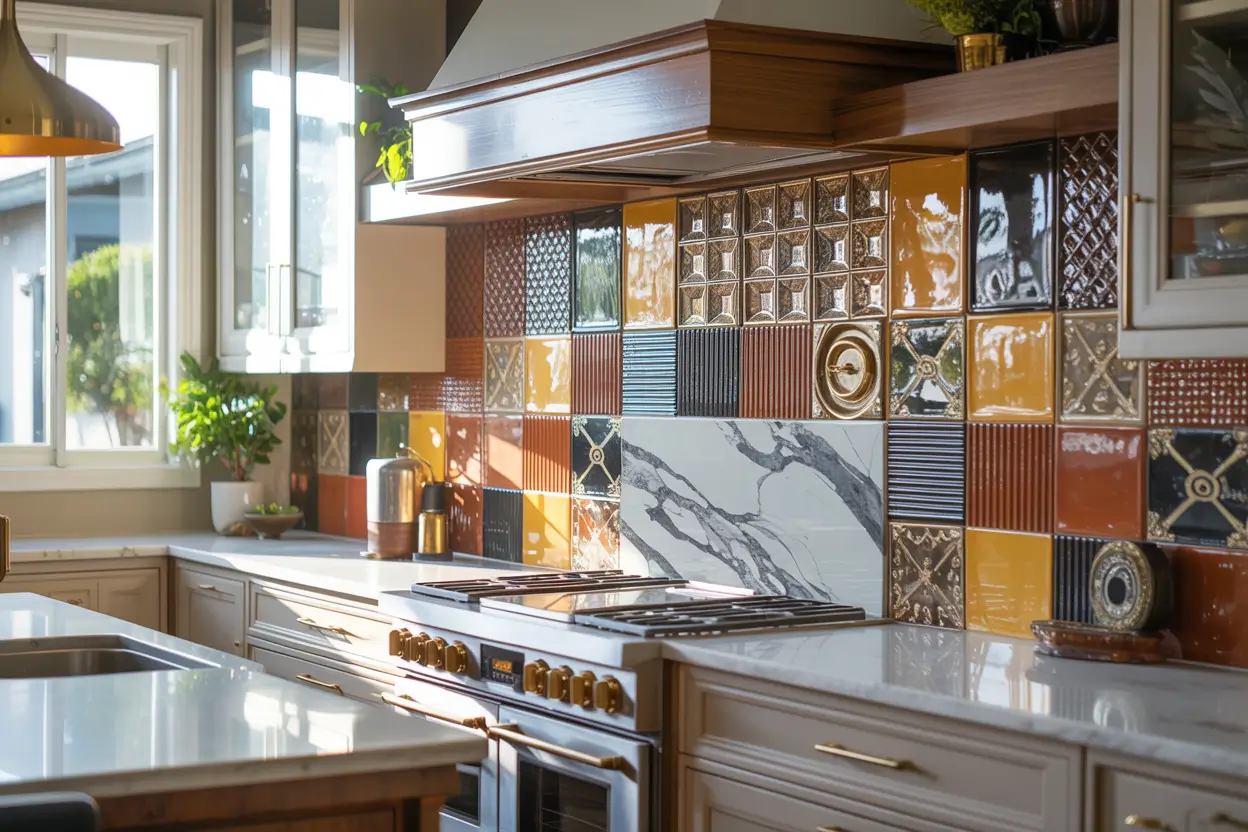
The backsplash is one of the few spots in a kitchen where you can take a real risk without much cost or commitment involved. It covers a small area, it gets replaced far less often than paint or cabinets get repainted, and it sits right at eye level where you actually notice it every single day. A plain white subway tile will always be a safe choice, but there are dozens of options that bring texture, color, and personality into a kitchen without looking overdone. This list covers 28 modern kitchen backsplash ideas, from handmade tile with an uneven glaze to full marble slabs that run straight up the wall. Some of these fit a tight budget, others are a bigger investment worth saving for. Either way, this is the wall your kitchen has been waiting for.
1. Vertical Stacked Subway Tile
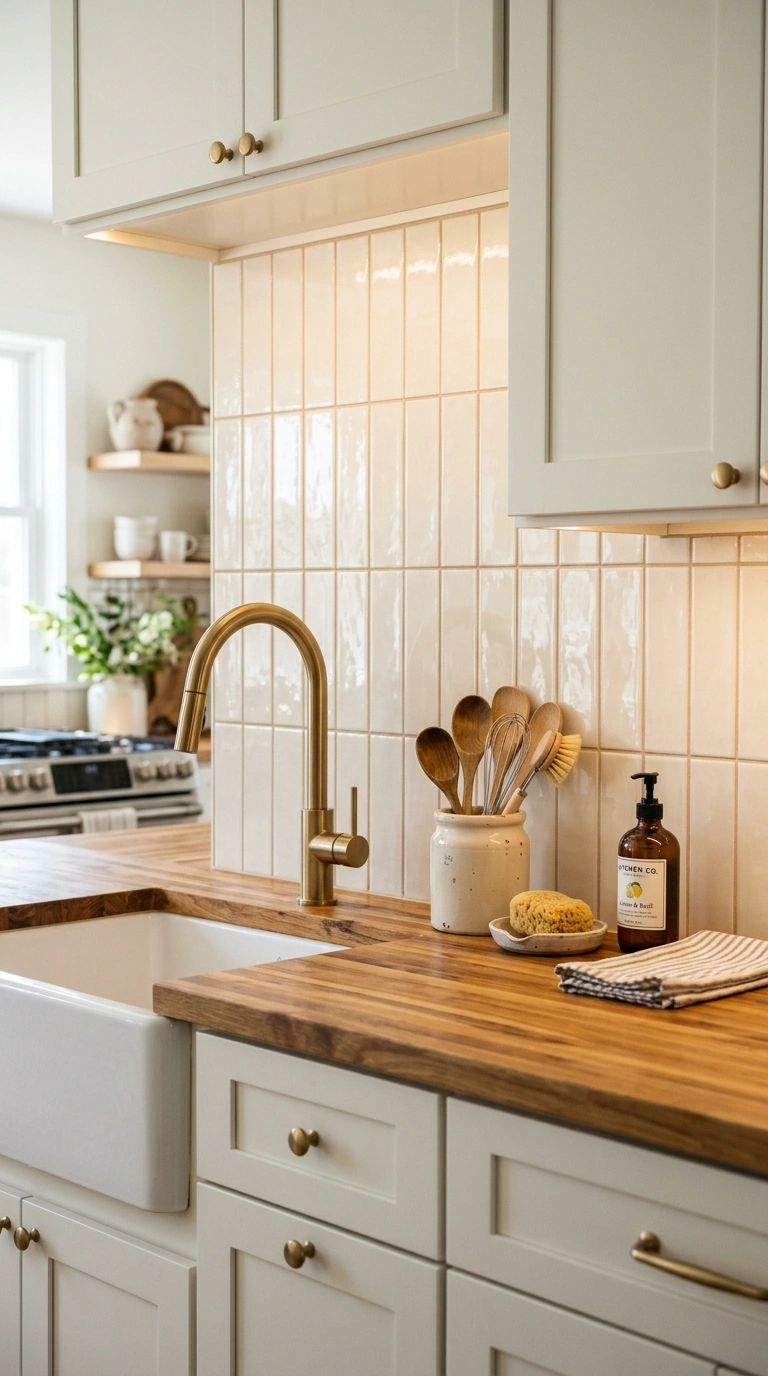
Turning classic subway tile on its side and stacking it vertically instead of the usual brick pattern gives a familiar tile a fresh, more current look. This works especially well behind a stove or sink where the vertical lines draw the eye upward, making a kitchen with lower ceilings feel a bit taller. Stick with a classic white or soft cream tile and a thin, matching grout line for a clean, modern finish that still feels timeless. Pair the tile with brushed brass or matte black faucets and cabinet hardware for contrast against the pale tile surface. This layout costs about the same as a standard subway tile install, since it is simply a change in orientation rather than a different material altogether. This idea suits almost any kitchen style, from a simple white kitchen to a more transitional space with wood cabinetry and warm accents.
2. Handmade Zellige Tile
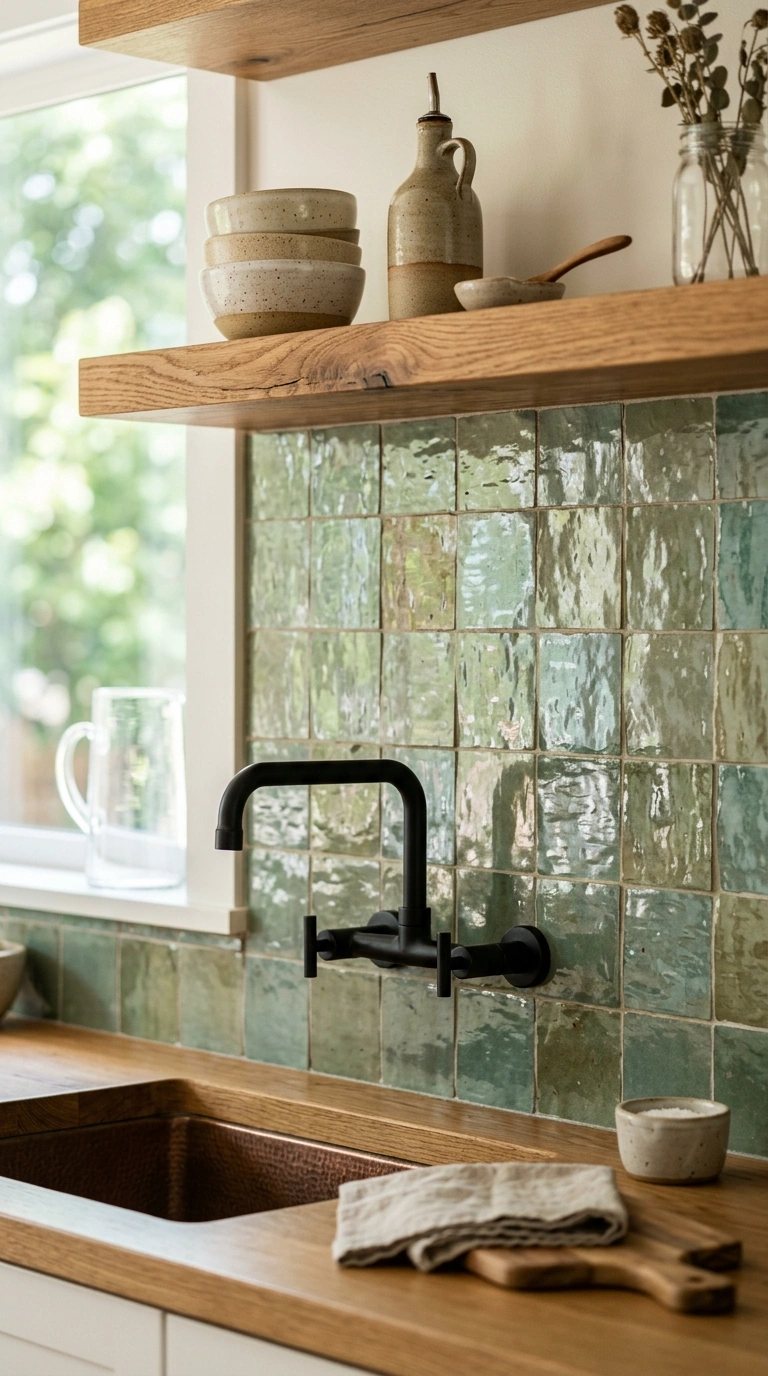
Handmade zellige tile brings warmth and gentle imperfection into a kitchen that a machine made tile simply cannot replicate. Each tile carries slight variations in color and surface texture, so the finished wall has a subtle, handcrafted look even when laid in a simple grid pattern. This tile works beautifully in warm, earthy kitchens with wood cabinetry, brass fixtures, and creamy white countertops, since the imperfect glaze pairs naturally with organic materials. Choose a soft, muted color like warm ivory, sage, or dusty terracotta rather than a bright, saturated shade, since the handmade texture already provides plenty of visual interest on its own. Because each tile is shaped and glazed by hand, zellige tends to cost more than standard ceramic tile, so many homeowners save it for a smaller focal area rather than an entire wall. A single zellige tile accent behind the stove still makes a strong, memorable statement.
Also Read > 22 Cozy Living Room and Kitchen Combo Ideas for Homes
3. Full-Height Marble Slab
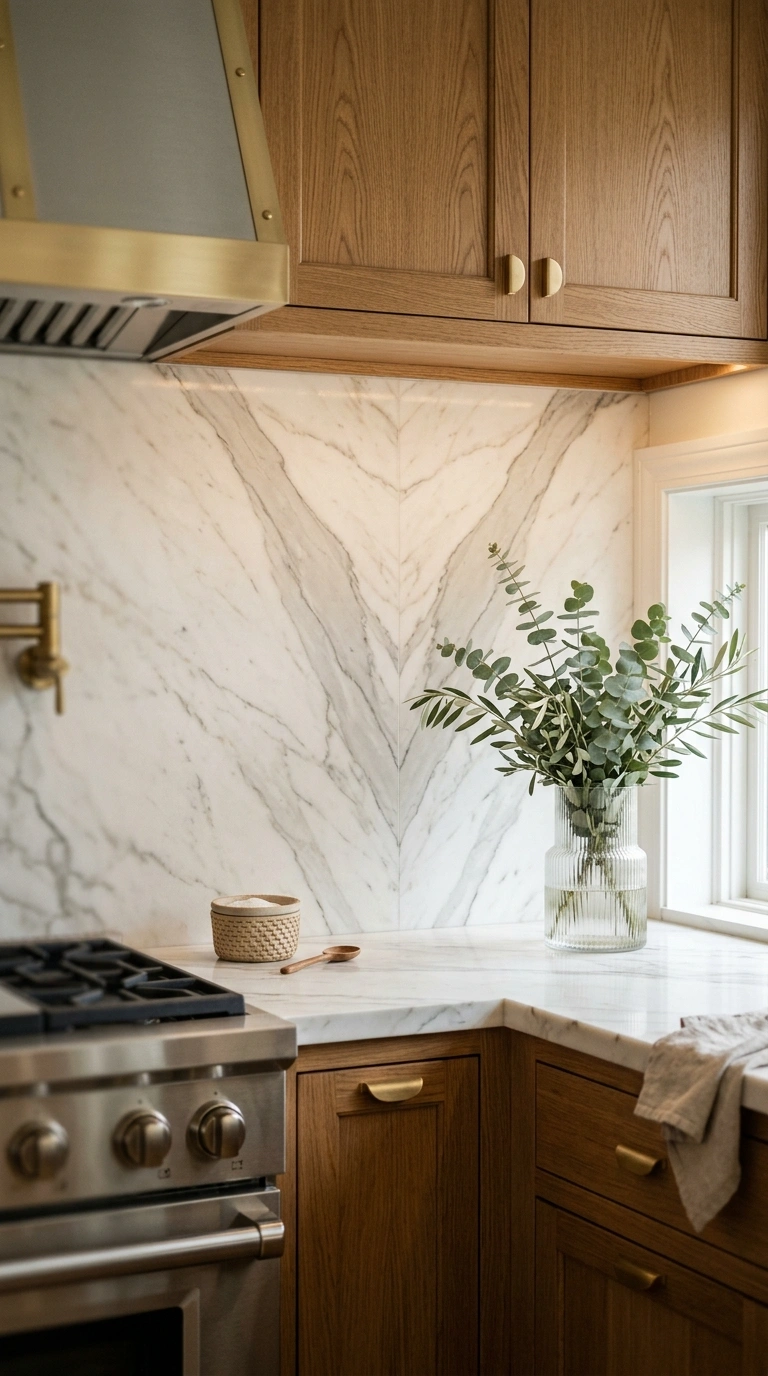
Running a single slab of marble from the countertop straight up to the upper cabinets creates a seamless, high end look with almost no visible seams or grout lines to interrupt the veining. This approach works especially well behind a stove or range, where a dramatic slab of marble becomes the clear focal point of the entire kitchen. Choose a marble with soft, flowing veining in warm gray or gold tones if you want the pattern to feel organic rather than busy. Because marble is porous, a sealed finish matters here more than in most other backsplash choices, protecting the stone from oil splatters and staining over time. This option carries one of the higher price tags on this list, since slab material and precise cutting both add to the cost. Pair the marble with simple, understated cabinetry so the natural stone pattern remains the star of the kitchen.
4. Herringbone Marble Mosaic
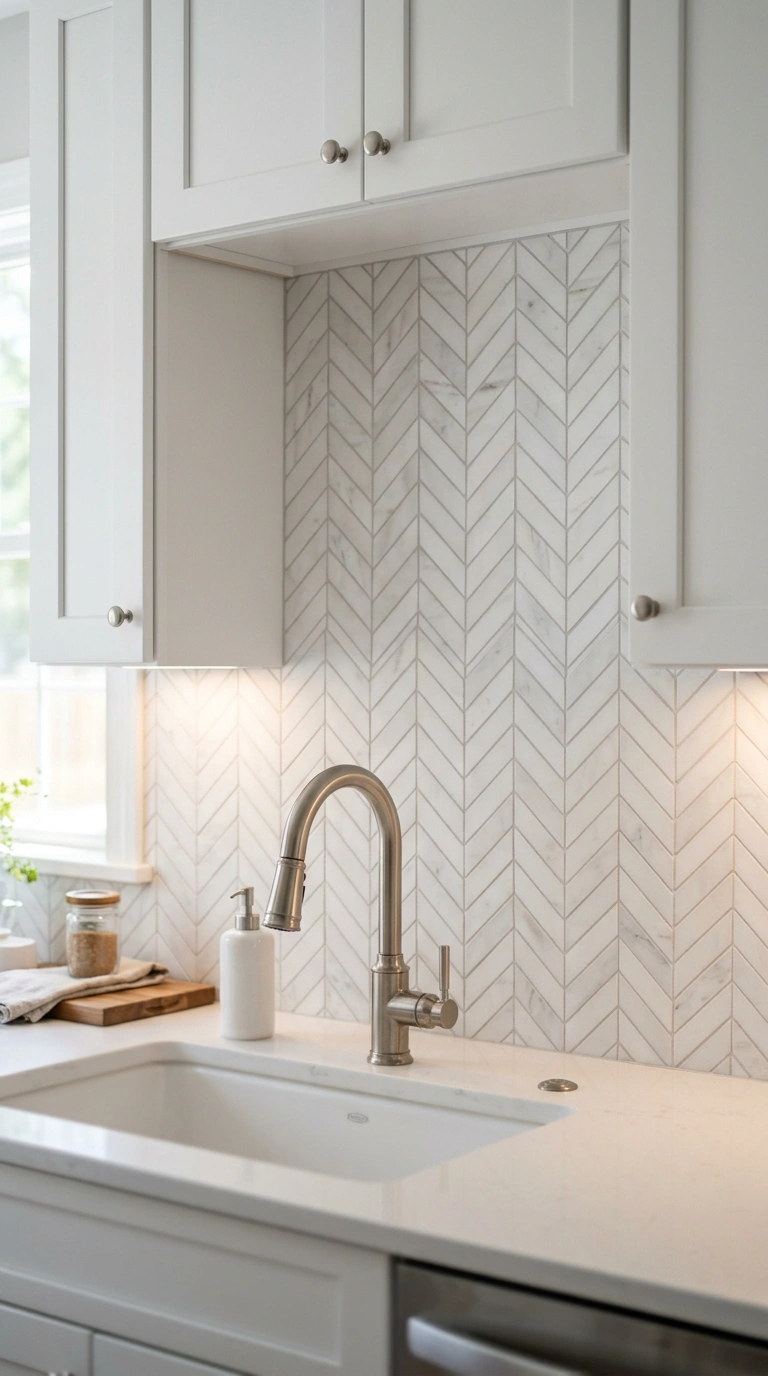
A herringbone pattern made from small marble mosaic tiles brings movement and texture into a kitchen while still keeping the overall material soft and neutral. This layout works particularly well behind a stove or across an entire wall, since the zigzag pattern catches light differently than a straight grid ever could. Choose a white or light gray marble mosaic with subtle veining, keeping the grout a close match to the tile color so the pattern reads clearly without a distracting grid of dark lines. This tile size and pattern combination takes longer to install than a large format tile, since each small piece needs careful placement, so labor costs run a bit higher. Pair the herringbone wall with simple white or wood cabinetry, letting the tile pattern carry the visual interest in an otherwise calm kitchen. This idea suits both traditional and modern kitchens equally well, since herringbone reads as a classic pattern with a slightly elevated finish.
5. Fluted Ribbed Tile
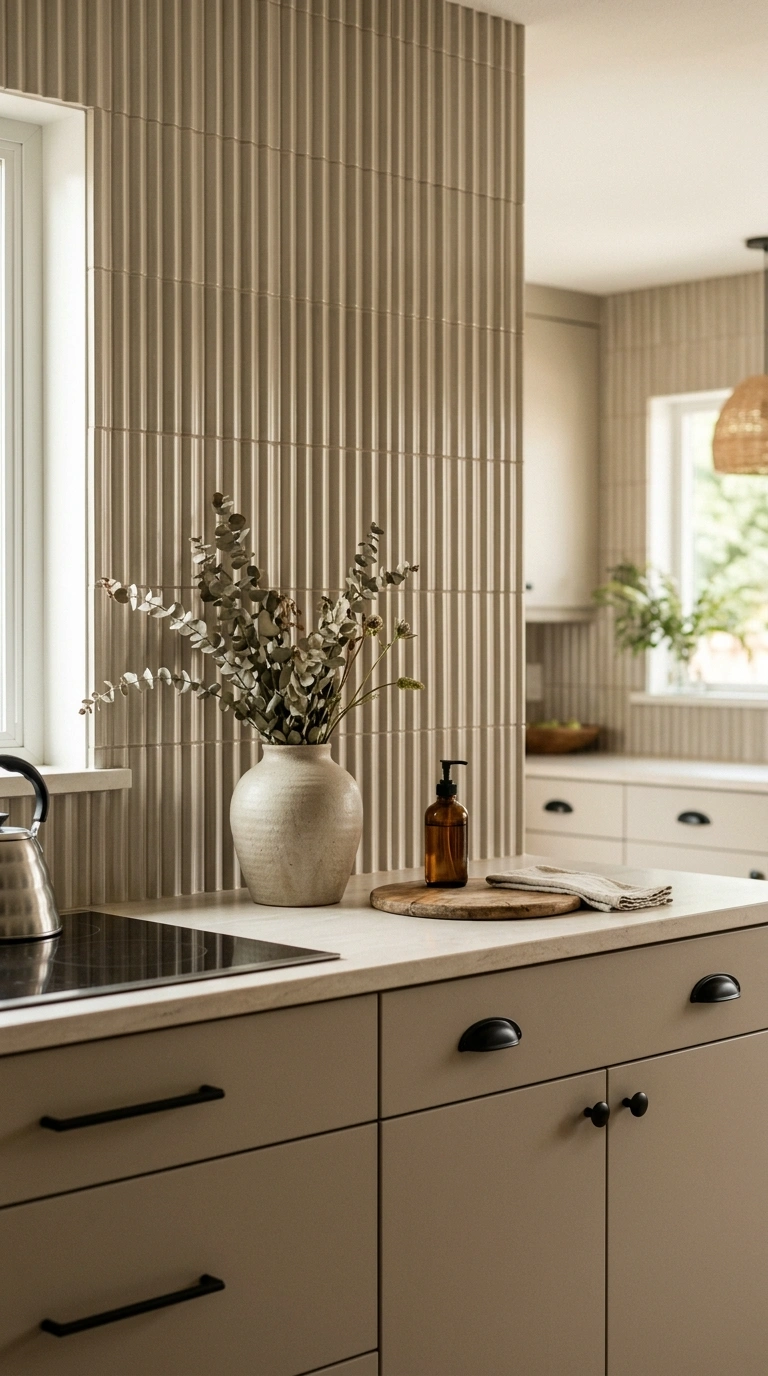
Fluted or ribbed tile brings a three dimensional, sculptural quality to a kitchen wall that flat tile simply cannot achieve. The vertical grooves catch light and shadow throughout the day, giving the wall a subtle, ever changing texture even in a single solid color. This tile works especially well in a warm terracotta, sage green, or soft cream shade, since the raised texture already provides plenty of visual interest without needing a bold pattern or color on top. Pair fluted tile with warm wood cabinetry and brass hardware for a look that feels current and a little bit luxurious. Because the surface is uneven, cleaning takes slightly more attention than a flat tile, though a quick wipe down after cooking keeps the grooves from collecting grease over time. This idea suits kitchens aiming for a modern, textural look without relying on pattern or color to make a statement.
6. Elongated Picket Tile
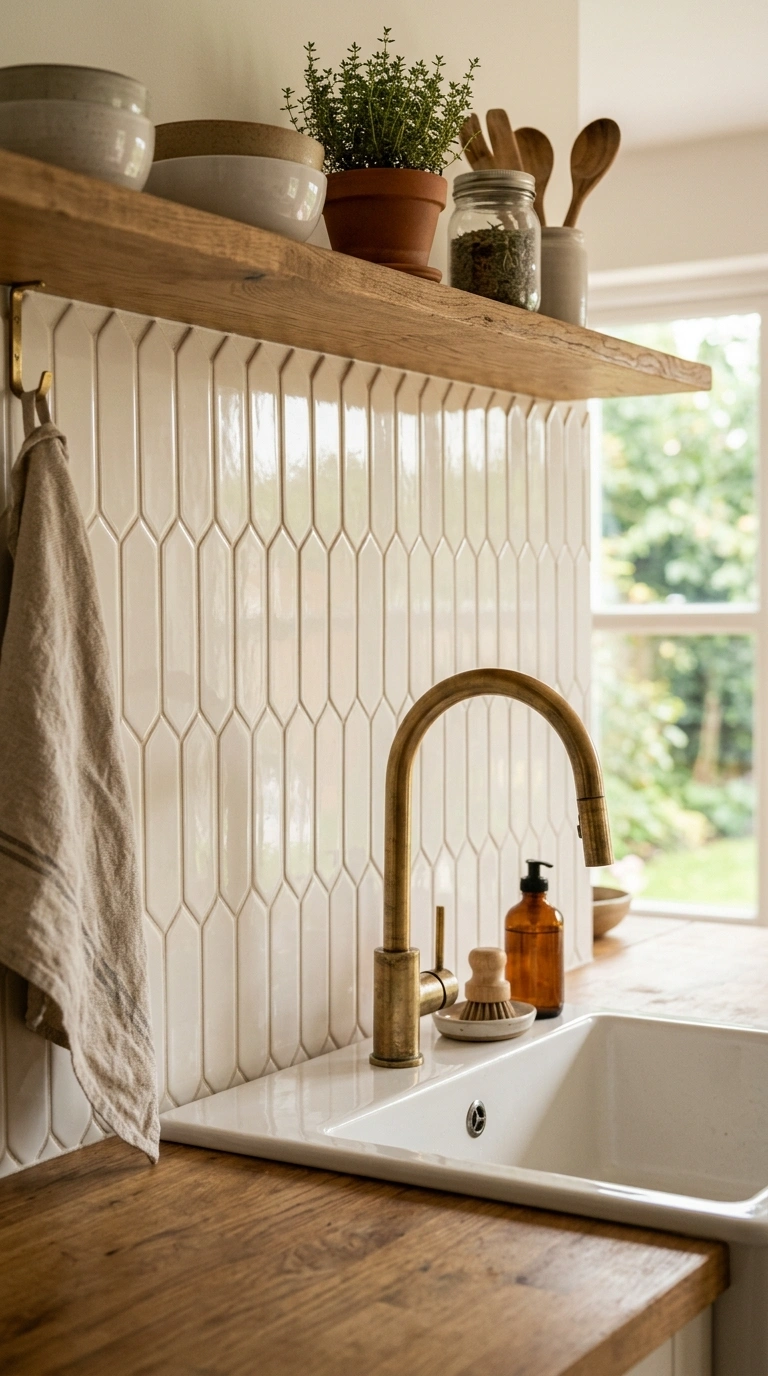
Elongated picket shaped tile, cut in a tall, narrow point rather than a standard rectangle, adds a subtle architectural detail to a kitchen wall. This shape works especially well laid in a straight vertical run behind open shelving or a stove, where the pointed top edge creates a soft, scalloped line along the top of the backsplash. Choose a glossy white or pale blue picket tile for a fresh, classic look, or a deeper color like forest green for something bolder and more unexpected. This tile size and shape suits kitchens with a slightly more traditional or cottage inspired style, since the pointed silhouette echoes older architectural details from historic homes. Pair the tile with simple white or shaker style cabinetry so the picket shape remains the clear design feature on the wall. This option costs a bit more than standard rectangular subway tile due to the specialty shape and slightly higher waste during cutting.
7. Bold Geometric Encaustic Tile
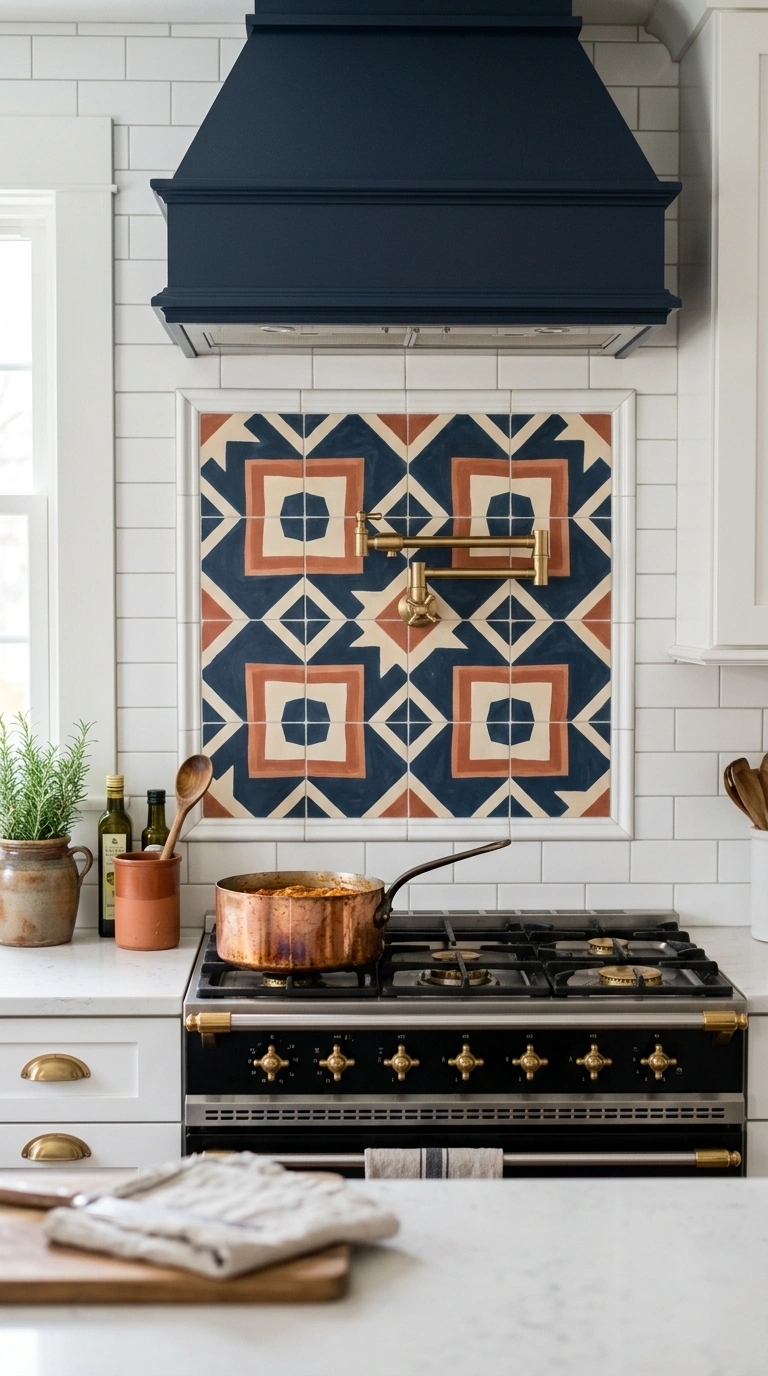
Bold, patterned encaustic tile brings color and graphic interest into a kitchen, working especially well as a smaller accent behind a stove or range hood rather than across an entire wall. These tiles often combine two or three colors in a repeating geometric pattern, so choosing one dominant color that matches your cabinetry or countertop helps the pattern feel intentional rather than random. This tile suits kitchens with otherwise simple, neutral cabinetry, since the pattern needs a calm backdrop to really stand out and do its job. Because encaustic tile patterns can be busy, keeping the surrounding wall space, countertops, and open shelving simple and uncluttered helps the backsplash read as a deliberate design choice. This option works particularly well in kitchens with a global or eclectic style, since patterned tile often draws inspiration from Spanish, Moroccan, or Mexican design traditions. A smaller accent panel keeps both cost and visual intensity manageable in a full size kitchen.
8. Glossy Emerald Green Tile
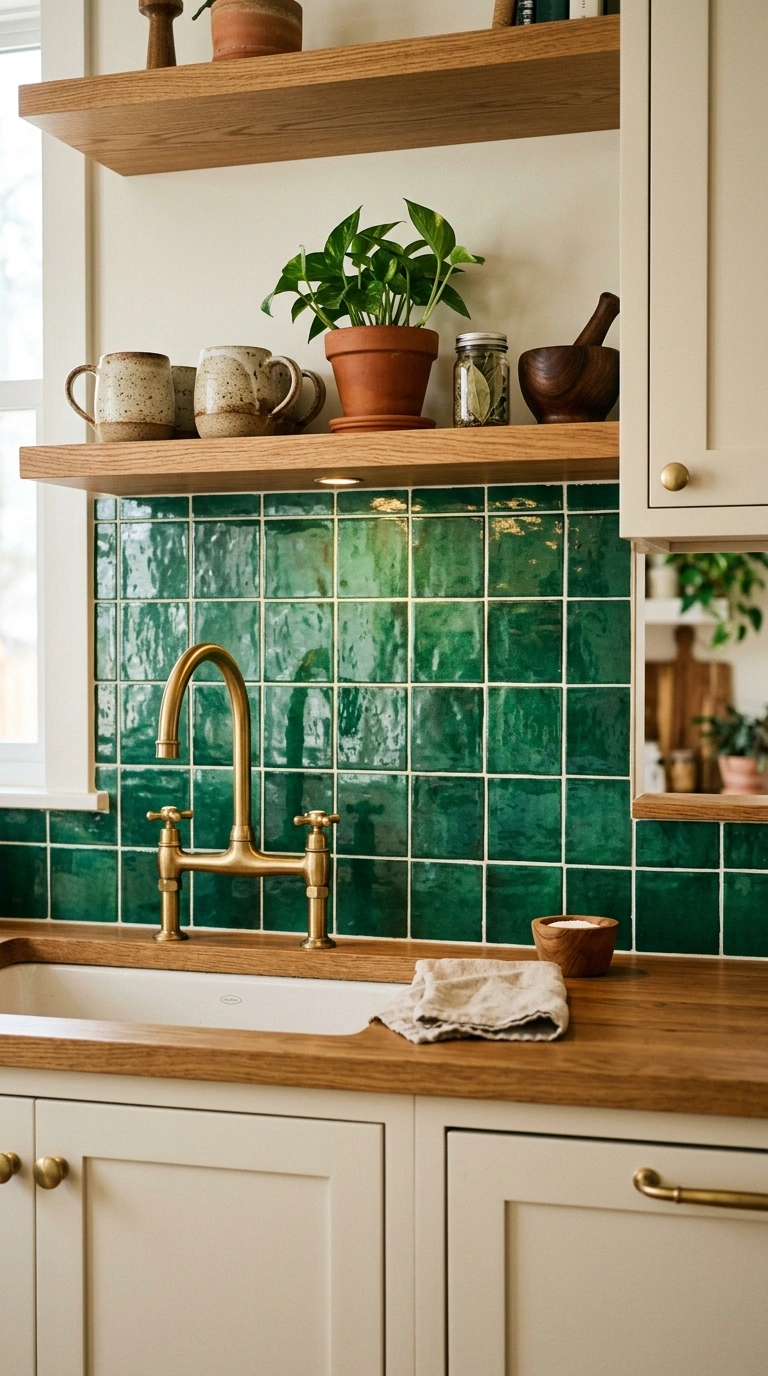
A glossy emerald green backsplash brings a rich, jewel toned pop of color into a kitchen that otherwise leans neutral in its cabinetry and countertops. This tile works especially well as a full wall behind open shelving or a stove, where the glossy finish reflects light and adds a sense of depth to the color. Pair emerald tile with warm brass or gold hardware and fixtures, since the metallic tone complements the cool, saturated green beautifully. Keep countertops and cabinetry in a simple white, cream, or warm wood tone so the emerald tile remains the clear focal point without competing against other bold choices. This color suits kitchens that want a strong style statement without committing to color across cabinetry or larger surfaces, since a backsplash is far easier and cheaper to update later than an entire kitchen. Add simple, clean lined hardware and fixtures so the tile color feels intentional rather than accidental.
9. Warm Terracotta Tile
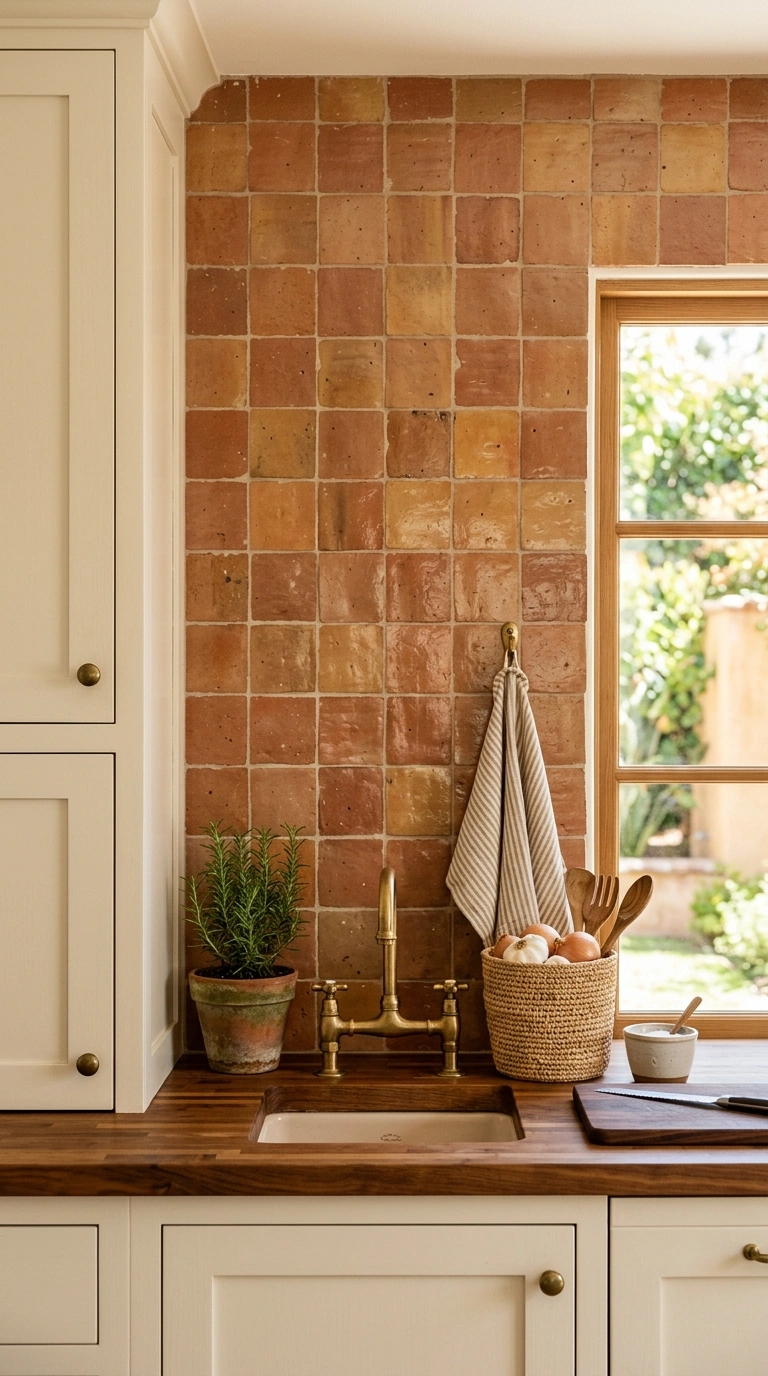
Warm terracotta tile brings an earthy, sun washed feeling into a kitchen, working beautifully in spaces with wood cabinetry, woven light fixtures, and natural stone countertops. This tile color pairs especially well with cream, warm white, or soft sage cabinetry, since the muted orange red tone needs a calm backdrop to feel grounded rather than overwhelming. Choose a slightly textured or handmade looking terracotta tile rather than a perfectly smooth, glossy finish, since the organic texture matches the warmth of the color itself. This backsplash suits kitchens leaning into a Mediterranean, Spanish, or modern rustic style, since terracotta has strong roots in those design traditions. Pair the tile with black or aged brass hardware for contrast, keeping other colors in the kitchen neutral so the terracotta remains the main event. This option works well as a full wall treatment or as a smaller accent behind just the stove, depending on how bold you want the final look to feel.
10. Penny Round Mosaic
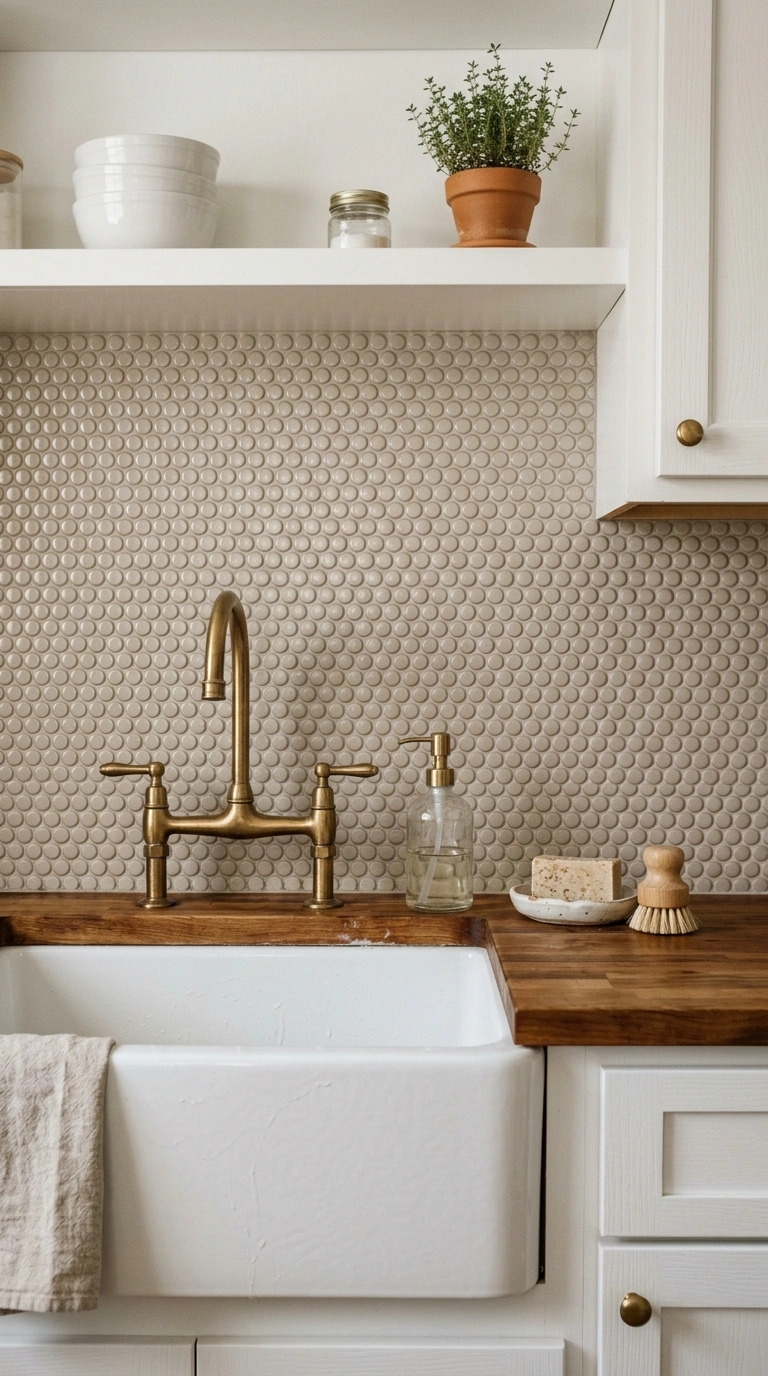
Small penny round tiles bring playful texture into a kitchen through their rounded shape and the slightly irregular grout pattern that naturally forms between circles. This mosaic style works especially well as a smaller accent behind a stove or sink, since the fine detail of tiny round tiles reads best up close rather than across a large expanse of wall. Choose a soft white or pale gray penny tile for a classic, versatile look, or a mix of two colors in a subtle pattern for something a little more playful and unexpected. Because the tiles are so small, grout lines make up a larger portion of the visual surface than with bigger tile formats, so choosing a grout color close to the tile itself keeps the overall look clean rather than busy. This tile suits kitchens with a retro or classic diner inspired style, since penny tile has strong ties to early twentieth century kitchen and bathroom design.
11. Quartzite Slab With Bold Veining
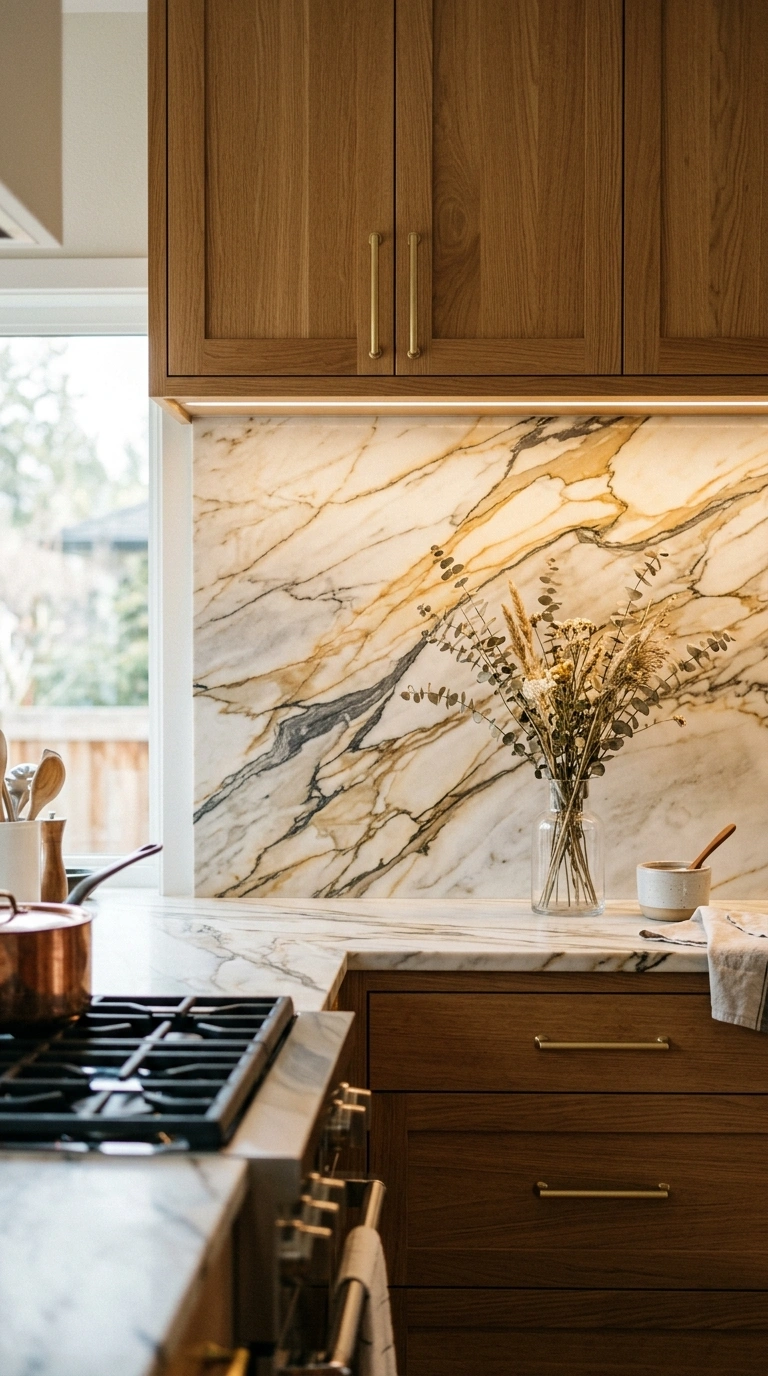
A quartzite slab with bold, dramatic veining brings the drama of natural stone into a kitchen while offering more durability than marble against daily wear and tear. This backsplash works especially well running straight up from the countertop in a matching or complementary quartzite, creating a seamless, high end look with no visible seams at the counter line. Choose a slab with strong veining in gold, gray, or soft rust tones if you want the pattern itself to be the main visual feature of the kitchen. Because quartzite is naturally more scratch and heat resistant than marble, it holds up especially well directly behind a stove or range where daily cooking happens. Pair the stone with simple, understated cabinetry in white or a warm wood tone so the natural veining pattern remains the true focal point. This option sits toward the higher end of the price range on this list, though its durability often makes it worth the investment over time.
12. Matte Black Tile
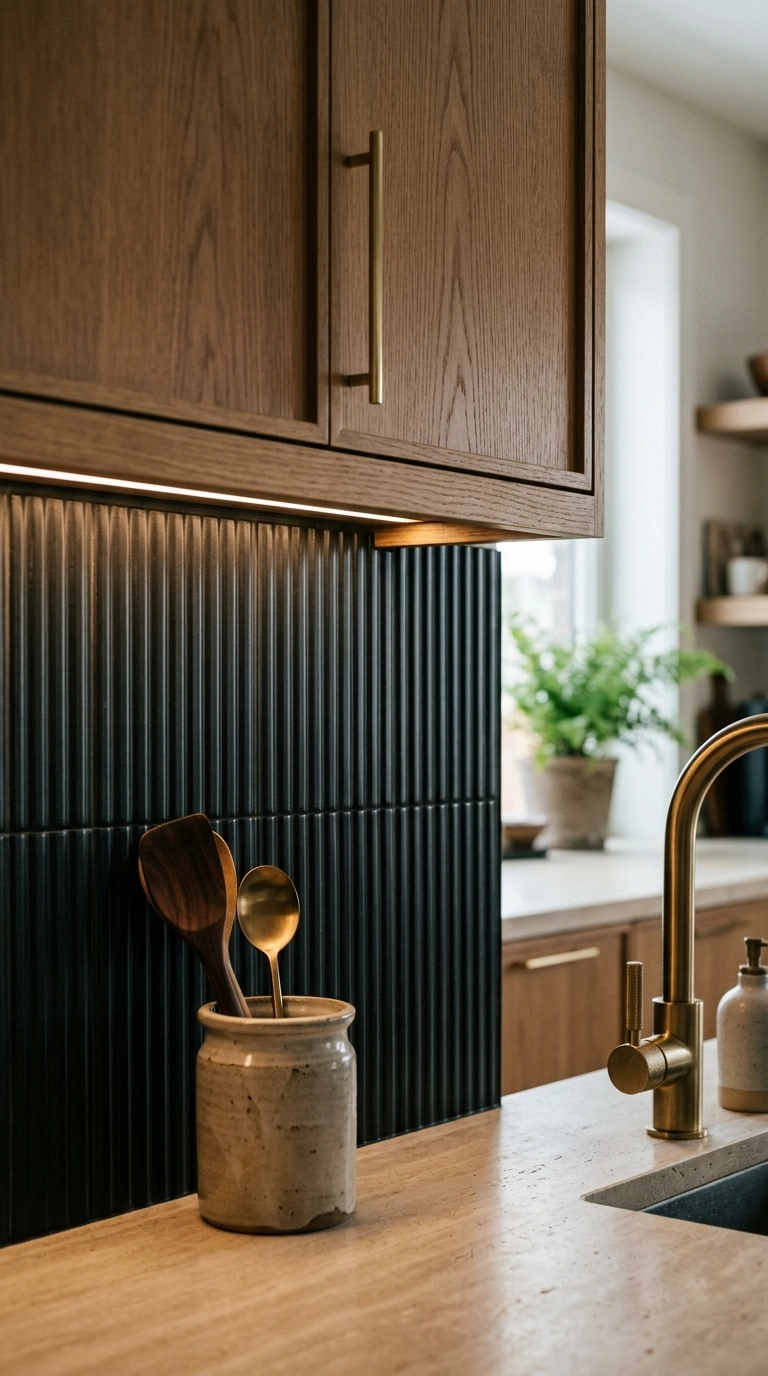
A matte black tile backsplash brings bold, moody contrast into a kitchen, working especially well against white or light wood cabinetry where the dark tile stands out clearly. Choose a matte rather than glossy finish, since matte black hides fingerprints and water spots far better, which matters in a spot that gets touched and splashed often. This tile suits modern or minimalist kitchens especially well, since the deep, flat color pairs naturally with clean lined cabinetry and simple hardware. Pair the black tile with brass or unlacquered brass fixtures for warmth against the cool, dark surface, or with matte black hardware throughout for a more monochromatic, cohesive look. This backsplash works well as a full wall treatment or as a smaller accent directly behind the stove, depending on how bold a statement you want the kitchen to make. Keep grout in a matching dark tone so the wall reads as one solid, graphic surface rather than a grid of individual tiles.
13. Antiqued Mirror Backsplash
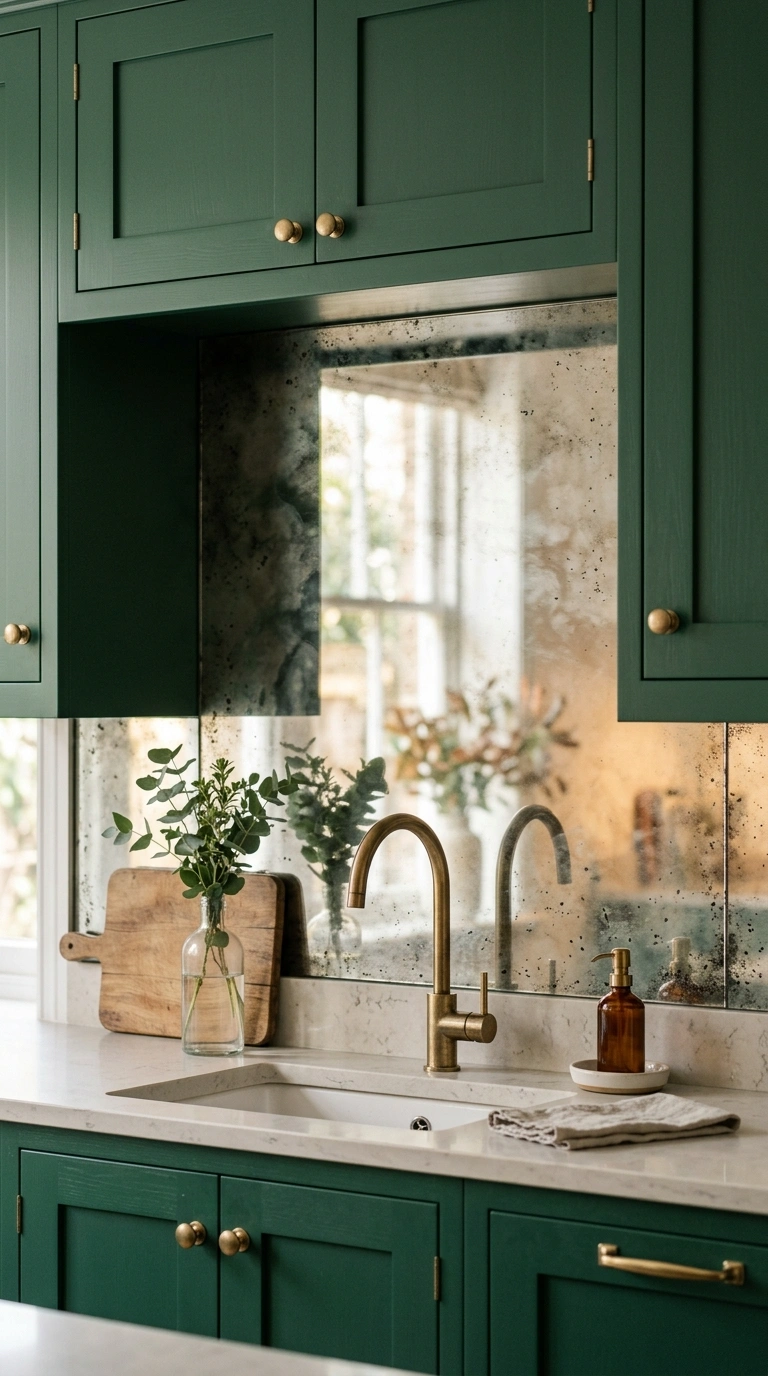
An antiqued mirror backsplash brings unexpected shine and a bit of old world glamour into a kitchen, reflecting light in a way that no ceramic or stone tile can replicate. This material works especially well in kitchens with warm wood cabinetry and brass fixtures, since the slightly clouded, aged finish on the mirror pairs beautifully with those warmer tones. Choose panels with visible antiquing, meaning small dark spots and a softly distressed surface, rather than a perfectly clear mirror, since the imperfect finish feels intentional and vintage rather than like a mistake. This backsplash suits kitchens aiming for a more traditional, French inspired, or eclectic style, since the reflective surface adds depth and a sense of history to the room. Because mirror shows water spots and splatters more visibly than tile, this option works best behind open shelving or a sink rather than directly behind a heavily used stove. Pair with warm lighting to enhance the soft glow the mirror creates.
14. Soft Blue Glass Tile
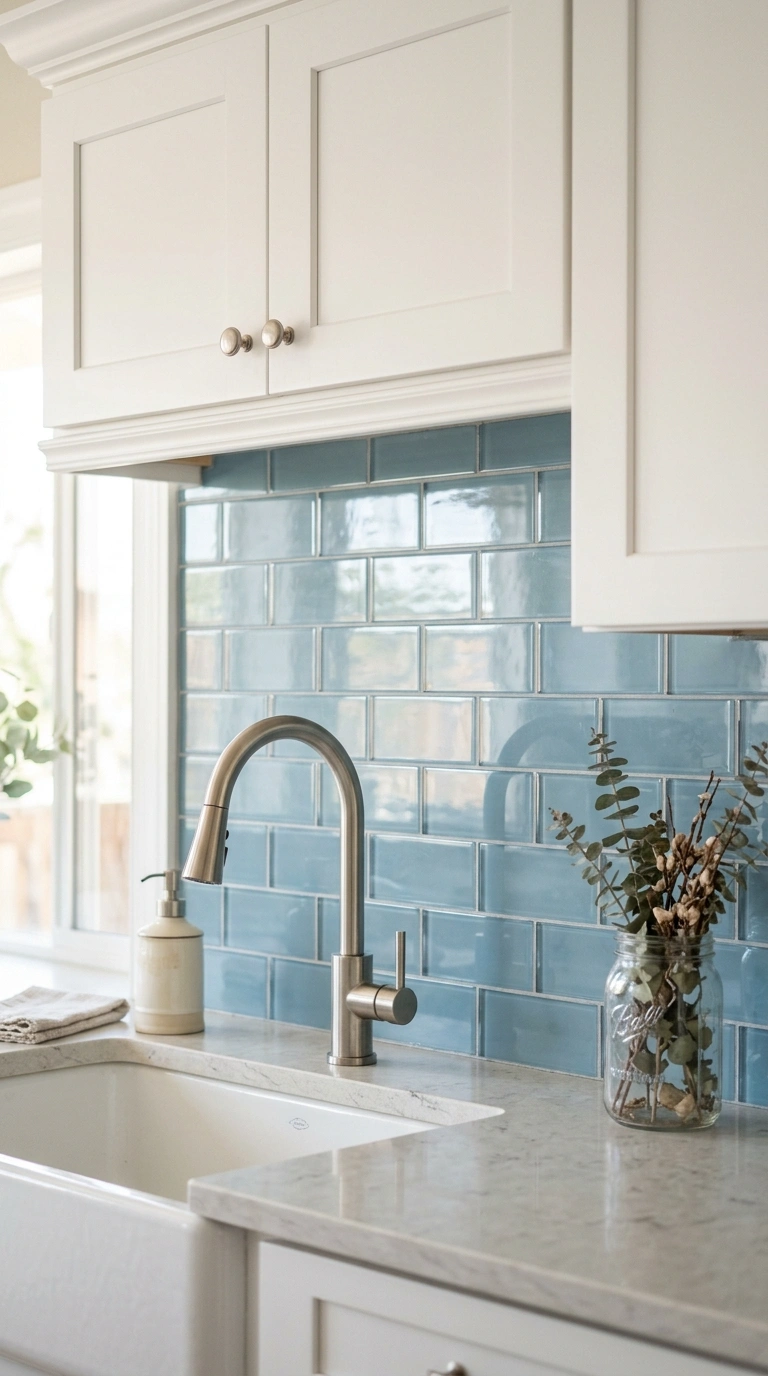
Soft blue glass tile brings a cool, calm pop of color into a kitchen while catching and reflecting light in a way that ceramic tile cannot match. This tile works especially well in kitchens with white or cream cabinetry, since the pale blue tone stands out clearly against a simple, neutral backdrop. Choose a tile with a slightly iridescent or textured glass finish rather than perfectly flat glass, since the subtle shimmer adds depth and keeps the wall from feeling too flat or plain. Pair the blue glass with brushed nickel or chrome fixtures, since cooler metal tones tend to complement glass tile better than warm brass does. This backsplash suits kitchens with a coastal, cottage, or simply a fresh, airy style, since the pale blue tone reads as light and breezy rather than heavy. Glass tile also cleans up easily with a simple wipe down, making it a practical choice directly behind a busy sink or stove area.
15. Exposed Brick Veneer
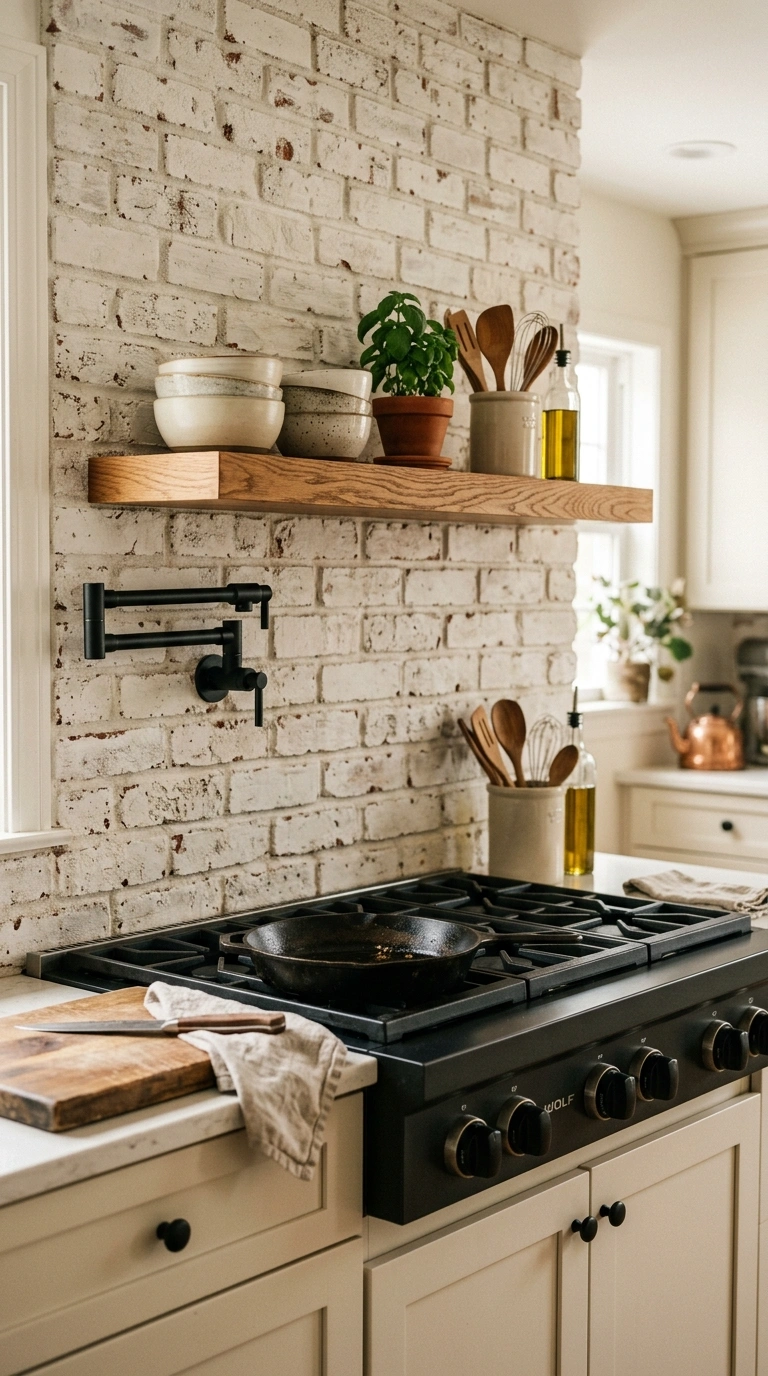
An exposed brick veneer backsplash brings raw, industrial texture into a kitchen, working especially well in loft style spaces or kitchens that already lean toward a more rustic, urban look. This material comes in thin veneer panels that install much like tile, meaning you get the look of a real exposed brick wall without the structural work of exposing an actual load bearing wall. Choose a warm red or whitewashed brick veneer depending on whether you want a bolder, more traditional look or something softer and more farmhouse in feeling. Pair the brick with simple black or stainless steel appliances and open wood shelving for a look that feels collected and a little bit lived in. Because brick has a naturally uneven, porous surface, sealing the veneer helps protect it from grease and staining over time, especially directly behind a stove. This backsplash suits kitchens wanting texture and history built into the walls without a fully renovated, historic building.
16. Two-Tone Split Tile Wall
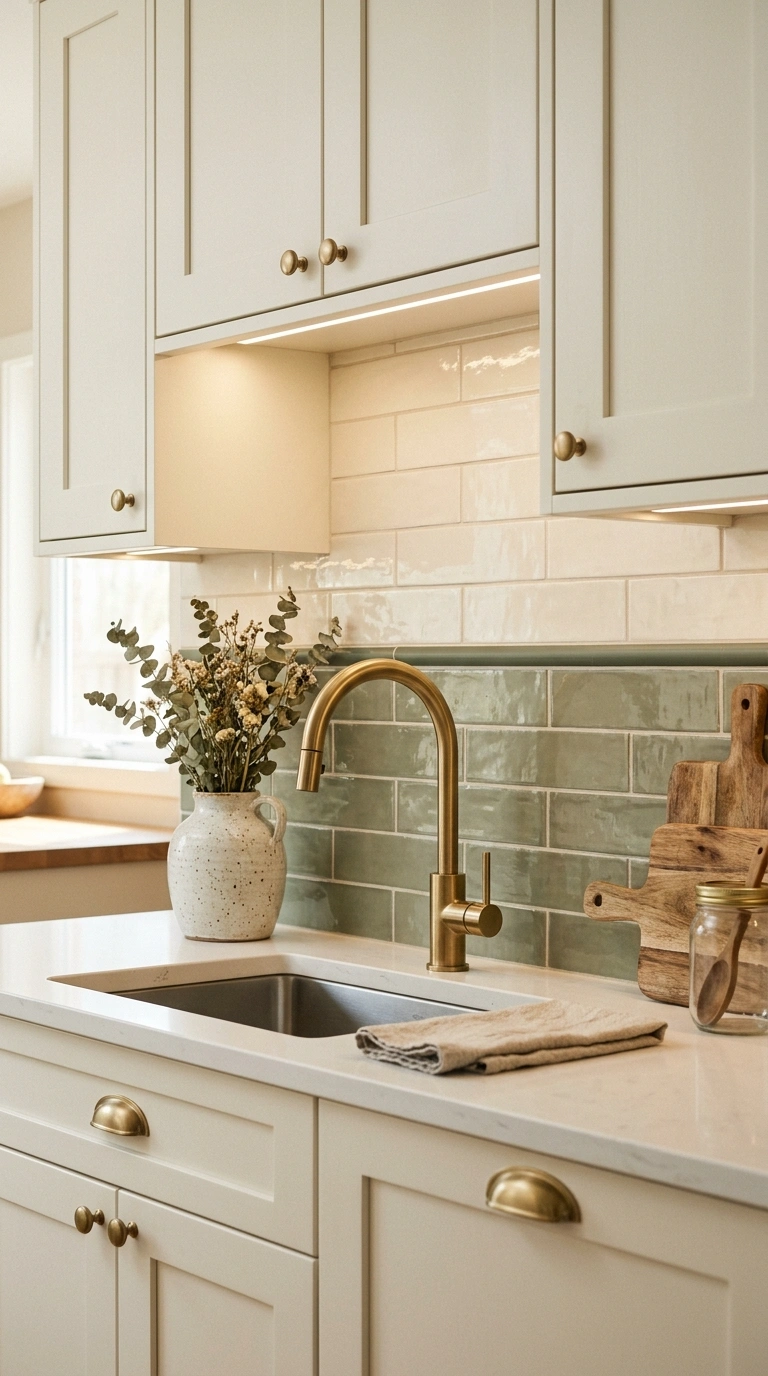
A two tone backsplash, splitting the wall between two different tile colors or materials, adds a modern, layered look that a single tile choice cannot achieve on its own. This works especially well with a lighter tile on the upper portion of the wall and a darker or bolder tile closer to the counter, creating a grounded, intentional break in the design. Choose two tiles in the same shape and size but different colors, like white and black subway tile, or mix materials entirely, pairing plain tile with a stone or wood look tile for added texture. This approach suits kitchens with simple, minimal cabinetry, since the two tone wall itself becomes the main design feature without needing much else to compete for attention. Keep the transition line clean and level, running along a natural break point like the bottom of upper cabinets or open shelving. This idea works well for anyone wanting a custom, considered look without a fully custom tile order.
17. Arabesque Lantern Tile
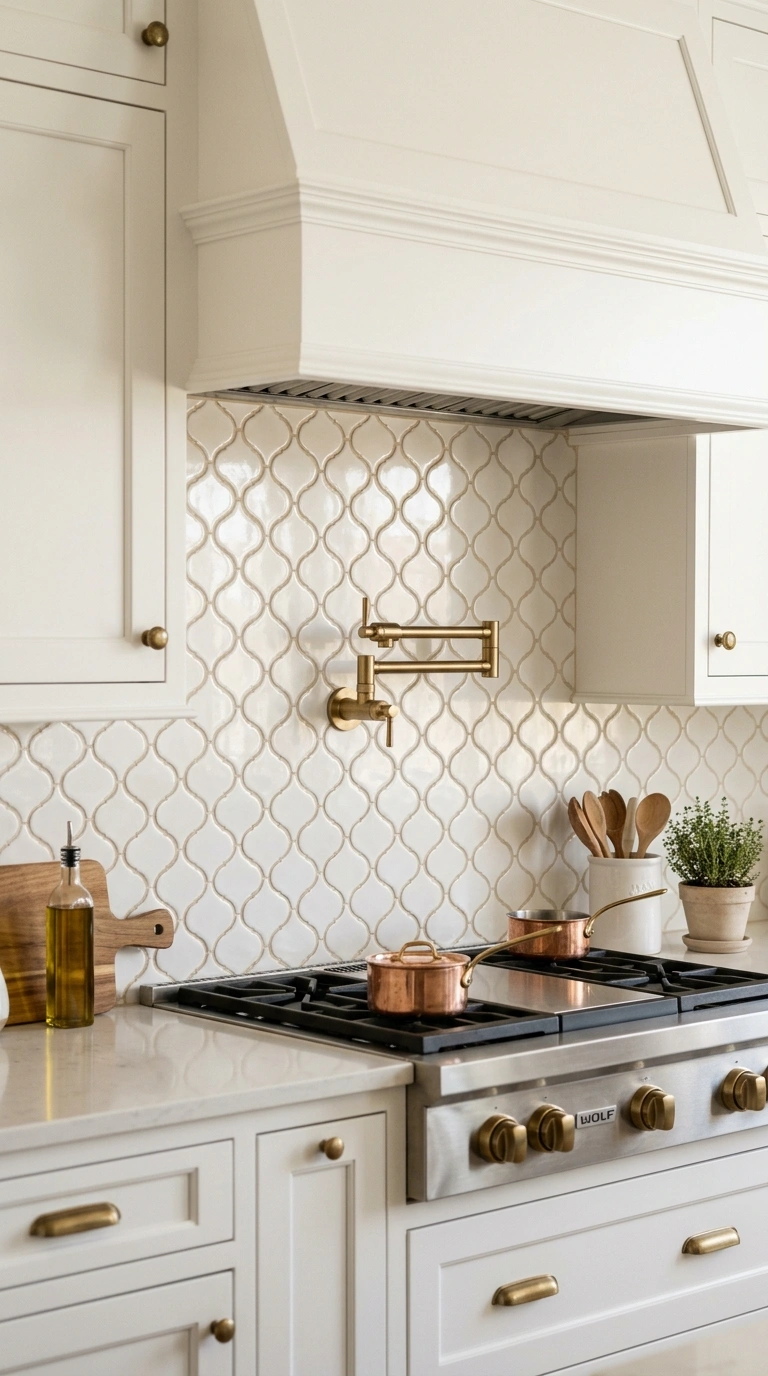
Arabesque or lantern shaped tile brings an ornate, global inspired pattern into a kitchen, working especially well as a full wall treatment behind a stove or range. This curved, scalloped tile shape creates a naturally decorative pattern even in a single solid color, so choosing a soft white, pale blue, or warm cream keeps the look elegant rather than overwhelming. Pair the tile with simple, clean lined cabinetry so the pattern itself remains the clear star of the kitchen without competing against other bold choices in the room. This tile shape suits kitchens leaning into a Moroccan, Spanish, or eclectic global style, since the lantern silhouette has deep roots in those design traditions. Grout lines should closely match the tile color so the curved pattern reads clearly as a whole rather than being broken up by contrasting lines. This backsplash works particularly well behind open shelving, where the ornate pattern peeks through styled dishware and cookbooks.
Also Read > 21 Modern Kitchen Remodel Ideas 2026 with Smart Storage and Warm Neutrals
18. Three-Dimensional Textured Tile
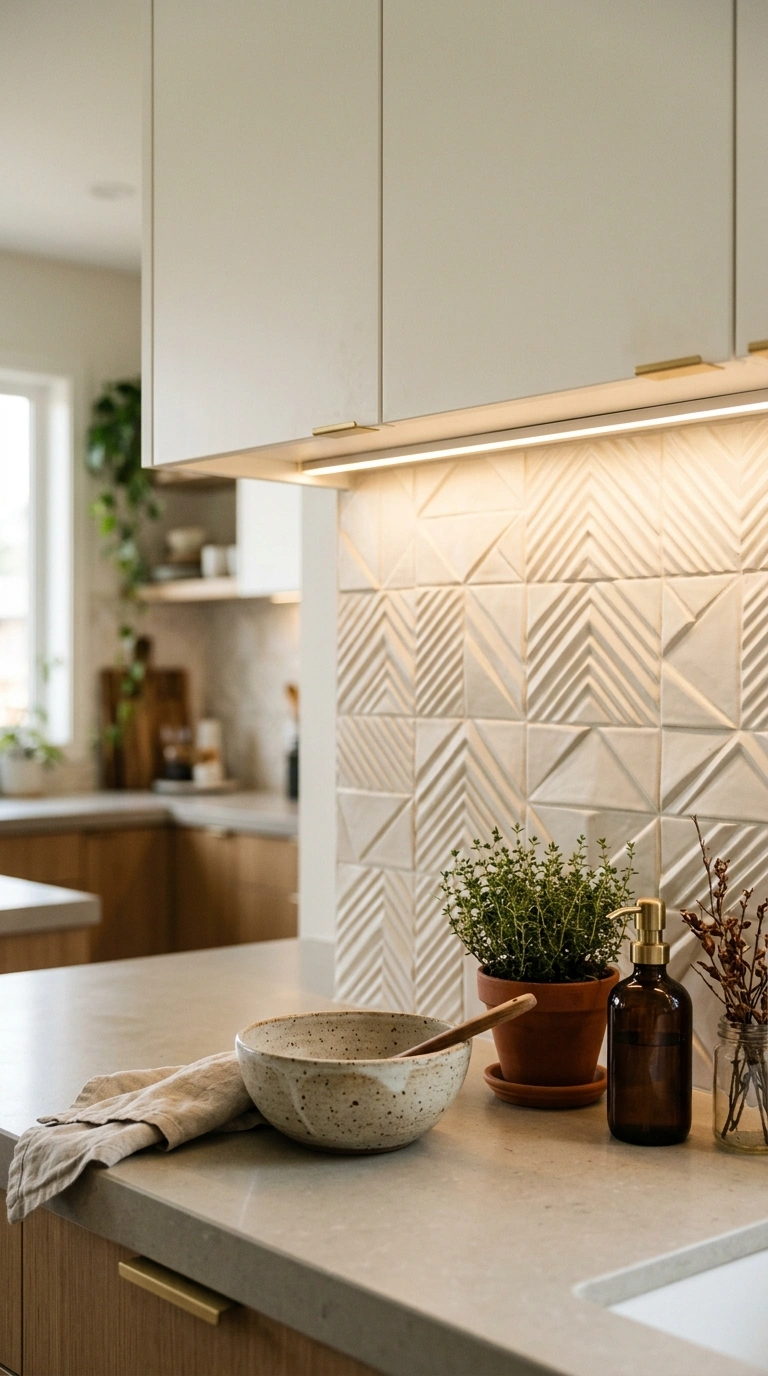
A three dimensional textured tile, featuring raised geometric shapes or a subtly sculpted surface, brings depth and shadow play into a kitchen wall without relying on color or pattern at all. This tile works especially well in a single neutral color like warm white, soft gray, or cream, since the raised texture already provides plenty of visual interest and shifts appearance depending on the angle of light. Pair the textured tile with simple, unadorned cabinetry and minimal hardware, letting the wall itself serve as the main decorative element in an otherwise clean, pared back kitchen. This backsplash suits modern and minimalist kitchens especially well, since the texture reads as sculptural and current rather than busy or dated. Lighting placement matters more with this tile than with a flat surface, since side lighting or under cabinet lights enhance the shadows created by the raised pattern. This option works well as a full wall treatment, giving the texture enough room to really stand out.
19. Waterfall Slab Continuity
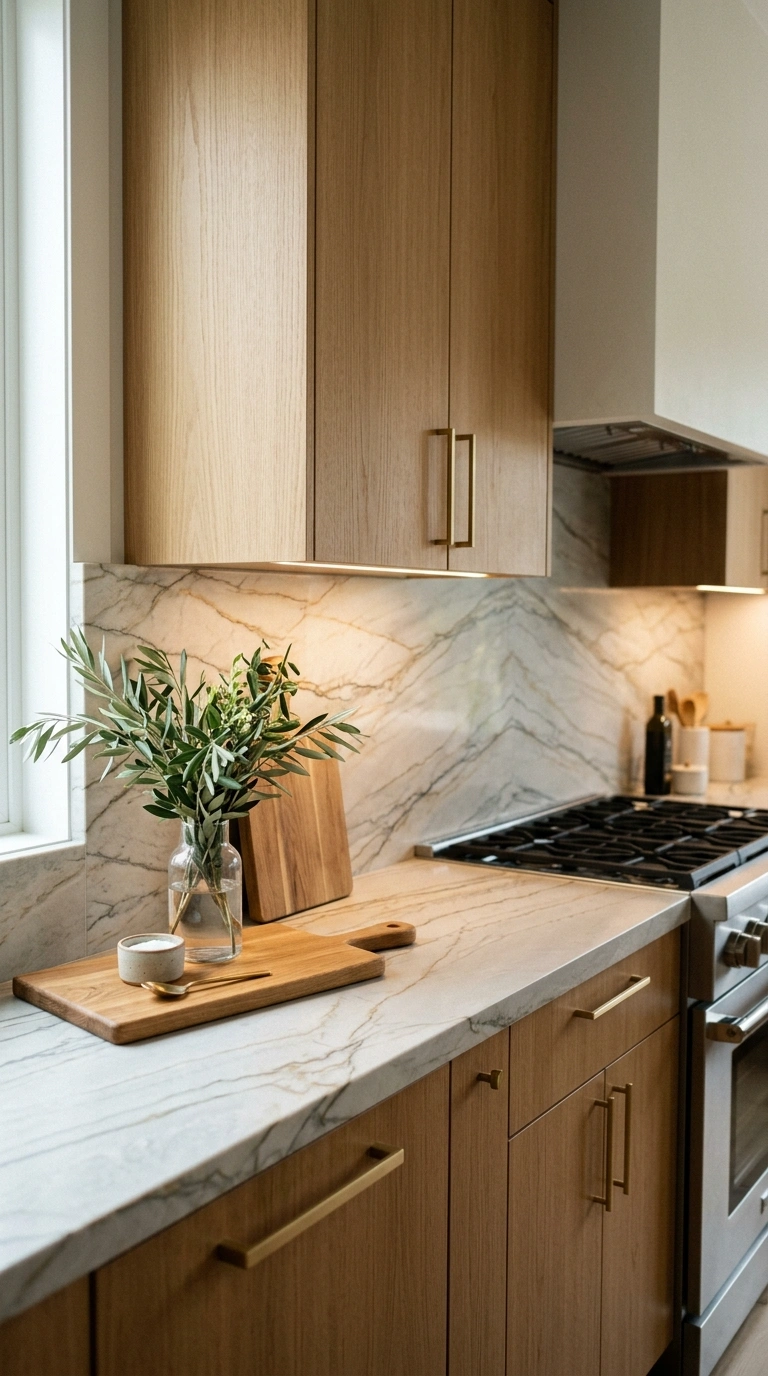
Extending the same stone slab from the countertop up the backsplash and down the sides of an island in a waterfall edge creates one continuous, seamless material throughout the kitchen. This approach works especially well with quartz or quartzite in a soft, subtle veining pattern, since the material needs to look intentional and cohesive across multiple large surfaces rather than busy or overwhelming. Choose a slab with veining that runs in a similar direction across each piece, since book matched or continuous veining makes the waterfall effect feel truly seamless rather than like separate slabs simply placed near each other. Pair this continuous stone look with simple, understated cabinetry, letting the material itself be the main visual feature throughout the kitchen. This option requires careful planning with your fabricator to ensure enough matching slab material is available from a single quarry lot. This choice sits toward the higher end of the price range but creates one of the most polished, custom looks possible in a kitchen.
20. Soapstone Slab Backsplash
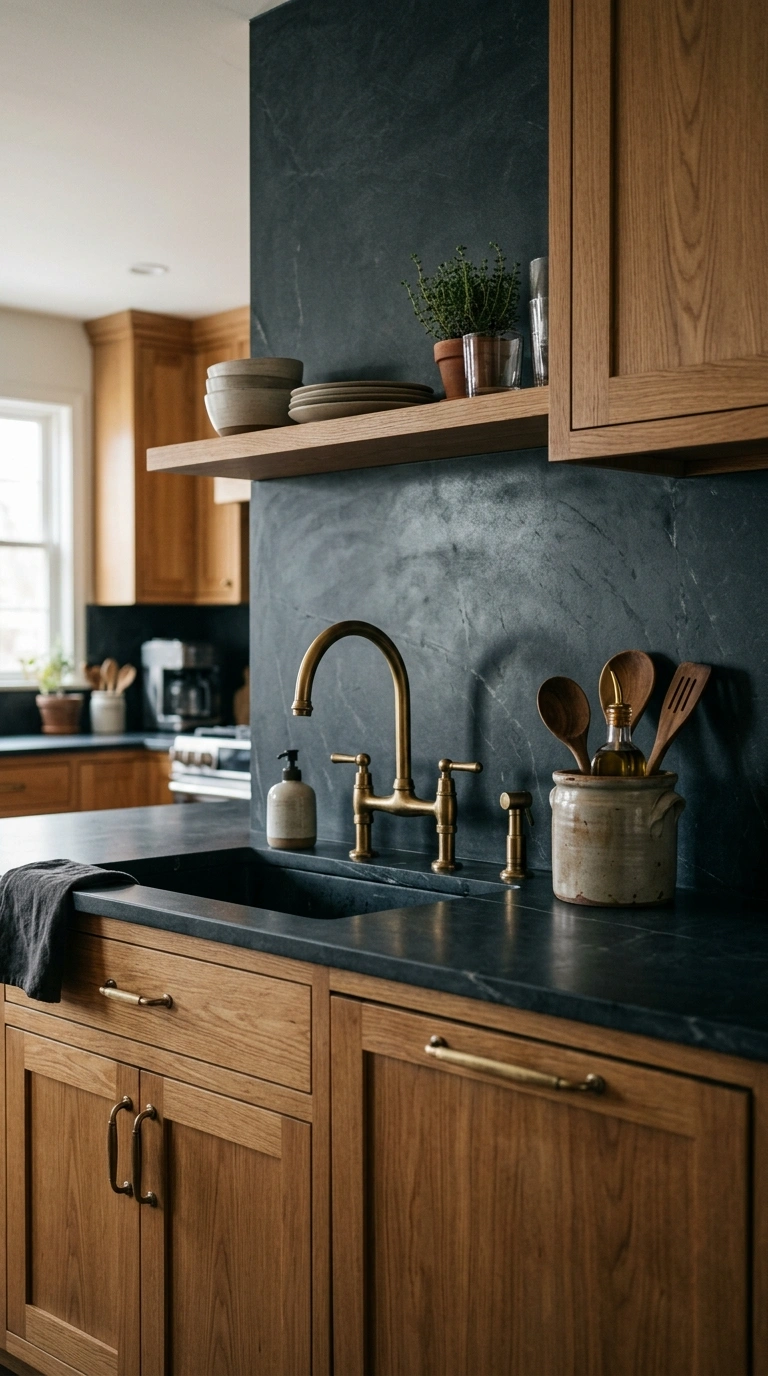
A soapstone slab backsplash brings a soft, matte, almost velvety surface into a kitchen, offering a natural stone look with a noticeably different feel than glossy marble or granite. This material typically appears in soft gray or charcoal tones with subtle veining, working especially well in kitchens with a farmhouse, traditional, or simple modern style. Soapstone naturally darkens and develops a richer patina over time, especially where oil from cooking touches the surface, which many homeowners find appealing rather than something to avoid. Pair the stone with warm wood cabinetry or simple white shaker style cabinets, since the muted, matte stone tone works well against either warmer or cooler surrounding tones. This backsplash suits kitchens wanting the elegance of natural stone without the higher maintenance that marble sometimes requires, since soapstone resists staining fairly well on its own. Regular applications of mineral oil can help even out the natural darkening process if you prefer a more consistent look over time.
21. Brushed Brass Metal Sheet
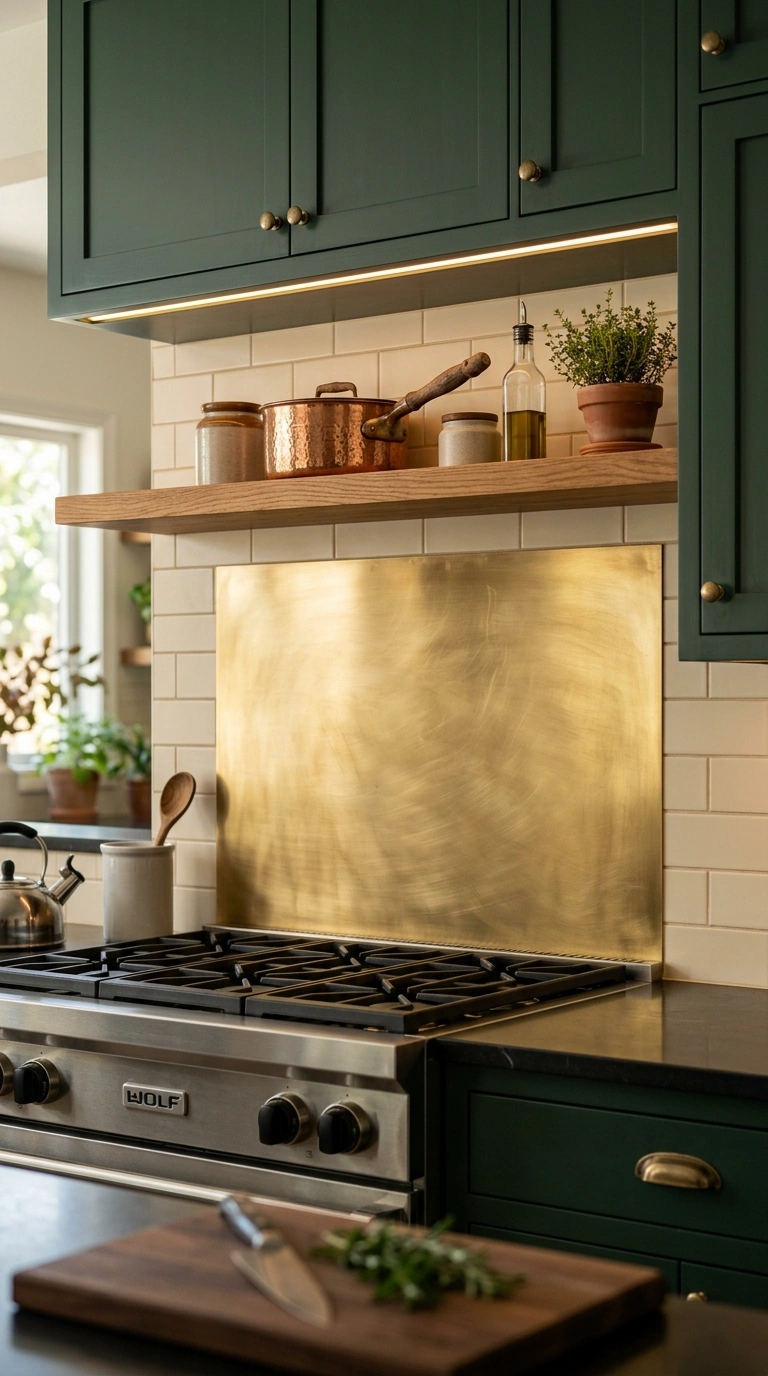
A brushed brass metal backsplash brings warmth and a soft, subtle shine into a kitchen without the high shine of a mirror or glossy tile. This material typically comes in large sheet panels, meaning fewer seams and grout lines than a tiled backsplash, giving the wall a clean, almost seamless look. Pair the brass panel with warm wood cabinetry, cream countertops, and simple black or brass hardware for a cohesive, warm toned kitchen overall. This backsplash suits modern or transitional kitchens especially well, since the metal reads as current and a little bit luxurious without feeling cold the way stainless steel sometimes can. Brushed rather than polished brass helps hide fingerprints and small scratches that naturally occur over time in a well used kitchen. This option works particularly well behind a stove, where the metal also offers excellent heat resistance and easy cleanup after cooking.
22. Wood-Look Porcelain Tile
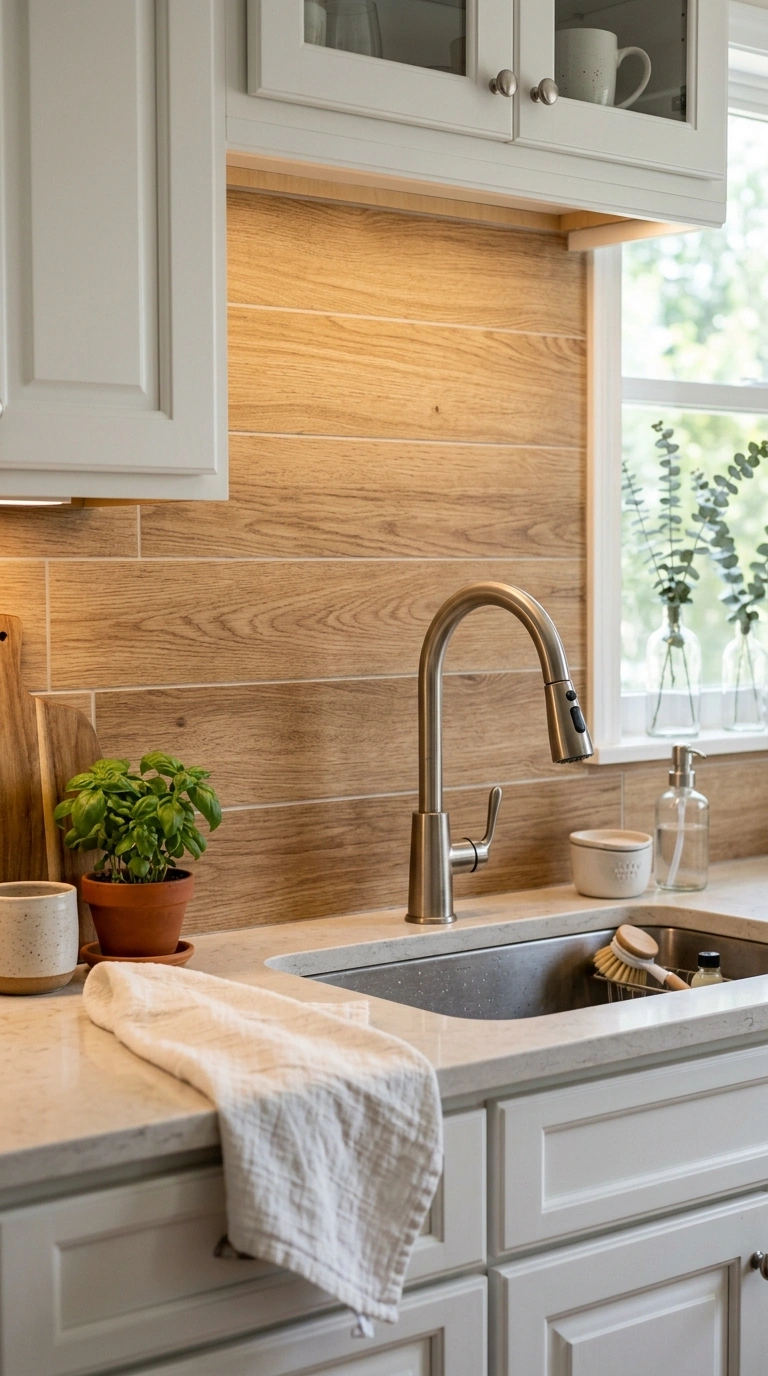
Wood look porcelain tile brings the warmth of natural wood grain into a kitchen backsplash without the moisture concerns that come with using actual wood so close to a sink or stove. This tile works especially well laid in a horizontal or herringbone pattern, mimicking the look of reclaimed wood planks while offering the easy cleanup and durability that porcelain provides. Choose a tile with a slightly varied, realistic wood grain pattern rather than a perfectly uniform print, since the subtle variation between planks makes the material read as genuine wood from a normal viewing distance. Pair this tile with simple white or black cabinetry, letting the warm wood tone provide contrast and texture against otherwise cool, clean surfaces. This backsplash suits kitchens wanting a rustic or Scandinavian inspired look, since the material bridges natural warmth with modern practicality. This option also works well for anyone who loves the look of wood but wants a surface built specifically to handle daily kitchen splashes.
23. Chevron Pattern Tile
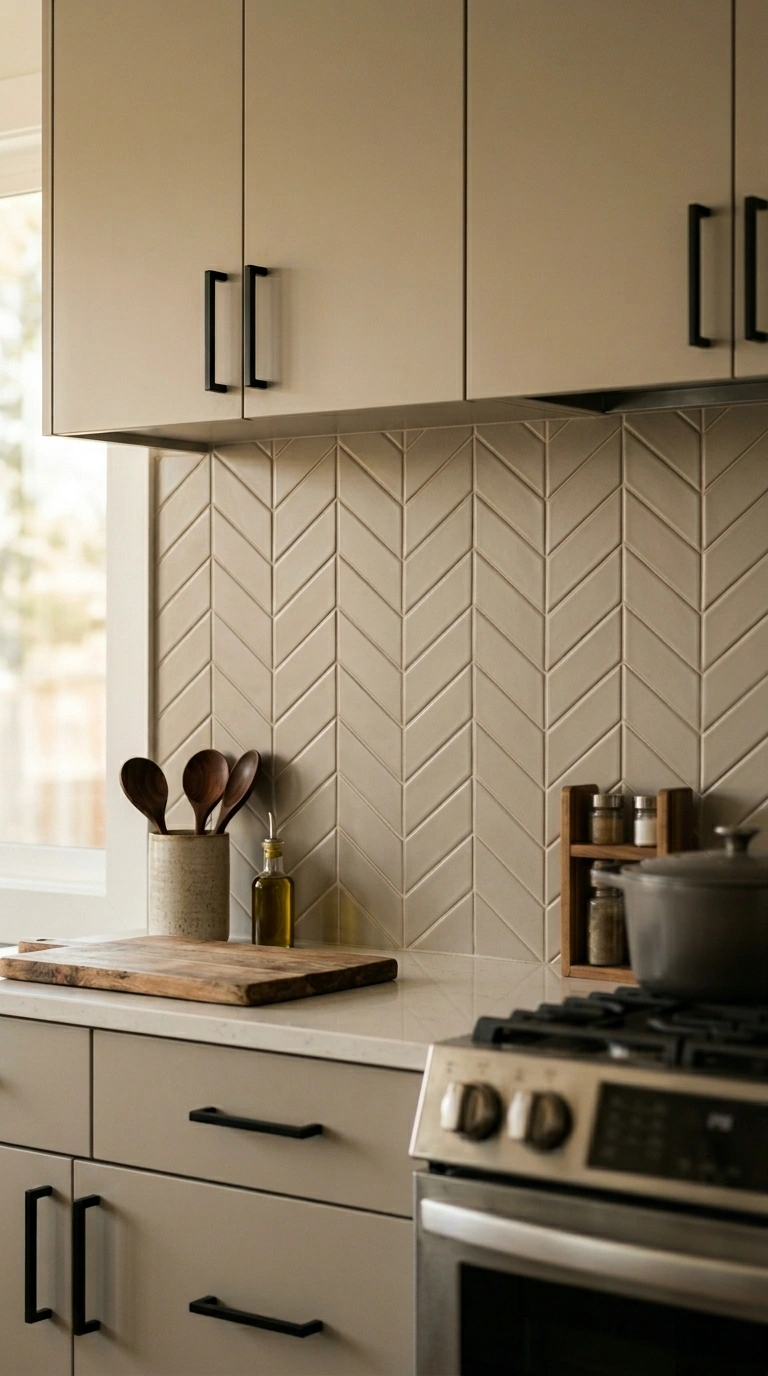
A chevron pattern, created by cutting tile at an angle so the pieces form a continuous zigzag, brings sharp, graphic movement into a kitchen wall. This layout differs slightly from herringbone, since chevron tiles meet at a precise point rather than overlapping at a perpendicular angle, creating a cleaner, more streamlined zigzag line. Choose a marble, ceramic, or wood look tile in this cut for the pattern, keeping the color simple in white, gray, or warm wood tones so the shape itself carries the visual interest. This tile pattern suits modern kitchens especially well, since the precise, angular lines feel current and a bit more graphic than a traditional straight or brick laid tile. Pair the chevron wall with simple, unadorned cabinetry and hardware, letting the pattern remain the clear focal point of the space. This layout requires more precise cutting during installation than a standard tile layout, so factor in slightly higher labor costs when planning this backsplash.
24. Color-Drenched Matching Tile
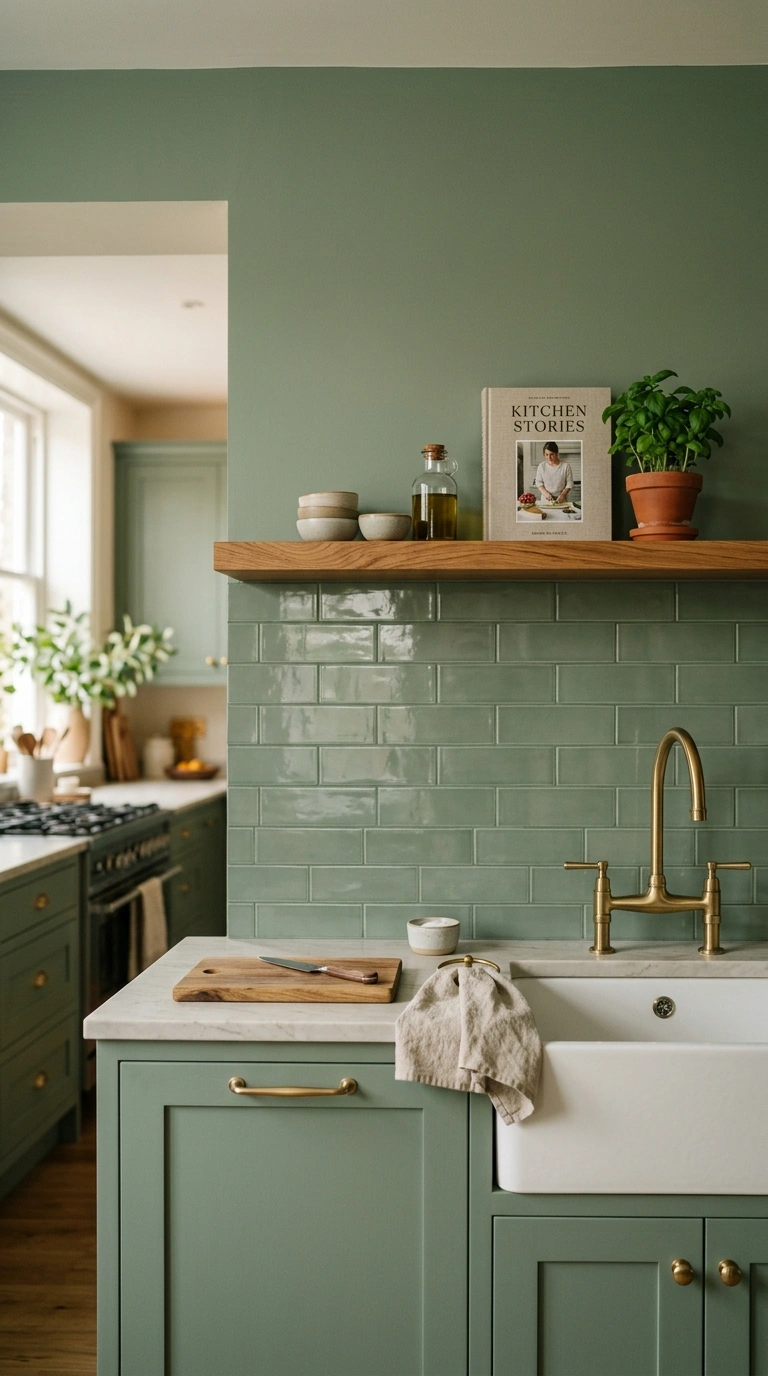
Color draping, or painting and tiling a kitchen in one single matching color from cabinets to backsplash to trim, creates an immersive, cohesive look that feels both bold and surprisingly calming. This approach works especially well with soft, muted tones like sage green, warm terracotta, or dusty blue, since a saturated, bright color across every surface can feel overwhelming rather than soothing. Choose a tile in the exact same shade as your cabinetry, or as close a match as possible, so the backsplash blends into the surrounding surfaces rather than standing out as a separate element. This look suits kitchens wanting a strong design statement without needing multiple colors, patterns, or materials working together, since the single color approach naturally reads as intentional and pulled together. Add warm wood open shelving, brass hardware, or a contrasting countertop material to keep the monochromatic scheme from feeling flat or one dimensional. This idea works particularly well in smaller kitchens, since a single color can make the whole room feel larger and more unified.
25. Tadelakt Plaster Backsplash
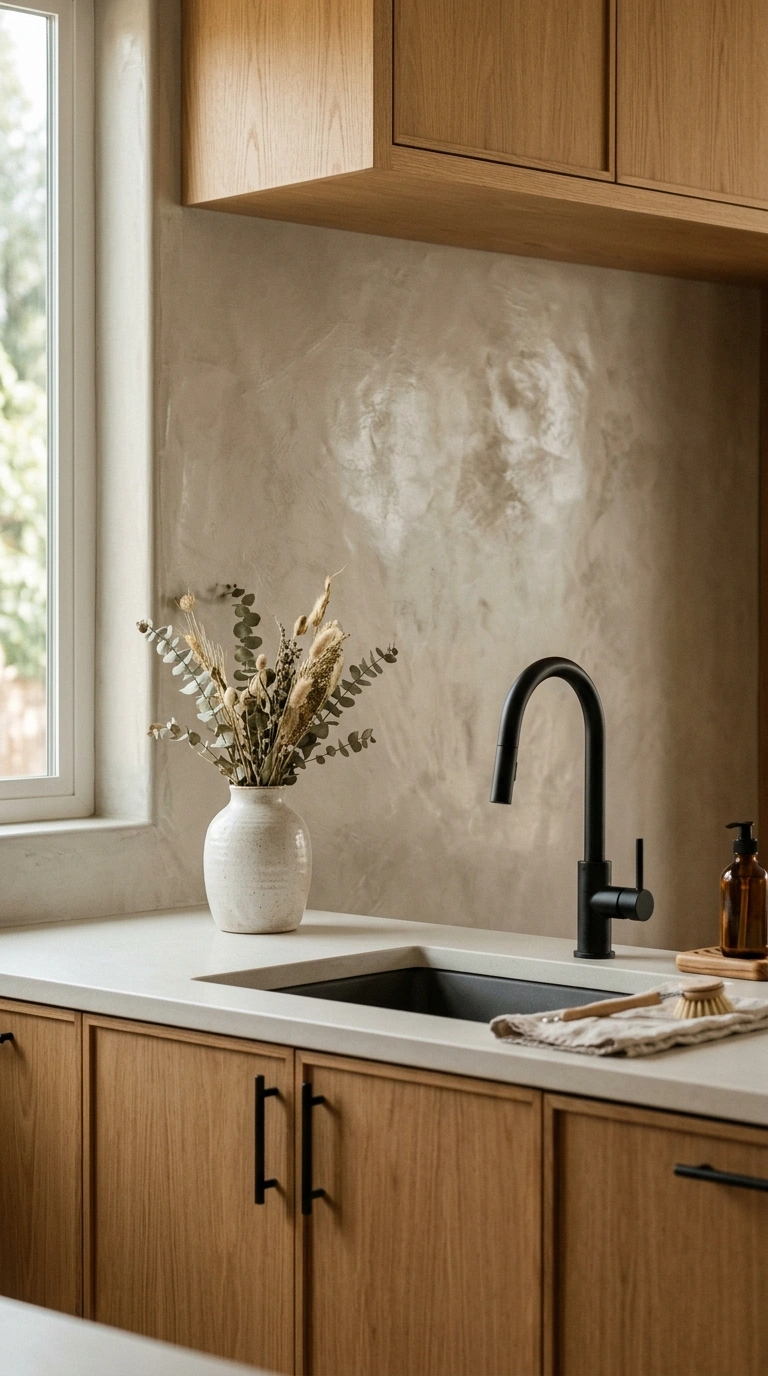
Tadelakt, a traditional Moroccan plaster finish, brings a smooth, hand troweled texture into a kitchen that no tile can fully replicate. This material creates a seamless, almost fabric like surface with soft, subtle variations in tone, typically appearing in warm earthy shades like clay, warm white, or soft terracotta. Because tadelakt is applied by hand in thin layers and polished with natural stone, it requires a skilled applicator familiar with the specific technique, making this a more specialized and often pricier choice than standard tile. Pair the plaster wall with simple, warm wood cabinetry and brass fixtures, letting the soft, organic texture of the tadelakt remain the clear focal point of the kitchen. This backsplash suits kitchens leaning into a Mediterranean, Moroccan, or modern organic style, since the material has deep roots in traditional North African architecture. This finish is naturally water resistant when properly sealed, making it a genuine option for backsplash use despite its unusual, artisanal appearance.
26. Travertine Slab Backsplash
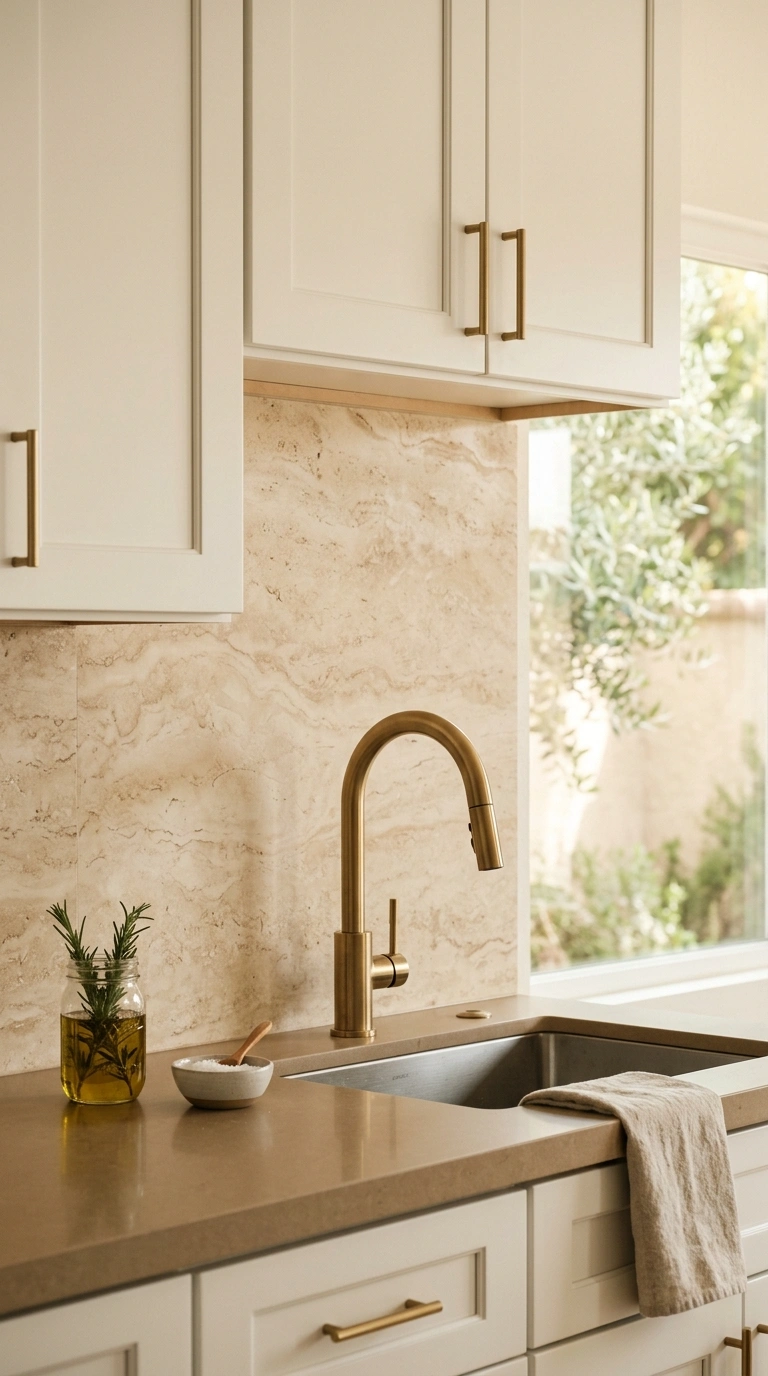
A travertine slab backsplash brings warm, naturally occurring texture and subtle pitting into a kitchen, offering a softer, more rustic alternative to polished marble or quartz. This stone typically appears in warm ivory, beige, or soft gold tones, working especially well in kitchens with a Mediterranean, Tuscan, or warm modern farmhouse style. Choose a honed rather than polished finish for a more matte, textured look that suits the naturally occurring surface variations travertine is known for. Pair the stone with warm wood cabinetry, wrought iron or aged brass hardware, and simple cream countertops for a cohesive, sun washed kitchen palette overall. Because travertine is naturally porous, sealing the surface well protects it from oil splatters and staining, particularly important directly behind a stove. This backsplash suits homeowners who love the warmth and history natural stone brings into a space, offering a distinctly different character than smoother, more uniform materials like quartz.
Also Read > 21 Kitchen Black Designs That Are Bold Yet Timeless
27. Patterned Cement Feature Panel
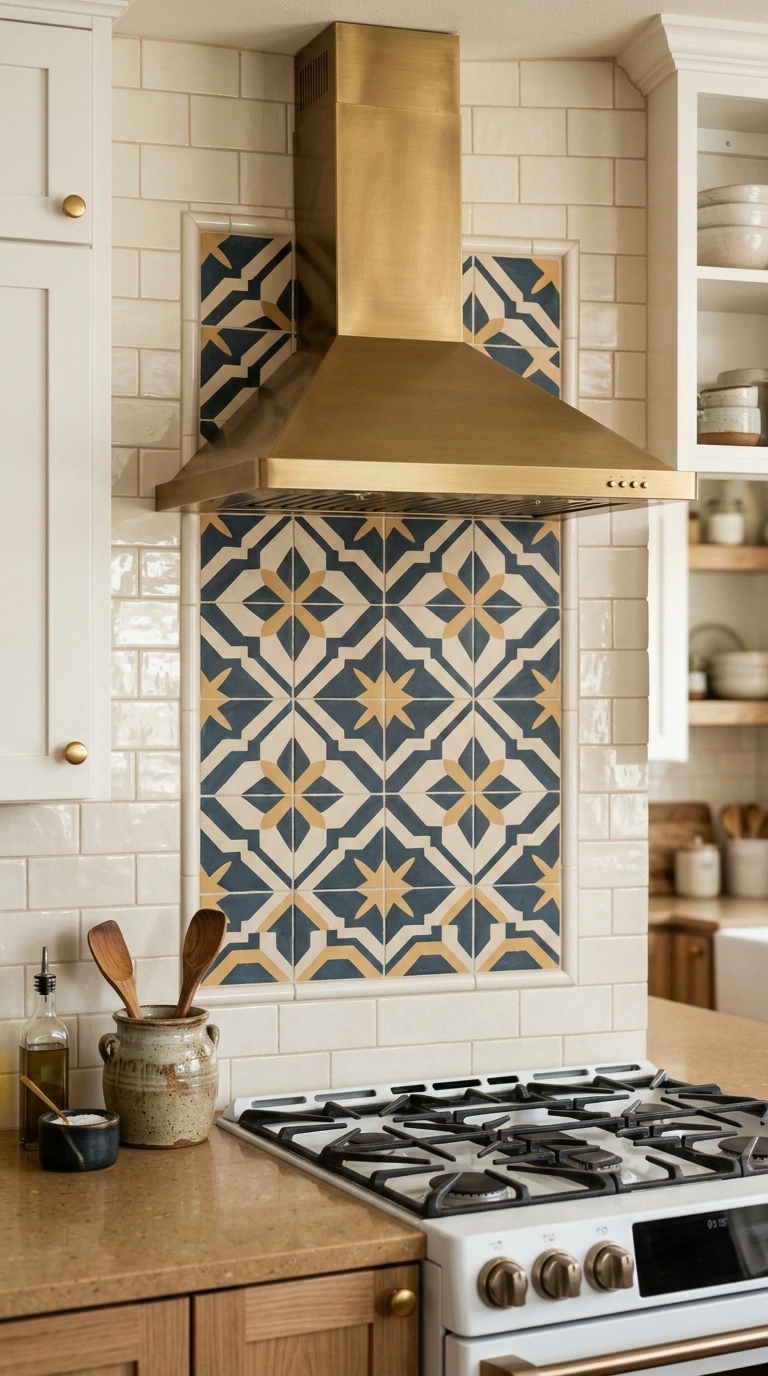
A patterned cement tile panel brings bold, graphic color into a kitchen, working especially well as a smaller accent behind a stove or range hood. These tiles often feature intricate, colorful patterns inspired by traditional Spanish, Cuban, or Moroccan cement tile designs, so choosing one dominant color that echoes your cabinetry or flooring helps the pattern feel connected to the rest of the room. This tile suits kitchens with otherwise simple, neutral surfaces, since the busy pattern needs a calm backdrop to really shine without feeling overwhelming. Cement tile requires sealing both during and after installation, since the material is naturally porous and prone to staining without proper protection. Pair the patterned panel with simple, clean lined cabinetry and minimal open shelving so the tile itself remains the clear design feature in the space. This backsplash works particularly well in kitchens wanting a bold, colorful moment without committing to pattern across a larger, more expensive surface like flooring.
28. Tile All the Way to the Ceiling
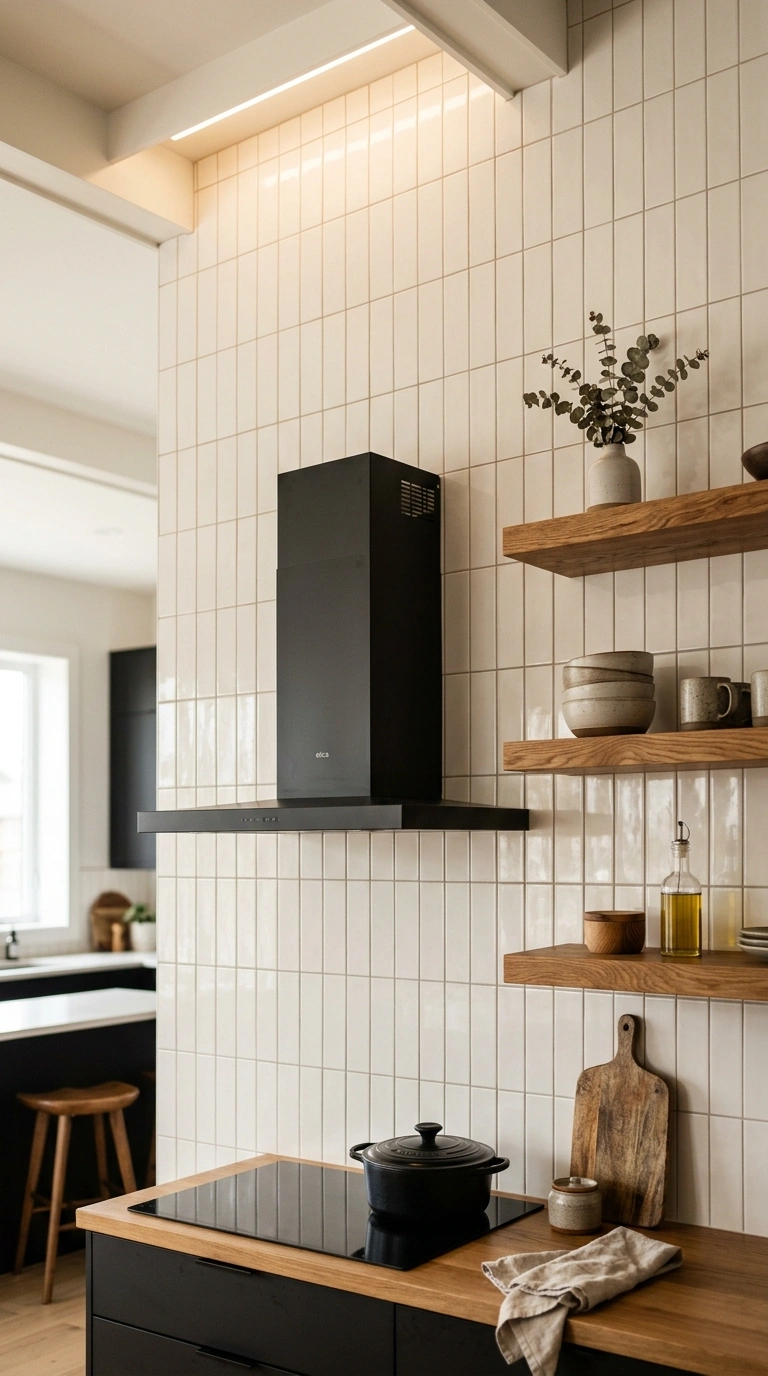
Running tile all the way from the countertop to the ceiling, rather than stopping at the bottom of the upper cabinets, creates a dramatic, fully finished look in a kitchen. This approach works especially well in kitchens with open shelving instead of upper cabinets, or in spaces without any upper cabinetry at all, since the tile has an uninterrupted wall to cover from top to bottom. Choose a tile that can handle being viewed at a larger scale, like a subtle marble look, a soft zellige, or a simple subway pattern, since a busy or bold pattern can feel overwhelming across such a large expanse of wall. Pair the full height tile with simple, streamlined cabinetry below so the wall itself becomes the clear focal point of the kitchen. This approach requires more tile and more labor than a standard backsplash height, so factor in a higher overall cost when planning this look. This idea suits kitchens wanting a bold, custom, gallery like finish that feels intentional from top to bottom.
Final Thoughts
A backsplash gives you room to try something a little bolder than the rest of your kitchen usually allows, whether that means a handmade tile with visible texture, a slab of stone with dramatic veining, or a full wall of color that ties everything else together. Think about how the material will hold up to daily cooking and cleaning, then choose the option that still feels exciting after that practical check. Small swatches or sample tiles held up against your actual cabinets and countertops make the final decision much easier than picking from a screen alone.
FAQs
What backsplash is most popular for modern kitchens?
Large format tile in a simple subway or vertical layout remains one of the most popular choices for modern kitchens, along with slab material like quartz or quartzite that continues straight up from the countertop. Handmade zellige tile has also grown in popularity for kitchens wanting texture and warmth over a perfectly uniform finish.
Should the backsplash match the countertop?
The backsplash does not need to match the countertop exactly, though many kitchens use the same or a very similar material for a seamless, cohesive look. Contrasting the backsplash and countertop, such as pairing a patterned tile with a plain stone counter, can also work well as long as one surface stays simple while the other carries more visual interest.
What is the easiest backsplash to keep clean?
Large format tile, slab stone, and metal panels tend to be the easiest to keep clean, since fewer grout lines mean less surface area for grease and food splatters to collect. Glossy finishes generally wipe clean faster than matte or heavily textured surfaces, though matte finishes hide fingerprints and water spots better between cleanings.
How high should a kitchen backsplash go?
A standard backsplash typically runs from the countertop to the bottom of the upper cabinets, usually around 18 inches, though many modern kitchens now extend tile all the way to the ceiling for a more dramatic, finished look. Behind a stove specifically, many homeowners extend the tile higher than the rest of the kitchen to create a focal point above the range.
Can I use bold patterned tile without it looking busy?
Bold patterned tile works best when used in a smaller, contained area, like directly behind a stove or range hood, rather than across an entire kitchen. Keeping surrounding cabinetry, countertops, and hardware simple and neutral allows the pattern to stand out as an intentional design choice rather than competing with too many other bold elements in the room.